
Lawrence Miles
Author of Alien Bodies
About the Author
Image credit: fun-autographs.tripod.com
Works by Lawrence Miles
About Time 1: The Unauthorized Guide to Doctor Who: Seasons 1 to 3 (2006) — Author — 150 copies, 5 reviews
About Time 2: The Unauthorized Guide to Doctor Who: Seasons 4 to 6 (2006) — Author — 129 copies, 5 reviews
In the Year of the Cat 6 copies
A Labyrinth of Histories 6 copies
Faction Paradox: Movers 6 copies
Shadow Play 6 copies
Grass 4 copies
Body Politic — Author — 4 copies
Words From Nine Divinities 4 copies
Ozymandias — Author — 4 copies
Ship of a Billion Years — Author — 4 copies
The Judgement of Sutekh 3 copies
The Judgement of Solomon 1 copy
Associated Works
The Year's Best Fantasy and Horror: Fifteenth Annual Collection (2002) — Contributor — 277 copies, 4 reviews
About Time 3: The Unauthorized Guide to Doctor Who: Seasons 7 to 11 (Expanded Second Edition) (2009) — Author — 77 copies, 4 reviews
Decalog 5: Wonders: Ten Stories, A Billon Years, An Infinite Universe (1997) — Contributor — 76 copies, 1 review
Tagged
Common Knowledge
- Birthdate
- 1972-03-15
- Gender
- male
- Nationality
- UK
- Birthplace
- Middlesex, England
- Associated Place (for map)
- Middlesex, England
Members
Reviews

Alright, alright, quit torturing me and I'll confess! Yes, it's true: I don't get on with Lawrence Miles. He's just... too much.
To recap for newcomers: Miles is something of a cult figure in Doctor Who fandom. As a very young man, he made his name writing several novels for the range, at a time when prose was the main medium for the series, and thus highly important. Although he went on to write plenty of sci-fi novels and other works during the 2000s and 2010s, and thus I'm sure considers show more himself to have made a considerable achievement in the world of letters, he never got what many of his comrades received: TV fame. Many of the (slightly older) luminary writers of the novels and short stories - among them Russell T Davies, Paul Cornell, Mark Gatiss, Chris Chibnall, Steven Moffat, Gareth Roberts - went on to be heavily involved in the TV program, not to mention now noted speculative fiction writer Ben Aaronovitch. Lawrence Miles had a different journey in mind.
Miles' view of what Doctor Who could be (should be?) is markedly different from Davies and Moffat in particular. They envision a family-friendly program, focused (to a certain extent) on standalone hours of television which are fan-inspired but can appeal to grandma or your lunkhead cousin. Miles wants the program to be more along the lines of those old sci-fi series like Farscape or Babylon 5: dense, complex sci-fi stories, deliberately plotted over multiple seasons, even though they will languish on cable channels and be ever at the brink of cancellation. The fact that Davies views Who as a modern drama in the soap opera mould and Moffat sees it as a fairytale without the need to dig deep into character or science especially galled dear Lawrence. He was boisterously, savagely critical of what he perceived to be the former's faults, but was - dare I say - venomous and rancorously unpleasant about the latter. (As it happens, I share ol' Larry's view about Moffat, although I also recognise he made an entertaining program that delighted millions. Conversely I think that Russell produced some of the best Who in its history. So, there.)
How does this impact Alien Bodies? Well, Miles had already written numerous books but this was his first for the new Eighth Doctor range, where he had more opportunity to influence the world-building and broader concepts of the series. And, my goodness, he went broad. There are a heckuva lot of ideas on display here. A putative future in which the US (or at least a Republican-controlled part of a Balkanised former US) invaded Canada. In which the military organisations at the heart of the series for decades were broken up and replaced. In which science has found a way to bio-engineer leopards whose visual and aural memories are passed through their urine, allowing people with the right technology to "read" those memories from puddles of the stuff. In which a species is able to exist as a type of mental parasite, inside your head and communicating with you by manipulating your mind to read their words in newspapers and signs. In which a dead man shows up to an auction, and it's a perfectly normal part of his species. Not to mention the expansive editions to the program's own mythology: semi-sentient TARDISes from the Doctor's future! A military-industrial complex that has been trying to find ways to assassinate the Doctor for three hundred years! A Time War taking place well into the Doctor's future which could destroy his people! Not to mention an age-old cult of Time Lords who thrive on tearing apart the rules of time.
You see what I mean? It's a lot.
Now, there are two schools of thought here. One would say that Miles' approach is simply "not Doctor Who". Every framework should be malleable but there are limits to what can be part of a series and what can't. (I think of those Murder, She Wrote episodes from the show's middle years where Angela Lansbury was overworked and so a completely unrelated detective would investigate a completely unrelated case for an entire episode. Multiple times a season. Was it really MSW or just a way to sell some ads?) If you need to rewrite vast tracts of what we've known for thirty-five years and disorient the physics and history of the world we've come to understand, have you in fact just created your own program under someone else's banner? The other viewpoint is that this is the very reason Who stagnated in the 1980s and, indeed, into the novel range. It had been playing it safe, Who by numbers, and it was time to tear down the fabric and start weaving it again.
Ultimately, I'm in the first camp. I agree that the program could play it safe, and I have found several of the other novels dissatisfying for this reason. Indeed, given that it's clear that Davies and Moff stole or absorbed or coincidentally latched on to several of Miles' ideas (I suspect all of the above, as some of them - like the sentient TARDIS - are clearly lingering in the air in fandom) for the TV series, Miles is not completely out of the realm of possibility. But there are just so many ideas all the time. He wants to make the world weird and conceptual and Douglas Adamsy, and as someone who doesn't enjoy Adams and rather likes his stories to make some level of sense, this isn't for me. There are some phenomenal moments, and I admire that he rehabilitated the Krotons. And I'm sad to make this complaint because, as I say, I am broadly anti-Moffat. I want my stories full not empty, I want my stories to have ideas not just plots. But this just made me tired. And it's not merely the concepts that annoyed me; there's a level of pretention to the approach which I couldn't endorse. The 25-year-old author has a confidence in his own abilities which isn't always matched by the output. Take for himself his occasional interruptions into the narrative voice ("It was a Kroton thing; they wouldn't understand") which strive for for playful but read as juvenile. Of course, the range's editors bear some responsibility for this. The cute allusions to popular sci-fi of the time (Twin Peaks, The X-Files, etc) are the kind of "clever" elements I would have included in my story ideas of my early 20s, so I see what Miles was going for. But we're a long way from that period now, so they help to date the book dramatically. (Not in itself a fault; authors don't tend to write books for consumption 25 years later, and nor should they. And this has been a problem with most authors of this range. But it stings nevertheless.)
(I amend this review to note that I recognise some of the circumstances which led to this. The BBC had reclaimed the novels from Virgin Publishing, had set about without much initial guidance in order to get the series going and, allegedly, had an editor who didn't really care at the time. Miles took what he saw as a dull companion and a bland focus and determined to knock it on its head. For that he can be commended, and I'll be intrigued to see whether the novels fight back or if they accept this new direction. I suspect not.)
I don't feel great about criticising Miles for his ambition or his iconoclastic nature, but sometimes these things must be said. Grand ideas can be positive; I recently read Paul Leonard's Venusian Lullaby which does a wonderful job of bringing several challenging approaches into the standard Doctor Who framework. "Everything and the kitchen sink too" can also be a valid approach; I've enjoyed every one of Gareth Roberts' novels, and he's never one to leave any passenger behind. Uniting those two approaches though proves to be an aggressive combination, at least for this naive millennial reader. show less
To recap for newcomers: Miles is something of a cult figure in Doctor Who fandom. As a very young man, he made his name writing several novels for the range, at a time when prose was the main medium for the series, and thus highly important. Although he went on to write plenty of sci-fi novels and other works during the 2000s and 2010s, and thus I'm sure considers show more himself to have made a considerable achievement in the world of letters, he never got what many of his comrades received: TV fame. Many of the (slightly older) luminary writers of the novels and short stories - among them Russell T Davies, Paul Cornell, Mark Gatiss, Chris Chibnall, Steven Moffat, Gareth Roberts - went on to be heavily involved in the TV program, not to mention now noted speculative fiction writer Ben Aaronovitch. Lawrence Miles had a different journey in mind.
Miles' view of what Doctor Who could be (should be?) is markedly different from Davies and Moffat in particular. They envision a family-friendly program, focused (to a certain extent) on standalone hours of television which are fan-inspired but can appeal to grandma or your lunkhead cousin. Miles wants the program to be more along the lines of those old sci-fi series like Farscape or Babylon 5: dense, complex sci-fi stories, deliberately plotted over multiple seasons, even though they will languish on cable channels and be ever at the brink of cancellation. The fact that Davies views Who as a modern drama in the soap opera mould and Moffat sees it as a fairytale without the need to dig deep into character or science especially galled dear Lawrence. He was boisterously, savagely critical of what he perceived to be the former's faults, but was - dare I say - venomous and rancorously unpleasant about the latter. (As it happens, I share ol' Larry's view about Moffat, although I also recognise he made an entertaining program that delighted millions. Conversely I think that Russell produced some of the best Who in its history. So, there.)
How does this impact Alien Bodies? Well, Miles had already written numerous books but this was his first for the new Eighth Doctor range, where he had more opportunity to influence the world-building and broader concepts of the series. And, my goodness, he went broad. There are a heckuva lot of ideas on display here. A putative future in which the US (or at least a Republican-controlled part of a Balkanised former US) invaded Canada. In which the military organisations at the heart of the series for decades were broken up and replaced. In which science has found a way to bio-engineer leopards whose visual and aural memories are passed through their urine, allowing people with the right technology to "read" those memories from puddles of the stuff. In which a species is able to exist as a type of mental parasite, inside your head and communicating with you by manipulating your mind to read their words in newspapers and signs. In which a dead man shows up to an auction, and it's a perfectly normal part of his species. Not to mention the expansive editions to the program's own mythology: semi-sentient TARDISes from the Doctor's future! A military-industrial complex that has been trying to find ways to assassinate the Doctor for three hundred years! A Time War taking place well into the Doctor's future which could destroy his people! Not to mention an age-old cult of Time Lords who thrive on tearing apart the rules of time.
You see what I mean? It's a lot.
Now, there are two schools of thought here. One would say that Miles' approach is simply "not Doctor Who". Every framework should be malleable but there are limits to what can be part of a series and what can't. (I think of those Murder, She Wrote episodes from the show's middle years where Angela Lansbury was overworked and so a completely unrelated detective would investigate a completely unrelated case for an entire episode. Multiple times a season. Was it really MSW or just a way to sell some ads?) If you need to rewrite vast tracts of what we've known for thirty-five years and disorient the physics and history of the world we've come to understand, have you in fact just created your own program under someone else's banner? The other viewpoint is that this is the very reason Who stagnated in the 1980s and, indeed, into the novel range. It had been playing it safe, Who by numbers, and it was time to tear down the fabric and start weaving it again.
Ultimately, I'm in the first camp. I agree that the program could play it safe, and I have found several of the other novels dissatisfying for this reason. Indeed, given that it's clear that Davies and Moff stole or absorbed or coincidentally latched on to several of Miles' ideas (I suspect all of the above, as some of them - like the sentient TARDIS - are clearly lingering in the air in fandom) for the TV series, Miles is not completely out of the realm of possibility. But there are just so many ideas all the time. He wants to make the world weird and conceptual and Douglas Adamsy, and as someone who doesn't enjoy Adams and rather likes his stories to make some level of sense, this isn't for me. There are some phenomenal moments, and I admire that he rehabilitated the Krotons. And I'm sad to make this complaint because, as I say, I am broadly anti-Moffat. I want my stories full not empty, I want my stories to have ideas not just plots. But this just made me tired. And it's not merely the concepts that annoyed me; there's a level of pretention to the approach which I couldn't endorse. The 25-year-old author has a confidence in his own abilities which isn't always matched by the output. Take for himself his occasional interruptions into the narrative voice ("It was a Kroton thing; they wouldn't understand") which strive for for playful but read as juvenile. Of course, the range's editors bear some responsibility for this. The cute allusions to popular sci-fi of the time (Twin Peaks, The X-Files, etc) are the kind of "clever" elements I would have included in my story ideas of my early 20s, so I see what Miles was going for. But we're a long way from that period now, so they help to date the book dramatically. (Not in itself a fault; authors don't tend to write books for consumption 25 years later, and nor should they. And this has been a problem with most authors of this range. But it stings nevertheless.)
(I amend this review to note that I recognise some of the circumstances which led to this. The BBC had reclaimed the novels from Virgin Publishing, had set about without much initial guidance in order to get the series going and, allegedly, had an editor who didn't really care at the time. Miles took what he saw as a dull companion and a bland focus and determined to knock it on its head. For that he can be commended, and I'll be intrigued to see whether the novels fight back or if they accept this new direction. I suspect not.)
I don't feel great about criticising Miles for his ambition or his iconoclastic nature, but sometimes these things must be said. Grand ideas can be positive; I recently read Paul Leonard's Venusian Lullaby which does a wonderful job of bringing several challenging approaches into the standard Doctor Who framework. "Everything and the kitchen sink too" can also be a valid approach; I've enjoyed every one of Gareth Roberts' novels, and he's never one to leave any passenger behind. Uniting those two approaches though proves to be an aggressive combination, at least for this naive millennial reader. show less
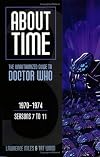
Though chronologically third, About Time 3 was actually the first volume of the series published, and consequently the shortest. Several years later, an expanded edition of it was released, but that was announced after I'd gotten this one, and I decided that though I like the About Time books, I don't love them, and I had no desire to purchase the same book over again.
In some ways, being the shortest helps the book. I rarely felt like there was less going on than I remembered from the first show more two volumes, so one wonders if all that extra stuff is actually all that extra. In later-written volumes, every story gets its own sidebar essay, and some of these can go off into nowhereville; there are fewer essays here, and they're more focused, with fewer of them awkwardly placing Doctor Who in a cultural context. And these ones are more reasonable, though as Lawrence Miles would later observe, a few of them are primarily there to explain why Doctor Who isn't Stargate SG-1. On the other hand, some of those bizarre essays can take us somewhere interesting, and I don't know that the book needed two essays to explain why Lance Parkin is wrong in the obviously-murky UNIT dating debate. The most insightful essay was "Just How Chauvinistic is Doctor Who?", which concludes that the answer is less than you think-- until Jo Grant (and Terrance Dicks and Berry Letts) come along. And the appraisals of individual stories continue to be insightful and interesting; I don't know if I'll ever love Carnival of Monsters or The Time Warrior, but it's easy to see how they're two of the most important Doctor Who stories ever made.
There was one thing I missed from the first two volumes: the sense of the production of Doctor Who itself, and how that drove what was going on in the show. There are some mentions of how the filming format of the series was changing, but this doesn't receive the depth of detail it would in later volumes. On the other hand, this volume has a feature that was eventually removed: writeups of how various stories were referred to in later spinoff media. I can't blame them for discontinuing this; its coverage is inconsistent and sloppy, and it primarily seems to be there to explain how Miles and Wood are smarter than David McIntee, anyway. So though this book lacks some of the shortcomings of its successors, on the whole I preferred the later-written volumes to this one. show less
In some ways, being the shortest helps the book. I rarely felt like there was less going on than I remembered from the first show more two volumes, so one wonders if all that extra stuff is actually all that extra. In later-written volumes, every story gets its own sidebar essay, and some of these can go off into nowhereville; there are fewer essays here, and they're more focused, with fewer of them awkwardly placing Doctor Who in a cultural context. And these ones are more reasonable, though as Lawrence Miles would later observe, a few of them are primarily there to explain why Doctor Who isn't Stargate SG-1. On the other hand, some of those bizarre essays can take us somewhere interesting, and I don't know that the book needed two essays to explain why Lance Parkin is wrong in the obviously-murky UNIT dating debate. The most insightful essay was "Just How Chauvinistic is Doctor Who?", which concludes that the answer is less than you think-- until Jo Grant (and Terrance Dicks and Berry Letts) come along. And the appraisals of individual stories continue to be insightful and interesting; I don't know if I'll ever love Carnival of Monsters or The Time Warrior, but it's easy to see how they're two of the most important Doctor Who stories ever made.
There was one thing I missed from the first two volumes: the sense of the production of Doctor Who itself, and how that drove what was going on in the show. There are some mentions of how the filming format of the series was changing, but this doesn't receive the depth of detail it would in later volumes. On the other hand, this volume has a feature that was eventually removed: writeups of how various stories were referred to in later spinoff media. I can't blame them for discontinuing this; its coverage is inconsistent and sloppy, and it primarily seems to be there to explain how Miles and Wood are smarter than David McIntee, anyway. So though this book lacks some of the shortcomings of its successors, on the whole I preferred the later-written volumes to this one. show less
http://nhw.livejournal.com/809156.html
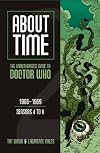
This series is a wonderful cornucopia of facts and analysis of the early years of everyone's favourite Time Lord. I think the second volume, dealing with the last two William Hartnell stories and the Patrick Troughton era, actually exceeds the high standard set by the first volume. Again, we have the exhaustive picking apart of each story looking for its sources of inspiration, broken up by substantive essays on more-or-less relevant topics - the one show more near the end, "Does Plot Matter", has considerable analytical depth and genre-wide interest - I hope someone (like perhaps Strange Horizons?) might consider approaching the authors to put it on-line for general information.
Lots of things I loved about this book. The vicious wit with which the authors savage any aspects of their favourite series that they disapprove of. (The chapter on every single story has a section devoted to Things That Don't Make Sense. Sometimes these sections are long, and sometimes they are longer.) Wood and Miles seem to particularly enjoy being able to argue at forty years' distance with Innes Lloyd, who was producer of the programme for much of this time, on the grounds that he betrayed the original Verity Lambert concept. Lloyd has been dead since 1991 and so can't argue back. But the tone is witty rather than polemical and myself I think a more balanced view of Lloyd's achievements emerges from these pages despite the authors' efforts.
Two minor mysteries that had troubled me in the last few months are explained: i) Colin Baker's narration of The Macra Terror is terrible not because Colin Baker is reading it but because John Nathan Turner wrote it; ii) Ian Marter's novelisation of The Enemy of the World is incomprehensible because the publisher slashed large chunks out of it to bring it down to the right page count. There is learned discussion of i) whose accent is the worst in the entire history of Doctor Who, ii) whether or not anyone in the TARDIS (Doctor excepted) ever had sex, and iii) the possible alchemical significance of mercury in the works of David Whitaker. There is constant mockery of Victoria. And there is a very thoughtful piece on why The Power of the Daleks is such a good story. I read it all except the chapter on The Mind Robber, because the authors insist very strongly that you should see it in all its glory first.
(One small nit-pick - The Third Man is set in Vienna, not Berlin, which was divided into four parts, not three. But this is tangential to its likely influence on The Invasion.)
I cannot imagine that future volumes in this series can possibly be as good as this one - but I shall buy them anyway. show less
This series is a wonderful cornucopia of facts and analysis of the early years of everyone's favourite Time Lord. I think the second volume, dealing with the last two William Hartnell stories and the Patrick Troughton era, actually exceeds the high standard set by the first volume. Again, we have the exhaustive picking apart of each story looking for its sources of inspiration, broken up by substantive essays on more-or-less relevant topics - the one show more near the end, "Does Plot Matter", has considerable analytical depth and genre-wide interest - I hope someone (like perhaps Strange Horizons?) might consider approaching the authors to put it on-line for general information.
Lots of things I loved about this book. The vicious wit with which the authors savage any aspects of their favourite series that they disapprove of. (The chapter on every single story has a section devoted to Things That Don't Make Sense. Sometimes these sections are long, and sometimes they are longer.) Wood and Miles seem to particularly enjoy being able to argue at forty years' distance with Innes Lloyd, who was producer of the programme for much of this time, on the grounds that he betrayed the original Verity Lambert concept. Lloyd has been dead since 1991 and so can't argue back. But the tone is witty rather than polemical and myself I think a more balanced view of Lloyd's achievements emerges from these pages despite the authors' efforts.
Two minor mysteries that had troubled me in the last few months are explained: i) Colin Baker's narration of The Macra Terror is terrible not because Colin Baker is reading it but because John Nathan Turner wrote it; ii) Ian Marter's novelisation of The Enemy of the World is incomprehensible because the publisher slashed large chunks out of it to bring it down to the right page count. There is learned discussion of i) whose accent is the worst in the entire history of Doctor Who, ii) whether or not anyone in the TARDIS (Doctor excepted) ever had sex, and iii) the possible alchemical significance of mercury in the works of David Whitaker. There is constant mockery of Victoria. And there is a very thoughtful piece on why The Power of the Daleks is such a good story. I read it all except the chapter on The Mind Robber, because the authors insist very strongly that you should see it in all its glory first.
(One small nit-pick - The Third Man is set in Vienna, not Berlin, which was divided into four parts, not three. But this is tangential to its likely influence on The Invasion.)
I cannot imagine that future volumes in this series can possibly be as good as this one - but I shall buy them anyway. show less
An "everything and the kitchen sink" approach to ideas/concepts, some of them quite promising, but stymied by dull and muddled presentation. Too much time on original side characters I didn't care about (and struggled to keep straight), not enough time on the Doctor. The book only really came alive when he was on the page and Lawrence Miles just let him do his thing. And while I've only read one other book featuring Sam as a companion, I can't believe that a 17/18-year-old who's canonically show more taken drugs, gone to (gay) clubs, and taken part in political rallies, was choosing to read Mizz magazine in her downtime. Mizz! As a very sheltered teen in the late '90s, I was starting to age out of Mizz (the UK and Ireland equivalent of Nonthreatening Boy Monthly) at 13 or 14. It was a throwaway line, but kind of a revealing one in terms of how much Lawrence Miles was capable of bringing to his female characters.
To damn with faint praise, I'll say that the '90s produced a lot of media that was far weirder, and more overtly so, about women, than Alien Bodies is, but there's a bunch of stuff in here that has, um, not aged well: sentient humanoid-form Tardises that look like non-white women who are described as "Amazonian" and curvaceous yet also not attractive; also explicitly compared to cars; multiple references, even from non-human characters, to Vodou as a blood-thirsty cult, with even the Doctor thinking disparagingly of something as "disgusting" and an example of "voodoo science"; one human character, whose dialogue is rendered in an odd, quasi-phonetic manner, reminds another of "the videocasts she’d seen of the urban tribes in Little São Paolo [...] Brazilian features and all", only his "rough, tanned, pockmarked" face has eyes that are "Pale blue. Aryan blue." Lot of choices there. I don't think they were conscious ones, necessarily, but these and others kept me from ever warming up to what the book was trying to do. show less
To damn with faint praise, I'll say that the '90s produced a lot of media that was far weirder, and more overtly so, about women, than Alien Bodies is, but there's a bunch of stuff in here that has, um, not aged well: sentient humanoid-form Tardises that look like non-white women who are described as "Amazonian" and curvaceous yet also not attractive; also explicitly compared to cars; multiple references, even from non-human characters, to Vodou as a blood-thirsty cult, with even the Doctor thinking disparagingly of something as "disgusting" and an example of "voodoo science"; one human character, whose dialogue is rendered in an odd, quasi-phonetic manner, reminds another of "the videocasts she’d seen of the urban tribes in Little São Paolo [...] Brazilian features and all", only his "rough, tanned, pockmarked" face has eyes that are "Pale blue. Aryan blue." Lot of choices there. I don't think they were conscious ones, necessarily, but these and others kept me from ever warming up to what the book was trying to do. show less
Lists
You May Also Like


Associated Authors
Statistics
- Works
- 33
- Also by
- 7
- Members
- 2,163
- Popularity
- #11,879
- Rating
- 4.0
- Reviews
- 44
- ISBNs
- 27
- Favorited
- 4