
Paul Leonard (1) (1961–)
Author of The Turing Test
For other authors named Paul Leonard, see the disambiguation page.
Works by Paul Leonard
Decalog 5: Wonders: Ten Stories, A Billon Years, An Infinite Universe (1997) — Editor — 76 copies, 1 review
Associated Works
Decalog 4: Re:Generations: Ten Stories, A Thousand Years, One Family (1997) — Contributor — 74 copies, 1 review
Tagged
Common Knowledge
- Canonical name
- Leonard, Paul
- Legal name
- Hinder, Paul J. Leonard
- Other names
- Hinder, P. J. L.
- Birthdate
- 1961
- Gender
- male
- Nationality
- UK
- Associated Place (for map)
- UK
Members
Reviews
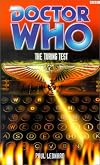
It's the 1940s, and the Eighth Doctor is a Companion-less amnesiac living through the dark days of WW2. In The Turing Test we encounter him through the perspectives of three very different historical figures—mathematician Alan Turing and authors Graham Greene and Joseph Heller—each of whom have very different takes on the Doctor. This is one of the stronger DW novels I've read, though also one of the darker. It really grapples with the moral greyness of some of the Doctor's actions, and show more from moment to moment and POV to POV he is by turns likeable and a jackass in a way that does feel very, well, like the Doctor.
(The author's note at the end about Turing is bullshitty though. Why he committed suicide isn't exactly a mystery.) show less
(The author's note at the end about Turing is bullshitty though. Why he committed suicide isn't exactly a mystery.) show less

This is part of the "trapped on Earth" story arc that began with The Ancestor Cell and The Burning, which I read over fifteen years ago; an amnesiac Doctor is left on Earth in 1890 to make a rendezvous with his companion Fitz in 2001, giving him and the TARDIS over a century to recuperate. This story details what the Doctor was up to during World War II, as he becomes involved in the activities of a group of aliens trapped in Nazi Germany.
I remember finding what I read of the post-Burning show more novels a mixed bag: while the novels did have the freedom to be more inventive and weird in the new post-Time Lord universe, it wasn't really clear to me what purpose the Doctor's amnesia was meant to serve. He seemed to always know how to do things anyway, and always remembered what was necessary for the plot. The Turing Test, however, makes great use of this premise, possibly the greatest of any EDA I've read. This Doctor is among humans, but knows he is not of them-- yet does not know who he actually is. So while a "normal" Doctor might thwart some aliens, this Doctor genuinely does not know what his "side" is. This approach is amplified by having the story narrated from the outside in the first person; the narrators here know less of the Doctor than we do, so we can read between the lines, but in some ways, we know as little as they do of this new Doctor. When telling the story from, say, a companion role, I think it's impossible to really render the Doctor as unknowable, but Leonard does an excellent job here of using his narrators to create distance and danger. Overall, this is an effective and gripping story of WWII intrigue and violence. I don't think it's the best Doctor Who novel but it is in the top tier. show less
I remember finding what I read of the post-Burning show more novels a mixed bag: while the novels did have the freedom to be more inventive and weird in the new post-Time Lord universe, it wasn't really clear to me what purpose the Doctor's amnesia was meant to serve. He seemed to always know how to do things anyway, and always remembered what was necessary for the plot. The Turing Test, however, makes great use of this premise, possibly the greatest of any EDA I've read. This Doctor is among humans, but knows he is not of them-- yet does not know who he actually is. So while a "normal" Doctor might thwart some aliens, this Doctor genuinely does not know what his "side" is. This approach is amplified by having the story narrated from the outside in the first person; the narrators here know less of the Doctor than we do, so we can read between the lines, but in some ways, we know as little as they do of this new Doctor. When telling the story from, say, a companion role, I think it's impossible to really render the Doctor as unknowable, but Leonard does an excellent job here of using his narrators to create distance and danger. Overall, this is an effective and gripping story of WWII intrigue and violence. I don't think it's the best Doctor Who novel but it is in the top tier. show less
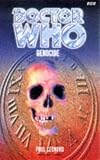
I'm enjoying this series more than I expected based on contemporary feedback. (It's fun that this series is old enough - 25 years - to carry a weight of history and be dated, sometimes, yet young enough that some contemporary reviews exist on the internet.) It's fascinating to track the changes taking place in fandom during that time and the attempts to broaden out the series, and especially the characters, now freed of the weight of decade-old figures.
Unsurprisingly, some fans at the time show more (a certain subset) didn't much appreciate this Doctor and certainly didn't appreciate his companion, Sam. I think in both cases they're wrong - or at least looking at the issue from a rather different perspective to me. Sylvester McCoy's Doctor is one of my favourites but it's refreshing to have this figure who is less sure of himself, more openly emotive, and almost on par with his companion in terms of their relationship. And the decision to tell much of the story from Sam's point-of-view prefigures what the television series would do a decade later; she's flawed, still figuring herself out, and not always able to trust the Doctor, and it makes this a jolly good read.
It's not a great book, to be clear. Like many of them it feels like an attempt to turn a TV script into a novel, although that's less overt than in some recent stories. And I'm not sure how I feel about a certain character's actions in the final act. But overall, a good addition to the drama. show less
Unsurprisingly, some fans at the time show more (a certain subset) didn't much appreciate this Doctor and certainly didn't appreciate his companion, Sam. I think in both cases they're wrong - or at least looking at the issue from a rather different perspective to me. Sylvester McCoy's Doctor is one of my favourites but it's refreshing to have this figure who is less sure of himself, more openly emotive, and almost on par with his companion in terms of their relationship. And the decision to tell much of the story from Sam's point-of-view prefigures what the television series would do a decade later; she's flawed, still figuring herself out, and not always able to trust the Doctor, and it makes this a jolly good read.
It's not a great book, to be clear. Like many of them it feels like an attempt to turn a TV script into a novel, although that's less overt than in some recent stories. And I'm not sure how I feel about a certain character's actions in the final act. But overall, a good addition to the drama. show less
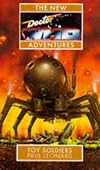
The year is 1919, and aliens who look like oversized teddy bears are using actual teddy bears in a plot to kidnap human children to serve as soldiers in a mysterious, surprisingly low-tech war. It sounds like a ludicrous premise, even for Doctor Who, but it's played absolutely straight, and there's nothing laughable about it at all. Ultimately, it's something of a commentary on the pointless loss of young life in WWI, and it doesn't stint on the brutality.
It does work better than you'd show more expect. Watching the plot unfold isn't quite as exciting as it might have been, though, and I think it would be nice to have a little more of the Doctor in a series of which he is ostensibly the main character. But it's not bad. I think I liked it better than most of the NAs I've read lately. show less
It does work better than you'd show more expect. Watching the plot unfold isn't quite as exciting as it might have been, though, and I think it would be nice to have a little more of the Doctor in a series of which he is ostensibly the main character. But it's not bad. I think I liked it better than most of the NAs I've read lately. show less
Awards
You May Also Like


Associated Authors
Statistics
- Works
- 13
- Also by
- 8
- Members
- 1,729
- Popularity
- #14,866
- Rating
- 3.2
- Reviews
- 27
- ISBNs
- 22
- Languages
- 2