
Jim Mortimore
Author of Clark's Law
About the Author
Disambiguation Notice:
Andrew Dymond is a pen-name of Jim Mortimore. James Mortimore who wrote Skaldenland and Last Blood is the same person as Jim Mortimore.
Works by Jim Mortimore
Decalog 5: Wonders: Ten Stories, A Billon Years, An Infinite Universe (1997) — Editor — 76 copies, 1 review
Doctor Who: The Book of Shadows 3 copies
The Sun in the Bone House 1 copy
From Eternity 1 copy
Lost Orders (short story) 1 copy
Associated Works
Decalog: Ten Stories, Seven Doctors, One Enigma (1994) — Author "The Book of Shadows" — 187 copies, 3 reviews
Time, Unincorporated: The Doctor Who Fanzine Archives, Vol. 3: Writings on the New Series (2011) — Contributor — 18 copies
Tagged
Common Knowledge
- Other names
- Dymond, Andrew (pen name)
Mortimore, James - Birthdate
- 1962
- Gender
- male
- Occupations
- television writer
author
composer
sound designer - Nationality
- UK
- Places of residence
- Bristol, England, UK
- Disambiguation notice
- Andrew Dymond is a pen-name of Jim Mortimore.
James Mortimore who wrote Skaldenland and Last Blood is the same person as Jim Mortimore. - Associated Place (for map)
- England, UK
Members
Reviews

This was not the book it was meant to be, which was already a kind of weird adventure for the original and best TARDIS team (the first Doctor, Ian, Barbara, and Susan) featuring Alexander the Great. Rather's it's a meditation on that TARDIS team... and the universe. Time is coming unraveled after a trip to Alexander's era, and who the Doctor's companions are keeps on shifting. Barbara is dead... or is Ian?
Big Finish's Companion Chronicles have reignited my love for the first few seasons of show more Doctor Who, when the show really could go anywhere and do anything. If they had done original tie-in novels back then, and allowed them to be as inventive as the parent show, one would imagine they'd come out something like this: it's like a literary version of The Edge of Destruction mashed with The Aztecs. And about as amazing as that sounds. The ideas are inventive, the prose is clever, and even though it takes place in a multitude of alternate realities, Mortimore gets the voices and personalities of the original TARDIS team completely perfect. You feel them as real people (an approach I'm not convinced a lot of post-1964 TARDIS teams could even support); the only other work to handle them with such deftness being, I suspect, Daniel O'Mahony's "Nothing at the End of the Lane" in Short Trips and Side Steps.
The ending's a bit nonsensical, and the essays at the end are far too long, but I suppose you can't have everything. Is this the best Doctor Who novel ever? Probably not, but it's the best one I've read in a long time. show less
Big Finish's Companion Chronicles have reignited my love for the first few seasons of show more Doctor Who, when the show really could go anywhere and do anything. If they had done original tie-in novels back then, and allowed them to be as inventive as the parent show, one would imagine they'd come out something like this: it's like a literary version of The Edge of Destruction mashed with The Aztecs. And about as amazing as that sounds. The ideas are inventive, the prose is clever, and even though it takes place in a multitude of alternate realities, Mortimore gets the voices and personalities of the original TARDIS team completely perfect. You feel them as real people (an approach I'm not convinced a lot of post-1964 TARDIS teams could even support); the only other work to handle them with such deftness being, I suspect, Daniel O'Mahony's "Nothing at the End of the Lane" in Short Trips and Side Steps.
The ending's a bit nonsensical, and the essays at the end are far too long, but I suppose you can't have everything. Is this the best Doctor Who novel ever? Probably not, but it's the best one I've read in a long time. show less
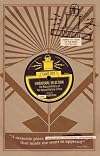
Probably the ultimate niche book – a ‘making of’ book about a ten year old audio play. But as follies go, it’s glorious.
Let’s start with the design here. It’s absolutely glorious, using the concepts featured in the story in ingenious ways. If the detail of the dust jacket wasn’t enough, there’s the cover of the book itself, and some eye-catching interior design. Cost prevented the design being even more closely modelled on an LP record, but that’s a minor quibble. I’m a show more sucker for a well-designed book, and that pushed me over the edge into buying this one. Salutations to Robert Hammond, design genius.
The contents itself are a similar format to Mortimore’s self-published extended reissue of his cancelled novel Campaign (cribbed, as he cops to, from the Making of 2001. The Space Odyssey, not the year). It charts the development of the story, from the reading of 1984 that sparked the initial idea, through its proposal as a Telos novella to release as a Big Finish play. He adds in deleted scenes, email exchanges and interviews with key personnel as well as a selection of reviews to show how it was received. It’s an admirably full picture of the journey of a piece of art from conception to reception, and one not marred by authorial egotism. Though it could be argued that the very existence of this book is an extended exercise in authorial egotism, given an almost infinite number of better known stories haven’t had this treatment.
But such accusations are blunted by Mortimore’s friendly self-deprecating style. He’s unafraid to own up to his faults and generously dole out credit to others (Gary Russell and the actors come out of this particularly well). It also helps that the script remains one of the more audacious Big Finish productions, articulate and with ambitions beyond simply telling another Doctor Who story. Oh, and with an absolutely killer twist which makes you reassess everything you’ve heard.
The question with ‘Making Of books is whether they send you back to the original with a deeper appreciation. Unnatural Selection passed that test with flying colours.
Now if only they’d made that deleted wedding scene… show less
Let’s start with the design here. It’s absolutely glorious, using the concepts featured in the story in ingenious ways. If the detail of the dust jacket wasn’t enough, there’s the cover of the book itself, and some eye-catching interior design. Cost prevented the design being even more closely modelled on an LP record, but that’s a minor quibble. I’m a show more sucker for a well-designed book, and that pushed me over the edge into buying this one. Salutations to Robert Hammond, design genius.
The contents itself are a similar format to Mortimore’s self-published extended reissue of his cancelled novel Campaign (cribbed, as he cops to, from the Making of 2001. The Space Odyssey, not the year). It charts the development of the story, from the reading of 1984 that sparked the initial idea, through its proposal as a Telos novella to release as a Big Finish play. He adds in deleted scenes, email exchanges and interviews with key personnel as well as a selection of reviews to show how it was received. It’s an admirably full picture of the journey of a piece of art from conception to reception, and one not marred by authorial egotism. Though it could be argued that the very existence of this book is an extended exercise in authorial egotism, given an almost infinite number of better known stories haven’t had this treatment.
But such accusations are blunted by Mortimore’s friendly self-deprecating style. He’s unafraid to own up to his faults and generously dole out credit to others (Gary Russell and the actors come out of this particularly well). It also helps that the script remains one of the more audacious Big Finish productions, articulate and with ambitions beyond simply telling another Doctor Who story. Oh, and with an absolutely killer twist which makes you reassess everything you’ve heard.
The question with ‘Making Of books is whether they send you back to the original with a deeper appreciation. Unnatural Selection passed that test with flying colours.
Now if only they’d made that deleted wedding scene… show less
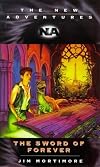
http://nwhyte.livejournal.com/2609722.html
I've seen some rather negative reviews out there of this Bernice Summerfield novel, but I really enjoyed it: Benny gets caught up in acnient Templar-style conspiracy theories involving a sentient velociraptor and her own mummified finger, across several timelines. Sure, it veers in a somewhat different direction of future earth continuity and Benny's own marital life, but as I am reading these books in order I find it a refreshing difference. A bit show more bleak in tone, but that tends to be the case with Mortimore. Could be recommended to a tolerant potential convert to the Bennyverse. show less
I've seen some rather negative reviews out there of this Bernice Summerfield novel, but I really enjoyed it: Benny gets caught up in acnient Templar-style conspiracy theories involving a sentient velociraptor and her own mummified finger, across several timelines. Sure, it veers in a somewhat different direction of future earth continuity and Benny's own marital life, but as I am reading these books in order I find it a refreshing difference. A bit show more bleak in tone, but that tends to be the case with Mortimore. Could be recommended to a tolerant potential convert to the Bennyverse. show less

This adventure features the Fourth Doctor and Leela on an expedition to Rapa Nui, where anthropologist Horace Stockwood committed the sin of stealing a sacred tablet from the Indigenous population and left his friend Alexander (and villager Tortorro) to die while he ran away. Stockwood is returning to the island, haunted by his deeds and obsessed with the secrets of the tablet he stole.
Overall, this adventure is all right. Leela narrates most of the chapters and her voice is pretty good. It show more was interesting to see the world from her perspective and learn about her own beliefs and rituals -- and to see how the Sevateem developed their lore from the survey team. (The "Prayer for Landing" broke my heart a little, in a weird way.) But I am not sure she would be *that* knowledgeable about all the sails and masts and rigging on a sailing ship. Those bits sounded a bit like research.
The most challenging part of this read was the non-linear storytelling. I'm not opposed to jumping around a bit in time, but the way these chapters were laid out, it was sometimes difficult to tell where and when we were, and even who was narrating in some places. I would expect to see dates and times at the beginning of each chapter. (I later read the Tardis wiki entry for this novel and not including dates and times may have been for narrative effect. This effect did not work well for me.) show less
Overall, this adventure is all right. Leela narrates most of the chapters and her voice is pretty good. It show more was interesting to see the world from her perspective and learn about her own beliefs and rituals -- and to see how the Sevateem developed their lore from the survey team. (The "Prayer for Landing" broke my heart a little, in a weird way.) But I am not sure she would be *that* knowledgeable about all the sails and masts and rigging on a sailing ship. Those bits sounded a bit like research.
The most challenging part of this read was the non-linear storytelling. I'm not opposed to jumping around a bit in time, but the way these chapters were laid out, it was sometimes difficult to tell where and when we were, and even who was narrating in some places. I would expect to see dates and times at the beginning of each chapter. (I later read the Tardis wiki entry for this novel and not including dates and times may have been for narrative effect. This effect did not work well for me.) show less
Lists
Read in 2009 (1)
You May Also Like


Associated Authors
Statistics
- Works
- 27
- Also by
- 11
- Members
- 2,054
- Popularity
- #12,514
- Rating
- 3.3
- Reviews
- 29
- ISBNs
- 42
- Languages
- 4