
Tara Samms
Author of Ferno the Fire Dragon (Beast Quest)
About the Author
Series
Works by Tara Samms
Project X Alien Adventures: Brown and Grey Book Bands, Oxford Levels 9-14: PROJ X:ALIEN:PK2 25XPB WALLET (2016) 72 copies
Doctor Who: 1001 Nights in Time and Space: Folk Tales rescued from around the Whoniverse (2025) 10 copies
ABBA Forever: The Winner Takes It All [2019 TV documentary] — Director — 6 copies
Drowning in My Bedroom: A gripping tale of survival amid environmental disaster (2024) 4 copies, 1 review
Finding Phil 2 copies
Astrossauros. Medo no Céu 2 copies
Ruby's Quest — Producer — 2 copies
Young Bond 2 copies
O Mistério dos Raptors 1 copy
Perigos Escondidos 1 copy
Bond - Strike lightning 1 copy
Bond - Shoot to kill 1 copy
Bond - Heads you die 1 copy
Bond - Red Memesis 1 copy
O Dia dos Dinodróides 1 copy
Los secuestradores de mentes/ The Mind-Swap Menace (Astrosaurus/ Astrosaurs) (Spanish Edition) (2007) 1 copy
Twit The Owl Who wasn't Wise 1 copy
Project Avalon | Breakdown 1 copy
Associated Works
The Supreme Court: The Personalities and Rivalries That Defined America (2007) — Cover artist, some editions — 319 copies, 12 reviews
Party Like It's 1998 — Author — 2 copies
Tagged
Common Knowledge
- Legal name
- Cole, Stephen
- Other names
- Cole, Steve
Collier, Michael (pseudonym)
Samms, Tara
Grice, Paul (pseudonym) - Birthdate
- 1971-09-11
- Gender
- male
- Nationality
- UK
- Associated Place (for map)
- UK
Members
Reviews

I've said it before and I'll say it again: short stories are a great medium for Doctor Who tales. They provide authors with a nice ability to tell the kinds of stories that maybe wouldn't quite work as an episode of the show and are too short to support an entire novel. Some of the most creative Doctor Who adventures have come from these collections of short stories (see the recently published Target Collection for examples) and I always look forward to them when they come out. Star Tales is show more no exception, especially as it finally unveils some of the stories behind the Doctor's frequently referenced encounters with celebrities. This go 'round, we get our first collection of stories that primarily focuses on the Thirteenth Doctor and her companions - Ryan, Yaz, and Graham - save for one story, early on. How are the stories in this collection? They're pretty good and definitely worth reading if you're a fan of this era of the show. (Mild spoilers for the stories within Star Tales.)
Star Tales is a really fun collection of short stories. I'm always a fan of the "Celebrity Historical" episodes of Doctor Who and Star Tales consists of nothing but celebrity historicals, so you can imagine I was pretty pumped about that. And Star Tales is filled with the best kinds of celebrity historicals - the ones that do something interesting with the historical figure. Jenny T. Colgan's Chasing the Dawn features the 11th Doctor and Amelia Earnhardt - in a story narrated to Yaz by the 13th Doctor - and it's a lot of fun seeing such an aloof Doctor interact with someone like Earnhardt. Jo Cotterill's "Einstein and the Doctor" features the 13th Doctor and her friends solving a mystery revolving around weird aliens leeching off Einstein's brain - an idea that seems so obvious it's impressive Doctor Who hadn't done it before. Trevor Baxendale's "The Pythagoras Problem" featured Pythagoras and the 13th Doctor (and co) going against a monster that could only be defeated by math. Mike Tucker's "Mission of the KaaDok" featured an insanely clever alien trying to replicate the brains and personalities of famous celebrities - like Audrey Hepburn. All in all, there's such a variety of stories in this collection that you're bound to find something to like.
Some of my favorite stories include "That's All Right, Mama" by Paul Magrs, a particularly heartbreaking story in which multiple incarnations of the Doctor meet Elvis Presley over the course of his life, and "Who-Dini" by Steve Cole, a really fun mystery involving a shapeshifting alien and Houdini. What made these two stories stand out the most was a mixture of the plots of the stories (what they did with the historical figures/what was actually going on) and the emotion at play within the story. "That's All Right, Mama" utilized the Doctor's ability to time travel in a really fun way, incorporating Elvis into her world a little bit while "Who-Dini" leaned heavily into Doctor Who's classic formula of "something weird is happening to a historical person, better find out what that is" in a really fun way. Both stories had fairly emotional, almost bittersweet endings and those are my favorite kinds of Doctor Who stories. Plus, both of these stories feel like they actually could be episodes of the show, and that's always a bonus.
With that said, it's not as though any of the stories in this collection were bad - far from it, actually; all of them are really good. Sure, some of them worked better for me than others did (I'm not a huge fan of "The Pythagoras Problem", for example - it had an interesting idea and the kind of monster that would only work in prose, but it felt lacking in the mystery department and probably needed at least double the word count to really work) but every story in the collection is well-written and does something interesting with both the Doctor and their companions as well as the historical figure involved in the story. Your mileage may vary on exactly which stories you love but I don't think any of the stories will really prove disappointing. There's a nice variety of stories - some of more romantic, some are more mysterious, and others still are more adventurous - and each of the core TARDIS Team members get something nice to do in one of the stories. I do find myself wishing that there was a bit more variety in terms of the Doctors and companions used (save for the first story, all of the stories primarily revolve around an adventure the 13th Doctor and her companions had) but I can't say I really dislike any of the stories. They're all really, really solid.
Overall, Star Tales is a very solid collection of short Doctor Who stories. Each of the authors does a great job at capturing the voices of the characters represented in their respective stories and each of the stories is captivating in their own right. Obviously, I have my own personal favorite stories, but none of the stories in this collection come anywhere close to being bad. I do wish there'd been a bit more variety in the Doctors represented in these stories as many of these historical figures were referenced by previous Doctors and it would have been nice to see those stories included. But aside from that, these stories are a lot of fun and it remains a joy seeing the Thirteenth Doctor interact with famous historical figures. If you like Doctor Who, you're gonna wanna read this book. Some of these stories are just quintessentially Doctor Who and it's a whole lot of fun. show less
Star Tales is a really fun collection of short stories. I'm always a fan of the "Celebrity Historical" episodes of Doctor Who and Star Tales consists of nothing but celebrity historicals, so you can imagine I was pretty pumped about that. And Star Tales is filled with the best kinds of celebrity historicals - the ones that do something interesting with the historical figure. Jenny T. Colgan's Chasing the Dawn features the 11th Doctor and Amelia Earnhardt - in a story narrated to Yaz by the 13th Doctor - and it's a lot of fun seeing such an aloof Doctor interact with someone like Earnhardt. Jo Cotterill's "Einstein and the Doctor" features the 13th Doctor and her friends solving a mystery revolving around weird aliens leeching off Einstein's brain - an idea that seems so obvious it's impressive Doctor Who hadn't done it before. Trevor Baxendale's "The Pythagoras Problem" featured Pythagoras and the 13th Doctor (and co) going against a monster that could only be defeated by math. Mike Tucker's "Mission of the KaaDok" featured an insanely clever alien trying to replicate the brains and personalities of famous celebrities - like Audrey Hepburn. All in all, there's such a variety of stories in this collection that you're bound to find something to like.
Some of my favorite stories include "That's All Right, Mama" by Paul Magrs, a particularly heartbreaking story in which multiple incarnations of the Doctor meet Elvis Presley over the course of his life, and "Who-Dini" by Steve Cole, a really fun mystery involving a shapeshifting alien and Houdini. What made these two stories stand out the most was a mixture of the plots of the stories (what they did with the historical figures/what was actually going on) and the emotion at play within the story. "That's All Right, Mama" utilized the Doctor's ability to time travel in a really fun way, incorporating Elvis into her world a little bit while "Who-Dini" leaned heavily into Doctor Who's classic formula of "something weird is happening to a historical person, better find out what that is" in a really fun way. Both stories had fairly emotional, almost bittersweet endings and those are my favorite kinds of Doctor Who stories. Plus, both of these stories feel like they actually could be episodes of the show, and that's always a bonus.
With that said, it's not as though any of the stories in this collection were bad - far from it, actually; all of them are really good. Sure, some of them worked better for me than others did (I'm not a huge fan of "The Pythagoras Problem", for example - it had an interesting idea and the kind of monster that would only work in prose, but it felt lacking in the mystery department and probably needed at least double the word count to really work) but every story in the collection is well-written and does something interesting with both the Doctor and their companions as well as the historical figure involved in the story. Your mileage may vary on exactly which stories you love but I don't think any of the stories will really prove disappointing. There's a nice variety of stories - some of more romantic, some are more mysterious, and others still are more adventurous - and each of the core TARDIS Team members get something nice to do in one of the stories. I do find myself wishing that there was a bit more variety in terms of the Doctors and companions used (save for the first story, all of the stories primarily revolve around an adventure the 13th Doctor and her companions had) but I can't say I really dislike any of the stories. They're all really, really solid.
Overall, Star Tales is a very solid collection of short Doctor Who stories. Each of the authors does a great job at capturing the voices of the characters represented in their respective stories and each of the stories is captivating in their own right. Obviously, I have my own personal favorite stories, but none of the stories in this collection come anywhere close to being bad. I do wish there'd been a bit more variety in the Doctors represented in these stories as many of these historical figures were referenced by previous Doctors and it would have been nice to see those stories included. But aside from that, these stories are a lot of fun and it remains a joy seeing the Thirteenth Doctor interact with famous historical figures. If you like Doctor Who, you're gonna wanna read this book. Some of these stories are just quintessentially Doctor Who and it's a whole lot of fun. show less
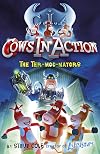
This is the first book in Cows In Action, one of those series of early-chapter children's books where the heroes have an adventure to a specific place in time (in this one it's Henry VIII) and defeat a bad guy who wants to destroy all of human history, but somehow at the end of the book end up neatly back where they started so they can have a remarkably similar adventure next book in a different exciting moment in time.
It's sweet, it's readable, it's funny, it's probably Astrosaurs with the show more dinosaurs filed off and replaced with cows, but I haven't read Astrosaurs, so that's quite unfair of me.
If you will permit me two bits of overthinking:
It really got me thinking about the nature of story, particularly children's stories, and Wild Imagination type stories. It, err, doesn't make a lot of sense. The cows live on a farm, but have managed to turn their shed into a time machine using things the farmer threw away with no-one noticing, despite no-one else on the planet being able to build a time machine (there is a very token 'the person next door is a scientist and throws cool things away in his bins'). The cows drink tea, despite not having hands. The cows have magic nose rings that make them look human to humans but not to other cows, but this amazing technology that can change what people see seems incredibly limited to just this one transformation, but perfect at that one. Changing time in big ways is super dangerous because the space time continuum is unstable and so the bad guys must be stopped in case they are all never born, but no-one has to worry about kicking someone in the testicles so the wrong sperm doesn't grow up into a different King. If instead of parodying Harry Potter Eliezer Yudkowsky had had to explain the ways in which Cows In Action makes No Sense, he would have had a field day. It is ridiculous. But it does highlight how stories don't have to make sense, and are still doing something important when they don't make sense. If you want to tell 'wouldn't it be cool if people could travel through time defeating bad guys and seeing major historic events? Oh, and also they're cows. Cows are cool' maybe it is better to get on with it and every time you hit one of the Huge Impossibilities just go 'that's not the point! They can travel in time because .... they've got a time travel shed! The humans don't know they're cows because ... magic rings!'. Maybe this is escapism at its purist, we want our favourite animals to save our favourite historical heroes, and the fact this couldn't happen in any meaningful or plausible way, well, duh! It's a story! We're making it up because it's fun! Things that can Actually Happen happen all the time and are Dull! But they are not very bovine cows, Watership Down this is not, they are some people having adventures who happen to be cows because cows are cool.
Again with the overthinking, the identification of the 'good' guys and 'bad' guys amused me (or should that be a-moo-sed me?) In the CIA-verse, cows are sentient people, perfectly capable of complicated science and meaningful relationships. In the future, cows have achieved their own utopian country just for cows (Luxemburg, now known as Luckyburger), which they have definitely done by Peaceful Democratic Means, like standing for election. The Bad Guys (the Fed-Up Bull Institute) has gone 'hang on, we have time machines, 300 million cows were killed every year, maybe we could go back in time and stop this mass slaughter?' The Good Guys (Cows In Action)'s response to this fairly reasonable case is broadly 'Luckyburger is really really nice for the cows here, don't mess up our nice thing', or to quote directly 'if the horrid history of cows is changed in any way then this fabulous future awaiting us all may never happen.' It is hard not to read about a population historically killed and enslaved that now have a little country just for their own kind, and not go 'huh, it feels weirdly backwards that the bad guys are time travelling to try and stop the slaughter of millions of their people, and the good guys are trying to stop them because messing with bad things in the past might mess up the creation of their independent state, and are there some really awkward parallels here?' It is also quite weird to read a book where the oppressed people are the heroes, and their main job is to save their oppressors from some angrier oppressed people who want actual revenge for genocide, or ideally for it not to have happened at all. Reader, I was not 100% on the side of the CIA for this book.
At that point I decided I was probably the wrong audience for these books, and actually 'cows! That travel through time to save all of humanity!' is a good idea for a story, just not one that bears poking too hard. show less
It's sweet, it's readable, it's funny, it's probably Astrosaurs with the show more dinosaurs filed off and replaced with cows, but I haven't read Astrosaurs, so that's quite unfair of me.
If you will permit me two bits of overthinking:
It really got me thinking about the nature of story, particularly children's stories, and Wild Imagination type stories. It, err, doesn't make a lot of sense. The cows live on a farm, but have managed to turn their shed into a time machine using things the farmer threw away with no-one noticing, despite no-one else on the planet being able to build a time machine (there is a very token 'the person next door is a scientist and throws cool things away in his bins'). The cows drink tea, despite not having hands. The cows have magic nose rings that make them look human to humans but not to other cows, but this amazing technology that can change what people see seems incredibly limited to just this one transformation, but perfect at that one. Changing time in big ways is super dangerous because the space time continuum is unstable and so the bad guys must be stopped in case they are all never born, but no-one has to worry about kicking someone in the testicles so the wrong sperm doesn't grow up into a different King. If instead of parodying Harry Potter Eliezer Yudkowsky had had to explain the ways in which Cows In Action makes No Sense, he would have had a field day. It is ridiculous. But it does highlight how stories don't have to make sense, and are still doing something important when they don't make sense. If you want to tell 'wouldn't it be cool if people could travel through time defeating bad guys and seeing major historic events? Oh, and also they're cows. Cows are cool' maybe it is better to get on with it and every time you hit one of the Huge Impossibilities just go 'that's not the point! They can travel in time because .... they've got a time travel shed! The humans don't know they're cows because ... magic rings!'. Maybe this is escapism at its purist, we want our favourite animals to save our favourite historical heroes, and the fact this couldn't happen in any meaningful or plausible way, well, duh! It's a story! We're making it up because it's fun! Things that can Actually Happen happen all the time and are Dull! But they are not very bovine cows, Watership Down this is not, they are some people having adventures who happen to be cows because cows are cool.
Again with the overthinking, the identification of the 'good' guys and 'bad' guys amused me (or should that be a-moo-sed me?) In the CIA-verse, cows are sentient people, perfectly capable of complicated science and meaningful relationships. In the future, cows have achieved their own utopian country just for cows (Luxemburg, now known as Luckyburger), which they have definitely done by Peaceful Democratic Means, like standing for election. The Bad Guys (the Fed-Up Bull Institute) has gone 'hang on, we have time machines, 300 million cows were killed every year, maybe we could go back in time and stop this mass slaughter?' The Good Guys (Cows In Action)'s response to this fairly reasonable case is broadly 'Luckyburger is really really nice for the cows here, don't mess up our nice thing', or to quote directly 'if the horrid history of cows is changed in any way then this fabulous future awaiting us all may never happen.' It is hard not to read about a population historically killed and enslaved that now have a little country just for their own kind, and not go 'huh, it feels weirdly backwards that the bad guys are time travelling to try and stop the slaughter of millions of their people, and the good guys are trying to stop them because messing with bad things in the past might mess up the creation of their independent state, and are there some really awkward parallels here?' It is also quite weird to read a book where the oppressed people are the heroes, and their main job is to save their oppressors from some angrier oppressed people who want actual revenge for genocide, or ideally for it not to have happened at all. Reader, I was not 100% on the side of the CIA for this book.
At that point I decided I was probably the wrong audience for these books, and actually 'cows! That travel through time to save all of humanity!' is a good idea for a story, just not one that bears poking too hard. show less
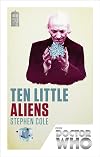
**Ten Little Aliens (Stephen Cole) (**30/10/25-2/11/25)
This is a spin off Doctor Who novel featuring the first Doctor William Hartnell and his companions in his last three TV stories, Ben and Polly. It is essentially Starship Troopers meets Agatha Christie. As well as the novel’s title being based on a famous Christie novel, the individual chapter names are titles of Agatha Christie novels (one is a book of her poems, and one a non-whodunnit written under her Mary Westmacott pseudonym). show more Soldiers of Earth’s future Empire are fighting two alien races, the Schirr and Morphieans, whose inter-relationship I was unclear on. There are planetary systems named after places on Earth. There is quite a strong atmosphere of alien body horror on show here. Essentially the Schirr and Morphieans are essentially trying to take over the physical bodies and minds of the troopers and the TARDIS crew in particularly gruesome ways. I found the evolution of the plot rather confusing, especially the very long chapter 14 with its various overlapping viewpoints being for me tedious and offputting. Despite its being fairly long, the plot resolution seemed rather sudden.
Ultimately this novel did not work for me. It was nice to see this TARDIS team back together in a novel, but I just did not think the First Doctor fitted into this kind of plot, and I could not imagine him saying the lines he is given here, and the addition of “hmms” and “my boy” to his utterances was not enough to make it work. Also he is very physically active considering he is near the end of his first incarnation here - this must be set between The Smugglers and The Tenth Planet. So overall, a disappointment. show less
This is a spin off Doctor Who novel featuring the first Doctor William Hartnell and his companions in his last three TV stories, Ben and Polly. It is essentially Starship Troopers meets Agatha Christie. As well as the novel’s title being based on a famous Christie novel, the individual chapter names are titles of Agatha Christie novels (one is a book of her poems, and one a non-whodunnit written under her Mary Westmacott pseudonym). show more Soldiers of Earth’s future Empire are fighting two alien races, the Schirr and Morphieans, whose inter-relationship I was unclear on. There are planetary systems named after places on Earth. There is quite a strong atmosphere of alien body horror on show here. Essentially the Schirr and Morphieans are essentially trying to take over the physical bodies and minds of the troopers and the TARDIS crew in particularly gruesome ways. I found the evolution of the plot rather confusing, especially the very long chapter 14 with its various overlapping viewpoints being for me tedious and offputting. Despite its being fairly long, the plot resolution seemed rather sudden.
Ultimately this novel did not work for me. It was nice to see this TARDIS team back together in a novel, but I just did not think the First Doctor fitted into this kind of plot, and I could not imagine him saying the lines he is given here, and the addition of “hmms” and “my boy” to his utterances was not enough to make it work. Also he is very physically active considering he is near the end of his first incarnation here - this must be set between The Smugglers and The Tenth Planet. So overall, a disappointment. show less

This slim anthology collects Doctor Who material created or published during 2020's coronavirus lockdown; some of it was for the Doctor Who web site, some of it was released as part of the series of tweetalongs organized by Emily Cook, some of it is original to this book. I always like a good Doctor Who anthology, and this is a great one. Steven Moffat explains what the terror of the Umpty Ums is as the Doctor faces down the DeathBorg known as Karpagnon; Russell T Davies gives us a glimpse show more into the way the Time War could have ended if Paul McGann had regenerated straight into Christopher Eccleston; Neil Gaiman reveals an incident in the life of the Corsair; Pete McTighe discovers that the Doctor also enjoys watching her past adventures; Paul Cornell revisits both Daughter-of-Mine from "Human Nature" and Bernice Summerfield; Mark Gatiss reunites the Doctor with her granddaughter. All this and some great illustrations, too; my favorites included Valentina Mozzo's of the Doctor fist-bumping a Judoon and Chris Riddell's of the Corsair.
It reads briskly but it reads well. Moffat shows that he can always craft an engaging Doctor Who story by mixing the fear of a child with the solace of the Doctor and yet always find something new and fun to do with it. Plus, of course, good jokes! Davies's closing pages of a faux Time War novelization are an utter delight, firing off more great Time War ideas in ten pages than Big Finish has in ten dozen box sets.
I really like Paul Cornell's "Shadow" trilogy: three linked stories of the Doctor coming to doubt that her punishment for Daughter-of-Mine in "The Family of Blood" was just, though the best one is probably the one that has the least to do with that premise; "The Shadow Passes" focuses on the thirteenth Doctor, Yaz, Graham, and Ryan spending time in a bunker on an alien planet. Cornell has a good grasp of the voices of these characters, especially the Doctor and Yaz, and make them likeable. I like the Doctor and her companions well enough on screen, but I feel that series 11-12 haven't done a great job using them. In fact, I think all of the authors here render a pretty great Doctor: Chris Chibnall, Moffat, Joy Wilkinson, and Gatiss also really shine. The promise of the thirteenth Doctor was, I think, a light of compassion burning in the darkness. The tv show struggles to make this work, often giving us a Doctor that seems ineffective and a "fam" that just stands there, but Adventures in Lockdown plays to her strengths, with Whittaker's compassion echoing off the page in a time where we need it most.
The only thing that didn't work for me is that seeing the script for "Rory's Story" is pretty pointless; that segment only worked for the novelty of getting to see Arthur Darvill play Rory once more. And though I did like "Shadow of a Doubt," it definitely loses something in not being read aloud by Lisa Bowerman. show less
It reads briskly but it reads well. Moffat shows that he can always craft an engaging Doctor Who story by mixing the fear of a child with the solace of the Doctor and yet always find something new and fun to do with it. Plus, of course, good jokes! Davies's closing pages of a faux Time War novelization are an utter delight, firing off more great Time War ideas in ten pages than Big Finish has in ten dozen box sets.
I really like Paul Cornell's "Shadow" trilogy: three linked stories of the Doctor coming to doubt that her punishment for Daughter-of-Mine in "The Family of Blood" was just, though the best one is probably the one that has the least to do with that premise; "The Shadow Passes" focuses on the thirteenth Doctor, Yaz, Graham, and Ryan spending time in a bunker on an alien planet. Cornell has a good grasp of the voices of these characters, especially the Doctor and Yaz, and make them likeable. I like the Doctor and her companions well enough on screen, but I feel that series 11-12 haven't done a great job using them. In fact, I think all of the authors here render a pretty great Doctor: Chris Chibnall, Moffat, Joy Wilkinson, and Gatiss also really shine. The promise of the thirteenth Doctor was, I think, a light of compassion burning in the darkness. The tv show struggles to make this work, often giving us a Doctor that seems ineffective and a "fam" that just stands there, but Adventures in Lockdown plays to her strengths, with Whittaker's compassion echoing off the page in a time where we need it most.
The only thing that didn't work for me is that seeing the script for "Rory's Story" is pretty pointless; that segment only worked for the novelty of getting to see Arthur Darvill play Rory once more. And though I did like "Shadow of a Doubt," it definitely loses something in not being read aloud by Lisa Bowerman. show less
Lists
Read in 2008 (1)
Awards


You May Also Like


Associated Authors
Statistics
- Works
- 282
- Also by
- 20
- Members
- 10,837
- Popularity
- #2,190
- Rating
- 4.1
- Reviews
- 205
- ISBNs
- 707
- Languages
- 12