
Christopher Bulis
Author of Vanderdeken's Children
Works by Christopher Bulis
Associated Works
Tagged
Common Knowledge
Members
Reviews

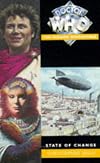
This is, essentially, inoffensive B-movie sci-fi of the kind I used to really enjoy as a teenager (and sometimes still do). It has three distinct stages, each of which feels progressively less original or interesting: first, an official, government-sanctioned British voyage to the moon, in the Victorian era, with all the trappings of a good Jules Verne novel; second, a Forbidden Planet-style adventure, mixed with a little John Carter of Mars, of the space-going sailors having to survive a show more hostile and alien environment; and third, a passable but rather trite homage to Aliens and Predator. I'm not sure it really adds up to much at the end, but there are certain very gripping sequences, and I like the premise even if its promise eventually dwindles away.
None of that's particularly unusual for a TV tie-in book, of course, and I remember Chris Bulis' books in the '90s being like this: a bit cheap and cheerful, easy to digest without much to really savor. My guess is that he was employed over and over again because he was a nice guy who turned in his commissions on time, and there's nothing wrong with that.
Perhaps the biggest criticism I can level at the book is that Bulis' method of getting the fifth Doctor and his friends into the story isn't especially graceful, utilizing a time paradox mechanism that just feels convoluted and keeps them from joining the action for almost fifty pages. It amplified a feeling I had that Bulis might have wanted to tell an original sci-fi story here and not a Doctor Who one; who knows, maybe that was how the book started, and he had to adapt the first fifty pages or so to a new purpose.
His fifth Doctor is a cold and clipped English gentleman, too, without any of the more gentle or even emotional mannerisms Peter Davison displayed on television. That's a surprise; I remember Bulis books as being well-characterized, but perhaps other ones had more defined TV performances to replicate. The audience's big point of reference here is Turlough, who acts authentically like a somewhat confused and impulsive young man in his late teens or early 20s. Kamelion is here, too...for the purpose, I think, of exactly one scene toward the end of the book. His appearances throughout may even have been back-engineered to let that happen, because it comes as something of a "Ta-da!" moment.
I've made it sound like I disliked this book, and that's not true. I enjoyed the first half a lot, although I found the second half more and more disappointing. I think I just became aware that the book was never going to gel into something more cohesive, and what felt like a lot of potential at first suddenly coalesced into a grab bag: some good ideas alongside some very tired ideas, and none of it really adding up to a greater whole. show less
None of that's particularly unusual for a TV tie-in book, of course, and I remember Chris Bulis' books in the '90s being like this: a bit cheap and cheerful, easy to digest without much to really savor. My guess is that he was employed over and over again because he was a nice guy who turned in his commissions on time, and there's nothing wrong with that.
Perhaps the biggest criticism I can level at the book is that Bulis' method of getting the fifth Doctor and his friends into the story isn't especially graceful, utilizing a time paradox mechanism that just feels convoluted and keeps them from joining the action for almost fifty pages. It amplified a feeling I had that Bulis might have wanted to tell an original sci-fi story here and not a Doctor Who one; who knows, maybe that was how the book started, and he had to adapt the first fifty pages or so to a new purpose.
His fifth Doctor is a cold and clipped English gentleman, too, without any of the more gentle or even emotional mannerisms Peter Davison displayed on television. That's a surprise; I remember Bulis books as being well-characterized, but perhaps other ones had more defined TV performances to replicate. The audience's big point of reference here is Turlough, who acts authentically like a somewhat confused and impulsive young man in his late teens or early 20s. Kamelion is here, too...for the purpose, I think, of exactly one scene toward the end of the book. His appearances throughout may even have been back-engineered to let that happen, because it comes as something of a "Ta-da!" moment.
I've made it sound like I disliked this book, and that's not true. I enjoyed the first half a lot, although I found the second half more and more disappointing. I think I just became aware that the book was never going to gel into something more cohesive, and what felt like a lot of potential at first suddenly coalesced into a grab bag: some good ideas alongside some very tired ideas, and none of it really adding up to a greater whole. show less
http://nwhyte.livejournal.com/1780253.html
I can recommend this Sixth Doctor novel to my Whovian classicist friends: it is set in a world where Antony and Cleopatra discovered alien technology and won the Battle of Actium, and a generation later, their twins and Cleopatra's son by Julius Cæsar together are ruling the known world as an uneasy triumvirate. Of course, all is not as it seems, but Bulis has produced quite a good story with some quite subtle underlying themes of change and show more transformation, and in particular gives Peri a rather better story than she usually gets. The characterisation of the Sixth Doctor is a bit off-kilter, but actually in rather a good way. Good fun. show less
I can recommend this Sixth Doctor novel to my Whovian classicist friends: it is set in a world where Antony and Cleopatra discovered alien technology and won the Battle of Actium, and a generation later, their twins and Cleopatra's son by Julius Cæsar together are ruling the known world as an uneasy triumvirate. Of course, all is not as it seems, but Bulis has produced quite a good story with some quite subtle underlying themes of change and show more transformation, and in particular gives Peri a rather better story than she usually gets. The characterisation of the Sixth Doctor is a bit off-kilter, but actually in rather a good way. Good fun. show less
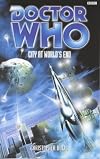
It had been a little while since I'd read a first doctor PDA, and within the first 3 chapters I was vowing to make sure I have all the others in my collection. Bulis does a fantastic job of capturing the spirit of the era, and each of the TARDIS crew members comes across as dead on. Barbara and Susan are put through the ringer, and you can easily picture the mussed hair, and smudged cheek shots typical of the beleaguered heroins. Ian reactive and stoic at the same time, and the Doctor show more alternately useless and key to the resolution It was a magical time.
I liked the story a lot - mainly an illustration of the religious and powerful fighting over cosmetic aspects of the culture while the scientists and engineers do the only work that matters to the survival of the people (while ignoring, to their detriment, some of the potential outcomes of their growing technological advances).
It isn't an easy book to describe/review without giving away plot surprises - suffice it to say, there are a lot of twists (maybe one or two too many, as some seem to either come from, or go into, blind alleys). Delightfully - a reason for the dimensional instability resulting in the adventure that follows (Planet of the Giants) is given, as well as a 'promise' to revisit the scene in the afterward.
An 'episodic feel' is chosen rather than the most well constructed story with a distinctive beginning, middle and end. I liked this about it, for the way it reflects the stories of the first TARDIS crew.
It may not be "The Witch Hunters", but it is a very good read that I recommend to anyone who is a fan of this period of the series. show less
I liked the story a lot - mainly an illustration of the religious and powerful fighting over cosmetic aspects of the culture while the scientists and engineers do the only work that matters to the survival of the people (while ignoring, to their detriment, some of the potential outcomes of their growing technological advances).
It isn't an easy book to describe/review without giving away plot surprises - suffice it to say, there are a lot of twists (maybe one or two too many, as some seem to either come from, or go into, blind alleys). Delightfully - a reason for the dimensional instability resulting in the adventure that follows (Planet of the Giants) is given, as well as a 'promise' to revisit the scene in the afterward.
An 'episodic feel' is chosen rather than the most well constructed story with a distinctive beginning, middle and end. I liked this about it, for the way it reflects the stories of the first TARDIS crew.
It may not be "The Witch Hunters", but it is a very good read that I recommend to anyone who is a fan of this period of the series. show less

I don't think that if I was the editor, I'd've followed a hardboiled detective novel with a locked-room murder mystery. Tempest is a better novel than Mean Streets, though, for all that's worth. A murder mystery on a high-speed train is an interesting setting, and Bulis does his best to get something out of it. Not great, but you could do worse; Tempest's biggest flaw is the central character, who feels like she could be any detective, and not Bernice Summerfield in particular. There's no show more sense of voice. show less
Lists
You May Also Like


Associated Authors
Statistics
- Works
- 13
- Also by
- 1
- Members
- 1,882
- Popularity
- #13,674
- Rating
- 3.1
- Reviews
- 24
- ISBNs
- 13
- Favorited
- 1