
Jude Fisher
Author of The Fellowship of the Ring Visual Companion (The Lord of the Rings)
About the Author
Disambiguation Notice:
This author's actual name is Jane Johnson. Has written as Jude Fisher, Jane Johnson and with M. John Harrison as Gabriel King.
Please do not combine this with the Jane Johnson author page, as there are other authors called Jane Johnson who are not Jude Fisher.
Series
Works by Jude Fisher
The Two Towers Visual Companion: The Official Illustrated Movie Companion (The Lord of the Rings) (2002) 631 copies, 1 review
The Return of The King Visual Companion: The Official Illustrated Movie Companion (The Lord of the Rings) (2003) 508 copies, 1 review
Associated Works
Tagged
Common Knowledge
- Canonical name
- Fisher, Jude
- Legal name
- Johnson, Jane
- Other names
- King, Gabriel
Johnson, Jane - Birthdate
- 1960
- Gender
- female
- Education
- Goldsmiths College, University of London (BA)
University College (MA)
Liskeard Grammar School - Occupations
- editor
- Organizations
- Allen & Unwin
HarperCollins - Nationality
- UK
- Birthplace
- Cornwall, England, UK
- Places of residence
- Coleshill, Buckinghamshire, England, UK
- Disambiguation notice
- This author's actual name is Jane Johnson. Has written as Jude Fisher, Jane Johnson and with M. John Harrison as Gabriel King.
Please do not combine this with the Jane Johnson author page, as there are other authors called Jane Johnson who are not Jude Fisher. - Associated Place (for map)
- England, UK
Members
Reviews
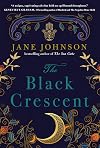
Jane Johnson's The Black Crescent offers a read that fascinates both in terms of history and plot. Set in the years before, during, and after the French withdrawal from Morocco, The Black Crescent follows the life of Hamou Badi, who spends his childhood in a village, but relocates to Casablanca as he's responsible for his mother and sister, which means finding the kind of paying work not available in a village.
Hamou decides to become a police officer, a position he believes will allow him a show more chance to stand up for the rights of the victimized and overlooked. He excels in his training program and is welcomed by the Sureté, the French police. Welcomed, not in the sense of "you're one of us now; we are brothers," but in the sense of "we can use you, and of course we'll assign you the most boring and most dangerous work, including furthering our control over your own people." At first Hamou finds satisfaction in his work. He does help the victimized and overlooked when given the opportunity, but such opportunities evaporate as the resistance against French colonial rule grows.
Hamou is trained in weapons use and finds himself assigned to tamp down protests and to ferret out those involved in clandestine independence groups. This is the crux of the novel: Hamou's witnessing of his own compromises and his growing unwillingness to maintain French power.
The promo material for the novel emphasizes the fact that Hamou is born with lines across his palms that mark him as a zhoury—a human who is part Djinn and who has remarkable skills and luck beyond the ordinary. I was expecting a novel heavy on magical realism, but that isn't the case. Readers see a handful of moments of great luck in Hamou's life, but mostly he is an ordinary man trying to live an ordinary life in a time when the meaning of "ordinary" is shifting as colonial society breaks down. This isn't a tale of magical realism; it's a tale of life as occupation crumbles and new norms emerge.
At first, I found the lack of magical realism disappointing, because I enjoy the genre. As I continued to read, however, I appreciated that events in the book aren't driven by magic, but by human inequities, tensions, and aspirations.
If you're interested in the history of French-occupied northern Africa or the struggle against colonialism you'll find this novel engaging, even though—or perhaps because—Hamou isn't a capital-H Hero, but a man who manages moments of small-h heroism during a dangerous time. But even if you're not interested in the historic aspects of the story, you'll find yourself appreciating the way The Black Crescent explores the costs and rewards of right action.
I received a free electronic review copy of this title from the publisher via Edelweiss; the opinions are my own. show less
Hamou decides to become a police officer, a position he believes will allow him a show more chance to stand up for the rights of the victimized and overlooked. He excels in his training program and is welcomed by the Sureté, the French police. Welcomed, not in the sense of "you're one of us now; we are brothers," but in the sense of "we can use you, and of course we'll assign you the most boring and most dangerous work, including furthering our control over your own people." At first Hamou finds satisfaction in his work. He does help the victimized and overlooked when given the opportunity, but such opportunities evaporate as the resistance against French colonial rule grows.
Hamou is trained in weapons use and finds himself assigned to tamp down protests and to ferret out those involved in clandestine independence groups. This is the crux of the novel: Hamou's witnessing of his own compromises and his growing unwillingness to maintain French power.
The promo material for the novel emphasizes the fact that Hamou is born with lines across his palms that mark him as a zhoury—a human who is part Djinn and who has remarkable skills and luck beyond the ordinary. I was expecting a novel heavy on magical realism, but that isn't the case. Readers see a handful of moments of great luck in Hamou's life, but mostly he is an ordinary man trying to live an ordinary life in a time when the meaning of "ordinary" is shifting as colonial society breaks down. This isn't a tale of magical realism; it's a tale of life as occupation crumbles and new norms emerge.
At first, I found the lack of magical realism disappointing, because I enjoy the genre. As I continued to read, however, I appreciated that events in the book aren't driven by magic, but by human inequities, tensions, and aspirations.
If you're interested in the history of French-occupied northern Africa or the struggle against colonialism you'll find this novel engaging, even though—or perhaps because—Hamou isn't a capital-H Hero, but a man who manages moments of small-h heroism during a dangerous time. But even if you're not interested in the historic aspects of the story, you'll find yourself appreciating the way The Black Crescent explores the costs and rewards of right action.
I received a free electronic review copy of this title from the publisher via Edelweiss; the opinions are my own. show less
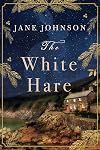
The White Hare provides a wonderful, spooky read that remains rewarding throughout. I have run up against so many books lately that begin with promise, but lose course, that I can't begin to say how grateful I am for a title that I never once considered abandoning.
The White Hare has plot elements that are familiar: outsiders come to a small community and are made less than welcome; there's a strange man who keeps showing up, but has no known address; the local priest is determined to stamp show more out paganism; other members of the community practice the old ways; the sea broods; past horrors are alluded to, but never explained.
Our outsiders in this case are a trio of women: grandmother and mother are both Polish immigrants who immigrated to the UK at the start of WWII; the daughter, Janey, not quite school-age, is UK-born. The two older women are both fleeing their own traumas, but Janey remains content with her rabbit-toy best friend and eager to explore the forests and beaches near her new home. But then Rabbit disappears—and reappears—and suddenly conversations between Janey and Rabbit become more mysterious and esoteric.
One of the joys of this title is the way it steadily builds a sense of menace, but also sustains a sense of hope. I kept waiting for the moment of horror that would ruin the book for me, but—despite plenty of unworldly events—that moment never came.
If you like "gothic" (not quite the right word here, but I'll go with it) fiction, but aren't interested in bloodbaths, you are going to *love* The White Hare. The balance of unease and comfort offered by the book lets readers walk a fine edge without a sudden fall to either side.
I received a free electronic review copy of this title from the publisher via NetGallet; the opinions are my own. show less
The White Hare has plot elements that are familiar: outsiders come to a small community and are made less than welcome; there's a strange man who keeps showing up, but has no known address; the local priest is determined to stamp show more out paganism; other members of the community practice the old ways; the sea broods; past horrors are alluded to, but never explained.
Our outsiders in this case are a trio of women: grandmother and mother are both Polish immigrants who immigrated to the UK at the start of WWII; the daughter, Janey, not quite school-age, is UK-born. The two older women are both fleeing their own traumas, but Janey remains content with her rabbit-toy best friend and eager to explore the forests and beaches near her new home. But then Rabbit disappears—and reappears—and suddenly conversations between Janey and Rabbit become more mysterious and esoteric.
One of the joys of this title is the way it steadily builds a sense of menace, but also sustains a sense of hope. I kept waiting for the moment of horror that would ruin the book for me, but—despite plenty of unworldly events—that moment never came.
If you like "gothic" (not quite the right word here, but I'll go with it) fiction, but aren't interested in bloodbaths, you are going to *love* The White Hare. The balance of unease and comfort offered by the book lets readers walk a fine edge without a sudden fall to either side.
I received a free electronic review copy of this title from the publisher via NetGallet; the opinions are my own. show less
Thanks to Simon & Shuster and NetGalley for a digital advance reader copy. All comments and opinions are my own.
Mila thinks “We’re not living in a fairy tale,” but there are elements of folklore, legends, myths, and magical qualities that make this an engrossing 5-star read. Any book that is recommended to fans of Kate Morton and Alice Hoffman sets me up for an atmospheric story of family, old houses, secrets, and mysteries. This one has all that and more.
Mila, her young daughter show more Janey, and her mother Magda have invested all their money to purchase a remote and neglected old house in Cornwall above the beach, on the edge of a forest. They intend to renovate and restore it to its former glory, with Magda planning to throw glamorous parties while Mila just wants a place to rebuild her life and raise her daughter. The superstitious local villagers hint at the house’s dark reputation while imaginative Janey seems to have connected with a mystical white hare that offers protection, guidance, and perhaps even answers to the mysteries that are slowly revealed.
The novel is told from Mila’s point of view, with much of the focus on the broken relationship between Mila and her mother Magda. This drama plays out against some of the other characters’ narratives as we learn more about them and the history of the area. The lush, wild forest is almost a character itself, providing a timeless atmospheric backdrop to this story that takes place in 1954. It also includes secret stairways, an ancient cryptic symbol that keeps turning up, and the feeling of a presence. As Mila says, “It’s not threatening – not to us, anyway – but just a sense of being watched, or maybe watched over. A sort of awareness, much larger than we are.”
Themes of strong women, family, mothers and daughters, healing and forgiveness blend with the magical and mystical aspects of folklore, restorative herbal concoctions, and a bit of romance, too. I thoroughly enjoyed this rich, timeless story with a satisfying conclusion. I highly recommend it. show less
Mila thinks “We’re not living in a fairy tale,” but there are elements of folklore, legends, myths, and magical qualities that make this an engrossing 5-star read. Any book that is recommended to fans of Kate Morton and Alice Hoffman sets me up for an atmospheric story of family, old houses, secrets, and mysteries. This one has all that and more.
Mila, her young daughter show more Janey, and her mother Magda have invested all their money to purchase a remote and neglected old house in Cornwall above the beach, on the edge of a forest. They intend to renovate and restore it to its former glory, with Magda planning to throw glamorous parties while Mila just wants a place to rebuild her life and raise her daughter. The superstitious local villagers hint at the house’s dark reputation while imaginative Janey seems to have connected with a mystical white hare that offers protection, guidance, and perhaps even answers to the mysteries that are slowly revealed.
The novel is told from Mila’s point of view, with much of the focus on the broken relationship between Mila and her mother Magda. This drama plays out against some of the other characters’ narratives as we learn more about them and the history of the area. The lush, wild forest is almost a character itself, providing a timeless atmospheric backdrop to this story that takes place in 1954. It also includes secret stairways, an ancient cryptic symbol that keeps turning up, and the feeling of a presence. As Mila says, “It’s not threatening – not to us, anyway – but just a sense of being watched, or maybe watched over. A sort of awareness, much larger than we are.”
Themes of strong women, family, mothers and daughters, healing and forgiveness blend with the magical and mystical aspects of folklore, restorative herbal concoctions, and a bit of romance, too. I thoroughly enjoyed this rich, timeless story with a satisfying conclusion. I highly recommend it. show less
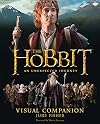
Stunning, stunning still photography from the film; superficial, often annoying text about the characters in the film. Absolutely worth a look for the photography, and if you love the costumes, props, make-up work, and sets in Jackson's Middle-Earth, worth getting a copy for your own. The fold-out map in the middle is quite nice as well. But if you're a Tolkien fan as well as a Jackson fan, I'd probably give the text a miss.
Lists
Awards


You May Also Like


Associated Authors
Statistics
- Works
- 40
- Also by
- 2
- Members
- 6,927
- Popularity
- #3,529
- Rating
- 3.7
- Reviews
- 123
- ISBNs
- 292
- Languages
- 13