
Brian Sibley
Author of The Fall of Númenor and Other Tales from the Second Age of Middle-Earth
About the Author
Brian Sibley was born in London, England on July 14, 1949. He is author of over 100 hours of radio drama and has written and presented hundreds of radio documentaries, features and weekly programs including J. R. R. Tolkien's The Lord of the Rings, C. S. Lewis' The Chronicles of Narnia, and show more Gormenghast, for which he won a Sony Radio Award. He has also written numerous books including The Lord of the Rings: The Making of the Movie Trilogy, Peter Jackson: A Film-Maker's Journey, The Disney Studio Story, Mickey Mouse: His Life and Times, The Land of Narnia, and Harry Potter Film Wizardry. (Bowker Author Biography) show less
Image credit: Photo by David Weeks ~ Wikimedia Commons
Series
Works by Brian Sibley
The Fall of Númenor and Other Tales from the Second Age of Middle-Earth (2022) — Editor — 1,405 copies, 14 reviews
The Fellowship of the Ring Insiders' Guide (The Lord of the Rings Movie Tie-In) (2001) 123 copies, 2 reviews
Wallace and Gromit: The Complete Collection (A Matter of Loaf and Death / A Grand Day Out / The Wrong Trousers / A Close Shave) (2009) — Writer — 122 copies
The Maps of Middle-earth: The Essential Maps of J.R.R. Tolkien's Fantasy Realm from Númenor and Beleriand to Wilderland and Middle-earth (2024) 120 copies
Mary Poppins: Anything Can Happen If You Let It (A Disney Theatrical Souvenir Book) (2007) 44 copies, 2 reviews
The Lion, the Witch, and the Wardrobe (BBC radio drama) (1988) — Dramatised by — 41 copies, 2 reviews
The Chronicles of Narnia: The Magician's Nephew [BBC Radio Presents] (1989) — Dramatised by — 36 copies
A Treasury of Narnia : The Story of C. S. Lewis and his Chronicles of Narnia (1999) — Author — 31 copies
The Complete Chronicles of Narnia: The Classic BBC Radio 4 Full-Cast Dramatisations (2000) — Dramatised by — 31 copies, 1 review
The Horse and His Boy (BBC Radio Collection: Chronicles of Narnia) (1994) — Dramatised by — 21 copies
J.R.R. Tolkien: An Audio Portrait of the Author of The Hobbit and The Lord of the Rings (2001) 20 copies, 1 review
The Voyage of the "Dawn Treader" (BBC Radio Collection: Chronicles of Narnia) (1995) — Dramatised by — 9 copies
Osric the extraordinary owl 4 copies
One Month to Live 1 copy
Microscopes and Megaloscopes or Alice in Pictures-that-move and Pictures-that-stand-still (1974) 1 copy
Um Cântico de Natal 1 copy
Associated Works
Thomas the Tank Engine: The Complete Collection (1996) — Afterword, some editions — 561 copies, 6 reviews
The Great Tales Never End: Essays in Memory of Christopher Tolkien (2022) — Contributor — 69 copies, 2 reviews
Thomas The Tank Engine 25 of the Best Stories from the Railway Series (1997) — Afterword — 43 copies
The Official Tolkien Calendar 2016: Illustrated by Tove Jansson (2015) — Introduction — 17 copies, 1 review
Tagged
Common Knowledge
- Canonical name
- Sibley, Brian
- Legal name
- Sibley, Brian David
- Birthdate
- 1949-07-14
- Gender
- male
- Education
- St Nicholas Church of England Primary School
Chislehurst Secondary School for Boys - Occupations
- clerk
manager
head of department
writer
broadcaster - Awards and honors
- Tolkien Society Honorary Membership (2003)
Tolkien Society Gold Badge - Nationality
- UK
- Birthplace
- Wandsworth, London, England, UK
- Places of residence
- Chislehurst, Kent, England, UK
- Map Location
- England, UK
Members
Reviews
Harry Potter Film Wizardry: Updated Edition: From the Creative Team Behind the Celebrated Movie Series by Brian Sibley
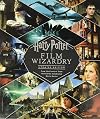
The last few Harry Potter companion books that I read were sadly underwhelming, but this one won me back into the fold! Designed by the Minalima team (who are also responsible for all of the graphic design for the film series itself), this book is a literal playground that allows readers to fully immerse themselves back into the visual imagery of the films and be inspired all over again by the story’s whimsy. Packed with stills from the films, behind the scenes imagery, and design artwork, show more I doubt that it would be possible to pack anymore information in - and yet, the writing team also held their own. Interspersed into the well-placed layouts are text panels that (for once) stay neatly contained alongside their visuals, and give us just the right balance of narration to retell the story. Much of the text is also woven with memories and personal stories from the actors and design team, so we get a real glimpse behind the scenes into the personalities of the Harry Potter world. Blended so artfully together, the book feels like a unique family scrapbook and really stands out amongst the plethora of other Potter publications that have been released over the years. Sure, we don’t get the depth of some of the speciality books (the art and design tomes are some of my favourites), but this book played the magical tone so perfectly that I am hard-pressed to think of how it could actually be improved. show less
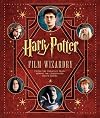
This book describes the making of all the Harry Potter films, except the last one which hadn’t been released yet when the book was published. I’ve found it interesting not only from the standpoint of a HP fan, but also as a window into the modern movie-making process in general (at least, if they have a huge budget).
One of the things that struck me when reading this book was how much actors are apparently expected to put up with. For instance, in the third film there’s a scene where show more Harry’s Aunt Marge is floating away and his Uncle Vernon tries to anchor her and ends up lifted in the air too, with her eager-to-help dog latching on to his leg. When I watched this scene I was sure most of it was done via computer animation. But it turned out that Pam Ferris who played Aunt Marge was actually wearing a huge body suit, and as Richard Griffiths who played Uncle Vernon explains, “I was tethered to Aunt Marge, and we were lifted 30-40 feet in the air… and Ripper the dog was just hanging on with his teeth – to my ankle! And, boy, were they strong teeth! And as we got higher in the air, I was thinking, ‘I just want to die now!’” In another example of a rather cavalier treatment of actors, in the fourth film, there’s a scene where Harry steals an artificial egg from a dragon and falls down the castle roof in the process. Once again, when I was watching this, I was dead sure I was watching a computer-generated sequence. But as Daniel Radcliffe recalls, “Some of the stunts were a bit scary. I was on a wire, and I fell, I think, 40 feet very, very fast. That was terrifying… it was really scary!” OK, so he was on a wire. Was there no chance at all that something would snap or slip? Or that he would hit the side of the castle while hanging from this wire? It seems to me from reading this book that filmmakers sometimes forget that what they are doing is entertainment, make-belief, and just because a character was bitten by a dog or fell from the roof doesn’t mean that the same should happen to the actor.
Another thing that surprised me was how much time, effort and money gets spent on props for minute and/or unnecessary scenes – props that the film audience doesn’t get to see in any amount of detail anyway. For instance, for the first film “the props department minted a small fortune in Galleons, Sickles and Knuts.” Well, in any film, when a character walks into a store and buys something, do you ever notice what kind of coins he pays with? Similarly, for the second film “the graphic arts and props department joined forces to create the complete works of Gilderoy Lockhart.” I’ve recently watched this film again on DVD, and the scene where Lockhart gives Harry the stack of his books is shot from the side, so that even the cover of the top book isn’t visible. It could have been a stack of any hardcover books. Or take the one-third-sized model of the Weasleys’ home, The Burrow, which required six months of painstaking effort to make, just so that it could burn down in six minutes. Was it absolutely necessary to have this scene of the burning house which was later rebuilt by Mr. Weasley? Couldn’t they simply return home to find it in ruins or some few still burning rafters? And what about a one-third model of Draco Malfoy created so that Hagrid could lift him and take him to school after Draco gets injured by a hippogriff, without it becoming obvious that Hagrid is not of half-giant size? Well, couldn’t Malfoy’s friends manage to get him to the hospital wing, as he was pretending to swoon? (But at least Tom Felton was lucky that the hippogriff was played by a model and computer animation, and so he didn’t have to get injured for real.) I could really go on and on. The one other artwork I can’t refrain from mentioning are the individual wands with all sorts of embellishments created for various characters. In the books, all wands are supposed to look like simple wooden sticks. The woods differ, the lengths differ slightly, and the magical cores differ; none of this would be obvious in a film. What’s impressive about a wand is what it, or rather its owner can do with it, not how it looks like. My favorite is definitely Bellatrix’s crooked wand made to resemble a claw – because if she’d had a straight wand, we’d never have noticed that she’s “crooked,” apparently. Wands are meant to aim, and aim accurately in a nick of time, and obviously a bent wand would be a lot harder to aim, except at an object sitting still right in front of one, and would put its owner at a severe disadvantage. So what sane wandmaker would make a bent wand?
If all this makes it sound like I didn’t appreciate the art that went into the creation of the Harry Potter films, that’s absolutely not the case. I loved all the Hogwarts, Diagon Alley, Hogsmeade, Burrow and Privet Drive sets, all the magical creatures, and all the props that are actually seen and make sense, from the Horcruxes to Rita Skeeter’s fancy green quill. And I was happy to learn (from an article in Entertainment Weekly) that after the completion of the last film, the sets and props are to be set up in a Potter museum due to open in 2012.
The book itself is very informative and beautifully done, with lots of fabulous photographs. All the important settings get a spread, and all the actors get a page or two, except for the actors who played Tom Riddle in the second and sixth films, who don’t even get a mention! This unexplainable omission is the only reason why I gave the book 4 rather than 5 stars. show less
One of the things that struck me when reading this book was how much actors are apparently expected to put up with. For instance, in the third film there’s a scene where show more Harry’s Aunt Marge is floating away and his Uncle Vernon tries to anchor her and ends up lifted in the air too, with her eager-to-help dog latching on to his leg. When I watched this scene I was sure most of it was done via computer animation. But it turned out that Pam Ferris who played Aunt Marge was actually wearing a huge body suit, and as Richard Griffiths who played Uncle Vernon explains, “I was tethered to Aunt Marge, and we were lifted 30-40 feet in the air… and Ripper the dog was just hanging on with his teeth – to my ankle! And, boy, were they strong teeth! And as we got higher in the air, I was thinking, ‘I just want to die now!’” In another example of a rather cavalier treatment of actors, in the fourth film, there’s a scene where Harry steals an artificial egg from a dragon and falls down the castle roof in the process. Once again, when I was watching this, I was dead sure I was watching a computer-generated sequence. But as Daniel Radcliffe recalls, “Some of the stunts were a bit scary. I was on a wire, and I fell, I think, 40 feet very, very fast. That was terrifying… it was really scary!” OK, so he was on a wire. Was there no chance at all that something would snap or slip? Or that he would hit the side of the castle while hanging from this wire? It seems to me from reading this book that filmmakers sometimes forget that what they are doing is entertainment, make-belief, and just because a character was bitten by a dog or fell from the roof doesn’t mean that the same should happen to the actor.
Another thing that surprised me was how much time, effort and money gets spent on props for minute and/or unnecessary scenes – props that the film audience doesn’t get to see in any amount of detail anyway. For instance, for the first film “the props department minted a small fortune in Galleons, Sickles and Knuts.” Well, in any film, when a character walks into a store and buys something, do you ever notice what kind of coins he pays with? Similarly, for the second film “the graphic arts and props department joined forces to create the complete works of Gilderoy Lockhart.” I’ve recently watched this film again on DVD, and the scene where Lockhart gives Harry the stack of his books is shot from the side, so that even the cover of the top book isn’t visible. It could have been a stack of any hardcover books. Or take the one-third-sized model of the Weasleys’ home, The Burrow, which required six months of painstaking effort to make, just so that it could burn down in six minutes. Was it absolutely necessary to have this scene of the burning house which was later rebuilt by Mr. Weasley? Couldn’t they simply return home to find it in ruins or some few still burning rafters? And what about a one-third model of Draco Malfoy created so that Hagrid could lift him and take him to school after Draco gets injured by a hippogriff, without it becoming obvious that Hagrid is not of half-giant size? Well, couldn’t Malfoy’s friends manage to get him to the hospital wing, as he was pretending to swoon? (But at least Tom Felton was lucky that the hippogriff was played by a model and computer animation, and so he didn’t have to get injured for real.) I could really go on and on. The one other artwork I can’t refrain from mentioning are the individual wands with all sorts of embellishments created for various characters. In the books, all wands are supposed to look like simple wooden sticks. The woods differ, the lengths differ slightly, and the magical cores differ; none of this would be obvious in a film. What’s impressive about a wand is what it, or rather its owner can do with it, not how it looks like. My favorite is definitely Bellatrix’s crooked wand made to resemble a claw – because if she’d had a straight wand, we’d never have noticed that she’s “crooked,” apparently. Wands are meant to aim, and aim accurately in a nick of time, and obviously a bent wand would be a lot harder to aim, except at an object sitting still right in front of one, and would put its owner at a severe disadvantage. So what sane wandmaker would make a bent wand?
If all this makes it sound like I didn’t appreciate the art that went into the creation of the Harry Potter films, that’s absolutely not the case. I loved all the Hogwarts, Diagon Alley, Hogsmeade, Burrow and Privet Drive sets, all the magical creatures, and all the props that are actually seen and make sense, from the Horcruxes to Rita Skeeter’s fancy green quill. And I was happy to learn (from an article in Entertainment Weekly) that after the completion of the last film, the sets and props are to be set up in a Potter museum due to open in 2012.
The book itself is very informative and beautifully done, with lots of fabulous photographs. All the important settings get a spread, and all the actors get a page or two, except for the actors who played Tom Riddle in the second and sixth films, who don’t even get a mention! This unexplainable omission is the only reason why I gave the book 4 rather than 5 stars. show less
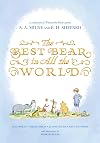
Some pretty decent writers do passable impressions of A. A. Milne around some nice illustrations in the style of E. H. Shepard.
Autumn: in which Pooh and Piglet prepare to meet a Dragon / Paul Bright
~3 stars~
Christopher Robin cannot be disturbed as he prepares for his role in the school play as St. George the dragon slayer. In his absence, Piglet gets all worked up that a dragon is coming to the Hundred-Acre Wood and pulls everyone else into his fear spiral. Meanwhile, Eeyore is desperate to show more keep credit for finding a shiny thing buried in the ground. It's fluff, but a cute little joke about uncomfortable pauses actually felt like something Milne would write.
Winter: in which Penguin arrives in the Forest / Brian Sibley
~3 stars~
Based on an actual photo of Milne, Christopher Robin and the original Winnie-the-Pooh stuffed animal looking at a penguin doll, this story is a bit macabre. First, Owl gets all prejudiced and downright enraged by the non-flying bird and takes his speciesist ass right out of the story in a huff without redemption or comeuppance. And then toward the end, the tone gets very dark as Penguin disappears and Christopher Robin gets ominously vague as to where he went or if he'll return. I genuinely fear for Penguin's fate and wonder if it involves something that might occur in Sid's room in the first Toy Story movie.
Spring: in which Eeyore suspects Another Donkey is after his thistles / Jeanne Willis
~2 stars~
A very predictable and labored story about paranoia, reflections and mistaken identity. Rabbit's friends and relations show up, but get treated as second-class citizens when it comes time to sit for tea and they are consigned to chat amongst themselves under the table, beneath the notice of the main characters. Nasty.
Summer: in which Pooh dreams of the Sauce of the Nile / Kate Saunders
~3 stars~
An amusing expotition has Pooh and friends trying to find find the headwaters of the stream that runs through the Hundred-Acre Wood. Not a lot happens as the trail leads up to the inevitable book-closing party, but the dialogue is snappy and reminiscent of Milne, and Kanga gets to shine more than usual. Very nice.
FOR REFERENCE:
Contents: Exposition -- Acknowledgments -- Autumn: in which Pooh and Piglet prepare to meet a Dragon / Paul Bright -- Winter: in which Penguin arrives in the Forest / Brian Sibley -- Spring: in which Eeyore suspects Another Donkey is after his thistles / Jeanne Willis -- Summer: in which Pooh dreams of the Sauce of the Nile / Kate Saunders -- Afterword / Paul Bright, Brian Sibley, Jeanne Willis, Kate Saunders
(My Pooh Project: I love Winnie the Pooh, and so does my wife. Having a daughter gave us a chance to indoctrinate her into the cult by buying and reading her every Pooh book we came across. How many is that? I’m going to count them this year by reading and reviewing one every day and seeing which month I finally run out. Track my progress here:
https://www.goodreads.com/review/list/23954351-rod-brown?ref=nav_mybooks&she... ) show less
Autumn: in which Pooh and Piglet prepare to meet a Dragon / Paul Bright
~3 stars~
Christopher Robin cannot be disturbed as he prepares for his role in the school play as St. George the dragon slayer. In his absence, Piglet gets all worked up that a dragon is coming to the Hundred-Acre Wood and pulls everyone else into his fear spiral. Meanwhile, Eeyore is desperate to show more keep credit for finding a shiny thing buried in the ground. It's fluff, but a cute little joke about uncomfortable pauses actually felt like something Milne would write.
Winter: in which Penguin arrives in the Forest / Brian Sibley
~3 stars~
Based on an actual photo of Milne, Christopher Robin and the original Winnie-the-Pooh stuffed animal looking at a penguin doll, this story is a bit macabre. First, Owl gets all prejudiced and downright enraged by the non-flying bird and takes his speciesist ass right out of the story in a huff without redemption or comeuppance. And then toward the end, the tone gets very dark as Penguin disappears and Christopher Robin gets ominously vague as to where he went or if he'll return. I genuinely fear for Penguin's fate and wonder if it involves something that might occur in Sid's room in the first Toy Story movie.
Spring: in which Eeyore suspects Another Donkey is after his thistles / Jeanne Willis
~2 stars~
A very predictable and labored story about paranoia, reflections and mistaken identity. Rabbit's friends and relations show up, but get treated as second-class citizens when it comes time to sit for tea and they are consigned to chat amongst themselves under the table, beneath the notice of the main characters. Nasty.
Summer: in which Pooh dreams of the Sauce of the Nile / Kate Saunders
~3 stars~
An amusing expotition has Pooh and friends trying to find find the headwaters of the stream that runs through the Hundred-Acre Wood. Not a lot happens as the trail leads up to the inevitable book-closing party, but the dialogue is snappy and reminiscent of Milne, and Kanga gets to shine more than usual. Very nice.
FOR REFERENCE:
Contents: Exposition -- Acknowledgments -- Autumn: in which Pooh and Piglet prepare to meet a Dragon / Paul Bright -- Winter: in which Penguin arrives in the Forest / Brian Sibley -- Spring: in which Eeyore suspects Another Donkey is after his thistles / Jeanne Willis -- Summer: in which Pooh dreams of the Sauce of the Nile / Kate Saunders -- Afterword / Paul Bright, Brian Sibley, Jeanne Willis, Kate Saunders
(My Pooh Project: I love Winnie the Pooh, and so does my wife. Having a daughter gave us a chance to indoctrinate her into the cult by buying and reading her every Pooh book we came across. How many is that? I’m going to count them this year by reading and reviewing one every day and seeing which month I finally run out. Track my progress here:
https://www.goodreads.com/review/list/23954351-rod-brown?ref=nav_mybooks&she... ) show less
J.R.R. Tolkien: An Audio Portrait of the Author of The Hobbit and The Lord of the Rings by Brian Sibley
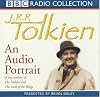
This is a great audiobook for content and presentation. The content explores the genesis and arc of J.R.R. Tolkien's creating, focused on The Hobbit. The presentation is in interview snippets with "Ronald" (Tolkien) himself and colleagues and commentators along with audio samples from The Hobbit - Full Cast Dramatisation - BBC Radio (1968).
I especially like the delving into WW I's impact on his original story-writing, the idea of the saga as high-level children's lit., and the show more linguistic/philological genesis by creating language and names first, then the story to match.
This is a balanced overview, even containing detractors. The Hobbit is categorically identified as children's lit, if of the highest caliber. Tolkien's borrowing from sources (see Tales Before Tolkien: The Roots of Modern Fantasy) is discussed including an interesting comparison on many points with The Thirty-Nine Steps, show less
I especially like the delving into WW I's impact on his original story-writing, the idea of the saga as high-level children's lit., and the show more linguistic/philological genesis by creating language and names first, then the story to match.
This is a balanced overview, even containing detractors. The Hobbit is categorically identified as children's lit, if of the highest caliber. Tolkien's borrowing from sources (see Tales Before Tolkien: The Roots of Modern Fantasy) is discussed including an interesting comparison on many points with The Thirty-Nine Steps, show less
Lists
Awards


You May Also Like


Associated Authors
Statistics
- Works
- 68
- Also by
- 14
- Members
- 9,889
- Popularity
- #2,405
- Rating
- 4.0
- Reviews
- 78
- ISBNs
- 305
- Languages
- 18
- Favorited
- 3