
On This Page
Description
Six million years ago, at the very dawn of the starfaring era, Abigail Gentian fractured herself into a thousand male and female clones: the shatterlings. Sent out into the galaxy, these shatterlings have stood aloof as they document the rise and fall of countless human empires. They meet every 200,000 years to exchange news and memories of their travels with their siblings. Not only are Campion and Purslane late for their thirty-second reunion but they have also brought along an amnesiac show more golden robot for a guest. But the wayward shatterlings get more than the scolding they expect: they face the discovery that someone has a very serious grudge against the Gentian line, and there is a very real possibility of traitors in their midst. The surviving shatterlings have to dodge exotic weapons while they regroup to try to solve the mystery of who is persecuting them and why-before their ancient line is wiped out of existence forever. show lessTags
Recommendations

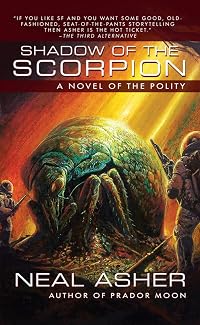
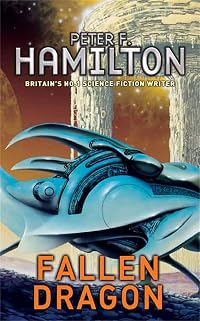
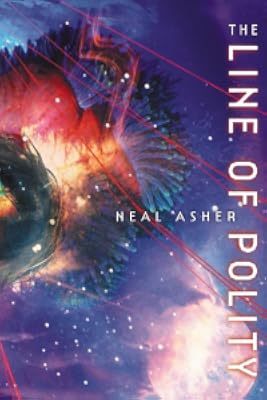

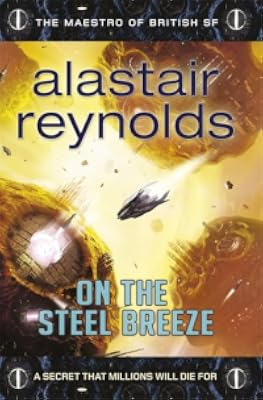

Member Recommendations
Member Reviews
Abigail Gentian, the only sane member of her family line, is the heiress to an immense fortune built off the back of weaponized cloning technology. She comes of age in a vast and ever-changing house with hardly any company to speak of other than her caretaker, a nameless boy from another affluent family, and an immersive VR simulation of a fantasy world that becomes more and more central to her life. Years later she decides to split her memories into 100 identical clones (or shatterlings), half male, half female, who have absurdly long lifespans. Abigail's strong sense of curiosity and thirst for knowledge is passed down seamlessly, and the group more-or-less falls into a pattern of observing the rise and fall of "turnover" show more civilizations throughout the galaxy, coming back together for periodic family reunions to synchronize their memories into a greater consciousness. The majority of the plot takes place millions of years in the future as Abigail's 'line' of clones uncover a mysterious plot against their very existence.
Out of the three works from Reynolds that I've read, this is the best by at least one standard deviation. Sure, all of Reynolds sore spots still crop up, (bloated/in need of an edit, unremarkable prose, and a perchance for over explaining/repetition) but House of Suns is carried by its absolute smorgasbord of neat space opera ideas and moments. All of these ideas have a cohesion to them that I found lacking from his other works. House of Suns also benefits from some of Reynolds most realistic and wholesome characters in Purslane and Campion who I found myself really getting behind emotionally.
The focus on cloning allows for at least some nuanced conversation about the nature of loyalty and moral responsibility. Are we culpable for actions that we either can't remember, or are only secondarily responsible for? How much of us can change before we are no longer the same person? To what degree do we owe our collected knowledge and information to those with less means than ourselves?
While the ending 'chase' scene ran rather long and dull for me, the very ending expands the scope of the books universe and opens up a whole new can of worms in a very pleasing way. Certainly this was the least disappointing ending of any other Reynolds novel I've encountered; though I suppose the bar wasn't that high, since I was practically begging to be put out of my misery by the end of The Prefect and Pushing Ice.
I can't tell whether I think that Reynolds is actually a good writer, or if he just throws so much spaghetti at the wall and this time it happened to stick (at least for me). Whatever the case may be, this is the new standard that Reynolds has set for himself. show less
Out of the three works from Reynolds that I've read, this is the best by at least one standard deviation. Sure, all of Reynolds sore spots still crop up, (bloated/in need of an edit, unremarkable prose, and a perchance for over explaining/repetition) but House of Suns is carried by its absolute smorgasbord of neat space opera ideas and moments. All of these ideas have a cohesion to them that I found lacking from his other works. House of Suns also benefits from some of Reynolds most realistic and wholesome characters in Purslane and Campion who I found myself really getting behind emotionally.
The focus on cloning allows for at least some nuanced conversation about the nature of loyalty and moral responsibility. Are we culpable for actions that we either can't remember, or are only secondarily responsible for? How much of us can change before we are no longer the same person? To what degree do we owe our collected knowledge and information to those with less means than ourselves?
While the ending 'chase' scene ran rather long and dull for me, the very ending expands the scope of the books universe and opens up a whole new can of worms in a very pleasing way. Certainly this was the least disappointing ending of any other Reynolds novel I've encountered; though I suppose the bar wasn't that high, since I was practically begging to be put out of my misery by the end of The Prefect and Pushing Ice.
I can't tell whether I think that Reynolds is actually a good writer, or if he just throws so much spaghetti at the wall and this time it happened to stick (at least for me). Whatever the case may be, this is the new standard that Reynolds has set for himself. show less
In the early fourth millennium, humanity largely lives within the light-hour surrounding our own Sun, and a few wealthy tycoons take up galactic tourism: they clone themselves a thousand times (often with genetic variations, including gender), decanting their personality into each clone, and set out in a thousand ships to travel the galaxy at near-lightspeed, with plans to meet up later. As civilizations rise and fall across the galaxy, these “shatterlings” (with the assistance of technologies for suspended animation, life extension, and time dilation) see six million years pass, trading information and expertise to the worlds they visit.
The book has two parallel stories: a shorter one following the youth of Abigail Gentian, who show more grows up to spawn the thousand shatterlings called Gentian Line (or the House of Flowers, since all of them are named after flowers), and a larger one following the intertwined lives of two of her shatterlings, Campion and Purslane, who have broken the rules of their Line, fallen in love, and taken up traveling together. They arrive late at a scheduled reunion of the Line, fearing censure by their fellows, and discover that someone has attempted to wipe out the entire clan. Their challenge is to figure out who did it, and why— and to survive.
Reynolds does a good job of keeping the suspense high even as the action stretches over the decades and centuries of interstellar travel. The tale includes some reflections on recent events, including the fear of the Other and the erosion of morality in times of stress. The feel is very much in the New Space Opera style of his other works, but is not as dark as the tales in his Revelation Space universe. show less
The book has two parallel stories: a shorter one following the youth of Abigail Gentian, who show more grows up to spawn the thousand shatterlings called Gentian Line (or the House of Flowers, since all of them are named after flowers), and a larger one following the intertwined lives of two of her shatterlings, Campion and Purslane, who have broken the rules of their Line, fallen in love, and taken up traveling together. They arrive late at a scheduled reunion of the Line, fearing censure by their fellows, and discover that someone has attempted to wipe out the entire clan. Their challenge is to figure out who did it, and why— and to survive.
Reynolds does a good job of keeping the suspense high even as the action stretches over the decades and centuries of interstellar travel. The tale includes some reflections on recent events, including the fear of the Other and the erosion of morality in times of stress. The feel is very much in the New Space Opera style of his other works, but is not as dark as the tales in his Revelation Space universe. show less
"I was born in a house with a million rooms, built on a small, airless world on the edge of an empire of light and commerce that the adults called the Golden Hour, for a reason I did not yet grasp.
I was a girl then, a single individual called Abigail Gentian."
This is such a fantastic novel! It explores memory, identity, culpability, love among two clones of the same person, intimacy, gender, human potential, and VAST time frames (while staying closely with the main characters). Its setting is the entire galaxy and beyond, it has a good murder mystery, fantastic other kinds of mysteries, creepy but lovable AIs, convincing villains who have a point, weird alien humans of the far future, action scenes in space, tense hide-and-seek, show more *beautiful prose*, memorable characters - I loved it SO MUCH.
I wish every book was like this and I can't wait to read more Alastair Reynolds. I've been making myself wait and try other new-to-me authors that many people think are great but really I'm just chomping at the bit to read more Reynolds. I just hope the rest of his books come close to this one.
If you absolutely want to hear a quibble because nothing can be *that* deliciously perfect: I could have done without the chase scene at the end, but the 'wah-wah-where-is-the-action' crowd loved that scene in particular, so I guess it was the correct choice to include it. I would have preferred even *more* philosophizing and exploring these cool ideas even further, because Reynolds's thoughts are actually really fascinating and worth thinking about. But the chase scene also shows that he knows what he's doing and how to appeal to a vast array of different kinds of reader, so I don't mind it at all. In addition, it was actually a tense chase scene and I'm the girl who always falls asleep during car chases in movies, so that says a lot. Other quibbles? I was so invested in the present-day story line and mysteries that I sometimes didn't want to go into one of the childhood flashbacks - but that feeling always vanished right away, and the flashbacks were deeply meaningful in the way this memory tried to communicate a deleted and suppressed *other* memory (and answer to one of the mysteries) in symbolic form. So brilliant! So freaking beautiful! So no, I can't really find any flaw with this book and can find so much genius instead.
I'm so happy this is a prolific author who's written a lot of other books already, so I've got a lot to look forward to. show less
I was a girl then, a single individual called Abigail Gentian."
This is such a fantastic novel! It explores memory, identity, culpability, love among two clones of the same person, intimacy, gender, human potential, and VAST time frames (while staying closely with the main characters). Its setting is the entire galaxy and beyond, it has a good murder mystery, fantastic other kinds of mysteries, creepy but lovable AIs, convincing villains who have a point, weird alien humans of the far future, action scenes in space, tense hide-and-seek, show more *beautiful prose*, memorable characters - I loved it SO MUCH.
I wish every book was like this and I can't wait to read more Alastair Reynolds. I've been making myself wait and try other new-to-me authors that many people think are great but really I'm just chomping at the bit to read more Reynolds. I just hope the rest of his books come close to this one.
If you absolutely want to hear a quibble because nothing can be *that* deliciously perfect: I could have done without the chase scene at the end, but the 'wah-wah-where-is-the-action' crowd loved that scene in particular, so I guess it was the correct choice to include it. I would have preferred even *more* philosophizing and exploring these cool ideas even further, because Reynolds's thoughts are actually really fascinating and worth thinking about. But the chase scene also shows that he knows what he's doing and how to appeal to a vast array of different kinds of reader, so I don't mind it at all. In addition, it was actually a tense chase scene and I'm the girl who always falls asleep during car chases in movies, so that says a lot. Other quibbles? I was so invested in the present-day story line and mysteries that I sometimes didn't want to go into one of the childhood flashbacks - but that feeling always vanished right away, and the flashbacks were deeply meaningful in the way this memory tried to communicate a deleted and suppressed *other* memory (and answer to one of the mysteries) in symbolic form. So brilliant! So freaking beautiful! So no, I can't really find any flaw with this book and can find so much genius instead.
I'm so happy this is a prolific author who's written a lot of other books already, so I've got a lot to look forward to. show less
As ever, Reynolds excels when it comes to the big picture - great ideas thrown across a canvas the size of the universe and the depth of millions of years. This book has some very cool ideas - where it is flawed is in the pace and depth of the narrative. [Warning: Spoiler] For a book that throws around so many mind-expanding images and themes and is about a 'line' of clones that have made it their business to explore the galaxy for six million years, too much time is spent sitting around on one planet (which curiously enough for a planet chosen at random just happens to be the planet that hosts the one being able to resolve a galactic crisis.)
Good, as most Reynolds is, but not his best.
Good, as most Reynolds is, but not his best.
This is the best novel ever. It explores memory, identity, culpability, love among two clones of the same person, intimacy, gender, human potential, VAST time frames (while staying closely with the main characters), its setting is the entire galaxy and beyond, it has a great murder mystery, fantastic other mysteries, creepy but lovable AIs, convincing villains who have a point, weird alien humans of the far future, action scenes in space, tense hide-and-seek, *beautiful prose*, memorable characters - I loved it SO MUCH.
I wish every book was like this and I can't wait to read more Alastair Reynolds. I've been making myself wait and try other new-to-me authors that many people think are great but really I'm just chomping at the bit to show more read more Reynolds. I just hope the rest of his books come close to this one.
If you absolutely want to hear a quibble because nothing can be *that* deliciously perfect: I could have done without the chase scene at the end, but the 'wah-wah-where-is-the-action' crowd loved that scene in particular, so I guess it was the correct choice to include it. I would have preferred even *more* philosophizing and exploring these cool ideas even further, because Reynolds's thoughts are actually really fascinating and worth thinking about. But the chase scene also shows that he knows what he's doing and how to appeal to a vast array of different kinds of reader, so I don't mind it at all. In addition, it was actually a tense chase scene and I'm the girl who always falls asleep during car chases in movies, so that says a lot. Other quibbles? I was so invested in the present-day story line and mysteries that I sometimes didn't want to go into one of the childhood flashbacks - but that feeling always vanished right away, and the flashbacks were deeply meaningful in the way this memory tried to communicate a deleted and suppressed *other* memory (and answer to one of the mysteries) in symbolic form. So brilliant! So freaking beautiful! So no, I can't really find any flaw with this book and can find so much genius instead.
I'm so happy this is a prolific author who's written a lot of other books already, so I've got a lot to look forward to. show less
I wish every book was like this and I can't wait to read more Alastair Reynolds. I've been making myself wait and try other new-to-me authors that many people think are great but really I'm just chomping at the bit to show more read more Reynolds. I just hope the rest of his books come close to this one.
If you absolutely want to hear a quibble because nothing can be *that* deliciously perfect: I could have done without the chase scene at the end, but the 'wah-wah-where-is-the-action' crowd loved that scene in particular, so I guess it was the correct choice to include it. I would have preferred even *more* philosophizing and exploring these cool ideas even further, because Reynolds's thoughts are actually really fascinating and worth thinking about. But the chase scene also shows that he knows what he's doing and how to appeal to a vast array of different kinds of reader, so I don't mind it at all. In addition, it was actually a tense chase scene and I'm the girl who always falls asleep during car chases in movies, so that says a lot. Other quibbles? I was so invested in the present-day story line and mysteries that I sometimes didn't want to go into one of the childhood flashbacks - but that feeling always vanished right away, and the flashbacks were deeply meaningful in the way this memory tried to communicate a deleted and suppressed *other* memory (and answer to one of the mysteries) in symbolic form. So brilliant! So freaking beautiful! So no, I can't really find any flaw with this book and can find so much genius instead.
I'm so happy this is a prolific author who's written a lot of other books already, so I've got a lot to look forward to. show less
NEW Review, Written After Reading
Comment #25 onwards was made after adding this section.
Good old-fashioned futuristic adventure at its best. Intelligent, well-written escapism about encounters between advanced human intelligences and even more advanced machine intelligences.
Reynolds often writes novels with three-strands, set in different worlds and eons, that gradually come together. This is a simpler, single, story, but it's epic in time and distance. There is adventure, love and loyalty, attack, sacrifice, and who and what to trust. The world building and science are vivid, and easily digestible to a non-scientist. It’s nearly all told chronologically by Campion and Purslane alternately. The exceptions are the first chapter and show more seven others, told by Abigail, long, long ago, until her story catches up with the main one. It opens:
"I was born in a house with a million rooms, built on a small, airless world on the edge of an empire of light and commerce that the adults called the Golden Hour, for a reason I did not yet grasp. I was a girl then, a single individual called Abigail Gentian."
I was born in a house with thousands of books, in a small, quiet village, on the edge of a former empire of conquering and commerce. I was a girl then, a single individual called Cecily.
Unlike Abigail, I have not cloned myself into a thousand shatterlings, sent them to explore the universe, to accumulate knowledge for the sake of it, and meet regularly to share it, all to satisfy an “insane craving to gorge... on reality”.
But I enjoyed reading of such things. And of Ugarit-Panth, a suicidal pachyderm.
Memories, Truth and Trust
When my kid was three or four, they described in some detail, how they thought memories worked: there was a box of paintings in their brain, but sometimes the paintings got mixed up, sometimes the paint rubbed off or messed up, and sometimes the pictures got muddled and stuck together or torn. It was important not to put them in when the paint was wet, though I’m not sure where they waited to dry. Maybe they had the concept of a palimpsest long before they knew the word.
This book is filled with inaccurate memories: “strands to edit, memories to delete, others to falsify”. Sometimes it’s for nefarious purposes, sometimes for self-preservation, and sometimes to spare others from pain.
There is also an immersive virtual reality world called Palatial, where fact and fiction, memories real and imagined, are blurred, “Like being in a lucid dream… although there was excitement and jeopardy, there was no actual anxiety”.
It makes truth uncertain for the characters and the reader.
One character says, “We can’t be punished for something we barely remember doing.” That’s an especially weak argument in this world.
The most interesting aspect is not the ethical one of editing and deleting, but the deeper, psychological effects of memories and personalities merging and melding: shatterlings who share DNA and a childhood, and convene to combine their latest experiences; those who become part of overly-realistic virtual reality; and machine intelligences that can split and then coalesce and confugure their minds with other machines and even post-humans.
• “I just don’t think an experience is worth anything unless you can remember it afterwards… To see something marvellous with your own eyes - that’s wonderful enough. But when two of you see it… knowing that you’ll both have that memory for the rest of your lives, but that each of you will only ever hold and incomplete half of it, and that it won’t ever really exist as a whole until you’re together… that’s worth more than one plus one.”
• “Making love was a game of echoes. We had shared memories… I could taste and feel her other lovers… each experience reaching away like a reflection in a hall of mirrors, diminishing into a kind of carnal background radiation, a sea of sensuous experience.”
Women - and Sex
Sci-fi is commonly castigated (perhaps unfairly) as overly masculine in terms of authors, readers, and the characters within. Reynolds often has strong and important female characters, as he does here: of the two main characters (a couple), one is a woman. The progenitor of almost everything, is a woman (Abigail), as is her rival (Ludmilla Marcellan), and there are plenty of others.
However, without female pronouns, I doubt I’d guess Purslane was a woman, and the loving relationship and smattering of sex between her and Campion feels bolted on.
I don’t want a sci-fi adventure pumped full of passion and fluff, but I’d like the women and their relationships to be more plausible, and to be portrayed with a little more feeling.
Voice
I’ve now read seven Reynolds books. I think I could read any page of his at random and know it was by him, though I’d struggle to explain why (other than that I haven’t read enough sci-fi recently to have an enormous number of other names at the ready).
An interesting feature of this book is how often voices are often commented on, and sometimes critical decisions are made by inferring something from a character’s tone of voice.
• “His voice was a trilling, liquid susurration of birdsong, orchestrated into human speech sounds.”
• “A voice more ancient than old-growth civilizations, deeper than time, slower than glaciers.”
• “He had a rough, leathery voice, as if his vocal chords had been left out to dry in the sun.”
• “Squealing garbled sounds… like a hundred people shouting at the same time, in a hundred different languages.”
And yet, despite the evident importance of voice to the story, the narrations of Purslane and Campion are distinguishable only by context: who and what they’re talking about, rather than how they express it.
Quotes
• Toys: “A scaly-winged dragon that flew around the room, spitting pink fire before landing on his arm and coiling its tail several times around it; a soldier who would hide himself somewhere in the room when we closed our eyes… Marbles… which rolled on the floor and organised themselves into shapes and figures according to shouted commands, or formed shapes which we then had to guess at before they were complete… A lovely machine ballerina who would dance on anything, even the tip of a finger.”
• “A nearby supernova remnant was a smear of ruby red, dulling to sable at its curdled edges.”
• “I had been a girl once, then a thousand men and women and their lovers.”
• “The first six million years had been all fun and games. Now we were growing up.”
• “We could build cities like that… But we haven’t… and now they’ve left their mark on deep time, whereas we’ll be doing well to be remembered a circuit from now.”
• “He wrote love letters the same way he wrote death warrants. This was neither.”
• Early machine intelligences were fascinated by arts and sciences because “The only genuinely innovative act they had ever achieved was to come into existence”.
• “To humanity, an only child growing up in an ancient and demon-haunted house, it was like discovering a new friend.”
• “Her expression was fiercely serene.”
“It’s not the span of time that counts, but what you do with it.”
Indeed. Carpe diem. Esto aliis benevolus.
“We'd never have visited this world unless something bad had happened to us. Never have heard those singing sands, seen this beautiful city… We might have travelled here eventually, I know, but it wouldn't be Neume the way it is now… Do you ever get tired of sunsets?... Do you ever get tired of waterfalls, or beaches?… Then there's always hope for us."
Source for image of memory box: http://www.homeinstead.co.uk/edinburgh/uploads/_NEWS/512d19585c2034.48350710.jpg
* * * * * * * * * * * * * * * * * * * * * * * * * * * *
OLD Review, Written Before Reading
Comments #1 - #24 were made in relation to this.
King, Kid, Suns, Buns... What?!
When my kid was small, they liked a breakfast cereal commonly known as K Flakes (actually Special K), but which they, then we, called King Flakes. One day, I couldn’t find them in in the supermarket, so asked a nearby member of staff where the King Flakes were. She looked puzzled and said she’d never even heard of them. I assured her - more than once! - that they’d sold them for years and I’d bought some there only a week or two earlier.
My kid is no longer small, and I can’t remember when I last bought King Flakes. I’ve read and enjoyed quite a few of their Alastair Reynolds, but not this one, which they took to university, and which I’ve just borrowed. I picked it because I’ve been nagged to read it for eons, by a GR fiend and sci-fi boff who always refers to it as House of Buns - as if the associations of Sun and Son were not already confusing enough! (Just as well I’ve never watched The Great British Bake Off.)
So, Apatt, illegible and ineffable good egg that you are, I’m finally starting bakery sci-fi…
I’m not sure if buns are better than tangerines, but I hope to thank you when I’ve finished.
However, I’ll probably be too confused to write a coherent review, so this weird non review may stay in perpetuity!
;)
Now, go and see Apatt's review, HERE. show less
Comment #25 onwards was made after adding this section.
Good old-fashioned futuristic adventure at its best. Intelligent, well-written escapism about encounters between advanced human intelligences and even more advanced machine intelligences.
Reynolds often writes novels with three-strands, set in different worlds and eons, that gradually come together. This is a simpler, single, story, but it's epic in time and distance. There is adventure, love and loyalty, attack, sacrifice, and who and what to trust. The world building and science are vivid, and easily digestible to a non-scientist. It’s nearly all told chronologically by Campion and Purslane alternately. The exceptions are the first chapter and show more seven others, told by Abigail, long, long ago, until her story catches up with the main one. It opens:
"I was born in a house with a million rooms, built on a small, airless world on the edge of an empire of light and commerce that the adults called the Golden Hour, for a reason I did not yet grasp. I was a girl then, a single individual called Abigail Gentian."
I was born in a house with thousands of books, in a small, quiet village, on the edge of a former empire of conquering and commerce. I was a girl then, a single individual called Cecily.
Unlike Abigail, I have not cloned myself into a thousand shatterlings, sent them to explore the universe, to accumulate knowledge for the sake of it, and meet regularly to share it, all to satisfy an “insane craving to gorge... on reality”.
But I enjoyed reading of such things. And of Ugarit-Panth, a suicidal pachyderm.
Memories, Truth and Trust
When my kid was three or four, they described in some detail, how they thought memories worked: there was a box of paintings in their brain, but sometimes the paintings got mixed up, sometimes the paint rubbed off or messed up, and sometimes the pictures got muddled and stuck together or torn. It was important not to put them in when the paint was wet, though I’m not sure where they waited to dry. Maybe they had the concept of a palimpsest long before they knew the word.
This book is filled with inaccurate memories: “strands to edit, memories to delete, others to falsify”. Sometimes it’s for nefarious purposes, sometimes for self-preservation, and sometimes to spare others from pain.
There is also an immersive virtual reality world called Palatial, where fact and fiction, memories real and imagined, are blurred, “Like being in a lucid dream… although there was excitement and jeopardy, there was no actual anxiety”.
It makes truth uncertain for the characters and the reader.
One character says, “We can’t be punished for something we barely remember doing.” That’s an especially weak argument in this world.
The most interesting aspect is not the ethical one of editing and deleting, but the deeper, psychological effects of memories and personalities merging and melding: shatterlings who share DNA and a childhood, and convene to combine their latest experiences; those who become part of overly-realistic virtual reality; and machine intelligences that can split and then coalesce and confugure their minds with other machines and even post-humans.
• “I just don’t think an experience is worth anything unless you can remember it afterwards… To see something marvellous with your own eyes - that’s wonderful enough. But when two of you see it… knowing that you’ll both have that memory for the rest of your lives, but that each of you will only ever hold and incomplete half of it, and that it won’t ever really exist as a whole until you’re together… that’s worth more than one plus one.”
• “Making love was a game of echoes. We had shared memories… I could taste and feel her other lovers… each experience reaching away like a reflection in a hall of mirrors, diminishing into a kind of carnal background radiation, a sea of sensuous experience.”
Women - and Sex
Sci-fi is commonly castigated (perhaps unfairly) as overly masculine in terms of authors, readers, and the characters within. Reynolds often has strong and important female characters, as he does here: of the two main characters (a couple), one is a woman. The progenitor of almost everything, is a woman (Abigail), as is her rival (Ludmilla Marcellan), and there are plenty of others.
However, without female pronouns, I doubt I’d guess Purslane was a woman, and the loving relationship and smattering of sex between her and Campion feels bolted on.
I don’t want a sci-fi adventure pumped full of passion and fluff, but I’d like the women and their relationships to be more plausible, and to be portrayed with a little more feeling.
Voice
I’ve now read seven Reynolds books. I think I could read any page of his at random and know it was by him, though I’d struggle to explain why (other than that I haven’t read enough sci-fi recently to have an enormous number of other names at the ready).
An interesting feature of this book is how often voices are often commented on, and sometimes critical decisions are made by inferring something from a character’s tone of voice.
• “His voice was a trilling, liquid susurration of birdsong, orchestrated into human speech sounds.”
• “A voice more ancient than old-growth civilizations, deeper than time, slower than glaciers.”
• “He had a rough, leathery voice, as if his vocal chords had been left out to dry in the sun.”
• “Squealing garbled sounds… like a hundred people shouting at the same time, in a hundred different languages.”
And yet, despite the evident importance of voice to the story, the narrations of Purslane and Campion are distinguishable only by context: who and what they’re talking about, rather than how they express it.
Quotes
• Toys: “A scaly-winged dragon that flew around the room, spitting pink fire before landing on his arm and coiling its tail several times around it; a soldier who would hide himself somewhere in the room when we closed our eyes… Marbles… which rolled on the floor and organised themselves into shapes and figures according to shouted commands, or formed shapes which we then had to guess at before they were complete… A lovely machine ballerina who would dance on anything, even the tip of a finger.”
• “A nearby supernova remnant was a smear of ruby red, dulling to sable at its curdled edges.”
• “I had been a girl once, then a thousand men and women and their lovers.”
• “The first six million years had been all fun and games. Now we were growing up.”
• “We could build cities like that… But we haven’t… and now they’ve left their mark on deep time, whereas we’ll be doing well to be remembered a circuit from now.”
• “He wrote love letters the same way he wrote death warrants. This was neither.”
• Early machine intelligences were fascinated by arts and sciences because “The only genuinely innovative act they had ever achieved was to come into existence”.
• “To humanity, an only child growing up in an ancient and demon-haunted house, it was like discovering a new friend.”
• “Her expression was fiercely serene.”
“It’s not the span of time that counts, but what you do with it.”
Indeed. Carpe diem. Esto aliis benevolus.
“We'd never have visited this world unless something bad had happened to us. Never have heard those singing sands, seen this beautiful city… We might have travelled here eventually, I know, but it wouldn't be Neume the way it is now… Do you ever get tired of sunsets?... Do you ever get tired of waterfalls, or beaches?… Then there's always hope for us."
Source for image of memory box: http://www.homeinstead.co.uk/edinburgh/uploads/_NEWS/512d19585c2034.48350710.jpg
* * * * * * * * * * * * * * * * * * * * * * * * * * * *
OLD Review, Written Before Reading
Comments #1 - #24 were made in relation to this.
King, Kid, Suns, Buns... What?!
When my kid was small, they liked a breakfast cereal commonly known as K Flakes (actually Special K), but which they, then we, called King Flakes. One day, I couldn’t find them in in the supermarket, so asked a nearby member of staff where the King Flakes were. She looked puzzled and said she’d never even heard of them. I assured her - more than once! - that they’d sold them for years and I’d bought some there only a week or two earlier.
My kid is no longer small, and I can’t remember when I last bought King Flakes. I’ve read and enjoyed quite a few of their Alastair Reynolds, but not this one, which they took to university, and which I’ve just borrowed. I picked it because I’ve been nagged to read it for eons, by a GR fiend and sci-fi boff who always refers to it as House of Buns - as if the associations of Sun and Son were not already confusing enough! (Just as well I’ve never watched The Great British Bake Off.)
So, Apatt, illegible and ineffable good egg that you are, I’m finally starting bakery sci-fi…
I’m not sure if buns are better than tangerines, but I hope to thank you when I’ve finished.
However, I’ll probably be too confused to write a coherent review, so this weird non review may stay in perpetuity!
;)
Now, go and see Apatt's review, HERE. show less
Alastair Reynolds has the rare ability to make vast expanses of time and space appear both visceral and comprehensible. He also adeptly bridges the gap between the limited scale of individual characters and such dizzying expanses. These skills are central to the impact of all his space operas, not least 'House of Suns'. The plot encompasses millions of years and ranges across the Milky Way and beyond. It follows several clones from the Gentian line, a dynasty comprising a thousand slightly different copies of a woman called Abigail Gentian. These clones separately circumnavigate the galaxy, investigating new civilisations that have sprung up, then reunite periodically to share memories. They have been doing this for millions of years, show more but each individual clone has only experienced a fraction of that time. While travelling between stars and planets, they can put themselves in stasis or cryogenic suspension. In this astonishing post-scarcity future, technology allows supernovas to be contained, planets wholly terraformed, and immortality achieved in multiple ways. However, spaceships still cannot travel faster than the speed of light. Two clones, Campion and Purslane, begin the novel concerned that they're running late for a Gentian reunion. It is amusing to find that immortality and technological near-omnipotence do not prevent posthumans procrastinating.
As is perhaps inevitable in such a distant and seemingly unfamiliar future, 'House of Suns' takes a little time, around a hundred pages, to establish its setting and characters before the plot really gets going. This initial establishment and exploration is compelling enough and the rest of the book proceeds at a tense, exciting pace. The splitting of perspective between Campion and Purslane works well, as they are obviously different characters and a couple to boot, yet retain a noticeable similarity. The concept of shatterlings and the word itself are ingenious. I was particularly pleased by the detail that shatterling is used as a term of endearment. Reynolds explores the antecedents of the Gentian line via flashbacks, which are well-integrated into the narrative. Meanwhile, Campion and Purslane get involved in a dangerous mystery, pulling them into an epic chase across the galaxy and conflict with AIs, known as Machine People.
In addition to an excellent plot, 'House of Suns' has some memorably fantastic concepts.Perhaps my favourite was the Vigilance, which Campion visits. These secretive archivists have attained immortality by very slowly growing larger and larger. When Campion visits them, he has to wait many years for admittance to the archive. Once allowed in, to share all his memory data (known charmingly as a 'trove') he is swallowed by one of them and travels through their digestive tract! This peculiar process is treated with a calmness that makes it seem rather reasonable. Similarly, there is a superb combination of quietness and tension to the conflict on board Purslane's ship Silver Wings once it has been hijacked by two Machine People. Purslane's hoarding of smaller spaceships in the hold of Silver Wings pays off, as she and Hesperus take shelter within one of them. The whole chase towards the Stardam and beyond is superbly described.
I did not enjoy every detail in the book, however. I remain confused as to the role of Dr. Meninx, who did little except complain constantly and then die in a way that cast unfounded suspicion upon Hesperus. There is also an extended sequence of torture, in which a person is cut into slices while still conscious. That made me feel like I was reading the obligatory torture portion of a Culture novel and I didn't appreciate it. On the other hand, I really liked the ending. It's especially difficult to end a sprawling space opera in a satisfactory fashion, bringing the character journeys to an end while providing resolution to the intergalactic peril. After following Purslane through a wormhole, Campion does not find the expected angry army of robots ready to invade. Instead, he encounters one Machine Person, a being made of glass marbles who bears no grudge towards him. He is then reunited with Hesperus, who has seemingly sacrificed himself to save Purslane. I liked the implication that after vast spans of time, machine people had stopped caring about humanity and moved past the carelessly genocidal attitude taken by the first AIs. It was also emotionally pleasing to find the two shatterlings reunited, without it being overly sentimental. The relationship between Purslane and Campion is considered taboo by the rest of their line as it's romantic and long-term, whereas a brief sexual liaison would be overlooked. They have an endearing dynamic that acts as one motivator of their actions without excluding others, such as intellectual curiosity, line protocol, and friendship with Hesperus.
Alastair Reynolds is a reliably high-quality hard sci-fi writer and I really enjoyed 'House of Suns'. It explores themes of how memory and tribal loyalty evolve and erode over time to very interesting effect, within a unique and striking future world. show less
As is perhaps inevitable in such a distant and seemingly unfamiliar future, 'House of Suns' takes a little time, around a hundred pages, to establish its setting and characters before the plot really gets going. This initial establishment and exploration is compelling enough and the rest of the book proceeds at a tense, exciting pace. The splitting of perspective between Campion and Purslane works well, as they are obviously different characters and a couple to boot, yet retain a noticeable similarity. The concept of shatterlings and the word itself are ingenious. I was particularly pleased by the detail that shatterling is used as a term of endearment. Reynolds explores the antecedents of the Gentian line via flashbacks, which are well-integrated into the narrative. Meanwhile, Campion and Purslane get involved in a dangerous mystery, pulling them into an epic chase across the galaxy and conflict with AIs, known as Machine People.
In addition to an excellent plot, 'House of Suns' has some memorably fantastic concepts.
I did not enjoy every detail in the book, however. I remain confused as to the role of Dr. Meninx, who did little except complain constantly and then die in a way that cast unfounded suspicion upon Hesperus. There is also an extended sequence of torture, in which a person is cut into slices while still conscious. That made me feel like I was reading the obligatory torture portion of a Culture novel and I didn't appreciate it. On the other hand, I really liked the ending. It's especially difficult to end a sprawling space opera in a satisfactory fashion, bringing the character journeys to an end while providing resolution to the intergalactic peril. After following Purslane through a wormhole, Campion does not find the expected angry army of robots ready to invade. Instead, he encounters one Machine Person, a being made of glass marbles who bears no grudge towards him. He is then reunited with Hesperus, who has seemingly sacrificed himself to save Purslane. I liked the implication that after vast spans of time, machine people had stopped caring about humanity and moved past the carelessly genocidal attitude taken by the first AIs. It was also emotionally pleasing to find the two shatterlings reunited, without it being overly sentimental. The relationship between Purslane and Campion is considered taboo by the rest of their line as it's romantic and long-term, whereas a brief sexual liaison would be overlooked. They have an endearing dynamic that acts as one motivator of their actions without excluding others, such as intellectual curiosity, line protocol, and friendship with Hesperus.
Alastair Reynolds is a reliably high-quality hard sci-fi writer and I really enjoyed 'House of Suns'. It explores themes of how memory and tribal loyalty evolve and erode over time to very interesting effect, within a unique and striking future world. show less
Members
- Recently Added By
Published Reviews
ThingScore 50
I found House Of Suns incredibly clever and sweeping and thought-provoking, and it all pays off in the final chapter with a very cosmic moment where the story's sweep opens up to take in a much larger, and stranger cosmos than we've glimpsed so far. Once you get past the slow begining, it's an exhilerating read that keeps your brain buzzing the whole time.
added by PhoenixTerran
SPOILERS!
It was apparent from early on that the title of this book was going to be a pun.
The Gentian Line builds stardams. Using ringworlds constructed by a lost civilisation known as the Priors they surround suns completely. Not even a supernova can get through. These suns, then, are housed.
The galaxy-spanning society where the novel is set contains many Lines known as Houses who employ show more stasis technology in their aeons long trips around the galaxy. The Lines’ members are called shatterlings, clones of their respective founders - but of both sexes - each with their founders’ memories. The Gentians’ founder, Abigail Gentian, had a strange, artificially extended childhood, brought up in near isolation on a small asteroid enclosing a tethered black hole, with only the game of psychological immersion known as Palatial for diversion.
The shatterlings Campion and Purslane - all the Gentians have names derived from plants - are aberrant in that they are lovers. They are late for their Line’s reunion, an important gathering where all the members’ memories of their latest “circuit” of the galaxy are collected and shared. Before they arrive they receive the news that most of the Gentian Line has been destroyed in an attack. The novel works through their attempts to find out why, the significance of the mysterious occlusion of the Andromeda galaxy, and of the hidden Line called the House of Suns.
The book is split into eight parts each of which begins with a section which follows Abigail’s childhood. Thereafter succeeding chapters are, in turn, narrated from the viewpoints of Campion and Purslane. At first it is difficult to make sense of this as Reynolds does not differentiate their voices clearly enough. The other “characters,” some of whom are machine intelligences, step forward Cadence and Cascade - a King Crimson allusion? - are also not well delineated, even the elephant-like Ugalit Panth.
What Reynolds does give you is plot, in abundance. 500 pages of closely packed print is pushing it a bit, though. show less
It was apparent from early on that the title of this book was going to be a pun.
The Gentian Line builds stardams. Using ringworlds constructed by a lost civilisation known as the Priors they surround suns completely. Not even a supernova can get through. These suns, then, are housed.
The galaxy-spanning society where the novel is set contains many Lines known as Houses who employ show more stasis technology in their aeons long trips around the galaxy. The Lines’ members are called shatterlings, clones of their respective founders - but of both sexes - each with their founders’ memories. The Gentians’ founder, Abigail Gentian, had a strange, artificially extended childhood, brought up in near isolation on a small asteroid enclosing a tethered black hole, with only the game of psychological immersion known as Palatial for diversion.
The shatterlings Campion and Purslane - all the Gentians have names derived from plants - are aberrant in that they are lovers. They are late for their Line’s reunion, an important gathering where all the members’ memories of their latest “circuit” of the galaxy are collected and shared. Before they arrive they receive the news that most of the Gentian Line has been destroyed in an attack. The novel works through their attempts to find out why, the significance of the mysterious occlusion of the Andromeda galaxy, and of the hidden Line called the House of Suns.
The book is split into eight parts each of which begins with a section which follows Abigail’s childhood. Thereafter succeeding chapters are, in turn, narrated from the viewpoints of Campion and Purslane. At first it is difficult to make sense of this as Reynolds does not differentiate their voices clearly enough. The other “characters,” some of whom are machine intelligences, step forward Cadence and Cascade - a King Crimson allusion? - are also not well delineated, even the elephant-like Ugalit Panth.
What Reynolds does give you is plot, in abundance. 500 pages of closely packed print is pushing it a bit, though. show less
added by piuss
Lists

Arthur C. Clarke Award Winners and Shortlisted Books
219 works; 14 members

Schisms in transhumanity - SF
34 works; 1 member

Isaac Arthur’s Book Recommendations
98 works; 3 members

I Could Live There
185 works; 12 members

Which house?
423 works; 16 members

An evolving science fiction novel canon
50 works; 2 members
Author Information

141+ Works 40,096 Members
Some Editions
Awards and Honors
Awards
Distinctions
Series

Common Knowledge
- Canonical title
- House of Suns
- Original title
- House of Suns
- Original publication date
- 2008-04
- People/Characters
- Abigail Gentian; Campion Gentian; Purslane Gentian; Doctor Meninx; Ateshga; Hesperus (show all 17); Fescue Gentian; Mezereon Gentian; Madame Kleinfelter; Betony Gentian; Grilse; Cadence; Cascade; Magistrate Jindabyne; Cyphel Gentian; Galingale Gentian; Abraham Valmik
- Important places
- Golden Hour; Absence; Andromeda; Milky Way Galaxy; Vigilance; Neume (show all 7); Silver Wings of Morning
- Dedication
- To Tracy and Grace: big and little sister, with love
- First words
- I was born in a house with a million rooms, built on a small, airless world on the edge of an empire of light and commerce that the adults called the Golden Hour, for a reason I did not yet grasp.
- Last words
- (Click to show. Warning: May contain spoilers.)After which, with regret, I shall have to be on my way.
- Blurbers
- Cornwell, Bernard
- Original language
- English
- Canonical DDC/MDS
- 823.087625
Classifications
- Genres
- Science Fiction, Fiction and Literature
- DDC/MDS
- 823.087625 — Literature & rhetoric English & Old English literatures English fiction By type Genre fiction Adventure fiction Speculative fiction Science fiction Space opera
- LCC
- PR6068 .E95 .H68 — Language and Literature English English Literature 1961-2000
- BISAC
Statistics
- Members
- 2,424
- Popularity
- 8,078
- Reviews
- 78
- Rating
- (4.04)
- Languages
- 7 — English, Finnish, French, German, Hungarian, Russian, Spanish
- Media
- Paper, Audiobook, Ebook
- ISBNs
- 26
- UPCs
- 1
- ASINs
- 11