
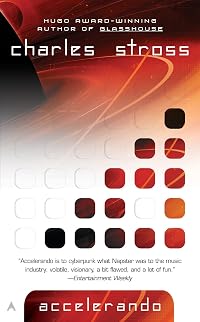
Accelerando
by Charles Stross
On This Page
Description
The Singularity. It is the era of the posthuman. Artificial intelligences have surpassed the limits of human intellect. Biotechnological beings have rendered people all but extinct. Molecular nanotechnology runs rampant, replicating and reprogramming at will. Contact with extraterrestrial life grows more imminent with each new day. Struggling to survive and thrive in this accelerated world are three generations of the Macx clan: Manfred, an entrepreneur dealing in intelligence amplification show more technology whose mind is divided between his physical environment and the Internet; his daughter, Amber, on the run from her domineering mother, seeking her fortune in the outer system as an indentured astronaut; and Sirhan, Amber's son, who finds his destiny linked to the fate of all of humanity. For something is systematically dismantling the nine planets of the solar system. Something beyond human comprehension. Something that has no use for biological life in any. show lessTags
Recommendations


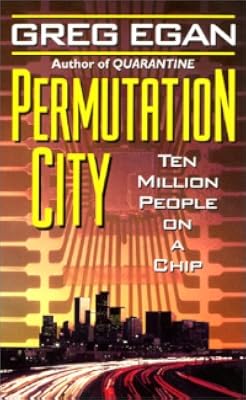
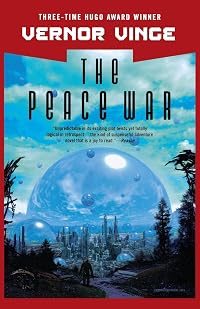
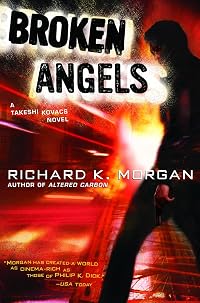
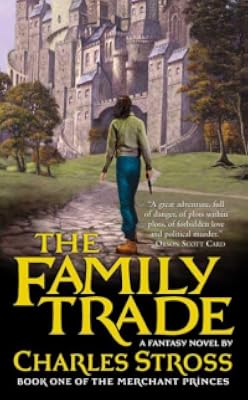
Member Recommendations
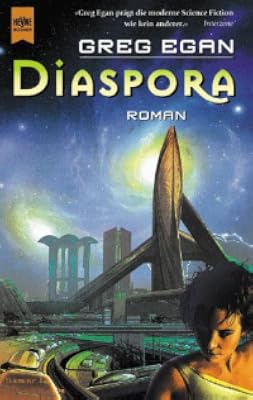
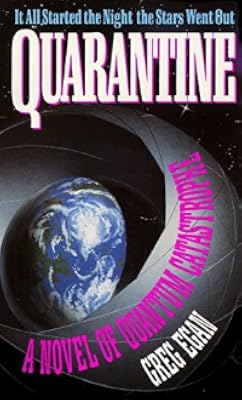
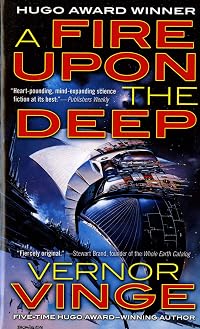
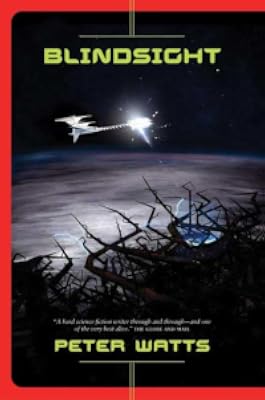
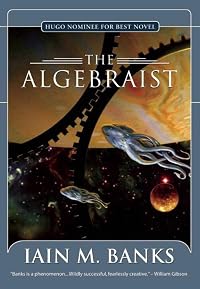
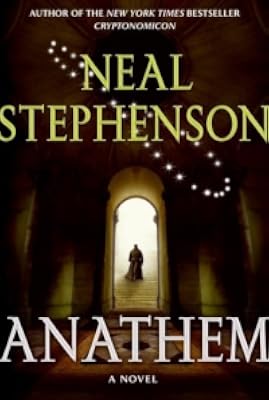
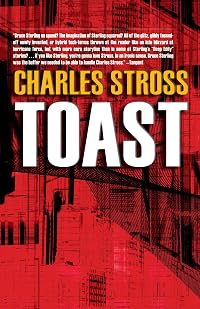
PortiaLong Extrapolation of how we interact with our informational devices and the digital world is an interesting done theme in both works.
32
Member Reviews
Accelerando combines science of the brain, economic theory, any amount of hardware, and aliens. It's post-Internet and post-Neuromancer, and moves so fast and so far and so strangely that it's main pleasure for me, not an inconsiderable pleasure, was the constant sense that it was going to spin out past the point where I could follow what was happening to its increasingly post-human world, and the thrill of feeling that I was almost keeping up. I just read that Charles Stross's previous book, Glasshouse, is one of the twenty science fiction novels that will change your life. It must be a humdinger if it's better than this, because this one certainly presents a future, or a range of futures, that are way beyond plausible or likely, and I show more would have thought until now way beyond imaginable. Like Neal Stephenson at his most exuberant, the book teems with ideas and inventions that seem to be generated and squandered for the sheer thrill of invention. (It does have a plot as well, and a satisfactory romantic thread or two.) show less
I lamented at the end of Iron Sunrise (Eschaton #2) that there wasn't a book 3. But in all the ways that matter, this is that book (even if technically it would be a prequel, and not consistent with the timeline). Everything I hoped it would be, and more.
I've criticized other books that take place in the future for only envisioning how current technologies will evolve, usually only looking at a small handful of them, and failing to see how they will interact and effect other aspects of society. Stross does no such thing, he fully embraces the Singularity and takes things to their logical extreme. What happens when superintelligent AI + neural interfaces + market based capitalism + politics + legal system + genetic engineering + VR + show more space travel + nanotechnology interact with each other?
What does it mean to be human in a world populated by AI simulations of the deceased, by uploaded versions of yourself, by distributed consciousnesses, by sentient lobsters and posthumans and intelligent financial instruments? What role does family play in a world in which relativistic travels renders your parents younger than yourself, or when you live multiple childhoods with different parents?
Let's be clear - despite the enthusiastic 5-stars, this brilliant book is far from perfect. It's aggressive, difficult, disjointed, and just barely readable in spots.
Stross makes no attempt to reign in his prodigious imagination; ideas spawn from his mad overworked brain to spill in unruly torrents over the page. The text is laden with technical terminology and jargon, and if the right word or concept or technology doesn't exist yet, he unapologetically invents it on the spot, often with only the barest of a hint of what he's talking about. While frustrating, it's also beautiful, poetry comprised not of flowery references to flowers, but instead to fractals, thermodynamics, quantum mechanics, network graphs, Dyson Spheres, and number theory.
Bottom Line: This book is audacious and challenging, bordering on the absurd - scintillating, effulgent poetry for nerds. show less
I've criticized other books that take place in the future for only envisioning how current technologies will evolve, usually only looking at a small handful of them, and failing to see how they will interact and effect other aspects of society. Stross does no such thing, he fully embraces the Singularity and takes things to their logical extreme. What happens when superintelligent AI + neural interfaces + market based capitalism + politics + legal system + genetic engineering + VR + show more space travel + nanotechnology interact with each other?
What does it mean to be human in a world populated by AI simulations of the deceased, by uploaded versions of yourself, by distributed consciousnesses, by sentient lobsters and posthumans and intelligent financial instruments? What role does family play in a world in which relativistic travels renders your parents younger than yourself, or when you live multiple childhoods with different parents?
Let's be clear - despite the enthusiastic 5-stars, this brilliant book is far from perfect. It's aggressive, difficult, disjointed, and just barely readable in spots.
Stross makes no attempt to reign in his prodigious imagination; ideas spawn from his mad overworked brain to spill in unruly torrents over the page. The text is laden with technical terminology and jargon, and if the right word or concept or technology doesn't exist yet, he unapologetically invents it on the spot, often with only the barest of a hint of what he's talking about. While frustrating, it's also beautiful, poetry comprised not of flowery references to flowers, but instead to fractals, thermodynamics, quantum mechanics, network graphs, Dyson Spheres, and number theory.
Bottom Line: This book is audacious and challenging, bordering on the absurd - scintillating, effulgent poetry for nerds. show less
Manfred Macx is a "venture altruist," someone who conceives of new technologies and patentable ideas who gives them away for free. He's a successful man because he makes others wealthy, who, in turn, cover all of his expenses. He's trying to be post money, but the IRS, still struggling to pay off America's massive debt, is after him. Normally, this wouldn't be a problem for a man like Macx, but the agent in charge of the investigation is his estranged, dominatrix wife. While on the lam in Amsterdam, he gets a call from a net-based AI built from the uploaded brain scans of lobsters that works for KGB.ru. It seems that the lobsters want to defect and escape the domineering influence of humanity and they need Macx's help.
If that sounds show more strange, it's only the beginning. We follow three generations of the Macx clan as they cope with the rapidly increasing pace of technological advancement, expansion of the human race into the solar system, and the decline of civilization as we know it.
Stross sets a heady pace here. He packs more ideas into a single chapter than most writers do in an entire novel. It's easy to get lost, but Stross provides omniscient narrator infodumps in each chapter that sound like newsreels from the first half of the 20th Century. But even with the help, there's nothing to help us stay connected with the characters. In fact, the reader must actively re-connect with them as the jumps in the narrative break the continuity. It was hardest to do with Amber, Manfred's daughter. She goes from rebellious pubescent girl on the run from her domineering mother to founding a kingdom/infohaven on one of Jupiter's moons without any sort of transition. But before we can adjust to this new setting, she's uploaded a copy of herself to an interstellar probe. Now I understand that the book is composed of a series of short stories, but for the collection which is Accelerando, I would've preferred new material that tied the individual stories together and delete the obvious repeated background which were necessary for the short stories to stand alone.
The accelerated pace of technological advancement reads like a Ray Kurzweil wet dream; something for the Singularity crowd to swoon over. Being that the time from when an author writes his manuscript to when it sees print takes some time, I thought Stross bought into Wired's fantasy puff piece: "The Long Boom," written pre-dotcom bubble burst, in which the dotcom boom was never going to end. Fortunately, Stross doesn't buy into that and he doesn't paint the Singularity as all shiny either. Instead, bad things happen as the offspring of post-humanity threaten us with extinction!
In case all of my grumbling has obscured matters, I'll reiterate that I loved reading Accelerando. Where else can self-aware corporations wielding lethal pyramid schemes do battle at an interstellar network router orbiting a neutron star with uploaded personalities fleeing an all-consuming Martioshka Brain? If your curiosity outweighs your confusion, then pick up a copy of this book. show less
If that sounds show more strange, it's only the beginning. We follow three generations of the Macx clan as they cope with the rapidly increasing pace of technological advancement, expansion of the human race into the solar system, and the decline of civilization as we know it.
Stross sets a heady pace here. He packs more ideas into a single chapter than most writers do in an entire novel. It's easy to get lost, but Stross provides omniscient narrator infodumps in each chapter that sound like newsreels from the first half of the 20th Century. But even with the help, there's nothing to help us stay connected with the characters. In fact, the reader must actively re-connect with them as the jumps in the narrative break the continuity. It was hardest to do with Amber, Manfred's daughter. She goes from rebellious pubescent girl on the run from her domineering mother to founding a kingdom/infohaven on one of Jupiter's moons without any sort of transition. But before we can adjust to this new setting, she's uploaded a copy of herself to an interstellar probe. Now I understand that the book is composed of a series of short stories, but for the collection which is Accelerando, I would've preferred new material that tied the individual stories together and delete the obvious repeated background which were necessary for the short stories to stand alone.
The accelerated pace of technological advancement reads like a Ray Kurzweil wet dream; something for the Singularity crowd to swoon over. Being that the time from when an author writes his manuscript to when it sees print takes some time, I thought Stross bought into Wired's fantasy puff piece: "The Long Boom," written pre-dotcom bubble burst, in which the dotcom boom was never going to end. Fortunately, Stross doesn't buy into that and he doesn't paint the Singularity as all shiny either. Instead, bad things happen as the offspring of post-humanity threaten us with extinction!
In case all of my grumbling has obscured matters, I'll reiterate that I loved reading Accelerando. Where else can self-aware corporations wielding lethal pyramid schemes do battle at an interstellar network router orbiting a neutron star with uploaded personalities fleeing an all-consuming Martioshka Brain? If your curiosity outweighs your confusion, then pick up a copy of this book. show less
I've read all of Charles Stross's Laundry novels, which are humorous neo-Lovecraftian espionage adventures. Those involve extensive homages to various earlier writers, with some consequent inflections of writing style. Accelerando is the first of Stross's straight-ahead science fiction books I've digested, and I presume it represents a more direct delivery of his authorial voice. (There's a simulated Lovecraft cameo at page 337, though.)
In subject matter, this book seemed most comparable to the excellent work of Ian McDonald, with an ambitious 21st-century futurology involving radical technologies of simulation, artificial intelligence, and enhancement of human capability. But true to his title, Stross imposes a pace of change far in show more excess of what I've seen in McDonald's books. He has evidently taken Moore's Law of integrated circuit development and its extrapolation in Kurzweil's Law of Accelerating Returns as the axioms of his story about what might become of our species and our planet. Not only does Stross have the intellectual fortitude to narratively stare down the "technological singularity" but he also confronts Fermi's Paradox. He enlists Ray Bradbury's notion of the matrioshka brain, Robert L. Forward's starwisp, and other inventions that seem inevitable in the face of unchecked technological development.
Given some of the topical focus, I was prepared for the futurological flavor of this book to have something in common with Olav Stapledon's Star Maker. Instead, I was surprised to sense a certain kinship to 1970s-era Robert Heinlein novels. Perhaps Heinlein's orientation to the aerospace research of his day has its analog in Stross's own background in software engineering. Moreover, the characters and their motivations are sketched in the manner that reminds me much more of Heinlein than, say, McDonald.
The novel has a triple-triadic structure, with the nine chapters having seen individual publication as short stories prior to their assembly here. As a consequence, there is something of an expositional "reset" at the start of each part, with a little redundancy and narrative hand-holding. But in light of the huge changes in context imposed by each transition from one part to the next, the effect is barely noticeable, and actually somewhat comforting. Another effect of this compositional process is that each chapter seems to have roughly the same dramatic weight as the others. The last of them could be read equally as climax or denouement, depending on the reader's inclination. Each of the three larger sections is focused on a successive generation of a single family moving deeper into the trans-human condition.
While not as overtly comedic as the Laundry books, Accelerando definitely has its share of laughs, many of them with a black sense of humor, such as the throwaway mention of cannibalistic cuisine on page 262. The characters are strong enough to keep the narrative rolling, despite its frequent interruption with bulletin-style text bringing the reader up to date on the state of (post-)human affairs for the decade in question. The entire book -- excepting the occasional retrospective glance -- is written in the present tense, and it is a mark of Stross's artistry in using this unconventional technique for novel-length fiction in English that I didn't even notice until I had read most of the way through the first large chapter. In the seven years since it has been collected into a novel, history has of course provided some contradictions to point up the status of Accelerando as a fiction, but the sort of events it proposes could still credibly be in our future. show less
In subject matter, this book seemed most comparable to the excellent work of Ian McDonald, with an ambitious 21st-century futurology involving radical technologies of simulation, artificial intelligence, and enhancement of human capability. But true to his title, Stross imposes a pace of change far in show more excess of what I've seen in McDonald's books. He has evidently taken Moore's Law of integrated circuit development and its extrapolation in Kurzweil's Law of Accelerating Returns as the axioms of his story about what might become of our species and our planet. Not only does Stross have the intellectual fortitude to narratively stare down the "technological singularity" but he also confronts Fermi's Paradox. He enlists Ray Bradbury's notion of the matrioshka brain, Robert L. Forward's starwisp, and other inventions that seem inevitable in the face of unchecked technological development.
Given some of the topical focus, I was prepared for the futurological flavor of this book to have something in common with Olav Stapledon's Star Maker. Instead, I was surprised to sense a certain kinship to 1970s-era Robert Heinlein novels. Perhaps Heinlein's orientation to the aerospace research of his day has its analog in Stross's own background in software engineering. Moreover, the characters and their motivations are sketched in the manner that reminds me much more of Heinlein than, say, McDonald.
The novel has a triple-triadic structure, with the nine chapters having seen individual publication as short stories prior to their assembly here. As a consequence, there is something of an expositional "reset" at the start of each part, with a little redundancy and narrative hand-holding. But in light of the huge changes in context imposed by each transition from one part to the next, the effect is barely noticeable, and actually somewhat comforting. Another effect of this compositional process is that each chapter seems to have roughly the same dramatic weight as the others. The last of them could be read equally as climax or denouement, depending on the reader's inclination. Each of the three larger sections is focused on a successive generation of a single family moving deeper into the trans-human condition.
While not as overtly comedic as the Laundry books, Accelerando definitely has its share of laughs, many of them with a black sense of humor, such as the throwaway mention of cannibalistic cuisine on page 262. The characters are strong enough to keep the narrative rolling, despite its frequent interruption with bulletin-style text bringing the reader up to date on the state of (post-)human affairs for the decade in question. The entire book -- excepting the occasional retrospective glance -- is written in the present tense, and it is a mark of Stross's artistry in using this unconventional technique for novel-length fiction in English that I didn't even notice until I had read most of the way through the first large chapter. In the seven years since it has been collected into a novel, history has of course provided some contradictions to point up the status of Accelerando as a fiction, but the sort of events it proposes could still credibly be in our future. show less
Stross trowels on just enough mortar - much of it in the clunky form of offset, bolded exposition - to make a more or less coherent generational tale out of the original short stories. You're surfing a tsunami of future-tech-jargon, but it is at least consistent jargon which makes for a suitably bewildering atmosphere. The ideas are super-fun, although some of them are victims of their own success in that they've since become clichés reminiscent of The New Space Opera bot (uploaded cats, borganisms etc.) In general, though, the concepts here have dated pretty well over the 15 years since publication, with the hilarious exception of the blogosphere still being a thing in the 2020's. I adore all the mad stuff with people uploading their show more minds into a flock of pigeons or an orangutan, kids impaling each other in the playground because they can just be resurrected afterwards, all that cool stuff that comes from not being caged inside the too too solid flesh. An amusing cameo from HP Lovecraft when he is resurrected on Saturn without his consent.
Unfortunately all the fun stuff comes with a downside, which is that when everyone is effectively immortal with no serious resource constraints, the tension leaks from the narrative like air from a punctured spacesuit. The book becomes a mere cabinet of wonders as the characters indulge their whims without any real skin in the game. Sure, there's this idea that the "Vile Offspring", Stross's terrific term for the incomprehensible AI arising from the singularity, want to chase the plucky posthumans out of the solar system altogether - but even then, they end up in a pretty cushy place. The story spans the galaxy but doesn't really go anywhere.
Oh, and what is it with the French and Italian characters whose add-ons give them perfect English, except for frequent inexplicable minor errors in word order which would never be made by native speakers of French or Italian? Bizarre. show less
Unfortunately all the fun stuff comes with a downside, which is that when everyone is effectively immortal with no serious resource constraints, the tension leaks from the narrative like air from a punctured spacesuit. The book becomes a mere cabinet of wonders as the characters indulge their whims without any real skin in the game. Sure, there's this idea that the "Vile Offspring", Stross's terrific term for the incomprehensible AI arising from the singularity, want to chase the plucky posthumans out of the solar system altogether - but even then, they end up in a pretty cushy place. The story spans the galaxy but doesn't really go anywhere.
Oh, and what is it with the French and Italian characters whose add-ons give them perfect English, except for frequent inexplicable minor errors in word order which would never be made by native speakers of French or Italian? Bizarre. show less
This would have been a five-star rating, given its incisive presentation of a lot of singularitarian concepts, economic extrapolations from current trends, well conceived centuries-spanning plotlines, and cycle through a series of engaging sub-storylines, if not for one drastic failure. The author engages in rather blatantly willful ignorance of the single biggest problem of his vision of transhumanism, providing exactly nothing to address the fact that the obvious interpretation of his version of technological "immortality" is of egotistical perpetuation of one's influence on the world in an act of personal suicide. The biggest problem facing the "upload" concept of transhumanist immortality in speculative fiction is the fact that show more copying a mind then killing the body in which the original lives is not actually uploading consciousness so much as creating a clone and ceding control of one's identity to that clone.
It's a problem addressed exceedingly well in the writings of Greg Egan and William Gibson, among others -- especially in Gibson's story Winter Market, which addresses the egotistical suicide-immortality attitude as well as the underlying problem that it actually is nothing but suicide and cloning. Meanwhile, Accelerando just ignores the problem altogether, as if failing to address it will ensure readers never catch on to the existence of the man behind the curtain. Stross takes an even more bafflingly ineffectual approach to the matter in Rapture of the Nerds, his collaboration with Cory Doctorow, where the authors confront the problem head-on then choose to dismiss it without meaningful justification, so this problem seems endemic to Stross' thinking rather than a momentary curiosity in one book.
The upshot, in any case, is that a glaring flaw in the thinking behind the construction of the plot and the world in which it evolves keeps this book from being a solid five stars, but the book is so good on matters other than this one problem that it does not quite deserve to be reduced to below four stars. show less
It's a problem addressed exceedingly well in the writings of Greg Egan and William Gibson, among others -- especially in Gibson's story Winter Market, which addresses the egotistical suicide-immortality attitude as well as the underlying problem that it actually is nothing but suicide and cloning. Meanwhile, Accelerando just ignores the problem altogether, as if failing to address it will ensure readers never catch on to the existence of the man behind the curtain. Stross takes an even more bafflingly ineffectual approach to the matter in Rapture of the Nerds, his collaboration with Cory Doctorow, where the authors confront the problem head-on then choose to dismiss it without meaningful justification, so this problem seems endemic to Stross' thinking rather than a momentary curiosity in one book.
The upshot, in any case, is that a glaring flaw in the thinking behind the construction of the plot and the world in which it evolves keeps this book from being a solid five stars, but the book is so good on matters other than this one problem that it does not quite deserve to be reduced to below four stars. show less
according to most people who care about this stuff, is the point in time where technology progresses at such a rate that it becomes impossible to understand what happens next for people who are living *before* the singularity.
I humbly propose an alternate explanation: it's the point in time after which I stop caring about the characters in a science fiction novel. So, in this case, the Singularity happens around page 120.
From then onwards, I was reading on autopilot... the author is good at describing mega-homungous-hyper-concepts and has surely a good grasp of a large number of scientific fields, a vast arrays of memes and is happy to throw in-jokes at his Slashdot crowd... problem is, when things get really really very advanced, life show more and death stop to have meaning, reality can be bent at will and everything (and everyone) is a virtual machine running some sort of simulation sofware, possibly on a stack of other virtual machines simulating everything above and below every layer of reality....
Who cares?
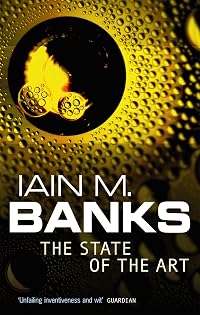
Not me. I suppose that The Culture could be considered post-singularity, but -maybe by injecting a good dose of Good Old Space Opera tropes, Banks succeeds in keeping me interested in his characters and plots. Or at least it does most of the time. show less
I humbly propose an alternate explanation: it's the point in time after which I stop caring about the characters in a science fiction novel. So, in this case, the Singularity happens around page 120.
From then onwards, I was reading on autopilot... the author is good at describing mega-homungous-hyper-concepts and has surely a good grasp of a large number of scientific fields, a vast arrays of memes and is happy to throw in-jokes at his Slashdot crowd... problem is, when things get really really very advanced, life show more and death stop to have meaning, reality can be bent at will and everything (and everyone) is a virtual machine running some sort of simulation sofware, possibly on a stack of other virtual machines simulating everything above and below every layer of reality....
Who cares?
Not me. I suppose that The Culture could be considered post-singularity, but -maybe by injecting a good dose of Good Old Space Opera tropes, Banks succeeds in keeping me interested in his characters and plots. Or at least it does most of the time. show less
Members
- Recently Added By
Lists

Best Science Fiction Novels
816 works; 426 members

Favourite Science Fiction Books of the 21st Century
47 works; 8 members

Top Five Books of 2013
1,562 works; 721 members

Best Cyberpunk
41 works; 7 members

Space Colonization
100 works; 26 members

Locus Award for Best Novel/SF Novel
53 works; 6 members

Singularity
12 works; 1 member

Arthur C. Clarke Award Winners and Shortlisted Books
219 works; 14 members

Schisms in transhumanity - SF
34 works; 1 member
Isaac Arthur’s Book Recommendations
98 works; 3 members

TED 2013 Summer Reading List
190 works; 13 members

Books Read in 2014
2,343 works; 89 members

Simulated Reality in Fiction
124 works; 7 members
Broderick and Di Filippo's Science Fiction: The 101 Best Novels 1985-2010
103 works; 7 members

Books Read in 2018
4,360 works; 110 members

Books That Changed Our Perspective
423 works; 168 members
Author Information

119+ Works 45,424 Members
Born in Leeds, England, Charles Stross knew he wanted to be a science fiction writer from the age of six. Despite this, he went to university in London and qualified as a Pharmacist. He made his first writing sale to Interzone in 1986, and sold about a dozen stories elsewhere throughout the late 1980s and early 1990s. He now writes fiction show more full-time, has sold about 16 novels, has won one Hugo award and been nominated nearly a dozen times, and has been translated into about a dozen languages. He is the author of the Merchant Princes series. His latest book, The Revolution Business, is the fifth in this series. He lives in Edinburgh, Scotland, with his wife Feorag. (Bowker Author Biography) show less
Some Editions
Awards and Honors
Awards
Distinctions
Notable Lists
Series
Belongs to Publisher Series
Work Relationships
Contains
Is abridged in
Common Knowledge
- Canonical title
- Accelerando
- Original title
- Accelerando
- Original publication date
- 2005-07
- People/Characters
- Manfred Macx; Amber Macx; Aineko
- Dedication
- For Feòrag, with love
- First words
- Manfred's on the road again, making strangers rich.
- Last words
- (Click to show. Warning: May contain spoilers.)She smiles gratefully, and they walk toward the gateway together, to find out how their descendants are dealing with their sudden freedom.
- Publisher's editor
- Buchanan, Ginjer
- Blurbers
- Doctorow, Cory; MacLeod, Ken; Vinge, Vernor; Wilson, Andrew
- Original language
- English
Classifications
Statistics
- Members
- 3,586
- Popularity
- 4,547
- Reviews
- 129
- Rating
- (3.74)
- Languages
- 9 — Czech, English, Estonian, French, German, Italian, Polish, Spanish, Ukrainian
- Media
- Paper, Audiobook, Ebook
- ISBNs
- 25
- ASINs
- 10