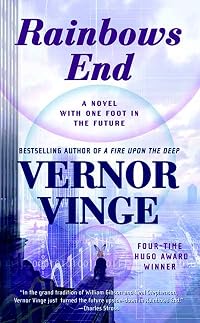
Rainbows End
by Vernor Vinge
On This Page
Description
In a near-future western civilization that is threatened by corruptive practices within its technologically advanced information networks, a recovered Alzheimer's victim and his family are caught up in a dangerous maelstrom beyond their worst imaginings.Tags
Recommendations




Member Recommendations
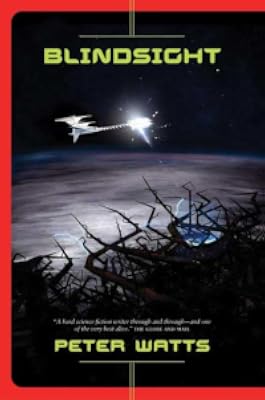
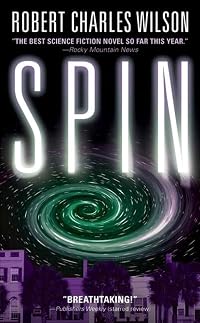
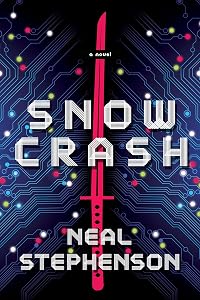
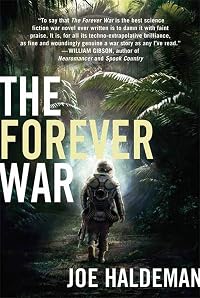
sdobie Near future thriller in an always-online world.
by hairball
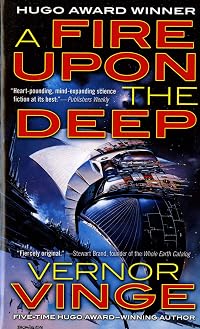
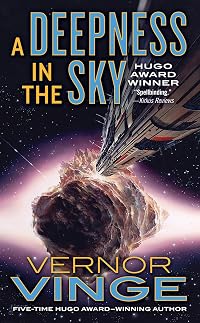
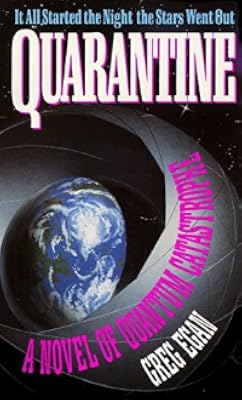
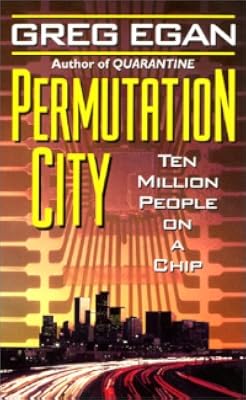
PortiaLong Extrapolation of how we interact with our informational devices and the digital world is an interesting done theme in both works.
11
Member Reviews
Rainbows End blends some really interesting futurism with much less worthwhile plots about family drama and the whole idea of spooky power, and while the story builds to an explosive climax, the different thematic lines never really come together, leaving the book less than the sum of its parts.
Let's start with the setting, since that's the real star of the book. It was Bruce Sterling who observed that nothing obsolesces like the future. From about 2006, Vinge imagined a strange and radically different 2026, where the dominant technology was wearable computing, with kids using ensemble coding to created augmented realities and fantasy universes. Everything is full of non-user servicable parts, innovation is ramping up at a breakneck show more pace, and schools have evolved into virtual collaborative environments where students work on applied projects and hope to catch the eye of a real business or major fandom circle.
Our entry into this world is Robert Gu, a "retread" senior citizen. Once a gifted poet, Robert nearly succumb to Alzhimer's before a miracle of the "medical minefield" of advanced biotechnology restored him to teenagehood. Now he's living with his middle-aged son Bob and his family, going back to a Vocational High School to learn how to use the new technology. The problem is that Robert Gu, aside from being a genius poet, was also a legendary asshole, and he's on thin ice with his kids. Robert falls in with a similar group of retreads who are trying to save the books in the UCSD Geisel Library (a truly cool piece of brutalist architecture) from a plan to shred and digitize him. Meanwhile, his granddaughter Miri is trying to set him up with like-minded friends and an adoring grad student so he's not so much of an asshole, and fellow student Juan Orozco is teaching Robert Gu how to use technology in exchange for learning how to use words like a poet.
But Robert Gu's problems adapting to modernity and making up for a lifetime of abuse are small potatoes compared to the spooky side of the story. Modern technology makes it possible to kill a lot of people very quickly, and only through constant vigilance by the intelligence services of the Great Powers (and the DHS mandated Secure Hardware Environment) is it possible to avert one of a million apocalypses. A group of Indo-European spooks detected a weapons test of You Gotta Believe Me technology--basically mind control, which is under development at a UCSD affiliated biotech lab, and engage the enigmatic Mr. Rabbit to break into the lab. The problem is that their most senior member is actually the mastermind behind the program, a man who believes that it may be necessary to enslave humanity to save them. Oh, and Bob Gu and his wife Alice are also high level spooks themselves in the USMC, which is a full-fledged cyber-intervention force.
The plot loops around these topics and converge on a single night when opposing fandoms battle for control of the Geisel Library in an immense augmented reality battle, Robery Gu and his friends stage a break-in at UCSD to save the books, acting as the hands of the intelligence operatives, who finally act against each other/Mr. Rabbit--who may be a rogue AI. A platoon of USMC rapid response forces make an assault on UCSD, backed up with everything from netwar drones to nukes, but it's to Miri and Robert and Juan as the hands on the ground to foil the plot and save the day. Which they do.
But both the mastermind and Mr. Rabbit get away, status quo ante restored. Robert becomes an okay programmer instead of a great poet, and may only be cranky rather than irredeemably cruel. The Library becomes an augmented reality library, but with some real books. Again and again, it turns out that both sides were being manipulated by a power above them, but that conspiracy was for the Greater Good. From an emotional level, it's immensely dissatisfying.
The futurism holds up surprisingly well. The online world of 2006 was very different. Youtube had just come into being, Facebook was restricted to colleges, the first iPhone was in the future, Uber and Airbnb and the million other parts of the "Sharing economy" didn't exist. Augmented reality and wereable computing were very much lab demos, and not anything that consumers could buy (well, they still aren't really, but give it a decade). Vinge misses a lot of the contemporary feel of social media, but who knows, that could change as well. In one of his more clever bits, he imagines the 'vandal charity' of Friends of Privacy, which exists solely to obscure web-searchable facts about people with plausible lies.
The thing that Vinge misses, and what he really needed to grapple with to drive this book home, is the difference between Power, Wealth, and Prestige. Roughly, power is the ability to make people do what you want, and this book believes in the power of information control and conspiracies, while also making traditional power very weak, teetering on a knife-edge of rogue destruction. Strict descriptions of wealth, the ability to get what you want, are danced around in a very American way. The characters are constantly anxious about being broke, but none of them appear to be under any actual material pressure. The ultra-wealthy appear to be able to make their own laws, but the only thing they do is the strange library transformation project. Finally, there's prestige, something that Robert Gu and all the retreads are immensely concerned with. Prestige might also accrue through the belief circles and gaming, but no one truly leet shows up to demonstrate the difference between the deliberate obscurity of the spooks and the glamour of the new stars. I think more philosophical clarity on these points would have helped Vinge focus the plot and characters of his story.
And on that note, while the setting was truly cool, and an interesting comparison of Silicon Valley ideology next to The Diamond Age, the characters and plot were very close to Vinge's previous two Hugo winners. Another grumpy old man out of time with the potential for greatness and evil. Another precocious young girl who learns to save the day. Another spies' war of information that culminates in a rapid and shadowy duel between great powers. You know what intelligence professionals say about anything that happens three times... show less
Let's start with the setting, since that's the real star of the book. It was Bruce Sterling who observed that nothing obsolesces like the future. From about 2006, Vinge imagined a strange and radically different 2026, where the dominant technology was wearable computing, with kids using ensemble coding to created augmented realities and fantasy universes. Everything is full of non-user servicable parts, innovation is ramping up at a breakneck show more pace, and schools have evolved into virtual collaborative environments where students work on applied projects and hope to catch the eye of a real business or major fandom circle.
Our entry into this world is Robert Gu, a "retread" senior citizen. Once a gifted poet, Robert nearly succumb to Alzhimer's before a miracle of the "medical minefield" of advanced biotechnology restored him to teenagehood. Now he's living with his middle-aged son Bob and his family, going back to a Vocational High School to learn how to use the new technology. The problem is that Robert Gu, aside from being a genius poet, was also a legendary asshole, and he's on thin ice with his kids. Robert falls in with a similar group of retreads who are trying to save the books in the UCSD Geisel Library (a truly cool piece of brutalist architecture) from a plan to shred and digitize him. Meanwhile, his granddaughter Miri is trying to set him up with like-minded friends and an adoring grad student so he's not so much of an asshole, and fellow student Juan Orozco is teaching Robert Gu how to use technology in exchange for learning how to use words like a poet.
But Robert Gu's problems adapting to modernity and making up for a lifetime of abuse are small potatoes compared to the spooky side of the story. Modern technology makes it possible to kill a lot of people very quickly, and only through constant vigilance by the intelligence services of the Great Powers (and the DHS mandated Secure Hardware Environment) is it possible to avert one of a million apocalypses. A group of Indo-European spooks detected a weapons test of You Gotta Believe Me technology--basically mind control, which is under development at a UCSD affiliated biotech lab, and engage the enigmatic Mr. Rabbit to break into the lab. The problem is that their most senior member is actually the mastermind behind the program, a man who believes that it may be necessary to enslave humanity to save them. Oh, and Bob Gu and his wife Alice are also high level spooks themselves in the USMC, which is a full-fledged cyber-intervention force.
The plot loops around these topics and converge on a single night when opposing fandoms battle for control of the Geisel Library in an immense augmented reality battle, Robery Gu and his friends stage a break-in at UCSD to save the books, acting as the hands of the intelligence operatives, who finally act against each other/Mr. Rabbit--who may be a rogue AI. A platoon of USMC rapid response forces make an assault on UCSD, backed up with everything from netwar drones to nukes, but it's to Miri and Robert and Juan as the hands on the ground to foil the plot and save the day. Which they do.
But both the mastermind and Mr. Rabbit get away, status quo ante restored. Robert becomes an okay programmer instead of a great poet, and may only be cranky rather than irredeemably cruel. The Library becomes an augmented reality library, but with some real books. Again and again, it turns out that both sides were being manipulated by a power above them, but that conspiracy was for the Greater Good. From an emotional level, it's immensely dissatisfying.
The futurism holds up surprisingly well. The online world of 2006 was very different. Youtube had just come into being, Facebook was restricted to colleges, the first iPhone was in the future, Uber and Airbnb and the million other parts of the "Sharing economy" didn't exist. Augmented reality and wereable computing were very much lab demos, and not anything that consumers could buy (well, they still aren't really, but give it a decade). Vinge misses a lot of the contemporary feel of social media, but who knows, that could change as well. In one of his more clever bits, he imagines the 'vandal charity' of Friends of Privacy, which exists solely to obscure web-searchable facts about people with plausible lies.
The thing that Vinge misses, and what he really needed to grapple with to drive this book home, is the difference between Power, Wealth, and Prestige. Roughly, power is the ability to make people do what you want, and this book believes in the power of information control and conspiracies, while also making traditional power very weak, teetering on a knife-edge of rogue destruction. Strict descriptions of wealth, the ability to get what you want, are danced around in a very American way. The characters are constantly anxious about being broke, but none of them appear to be under any actual material pressure. The ultra-wealthy appear to be able to make their own laws, but the only thing they do is the strange library transformation project. Finally, there's prestige, something that Robert Gu and all the retreads are immensely concerned with. Prestige might also accrue through the belief circles and gaming, but no one truly leet shows up to demonstrate the difference between the deliberate obscurity of the spooks and the glamour of the new stars. I think more philosophical clarity on these points would have helped Vinge focus the plot and characters of his story.
And on that note, while the setting was truly cool, and an interesting comparison of Silicon Valley ideology next to The Diamond Age, the characters and plot were very close to Vinge's previous two Hugo winners. Another grumpy old man out of time with the potential for greatness and evil. Another precocious young girl who learns to save the day. Another spies' war of information that culminates in a rapid and shadowy duel between great powers. You know what intelligence professionals say about anything that happens three times... show less
Rereading Rainbows End has been an unexpected pleasure. I remember its satire of Google Books taking paper copies apart for scanning. (By the way, in Service Model, Adrian Tchaikovsky goes Vinge one better on that score.) This time, I noticed his updating of Aldous Huxley’s Brave New World. His hero, Robert Gu, is a retired literature professor and poet from the University of California at San Diego, where Vinge taught. When he wakes from the mental fog of years of Alzheimer’s disease, cured by some post-singularity medicine, he finds himself in a brave new world where he doesn’t fit. Poetry has been supplanted by multimedia creations that augment reality. He must return to high school to learn the computer skills every kid now show more knows. He is as much a displaced person as Huxley’s John Savage. He is finally saved from the tragedy that ends Brave New World by becoming a new man who can connect with others in ways that have nothing to do with technology.
Vinge bought into the idea of a rapid, near-future technological singularity that strains credulity. If you grant him his premise, Vinge writes a good story. show less
Vinge bought into the idea of a rapid, near-future technological singularity that strains credulity. If you grant him his premise, Vinge writes a good story. show less
Meh. This novel has virtues and flaws that are typical of Vinge.
Chief among the flaws is that there are too many characters. They’re hard to keep track of. Also, Vinge indulges in a fascination with technology to the extent that the plot is overshadowed. Yes, this is a standard hazard with science fiction, but for precisely that reason a professional SF writer should be on guard for it. These first two problems create a third: the pacing suffers.
The virtues I’ll get to later, but other things first.
The setting. In the future, everything is wired. You can see in the dark because the world is littered with cameras that are beaming out IR and UV and routing what they see to your wearable computer, which routes the info to your show more computerized contact lenses. You can see through walls in the same way. You can walk heedlessly into traffic on a busy superhighway with no danger, because every car is computer-controlled, and they, with superhuman speed, alter their paths around you. You can dance in realtime with people on the other side of the planet. Etc.
This is all very cool... if one doesn’t think about the Orwellian aspects: the government knows everything you’re doing all the time. Indeed, it’s illegal to have any IT that lacks a Department of Homeland Security monitoring/ controlling chip.
Biotech and nanotech are also very advanced, which takes us to...
The plot. As the book opens, someone - no one knows who - has invented biotechnology that lets them manipulate other people’s beliefs and behavior, as in, “We’ll rearrange their neural structures to make them believe anything we tell them.” That ain’t good.
A union of intelligence agencies in Europe and Asia traces this tech to a lab at the University of California’s San Diego campus. They want to infiltrate the lab to learn who developed this tech and, more importantly, destroy it. However, to avoid conflict - this is espionage by foreign powers on US soil - they plan to work through a cutout.
The cutout is Rabbit, a virtual presence who takes the form of, well, guess. They don’t know who Rabbit really is; they don’t even know if it’s a person, a business organization, a government actor, a consortium of several such entities, or what. All they know is that “he” has a good record of past computer thefts, pranks, etc., and he’s never been caught.
Rabbit doesn’t really know what he’s helping them to acquire, and two of the three intelligence operatives don’t either - they’re all being manipulated by the third one. The third one, a director of a European intelligence operation, wants to acquire the new tech instead of destroy it.
There is a separate set of people who live near the U. Cal. San Diego campus who are manipulated into acting as the on-scene hands of the infiltration operation. This set of people is too large to conveniently describe. They all have different desires, and are promised different things by the espionage consortium, to elicit their cooperation. This is where Vinge’s lack of self-discipline with the number of characters really hurts. I’ll spare you.
After a lot of slow development that makes it a chore to read, everything comes to a head one night on the U. Cal. San Diego campus. The espionage group executes a raid on the biolab. The group has arranged for a riot to occur that night to distract campus security and cause general chaos to provide cover for the raid.
The riot takes the form of a clash between two groups of fiction fans contending (mostly non-violently) over the fate of the campus library. The library’s fate is uncertain because all its printed material is being transferred to digital formats; there is conflict over what to do with the ’brary after the transition is complete.
There is a cool scene during the riot, in which the active stabilization hydraulics that are used to earthquake-proof the library are taken over by some hacker. They use it to make the library get up and walk. This is absurd, obviously, but it’s a cool image. Here is a photo of the UCSD campus library, described accurately by Vinge, and yeah, it would be cool to see that thing striding around, looking like an alien explorer-bot freestylin’ around on Earth until the Mother Ship lands to take it back.
In the end the attempt to acquire the bad biotech is defeated and the tech is mostly destroyed. A little of it is preserved inside the brains of lab mice, some of whom escape into the wild during the riot, but as far as we know that never leads anywhere. (20 years later: “I feel compelled to provide cheese to random mice. Why am I doing this?”)
The novel does have some virtues, to wit:
• A few cool scenes like the library walking.
• The rioting fictional groups, Skootchies and Hacekians. They take their costumes from various works of fiction, mostly in the form of fanciful beasts, warriors, aliens, monsters, etc.
• Rabbit is an amusing character, who perhaps should have been given more "screen time," but... at the end we are still unaware of what it actually is! I think this is because the two most interesting possibilities, AI and ETs, have been used by Vinge before. In True Names, he first hinted that a mysterious hacker was an alien, before revealing that it was actually (human-created) AI. So there's an interesting pair of possibilities, both of which Vinge had already used, and he didn’t want to repeat himself. So what does he do? He refuses to solve the riddle! Gah! Vinge!
In the end, essentially nothing in this fictional world has changed. People have some fun memories of creative rioting and a walking library, but otherwise everything is pretty much as it was before.
This defies one of the principal desiderata of the novel as a literary form: that a situation and/or a character change so that in the end, the world, or at least the protagonist’s personal world, is different. Even in the “save the world from blowing up” genre, it should not be that the only thing that happens is that the world is in peril but then is saved. The hero/heroine should have learned something, or achieved something personal, along the way. Or the world should be at a new equilibrium, as in, “Double-Oh-Seven, the world has now had three narrowly-averted disasters involving ketchup, guitar strings, and snowboards, and this last one was the worst of all. This has caused us to establish a multinational Ketchup, Guitar String, and Snowboard Task Force, such that this peril will never threaten the world again! We’re safe!” In other words, the planet is in a new, better situation compared to the start of the novel.
So at the end of Rainbows End, we’re right where we started. Yeah, we saw some cool implications of a thoroughly-wired world along the way, but... that’s not really enough. show less
Chief among the flaws is that there are too many characters. They’re hard to keep track of. Also, Vinge indulges in a fascination with technology to the extent that the plot is overshadowed. Yes, this is a standard hazard with science fiction, but for precisely that reason a professional SF writer should be on guard for it. These first two problems create a third: the pacing suffers.
The virtues I’ll get to later, but other things first.
The setting. In the future, everything is wired. You can see in the dark because the world is littered with cameras that are beaming out IR and UV and routing what they see to your wearable computer, which routes the info to your show more computerized contact lenses. You can see through walls in the same way. You can walk heedlessly into traffic on a busy superhighway with no danger, because every car is computer-controlled, and they, with superhuman speed, alter their paths around you. You can dance in realtime with people on the other side of the planet. Etc.
This is all very cool... if one doesn’t think about the Orwellian aspects: the government knows everything you’re doing all the time. Indeed, it’s illegal to have any IT that lacks a Department of Homeland Security monitoring/ controlling chip.
Biotech and nanotech are also very advanced, which takes us to...
The plot. As the book opens, someone - no one knows who - has invented biotechnology that lets them manipulate other people’s beliefs and behavior, as in, “We’ll rearrange their neural structures to make them believe anything we tell them.” That ain’t good.
A union of intelligence agencies in Europe and Asia traces this tech to a lab at the University of California’s San Diego campus. They want to infiltrate the lab to learn who developed this tech and, more importantly, destroy it. However, to avoid conflict - this is espionage by foreign powers on US soil - they plan to work through a cutout.
The cutout is Rabbit, a virtual presence who takes the form of, well, guess. They don’t know who Rabbit really is; they don’t even know if it’s a person, a business organization, a government actor, a consortium of several such entities, or what. All they know is that “he” has a good record of past computer thefts, pranks, etc., and he’s never been caught.
Rabbit doesn’t really know what he’s helping them to acquire, and two of the three intelligence operatives don’t either - they’re all being manipulated by the third one. The third one, a director of a European intelligence operation, wants to acquire the new tech instead of destroy it.
There is a separate set of people who live near the U. Cal. San Diego campus who are manipulated into acting as the on-scene hands of the infiltration operation. This set of people is too large to conveniently describe. They all have different desires, and are promised different things by the espionage consortium, to elicit their cooperation. This is where Vinge’s lack of self-discipline with the number of characters really hurts. I’ll spare you.
After a lot of slow development that makes it a chore to read, everything comes to a head one night on the U. Cal. San Diego campus. The espionage group executes a raid on the biolab. The group has arranged for a riot to occur that night to distract campus security and cause general chaos to provide cover for the raid.
The riot takes the form of a clash between two groups of fiction fans contending (mostly non-violently) over the fate of the campus library. The library’s fate is uncertain because all its printed material is being transferred to digital formats; there is conflict over what to do with the ’brary after the transition is complete.
There is a cool scene during the riot, in which the active stabilization hydraulics that are used to earthquake-proof the library are taken over by some hacker. They use it to make the library get up and walk. This is absurd, obviously, but it’s a cool image. Here is a photo of the UCSD campus library, described accurately by Vinge, and yeah, it would be cool to see that thing striding around, looking like an alien explorer-bot freestylin’ around on Earth until the Mother Ship lands to take it back.
In the end the attempt to acquire the bad biotech is defeated and the tech is mostly destroyed. A little of it is preserved inside the brains of lab mice, some of whom escape into the wild during the riot, but as far as we know that never leads anywhere. (20 years later: “I feel compelled to provide cheese to random mice. Why am I doing this?”)
The novel does have some virtues, to wit:
• A few cool scenes like the library walking.
• The rioting fictional groups, Skootchies and Hacekians. They take their costumes from various works of fiction, mostly in the form of fanciful beasts, warriors, aliens, monsters, etc.
• Rabbit is an amusing character, who perhaps should have been given more "screen time," but... at the end we are still unaware of what it actually is! I think this is because the two most interesting possibilities, AI and ETs, have been used by Vinge before. In True Names, he first hinted that a mysterious hacker was an alien, before revealing that it was actually (human-created) AI. So there's an interesting pair of possibilities, both of which Vinge had already used, and he didn’t want to repeat himself. So what does he do? He refuses to solve the riddle! Gah! Vinge!
In the end, essentially nothing in this fictional world has changed. People have some fun memories of creative rioting and a walking library, but otherwise everything is pretty much as it was before.
This defies one of the principal desiderata of the novel as a literary form: that a situation and/or a character change so that in the end, the world, or at least the protagonist’s personal world, is different. Even in the “save the world from blowing up” genre, it should not be that the only thing that happens is that the world is in peril but then is saved. The hero/heroine should have learned something, or achieved something personal, along the way. Or the world should be at a new equilibrium, as in, “Double-Oh-Seven, the world has now had three narrowly-averted disasters involving ketchup, guitar strings, and snowboards, and this last one was the worst of all. This has caused us to establish a multinational Ketchup, Guitar String, and Snowboard Task Force, such that this peril will never threaten the world again! We’re safe!” In other words, the planet is in a new, better situation compared to the start of the novel.
So at the end of Rainbows End, we’re right where we started. Yeah, we saw some cool implications of a thoroughly-wired world along the way, but... that’s not really enough. show less
I'm torn about this book.
On the one hand, the ideas presented about the cyberfuture and medical utopia are compelling, truly futuristic, solidly grounded in the present and completely developed. Mr. Vinge has extrapolated a networked near future full of technological miracles and complications. Anyone working or playing in the field of computers, gaming and networks, as I do, can easily start to believe in the inevitability of the vision. The reader loses track of the here and now, living entirely in that other world. Several main characters are full of life and motivation, I found myself yearning to learn what they would do next and why. They often surprised me.
On the other hand, getting there was somewhat laborious. The novelty and show more virtuality of the invented future, the mystery surrounding several characters and their motivations, and the obscure nature of many fantasies within the fantasy made some scenes difficult to wade through. Even at the end of the book, not everything or everyone is explained. On the one hand, I believe this is intentional. Hats off to Mr. Vinge for not spoon feeding the reader and allowing us to fill in the blanks with our own imaginations. On the other hand, I know there are potential readers that will be left completely at sea.
This is thought-provoking, challenging science fiction at its finest. If you want to know where our technology and entertainment choices are taking us, this might be it. show less
On the one hand, the ideas presented about the cyberfuture and medical utopia are compelling, truly futuristic, solidly grounded in the present and completely developed. Mr. Vinge has extrapolated a networked near future full of technological miracles and complications. Anyone working or playing in the field of computers, gaming and networks, as I do, can easily start to believe in the inevitability of the vision. The reader loses track of the here and now, living entirely in that other world. Several main characters are full of life and motivation, I found myself yearning to learn what they would do next and why. They often surprised me.
On the other hand, getting there was somewhat laborious. The novelty and show more virtuality of the invented future, the mystery surrounding several characters and their motivations, and the obscure nature of many fantasies within the fantasy made some scenes difficult to wade through. Even at the end of the book, not everything or everyone is explained. On the one hand, I believe this is intentional. Hats off to Mr. Vinge for not spoon feeding the reader and allowing us to fill in the blanks with our own imaginations. On the other hand, I know there are potential readers that will be left completely at sea.
This is thought-provoking, challenging science fiction at its finest. If you want to know where our technology and entertainment choices are taking us, this might be it. show less
The odd future described by this book is both depressing and hopeful. It is a world in which humans regularly retreat into virtual reality, often corresponding to their chosen ‘belief circles,’ as an interface to the real world and yet they remain curious, productive and creative. There are large ‘Big Brother’ governments but they are mostly benign. There is very little privacy and yet people seem to respect one another’s individuality. There is an ever looming threat that terrorists will use real weapons of mass destruction against civilians but people in general seem to honestly abhor violence. People group themselves into belief circles with complex mythos based on various things from Terry Pratchett’s Discworld to show more something that sounds much like Pokemon but these seem to be viewed more as matters of taste than uncompromising religious “truths” so there remains room for compromise and agreement among their followers.
This juxtaposition of positive and negative extends to the characters. It is told from multiple points of view, primarily that of Robert Gu, once a renowned poet and a complete jerk in his personal life who is being successfully treated for several aging related illnesses including Alzheimer’s. Once he begins to regain his mind, he starts out as the SOB he used to be but he grows into far more empathetic person. The antagonist, Alfred Vaz, is attempting to develop something that sounds very much like mind control but he is doing so in an effort to protect people and create a more peaceful world and he is honestly upset when Gu’s granddaughter is endangered because of events that unfold ultimately from Gu’s efforts to stop him.
The book requires some work on the part of the reader. First of all the virtual reality aspect often makes it difficult to tell what is “real” and what isn’t. It also isn’t a simple good guy versus bad guy adventure tale. The characters are more complex than that and they grow and change through the course of the book. And there are a few loose threads left hanging, most notably who or what is “Rabbit?” But I hesitate to call these flaws. This ambiguity is part of the theme of this book and Vinge’s merging of dystopian and utopian views of the future make this an interesting and thought provoking read. show less
This juxtaposition of positive and negative extends to the characters. It is told from multiple points of view, primarily that of Robert Gu, once a renowned poet and a complete jerk in his personal life who is being successfully treated for several aging related illnesses including Alzheimer’s. Once he begins to regain his mind, he starts out as the SOB he used to be but he grows into far more empathetic person. The antagonist, Alfred Vaz, is attempting to develop something that sounds very much like mind control but he is doing so in an effort to protect people and create a more peaceful world and he is honestly upset when Gu’s granddaughter is endangered because of events that unfold ultimately from Gu’s efforts to stop him.
The book requires some work on the part of the reader. First of all the virtual reality aspect often makes it difficult to tell what is “real” and what isn’t. It also isn’t a simple good guy versus bad guy adventure tale. The characters are more complex than that and they grow and change through the course of the book. And there are a few loose threads left hanging, most notably who or what is “Rabbit?” But I hesitate to call these flaws. This ambiguity is part of the theme of this book and Vinge’s merging of dystopian and utopian views of the future make this an interesting and thought provoking read. show less
A lot of hard science and world-building anchors this novel in the near future--an as-yet-unreached future, but one that's plausibly at hand. Robert Gu is an enjoyable protagonist and his actions, including a variety of betrayals he perpetuates, make sense in relation to his character and the events he's experienced. The book provides a good example of relationships between small, local phenomena and the larger-world perturbations and repercussions that follow from them.
Action lags somewhat in the middle but picks back up, including a clash of belief circles that has the buildup of Stephenson's [b:Snow Crash|830|Snow Crash|Neal Stephenson|http://photo.goodreads.com/books/1320544000s/830.jpg|493634] without that book's disappointing show more slump. Some loose ends are acceptable, such as Lena's lack of reply to Robert, whereas others such as many unanswered questions about Alice's abilities, reasons for keeping Robert around, JITT status, etc. are not. Rabbit's identity is not revealed and thus he/it is left a disappointing deus ex machina. Here's hoping for a sequel to wrap up some egregiously loose threads in an otherwise fine and engaging story. show less
Action lags somewhat in the middle but picks back up, including a clash of belief circles that has the buildup of Stephenson's [b:Snow Crash|830|Snow Crash|Neal Stephenson|http://photo.goodreads.com/books/1320544000s/830.jpg|493634] without that book's disappointing show more slump. Some loose ends are acceptable,
This is a near-future 'wired world' conspiracy theory story with some unusual and clever aspects. Written in 2005-6 and set in 2025, the protagonist, Robert Gu, emerges from the half-world of Alzheimer's via a new biotech cure to find his world, naturally, completely changed. Meanwhile, an international group of intelligence operatives are trying to infiltrate a plot to release a bio-engineered nanovirus into the world to influence populations remotely (read: MacGuffin), not knowing that the plot is lead by one of their number. These two plots come together through the protagonist and his family (though be warned, this is definitely not a 'happy families' situation; some of the situations as Gu begins to reinstate his place in the world show more are reflective of the sort of problems Alzheimer's sufferers experience on their way down that path. It is only reasonable to imagine that if a part-way successful treatment were to be found, restorees might experience similar issues on their way back up).
From where I'm sitting, just over half-way between the writing and the events of the novel, there are many aspects of this book which look remarkably prescient. Technology has jumped the smartphone stage and gone directly to wearable tech. Everywhere is wired; (nearly) everything is visible. There is a lot of augmented reality and automatous and semi-automatous tech; in one scene, a character walks across a busy freeway in the dark, and the automatous cars automatically avoid him, parting to miss him as though he were moving through water. Robert Gu is sent back to school to learn how to use the tech, alongside other Alzheimer's recoverees and high school kids. The clash of cultures can be quite creative at times, and in showing us this Vinge has some effective scenes.
Some of Vinge's takes on technology are worth noting. He has spotted that there is a blank spot in the Internet's coverage of things. There's a period in Web coverage of events between, roughly, 1948 and 1998, where subjects that aren't immediately "sexy" haven't been picked up. I'd spotted this myself - I'm trying to research a British writer of novels and later books on engineering between the 1950s and the late 1970s, and it is almost impossible to find anything out about him. His books went out of print; he stopped writing before web publishing became A Thing; his publishers have ceased to exist and the company that inherited their backlists have no records from that time because they were all "dead" accounts and so there was no need to input them to current systems. The key events, especially in "hot" subjects, have all been recorded, but a minor Dark Age now exists for those forty years. Vinge has spotted this; it forms the basis of his characters' opposition to a plan to destructively digitise all the world's books.
This group of counter-plotters, who are manipulated by the AI employed by the intelligence agents, are all Alzheimer's recoverees, but the process is far from perfect, with a success rate of 50% at best, and with an effectiveness drop-off that can be quite steep. Robert Gu is one of the rare cases where recovery is better than 90%. Obviously, the treatment cannot restore any recollection of the years when the illness ruled the patient's life; our protagonist was an acclaimed writer and poet, and he spends a lot of the book worrying over whether he can get his ability with words back.
Ironically, the book name-checks Terry Pratchett as still being writing in 2025; publication pre-dated the announcement of Pratchett's own early-onset Alzheimer's by a year.
Yet at the same time, all technology has to be approved by the Department of Homeland Security and (theoretically at least) the State has total surveillance in the name of "freedom" and "security". The intelligence operatives manage to avoid this; ordinary citizens cannot.
Vinge's own writing is a bit hit-and-miss; the process by which Robert Gu emerges from the fog of dementia is quite effective, and throughout the novel the occasional turn of phrase made me smile. Yet there were sections which I found to be hard work. Given that Robert Gu is supposed to be a poet, this ratcheted the irony up another couple of notches.
Overall, then, a creditable attempt to depict some of the issues of the wired world which works quite well on a technical level, but sometimes has surprising faults in the artistic department. show less
From where I'm sitting, just over half-way between the writing and the events of the novel, there are many aspects of this book which look remarkably prescient. Technology has jumped the smartphone stage and gone directly to wearable tech. Everywhere is wired; (nearly) everything is visible. There is a lot of augmented reality and automatous and semi-automatous tech; in one scene, a character walks across a busy freeway in the dark, and the automatous cars automatically avoid him, parting to miss him as though he were moving through water. Robert Gu is sent back to school to learn how to use the tech, alongside other Alzheimer's recoverees and high school kids. The clash of cultures can be quite creative at times, and in showing us this Vinge has some effective scenes.
Some of Vinge's takes on technology are worth noting. He has spotted that there is a blank spot in the Internet's coverage of things. There's a period in Web coverage of events between, roughly, 1948 and 1998, where subjects that aren't immediately "sexy" haven't been picked up. I'd spotted this myself - I'm trying to research a British writer of novels and later books on engineering between the 1950s and the late 1970s, and it is almost impossible to find anything out about him. His books went out of print; he stopped writing before web publishing became A Thing; his publishers have ceased to exist and the company that inherited their backlists have no records from that time because they were all "dead" accounts and so there was no need to input them to current systems. The key events, especially in "hot" subjects, have all been recorded, but a minor Dark Age now exists for those forty years. Vinge has spotted this; it forms the basis of his characters' opposition to a plan to destructively digitise all the world's books.
This group of counter-plotters, who are manipulated by the AI employed by the intelligence agents, are all Alzheimer's recoverees, but the process is far from perfect, with a success rate of 50% at best, and with an effectiveness drop-off that can be quite steep. Robert Gu is one of the rare cases where recovery is better than 90%. Obviously, the treatment cannot restore any recollection of the years when the illness ruled the patient's life; our protagonist was an acclaimed writer and poet, and he spends a lot of the book worrying over whether he can get his ability with words back.
Ironically, the book name-checks Terry Pratchett as still being writing in 2025; publication pre-dated the announcement of Pratchett's own early-onset Alzheimer's by a year.
Yet at the same time, all technology has to be approved by the Department of Homeland Security and (theoretically at least) the State has total surveillance in the name of "freedom" and "security". The intelligence operatives manage to avoid this; ordinary citizens cannot.
Vinge's own writing is a bit hit-and-miss; the process by which Robert Gu emerges from the fog of dementia is quite effective, and throughout the novel the occasional turn of phrase made me smile. Yet there were sections which I found to be hard work. Given that Robert Gu is supposed to be a poet, this ratcheted the irony up another couple of notches.
Overall, then, a creditable attempt to depict some of the issues of the wired world which works quite well on a technical level, but sometimes has surprising faults in the artistic department. show less
Members
- Recently Added By
Lists

Best Science Fiction Novels
816 works; 430 members

Hugo Award Winning Novels
63 works; 23 members

Hugo Awards - Best Novel
69 works; 10 members

Best Spec Fic Featuring Lesbians
27 works; 5 members
Locus Award for Best Novel/SF Novel
53 works; 6 members

Exploration of alternative economical systems
40 works; 3 members

Schisms in transhumanity - SF
34 works; 1 member
Speculative Fiction: The Award Winners
27 works; 6 members

Books Read in 2023
5,638 works; 147 members

Books Read in 2020
4,379 works; 124 members

Best Campus Novels
99 works; 18 members

Academia in Fiction
158 works; 23 members

2000s (the decade, not the century)
184 works; 9 members

Books with Colourful Titles
171 works; 8 members

To Read Shortlist
20 works; 1 member

Simulated Reality in Fiction
124 works; 7 members

Speculative Fiction to Read
706 works; 31 members

Writers as Characters in Fiction
120 works; 19 members

A Rainbow of Books: Colors in the Title
570 works; 24 members

Fiction for Readers Who Love Science and Math
57 works; 15 members

Future Visions
7 works; 2 members

Books Read in 2026
2,036 works; 68 members

Best Cyberpunk
41 works; 7 members
Author Information

58+ Works 23,224 Members
Some Editions
Awards and Honors
Awards
Distinctions
Notable Lists
Common Knowledge
- Canonical title
- Rainbows End
- Original title
- Rainbows End
- Original publication date
- 2006
- People/Characters
- Robert Gu; Rabbit; Alice Gu; Robert Gu, Jr.
- Important places
- San Diego, California, USA; University of California, San Diego, California, USA
- Dedication
- To the Internet-based cognitive tools that are changing our lives--Wikipedia, Google, eBay, and the others of their kind, now and in the future
- First words
- The first bit of dumb luck came disguised as a public embarrassment for the European Center for Defense Against Disease.
- Last words
- (Click to show. Warning: May contain spoilers.)What if I can have it all?
- Publisher's editor
- Frenkel, James
- Blurbers
- Doctorow, Cory; Malone, Thomas W.; Benford, Gregory; Brin, David; McCarthy, Wil
- Original language
- English
Classifications
Statistics
- Members
- 3,222
- Popularity
- 5,359
- Reviews
- 118
- Rating
- (3.56)
- Languages
- 7 — Bulgarian, English, French, German, Hungarian, Italian, Spanish
- Media
- Paper, Audiobook, Ebook
- ISBNs
- 14
- ASINs
- 15