On This Page
Description
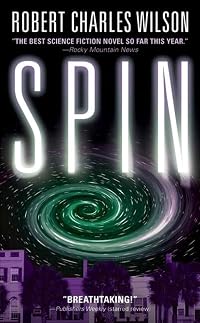
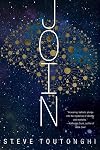
After witnessing the onset of an astronomical event that has caused the sun to go black and the stars and moon to disappear, Tyler, Jason, and Diane learn that the darkness has been caused by a time-altering, alien-created artificial barrier and that the sun will be extinguished in less than forty years.Tags
Recommendations

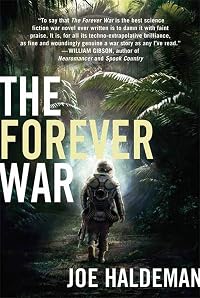
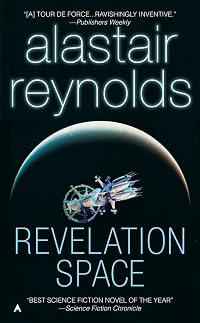
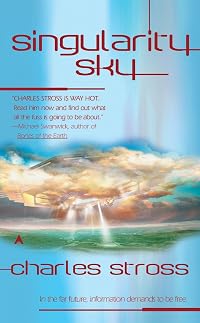
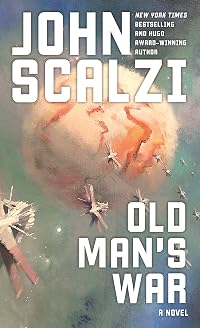
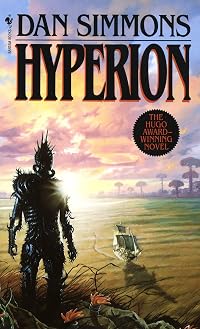
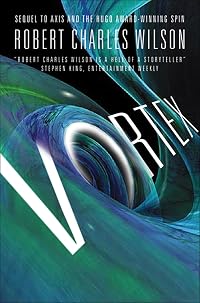
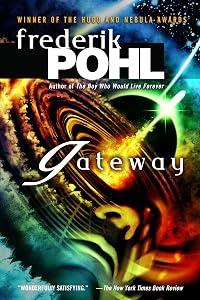
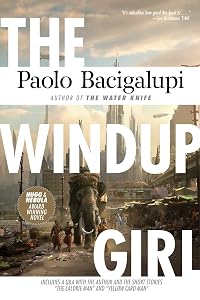
Member Recommendations
Member Reviews
4.5/5
A better version of the writing style that I found with Alistair Reynolds in The Prefect and a much better version what I think Neal Stephenson was trying to do with Seveneves. As much of a love story as it is a story of mysterious first contact, Spin follows a pair of fraternal twins and their mutual childhood friend through the tumultuous times that follow a permeable membrane encapsulating the Earth, while outside in space, time accelerates to breakneck speeds. These aren't ordinary children though: the twins are the progeny of an industrious and domineering capitalist whose technology is benefited by the 'spin', and who coldly builds his son into the heir of his advantageous position. The story itself though is told as a show more pseudo-memoir of Tyler, the best friend to both Jason, the heir-apparent, and his sister Diane, who Tyler has been in love with since he can remember.
Spin has three main focal points. The first and perhaps least explored is the effects that the 'spin' has on society, culture, religion, and government. We see first hand the waves of emotions that humanity goes through as they come to accept the new normal. We see the science denial, the apathy, the anxious brooding thoughts of despair under the skin of a moldering social code. We see what happens when people are faced with their own impending mortality. We see how all of this effects the structure that we all live under. Now, is this examination the sole focus of the book, no. But it damn sure is more realistic than a book like Seveneves, and still allows for optimism and hope at the end of it all without turning a blind eye to the hard facts psychology in the face of an upending status quo. Wilson does a good job of manufacturing speculation on what might transpire here. The world behind the story does not fade into the background, it's right there on the surface.
Second is the exploration of the hard-ish science that revolves around humanities attempts to understand the spin, and potentially prevent what they see as a potential extension level event as the sun begins to grow through the billions of years of time outside the membrane. The execution of the main concept was brilliant to me. I loved the idea of seeding Mars with life and in just a short time seeing the results. I loved the bio engineered node system (a von neumann machine) and how that ties in with the ending and the 'hypotheticals'. I especially loved the idea of another phase of human life brought about by injecting DNA editing technology, how that could be a platform for more acute changes in psychology physical ability, and what that would do to our conception of what it means to be human. The ending takes these concepts to a broader, galaxy/universe level stage. I enjoy a book that drip feeds me details on that level, and finishes with a flourish of new ideas that leaves you dreaming about the future like Spin does.
Finally, where I think the meat of the book lies, is in the characters. I applaud Wilson's choice to stick with the same three characters throughout the story. Doing so allows him to slowly build them out through their actions and choices. It allows him the luxury of drawing on characterization that he wrote hundreds of pages to ago to show growth and progression through time. These characters are heartbreaking and resilient all unto themselves. The love between Diane and Tyler is palpable, but doesn't feel trite or distracting, it simply is. There are a few standout side characters, headlined by the twins' mother, Caroline, an alcoholic who is sporadically involved in her children lives but is every bit a textured person, who we see but a window into. I thought it was a cute bit of characterization that the Tyler is drawn as a sometimes detached and empty person to justify how the prose is written. It makes sense considering that he's brought up in the 'spin generation' which is brought up a lot, and because of his background as a medical doctor. Tyler, more than anyone else, is able to separate himself from the tumultuous world he lives in, which juxtaposes him with Diane, who seeks meaning an enlightenment, and Jason, who values knowledge above all else. As the twins lose themselves in the pursue fulfillment, Tyler remains the steadfast friend who watches from the sidelines and picks them up when they fall.
The prose itself isn't something to write home about I suppose. It's not creative, especially beautiful, or stylistic, but it serves its purpose well; an economic vehicle with which Wilson can express his plot and characters. It is, however, especially readable prose that can appeal to a lot of people, a similarity that I draw to Reynolds. What I find especially impressive about Spin is Wilson's ability to marry a lot of harder-science material with deeper characterization that I've found in most genre literature. He also doesn't get bogged down in technical jargon when he explains things, and spaces section of exposition and world-building with character focused drama.
It does dip in intensity and interest towards the middle. My interest in the plot sagged as it sagged without a clear direction forward. This was salved by an ending that was not only a rejuvenation and a satisfying completion to many narrative threads, but also done with a grace that I wasn't expecting. Apparently this is also the first in the a series of books, but it hardly needs it, which should be a ringing endorsement by itself. show less
A better version of the writing style that I found with Alistair Reynolds in The Prefect and a much better version what I think Neal Stephenson was trying to do with Seveneves. As much of a love story as it is a story of mysterious first contact, Spin follows a pair of fraternal twins and their mutual childhood friend through the tumultuous times that follow a permeable membrane encapsulating the Earth, while outside in space, time accelerates to breakneck speeds. These aren't ordinary children though: the twins are the progeny of an industrious and domineering capitalist whose technology is benefited by the 'spin', and who coldly builds his son into the heir of his advantageous position. The story itself though is told as a show more pseudo-memoir of Tyler, the best friend to both Jason, the heir-apparent, and his sister Diane, who Tyler has been in love with since he can remember.
Spin has three main focal points. The first and perhaps least explored is the effects that the 'spin' has on society, culture, religion, and government. We see first hand the waves of emotions that humanity goes through as they come to accept the new normal. We see the science denial, the apathy, the anxious brooding thoughts of despair under the skin of a moldering social code. We see what happens when people are faced with their own impending mortality. We see how all of this effects the structure that we all live under. Now, is this examination the sole focus of the book, no. But it damn sure is more realistic than a book like Seveneves, and still allows for optimism and hope at the end of it all without turning a blind eye to the hard facts psychology in the face of an upending status quo. Wilson does a good job of manufacturing speculation on what might transpire here. The world behind the story does not fade into the background, it's right there on the surface.
Second is the exploration of the hard-ish science that revolves around humanities attempts to understand the spin, and potentially prevent what they see as a potential extension level event as the sun begins to grow through the billions of years of time outside the membrane. The execution of the main concept was brilliant to me. I loved the idea of seeding Mars with life and in just a short time seeing the results. I loved the bio engineered node system (a von neumann machine) and how that ties in with the ending and the 'hypotheticals'. I especially loved the idea of another phase of human life brought about by injecting DNA editing technology, how that could be a platform for more acute changes in psychology physical ability, and what that would do to our conception of what it means to be human. The ending takes these concepts to a broader, galaxy/universe level stage. I enjoy a book that drip feeds me details on that level, and finishes with a flourish of new ideas that leaves you dreaming about the future like Spin does.
Finally, where I think the meat of the book lies, is in the characters. I applaud Wilson's choice to stick with the same three characters throughout the story. Doing so allows him to slowly build them out through their actions and choices. It allows him the luxury of drawing on characterization that he wrote hundreds of pages to ago to show growth and progression through time. These characters are heartbreaking and resilient all unto themselves. The love between Diane and Tyler is palpable, but doesn't feel trite or distracting, it simply is. There are a few standout side characters, headlined by the twins' mother, Caroline, an alcoholic who is sporadically involved in her children lives but is every bit a textured person, who we see but a window into. I thought it was a cute bit of characterization that the Tyler is drawn as a sometimes detached and empty person to justify how the prose is written. It makes sense considering that he's brought up in the 'spin generation' which is brought up a lot, and because of his background as a medical doctor. Tyler, more than anyone else, is able to separate himself from the tumultuous world he lives in, which juxtaposes him with Diane, who seeks meaning an enlightenment, and Jason, who values knowledge above all else. As the twins lose themselves in the pursue fulfillment, Tyler remains the steadfast friend who watches from the sidelines and picks them up when they fall.
The prose itself isn't something to write home about I suppose. It's not creative, especially beautiful, or stylistic, but it serves its purpose well; an economic vehicle with which Wilson can express his plot and characters. It is, however, especially readable prose that can appeal to a lot of people, a similarity that I draw to Reynolds. What I find especially impressive about Spin is Wilson's ability to marry a lot of harder-science material with deeper characterization that I've found in most genre literature. He also doesn't get bogged down in technical jargon when he explains things, and spaces section of exposition and world-building with character focused drama.
It does dip in intensity and interest towards the middle. My interest in the plot sagged as it sagged without a clear direction forward. This was salved by an ending that was not only a rejuvenation and a satisfying completion to many narrative threads, but also done with a grace that I wasn't expecting. Apparently this is also the first in the a series of books, but it hardly needs it, which should be a ringing endorsement by itself. show less
Al comienzo de ’Spin’, uno de los personajes está inyectando una droga a otro, y mediante una sucinta descripción, Wilson nos indica que no nos encontramos en la Tierra que conocemos normalmente. A partir de aquí, haciendo uso de flashbacks iremos sabiendo de las vicisitudes por las que han ido pasando tanto los protagonistas como su entorno. Wilson es fiel a sí mismo, y como en el resto de su obra, parte de un fenómeno extraño y extraordinario que trastoca la vida de las personas. Me resisto a comentar cuál es este hecho, aunque leyendo cualquier sinopsis de la novela, se sabe enseguida.
Los personajes más importantes de la historia son tres: los gemelos Jason y Diane, y el amigo de ambos, Tyler, verdadero protagonista de la show more novela, ya que toda la trama la conocemos a través de su punto de vista. Wilson sabe transmitirnos perfectamente el sentir de los personajes, sus sentimientos y pensamientos. De igual manera, Wilson no olvida la parte científica y tecnológica, y nos va desvelando las investigaciones y descubrimientos debidos al llamado Spin, reflexionando sobre sus implicaciones a todos los niveles, políticos, religiosos y personales.
’Spin’ es una muy buena novela de ciencia ficción hard ligera, que mezcla a la perfección la ciencia con las relaciones personales de los protagonistas, todo ello narrado de manera muy fácil por Wilson. El único pero que se le puede poner, es que le sobran algunas páginas. Decir también que ’Spin’ forma parte de una trilogía, pero que la novela se cierra satisfactoriamente. show less
Los personajes más importantes de la historia son tres: los gemelos Jason y Diane, y el amigo de ambos, Tyler, verdadero protagonista de la show more novela, ya que toda la trama la conocemos a través de su punto de vista. Wilson sabe transmitirnos perfectamente el sentir de los personajes, sus sentimientos y pensamientos. De igual manera, Wilson no olvida la parte científica y tecnológica, y nos va desvelando las investigaciones y descubrimientos debidos al llamado Spin, reflexionando sobre sus implicaciones a todos los niveles, políticos, religiosos y personales.
’Spin’ es una muy buena novela de ciencia ficción hard ligera, que mezcla a la perfección la ciencia con las relaciones personales de los protagonistas, todo ello narrado de manera muy fácil por Wilson. El único pero que se le puede poner, es que le sobran algunas páginas. Decir también que ’Spin’ forma parte de una trilogía, pero que la novela se cierra satisfactoriamente. show less
Have you ever wondered what would happen if the heroes of a book, who are going to save the world, were also clinically depressed? Robert Charles Wilson's "Spin". The passive narrator has a series of failed relationships and blames his life on the one-that-got-away, an idealized vaguely incestuous imaginary relationship. Intractable daddy issues. Relationships between all characters molder into dysfunction and the outer world, everyone on earth, and indeed sentient creatures across the galaxy, subtly mirror the internal psychological struggles of the main characters, wherein they are unable to be happy because they must destroy what they care about because they can't have it the way they want. Spin is very well written. Great SF. All of show more the action perceived through a depressive lens means that it is a "literary" book. Recommended. show less
Spin is an expertly crafted science fiction novel presenting provocative technological ideas in a thoughtful and empathetic work of literature.
(spoilers)
Wilson’s novel explores two questions, both thoroughly examined with the help of the “Spin” technology:
1. What is humanity’s place in the universe?
2. What is one’s place amongst others?
The scale of the ideas presented becomes steadily larger as the book progresses and the reader is led carefully up a ladder where only near the top is it clear where it is heading. This derivation from first principles of an end so unfathomably immense introduces a new technological concept every few chapters large enough to warrant its own book. Time dilation, Martians, the Fourth treatment, show more von Neumann probes, up to the final reveal of the endless chain of uncultivated worlds that is momentous if not for its novelty then for its delivery — Wilson ultimately constructs a future more fantastical than technical using building blocks that pass the “hard SF” smell test.
The time dilation of the Spin was for me the most exciting idea presented. The utterly inhuman and oppressive scale of the universe can be a roadblock for SF as a genre, overcome in various works through wormholes, FTL travel, stasis, generational endeavors, time travel, biological or technological immortality… but each of those paths are, to me, well-trodden and useful as an enabling factor in a story centered elsewhere but uncompelling as central technologies. Spin’s dilation achieves the goal of humanizing geological and astrological timescales in a way that pleases my inner critic and lights my imagination on fire.
Spin shines equally brightly as a novel about people. Where there is a clean answer (within its fictional universe) in the final chapters for question #1, no such answer can be found for question #2, save for the droplets of wisdom interspersed throughout the novel. A fictional technology sufficiently answers the question of our place in the universe but even between the covers of an SF novel it is up to each of us as an individual to find our place amongst others. Through stories of religion, apathy, paralysis and perseverance in the face of the apocalypse, Wilson depicts an amplified version of the struggle with our own mortality that each of us endures in the real world.
I started Spin without expectations and finished with the undeniable realization that my all-time top SF novel rankings had been shaken up. Spin wholly deserves its Hugo and is now my go-to recommendation to anybody claiming that SF can’t be both technologically thrilling and literarily and emotionally substantive.
— — —
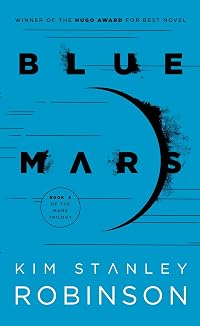
Aside: I have to wonder if the Martian “fourth” treatment — a DNA-repairing biochemical agent capable of curing incurable diseases, extending lifetimes and expanding consciousness — is an homage to the senescence treatment in Kim Stanley Robinson’s Mars trilogy, a series even mentioned by name in Spin. show less
(spoilers)
Wilson’s novel explores two questions, both thoroughly examined with the help of the “Spin” technology:
1. What is humanity’s place in the universe?
2. What is one’s place amongst others?
The scale of the ideas presented becomes steadily larger as the book progresses and the reader is led carefully up a ladder where only near the top is it clear where it is heading. This derivation from first principles of an end so unfathomably immense introduces a new technological concept every few chapters large enough to warrant its own book. Time dilation, Martians, the Fourth treatment, show more von Neumann probes, up to the final reveal of the endless chain of uncultivated worlds that is momentous if not for its novelty then for its delivery — Wilson ultimately constructs a future more fantastical than technical using building blocks that pass the “hard SF” smell test.
The time dilation of the Spin was for me the most exciting idea presented. The utterly inhuman and oppressive scale of the universe can be a roadblock for SF as a genre, overcome in various works through wormholes, FTL travel, stasis, generational endeavors, time travel, biological or technological immortality… but each of those paths are, to me, well-trodden and useful as an enabling factor in a story centered elsewhere but uncompelling as central technologies. Spin’s dilation achieves the goal of humanizing geological and astrological timescales in a way that pleases my inner critic and lights my imagination on fire.
Spin shines equally brightly as a novel about people. Where there is a clean answer (within its fictional universe) in the final chapters for question #1, no such answer can be found for question #2, save for the droplets of wisdom interspersed throughout the novel. A fictional technology sufficiently answers the question of our place in the universe but even between the covers of an SF novel it is up to each of us as an individual to find our place amongst others. Through stories of religion, apathy, paralysis and perseverance in the face of the apocalypse, Wilson depicts an amplified version of the struggle with our own mortality that each of us endures in the real world.
I started Spin without expectations and finished with the undeniable realization that my all-time top SF novel rankings had been shaken up. Spin wholly deserves its Hugo and is now my go-to recommendation to anybody claiming that SF can’t be both technologically thrilling and literarily and emotionally substantive.
— — —
Aside: I have to wonder if the Martian “fourth” treatment — a DNA-repairing biochemical agent capable of curing incurable diseases, extending lifetimes and expanding consciousness — is an homage to the senescence treatment in Kim Stanley Robinson’s Mars trilogy, a series even mentioned by name in Spin. show less
What I would call a perfect SF book, or least one without major flaws, to my eyes. There are many books I love, but for the ending, or the long dry stretch, or the inadequately developed premise, or the cliched characters. With Spin, the human story and the SF ideas both develop organically over 100s of pages, reaching a sound conclusion for both. Yes, there are two sequels, but the novel does not just stop, as did Jo Walton's otherwise excellent "Just City". Yes, the explanation of the bubble that cuts Earth off from the rest of the universe is cosmic in both time and space, with surprising reveals along the way, but the explanation isn't incomprehensible, as was Greg Egan's in "Quarantine." The human story, tracking a handful of major show more characters over the decades, through catastrophic changes, maintains a singular focus on the flawed but never annoying narrator, from youth to advanced adulthood. I never grew tired hearing the details of his life, relationships, emotions, confusions, and failures. A secondary character near the end ties this aspect of the novel together: "We're all strangers, to ourselves and each other. We're never formally introduced." Yes, characters deliver lectures rather than dialog at certain points, but that's the price speculative SF has to pay in a personal narrative.
Highly recommended. show less
Highly recommended. show less
Spin starts with an utterly fascinating premise. One day, in the near present, the stars go out. The moon is hidden, sunlight is filtered. Earth is cut off from the universe by the Spin barrier, and one year on Earth equals 100 million years in the universe. Time is literally passing humanity by, and within one lifetime the sun will expand to encompass the Earth.
The story follows Tyler Dupree, a family confidant of the intelligent and powerful Lawton family. The twins Jason and Diane, two years older than Tyler, serve as windows on the human reaction to the Spin. Jason becomes a scientist, in charge of the aerospace program to find a way around the barrier. Diane falls in with a millenialist Christian movement as she and Tyler lead the show more broken lives of star-crossed lovers.
The scientific side of the story is one of the boldest and coolest bits that I've read in a while. Jason Lawton learns to use the Spin as a temporal weapon, terraforming Mars and founding a new human world that hopefully can find a solution. Later, Oort-cloud inhabiting nanotech serves as a Von Nuemann probe network, mapping the cosmos over billions of years to discover what force created the Spin. The Martian technology and Martian envoy, Wun, are also high-points in the story.
The human side of the story, around Diane, is not nearly as satisfying. The romance is realistically tense and awkward, with all the burning of high emotion, but not very satisfying as a story. The Christian millenialists are mostly generic, people who deal with mystery by falling into ancient Greek, rather than technical equations, their fervor muted by Dupree's distance as a protagonist and Wilson's style as an author. The Spin is a slow motion apocalypse, and people go mad, but it's all a very ordinary kind of petty crime and alcoholism with a dash of despairing suicide.
The final bit, the meaning behind it all, is entirely unsatisfying. The Spin was created by a hyper-advanced galactic intelligence, one that lived in the Oort cloud and "thought" on timescales too slow to interact with biological beings. But it hated seeing the mayfly lives of planetary civilizations as they hit their resource limits, and so embarked on a scheme to protect all planetary civilizations in Spin barriers, until they can create a massive set of artificial planets linked by wormhole gates, where planetary civilizations can expand indefinitely. The story ends with our protagonists sailing into a new world, empty and free.
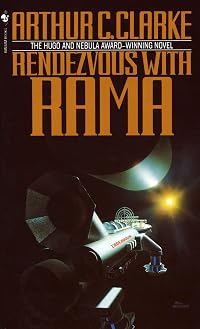
The ideas are grand, amazing, but a story needs some character, some plot. I ask myself, did Tyler learn anything over the course of the story? Did anybody's knowledge or faith or sacrifice make a difference? And the answer is a resounding negative. This is a wonderful Out Of Context Problem story, but is even weaker in characterization than Rendezvous with Rama, something I believed to be impossible. show less
The story follows Tyler Dupree, a family confidant of the intelligent and powerful Lawton family. The twins Jason and Diane, two years older than Tyler, serve as windows on the human reaction to the Spin. Jason becomes a scientist, in charge of the aerospace program to find a way around the barrier. Diane falls in with a millenialist Christian movement as she and Tyler lead the show more broken lives of star-crossed lovers.
The scientific side of the story is one of the boldest and coolest bits that I've read in a while. Jason Lawton learns to use the Spin as a temporal weapon, terraforming Mars and founding a new human world that hopefully can find a solution. Later, Oort-cloud inhabiting nanotech serves as a Von Nuemann probe network, mapping the cosmos over billions of years to discover what force created the Spin. The Martian technology and Martian envoy, Wun, are also high-points in the story.
The human side of the story, around Diane, is not nearly as satisfying. The romance is realistically tense and awkward, with all the burning of high emotion, but not very satisfying as a story. The Christian millenialists are mostly generic, people who deal with mystery by falling into ancient Greek, rather than technical equations, their fervor muted by Dupree's distance as a protagonist and Wilson's style as an author. The Spin is a slow motion apocalypse, and people go mad, but it's all a very ordinary kind of petty crime and alcoholism with a dash of despairing suicide.
The final bit, the meaning behind it all, is entirely unsatisfying. The Spin was created by a hyper-advanced galactic intelligence, one that lived in the Oort cloud and "thought" on timescales too slow to interact with biological beings. But it hated seeing the mayfly lives of planetary civilizations as they hit their resource limits, and so embarked on a scheme to protect all planetary civilizations in Spin barriers, until they can create a massive set of artificial planets linked by wormhole gates, where planetary civilizations can expand indefinitely. The story ends with our protagonists sailing into a new world, empty and free.
The ideas are grand, amazing, but a story needs some character, some plot. I ask myself, did Tyler learn anything over the course of the story? Did anybody's knowledge or faith or sacrifice make a difference? And the answer is a resounding negative. This is a wonderful Out Of Context Problem story, but is even weaker in characterization than Rendezvous with Rama, something I believed to be impossible. show less
Like some others of RCW's books (looking at you, "Darwinia"), "Spin" is a Big Idea Book, presenting sweeping concepts and BDOs that take your sense of wonder for a long forced march in the manner of Clarke's "Rendezvous With Rama" or Bear's "Eon." Wilson presents his cosmic concepts like layers of an onion, peeling each back to expose another as you come to grasp the first; that's really the strength of the novel, compelling the reader onward. The chaotic social effects those cause in contemporary (publ. in 2005) America are uncomfortable in post-Trump America, but perhaps more credible now.
Sadly, "Spin's" biggest flaw plagues many such novels: character development suffers. There are only three fully active characters in "Spin" and show more even they are really archetypes, placeholders for psychologies that do what the story needs them to do. That's made tragic by the actually quite lovely writing Wilson uses to frame them, color them, move them around; for instance, to underscore Diane's underlying sadness, he tells us,
"There was little enough love and affection in her life and each instance of it had to be accounted and stored up in heaven, hoarded against the winter of the universe." (p.180)
That's perhaps more elegant than the book or character required, but I appreciate use of rich language. It kept me going even when I was impatient with the cardboard-cutout simulacra involved. show less
Sadly, "Spin's" biggest flaw plagues many such novels: character development suffers. There are only three fully active characters in "Spin" and show more even they are really archetypes, placeholders for psychologies that do what the story needs them to do. That's made tragic by the actually quite lovely writing Wilson uses to frame them, color them, move them around; for instance, to underscore Diane's underlying sadness, he tells us,
"There was little enough love and affection in her life and each instance of it had to be accounted and stored up in heaven, hoarded against the winter of the universe." (p.180)
That's perhaps more elegant than the book or character required, but I appreciate use of rich language. It kept me going even when I was impatient with the cardboard-cutout simulacra involved. show less
Members
- Recently Added By
Lists

Best Science Fiction Novels
816 works; 426 members

Hugo Award Winning Novels
63 works; 23 members

Hugo Awards - Best Novel
69 works; 10 members
Broderick and Di Filippo's Science Fiction: The 101 Best Novels 1985-2010
103 works; 7 members

Recommend the 20 best books you've read in the last five years
2,168 works; 606 members

CBC Books - Canada's 100 (+ bonus 10): Which have you read?
110 works; 23 members
Dystopian and Apocalyptic Literature
350 works; 74 members

S.F. Masterworks (Complete)
229 works; 15 members

It's the end of the world as we know it!
90 works; 23 members

Religious Science Fiction
70 works; 20 members

Speculative Fiction to Read
706 works; 32 members

Books Read in 2018
4,360 works; 110 members

Top Five Books of 2017
757 works; 231 members

Books Read in 2011
684 works; 19 members

um actually
76 works; 3 members
Favorite Science Fiction
456 works; 218 members
Author Information

47+ Works 14,413 Members
Some Editions
Awards and Honors
Awards
Distinctions
Series

Belongs to Publisher Series
Work Relationships
Is contained in
Common Knowledge
- Canonical title*
- Spin
- Original title
- Spin
- Original publication date
- 2005-04
- People/Characters
- Jason Lawton; Diane Lawton; Tyler Dupree; E. D. Lawton; Simon Townsend; Molly Seagram (show all 28); Ina; En; Wun Ngo Wen; Carol Lawton; Mrs. Truall; Giselle Palmer; Dr. Koenig; Belinda Dupree; Dr. David Malmstein; Nijon; Preston Lomax; Jala; Bob Kobel; Aaron Sorley; Dan Condon; Teddy McIsaac; Herbert Hakkim; Allen Fulton; Jody Fulton; Colin Hinz; Chuck Bernelli; Sylvia Tucker
- Important places
- Padang, West Sumatra, Indonesia; Washington, D.C., USA; Cocoa Beach, Florida, USA; Indonesia; USA; Florida, USA (show all 12); Berkshire Hills, Massachusetts, USA; Massachusetts, USA; Seattle, Washington, USA; Orlando, Florida, USA; San Diego, California, USA; California, USA
- First words
- Everybody falls, and we all land somewhere.
- Quotations*
- Des mots comme des ancres, amarrant des bateaux de mémoire pour ne pas que la tempête les emporte.
Il n'y a pas d'acte sexuel assez édénique pour qu'un étudiant en médecine solitaire ne puisse se branler dessus.
— Où est-ce que tu préférerais passer l'éternité, toi ? Dans un paradis terrestre ou dans un laboratoire stérile ? » La réponse ne me semblait pas aussi évidente qu'elle en avait l'air pour Simon. Je me suis souven... (show all)u de ce qu'avait répondu Mark Twain à une question similaire : « Au paradis pour le climat. En enfer pour la compagnie. »
Un bon boudin vaut presque un ami.
Nous sommes aussi éphémères que des gouttes de pluie. Nous tombons tous, et nous atterrissons tous quelque part. - Last words
- (Click to show. Warning: May contain spoilers.)"History doesn't start until we land."
- Publisher's editor
- Nielsen Hayden, Teresa
- Original language*
- Anglais canadien
*Some information comes from Common Knowledge in other languages. Click "Edit" for more information.
Classifications
Statistics
- Members
- 4,227
- Popularity
- 3,608
- Reviews
- 175
- Rating
- (3.96)
- Languages
- 12 — Bulgarian, Czech, English, French, German, Hungarian, Italian, Lithuanian, Romanian, Russian, Spanish, Turkish
- Media
- Paper, Audiobook, Ebook
- ISBNs
- 26
- ASINs
- 10