On This Page
Description
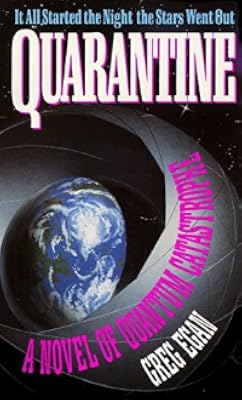
Fiction. Science Fiction. In 2034, the stars went out. An unknown agency surrounded the solar system with an impenetrable barrier, concealing the universe from humanity's gaze.In 2067, Nick Stavrianos is hired to investigate the disappearance of a mentally disabled woman, Laura Andrews, from the institution where she was being cared for. Aided by a skull full of neural modifications, he follows her trail to the Republic of New Hong Kong, where an organisation known as the Ensemble has show more uncovered Laura's extraordinary secret: an ability that could transform the world. show lessTags
Recommendations
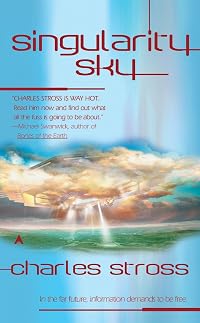
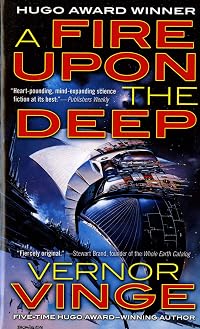
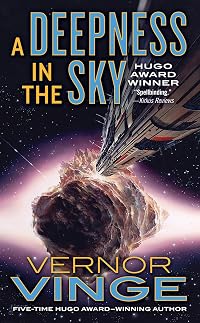
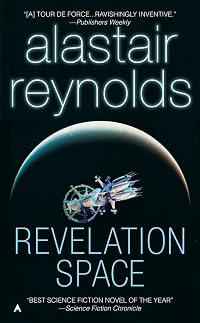



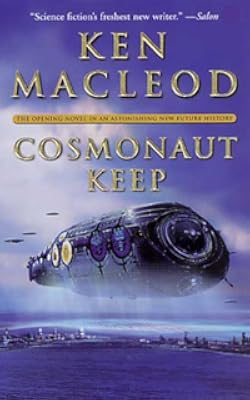
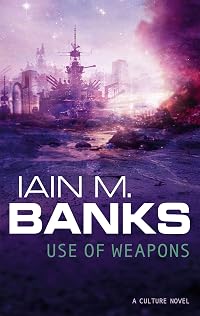
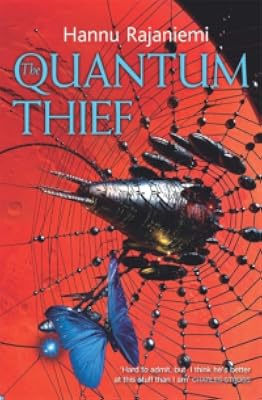
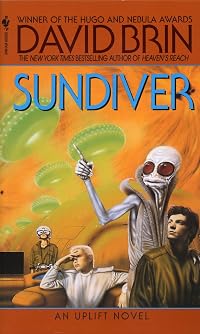
Member Recommendations

hungeri A good scientific book and a sci-fi based on the same subject. The scientific base of the sci-if is strong, but as it is a fiction, you can relax and enjoy it without a worry about "but is it true", "can it be true?". That worry is for books on science.
Member Reviews
I've finished and I am exhausted and elated and confused and my brain is melted, but also maybe it grew a little? I don't know. What I do know is that I knew nothing about this book before and now I'm utterly obsessed and completely in love with it and the author.
I'm getting so behind on talking more in depth about the books that have absolutely blown my mind, but I will be back to this. Suffice to say this has been one of the most unique, exhilarating, and uniquely exquisite experiences I have ever had with a book.
A book like this is never going to win the bestest, most book ever award (like putting numbers and ribbons on art actually means anything anyway...), but this is without a doubt one of the best books I've ever had the show more pleasure of reading.
I feel fundamentally changed and envigorated! I already likened the experience of reading this book and attempting to comprehend the concepts it explores as to coming up on class As, but this feels akin to a secular religious experience--I am changed, my perspective has changed, and I have a whole new areas of science, fiction, and science fiction I now know make my brain glow incandescently and melt, and I love that for me.
I am feeling so unbelievably inspired and have already started working on a TTRPG that translates eigenstates and wave forms into mechanics, unifying the dice the protagonist in the book, people in the world of the game, and players at the table...I think. Point is my brain is tingling and I'm inspired
Oh baybee! I have so much more incoherent, hyperfixated, autistic excitement to vent, but for now, spectacular book is spectacular! show less
I'm getting so behind on talking more in depth about the books that have absolutely blown my mind, but I will be back to this. Suffice to say this has been one of the most unique, exhilarating, and uniquely exquisite experiences I have ever had with a book.
A book like this is never going to win the bestest, most book ever award (like putting numbers and ribbons on art actually means anything anyway...), but this is without a doubt one of the best books I've ever had the show more pleasure of reading.
I feel fundamentally changed and envigorated! I already likened the experience of reading this book and attempting to comprehend the concepts it explores as to coming up on class As, but this feels akin to a secular religious experience--I am changed, my perspective has changed, and I have a whole new areas of science, fiction, and science fiction I now know make my brain glow incandescently and melt, and I love that for me.
I am feeling so unbelievably inspired and have already started working on a TTRPG that translates eigenstates and wave forms into mechanics, unifying the dice the protagonist in the book, people in the world of the game, and players at the table...I think. Point is my brain is tingling and I'm inspired
Oh baybee! I have so much more incoherent, hyperfixated, autistic excitement to vent, but for now, spectacular book is spectacular! show less
I always tell people that this is one of the dullest books I've ever read. It's amost certainly the dullest book I've ever read five times. It's dull in a really interesting way.
You may not like it, but I guarantee it won't be like anything else you've ever read.
You may not like it, but I guarantee it won't be like anything else you've ever read.
I've read 6 Egan books so far, including this one in addition to a short story collection, and each time I come to appreciate his recurrent use of lone wolf, nearly autistic lead characters a little bit more. I grew up reading every Asimov novel I could get my hands on, and to this day I consider the original Foundation trilogy to be nearly perfect science fiction: expansive, imaginative, thoughtful, and most of all, deeply concerned with human problems. But where Asimov's heroes were hard-boiled 50s men translated to a far future of robots and starships, Egan has a different attitude towards his protagonists that reflects his different attitude towards the themes of his books. He doesn't ground his writing in Asimov's cheerful faith in show more rationalism as the savior of humanity even as his heroes are some of the most coldly rational you'll find, he's much more content to just set up a mind-twisting mathematical dreamworld and let them stumble around from one revelation to the next, enjoying the various scenarios for their own sake rather than as parables of the Enlightenment. Maybe these different attitudes to science are partly a generational thing - even though Asimov was as big a fan of hard science as anyone, many modern authors seem to have lost the belief that science in itself can lead to better worlds. The cigar-chomping traders and politicians in Foundation might be completely out of place in a galactic civilization, or even a transhuman world a few decades from now. Or maybe Egan is just more of a nerd, more comfortable with characters who can prune away feelings they don't like and can choose to accept the messiness of the world on their own terms.
Quarantine starts off with a nod to the sudden astronomical catastrophe in Asimov's classic Nightfall: a mysterious force has enclosed the solar system with a spherical event horizon that blocks all contact with the universe beyond, spawning new apocalyptic, millennarian cults. This event was less devastating than the one in the Asimov book, though, and life has moved on. Protagonist Nick Stavrianos is a computationally-augmented private eye hired to investigate the mysterious disappearance of a mentally disabled woman from the institute she was residing in, which could be the work of one of those cults. Nick manages to track her down, discovers she has the ability to somehow make locks and barriers irrelevant, and is immediately pressed into the service of a corporation doing research into quantum consciousness. Roger Penrose once wrote a book called The Emperor's New Mind that tried to argue that AI was impossible because consciousness isn't something merely algorithmic, it depends on quantum effects inherent in the unique physical structure of the brain. I thought the book was flat wrong, but Egan introduces a similar idea here in reverse, that the macroscopic quantum stability/waveform collapse we see everyday is due to the unique observer properties of conscious minds and can be explored with the help of mental software. Egan ties this idea back into the solar Bubble in an interesting way, but unfortunately the climax of the novel, and in addition many of the points about religion and quantum physics, struck me as very similar to their counterparts in Distress - this quantum Messiah idea is the first time I've seen Egan repeat himself so blatantly. Since Distress was written after Quarantine that shouldn't reflect poorly on this book, and to be fair the books aren't necessarily as similar as all that, but I just wasn't expecting such a close recapitulation of themes.
The parts of the book I thought were strongest was where Nick was wrestling with the effects of being neurally reprogrammed to be completely loyal to the quantum consciousness research project, and his Jesuitical attempts to gradually gain some of his mental independence back; those parts brought to mind many good points about the nature of faith, loyalty, and free will. Nick's use of a piece of mental software to run a simulation of his dead wife is also another trademark Egan take on the way we deal with death and loss, which is even more humane in its way somehow than whatever the counterpart would be in an Asimov novel. Maybe the characteristic manipulation of human emotions in Egan's books isn't a sign that he just can't write "normal" people, but an acknowledgment that the limitless possibilities inherent in the idea of increased control of our minds means that a faithful depiction of this process is inherently alienating to the people who have been left behind. There's an outburst from Nick to this effect in the book, which is of course conveyed in hyper-articulate info-dumps, and it's surprisingly moving, in the same way that the similar struggles with death of the characters in Diaspora were moving. Has the relentless opening of new technological vistas rendered the neat futures of Asimov obsolete, and does a more accurate depiction of the future involve more of Egan's brooding introversion than Asimov's scientific optimism? I guess there's no real way to say, but I do enjoy the contrast, and Quarantine, while not quite the philosophical masterpiece that is Permutation City, is still a strong novel on its own. show less
Quarantine starts off with a nod to the sudden astronomical catastrophe in Asimov's classic Nightfall: a mysterious force has enclosed the solar system with a spherical event horizon that blocks all contact with the universe beyond, spawning new apocalyptic, millennarian cults. This event was less devastating than the one in the Asimov book, though, and life has moved on. Protagonist Nick Stavrianos is a computationally-augmented private eye hired to investigate the mysterious disappearance of a mentally disabled woman from the institute she was residing in, which could be the work of one of those cults. Nick manages to track her down, discovers she has the ability to somehow make locks and barriers irrelevant, and is immediately pressed into the service of a corporation doing research into quantum consciousness. Roger Penrose once wrote a book called The Emperor's New Mind that tried to argue that AI was impossible because consciousness isn't something merely algorithmic, it depends on quantum effects inherent in the unique physical structure of the brain. I thought the book was flat wrong, but Egan introduces a similar idea here in reverse, that the macroscopic quantum stability/waveform collapse we see everyday is due to the unique observer properties of conscious minds and can be explored with the help of mental software. Egan ties this idea back into the solar Bubble in an interesting way, but unfortunately the climax of the novel, and in addition many of the points about religion and quantum physics, struck me as very similar to their counterparts in Distress - this quantum Messiah idea is the first time I've seen Egan repeat himself so blatantly. Since Distress was written after Quarantine that shouldn't reflect poorly on this book, and to be fair the books aren't necessarily as similar as all that, but I just wasn't expecting such a close recapitulation of themes.
The parts of the book I thought were strongest was where Nick was wrestling with the effects of being neurally reprogrammed to be completely loyal to the quantum consciousness research project, and his Jesuitical attempts to gradually gain some of his mental independence back; those parts brought to mind many good points about the nature of faith, loyalty, and free will. Nick's use of a piece of mental software to run a simulation of his dead wife is also another trademark Egan take on the way we deal with death and loss, which is even more humane in its way somehow than whatever the counterpart would be in an Asimov novel. Maybe the characteristic manipulation of human emotions in Egan's books isn't a sign that he just can't write "normal" people, but an acknowledgment that the limitless possibilities inherent in the idea of increased control of our minds means that a faithful depiction of this process is inherently alienating to the people who have been left behind. There's an outburst from Nick to this effect in the book, which is of course conveyed in hyper-articulate info-dumps, and it's surprisingly moving, in the same way that the similar struggles with death of the characters in Diaspora were moving. Has the relentless opening of new technological vistas rendered the neat futures of Asimov obsolete, and does a more accurate depiction of the future involve more of Egan's brooding introversion than Asimov's scientific optimism? I guess there's no real way to say, but I do enjoy the contrast, and Quarantine, while not quite the philosophical masterpiece that is Permutation City, is still a strong novel on its own. show less
I've had Greg Egan on my radar for a long time but aside from a lucky chance encounter with a novella, it still took me almost two decades to finally break down and read him! It wasn't his fault. That lies entirely with me. I'm absolutely ashamed.
Why? Because this hard-SF novelist is unashamedly tackling some of the hardest quantum physics interpretations, (smearing possibilities and collapsing the wave functions of reality) to very, very courageous levels.
The writer runs with a loaded gun with a safety off. It's pretty awesome. The risk he takes from turning a cyberpunk Private Investigator novel into a completely sidelined thought experiment including the mythical Observer and the death of all the wave functions to create a single show more reality, multiplying it by a few observers, and then eventually to the whole Earth, is not an end ANYONE ought to miss. I cheered. I gasped. I whooped.
Am I explaining this too esoterically? Possibly. Okay, let's back up. The Earth is suddenly quarantined in a quantum bubble to protect the rest of the universe from summarily changing realities willy-nilly because we THINK it into being. It starts out as quantum tunneling on the macro scale, cheating at cards, getting hugely improbable number sequences right, but then we go deeper and deeper down the rabbit hole where multiple worlds can be chosen from at will, thousands, hundreds of thousands, and each die as the "best" possible world becomes real. Now let's throw that into the stew and add more people. How about adding everyone to that powerful quantum schedule? What happens when we all get the ability to be gods?
Yeah, Egan attempts just this. :) Brilliant attempt, too!
So why didn't I give it 5 stars? Because great ideas don't always equate great fundamental stories with plot and characters. There's nothing wrong with this one, but most the plot and characters are puppets to the need to make clear what is going on, science-wise. I like good exposition when I need it to follow the intent of the author. In this case, it's absolutely necessary. And delightful. But it necessarily slows down the plot, too. Like, to a crawl.
Fortunately, it was never boring to me. Just uneven. No harm, no foul! And what we have here is a novel of quantum possibilities gone totally nuts. :) I LOVE THIS! show less
Why? Because this hard-SF novelist is unashamedly tackling some of the hardest quantum physics interpretations, (smearing possibilities and collapsing the wave functions of reality) to very, very courageous levels.
The writer runs with a loaded gun with a safety off. It's pretty awesome. The risk he takes from turning a cyberpunk Private Investigator novel into a completely sidelined thought experiment including the mythical Observer and the death of all the wave functions to create a single show more reality, multiplying it by a few observers, and then eventually to the whole Earth, is not an end ANYONE ought to miss. I cheered. I gasped. I whooped.
Am I explaining this too esoterically? Possibly. Okay, let's back up. The Earth is suddenly quarantined in a quantum bubble to protect the rest of the universe from summarily changing realities willy-nilly because we THINK it into being. It starts out as quantum tunneling on the macro scale, cheating at cards, getting hugely improbable number sequences right, but then we go deeper and deeper down the rabbit hole where multiple worlds can be chosen from at will, thousands, hundreds of thousands, and each die as the "best" possible world becomes real. Now let's throw that into the stew and add more people. How about adding everyone to that powerful quantum schedule? What happens when we all get the ability to be gods?
Yeah, Egan attempts just this. :) Brilliant attempt, too!
So why didn't I give it 5 stars? Because great ideas don't always equate great fundamental stories with plot and characters. There's nothing wrong with this one, but most the plot and characters are puppets to the need to make clear what is going on, science-wise. I like good exposition when I need it to follow the intent of the author. In this case, it's absolutely necessary. And delightful. But it necessarily slows down the plot, too. Like, to a crawl.
Fortunately, it was never boring to me. Just uneven. No harm, no foul! And what we have here is a novel of quantum possibilities gone totally nuts. :) I LOVE THIS! show less
“[character referring to quantum entanglement and wave function collapse] ‘so, what should they call it?’ ‘Oh...neural linear decomposition of the state vector, followed by phase-shifting and preferential reinforcements of selected eigenstates.’”
In “Quarantine” by Greg Egan
“’So...where’s the problem?’
‘The problem is: before you make a measurement in either of these cases, the wave function doesn’t tell you what the outcome is going to be; it just tells you that there’s a fifty-fifty chance either way. But once you’ve made the measurement,a a second measurement on the same system will always give the same result; if the cat was dead the first time you looked, it will still be dead if you look again. In show more terms of the wave function, the act of making the measurement has, somehow, changes it from a mixture of two waves, representing the two possibilities, to a ‘pure’ wave - called an eingestate - representing just one. That’s what’s called ‘the collapse of the wave function’.
‘But why should a measurement be special? Why should it collapse the wave function? Why should some measuring device - itself made up of individual atoms, all of which are presumably obeying the very same quantum mechanical laws as the system being measured - cause a mixture of possibilities to collapse into one? If you treat the measuring device as just another part of the system, Schrödinger’s equation predicts that the device itself should end up in a mixture of states - and so should anything that interacts with it.’”
In “Quarantine” by Greg Egan
What’s at play here? Quantum entanglement (quantum entanglement occurs when pairs of particles interact in ways that the quantum state of each particle cannot be described independently) in one of the best narrative treatments I’ve ever read in a non-SFional setting.
If the nature of reality is consciousness then, there are no perfect symmetries, there is no pure randomness. We are in the gray region between truth and chaos. These extremes can only be ideals, not reality. Process only occurs in the gray region, time does not exist at the extremes. If we think of coin tosses, with truth, the coin is either heads or tails as a frozen expression of meaning, and with chaos the coin is always both, it never stops spinning, and contains no meaning. The dynamic tension between the two is where time comes from. Either spin is imparted to truth or the perfect randomness of the perpetual spin symmetry is broken. At each extreme is a different form of symmetry, one is a symmetry in the relationship of meaning and the other is a symmetry of potential.
Truth as a static structure vs a dynamic system. To simplify, think of a stack of copy paper with one word on each page. In time, we see each page one at a time, outside of time all of the words, on all of the pages combine to make a single word. This single word is truth, it is the entire story, told in an instant of time. The fractal version of this story has another feature. As each page is presented to us, our intent creates a slightly new meaning that branches out, changing the story, an effect that turns the stack into a tree like structure.
The direction of time's arrow is the breaking of the symmetry of the potential of the boundary condition. In other words, if I toss a coin and it has perfect symmetry of potential it will land heads half the time and tails half the time. The symmetry of the potential is broken if the coin tosses are not 50/50. In a perfectly random system, after a sufficient number of tosses, the symmetry for all even number tosses would always be 50/50. Coin tosses are a lot like squaring the circle. You get closer and closer to the true value but you never reach it, like an infinite recursive iteration.
With the earlier novels (e.g., “Quarantine”), Egan tends to be more story driven, though there is always a mathematics/physics/computational basis, and the later ones tend to be more bit less driven by the story and more by the maths/physics (e.g., “The Orthogonal Trilogy”). With some writers it takes them a while to fully master their narrative skills but Egan was great from the start, so there is no work to avoid. show less
In “Quarantine” by Greg Egan
“’So...where’s the problem?’
‘The problem is: before you make a measurement in either of these cases, the wave function doesn’t tell you what the outcome is going to be; it just tells you that there’s a fifty-fifty chance either way. But once you’ve made the measurement,a a second measurement on the same system will always give the same result; if the cat was dead the first time you looked, it will still be dead if you look again. In show more terms of the wave function, the act of making the measurement has, somehow, changes it from a mixture of two waves, representing the two possibilities, to a ‘pure’ wave - called an eingestate - representing just one. That’s what’s called ‘the collapse of the wave function’.
‘But why should a measurement be special? Why should it collapse the wave function? Why should some measuring device - itself made up of individual atoms, all of which are presumably obeying the very same quantum mechanical laws as the system being measured - cause a mixture of possibilities to collapse into one? If you treat the measuring device as just another part of the system, Schrödinger’s equation predicts that the device itself should end up in a mixture of states - and so should anything that interacts with it.’”
In “Quarantine” by Greg Egan
What’s at play here? Quantum entanglement (quantum entanglement occurs when pairs of particles interact in ways that the quantum state of each particle cannot be described independently) in one of the best narrative treatments I’ve ever read in a non-SFional setting.
If the nature of reality is consciousness then, there are no perfect symmetries, there is no pure randomness. We are in the gray region between truth and chaos. These extremes can only be ideals, not reality. Process only occurs in the gray region, time does not exist at the extremes. If we think of coin tosses, with truth, the coin is either heads or tails as a frozen expression of meaning, and with chaos the coin is always both, it never stops spinning, and contains no meaning. The dynamic tension between the two is where time comes from. Either spin is imparted to truth or the perfect randomness of the perpetual spin symmetry is broken. At each extreme is a different form of symmetry, one is a symmetry in the relationship of meaning and the other is a symmetry of potential.
Truth as a static structure vs a dynamic system. To simplify, think of a stack of copy paper with one word on each page. In time, we see each page one at a time, outside of time all of the words, on all of the pages combine to make a single word. This single word is truth, it is the entire story, told in an instant of time. The fractal version of this story has another feature. As each page is presented to us, our intent creates a slightly new meaning that branches out, changing the story, an effect that turns the stack into a tree like structure.
The direction of time's arrow is the breaking of the symmetry of the potential of the boundary condition. In other words, if I toss a coin and it has perfect symmetry of potential it will land heads half the time and tails half the time. The symmetry of the potential is broken if the coin tosses are not 50/50. In a perfectly random system, after a sufficient number of tosses, the symmetry for all even number tosses would always be 50/50. Coin tosses are a lot like squaring the circle. You get closer and closer to the true value but you never reach it, like an infinite recursive iteration.
With the earlier novels (e.g., “Quarantine”), Egan tends to be more story driven, though there is always a mathematics/physics/computational basis, and the later ones tend to be more bit less driven by the story and more by the maths/physics (e.g., “The Orthogonal Trilogy”). With some writers it takes them a while to fully master their narrative skills but Egan was great from the start, so there is no work to avoid. show less
Egan is one of the few writers who knows enough physics to put the science in science fiction. He does it with enough credibility to make it interesting even to experts. At the same time, he goes to great lengths to make the subject intelligible to casual readers as well.
The novel takes seriously a certain scenario proposed to interpret quantum mechanics. At issue is so-called "collapse", which is the process through which the quantum world appears classical to our senses. The subject of interpretations of quantum mechanics is rich with different possibilities for implementing collapse. Egan picks one of the more dramatic ones and logically extrapolates its consequences. A brilliant piece of hard SF, even if the scenario explored in it show more does not quite correspond to the real world.
At the same time, he does not fail to paint a realistic picture of a near future world, where bio- and neuro-technologies have had significant impact on human lives. Sometimes technology makes our lives better, but sometimes it only reinforces some of our pathologies.
As usual, there is also a moral point (if it can be called that) tackled by the story. Egan explores the introduction of an unsubstantiated axiom into the human thought process. Anyone familiar with basic logic can realize that simply throwing in an extra axiom (aka assertion or belief) may render the entire logical system inconsistent. In that case, a person can in principle be convinced of anything, no matter how morally reprehensible, with disastrous consequences. Although the situation described in Quarantine is both fictional and somewhat artificial, it is not hard to see a cautionary line of dots pointing to the many very real irrational beliefs held by regular people, including religion and superstition.
As always, highly thought provoking. show less
The novel takes seriously a certain scenario proposed to interpret quantum mechanics. At issue is so-called "collapse", which is the process through which the quantum world appears classical to our senses. The subject of interpretations of quantum mechanics is rich with different possibilities for implementing collapse. Egan picks one of the more dramatic ones and logically extrapolates its consequences. A brilliant piece of hard SF, even if the scenario explored in it show more does not quite correspond to the real world.
At the same time, he does not fail to paint a realistic picture of a near future world, where bio- and neuro-technologies have had significant impact on human lives. Sometimes technology makes our lives better, but sometimes it only reinforces some of our pathologies.
As usual, there is also a moral point (if it can be called that) tackled by the story. Egan explores the introduction of an unsubstantiated axiom into the human thought process. Anyone familiar with basic logic can realize that simply throwing in an extra axiom (aka assertion or belief) may render the entire logical system inconsistent. In that case, a person can in principle be convinced of anything, no matter how morally reprehensible, with disastrous consequences. Although the situation described in Quarantine is both fictional and somewhat artificial, it is not hard to see a cautionary line of dots pointing to the many very real irrational beliefs held by regular people, including religion and superstition.
As always, highly thought provoking. show less
This was a surprisingly good book. (The cover is very misleading). It is sci-fi (speculative sci-fi) and is very engaging and thought provoking. I enjoyed it WAY more than I had expected to.
I want to emphasize. This was a very good book and the cover is very ... off... for the content. I bought the second book in this collection...
I want to emphasize. This was a very good book and the cover is very ... off... for the content. I bought the second book in this collection...
Members
- Recently Added By
Lists

Best Science Fiction Novels
816 works; 430 members

Top Five Books of 2020
982 works; 348 members

Finished in 2021
18 works; 1 member

Books We Want To Read Again For The First Time
384 works; 160 members
Favorite Science Fiction
456 works; 218 members
Author Information

129+ Works 13,912 Members
Some Editions
Awards and Honors
Series

Belongs to Publisher Series
Common Knowledge
- Canonical title
- Quarantine
- Original title
- Quarantine
- Alternate titles*
- Cuarentena
- Original publication date
- 1992
- People/Characters
- Laura Andrews; Nick Stavrianos; Chung Po-Kwai; Karen
- Important places
- New Hong Kong; Perth, Western Australia, Australia
- First words
- Only the most paranoid clients phone me in my sleep.
- Last words
- (Click to show. Warning: May contain spoilers.)It all adds up to normality.
- Blurbers
- Dozois, Gardner
- Original language
- English
*Some information comes from Common Knowledge in other languages. Click "Edit" for more information.
Classifications
Statistics
- Members
- 1,361
- Popularity
- 17,527
- Reviews
- 31
- Rating
- (3.84)
- Languages
- 13 — Czech, Dutch, English, French, German, Hungarian, Italian, Japanese, Korean, Lithuanian, Polish, Romanian, Spanish
- Media
- Paper, Audiobook, Ebook
- ISBNs
- 25
- ASINs
- 8