
In Search Of Schrodinger's Cat: Quantum Physics and Reality
by John Gribbin
On This Page
Description
tells the complete story of quantum mechanics, a truth stranger than any fiction. John Gribbin takes us step by step into an even more bizarre and fascinating place, requiring only that we approach it with an open mind. He introduces the scientists who developed quantum theory. He investigates the atom, radiation, time travel, the birth of the universe, super conductors and life itself. And in a world full of its own delights, mysteries and surprises, he searches for Schrodinger's Cat - a show more search for quantum reality - as he brings every reader to a clear understanding of the most important area of scientific study today - quantum physics. is a fascinating and delightful introduction to the strange world of the quantum - an essential element in understanding today's world. show lessTags
Recommendations




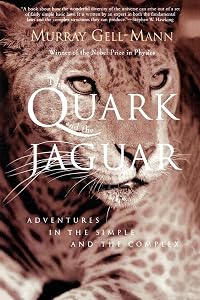
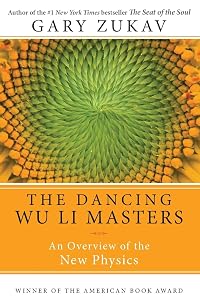
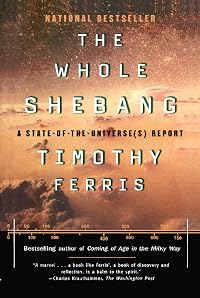
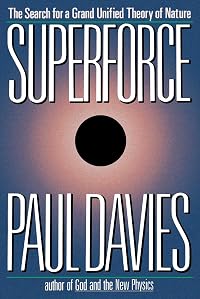



Member Recommendations
hungeri Mindkét tudományos ismeretterjesző mű történeti megközelítésű ugyanazon szerző tollából. Egyedül a téma különbözik. :-)
hungeri A good scientific book and a sci-fi based on the same subject. The scientific base of the sci-if is strong, but as it is a fiction, you can relax and enjoy it without a worry about "but is it true", "can it be true?".
GuyDeWhitney The best intro to modern physics I have ever read! Gribbon is the one that first made quantum theory have meaning for me.
Member Reviews
John Gribbin has a real gift for elucidating the fundamental questions, advances, and mysteries in understanding the underpinnings of reality as understood with quantum mechanics. Girbbin offers a very expansive picture, showing how quantum realities touch our everyday lives:
He explains many points of QM in ways I do not recall seeing elsewhere or explained as well and often challenging popular assumptions:
Unexpectedly, at least to me, the summation is a running endorsement of the many-worlds interpretation of American physicist Hugh Everett III (father to E), who proposed it in his doctoral thesis at Princeton University in 1957. In effect, this implies that the super-universe contains within it all possible realities, which is very Leibniz. show less
...we have all heard of genetic engineering and read about the miraculous prospects—and the dangers—it holds for the future. Very few people appreciate, though, that the understanding of living molecules that makes genetic engineering possible depends on our present understanding of quantum mechanics, without which we would not be able to interpret X-ray diffraction data, apart from anything else. To understand how to construct, or reconstruct, genes, we have toshow more
understand how and why atoms join together only in certain arrangements, certain distances apart and with chemical bonds of a certain strength. That understanding is the gift of quantum physics to chemistry and to molecular biology.
I’ve labored the point a little more than I might have had it not been for a member of the University College of Wales. In March 1983, in a review in New Scientist, I mentioned in passing that “without quantum theory there would be no genetic engineering, no solid-state computers, no nuclear power stations (or bombs).” This drew a complaint from a correspondent in that respected academic institution to the effect that he was fed up with seeing genetic engineering dragged in everywhere as the new scientific buzzword, and that John Gribbin shouldn’t be allowed to get away with such outrageous remarks. What possible connection, however tenuous, could there be between quantum theory and genetics? I hope the connection is clear this time. At one level, it is delightful to be able to point out the fact that Crick’s conversion to biophysics was directly inspired by Schrödinger, and that the work that led to the discovery of the DNA double helix was carried out under the formal, if sometimes unwelcome, direction of Lawrence Bragg; at a deeper level, of course, the reason for the interest of pioneers like Bragg and Schrödinger, and the next generation of physicists such as Kendrew, Perutz, Wilkins, and Franklin in biological problems is that these problems are, as Schrödinger pointed out, simply another kind of physics, one that deals with collections of large numbers of atoms in complex molecules.
He explains many points of QM in ways I do not recall seeing elsewhere or explained as well and often challenging popular assumptions:
This misconception still arises today, partly because of the way the idea of uncertainty is often taught. Heisenberg himself used the idea of observing an electron to make his point. We can only see things by looking at them, which involves bouncing photons of light off them and into our eyes. A photon doesn’t disturb an object like a house very much, so we don’t expect the house to be affected by looking at it. For an electron, though, things are rather different. To start with, because an electron is so small we have to use electromagnetic energy with a short wavelength in order to see it (with the aid of experimental apparatus)at all. Such gamma radiation is very energetic, and any photon of gamma radiation that bounces off an electron and can be detected by our experimental apparatus will drastically change the position and momentum of the electron—if the electron is in an atom, the very act of observing it with a gamma ray microscope may knock it out of the atom altogether.
All this is true enough, and it does give a general idea of the impossibility of measuring precisely both the position and momentum of an electron. But what the uncertainty principle tells us is that, according to the fundamental equation of quantum mechanics, there is no such thing as an electron that possesses both a precise momentum and a precise position.
This has far-reaching implications. As Heisenberg said at the end of his paper in the Zeitschrift, “We cannot know, as a matter of principle, the present in all its details.” This is where quantum theory cuts free from the determinacy of classical ideas. To Newton, it would be possible to predict the entire course of the future if we knew the position and momentum of every particle in the universe; to the modern physicist, the idea of such perfect prediction is meaningless because we cannot know the position and momentum of even one particle precisely. The same conclusion comes out of all the different versions of the equations, the wave mechanics, the Heisenberg-Born-Jordan matrices, and Dirac’s q numbers, although Dirac’s approach, which carefully avoids any physical comparisons with the everyday world, seems the most appropriate. Indeed, Dirac very nearly came to the uncertainty relation before Heisenberg. In a paper for the Proceedings of the Royal Society in December 1926 he pointed out that in quantum theory it is impossible to answer any question that refers to numerical values of both q and p, although “one would expect, however, to be able to answer questions in which only the q or only the p are given numerical values.”
It was only in the 1930s that the philosophers took up the implications of these ideas for the concept of causality—the idea that every event is caused by some other specific event—and the puzzle of predicting the future. Meanwhile, although the uncertainty relations had been derived from the fundamental equations of quantum mechanics, some influential experts began to teach quantum theory by starting out from the uncertainty relations. Wolfgang Pauli was probably the key influence in this trend. He wrote a major encyclopedia article on quantum theory that began with the uncertainty relations, and he encouraged a colleague, Herman Weyl, to begin his textbook Theory of Groups and Quantum Mechanics in much the same way. This book was first published in German in 1928 and in English (by Methuen) in 1931. Together, the book and Pauli’s article set the tone for a generation of standard texts. Students raised on those texts became, in some cases, professors in their turn, and passed on the same style of teaching to subsequent generations. As a result students at university today are still, more often than not, introduced to quantum theory via the uncertainty relations...
Unexpectedly, at least to me, the summation is a running endorsement of the many-worlds interpretation of American physicist Hugh Everett III (father to E), who proposed it in his doctoral thesis at Princeton University in 1957. In effect, this implies that the super-universe contains within it all possible realities, which is very Leibniz. show less
Quantum physics is deeply unsettling. The two competing theories that attempt to explain the Schrodinger's cat paradox of the title seem both (to the average person) equally implausible: the Copenhagen interpretation proposes that, until an observer 'fixes' the results of the experiment by opening the box, the cat is neither alive nor dead, but both; the Many Worlds interpretation proposes that quantum indeterminacy results in alternative worlds where both possible outcomes are respectively fulfilled (one universe contains a live cat, another contains the dead one). It's crazy stuff. And it doesn't stop there - but I'll let you read the book for yourself.
However, whilst physicists may not understand why the sub-atomic world behaves the show more way it does, quantum theory is a hugely powerful tool that has provided the basis for many of the advances of modern science and technology - nuclear energy, lasers, microwaves, computers, even playing a role in the discovery of DNA. In fact, it wouldn't be too strong a claim to say that our modern world would be unthinkable without it. So, in Gribbin's words, we have a 'Quantum cookbook' with which we can exert an extraordinary power over nature, even if we don't fully understand why the recipes work or what the ingredients are.
This is a difficult subject, and Gribbin does an admirable job of attempting to give a full account of the development of quantum theory in clear historical terms whilst also endeavouring to explain its advances in accessible language. However, given the complexity of the material, there are some sections which will leave the layperson baffled. This is perhaps unavoidable, and it would have been worse if the author had succumbed to the temptation to oversimplify. So, I'll probably read it again at some point, and hope that more of it sinks in. Well worth a read, though, and probably - even though it's getting on a bit now - still the classic introduction to the subject.
Gareth Southwell is a philosopher, writer and illustrator. show less
However, whilst physicists may not understand why the sub-atomic world behaves the show more way it does, quantum theory is a hugely powerful tool that has provided the basis for many of the advances of modern science and technology - nuclear energy, lasers, microwaves, computers, even playing a role in the discovery of DNA. In fact, it wouldn't be too strong a claim to say that our modern world would be unthinkable without it. So, in Gribbin's words, we have a 'Quantum cookbook' with which we can exert an extraordinary power over nature, even if we don't fully understand why the recipes work or what the ingredients are.
This is a difficult subject, and Gribbin does an admirable job of attempting to give a full account of the development of quantum theory in clear historical terms whilst also endeavouring to explain its advances in accessible language. However, given the complexity of the material, there are some sections which will leave the layperson baffled. This is perhaps unavoidable, and it would have been worse if the author had succumbed to the temptation to oversimplify. So, I'll probably read it again at some point, and hope that more of it sinks in. Well worth a read, though, and probably - even though it's getting on a bit now - still the classic introduction to the subject.
Gareth Southwell is a philosopher, writer and illustrator. show less
In the search for Schrodinger's Cat Gribben shows us the fantastic whimsical world of the Quantum. Walking Dead Cats notwithstanding, it is a fascinating journey into that world that even a layman like me can understand. And it opens the door to link the known and seen physical world to the unseen world and our interactions with the unseen by just looking at it!
For anybody with a Theological background (like me) it gives entrance to a wormhole tunnel between the two seemingly incompatible genres of knowledge.
Having a Folio Society version adds icing to the cake with its beautifully crafted design. It is a pleasure to hold in the hand, feel the cover and pages, and peruse the beauty of the content. Well worth having a copy!
For anybody with a Theological background (like me) it gives entrance to a wormhole tunnel between the two seemingly incompatible genres of knowledge.
Having a Folio Society version adds icing to the cake with its beautifully crafted design. It is a pleasure to hold in the hand, feel the cover and pages, and peruse the beauty of the content. Well worth having a copy!
This is the second John Gribbin book I have read, but not the last one, I am sure.
Another Gribbin book (Science: A History 1534-2001) convinced me that his style is very enjoyable. His scientific thinking, good sense of selecting and explaining interesting subjects is very well integrated by his fine humor and vivid story telling. You can find no boring parts you might got familiar in school. Based on what I have already read from him, he seems to choose the time based story telling approach instead of giving the knowledge at once - this makes the whole much more exciting.
Atom, light, electron: I have never thought they could be so amusing. You know, school have hidden this secret world from me. Or just didn't know the right way to tell show more it. The whole book is a fascinating and shocking travel to the world of the smaller and smaller things. In the office it was a constant subject, I always kept my collegues up-to-date regarding what I have read. And what also counts: I am a sceptic and agnostig man, lacking mystic feelings. Now I got it.
I myself made notes during reading, because otherwise I cannot remember the details. Of course, it is also good just to relax and enjoy.
In the last chapter, he becomes subjective, and votes for a theory that I could not believe. However, in the second part of this book (Schrödinger's Kittens and the Search for Reality) he practically votes for another one. That is also hard to believe - but this is typical for the whole subject. So might even be true. show less
Another Gribbin book (Science: A History 1534-2001) convinced me that his style is very enjoyable. His scientific thinking, good sense of selecting and explaining interesting subjects is very well integrated by his fine humor and vivid story telling. You can find no boring parts you might got familiar in school. Based on what I have already read from him, he seems to choose the time based story telling approach instead of giving the knowledge at once - this makes the whole much more exciting.
Atom, light, electron: I have never thought they could be so amusing. You know, school have hidden this secret world from me. Or just didn't know the right way to tell show more it. The whole book is a fascinating and shocking travel to the world of the smaller and smaller things. In the office it was a constant subject, I always kept my collegues up-to-date regarding what I have read. And what also counts: I am a sceptic and agnostig man, lacking mystic feelings. Now I got it.
I myself made notes during reading, because otherwise I cannot remember the details. Of course, it is also good just to relax and enjoy.
In the last chapter, he becomes subjective, and votes for a theory that I could not believe. However, in the second part of this book (Schrödinger's Kittens and the Search for Reality) he practically votes for another one. That is also hard to believe - but this is typical for the whole subject. So might even be true. show less
A clear and concise summation of Quantum Physics. Gets rather dense about 2/3 of the way through, but Gribbin sticks the landing.
A comprehensive history of 20th century physics - it get's a bit overly technical and mathematical in places but it really can't be helped given the subject matter. I can't say I understand quantum mechanics any better after reading this, but I can say I better understand where it came from. Oh, and they never have found the cat ...
I thought this was quite informative and exhaustive. I liked the general tone of the book - precise, objective with a touch of love for the subject.
I listened to this as an audiobook and I should buy a physical copy to read again some parts. The formulas don't work in an audiobook.
It's good. I would recommend it.
I listened to this as an audiobook and I should buy a physical copy to read again some parts. The formulas don't work in an audiobook.
It's good. I would recommend it.
Members
- Recently Added By
Lists

The r/AskScience Reading List
159 works; 3 members
Author Information

181+ Works 15,954 Members
John R. Gribbin (born 19 March 1946) is a British science writer, an astrophysicist, and a visiting fellow in astronomy at the University of Sussex. The topical range of his prolific writings include quantum physics, human evolution, climate change, global warming, the origins of the universe, and biographies of famous scientists. He also writes show more science fiction. In 1984, Gribbin published In Search of Schrödinger's Cat: Quantum Physics and Reality, the book that he is best known for, which continues to sell well even after years of publication. At the 2009 World Conference of Science Journalists, the Association of British Science Writers presented Gribbin with their Lifetime Achievement award. (Bowker Author Biography) John Gribbin, visiting fellow in astronomy at the University of Sussex. He is married to Mary Grivvin, also a science writer. (Publisher Provided) show less
Series
Belongs to Publisher Series
Work Relationships
Common Knowledge
- Canonical title
- In Search Of Schrodinger's Cat: Quantum Physics and Reality
- Original publication date
- 1984
- People/Characters
- Erwin Schrödinger
- Epigraph
- I don't like it, and I'm sorry I ever had anything to do with it.
—Erwin Schrödinger
Nothing is real.
—John Lennon
Anyone who is not shocked by quantum theory has not understood it.
—Niels Bohr, Part One: The Quantum
All science is either physics or stamp collecting.
—Ernest Rutherford, Part Two: Quantum Mechanics
It is better to debate a question without settling it than to settle a question without debating it.
—Joseph Joubert, Part Three: ...And Beyond - First words
- Prologue
The cat of our title is a mythical beast, but Schrodinger was a real person.
Isaac Newton invented physics, and all of science depends on physics. - Last words
- (Click to show. Warning: May contain spoilers.)If the business of physics is ever finished, the world will be a much less interesting place in which to live, which is why I'm happy to leave you with loose ends, tantalizing hints, and the prospect of more stories yet to be told, each one as intriguing as the story of Schroedinger's cat.
Classifications
- Genres
- Science & Nature, Nonfiction, General Nonfiction, History, Philosophy
- DDC/MDS
- 530.1209 — Natural sciences & mathematics Physics Physics Theoretical Physics Quantum Mechanics Biography And History
- LCC
- QC173.98 .G75 — Science Physics Physics Atomic physics. Constitution and properties of matter
- BISAC
Statistics
- Members
- 2,863
- Popularity
- 6,364
- Reviews
- 30
- Rating
- (3.85)
- Languages
- 13 — Chinese, Czech, Danish, Dutch, English, French, German, Greek, Hungarian, Polish, Spanish, Swedish, Turkish
- Media
- Paper, Audiobook, Ebook
- ISBNs
- 29
- ASINs
- 18