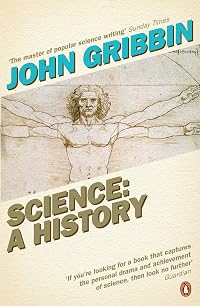
Science: A History 1543-2001
by John Gribbin
There are 2 current discussions about this work.
On This Page
Description
This title begins with Galileo and takes the reader through to the scientific developments of string theory. It is an accessible narrative history, focusing on the way in which science has progressed by building on what went before, and also on the very close relationship between the progress of science and improved technology.Tags
Recommendations
















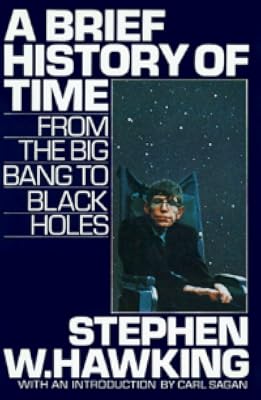


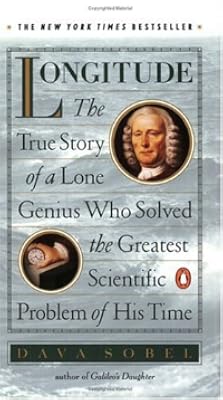
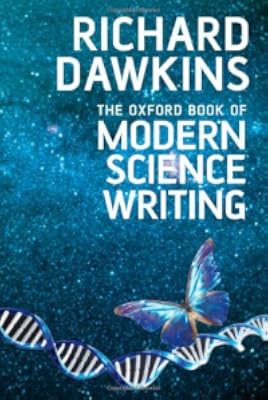

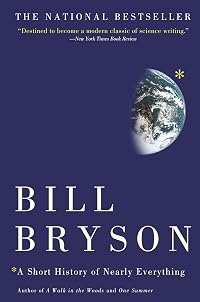




Member Recommendations

hungeri Mindkét tudományos ismeretterjesző mű történeti megközelítésű ugyanazon szerző tollából. Egyedül a téma különbözik. :-)
Member Reviews
Magnificent tour-de-force on the development of science as we know it.
With one big limitation, which the author duly acknowledges: it doesn't cover advances and breakthroughs in medical science, no matter how stupendous they were. If you want to see how discoveries of vaccination, microbes and viruses, anaesthesia etc... fit into a larger context of science development, you better look elsewhere. Names of Jenner, Pasteur, Koch, Flemming and multiple others are found nowhere on its pages. There you may encouter only subtlest hints on how major events in chemistry, physics, biology and in scientific method in general affected medicine.
Yet, since it was more or less unambigously declared by the author, the abscence of such narrative could show more not be considered a book's flaw. Excellent account otherwise! show less
With one big limitation, which the author duly acknowledges: it doesn't cover advances and breakthroughs in medical science, no matter how stupendous they were. If you want to see how discoveries of vaccination, microbes and viruses, anaesthesia etc... fit into a larger context of science development, you better look elsewhere. Names of Jenner, Pasteur, Koch, Flemming and multiple others are found nowhere on its pages. There you may encouter only subtlest hints on how major events in chemistry, physics, biology and in scientific method in general affected medicine.
Yet, since it was more or less unambigously declared by the author, the abscence of such narrative could show more not be considered a book's flaw. Excellent account otherwise! show less
This is a very comprehensive text that brings to life some of the names behind the laws, theories and experiments from the high school science curriculum. Many of the stories are fascinating - we get a brief insight into some of the personal and political issues that these people had to cope with.
A particular strength of the book is the strong focus on pre-20th century scientific advancement. Many histories tend to over-emphasise recent events to the detriment of older stories.
My only reservation about the book was the uneveness of the biographies in the books. Some of the bios are fascinating, others appear irrelevant and rather pedestrian. I have a feeling that some more editing in this direction would have helped the readibility of show more the book greatly.
Nevertheless, a fascinating book for anyone who wants to understand something about where how these great ideas came about. show less
A particular strength of the book is the strong focus on pre-20th century scientific advancement. Many histories tend to over-emphasise recent events to the detriment of older stories.
My only reservation about the book was the uneveness of the biographies in the books. Some of the bios are fascinating, others appear irrelevant and rather pedestrian. I have a feeling that some more editing in this direction would have helped the readibility of show more the book greatly.
Nevertheless, a fascinating book for anyone who wants to understand something about where how these great ideas came about. show less
This sprawling, comprehensive history of science and the scientists that made its discoveries begins from Copernicus and ends in a slightly rushed way towards modern day science. Some famous scientists are described wonderfully, making science appear very much a personal process, with fascinating often larger-than-life characters populating it. The science itself is usually described with crisp authority, though there are times when more clarity would be useful. The two main strengths of the book for me were the sheer range of detailed historical coverage, and secondly the opinionated overviews of what specific discoveries mean for our place in the universe, and how science operates. These were fantastic at highlighting how incredibly show more profoundly science has changed our perspective of almost everything, and I would have liked even more digressions like this.
But, having been published about 15 years ago, there are a few places here and there that are a little outdated: for instance the genomic information is wrong, and some of the astronomical information is too.
And it is written in a rather dry, slightly pompous, even marginally old-fashioned style. And I imagine to avoid the book going on for thousands more pages, it is a tad uneven in the following way: there is far more biographical information about the earliest scientific names compared to the giants of 20th century science. For instance, there is almost no biographical information on Richard Feynman, Murray Gellman, Watson and Crick, and other leaders of modern science.
But these are minor quibbles. The book is on the whole a fantastic achievement, and a great treat to read for anyone remotely interested in science. show less
But, having been published about 15 years ago, there are a few places here and there that are a little outdated: for instance the genomic information is wrong, and some of the astronomical information is too.
And it is written in a rather dry, slightly pompous, even marginally old-fashioned style. And I imagine to avoid the book going on for thousands more pages, it is a tad uneven in the following way: there is far more biographical information about the earliest scientific names compared to the giants of 20th century science. For instance, there is almost no biographical information on Richard Feynman, Murray Gellman, Watson and Crick, and other leaders of modern science.
But these are minor quibbles. The book is on the whole a fantastic achievement, and a great treat to read for anyone remotely interested in science. show less
An easily-read and entertaining overview of the main players and events in the history of Western science. the author clearly sets out his stall from the beginning in the the limits of what he covers and how he chooses to approach the subject. This is very much focussed on the the individual and the personality with an emphasis on the biographical detail rather than the scientific detail. In general this works well, there are a couple of occasions where the informal approach does jar slightly (in describing one scientist as 'going ballistic' at his rival), but mostly it works to flesh out personalities (particularly pre 20th century).
However, given the scope of this book, it takes some skill to cover so much and put in a proper context, show more and by and large Gribbin manages this. It would make a good introduction to the general reader. show less
However, given the scope of this book, it takes some skill to cover so much and put in a proper context, show more and by and large Gribbin manages this. It would make a good introduction to the general reader. show less
John Gribbin writes excellent narrative history, with an eye for the entertaining anecdote, but also in a well-organized and comprehensive fashion, covering physics, biology, chemistry and geology equally well.
A great introduction to the topic which concentrates on the people and their lives and only gives a brief insight into the science itself.
Very easy to read and with many entertaining anecdotes and tales.
Gribbin is one of the easiest to read popular science writers, now he shows his hand as a great history writer as well.
I can see that I will be dipping in and out of this book for reference for many years to come.
A good read.
Four out of five stars.
Very easy to read and with many entertaining anecdotes and tales.
Gribbin is one of the easiest to read popular science writers, now he shows his hand as a great history writer as well.
I can see that I will be dipping in and out of this book for reference for many years to come.
A good read.
Four out of five stars.
Helps to make clear that the poet and scientist often drink from the same glass! Also forget the myth of the objective, white coated scientist. Social orgins of knowledge always more revealing- check out the discovery and publication of DNA
Members
- Recently Added By
Lists

Falling for Science
56 works; 3 members
Talk Discussions
Current Discussions
Reading A Briefer History of Time by Stephen Hawking & More in Journey In Books (June 27)
Anisha’s Nonfiction Challenge 2026 in Journey In Books (June 23)
Author Information

180+ Works 15,905 Members
John R. Gribbin (born 19 March 1946) is a British science writer, an astrophysicist, and a visiting fellow in astronomy at the University of Sussex. The topical range of his prolific writings include quantum physics, human evolution, climate change, global warming, the origins of the universe, and biographies of famous scientists. He also writes show more science fiction. In 1984, Gribbin published In Search of Schrödinger's Cat: Quantum Physics and Reality, the book that he is best known for, which continues to sell well even after years of publication. At the 2009 World Conference of Science Journalists, the Association of British Science Writers presented Gribbin with their Lifetime Achievement award. (Bowker Author Biography) John Gribbin, visiting fellow in astronomy at the University of Sussex. He is married to Mary Grivvin, also a science writer. (Publisher Provided) show less
Common Knowledge
- Alternate titles
- Science: A History 1534-2001; History of Western Science, 1543-2001
- Original publication date
- 2002
- People/Characters
- Henry Cavendish; Nicolaus Copernicus; Charles Darwin [Charles Robert: 1809-1882]; Albert Einstein; Michael Faraday; Galileo Galilei (show all 11); Edmond Halley; Robert Hooke; Antoine Lavoisier; Charles Lyell; Isaac Newton
- First words
- Introduction
The most important thing that science has taught us about our place in the Universe is that we are not special. - Last words
- (Click to show. Warning: May contain spoilers.)And what motivates the great scientists is not the thirst for fame or fortune (although that can be a seductive lure for the less-than-great scientists), but what Richard Feynman called 'the pleasure of finding things out', a pleasure so satisfying that many of those great scientists, from Newton to Cavendish and from Charles Darwin to Feynman himself, have not even bothered to publish their findings unless pressed by their friends to do so, but a pleasure that would hardly exist if there were no truths to discover.
Classifications
Statistics
- Members
- 815
- Popularity
- 33,883
- Reviews
- 9
- Rating
- (3.85)
- Languages
- 8 — English, Estonian, Hebrew, Hungarian, Italian, Portuguese, Spanish, Turkish
- Media
- Paper, Ebook
- ISBNs
- 15
- ASINs
- 14