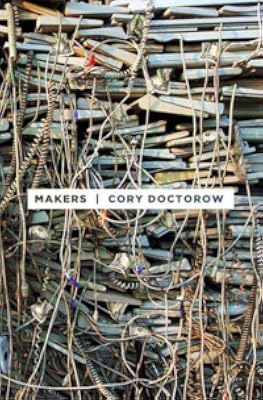
Makers
by Cory Doctorow
On This Page
Description
What happens to America when two geeks working from a garage invent easy 3D printing, a cure for obesity, and crowd-sourced theme parks? Lawsuits against Disney are only the beginning in this major novel of the booms, busts, and further booms in store for America in the age of open source and its hero/hacker culture.Tags
Recommendations

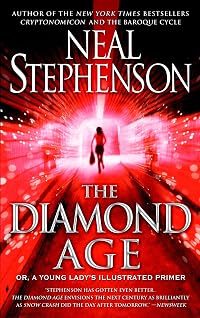
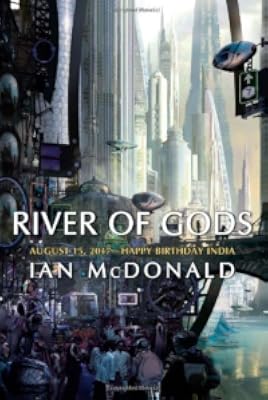
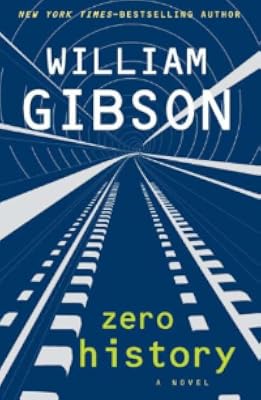
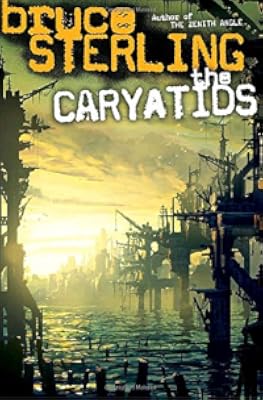



Member Recommendations
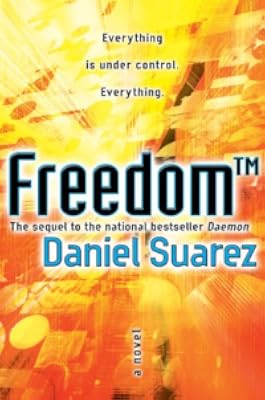
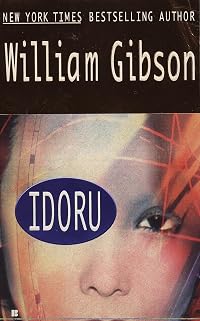
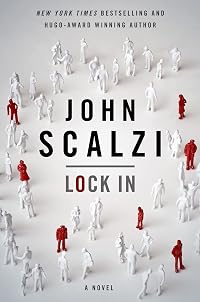
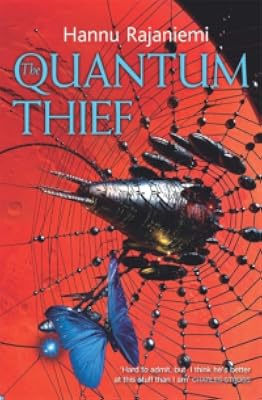
PghDragonMan Big corporations seek to control creativity and the creative forces strike back.
30
grizzly.anderson Both are near-future extrapolations of technology, behavior and society.

by hairball
Member Reviews
This Cory Doctorow novel takes us to the very near future, a pretty bleak, economically depressed landscape. Into this landscape, Doctorow drops two tech nerds (Lester and Perry), an English venture capitalist (Kettlewell), a blogger (Suzanne Church) and a mid-level Disney exec (Sammy) in a story of how unfettered high tech capitalism and bio-technology might shape the near future, a future in which many of our previous bellwether economic engines, companies such as Kodak, Duracell and Westinghouse have found themselves to be obsolete.
This is a vastly entertaining read, one in which very, very many current economic trends are followed to their potential conclusions, some good and some not so good (think airport security). The wealth of show more potential new inventions which Doctorow has imagined is staggering. Imagine a world in which obesity is eliminated through biochemical altering of metabolism (with the proviso that the altered individual must consume 10,000 calories a day or starve to death!). Imagine what might happen to Disney World when patrons can undergo similar or superior experiences through virtual reality in one’s own home or at a fraction of the cost. Rest assured, Mickey will not go quietly into that good night. As an aside, what is it with Doctorow and Disney?
This is a story told in three parts: First, an attempted conversion of the old economy into a vibrant, creative “New Work” economy in which micro cells of technologically proficient, highly creative inventors are identified, organized and capitalized; second, 5-10 years following collapse of the “New Work” economy, our heroes (Perry and Lester) create a nostalgic look back through construction of a “ride”, in which participants not only experience the contents, but grade and ultimately reconfigure it through their collective experiences. Such rides sweep the nation, and are connected and remain identical through technical networks; third, is the clash between the “rides” and the ultimate “ride”, Disney World. The Empire Strikes Back, as it were. Suits, countersuits, trademark infringement, industrial espionage all ensue.
Doctorow is clearly no fan of multi-national corporations, bureaucracy, “suits” or even mid-level management. One would almost picture his Utopia as a near anarchical society in which the individual creative genius is given complete control, unfettered by law (intellectual property) or administrative control. Of course, both in real life and in Doctorow’s novel, such a society is not sustainable. At each level of the story, a predictable progression of creativity, success and growth is followed by chaos, control, litigation and ultimately collapse. It’s a wild “ride” and one well worth the time. show less
This is a vastly entertaining read, one in which very, very many current economic trends are followed to their potential conclusions, some good and some not so good (think airport security). The wealth of show more potential new inventions which Doctorow has imagined is staggering. Imagine a world in which obesity is eliminated through biochemical altering of metabolism (with the proviso that the altered individual must consume 10,000 calories a day or starve to death!). Imagine what might happen to Disney World when patrons can undergo similar or superior experiences through virtual reality in one’s own home or at a fraction of the cost. Rest assured, Mickey will not go quietly into that good night. As an aside, what is it with Doctorow and Disney?
This is a story told in three parts: First, an attempted conversion of the old economy into a vibrant, creative “New Work” economy in which micro cells of technologically proficient, highly creative inventors are identified, organized and capitalized; second, 5-10 years following collapse of the “New Work” economy, our heroes (Perry and Lester) create a nostalgic look back through construction of a “ride”, in which participants not only experience the contents, but grade and ultimately reconfigure it through their collective experiences. Such rides sweep the nation, and are connected and remain identical through technical networks; third, is the clash between the “rides” and the ultimate “ride”, Disney World. The Empire Strikes Back, as it were. Suits, countersuits, trademark infringement, industrial espionage all ensue.
Doctorow is clearly no fan of multi-national corporations, bureaucracy, “suits” or even mid-level management. One would almost picture his Utopia as a near anarchical society in which the individual creative genius is given complete control, unfettered by law (intellectual property) or administrative control. Of course, both in real life and in Doctorow’s novel, such a society is not sustainable. At each level of the story, a predictable progression of creativity, success and growth is followed by chaos, control, litigation and ultimately collapse. It’s a wild “ride” and one well worth the time. show less
Doctorow loves to write about the near-future with the little guy going up against evil mega-corps and 'Makers' is no exception to that basic premise. Perry and Lester are hacking a post-modern living out of the wasteland of near-future America while living in the shadow of the evil Disney corporation. Suzanne is an ex-reporter turned blogger hired to cover their story. Together, along with a few other people, they create a cult of personality that changes the world - for a little while.
This book was up & down for me. Mostly up; the writing style is direct and easy to read. The characters are pretty well-conceived and have interesting relationships with each other. The back-drop of the post-modern, post-consumer world is rendered in show more great, but not over-bearing, detail. I'm not entirely sure what the denouement was supposed to be though? The last few chapters left me feeling flat as the story just sort of petered out.
I have to add that I did not really intend to read this book when I began it. Doctorow, putting his money where his mouth is when it comes to his stance on intellectual property rights, released the e-book version of 'Makers' under a Creative Commons license. That means it's free to download from online sources, (his website, gutenberg.org, etc). However... the cover artwork is not included in the licensing. So... here I had this blank bookcover on my e-reader and, having forgotten what it was that I downloaded several months ago, I only openend the file to see which book it was. I parsed a few paragraphs and was quickly hooked in & ended up reading this almost 600-page tome in just about four days. In short, it's an easy read that you can snag for free. Give it a shot. Even though the book is not perfect, it does contain a lot of cool ideas. show less
This book was up & down for me. Mostly up; the writing style is direct and easy to read. The characters are pretty well-conceived and have interesting relationships with each other. The back-drop of the post-modern, post-consumer world is rendered in show more great, but not over-bearing, detail. I'm not entirely sure what the denouement was supposed to be though? The last few chapters left me feeling flat as the story just sort of petered out.
I have to add that I did not really intend to read this book when I began it. Doctorow, putting his money where his mouth is when it comes to his stance on intellectual property rights, released the e-book version of 'Makers' under a Creative Commons license. That means it's free to download from online sources, (his website, gutenberg.org, etc). However... the cover artwork is not included in the licensing. So... here I had this blank bookcover on my e-reader and, having forgotten what it was that I downloaded several months ago, I only openend the file to see which book it was. I parsed a few paragraphs and was quickly hooked in & ended up reading this almost 600-page tome in just about four days. In short, it's an easy read that you can snag for free. Give it a shot. Even though the book is not perfect, it does contain a lot of cool ideas. show less
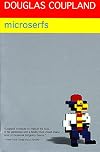
If you loved Microserfs by Douglas Coupland which chronicled life in Silicon Valley in the 90s, you'll probably enjoy this which takes the nerds into the near future. Rather than spoofing Microsoft, it takes Disney as the corporate behemoth that needs taking down a peg.
Perry and Lester are two talented engineers who specialise in making things by recycling toys and gadgets into other electronic gadgets which they sell to collectors. Key to this is the 3D printer - which when filled with 'goop' will create any part needed. They subsist in happy chaos in Florida living and working in an old Wal-mart store, living in harmony with a collection of drop-outs and homeless folk who've built a nearby shantytown.
Then they get discovered. One of show more the corporate behemoths, Kodacell (a Kodak-Duracell merger) is looking for a new way of doing business now the markets don't want their traditional products any more. They think a small is beautiful approach using hundreds of small subsidiaries all networking and using each other is the answer, and want to use Perry and Lester as their flagship. A business manager is sent in, and Suzanne Church - a journalist is implanted to document everything that happens and make sure that the world knows about it. Inadvertently, all this will hasten the demise of the traditional economy!
It goes wild, they're a hit, but what they hadn't bargained for is that Perry and Lester are liberal types - big business isn't really their thing and they'd rather carry on tinkering and helping the homeless. They also have a love of retro-electronics and create a 'ride' that celebrates it and also evolves. This becomes the surprise highlight of a holiday in Florida for many. Enter Disney, and as Perry and Lester's technology gets hijacked, things start to go seriously wrong...
This was a dense and chunky novel - far too long at 416 pages in the hardback format - but generally entertaining to read. Although the characterisation is far from perfect and the writing was a bit clunky, you couldn't help but like Perry and Lester, loveable underdogs who get out of their depth; Suzanne as the hack with a heart of gold was somewhat sad - sacrificing any life of her own for the story. You could also feel some sympathy for the good guys of the business world who tried to help the small fry, but the baddies were portrayed as real pantomime villains in this technological Cinderella story, very shallow indeed. There was one sub-plot I didn't like - regarding a Russian technological miracle to cure obesity - the 'Fatkins' programme. While having a serious point to make, it got in the way of the main story.
Overall - this is a novel of ideas - and I could imagine some of them happening! (8/10)
(Book supplied by the Amazon Vine programme). show less
Perry and Lester are two talented engineers who specialise in making things by recycling toys and gadgets into other electronic gadgets which they sell to collectors. Key to this is the 3D printer - which when filled with 'goop' will create any part needed. They subsist in happy chaos in Florida living and working in an old Wal-mart store, living in harmony with a collection of drop-outs and homeless folk who've built a nearby shantytown.
Then they get discovered. One of show more the corporate behemoths, Kodacell (a Kodak-Duracell merger) is looking for a new way of doing business now the markets don't want their traditional products any more. They think a small is beautiful approach using hundreds of small subsidiaries all networking and using each other is the answer, and want to use Perry and Lester as their flagship. A business manager is sent in, and Suzanne Church - a journalist is implanted to document everything that happens and make sure that the world knows about it. Inadvertently, all this will hasten the demise of the traditional economy!
It goes wild, they're a hit, but what they hadn't bargained for is that Perry and Lester are liberal types - big business isn't really their thing and they'd rather carry on tinkering and helping the homeless. They also have a love of retro-electronics and create a 'ride' that celebrates it and also evolves. This becomes the surprise highlight of a holiday in Florida for many. Enter Disney, and as Perry and Lester's technology gets hijacked, things start to go seriously wrong...
This was a dense and chunky novel - far too long at 416 pages in the hardback format - but generally entertaining to read. Although the characterisation is far from perfect and the writing was a bit clunky, you couldn't help but like Perry and Lester, loveable underdogs who get out of their depth; Suzanne as the hack with a heart of gold was somewhat sad - sacrificing any life of her own for the story. You could also feel some sympathy for the good guys of the business world who tried to help the small fry, but the baddies were portrayed as real pantomime villains in this technological Cinderella story, very shallow indeed. There was one sub-plot I didn't like - regarding a Russian technological miracle to cure obesity - the 'Fatkins' programme. While having a serious point to make, it got in the way of the main story.
Overall - this is a novel of ideas - and I could imagine some of them happening! (8/10)
(Book supplied by the Amazon Vine programme). show less
The last couple of years has seen the charge by a few in literary circles that too many authors today are taking refuge in historical fiction. Their point seems to be there is nothing wrong with historical fiction but it can lead to a dearth of writers writing about the world we live in at present. Understanding and describing our times can be like trying to mold water into a sculpture. Nothing stays as it was for more than a microsecond. Change is constant and accelerating.
Cory is a writer at ease in contemporary time. His fiction and essays have worked this territory for decades now. The early age SF writer A.E. VanVogt wrote with the rule that a reader should be hit with a new idea every 800 words. I'm not sure if CD is aware of this show more rule but his style suggests it. Makers is a novel of ideas. But it's not just a novel of ideas. He's digging deeper into capitalistic corporate economics, social networking, sociology, culture, abundance, waste, and poverty among other subjects. It is a wild ride from the start until the finish.
The main characters are two techno-geek friends and a reporter/blogger that chronicles their efforts. They like to make things, thus the title. In the process they help create a new economy based on New Work. Things do good and they are riding high. It crashes. Now they are not riding so high. The story follows them into old age with all kinds of ups and downs. When is the last time you read of old techno-geeks literally playing Calvinball? The game from Calvin and Hobbes where the same rule can never be used twice.
Cory is a successful (Boing Boing) blogger. He can string some snarky irreverent passages together like some politician's do spin. He's writing near-future that takes place in about the next five hours and seven minutes. He also lives what he writes. When the Canadian SF writer Peter Watts was recently beaten, pepper sprayed by and turned out into a snowstorm with no coat by the US Border Patrol, CD blogged about it, set up a legal defense fund, and PayPal-ed him $1,000 Canadian. Not a bad guy to have in your corner during these times. He writes a pretty good book too. show less
Cory is a writer at ease in contemporary time. His fiction and essays have worked this territory for decades now. The early age SF writer A.E. VanVogt wrote with the rule that a reader should be hit with a new idea every 800 words. I'm not sure if CD is aware of this show more rule but his style suggests it. Makers is a novel of ideas. But it's not just a novel of ideas. He's digging deeper into capitalistic corporate economics, social networking, sociology, culture, abundance, waste, and poverty among other subjects. It is a wild ride from the start until the finish.
The main characters are two techno-geek friends and a reporter/blogger that chronicles their efforts. They like to make things, thus the title. In the process they help create a new economy based on New Work. Things do good and they are riding high. It crashes. Now they are not riding so high. The story follows them into old age with all kinds of ups and downs. When is the last time you read of old techno-geeks literally playing Calvinball? The game from Calvin and Hobbes where the same rule can never be used twice.
Cory is a successful (Boing Boing) blogger. He can string some snarky irreverent passages together like some politician's do spin. He's writing near-future that takes place in about the next five hours and seven minutes. He also lives what he writes. When the Canadian SF writer Peter Watts was recently beaten, pepper sprayed by and turned out into a snowstorm with no coat by the US Border Patrol, CD blogged about it, set up a legal defense fund, and PayPal-ed him $1,000 Canadian. Not a bad guy to have in your corner during these times. He writes a pretty good book too. show less
One of the best science fiction novels I've read in a long time. Using the cyberpunk genre, Doctorow effectively looks at the future of capitalism in an age where the cost of goods is constantly driving towards $0.00. As with all cyberpunk I've read, the evil corporations win in the end, but this novel exposes the real chinks in their armor. Doctorow explores the change away from "means of manufacturing" towards innovation and creativity. He shows how technology is inevitably knocking down the fiefdom walls of Industrial Age centralization and leading to a truly decentralized, self-organizing chaos of innovation. The novel points out how out-dated our system of intellectual property is and how it now serves only the corporations who do show more not really serve their customers' best interests. The novel shows the potential we have to change the way we live if only we were free (in a legal sense) to do what is possible. show less
I hesitate to mark this book as 'read', but I did read over half of it. I usually don't stop in the middle of books, but this book was an exception. I didn't just dislike it - it made me actively angry.It's not the concepts or politics that made me angry - I'm familiar with Doctorow's agenda, and I agree with most of it. I'm a lefty, I'm interested in technology and decentralized/local production of goods and services, I think activism can be important, and I think copyright is broken. I didn't love Little Brother, but I really liked it. I should like this thing.But I hated it. And here's a long explanation why.First: This is a near-future speculative fiction novel. It's chockablock with recognizable technology - stuff I can point at show more and say "hey, I just read about rudimentary version of that on Boing-Boing!". Some of it is stuff that Doctorow has actively blogged about. There's nothing wrong with this.But if you're going to base your whole plot on this type of thing, where a bunch of the research has actually been done and prototypes are being made and you can get interviews with the people who are doing it...you better back it up with at least some implementation/technical detail, or if not, be really good at characterization or description. Basically, the plot reads like a lot of really cool gadgets strung together, with a thin overlay of cardboard people. Lots of hand-wavy stuff to get from one gadget to another. It just seems lazy. This laziness makes me livid. This is stuff I care about. I wish Doctorow had taken better care of these ideas. Second: It smacks of Mary Sue and shoddiness. When a blogger writes a novel in which a (female, nice cover, Doctorow) blogger becomes the most important journalist EVAR and changes the world...my eyes start to roll. The evil journalist is 100% evil. The activists are young and hot and anxious to get with the dude thrust from tinkerer into the spotlight of movement leader. Tsk.Third: This book is preaching to the choir. Again, if this is such potentially important stuff, why write the book so as to appeal only to those who agree with you? This book is not going to change anyone's minds. It's a collective wank, not a manifesto. Probably that's unfair - it's just a novel after all. Unfair or not, that's how I feel. I'm pissed. And I can't wait to move onto something else. show less
Doctorow's novel tries to imagine the near future as impacted by inexpensive 3D printers just as much as we have in our time been impacted by the Internet.
The book follows two natural inventors who glom onto 3D technology, inspire a collective project that spans the globe, and find themselves doing litigious battle with Disney.
In brief: new tech hive mind vs. corporations.
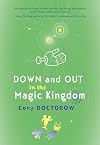
This formula has become something of a theme for Doctorow. But as Nick Lowe once sang, "This rut I am in, it once was a groove," and I worry with Makers that Doctorow's groove has become a rut. Especially because we find him once again digging deep into Disney, which he's returned to time and again since his debut novel, Down and Out in the Magic Kingdom. And that's show more not the only plot device that will be familiar to longtime Doctorow readers.
My biggest problem with the book, though, has nothing to do with ongoing subjects of his fiction. It's specific to this book, related to the subject of the global hive-mind operation he describes. It involves (non-Disney) theme parks built up around nostalgia for objects created in the early days of 3D tech, and somehow the collective watching of these halcyon objects helps transform the exhibit into something of a story for people who visit. (If the ride sounds a bit like an extrapolation of Boing Boing, the website of which Doctorow is a partner, then you won't be surprised that the novel's journalist character, Suzanne Church, ends up seeming like a Boing Boing blogger.) The problem is, I can never quite figure out what the ride is like, how it functions, what it's like to experience. Since the ride is the engine that fuels the book's narrative, its ambiguous quality gives Makers a mushy-at-best spine.
In addition, an end-of-novel turn of events (involving the relationship between Disney and the protagonists) is so sudden, and so goes against everything the characters have stated up until that point, that it seems more like a quick way to bring the book to a close than a natural or otherwise meaningful development.
Still, there's tons of fun in here. Doctorow really can look clearly ten minutes and ten years into the future, and his take on 3D tech, on the science of dieting, and on business culture are highly entertaining, and much more thought-provoking that the story itself. show less
The book follows two natural inventors who glom onto 3D technology, inspire a collective project that spans the globe, and find themselves doing litigious battle with Disney.
In brief: new tech hive mind vs. corporations.
This formula has become something of a theme for Doctorow. But as Nick Lowe once sang, "This rut I am in, it once was a groove," and I worry with Makers that Doctorow's groove has become a rut. Especially because we find him once again digging deep into Disney, which he's returned to time and again since his debut novel, Down and Out in the Magic Kingdom. And that's show more not the only plot device that will be familiar to longtime Doctorow readers.
My biggest problem with the book, though, has nothing to do with ongoing subjects of his fiction. It's specific to this book, related to the subject of the global hive-mind operation he describes. It involves (non-Disney) theme parks built up around nostalgia for objects created in the early days of 3D tech, and somehow the collective watching of these halcyon objects helps transform the exhibit into something of a story for people who visit. (If the ride sounds a bit like an extrapolation of Boing Boing, the website of which Doctorow is a partner, then you won't be surprised that the novel's journalist character, Suzanne Church, ends up seeming like a Boing Boing blogger.) The problem is, I can never quite figure out what the ride is like, how it functions, what it's like to experience. Since the ride is the engine that fuels the book's narrative, its ambiguous quality gives Makers a mushy-at-best spine.
In addition, an end-of-novel turn of events (involving the relationship between Disney and the protagonists) is so sudden, and so goes against everything the characters have stated up until that point, that it seems more like a quick way to bring the book to a close than a natural or otherwise meaningful development.
Still, there's tons of fun in here. Doctorow really can look clearly ten minutes and ten years into the future, and his take on 3D tech, on the science of dieting, and on business culture are highly entertaining, and much more thought-provoking that the story itself. show less
Members
- Recently Added By
Lists

Top Five Books of 2013
1,562 works; 721 members

Exploration of alternative economical systems
40 works; 3 members

Biggest Disappointments
606 works; 168 members
Author Information

121+ Works 25,959 Members
Writer and activist Cory Doctorow was born in Toronto, Canada on July 17, 1971. In 1999 he co-founded a free software company called Opencola and served as Canadian Regional Director of the Science Fiction and Fantasy Writers of America. For four years he worked as European Affairs Coordinator for the Electronic Frontier Foundation and in 2007 won show more its Pioneer Award. His first novel, Down and Out in the Magic Kingdom, won a Locus Award for Best First Novel. His short story collection A Place So Foreign and Eight More won a Sunburst Award, and his bestselling novel Little Brother received the 2009 Prometheus Award, a Sunburst Award, and the John W. Campbell Memorial Award. Doctorow also writes nonfiction books and articles, and he co-edits the blog Boing Boing. (Bowker Author Biography) show less
Awards and Honors
Awards
Notable Lists
Work Relationships
Is contained in
Common Knowledge
- Original publication date
- 2009-10-27
- People/Characters
- Suzanne Church; Landon Kettlewell; Perry Gibbons; Lester Banks
- Important places
- Florida, USA; Madison, Wisconsin, USA; Wisconsin, USA
- Dedication
- For "the risk-takers, the doers, the makers of things."
- First words
- Suzanne Church almost never had to bother with the blue blazer these days. Back at the height of the dot-boom, she'd put on her business journalist drag--blazer, blue sailcloth shirt, khaki trousers, loafers--just about every... (show all) day, putting in her obligatory appearances at splashy press-conferences for high-flying IPOs and mergers. These days, it was mostly work at home or one day a week at the San Jose Mercury News's office, in comfortable light sweaters with loose necks and loose cotton pants that she could wear straight to yoga after shutting her computer's lid.
- Last words
- (Click to show. Warning: May contain spoilers.)She fell asleep almost instantly.
- Publisher's editor
- Nielsen Hayden, Patrick
Classifications
Statistics
- Members
- 1,344
- Popularity
- 17,848
- Reviews
- 75
- Rating
- (3.59)
- Languages
- Dutch, English
- Media
- Paper, Audiobook, Ebook
- ISBNs
- 13
- ASINs
- 9