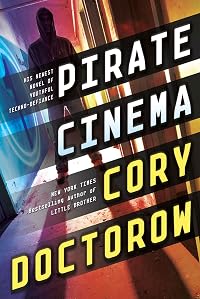
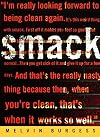
Pirate Cinema
by Cory Doctorow
On This Page
Description
In a dystopian, near-future Britain, sixteen-year-old Trent, obsessed with making movies on his computer, joins a group of artists and activists who are trying to fight a new bill that will criminalize even more harmless internet creativity.Tags
Recommendations

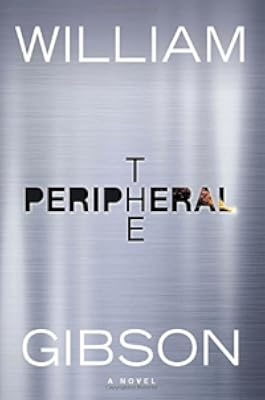
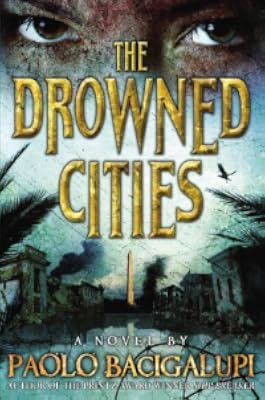
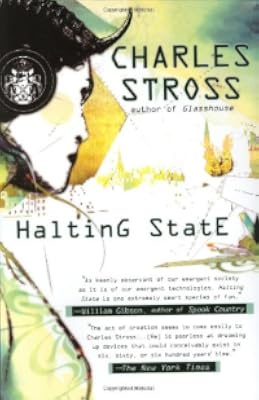
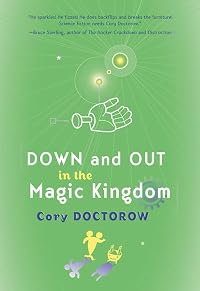


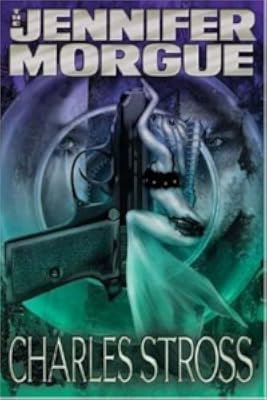
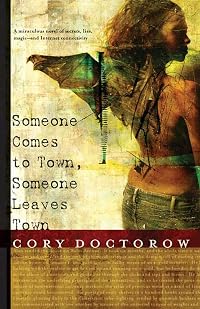
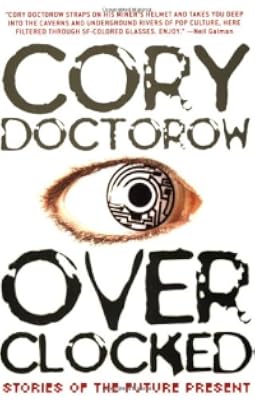




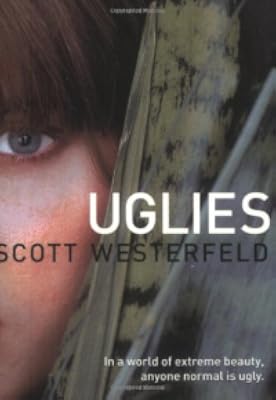

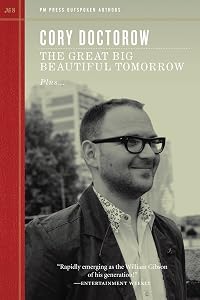
Member Recommendations
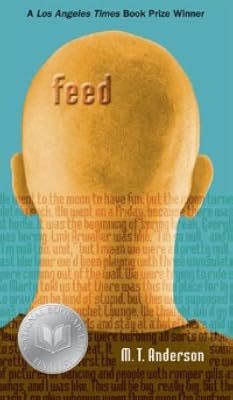
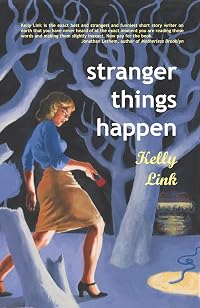
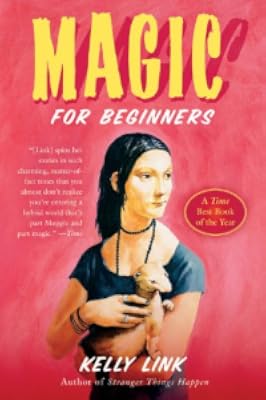
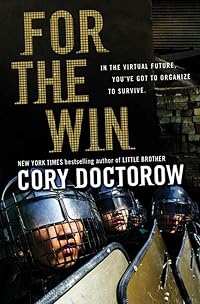
PghDragonMan Big corporations seek to control creativity and the creative forces strike back.
by kaledrina
Member Reviews
It took me more than a hundred pages to warm to this book, but after that I enjoyed it quite a bit. I hold the narrator responsible for this; he is a 16 year old boy, and thus as far as I am concerned is inherently very annoying. After his friends, family, girlfriend, and girlfriend’s family get more involved in his life, though, he become better and so does the novel. It is very much a Cory Doctorow novel and thus quite predictable: there are regular chunks of technological and/or socio-political explanation. I don’t mind that, though. Each of Doctorow’s novels is essentially explores an aspect of technology in an entertaining manner. In this case, the ease and uncontrollability of internet piracy. ‘Pirate Cinema’ is set in a show more near-future London in which copyright laws have criminalised teenagers for downloading and cut their families off the internet.
Doctorow novels have an engaging idealism that I find refreshing, which I think is why they tend to star teenagers. I am a relatively cynical twentysomething and found the little debates about politics rather adorably naive. Still, in the Doctorow world a piece of technology deployed carefully at the right time can make a massive difference. Maybe that is true, albeit never as easy as he makes it out to be. Still, not enough fiction explores the potential for positive political changes based on a grassroots movement. On the other hand, I think the ease and comfort of squat living and ‘freeganism’ must be exaggerated here. For a start, there cannot be many liveable empty buildings left to occupy in London, given its intense housing crisis. Moreover, given how difficult it is to keep warm and relatively free of mould in expensive rented accommodation, surely squats must have similar issues.
These are quite minor quibbles, though. I did enjoy this novel after a slow-ish start. It makes copyright law reform exciting and accessible, which is impressive. I was a little surprised that it didn’t directly mention what is (to me) one of the strongest arguments against repressive anti-downloading laws: the marginal cost of copying a file is zero and the supply is effectively infinite. According to free market economics, in a perfectly competitive market (which doesn’t exist, but economists pretend that they do) marginal cost = price and infinite supply = price of zero. Technology has created these conditions and it seems impossible to reverse them, so a new business model for copyright seems to be required. Penalising file-copying seems doomed to be about as successful as prohibition.
EDITED TO ADD: I've just remembered what bothered me most about this book - the abbreviation of laptop to 'lappie'. NO. That is inexcusable. show less
Doctorow novels have an engaging idealism that I find refreshing, which I think is why they tend to star teenagers. I am a relatively cynical twentysomething and found the little debates about politics rather adorably naive. Still, in the Doctorow world a piece of technology deployed carefully at the right time can make a massive difference. Maybe that is true, albeit never as easy as he makes it out to be. Still, not enough fiction explores the potential for positive political changes based on a grassroots movement. On the other hand, I think the ease and comfort of squat living and ‘freeganism’ must be exaggerated here. For a start, there cannot be many liveable empty buildings left to occupy in London, given its intense housing crisis. Moreover, given how difficult it is to keep warm and relatively free of mould in expensive rented accommodation, surely squats must have similar issues.
These are quite minor quibbles, though. I did enjoy this novel after a slow-ish start. It makes copyright law reform exciting and accessible, which is impressive. I was a little surprised that it didn’t directly mention what is (to me) one of the strongest arguments against repressive anti-downloading laws: the marginal cost of copying a file is zero and the supply is effectively infinite. According to free market economics, in a perfectly competitive market (which doesn’t exist, but economists pretend that they do) marginal cost = price and infinite supply = price of zero. Technology has created these conditions and it seems impossible to reverse them, so a new business model for copyright seems to be required. Penalising file-copying seems doomed to be about as successful as prohibition.
EDITED TO ADD: I've just remembered what bothered me most about this book - the abbreviation of laptop to 'lappie'. NO. That is inexcusable. show less
Fun. Not entirely believable, in fact naive and idealistic, but making an important point. Some nice hat tips to current reality! - especially WriteToThem.Com which is a genuine website than enables everyone to painlessly email their MP about anything they think they're MP should be aware of. Helping to keep democracy democratic - although as we see in the book, this is easier in principle than in practise.
Trent - mostly known by his nom de guerre of Cecil BeVil, is a young lad in the near future, who like everyone else downloads stuff for free off the Internet. He take sit somewhat to extremes though having hundreds and thousands of films from his all-time ever favourite actor, now deceased, one Scot Colford. Not being content with show more this, he creates mashups - modern art consisting of rearranging clips into new videos. Currently this is legal, ish, although the downloading certainly isn't. In our fictional near future (but time unspecified) book, both activities are heavily illegal, with the multimedia corporations ensuring that plenty of laws are passed to try and stem this 'profit stealing' 'epidemic'. Trent's Internet Access gets turned off, not just fro him, but for everyone a his house - his family, his parent's can't access work or health or benefits and his intelligent sister can't do her homework. Trent guiltily flees to the cesspit of London, bright spark in the decaying UK. Here he quickly faces some realities before being whisked away in a very very unlikely set of scenarios that end up with him in a safe comfortable squat and able to make his mashup videos again. A few lucky connections lead him to the alternative party scene, pretty girls and anarchistic groups. Modern polite civilised anarchs though, who use non-violent protest to make their point - that of the tyranny of the corporations, corruption of MPs and powerlessness of the downtrodden. Trent's amazing film editing skills win him friends and fame.
In making his basically unarguable point, that people should be free to express their creativity without the nasty corporations suing them, locking stuff up behind walls, spying on them to ensure they're playing by the rules and generally being nasty, Cory does rather blithely skip over vast swathes of more tricky ground. For a start, Trent is definitely guilty of downloading - stealing - works that many people put vast amount s of efforts into making, and whom deserve recompense for their time and imagination. That Cory himself is able to earn a living without insisting on people paying for his books is one thing - to expect the same to hold true for all creative artists is somewhat different.
Running away from home is not generally a pleasant adventure! No big city, or even town, has genuine friends ready to help the poor and naive kid who turns up lost in it. By portraying such actions in a positive light, Cory is leading more kids to do this - sometimes it is the only answer, sure. But it is a desperate action, and needs to be portrayed more realistically. Squats are generally not pleasant places to live. I'm sure there are exceptions, but again, the expectations here are way out of line with reality. Even dumpster diving, while frequently done, is not by all accounts a bountiful way of keeping ones body and soul together.
In other areas Cory;s imagination has been far less creative than it ought. Where necessary for the plot, new technologies are invented, but the greater cultural adoptions to new tech that keeps emerging, is ignored altogether.A lot of the characters are somewhat stereotyped, and he has completely missed the recent changes in the political landscape, casting the LibDems as they wish to be seen, rather than the party they've turned out to be. Cory somewhat innocently assumes that copyright will remain at author's death+70 years- an already heinous length, but recent plans have already been announced extending this to death+90 to ensure that Disney retain the rights to Mickey Mouse for a while longer
All that carping aside, what remains is fun fast and thought provoking - although probably not that applicable to a world wide audience, being very UK centric in term s of how our government works. The Three Line Whip is another genuine part of politics, and something that isn't mentioned enough. Trent's escapades are clever, and although it is very difficult to describe a film (2D again poor imagination of the future), in words, the reactions of the supporting characters is sufficient.
Clever - but not as clever as it thinks it is. It will promote (more) argument about the justification for copyright.
.....................................................
Can't argue with that review after re-read. Being set in the slightyl near future means it isn't yet out of date, and the copyright arguments haven't gone away. show less
Trent - mostly known by his nom de guerre of Cecil BeVil, is a young lad in the near future, who like everyone else downloads stuff for free off the Internet. He take sit somewhat to extremes though having hundreds and thousands of films from his all-time ever favourite actor, now deceased, one Scot Colford. Not being content with show more this, he creates mashups - modern art consisting of rearranging clips into new videos. Currently this is legal, ish, although the downloading certainly isn't. In our fictional near future (but time unspecified) book, both activities are heavily illegal, with the multimedia corporations ensuring that plenty of laws are passed to try and stem this 'profit stealing' 'epidemic'. Trent's Internet Access gets turned off, not just fro him, but for everyone a his house - his family, his parent's can't access work or health or benefits and his intelligent sister can't do her homework. Trent guiltily flees to the cesspit of London, bright spark in the decaying UK. Here he quickly faces some realities before being whisked away in a very very unlikely set of scenarios that end up with him in a safe comfortable squat and able to make his mashup videos again. A few lucky connections lead him to the alternative party scene, pretty girls and anarchistic groups. Modern polite civilised anarchs though, who use non-violent protest to make their point - that of the tyranny of the corporations, corruption of MPs and powerlessness of the downtrodden. Trent's amazing film editing skills win him friends and fame.
In making his basically unarguable point, that people should be free to express their creativity without the nasty corporations suing them, locking stuff up behind walls, spying on them to ensure they're playing by the rules and generally being nasty, Cory does rather blithely skip over vast swathes of more tricky ground. For a start, Trent is definitely guilty of downloading - stealing - works that many people put vast amount s of efforts into making, and whom deserve recompense for their time and imagination. That Cory himself is able to earn a living without insisting on people paying for his books is one thing - to expect the same to hold true for all creative artists is somewhat different.
Running away from home is not generally a pleasant adventure! No big city, or even town, has genuine friends ready to help the poor and naive kid who turns up lost in it. By portraying such actions in a positive light, Cory is leading more kids to do this - sometimes it is the only answer, sure. But it is a desperate action, and needs to be portrayed more realistically. Squats are generally not pleasant places to live. I'm sure there are exceptions, but again, the expectations here are way out of line with reality. Even dumpster diving, while frequently done, is not by all accounts a bountiful way of keeping ones body and soul together.
In other areas Cory;s imagination has been far less creative than it ought. Where necessary for the plot, new technologies are invented, but the greater cultural adoptions to new tech that keeps emerging, is ignored altogether.A lot of the characters are somewhat stereotyped, and he has completely missed the recent changes in the political landscape, casting the LibDems as they wish to be seen, rather than the party they've turned out to be. Cory somewhat innocently assumes that copyright will remain at author's death+70 years- an already heinous length, but recent plans have already been announced extending this to death+90 to ensure that Disney retain the rights to Mickey Mouse for a while longer
All that carping aside, what remains is fun fast and thought provoking - although probably not that applicable to a world wide audience, being very UK centric in term s of how our government works. The Three Line Whip is another genuine part of politics, and something that isn't mentioned enough. Trent's escapades are clever, and although it is very difficult to describe a film (2D again poor imagination of the future), in words, the reactions of the supporting characters is sufficient.
Clever - but not as clever as it thinks it is. It will promote (more) argument about the justification for copyright.
.....................................................
Can't argue with that review after re-read. Being set in the slightyl near future means it isn't yet out of date, and the copyright arguments haven't gone away. show less
While it's basically Little Brother but this time I'm England, I couldn't help but enjoy this book. Yes it has all the same Doctorow-y tropes but I enjoy his style and characters. Makes me want to move to a hugely urban city and put on my own pirate cinemas. A light fun romp for those who enjoy the teenage techno rebellion genre.
All of Cory's books have something to say about copyright law and user rights and remix culture. Generally, they're set in a post-scarcity economy that, while near, still feels futuristic and gives his stories a slight sci-fi feel.
In Pirate Cinema very little is different from our current society. Sure the general population is a bit more dependant on the internet than they might be now. And the draconian anti-innovation copyright laws are more oppressive, parliament is more corrupt, voters more apathetic. But it all feels like a logical - if scary and unfortunate - extension of today. A very real look at where our laws are headed. I started with a discussion of all of Cory's books for a reason. While his writings have a general theme show more of user rights, open more logical copyright, &c. these themes and discussions are everything to Pirate Cinema. Where books like "Makers" and "Down and Out in the Magic Kingdom" use remix culture and transformative works as a method of discussing broader sociological and philosophical topics, "Pirate Cinema" takes a hard look at why big media groups like the MPAA and the RIAA and their non-US counterparts spend billions of dollars making sure remixes and transformative works &c. are made illegal and - if they had their way - criminal.
While the strong focus on copyright issues and transformative works doesn't make "Pirate Cinema" unenjoyable - it is, in fact, a fantastic read - it does make certain parts feel a bit preachy. On the other hand, I already agreed with the views expressed by Cecil and 26 and their cohorts and still found some novel arguments and discussions that I really enjoyed.
So I vehemently recommend this to anyone who is just learning about transformative works or those who think that this kind of art is theft. Read this book. Sure it's fiction. But you're kidding yourself if you believe it isn't extremely relevant to what is happening right now in the global IP law sector. This is where we're headed. If it's all the same to you, dear reader, I'd rather we turned around and made some sensible laws now. It's time to embrace the internet. show less
In Pirate Cinema very little is different from our current society. Sure the general population is a bit more dependant on the internet than they might be now. And the draconian anti-innovation copyright laws are more oppressive, parliament is more corrupt, voters more apathetic. But it all feels like a logical - if scary and unfortunate - extension of today. A very real look at where our laws are headed. I started with a discussion of all of Cory's books for a reason. While his writings have a general theme show more of user rights, open more logical copyright, &c. these themes and discussions are everything to Pirate Cinema. Where books like "Makers" and "Down and Out in the Magic Kingdom" use remix culture and transformative works as a method of discussing broader sociological and philosophical topics, "Pirate Cinema" takes a hard look at why big media groups like the MPAA and the RIAA and their non-US counterparts spend billions of dollars making sure remixes and transformative works &c. are made illegal and - if they had their way - criminal.
While the strong focus on copyright issues and transformative works doesn't make "Pirate Cinema" unenjoyable - it is, in fact, a fantastic read - it does make certain parts feel a bit preachy. On the other hand, I already agreed with the views expressed by Cecil and 26 and their cohorts and still found some novel arguments and discussions that I really enjoyed.
So I vehemently recommend this to anyone who is just learning about transformative works or those who think that this kind of art is theft. Read this book. Sure it's fiction. But you're kidding yourself if you believe it isn't extremely relevant to what is happening right now in the global IP law sector. This is where we're headed. If it's all the same to you, dear reader, I'd rather we turned around and made some sensible laws now. It's time to embrace the internet. show less
To call this science fiction would be an exaggeration - there's scarcely anything sciency about it. Even the speculative fiction label is hard to apply, because what little speculative invention it contains only forecasts into next Tuesday. Hardly a leap of prognosticating wizardry. No, this is about as speculative as a John Grisham novel, which is to say, it isn't. I'm pretty sure the conditions Pirate Cinema show us in Britain do not yet exist there - but for all I know, they could very well exist in Lithuania, or Scotland, or some other less visible corner of the modern world.
Now, there are lots of great novels set in the contemporary world, or somewhere much like it, but this is not one of them. From the outset, Pirate Cinema feels show more forced. Its settings, its characters, and the situations they get into all feel entirely contrived, by Doctorow, for the express purpose of lining up his rant on freedom of expression and the tyranny of copyright law. The situation is a complete straw dog from opening to close.
He does make some interesting arguments, but even those brief glimmers of engagement were snuffed out, for me, by the obviously contrived, artificial situation. I don't think it spoils anything to reveal that the protagonist is a film mashup artist who runs afoul of increasingly strict copyright law. But all through the book, I kept asking myself, "If the point he's making about copyright is so valid, then why didn't he cast Trent as an up and coming pianist or composer or novelist, even?" Surely his reliance on such a niche art form weakens his argument. My only answer to that question is that it's because he trying to present a simplistic analysis of what is actually a complex, multi-layered, and nuanced social problem.
So as spec fic, there isn't much there, while as social commentary it's entirely contrived and artificial feeling. I suppose it works as a simple urban coming of age piece in a very slightly dystopian setting, but on that basis, it's also pretty formulaic - a David and Goliath tale, pitting little-guy artist against evil corporations, with entirely predictable obstacles, tactics and outcomes. show less
Now, there are lots of great novels set in the contemporary world, or somewhere much like it, but this is not one of them. From the outset, Pirate Cinema feels show more forced. Its settings, its characters, and the situations they get into all feel entirely contrived, by Doctorow, for the express purpose of lining up his rant on freedom of expression and the tyranny of copyright law. The situation is a complete straw dog from opening to close.
He does make some interesting arguments, but even those brief glimmers of engagement were snuffed out, for me, by the obviously contrived, artificial situation. I don't think it spoils anything to reveal that the protagonist is a film mashup artist who runs afoul of increasingly strict copyright law. But all through the book, I kept asking myself, "If the point he's making about copyright is so valid, then why didn't he cast Trent as an up and coming pianist or composer or novelist, even?" Surely his reliance on such a niche art form weakens his argument. My only answer to that question is that it's because he trying to present a simplistic analysis of what is actually a complex, multi-layered, and nuanced social problem.
So as spec fic, there isn't much there, while as social commentary it's entirely contrived and artificial feeling. I suppose it works as a simple urban coming of age piece in a very slightly dystopian setting, but on that basis, it's also pretty formulaic - a David and Goliath tale, pitting little-guy artist against evil corporations, with entirely predictable obstacles, tactics and outcomes. show less
"If it's just theft, then why do they need to get their laws passed in the dead of the night, without debate or discussion?" - 26 in Pirate Cinema
There's something more than a little bit After School Special-ish about Pirate Cinema, I'm afraid. Well, let's say half After-School Special and half Steal This Book. With maybe a little of some sunny Oliver!-ish can-do musical extravaganza thrown in here and there. Which is to say that in a lot of ways, the didactic agenda of this novel gets noticeably in the way of the story a little too often to make this a genuinely enjoyable read. And however praiseworthy that agenda may be, a novel-length parable illustrating its importance is a bit much.
But! Fear not, for the bits where we don't feel show more the author sitting next to us and preaching at us (and let me just get it out there right now: I sing an enthusiastic tenor in every performance of the choir to whom Cory Doctorow is preaching) are pretty good, though in some ways that almost makes it worse -- they're good enough to just make the reader ache for an edit of this book with maybe at least some of the finger-wagging cut out or cut down.
I wonder how Doctorow, champion of remix culture, culture jamming, sharing, and all the other ideas that are illustrated in this book, would feel about such an edit, though? On the one hand, his work would be getting watered down, stripped of a lot of its political message and used as mere entertainment, and thus maybe undermining that message; on the other, well, it would be a remix like any other. Another fan might choose to edit out all of the teenage romance and cheerful "we can do it" remodeling/repurposing/squat claiming stuff and just leave the expounding dialogues in place to educate everyone about the dangers of copyright maximalism and the move to privatize free expression and bring all media under corporate control.
Actually, as I consider it, I would probably enjoy reading either of those edits, at least more than I enjoyed reading this novel.
That's not to say it's a horrible novel; it's not. Doctorow has considerable narrative skill and has populated his story with a host of very charming characters, young punks all, lovable scamps with talent and creativity and technical know-how (and, in more than a few cases, an impressive knowledge of property law, both intellectual and real). One would have to have a heart of stone not to root for Trent and his girlfriend 26*, Jem and Rabid Dog, Cora and Aziz and all the rest**. Especially since their foes are so faceless, so nameless as to not even be human at all: Paramount, Universal, Disney-Marvel, Virgin -- you get the idea.
Trent and co. live in an absolute copyright dystopia that takes things even further than that depicted in my good friend Paul Laroquod's Swap Thing videos. If you want to see a movie on the big screen, you not only have to fork out the cash for a ticket, but also subject yourself to metal detectors, searches, and temporary confiscation of any personal electronics you've been dumb enough to bring. Download too many illegal files off the internet and you can have your entire family's access cut off for a whole year. And all that's even before yet another piece of draconian legislation gets passed that imposes, among other things, mandatory minimum jail sentences for being caught in possession of any music, photos, films or other files you can't prove you obtained 100% legally.
Enter our hero, Trent, a teenaged kid who happens to be a very talented video editor, and to be, as teenagers are, utterly disinclined to wait until he's done with school and has been hired and vetted by a corporate overlord to sanction/pay for/control his exercise of his talents, anymore than a kid who was good at a sport would wait for a professional league to discover him before playing that sport. Of course, as we've established, Trent does not live in a world that acknowledges or respects this equivalency; it is as if a promising young basketball player got busted and banned for enjoying some pick-up games on the playground, sharing his ball and the court and his knowledge of the rules and the history of the sport with other kids freely being suddenly banned from ever touching any ball or court or uniform, perhaps even any spectator's seat at a game, ever again.
I know, ridiculous, right? What's to stop such a kid from, say, stealing a ball from a sporting goods store and shooting some hoops on a deserted playground in the dead of night? Maybe even teaming up with other people who got busted and starting a secret club where they head off to a secret cobbled-together court somewhere to indulge their shared passion.***
That's pretty much what Trent does. When a third copyright offense, logged as he finishes his latest mash-up masterpiece on his laptop at his parents' house, triggers the harshest penalty -- his entire household, parents and sister and all, being banned from the internet for an entire year -- Trent runs away and goes rogue, joining up with a bunch of other similarly banned/punished people to continue doing what they love outside of/under mainstream society, hacking hardware to circumvent the latest crufted-on copyright protection cripples, remixing films and books and music into their own weird new creations, throwing parties in which their artwork is freely shared and enjoyed by anyone cool enough and smart enough to be willing to put in the time to find out where to go and how to do it.
Ahh, hackers. Ahh, culture jammers. How are they not lovable? Romantic? Quixotic? Charming? Plucky? And yet also, somehow boring. They always get along. They always make things happen. Hell, even the parents and other adults like and encourage them, even 26's parents, who tell Trent it's just fine that he sleeps over in their 17-year-old-daughter's bedroom. With her. Even if they don't sleep. Wink wink. Really?
After a while, even the important jeopardy -- the big bad so big and so bad and so important that Doctorow couldn't allow even the ghost of any other kind of conflict so that even the neighborhood drug dealers where Trent squats are nice and friendly and helpful -- feels unreal and inchoate. The corporate sharks are swimming out there in the deep water, watchful and hungry, but our carefree happy little heroes stick to the shallows and frolick away, and just occasionally chuck some chum out to sea out of sheer exuberance.
Don't get me wrong; I had fun reading this at times. But I could never just immerse myself in the story, between the preaching and the excessive benevolence of the book's universe. In the end, I found that for all my love of Doctorow and what he does, I didn't ever feel like I was this book's audience.
But I'm not sure who is.
*Yeah, that's really her name. Sometimes people call her Twenty for short.
**Not that they need much rooting for.
***You sports fans should all take a moment and contemplate with gratitude the fact that, as dickheaded as the NBA, NFL, FIFA, etc. can be, they haven't to date tried to get play not under their aegis banned by law. show less
There's something more than a little bit After School Special-ish about Pirate Cinema, I'm afraid. Well, let's say half After-School Special and half Steal This Book. With maybe a little of some sunny Oliver!-ish can-do musical extravaganza thrown in here and there. Which is to say that in a lot of ways, the didactic agenda of this novel gets noticeably in the way of the story a little too often to make this a genuinely enjoyable read. And however praiseworthy that agenda may be, a novel-length parable illustrating its importance is a bit much.
But! Fear not, for the bits where we don't feel show more the author sitting next to us and preaching at us (and let me just get it out there right now: I sing an enthusiastic tenor in every performance of the choir to whom Cory Doctorow is preaching) are pretty good, though in some ways that almost makes it worse -- they're good enough to just make the reader ache for an edit of this book with maybe at least some of the finger-wagging cut out or cut down.
I wonder how Doctorow, champion of remix culture, culture jamming, sharing, and all the other ideas that are illustrated in this book, would feel about such an edit, though? On the one hand, his work would be getting watered down, stripped of a lot of its political message and used as mere entertainment, and thus maybe undermining that message; on the other, well, it would be a remix like any other. Another fan might choose to edit out all of the teenage romance and cheerful "we can do it" remodeling/repurposing/squat claiming stuff and just leave the expounding dialogues in place to educate everyone about the dangers of copyright maximalism and the move to privatize free expression and bring all media under corporate control.
Actually, as I consider it, I would probably enjoy reading either of those edits, at least more than I enjoyed reading this novel.
That's not to say it's a horrible novel; it's not. Doctorow has considerable narrative skill and has populated his story with a host of very charming characters, young punks all, lovable scamps with talent and creativity and technical know-how (and, in more than a few cases, an impressive knowledge of property law, both intellectual and real). One would have to have a heart of stone not to root for Trent and his girlfriend 26*, Jem and Rabid Dog, Cora and Aziz and all the rest**. Especially since their foes are so faceless, so nameless as to not even be human at all: Paramount, Universal, Disney-Marvel, Virgin -- you get the idea.
Trent and co. live in an absolute copyright dystopia that takes things even further than that depicted in my good friend Paul Laroquod's Swap Thing videos. If you want to see a movie on the big screen, you not only have to fork out the cash for a ticket, but also subject yourself to metal detectors, searches, and temporary confiscation of any personal electronics you've been dumb enough to bring. Download too many illegal files off the internet and you can have your entire family's access cut off for a whole year. And all that's even before yet another piece of draconian legislation gets passed that imposes, among other things, mandatory minimum jail sentences for being caught in possession of any music, photos, films or other files you can't prove you obtained 100% legally.
Enter our hero, Trent, a teenaged kid who happens to be a very talented video editor, and to be, as teenagers are, utterly disinclined to wait until he's done with school and has been hired and vetted by a corporate overlord to sanction/pay for/control his exercise of his talents, anymore than a kid who was good at a sport would wait for a professional league to discover him before playing that sport. Of course, as we've established, Trent does not live in a world that acknowledges or respects this equivalency; it is as if a promising young basketball player got busted and banned for enjoying some pick-up games on the playground, sharing his ball and the court and his knowledge of the rules and the history of the sport with other kids freely being suddenly banned from ever touching any ball or court or uniform, perhaps even any spectator's seat at a game, ever again.
I know, ridiculous, right? What's to stop such a kid from, say, stealing a ball from a sporting goods store and shooting some hoops on a deserted playground in the dead of night? Maybe even teaming up with other people who got busted and starting a secret club where they head off to a secret cobbled-together court somewhere to indulge their shared passion.***
That's pretty much what Trent does. When a third copyright offense, logged as he finishes his latest mash-up masterpiece on his laptop at his parents' house, triggers the harshest penalty -- his entire household, parents and sister and all, being banned from the internet for an entire year -- Trent runs away and goes rogue, joining up with a bunch of other similarly banned/punished people to continue doing what they love outside of/under mainstream society, hacking hardware to circumvent the latest crufted-on copyright protection cripples, remixing films and books and music into their own weird new creations, throwing parties in which their artwork is freely shared and enjoyed by anyone cool enough and smart enough to be willing to put in the time to find out where to go and how to do it.
Ahh, hackers. Ahh, culture jammers. How are they not lovable? Romantic? Quixotic? Charming? Plucky? And yet also, somehow boring. They always get along. They always make things happen. Hell, even the parents and other adults like and encourage them, even 26's parents, who tell Trent it's just fine that he sleeps over in their 17-year-old-daughter's bedroom. With her. Even if they don't sleep. Wink wink. Really?
After a while, even the important jeopardy -- the big bad so big and so bad and so important that Doctorow couldn't allow even the ghost of any other kind of conflict so that even the neighborhood drug dealers where Trent squats are nice and friendly and helpful -- feels unreal and inchoate. The corporate sharks are swimming out there in the deep water, watchful and hungry, but our carefree happy little heroes stick to the shallows and frolick away, and just occasionally chuck some chum out to sea out of sheer exuberance.
Don't get me wrong; I had fun reading this at times. But I could never just immerse myself in the story, between the preaching and the excessive benevolence of the book's universe. In the end, I found that for all my love of Doctorow and what he does, I didn't ever feel like I was this book's audience.
But I'm not sure who is.
*Yeah, that's really her name. Sometimes people call her Twenty for short.
**Not that they need much rooting for.
***You sports fans should all take a moment and contemplate with gratitude the fact that, as dickheaded as the NBA, NFL, FIFA, etc. can be, they haven't to date tried to get play not under their aegis banned by law. show less
I have liked all of Doctorow's books I have read but I felt Pirate Cinema was even better than his more will known works.
In a near future Britian a teenage boy gets his family cut off from the internet for one year for torrenting classic movies. He was using them to remix his own movies.
In hope of running away from his problems he runs away to London and ends up in a homeless shelter, where he meets some pretty dodgy characters who teach him how to squat and pan handle and he ends up with more time to download more movies and make more movies.
He meets a beautiful girl and falls in love and accidentally becomes the leader of a pro-piracy movement.
It just felt so realistic, I cried, I laughed, I hoped he'd get laid. If I had anything show more negative it would be that the love interest Twenty-Six, nor her family, felt Indian at all. I've had dozens of friends from dozens of different Indian states, and they felt nothing like them to the point I honestly wonder if Doctorow knows any Indians. show less
In a near future Britian a teenage boy gets his family cut off from the internet for one year for torrenting classic movies. He was using them to remix his own movies.
In hope of running away from his problems he runs away to London and ends up in a homeless shelter, where he meets some pretty dodgy characters who teach him how to squat and pan handle and he ends up with more time to download more movies and make more movies.
He meets a beautiful girl and falls in love and accidentally becomes the leader of a pro-piracy movement.
It just felt so realistic, I cried, I laughed, I hoped he'd get laid. If I had anything show more negative it would be that the love interest Twenty-Six, nor her family, felt Indian at all. I've had dozens of friends from dozens of different Indian states, and they felt nothing like them to the point I honestly wonder if Doctorow knows any Indians. show less
Members
- Recently Added By
Lists

Prometheus Award Winners
16 works; 1 member
Author Information

116+ Works 26,011 Members
Writer and activist Cory Doctorow was born in Toronto, Canada on July 17, 1971. In 1999 he co-founded a free software company called Opencola and served as Canadian Regional Director of the Science Fiction and Fantasy Writers of America. For four years he worked as European Affairs Coordinator for the Electronic Frontier Foundation and in 2007 won show more its Pioneer Award. His first novel, Down and Out in the Magic Kingdom, won a Locus Award for Best First Novel. His short story collection A Place So Foreign and Eight More won a Sunburst Award, and his bestselling novel Little Brother received the 2009 Prometheus Award, a Sunburst Award, and the John W. Campbell Memorial Award. Doctorow also writes nonfiction books and articles, and he co-edits the blog Boing Boing. (Bowker Author Biography) show less
Some Editions
Awards and Honors
Awards
Distinctions
Notable Lists
Work Relationships
Is contained in
Common Knowledge
- Original publication date
- 2012
- Dedication
- For Walt Disney:
remix artist, driven weirdo, public domain enthusiast - First words
- I will never forget the day my family got cut off from the Internet.
- Quotations
- No, it only takes a long time because there are so many people who would like to come up with a definition of creativity that includes everything they
- Publisher's editor
- Nielsen Hayden, Patrick
Classifications
- Genres
- Fiction and Literature, Science Fiction, Teen, Young Adult
- DDC/MDS
- 813.6 — Literature & rhetoric American literature in English American fiction in English 2000-
- LCC
- PZ7 .D66237 .P — Language and Literature Fiction and juvenile belles lettres Fiction and juvenile belles lettres Juvenile belles lettres
- BISAC
Statistics
- Members
- 868
- Popularity
- 31,436
- Reviews
- 55
- Rating
- (3.64)
- Languages
- English, German, Portuguese
- Media
- Paper, Audiobook, Ebook
- ISBNs
- 14
- ASINs
- 4