On This Page
Description
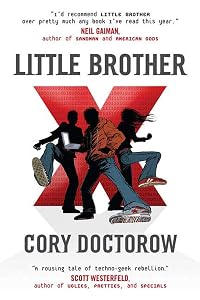
After being interrogated for days by the Department of Homeland Security in the aftermath of a major terrorist attack on San Francisco, California, seventeen-year-old Marcus, released into what is now a police state, decides to use his expertise in computer hacking to set things right.Tags
Recommendations
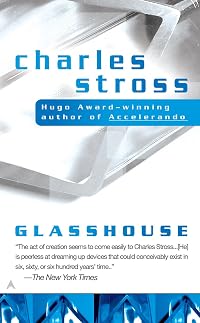
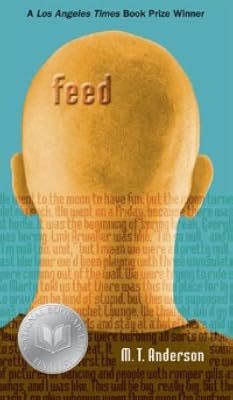
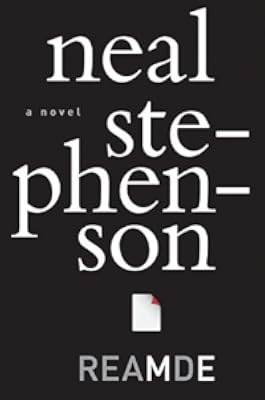
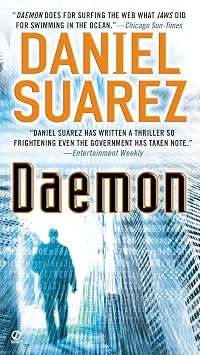

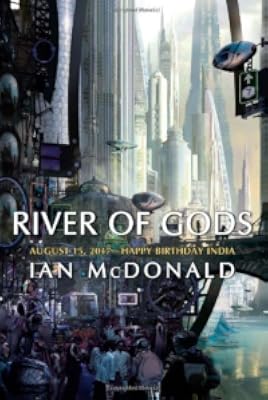
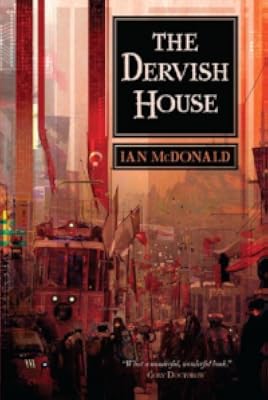
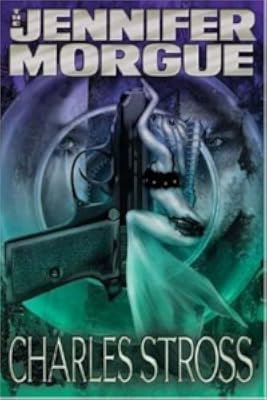
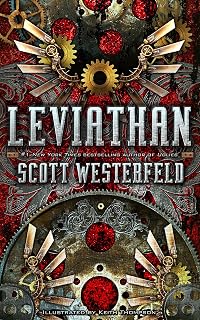


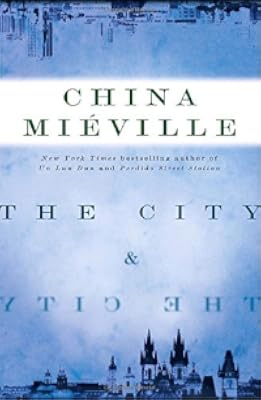
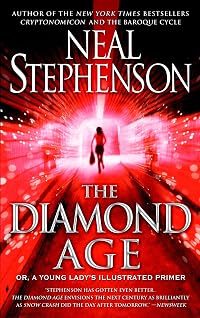
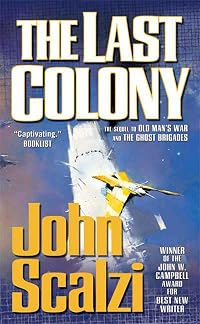
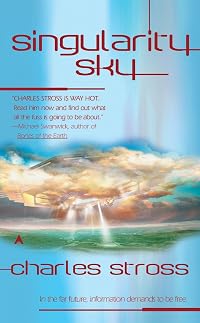
Member Recommendations
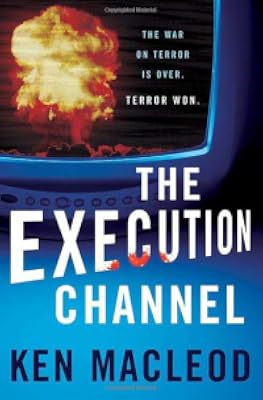
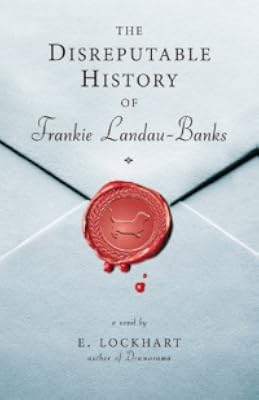
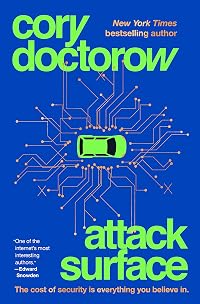
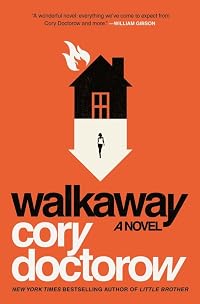
persky The book that turned Doctorow on to the EFF and a real world account of various government agencies cracking down on teenage hackers.
81
whymaggiemay Both about teens fighting back against the greater power using computers.
20
strande In chapter thirteen, Ange and Marcus call the media whores. "In fact, that's an insult to hardworking whores everywhere. They're, they're profiteers." Media Monopoly is a whole book about how the media turned into profiteers.
20
MyriadBooks For knowledge, the use and distribution, general purpose. Best for teens.

reconditereader Both involve dystopias, resistance, oppression, technology, and interesting characters.
by Furu

by persky

persky From the afterword "Many novelists have tackled parts of the story in Little Brother. Daniel Pinkwater’s towering comic masterpiece ... is a book that every geek needs to read."
11
g33kgrrl Young people take on the system.
Member Reviews
I couldn't put this book down. It was a one night read, and not because it was easy, but because the book was so real, so likely, that it scared me into the next page. Doctorow comes down hard on the liberal side of homeland security issues, and while that can no doubt throw some more conservative readers, you can't deny the skill with which Doctorow can construct situations. Instead of being completely character driven, like most YA novels, Doctorow constructs a political situation and then draws parallels between the events in his novels and those of the past--and maybe the future. A must read for this year.
Because of the age of the main characters, Little Brother by Cory Doctorow could easily be discounted as a “young adult” novel. It is officially classified as both “Science Fiction” and “Juvenile.” However, the content makes it relevant to any American citizen; young or old. In fact, it should be required reading for all.
This is the 1984 for our (and the next) generation. In a post-9/11 world, our level of personal freedom has diminished. This novel is about what can happen when you allow that to go too far.
The story is action-packed and has numerous contemporary references to technology that anyone in the IT word will find hilarious. There are some “geeky” elements like role-playing games and virtual worlds, but the show more underlying political realities of life after a terrorist attack are the focus of the book. It appears that only those on the “fringe” are aware of how our freedom is slowly eroding. When innocent US citizens are imprisoned because they act against how the government is handling the situation, it begins to get scary and the real paranoia takes hold.
The plot of this novel closely reflects today’s world. The book makes some excellent points as to the value of the security measures that have been imposed since 9/11. Most interesting is a part of Chapter 8 that explains the “mathematics of terrorism.” It gives statistical details as to how many innocent people need to be wrongly incarcerated to catch one real terrorist and the results are frightening.
The message of the book, and one everyone needs to evaluate for themselves, is whether giving up our freedom keeps us safer or can be marked as a “win” for the terrorists. After reading this book, I’m leaning towards the later. show less
This is the 1984 for our (and the next) generation. In a post-9/11 world, our level of personal freedom has diminished. This novel is about what can happen when you allow that to go too far.
The story is action-packed and has numerous contemporary references to technology that anyone in the IT word will find hilarious. There are some “geeky” elements like role-playing games and virtual worlds, but the show more underlying political realities of life after a terrorist attack are the focus of the book. It appears that only those on the “fringe” are aware of how our freedom is slowly eroding. When innocent US citizens are imprisoned because they act against how the government is handling the situation, it begins to get scary and the real paranoia takes hold.
The plot of this novel closely reflects today’s world. The book makes some excellent points as to the value of the security measures that have been imposed since 9/11. Most interesting is a part of Chapter 8 that explains the “mathematics of terrorism.” It gives statistical details as to how many innocent people need to be wrongly incarcerated to catch one real terrorist and the results are frightening.
The message of the book, and one everyone needs to evaluate for themselves, is whether giving up our freedom keeps us safer or can be marked as a “win” for the terrorists. After reading this book, I’m leaning towards the later. show less
This book did what all good dystopias should do. It scared the crap out of me. Everything the author wrote about just sounded so completely plausible and doable with modern day technology. Especially considering the bill that is making it's way through congress right now that would allow companies to basically monitor our internet. Marcus is a smart tech savy kid who knows his way around electronics. A combination of being able to do things with a computer that a lot of adults aren't capable of much less wrap their head around and being in the wrong place at the wrong time gets Marcus and his friends picked up and kept by the Department of Homeland Security the day of a terrorist attack. His experiences make him decide to fight back. show more Sometimes the things Marcus does exacerbate the problem, and you can definitely feel his frustration when things he says, does and sets up are misinterpreted and/or go wrong.
The reason this book is so good and so frightening is that unlike other dystopia's I've read, this doesn't take place in the future, it takes place right now. A lot of the technology that the government uses to turn San Francisco into a police state is similar to tech that we use, available and being used in innocuous ways now. The whole thing just sounds so feasible, like it would be so easy for the government to pull of now. Granted I'm not super tech savy so I could be totally wrong, but still the book makes me think which is really the point. This is one of those books I think everyone should read, even if only to get a different perspective on things and to learn to be more aware of what's going on. show less
The reason this book is so good and so frightening is that unlike other dystopia's I've read, this doesn't take place in the future, it takes place right now. A lot of the technology that the government uses to turn San Francisco into a police state is similar to tech that we use, available and being used in innocuous ways now. The whole thing just sounds so feasible, like it would be so easy for the government to pull of now. Granted I'm not super tech savy so I could be totally wrong, but still the book makes me think which is really the point. This is one of those books I think everyone should read, even if only to get a different perspective on things and to learn to be more aware of what's going on. show less
In some ways, this is not the kind of book I usually read--phrases like "techno-geek" on the cover don't tend to appeal to me. But I picked this one up because both my brother and sister really liked it, and I'm glad I did. Doctorow raises a lot of difficult questions about the trade-offs between security and privacy, and tells a gripping story too.
Marcus is a high-school student in the not-too-distant future, at a time when surveillance is increasing and school-issued notebooks record every keystroke a student makes. Being concerned with privacy and good with computers, Marcus has hacked his notebook to get around the surveillance features and takes other measures like putting gravel in his shoes to outsmart the gait-recognition show more devices in the school hallways. He's not really a bad guy, though, more concerned with getting out of school to play games with his friends than with using his abilities for any greater, malicious purpose.
Unfortunately, after a terrorist attack in San Francisco, the authorities don't see Marcus' behaviour in such an innocent light. He's grabbed off the street almost arbitrarily by the Department of Homeland Security and accused of being a terrorist. When he isn't immediately willing to give up all his privacy and insists, for example, on seeing a lawyer, the situation only worsens. He's subjected to mild forms of torture until he yields completely, and is eventually released with instructions to tell no one about what happened and a warning that his every move will be watched from then on.
Rather than giving in, though, Marcus decides to fight back against the Department of Homeland Security. As more and more citizens' rights are taken away in the name of safety, Marcus develops an underground network devoted to preserving privacy and freedom. Nothing here is completely black-and-white, though, and many of Marcus' friends and family members oppose his actions. The result is a thought-provoking examination of how far you should go in standing up for your beliefs.
As a side note, the author of this book strongly opposes DRM and has released all his books in free, unprotected electronic formats at the same time as the print releases. This makes him a good guy in my books. show less
Marcus is a high-school student in the not-too-distant future, at a time when surveillance is increasing and school-issued notebooks record every keystroke a student makes. Being concerned with privacy and good with computers, Marcus has hacked his notebook to get around the surveillance features and takes other measures like putting gravel in his shoes to outsmart the gait-recognition show more devices in the school hallways. He's not really a bad guy, though, more concerned with getting out of school to play games with his friends than with using his abilities for any greater, malicious purpose.
Unfortunately, after a terrorist attack in San Francisco, the authorities don't see Marcus' behaviour in such an innocent light. He's grabbed off the street almost arbitrarily by the Department of Homeland Security and accused of being a terrorist. When he isn't immediately willing to give up all his privacy and insists, for example, on seeing a lawyer, the situation only worsens. He's subjected to mild forms of torture until he yields completely, and is eventually released with instructions to tell no one about what happened and a warning that his every move will be watched from then on.
Rather than giving in, though, Marcus decides to fight back against the Department of Homeland Security. As more and more citizens' rights are taken away in the name of safety, Marcus develops an underground network devoted to preserving privacy and freedom. Nothing here is completely black-and-white, though, and many of Marcus' friends and family members oppose his actions. The result is a thought-provoking examination of how far you should go in standing up for your beliefs.
As a side note, the author of this book strongly opposes DRM and has released all his books in free, unprotected electronic formats at the same time as the print releases. This makes him a good guy in my books. show less
Little Brother by Cory Doctorow is a great read! This is one of those books that makes you think and start to question the world we live in. I was captivated by the first page and could not put it down.
The book is about Marcus Yallow, a technically savvy ‘geek’, who finds himself along with his friends targeted as a suspected terrorist by the Department of Homeland Security (DHS) immediately after the bombing of the San Francisco Bay Bridge. Prior to the bombing, Marcus was a normal teenager who would put pebbles in his shoes to trip gait surveillance cameras at school, download software to his school distributed laptop to block monitoring programs that track his usage, and chat anonymously online using a homemade computer. After show more being targeted and mistreated by the DHS, Marcus begins a movement with some fellow xNetters in an attempt to send a message that the tactics of the DHS are unconstitutional. They begin to trip up monitoring devises set up throughout the city to track peoples’ movements and behavior patterns.
There was a passage in the book that really makes you think about what our government should and shouldn’t be allowed to do:
“Governments are instituted among men, deriving their just powers from the consent of the governed, that whenever any form of government becomes destructive of these ends, it is the right of the people to alter or abolish it and institute new government, laying its foundation on such principles, and organizing its powers in such form, as to them shall seem most likely to effect their safety and happiness.” The Declaration of Independence.
This passage is included in the book to prove a point that at times, the government makes choices and acts in ways that the American people do not agree with, and it is not treacherous to rebel against the tactics of the government; it is within our rights as Americans.
The book makes you question, many things, including:
How much freedom are you willing to forego for safety?
Does the government have the right to take away or restrict our privacy and freedom in the name of protection and safety?
Does the government have the right to treat everyone like suspected terrorists?
If the terrorists' main goal is to bring terror among people , then the tactics of the government is helping them accomplish that by making people suspicious of each other, turning people against each other, calling dissenters traitors, etc.
In the end, one must ponder, if it is worth it to trade privacy for security... A passage in the book summed it up quite nicely for me:
“...no matter how unpredictable the future may be, we can’t accomplish freedom through security systems, crypto technology, interrogations and spot searches. We accomplish freedom by having the courage and the conviction to live every day freely and to act as a free society, no matter how great the threats are on the horizon...”
Great, thought-provoking book! Give it a try, so worth it! show less
The book is about Marcus Yallow, a technically savvy ‘geek’, who finds himself along with his friends targeted as a suspected terrorist by the Department of Homeland Security (DHS) immediately after the bombing of the San Francisco Bay Bridge. Prior to the bombing, Marcus was a normal teenager who would put pebbles in his shoes to trip gait surveillance cameras at school, download software to his school distributed laptop to block monitoring programs that track his usage, and chat anonymously online using a homemade computer. After show more being targeted and mistreated by the DHS, Marcus begins a movement with some fellow xNetters in an attempt to send a message that the tactics of the DHS are unconstitutional. They begin to trip up monitoring devises set up throughout the city to track peoples’ movements and behavior patterns.
There was a passage in the book that really makes you think about what our government should and shouldn’t be allowed to do:
“Governments are instituted among men, deriving their just powers from the consent of the governed, that whenever any form of government becomes destructive of these ends, it is the right of the people to alter or abolish it and institute new government, laying its foundation on such principles, and organizing its powers in such form, as to them shall seem most likely to effect their safety and happiness.” The Declaration of Independence.
This passage is included in the book to prove a point that at times, the government makes choices and acts in ways that the American people do not agree with, and it is not treacherous to rebel against the tactics of the government; it is within our rights as Americans.
The book makes you question, many things, including:
How much freedom are you willing to forego for safety?
Does the government have the right to take away or restrict our privacy and freedom in the name of protection and safety?
Does the government have the right to treat everyone like suspected terrorists?
If the terrorists' main goal is to bring terror among people , then the tactics of the government is helping them accomplish that by making people suspicious of each other, turning people against each other, calling dissenters traitors, etc.
In the end, one must ponder, if it is worth it to trade privacy for security... A passage in the book summed it up quite nicely for me:
“...no matter how unpredictable the future may be, we can’t accomplish freedom through security systems, crypto technology, interrogations and spot searches. We accomplish freedom by having the courage and the conviction to live every day freely and to act as a free society, no matter how great the threats are on the horizon...”
Great, thought-provoking book! Give it a try, so worth it! show less
I loved this book. Your outrage at the new, horrible abuses of government through the Patriot Act will keep you engaged with the book, while the likability of the characters will fuel that engagement. Books about dystopian futures are usually downers, but this book explored governmental abuses, the destruction of privacy, and the unconstitutional torture of American citizens on American soil while still keeping the tone upbeat. The hero, Marcus Yallow, is only 17 years old, and as a result, his idealism and youthful belief in Right winning in the end will have you believing it too, despite your more cynical knowledge that in the real world it probably won't. His optimism keeps the book from becoming hopeless as you read what would show more otherwise be a doomed struggle against our corrupt government.
I was hooked on this book and read it as quickly over a two-day period as life would allow. It's infectious - you don't want to stop reading it. And the speedy pace makes the reading faster too. I wished it had gone on longer. My only complaint (because otherwise I'm full of praise for this novel), is that there were bits of plot that arose that the reader might have thought were going somewhere, characters introduced whose stories were never explicated (like Charles...what WAS that dude's problem?), and tangents that were dropped before fully forming. Minor plot issues were fudged for the sake of the author's real interest in technology and explaining technology. These explanations were fun enough that you didn't really care that certain other parts of plot were left by the wayside.
This was a fantastic read, especially if you loved the movie Hackers. Except this novel had an important, political point. Read it and find out. show less
I was hooked on this book and read it as quickly over a two-day period as life would allow. It's infectious - you don't want to stop reading it. And the speedy pace makes the reading faster too. I wished it had gone on longer. My only complaint (because otherwise I'm full of praise for this novel), is that there were bits of plot that arose that the reader might have thought were going somewhere, characters introduced whose stories were never explicated (like Charles...what WAS that dude's problem?), and tangents that were dropped before fully forming. Minor plot issues were fudged for the sake of the author's real interest in technology and explaining technology. These explanations were fun enough that you didn't really care that certain other parts of plot were left by the wayside.
This was a fantastic read, especially if you loved the movie Hackers. Except this novel had an important, political point. Read it and find out. show less
Summary: Seventeen-year-old Markus and three of his friends are cutting school when terrorists blow up the San Francisco Bay Bridge. Caught out on the streets, they're picked up by the Department of Homeland Security, and detained and questioned for days under suspicion of being involved in the attack. When Markus is finally released, he finds his city on lock-down, with the DHS having ramped up surveillance in every sphere of daily life. But Markus isn't willing to let the government strip away his freedom without a fight, and he eventually becomes the figurehead for a new counterculture rebellion. But this rebellion makes him a marked man, and anyways, how can one kid possibly hope to take down the government-funded monolith of the show more DHS?
Review: This book terrified me. Admittedly, I don't read a lot of horror novels, so I don't have a huge basis for comparison, but this book is easily the most terrifying thing I've read in years. And what's terrifying isn't a bunch of supernatural ghosties and goblins... just about everything in this book is either real, or completely plausibly almost real - and that's what scares the crap out of me.
The title, of course, is a reference to Orwell's 1984, and therefore this book tends to get classed with other dystopian novels - i.e. as science fiction. The thing is, though, that calling this book science fiction is a misnomer. Almost all of the technology that Doctorow describes already exists; the surveillance systems he describes as being taken over by DHS are already in place, invading our privacy in a million subtle ways every day. Little Brother is technically speculative fiction, but the scary thing is that it doesn't have to speculate very far: its world could easily be our world tomorrow... literally, tomorrow. That's not dystopian, that's just... topian. And that makes it one important read. Regardless of your politics, regardless of your views on issues of privacy and free speech and terrorism and national security and personal liberty, Little Brother highlights the knife edge on which our society is walking, and the terrible ways in which it can go wrong.
The thing is, although this book is terrifying and important, and although it wears its politics on its sleeve and very clearly has A Message, it's still a really, really good read. The style might not be to everyone's taste; there are frequent mini-lectures about security, or encryption, or the history of the counterculture movement, or LARPing, or computer programing, or whatever. That may sound deathly boring to you - I certainly would have thought so before I read this book - but the thing is, Doctorow writes them so well, and they're all so immediately relevant to the plot, that they wind up completely fascinating, even for non-techno-geeks like me. (With the exception of one digression that involved a lot of IP addresses that poor Kirby Heyborne still had to read out loud for the audiobook.)
The technobabble and the terrorism plots aren't all there is to this book, either. Marcus is a thoroughly believable teenaged boy, and Doctorow's also really good at capturing the realities of being seventeen. Little Brother is as effective of a coming-of-age story as it is a technogeek-rebellion-political-commentary, and where it really wins is by so effortlessly merging the two together. So, to sum up: the narrator's sympathetic, the story is fascinating, the writing is engaging, you learn some cool things along the way, it makes you think critically about the world around you, and the issues it raises are of crucial importance to modern society. Why aren't you reading this book already? 5 out of 5 stars.
Recommendation: Read it. Even if you don't like sci-fi, or avoid young adult novels on principle, this one is worth your time. I may be older than twenty-five, but trust me... at least on this. show less
Review: This book terrified me. Admittedly, I don't read a lot of horror novels, so I don't have a huge basis for comparison, but this book is easily the most terrifying thing I've read in years. And what's terrifying isn't a bunch of supernatural ghosties and goblins... just about everything in this book is either real, or completely plausibly almost real - and that's what scares the crap out of me.
The title, of course, is a reference to Orwell's 1984, and therefore this book tends to get classed with other dystopian novels - i.e. as science fiction. The thing is, though, that calling this book science fiction is a misnomer. Almost all of the technology that Doctorow describes already exists; the surveillance systems he describes as being taken over by DHS are already in place, invading our privacy in a million subtle ways every day. Little Brother is technically speculative fiction, but the scary thing is that it doesn't have to speculate very far: its world could easily be our world tomorrow... literally, tomorrow. That's not dystopian, that's just... topian. And that makes it one important read. Regardless of your politics, regardless of your views on issues of privacy and free speech and terrorism and national security and personal liberty, Little Brother highlights the knife edge on which our society is walking, and the terrible ways in which it can go wrong.
The thing is, although this book is terrifying and important, and although it wears its politics on its sleeve and very clearly has A Message, it's still a really, really good read. The style might not be to everyone's taste; there are frequent mini-lectures about security, or encryption, or the history of the counterculture movement, or LARPing, or computer programing, or whatever. That may sound deathly boring to you - I certainly would have thought so before I read this book - but the thing is, Doctorow writes them so well, and they're all so immediately relevant to the plot, that they wind up completely fascinating, even for non-techno-geeks like me. (With the exception of one digression that involved a lot of IP addresses that poor Kirby Heyborne still had to read out loud for the audiobook.)
The technobabble and the terrorism plots aren't all there is to this book, either. Marcus is a thoroughly believable teenaged boy, and Doctorow's also really good at capturing the realities of being seventeen. Little Brother is as effective of a coming-of-age story as it is a technogeek-rebellion-political-commentary, and where it really wins is by so effortlessly merging the two together. So, to sum up: the narrator's sympathetic, the story is fascinating, the writing is engaging, you learn some cool things along the way, it makes you think critically about the world around you, and the issues it raises are of crucial importance to modern society. Why aren't you reading this book already? 5 out of 5 stars.
Recommendation: Read it. Even if you don't like sci-fi, or avoid young adult novels on principle, this one is worth your time. I may be older than twenty-five, but trust me... at least on this. show less
Members
- Recently Added By
Published Reviews
ThingScore 75
Little Brother represents a great step forward in the burgeoning subgenre of dystopian young-adult SF. It brings a greater degree of political sophistication, geekiness and civil disobedience to a genre that was already serving up a milder dose of rebellion. After this, no YA novel will be able to get away with watering down its youthful revolution.
added by PhoenixTerran
MY favorite thing about “Little Brother” is that every page is charged with an authentic sense of the personal and ethical need for a better relationship to information technology, a visceral sense that one’s continued dignity and independence depend on it: “My technology was working for me, serving me, protecting me. It wasn’t spying on me. This is why I loved technology: if you show more used it right, it could give you power and privacy.”
I can’t help being on this book’s side, even in its clunkiest moments. It’s a neat story and a cogently written, passionately felt argument. show less
I can’t help being on this book’s side, even in its clunkiest moments. It’s a neat story and a cogently written, passionately felt argument. show less
added by Aerrin99
Lists

Best Dystopias
280 works; 271 members

Best Science Fiction Novels
816 works; 430 members

Most thought-provoking novels
30 works; 28 members

Top Five Books of 2013
1,562 works; 715 members

Dystopian and Apocalyptic Literature
350 works; 74 members

Recommend the 20 best books you've read in the last five years
2,168 works; 602 members

Broderick and Di Filippo's Science Fiction: The 101 Best Novels 1985-2010
103 works; 7 members

CBC's 100 Young Adult Books
100 works; 4 members

Libertarian Books
102 works; 18 members

Prometheus Award Winners
16 works; 1 member

Top Five Books of 2020
982 works; 348 members

Speculative Fiction to Read
706 works; 32 members

Children's and YA Dystopias
123 works; 11 members

AbeBooks: 50 essential science fiction books
50 works; 6 members

Books Read in 2024
4,623 works; 126 members

Books Read in 2008
335 works; 8 members

Books Read in 2021
5,361 works; 113 members

Future Politics Political Science 300
18 works; 1 member

San Francisco One City One Book Selections
15 works; 2 members

Cryptology - non-fiction and fiction
57 works; 4 members

Books Read in 2015
3,299 works; 129 members

Books Read in 2017
4,249 works; 130 members

Biggest Disappointments
606 works; 168 members

Unshelved Book Clubs
579 works; 5 members
Books Read in 2016
4,666 works; 197 members

Books for HS summer reading
21 works; 2 members

Books With Family Relationships in the Title
44 works; 4 members
Talk Discussions
Past Discussions
JUNE - SPOILERS - Little Brother in The Green Dragon (June 2014)
JUNE - NO SPOILERS - Little Brother in The Green Dragon (May 2014)
Author Information

121+ Works 25,901 Members
Writer and activist Cory Doctorow was born in Toronto, Canada on July 17, 1971. In 1999 he co-founded a free software company called Opencola and served as Canadian Regional Director of the Science Fiction and Fantasy Writers of America. For four years he worked as European Affairs Coordinator for the Electronic Frontier Foundation and in 2007 won show more its Pioneer Award. His first novel, Down and Out in the Magic Kingdom, won a Locus Award for Best First Novel. His short story collection A Place So Foreign and Eight More won a Sunburst Award, and his bestselling novel Little Brother received the 2009 Prometheus Award, a Sunburst Award, and the John W. Campbell Memorial Award. Doctorow also writes nonfiction books and articles, and he co-edits the blog Boing Boing. (Bowker Author Biography) show less
Some Editions
Awards and Honors
Awards
Distinctions
Notable Lists
Series

Belongs to Publisher Series
Work Relationships
Is contained in
Was inspired by
Has as a commentary on the text
Has as a student's study guide
Common Knowledge
- Canonical title
- Little Brother
- Original title
- Little Brother
- Alternate titles*
- Little Brother
- Original publication date
- 2008-04-29
- People/Characters
- Marcus Yallow "w1n5t0n" "m1k3y"; Vanessa "Van" Pak; Darryl Glover; Jose-Luis "Jolu" Torrez; Angela Carvelli
- Important places
- San Francisco, California, USA; Treasure Island, California, USA; Mission Hill, San Francisco, California, USA
- Dedication
- For Alice, who makes me whole
- First words
- I'm a senior at Cesar Chavez high in San Francisco's sunny Mission district, and that makes me one of the most surveilled people in the world.
- Last words
- (Click to show. Warning: May contain spoilers.)She kissed me then, and I kissed her back, and it was some time before we went out for that burrito.
- Publisher's editor
- Nielsen Hayden, Patrick
- Blurbers
- Gaiman, Neil; Westerfeld, Scott; Gould, Steven; Vaughan, Brian K.; Huang, Andrew; Scalzi, John (show all 9); McGonigal, Jane; Walton, Jo; O'Reilly, Tim
- Original language
- English
- Canonical DDC/MDS
- 813.6
- Canonical LCC
- PZ7.D66237
*Some information comes from Common Knowledge in other languages. Click "Edit" for more information.
Classifications
- Genres
- Teen, Fiction and Literature, Young Adult, Science Fiction
- DDC/MDS
- 813.6 — Literature & rhetoric American literature in English American fiction in English 2000-
- LCC
- PZ7 .D66237 — Language and Literature Fiction and juvenile belles lettres Fiction and juvenile belles lettres Juvenile belles lettres
- BISAC
Statistics
- Members
- 5,995
- Popularity
- 2,136
- Reviews
- 404
- Rating
- (4.00)
- Languages
- 14 — Czech, Danish, Dutch, English, Esperanto, French, German, Hungarian, Italian, Japanese, Norwegian (Nynorsk), Polish, Portuguese, Spanish
- Media
- Paper, Audiobook, Ebook
- ISBNs
- 47
- UPCs
- 1
- ASINs
- 20