

Eastern Standard Tribe
by Cory Doctorow
On This Page
Description
A comedy of loyalty, betrayal, sex, madness, and music-swapping Art is an up-and-coming interface designer working on the management of data flow along the Massachusetts Turnpike. He's doing the best work of his career and can guarantee that the system will be, without a question, the most counterintuitive, user-hostile piece of software ever pushed forth onto the world. Why? Because Art is an industrial saboteur. He may live in London and work for an EU telecommunications megacorp, but show more Art's real home is the Eastern Standard Tribe. Instant wireless communication puts everyone in touch with everyone else, twenty-four hours a day. But one thing hasn't changed: the need for sleep. The world is slowly splintering into tribes held together by a common time zone. Art is working to humiliate the Greenwich Mean Tribe to the benefit of his own people. But in a world without boundaries, nothing can be taken for granted-not happiness, not money, and most certainly not love ... which might explain why Art finds himself stranded on the roof of an insane asylum outside of Boston. show lessTags
Recommendations



Member Recommendations
Member Reviews
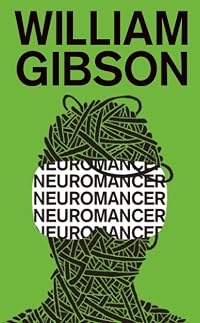
My first experience with cyberpunk is probably the 80’s TV show Max Headroom, and a few years later, the Japanese movie Akira. I know I’m supposed to mention [book:Neuromancer|22328] here, but I never read it, so sue me. When I first discovered these stories, I was fascinated by the prospect of a semichaotic high-speed digital future where power, status and wealth were all a function of one’s dexterity with technology and information. I guess my invulnerable 20 year old self identified with the heroes, and imagined that I too (an engineering student) was a master of data and technology. That turned out to be far from true, but cyberpunk was an accessible sort of science fiction to me… far off, but not so far off as stuff like show more Star Trek, and exciting because it seemed plausible that I might actually live to see a sort of cyberpunk future one day.
And so I have.
But now the idea of nonstop breakneck change- a simultaneously insane yet controlled world highly attuned to the flow and analysis of information, where technology so pervades our habits and substance that it is never clear whether all the gadgetry around us is liberating or confining- all makes me feel very tired, and very sad. I wonder why it didn’t before.
Eastern Standard Tribe is set in 2022 and could defensibly be called a cyberpunk story, but just barely. Arthur Berry is a freelance User Interface engineer (or some such term, I may be slightly off). He develops applications for existing products, and dreams up ways to make technology more friendly and practical… an anti-cyberpunk protagonist in a cyberpunk world. One of his ideas becomes a business proposal which drives the plot, but that’s really the extent of technology’s role in this book.
And I love that.
The book is really more preoccupied with this idea of tribes… social organizations members freely gravitate to, based on common interests, rather than proximity. It is all about the disappearance of geography in the telecommunications era, which makes it perhaps the most perfect book to read and write about on GoodReads. Well, we are a tribe, aren’t we? A big one, to be sure, with internecine squabbles, and a few oddbird members we’d maybe prefer not to meet in real life… but at the end of it all, GR is very much my tribe, the same way the Eastern Standard Time (Zone) is for Arthur Berry. This book wasn’t my first introduction to the ideas that society seems to be reorganizing into mini interest-based communities. I think that’s one of the big themes of Infinite Jest, and I dwell on this quite a bit in my review of that book. A Clockwork Orange, or all the ponderous dissection of what the proper role is between the individual and society in The Unincorporated Man. Add to the mix a few interesting supporting characters, some corporate intrigue, a little seduction, and pretty soon you have a fully-fleshed out story which just happens to have a sci-fi setting. This, to me, is the best kind of science fiction. show less
And so I have.
But now the idea of nonstop breakneck change- a simultaneously insane yet controlled world highly attuned to the flow and analysis of information, where technology so pervades our habits and substance that it is never clear whether all the gadgetry around us is liberating or confining- all makes me feel very tired, and very sad. I wonder why it didn’t before.
Eastern Standard Tribe is set in 2022 and could defensibly be called a cyberpunk story, but just barely. Arthur Berry is a freelance User Interface engineer (or some such term, I may be slightly off). He develops applications for existing products, and dreams up ways to make technology more friendly and practical… an anti-cyberpunk protagonist in a cyberpunk world. One of his ideas becomes a business proposal which drives the plot, but that’s really the extent of technology’s role in this book.
And I love that.
The book is really more preoccupied with this idea of tribes… social organizations members freely gravitate to, based on common interests, rather than proximity. It is all about the disappearance of geography in the telecommunications era, which makes it perhaps the most perfect book to read and write about on GoodReads. Well, we are a tribe, aren’t we? A big one, to be sure, with internecine squabbles, and a few oddbird members we’d maybe prefer not to meet in real life… but at the end of it all, GR is very much my tribe, the same way the Eastern Standard Time (Zone) is for Arthur Berry. This book wasn’t my first introduction to the ideas that society seems to be reorganizing into mini interest-based communities. I think that’s one of the big themes of Infinite Jest, and I dwell on this quite a bit in my review of that book. A Clockwork Orange, or all the ponderous dissection of what the proper role is between the individual and society in The Unincorporated Man. Add to the mix a few interesting supporting characters, some corporate intrigue, a little seduction, and pretty soon you have a fully-fleshed out story which just happens to have a sci-fi setting. This, to me, is the best kind of science fiction. show less
I work in an organization very much like the one where the protagonist of this book executes his agent-provocateur activities. Suddenly it all makes sense! Agents of our enemies are destroying us from within by corrupting our UI and business processes! I laughed out loud many times reading this book and found it very thought provoking.
I like the fact it feels so real, has a just beyond the cutting edge view of the way technology affects us and at the same time has such human characters in it.
I have recommended it to several of my colleagues who also enjoyed it. I have even found myself quoting passages in design meetings when it all gets a little too surreal.
I like the fact it feels so real, has a just beyond the cutting edge view of the way technology affects us and at the same time has such human characters in it.
I have recommended it to several of my colleagues who also enjoyed it. I have even found myself quoting passages in design meetings when it all gets a little too surreal.
science fiction at the edge. felt like a ripping tale built-in with near-future slang and technospeak that we can understand if we just tilt our heads just so and put our tongues in the corners of our mouths.
the glimpse of the society shown here works well as the backdrop but also entangled within the fabric of the prose itself. that is, it feels real. Doctorow does not spoon feed us. there are some details from his future that i just do not grok but that doesn’t make it any less compelling.
really, this book is about the virtual tribalism that is happening right now all around us and how it has the potential to grow into and beyond Masonic proportions through the power of digital and wifi connectivity.
the book works on the level of a show more piece of art, too, with the interspersion of screenshots of chat banter with the text and plot.
i will say that the ending and what exactly happened there is a bit foggy but i think i understand it well enough to still have enjoyed this character-driven story. a nice slice of a very possible very near future that is already happening. show less
the glimpse of the society shown here works well as the backdrop but also entangled within the fabric of the prose itself. that is, it feels real. Doctorow does not spoon feed us. there are some details from his future that i just do not grok but that doesn’t make it any less compelling.
really, this book is about the virtual tribalism that is happening right now all around us and how it has the potential to grow into and beyond Masonic proportions through the power of digital and wifi connectivity.
the book works on the level of a show more piece of art, too, with the interspersion of screenshots of chat banter with the text and plot.
i will say that the ending and what exactly happened there is a bit foggy but i think i understand it well enough to still have enjoyed this character-driven story. a nice slice of a very possible very near future that is already happening. show less
This was another read on the T on my Palm. I never really did figure out what the tribe was about and somewhere in the middle I started thinking that I didn't like the story that much - too much crazy conniving girlfriend shtick and depressing trapped in a mental institution scenes, but then it all worked out for the best. The riffs on designing better systems were the most fun. (September 25, 2004)
Cory Doctorow always seems to think outside the box, and even though this one didn't blow me away it definitely had it's bouts of brilliance and originality. The one thing I couldn't get around though was the "girlfriend", she was written as such a complete psycho, selfish, bitch that I didn't find it believable that he stayed with her or if he was the kind of person who would stay with her then I wanted him to fail.
This started off really "meta", but eventually strayed away from that. I thought that in the end it should have come back to that, a kind of "wrap up" referencing the beginning, but it never did and so it kind of made that beginning section feel irrelevant.
This started off really "meta", but eventually strayed away from that. I thought that in the end it should have come back to that, a kind of "wrap up" referencing the beginning, but it never did and so it kind of made that beginning section feel irrelevant.
Art Berry lives in a world just slightly askew from the rest of us. In our increasingly wireless world of instant and constant communication, he gives his loyalty not to a state or a company or family and friends he sees regularly, but to the Eastern Standard Tribe—a largely faceless collection of people whose home time zone is the Eastern Standard Zone, who are locked in cutthroat competition with other tribes aligned with other time zones. Art himself is currently working in London, engaged in industrial sabotage against the Greenwich Mean Tribe. Virgn/Deutsche Telekom thinks he's working for them, improving their user interface; in fact he's trying to make it almost unusable. He's got a partner and supervisor from the Tribe, show more Federico, and a new girlfriend, Linda, whom he met when she staged an accident with him as the fall guy so that she could claim the insurance.
For some reason, that doesn't suggest to Art that perhaps Linda is fundamentally untrustworthy and not looking out for his best interests.
Art's having fun, screwing with V/DT's user interface, dreaming up a really good, fun, and profitable idea for EST to sell to MassPike, involving rights management for downloaded music. There are frustrations, too, of course, as he begins to dimly realize that Fede might be double-crossing him, trying to steal his idea and cut him out of the deal. There are more frustrations as Linda and Fede make increasingly contradictory and irreconcilable demands on him. Eventually, on a trip which he thinks is to pitch the idea, and a side trip home to Toronto to introduce Linda to his Gran, Art finally figures out that Linda is not his friend, either. He reacts very badly, and winds up on the roof of a mental institution in Massachusetts, trying to decide whether to stick a pencil into his brain.
There are some neat ideas here, and the story moves along briskly, alternating between the main story and Art on top of the asylum, trying to figure out what he does next, with quite adequate amounts of suspense. Unfortunately, it doesn't quite satisfy. Except for Art, neither the characters nor the book's main conceit, the Tribes, feel fully developed. I was left feeling that this will probably be a fun book to read when Doctorow finishes writing it. show less
For some reason, that doesn't suggest to Art that perhaps Linda is fundamentally untrustworthy and not looking out for his best interests.
Art's having fun, screwing with V/DT's user interface, dreaming up a really good, fun, and profitable idea for EST to sell to MassPike, involving rights management for downloaded music. There are frustrations, too, of course, as he begins to dimly realize that Fede might be double-crossing him, trying to steal his idea and cut him out of the deal. There are more frustrations as Linda and Fede make increasingly contradictory and irreconcilable demands on him. Eventually, on a trip which he thinks is to pitch the idea, and a side trip home to Toronto to introduce Linda to his Gran, Art finally figures out that Linda is not his friend, either. He reacts very badly, and winds up on the roof of a mental institution in Massachusetts, trying to decide whether to stick a pencil into his brain.
There are some neat ideas here, and the story moves along briskly, alternating between the main story and Art on top of the asylum, trying to figure out what he does next, with quite adequate amounts of suspense. Unfortunately, it doesn't quite satisfy. Except for Art, neither the characters nor the book's main conceit, the Tribes, feel fully developed. I was left feeling that this will probably be a fun book to read when Doctorow finishes writing it. show less
I gulped Eastern Standard Tribe down almost in one sitting, on a day I was tired from uploading family photos to the internet.
Art Berry is a user experience consultant, working for a firm in London. Actually, he's an agent for the Eastern Standard Tribe, a social network of east-coast net-connected folk who find each other work, help each other out, and they sabotage companies so to make way for their own concepts in the market. Almost forgot... they all keep a sleep schedule that lets them stay in touch in real time with tribe ground zero. Got that? Sleep-deprived idea-folk who are disguised as businessmen. Sorta.
I enjoyed Cory Doctorow's second novel very much; I read it in a few hours, mostly on a train. It doesn't hold together show more nearly as much as his first book, though. Art bears more than a passing resemblance to Manfred Macx, main honcho of Charles Stross's Accelerando, Doctorow's sometimes collaborator.
But. The concept of people depriving themselves of sleep to keep up with the j0nz3s has been going on for years; when's the lat time you walked into work yawning because you'd stayed online until 1am? (Or is it just me that does that?) Of course, we used to stay up late to watch late night TV, and some of us even stay up late reading.
Tribe is very perceptive, easily read, and very thoughtful. show less
Art Berry is a user experience consultant, working for a firm in London. Actually, he's an agent for the Eastern Standard Tribe, a social network of east-coast net-connected folk who find each other work, help each other out, and they sabotage companies so to make way for their own concepts in the market. Almost forgot... they all keep a sleep schedule that lets them stay in touch in real time with tribe ground zero. Got that? Sleep-deprived idea-folk who are disguised as businessmen. Sorta.
I enjoyed Cory Doctorow's second novel very much; I read it in a few hours, mostly on a train. It doesn't hold together show more nearly as much as his first book, though. Art bears more than a passing resemblance to Manfred Macx, main honcho of Charles Stross's Accelerando, Doctorow's sometimes collaborator.
But. The concept of people depriving themselves of sleep to keep up with the j0nz3s has been going on for years; when's the lat time you walked into work yawning because you'd stayed online until 1am? (Or is it just me that does that?) Of course, we used to stay up late to watch late night TV, and some of us even stay up late reading.
Tribe is very perceptive, easily read, and very thoughtful. show less
Members
- Recently Added By
Lists

Books Read in 2025
4,091 works; 97 members
Author Information

121+ Works 25,915 Members
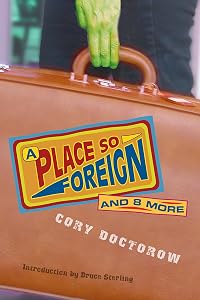
Writer and activist Cory Doctorow was born in Toronto, Canada on July 17, 1971. In 1999 he co-founded a free software company called Opencola and served as Canadian Regional Director of the Science Fiction and Fantasy Writers of America. For four years he worked as European Affairs Coordinator for the Electronic Frontier Foundation and in 2007 won show more its Pioneer Award. His first novel, Down and Out in the Magic Kingdom, won a Locus Award for Best First Novel. His short story collection A Place So Foreign and Eight More won a Sunburst Award, and his bestselling novel Little Brother received the 2009 Prometheus Award, a Sunburst Award, and the John W. Campbell Memorial Award. Doctorow also writes nonfiction books and articles, and he co-edits the blog Boing Boing. (Bowker Author Biography) show less
Some Editions
Awards and Honors
Awards
Distinctions
Work Relationships
Is contained in
Common Knowledge
- Canonical title
- Eastern Standard Tribe
- Original publication date
- 2004-03-01
- People/Characters
- Art Berry; Fede; Linda
- Important places
- London, England, UK
- Dedication
- For my parents
For my family
For everyone who helped me up and for everyone I let down. You know who you are. Sincerest thanks and most heartfelt apologies. - First words
- I once had a Tai Chin instructor who explained the difference between Chinese and Western medicine thus: "Western medicine is based on corpses, things that you discover by cutting up dead bodies and pulling them apart. Chine... (show all)se medicine is based on living flesh, things observed from vital, moving humans."
- Last words
- (Click to show. Warning: May contain spoilers.)"You belong in a loony bin, you know that?" she says, punching me in the thigh harder than is strictly necessary.
"Oh, I know," I say, and dial up some music on the car stereo. - Publisher's editor
- Nielsen Hayden, Patrick
Classifications
Statistics
- Members
- 1,277
- Popularity
- 19,101
- Reviews
- 37
- Rating
- (3.43)
- Languages
- English, German
- Media
- Paper, Audiobook, Ebook
- ISBNs
- 18
- ASINs
- 7