

Patrick Nielsen Hayden
Author of Twenty-First Century Science Fiction
About the Author
Image credit: Patrick Nielsen Hayden, 2008 [credit: Houari Boumedienne]
Series
Works by Patrick Nielsen Hayden
Some of the Best from Tor.com: 2011 Edition: A Tor.Com Original (2012) — Editor — 157 copies, 2 reviews
The Year's Best Science Fiction and Fantasy for Teens: First Annual Collection (Year's Best Science Fiction & Fantasy for Teens) (2005) — Editor — 84 copies, 2 reviews
Return {short story} 1 copy
Associated Works
Tagged
Common Knowledge
- Legal name
- Nielsen Hayden, Patrick James
- Birthdate
- 1959-01-02
- Gender
- male
- Occupations
- editor
- Organizations
- Tor Books
Izzard
The New York Review of Science Fiction
Literary Guild
Chelsea House - Awards and honors
- E.E. Smith Memorial Award for Imaginative Fiction (2003)
Hugo Nominee (Best editor - long form, 2022) - Relationships
- Nielsen Hayden, Teresa (wife)
- Nationality
- USA
- Birthplace
- Lansing, Michigan, USA
- Places of residence
- Lansing, Michigan, USA
Toronto, Ontario, Canada
Seattle, Washington, USA
New York, New York, USA - Associated Place (for map)
- USA
Members
Reviews

This is an anthology of post-2000 sf written by authors who "came to prominence" after 2000. That is to say, they may have published something prior to 2000, but they didn't break through into wider consciousness until after; see for example Charles Stross, whose first publication is all the way back in 1985, but achieved wider acclaim with his 2001 novel The Atrocity Archive. I got the book as a gift back when it came out in 2013, but as is usual for me, did not get around to reading it for show more another decade. In a way, this was helpful for evaluating the book's "argument."
It's been my thesis that large anthologies (and this one clocks in at 572 pages, with over thirty stories) are arguments. In this case, the argument seems to be: "These writers are the future of science fiction." In that case, reading it ten years late lets me estimate how right the editors got it. Did these talents pan out?
Overall, I have to say yes, but sort of with reservations. There's no denying that, say, Mary Robinette Kowal has gone on to be a juggernaut of twenty-first century science fiction. But enjoy as I might her "Lady Astronaut" books, the story included here ("Evil Robot Monkey") didn't grab me—this isn't the reason. (Though given the story was a Hugo finalist, it must have grabbed other people.) Similarly, some of the stories feel like stretches, in that they're sf tales from writers much better known for publishing fantasy or even horror, like Jo Walton's "Escape to Other Worlds with Science Fiction" or Daryl Gregory's "Second Person, Present Tense"; these were two stories I enjoyed a lot, actually, but I wouldn't put either Walton or Gregory in the pantheon of great twenty-first century sf writers, based on what I've read of them at least.
And of course, there are a couple stories I found outright bad... but they're by writers whose work in general I struggled to enjoy yet I cannot deny that those writers are generally popular. I speak here of John Scalzi's "The Tale of the Wicked," which requires all of its main characters to be idiots, and Catherynne M. Valente's "How to Become a Mars Overlord" which at eight pages still had me skimming to get to the end. So I guess the anthology is right to include them: both works read as fairly typical for their writers even if I did not like them. They are a key part of twenty-first century sf. I just wish they weren't.
But of course there are areas where the editors totally get it right. I always like a bit of Vandana Singh, and her story "Infinities" (one of only three rereads for me in the book) is a typically excellent piece of work. I don't think Rachel Swirsky has ever published a novel, but her story "Eros, Philia, Agape" is astounding, a masterful tale of what might it mean for an android to love, and she's an acclaimed writer of short science fiction and fantasy, with two Nebula wins and a number of Hugo and Nebula finalists. Madeleine Ashby is someone I haven't read much of, but I really enjoyed her story "The Education of Junior Number 12" here (another story of androids in love, actually, but very different from the Swirsky) and everything else I have read by her I have enjoyed; she's an incisive writer on the cutting edge of current technology, and now I want to seek our her related novel, vN. Ken Liu is an acclaimed writer of short sf, and though I've personally found his stuff hit or miss, "The Algorithm of Love" is probably the best thing I've read by him, a dark meditation on the implications AI might have for human consciousness.
"A Vector Alphabet of Interstellar Travel" is a pretty typical piece by Yoon Ha Lee: told in the form of a series of encyclopedia entries, so purely exposition, it nonetheless manages to say interesting things about how societies interact, especially with a really strong last line, and it's no wonder he went on to do acclaimed work like Machineries of Empire. Peter Watts is a highly acclaimed writer of hard sf about consciousness, and his story "The Island" here is great on many levels, examining how people think, how machines think, and how something we don't even understand thinks, and how different that might or might not be; dark but highly effective. There's a Cory Doctorow story here, too: "Chicken Little," about a lot of stuff, including immortality, marketing, and rational calculations of risk. I don't think I've ever enjoyed a Doctorow story before, but I thought this was great. So you have a lot of great stuff here by acclaimed writers.
Beyond that, though, you have great stuff from writers I actually had never heard of... but if Hartwell and Nielsen Hayden are making an argument, it's that I should have heard of them, and so I'm prepared to accept that it's not the anthology that's at fault but the universe—or, perhaps, me. I'd never heard of David Moles, but I loved his story "Finisterra" about a gas giant with an Earth-like atmosphere where people build communities on the backs of giant floating life-forms. Similarly, I didn't know Karl Schroeder but found his "To Hie from Far Cilenia" very intriguing, a story about digital communities overlapping with the physical world that we might not even notice unless we learn how to see differently. "The Prophet of Flores" by Ted Kosmatka was fascinating, set in a world where the Earth really was created in 4,000 B.C. but otherwise science is the same, and exploring what implications the discovery of the so-called hobbits of Flores would have. It was expanded into a novel, which I'll have to seek out. These people ought to be the face of twenty-first century sf if they're not.
It's not all great, of course; I've mentioned a couple I didn't like already, and there were some more that I bounced off of, including Stross's "Rogue Farm" (too clever for me, maybe), Marissa Lingen's "The Calculus Plague" (some improbably bad research ethics; where's the IRB?), Paul Cornell's "One of Our Bastards Is Missing" (I love Cornell but have never gotten much out of his Hamilton shorts), Oliver Morton's "The Albian Message" (less a story, more a thought experiment), and Alaya Dawn Johnson's "Third Day Lights" (I just could not be bothered to work out what was actually happening). But most of what was left was usually good, if not great, or among the best short stories I've read in the past year.
One story is a bit tragic: Kage Baker's "Plotters and Shooters" was good fun, a take on Ender's Game where the protagonists are all thirty-year-olds who are stuck in their mothers' basements. But Kage Baker can't be the future of sf, because she unfortunately died at the age of 57 in 2010. It reminded me I really must get around to finishing her Company series, though.
There's a lot of great stuff here; I think this probably has one of the best hit rates for an anthology I've read outside of something like The Science Fiction Hall of Fame volumes. Perhaps the real argument here is that "Twenty-first century science fiction is in rude health." If that's the case, then the editors have assembled evidence that demonstrates their conclusions thirty times over. show less
It's been my thesis that large anthologies (and this one clocks in at 572 pages, with over thirty stories) are arguments. In this case, the argument seems to be: "These writers are the future of science fiction." In that case, reading it ten years late lets me estimate how right the editors got it. Did these talents pan out?
Overall, I have to say yes, but sort of with reservations. There's no denying that, say, Mary Robinette Kowal has gone on to be a juggernaut of twenty-first century science fiction. But enjoy as I might her "Lady Astronaut" books, the story included here ("Evil Robot Monkey") didn't grab me—this isn't the reason. (Though given the story was a Hugo finalist, it must have grabbed other people.) Similarly, some of the stories feel like stretches, in that they're sf tales from writers much better known for publishing fantasy or even horror, like Jo Walton's "Escape to Other Worlds with Science Fiction" or Daryl Gregory's "Second Person, Present Tense"; these were two stories I enjoyed a lot, actually, but I wouldn't put either Walton or Gregory in the pantheon of great twenty-first century sf writers, based on what I've read of them at least.
And of course, there are a couple stories I found outright bad... but they're by writers whose work in general I struggled to enjoy yet I cannot deny that those writers are generally popular. I speak here of John Scalzi's "The Tale of the Wicked," which requires all of its main characters to be idiots, and Catherynne M. Valente's "How to Become a Mars Overlord" which at eight pages still had me skimming to get to the end. So I guess the anthology is right to include them: both works read as fairly typical for their writers even if I did not like them. They are a key part of twenty-first century sf. I just wish they weren't.
But of course there are areas where the editors totally get it right. I always like a bit of Vandana Singh, and her story "Infinities" (one of only three rereads for me in the book) is a typically excellent piece of work. I don't think Rachel Swirsky has ever published a novel, but her story "Eros, Philia, Agape" is astounding, a masterful tale of what might it mean for an android to love, and she's an acclaimed writer of short science fiction and fantasy, with two Nebula wins and a number of Hugo and Nebula finalists. Madeleine Ashby is someone I haven't read much of, but I really enjoyed her story "The Education of Junior Number 12" here (another story of androids in love, actually, but very different from the Swirsky) and everything else I have read by her I have enjoyed; she's an incisive writer on the cutting edge of current technology, and now I want to seek our her related novel, vN. Ken Liu is an acclaimed writer of short sf, and though I've personally found his stuff hit or miss, "The Algorithm of Love" is probably the best thing I've read by him, a dark meditation on the implications AI might have for human consciousness.
"A Vector Alphabet of Interstellar Travel" is a pretty typical piece by Yoon Ha Lee: told in the form of a series of encyclopedia entries, so purely exposition, it nonetheless manages to say interesting things about how societies interact, especially with a really strong last line, and it's no wonder he went on to do acclaimed work like Machineries of Empire. Peter Watts is a highly acclaimed writer of hard sf about consciousness, and his story "The Island" here is great on many levels, examining how people think, how machines think, and how something we don't even understand thinks, and how different that might or might not be; dark but highly effective. There's a Cory Doctorow story here, too: "Chicken Little," about a lot of stuff, including immortality, marketing, and rational calculations of risk. I don't think I've ever enjoyed a Doctorow story before, but I thought this was great. So you have a lot of great stuff here by acclaimed writers.
Beyond that, though, you have great stuff from writers I actually had never heard of... but if Hartwell and Nielsen Hayden are making an argument, it's that I should have heard of them, and so I'm prepared to accept that it's not the anthology that's at fault but the universe—or, perhaps, me. I'd never heard of David Moles, but I loved his story "Finisterra" about a gas giant with an Earth-like atmosphere where people build communities on the backs of giant floating life-forms. Similarly, I didn't know Karl Schroeder but found his "To Hie from Far Cilenia" very intriguing, a story about digital communities overlapping with the physical world that we might not even notice unless we learn how to see differently. "The Prophet of Flores" by Ted Kosmatka was fascinating, set in a world where the Earth really was created in 4,000 B.C. but otherwise science is the same, and exploring what implications the discovery of the so-called hobbits of Flores would have. It was expanded into a novel, which I'll have to seek out. These people ought to be the face of twenty-first century sf if they're not.
It's not all great, of course; I've mentioned a couple I didn't like already, and there were some more that I bounced off of, including Stross's "Rogue Farm" (too clever for me, maybe), Marissa Lingen's "The Calculus Plague" (some improbably bad research ethics; where's the IRB?), Paul Cornell's "One of Our Bastards Is Missing" (I love Cornell but have never gotten much out of his Hamilton shorts), Oliver Morton's "The Albian Message" (less a story, more a thought experiment), and Alaya Dawn Johnson's "Third Day Lights" (I just could not be bothered to work out what was actually happening). But most of what was left was usually good, if not great, or among the best short stories I've read in the past year.
One story is a bit tragic: Kage Baker's "Plotters and Shooters" was good fun, a take on Ender's Game where the protagonists are all thirty-year-olds who are stuck in their mothers' basements. But Kage Baker can't be the future of sf, because she unfortunately died at the age of 57 in 2010. It reminded me I really must get around to finishing her Company series, though.
There's a lot of great stuff here; I think this probably has one of the best hit rates for an anthology I've read outside of something like The Science Fiction Hall of Fame volumes. Perhaps the real argument here is that "Twenty-first century science fiction is in rude health." If that's the case, then the editors have assembled evidence that demonstrates their conclusions thirty times over. show less
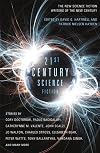
An anthology of stories by "some of the best science fiction writers that came to prominence since the twentieth century changed into the twenty-first," edited by two of the field's best editors.
There are 34 stories here, by an impressive roster of the new century's finest writers -- Vandana Singh, Paolo Bacigalupi, Rachel Swirsky, John Scalzi, Genevieve Valentine, Daryl Gregory among them.
For my money, it is a collection of consistently very good stories that rarely reaches greatness, a show more solid gathering of B+/A- stories. The best of the bunch include three stories that deal in various ways with parent/child relationships -- Gregory's "Second Person, Present Tense," Peter Watts's "The Island," and Madeline Ashby's "The Education of Junior Number 12 -- and Scalzi's "The Tale of the Wicked," in which tropes of first contact and intelligent spaceships collide in amusing ways.
The SF community in general was more impressed than I by these stories, nominating eleven of them for major awards, with three winners ("The Island," David D. Levine's "Tk'tk'tk," and Elizabeth Bear's "Tideline"). But there are very few outright clunkers here, and the average quality is higher than in most anthologies. Perhaps not the ideal book for the SF novice, but genre fans should appreciate it. show less
There are 34 stories here, by an impressive roster of the new century's finest writers -- Vandana Singh, Paolo Bacigalupi, Rachel Swirsky, John Scalzi, Genevieve Valentine, Daryl Gregory among them.
For my money, it is a collection of consistently very good stories that rarely reaches greatness, a show more solid gathering of B+/A- stories. The best of the bunch include three stories that deal in various ways with parent/child relationships -- Gregory's "Second Person, Present Tense," Peter Watts's "The Island," and Madeline Ashby's "The Education of Junior Number 12 -- and Scalzi's "The Tale of the Wicked," in which tropes of first contact and intelligent spaceships collide in amusing ways.
The SF community in general was more impressed than I by these stories, nominating eleven of them for major awards, with three winners ("The Island," David D. Levine's "Tk'tk'tk," and Elizabeth Bear's "Tideline"). But there are very few outright clunkers here, and the average quality is higher than in most anthologies. Perhaps not the ideal book for the SF novice, but genre fans should appreciate it. show less
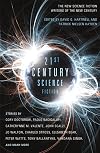
This is a collection of Science Fiction short stories from the 21st century. The brief preface explains that many of the writers were writing and publishing before the millennium but have come to prominence since. The editors have a broad church view of Science Fiction, which lends itself to great variety in the contents but the usual suspects are here: androids and robots, aliens and AIs. I’ll start with the Earthbound stuff and move outwards into the galaxy and the far future.
The first show more story, ‘Infinities’, is by Vandana Singh, a physics teacher who, as an Indian living in Boston has some claim to being a stranger in a strange land. Abdul Karim is a little old mathematics teacher with a great love for his subject and a particular interest in infinity. He is a Muslim and his best friend, Gangadhar, is a Hindu in a city often driven by strife between these faiths. Abdul’s life story is described in a telling manner, not shown. This is contrary to all the best advice on writing modern commercial fiction but I like it. Usually, you have to read old stories by the likes of Somerset Maugham to get this straightforward, sedate type of narrative. The tale is interspersed with quotations from poets, philosophers and mathematicians and turns fantastic quite near the end, which is also where the real world, beastly as usual, intrudes on Abdul’s quiet life. Imbued as it is with composed contemplation of God and the infinite, I found this story perfect reading on a quiet Sunday morning. It’s also a nice change from western, materialist, technology orientated Science Fiction and a useful reminder that there are civilisations older than ours to the east.
Back home, country life will be very different later this century if ‘Rogue Farm’ is anything to go by. The establishment in the title is a tank-sized organism which contains six people and wants to go to Jupiter. Blast off will burn a hundred hectares around, including Joe’s farm so he is determined to stop it. The population shrinkage and consequent housing surplus in future Britain would be great but the rest of this vision from Charles Stross does not appeal to me, not even the talking dog who likes to smoke a joint with his master. I like the countryside the way it is, thanks. It’s a good story, though.
In ‘Bread And Bombs’, Mary Rickert starts off with a small-town setting and evokes a bucolic air with long, slow sentences that talk of picnics and crab-apple trees and the little local schoolhouse. Slowly, a darker history is revealed. The first person narration is by an adult remembering stuff that happened when she was a kid, like Scout in ‘To Kill A Mockingbird’ and the setting is similar. A well-wrought yarn that should make us appreciate our lives today.
Paolo Bacigalupi writes stories set in the near future. ‘The Gambler’ was first published in 2008 and is almost true already. Ong was born in Laos. He fled when it became a dictatorship and now works on a news outlet in Los Angeles where he writes serious stories about political corruption, government incompetence and global warming. His colleague, Marty Mackley, writes about Double DP, a Russian mafia cowboy rapper who has had an affair with a fourteen-year-old. Live news feeds follow Double as he tries to flee to Mexico. The story goes viral instantly, advertising revenue floods in, the company’s stock goes up and Mackley’s star continues to rise. Ong’s is falling. His content pulls in hardly any readers and he will soon be sacked. He has two hopes: a celebrity from his own country or Henry David Thoreau and the flowers of Walden pond. This is even more depressing than ‘Rogue Farm’ because it seems truer as celebrity pap ‘content’ buries real news every day. Again, it’s a great story but stop the world, please, I want to get off.
Staying with marketing, ‘The Calculus Plague’ has people on a university campus being infected with false memories. The connection with advertising is not obvious at first but is soon made. Author Marissa Lingen was one of my favourite contributors to ‘On Spec’ with her Carter Hall yarns and this short story doesn’t disappoint either.
Gennady Malianov, a private investigator, gets looking for some stolen plutonium in ‘To Hie From Far Cilenia’ by Karl Shroeder. Set in a near future, where virtual reality games and worlds are more developed and developing, it has a good plot that keeps revealing more about the setting as it goes on. Gennady is a sympathetic character and despite the fact that this sort of thing is alien to me – I don’t even Game – it was enjoyable and interesting.
Would you like to get in touch with the versions of you that exist in parallel universes? Such is the ambition of Professor Elsa Hill, a genius physicist and she is ably assisted in the work by Adam Giles – who narrates the story – and a very smart computer. Artificial intelligences may also have twins in the other worlds. ‘Savant Songs’ by Brenda Cooper is a moving, almost frightening exploration of a common SF theme.
In ‘Chicken Little’ by Cory Doctorow, the super-rich are becoming immortal, their failing bodies wired into complex machines, some as big as small towns, that keep them alive. They are quadrillionaires and some are sovereign states. They control the world. Ate is a company that exists to please them or, rather, to attempt to invent some new way to please them as they can have anything they want. Our hero is Leon, a smart man working for Ate and trying to come up with something new for their clients. The story takes unexpected turns and ends up having a pleasing philosophical bent concerning what humans really want and what’s really good for them.
‘Eros, Philia, Agape’ is by Rachel Swirsky. Robots are an old standby of the genre and I think humans may have fallen in love with them before. That’s what the author’s story title is about but, as the couple have an adopted child, it’s more complicated. A fine example to show that ‘adult themes’ doesn’t just mean gratuitous sex and violence but an exploration of the multi-faceted relationships that might result between us and our advanced technologies.
In similar territory is ‘The Nearest Thing’, Genevieve Valentine’s tale about the development of nearly humanoid androids. Inevitably, the experienced SF fan is reminded of ‘Blade Runner’ but it’s a good story on its own merits.
I was mildly put off ‘The Algorithms For Love’ by the title but, as it’s by Ken Liu, decided to give it a go because he’s written some very good short Science Fiction over the last few years. This may be the best of them but it’s downright scary. The protagonist designs humanoid dolls that are very life-like but her work has driven her mad. By the time you get the ideas behind this yarn, near the end, you may decide that it doesn’t bear thinking about too much or you might join her in the asylum.
In Ian Creasey’s ‘Erosion’, Winston is about to set off on a new adventure, just as his Jamaican grandfather did when he came to England. Augmented by technology he and others are to board a starship and colonise a rugged new planet. On his last day on an Earth, imperilled by global warming, he walks along the coastal path near Scarborough. There’s some good writing on the scenery but his actions seem a bit irrational at times. We would probably send more stable people to new planets.
Aliens have featured in science fiction ever since H.G. Wells’ Martians attacked us on Horsell Common. They were not all nasty. Neil Asher’s aliens in ‘Strood’ treat us like a third world country, setting up clinics to treat us for conditions beyond our resources. There are many different species, all of them far in advance of man. Our hero has cancer and his story nicely illustrates the setting, which is really the star. The beginning might have ‘one’s discombobulation requiring pellucidity’ but that’s just a sign of how well it’s written.
I have always disliked them but it is surely awful to actually be a salesman with the soul-destroying fawning and mendacity and the quiet desperation. In the excellent ‘Tk,Tk,Tk’, David E. Levine shows how bad it is to be a salesman on a planet full of alien insects with a strange culture and terrible food. To butter up clients, Walker has to quaff drinks ‘indistinguishable from warm piss’ and then things get worse. This story won the Hugo in 2006. SF fans love a good alien.
Really good ones can be so odd they seem outside the genre. When a strong, handsome man rides a talking deer to a confrontation with a shape-changing demon of the scorched desert who has a two-dimensional child you are led to believe it’s a fantasy. Not so. ‘Third Day Lights’ by Alaya Dawn Johnson is Science Fiction set in a far distant future where anything is possible, somewhat like Michael Moorcock’s ‘Dancers At The End of Time’ stories. The classical fantasy aspect is kept when the hero has to face three challenges but the sensual story is narrated by the demon, not the man. There’s lots of invention and a good array of unusual characters in this far out flight of fancy.
John Scalzi is trending in the last few years so I was glad to get to read something by him at last. ‘The Tale Of The Wicked’ is about a space battle between two enemy ships that goes awry. To describe the plot is to spoil it but suffice to say it was clever, amusing and thought-provoking. I shall keep an eye out for more Scalzi.
Nerdy ‘plotters’ calculate the trajectories of asteroids that may strike an inhabited planet Mars and the ‘shooters‘, a rough crowd, blast them out of the sky. These incompatible groups share an orbiting gunship and the life of a nerd involves flackeying to the jocks, rather as junior boys used to serve seniors in our English public schools. Then a newbie arrives with a different take on things. ‘Plotters And Shooters’ by Kage Baker is a strong story that would translate well to television in some anthology program.
Far in the future, a human lady and her son crew a ship supervising the building of artificial wormholes for interstellar travel. They are bossed by an AI she calls the Chimp. Earth is long gone and the species that come through the gates have evolved far beyond her but the work continues. Then they encounter a red dwarf star that seems to be signalling them. ‘The Island’ by Peter Watts is hard going at first but presently makes sense, enough that it won the Hugo for best novelette in 2010.
The also-rans here would-be stars in many another collection and only the limitations of a review prevent me from raving about them at length. ‘Ikirhyoh’ by Liz Williams is an original take on genetic specialisation in a future oriental civilisation. ‘The Prophet Of Flores’ by Ted Kosmatka’ is an archaeological dig story set in a world where Darwin was wrong.
‘How To Become A Mars Overlord’ by Catherynne M. Valente didn’t suit my tastes but a lot of lexical dexterity went into this exuberant piece.
Not dissimilar is ‘A Vector Alphabet of Interstellar Travel‘ by Yoon Ha Lee. It also breaks the bounds of traditional storytelling but the plain, almost academic language works better.
‘Escape to Other Worlds With Science Fiction’ by Jo Walton is a frightening look at an alternative history in which Britain didn’t oppose Nazi Germany but it’s set in America. It’s frightening because our much loved USA often seems to be on the brink of going this route.
The main thing that struck me about 21st-century writing is how literary it is compared to the Golden Age stuff. SF was mainly rooted in pulp fiction but slowly it has evolved out of that and is now comfortably grown-up. Reading these stories is like reading a Science Fiction story by Graham Greene or Somerset Maugham. The authors take their time to set the mood and there is no need for melodrama. Character is as important as plot and background. There was a bit of a crisis about this a few decades ago and writers as diverse as Kingsley Amis and Isaac Asimov wondered if Science Fiction could be recognised as literature and still preserve the all-important sense of wonder. I should add that for most of us preserving the sense of wonder was far more important than being recognised by high falutin’ critics. Anyway, the crisis is past and ‘21st Century Science Fiction’ proves beyond doubt that our flexible genre can do both, in spades. This is probably the best and most intelligent anthology of Science Fiction stories I have ever read and I’ve read a few.
Eamonn Murphy
This review first appeared at https://www.sfcrowsnest.info/ show less
The first show more story, ‘Infinities’, is by Vandana Singh, a physics teacher who, as an Indian living in Boston has some claim to being a stranger in a strange land. Abdul Karim is a little old mathematics teacher with a great love for his subject and a particular interest in infinity. He is a Muslim and his best friend, Gangadhar, is a Hindu in a city often driven by strife between these faiths. Abdul’s life story is described in a telling manner, not shown. This is contrary to all the best advice on writing modern commercial fiction but I like it. Usually, you have to read old stories by the likes of Somerset Maugham to get this straightforward, sedate type of narrative. The tale is interspersed with quotations from poets, philosophers and mathematicians and turns fantastic quite near the end, which is also where the real world, beastly as usual, intrudes on Abdul’s quiet life. Imbued as it is with composed contemplation of God and the infinite, I found this story perfect reading on a quiet Sunday morning. It’s also a nice change from western, materialist, technology orientated Science Fiction and a useful reminder that there are civilisations older than ours to the east.
Back home, country life will be very different later this century if ‘Rogue Farm’ is anything to go by. The establishment in the title is a tank-sized organism which contains six people and wants to go to Jupiter. Blast off will burn a hundred hectares around, including Joe’s farm so he is determined to stop it. The population shrinkage and consequent housing surplus in future Britain would be great but the rest of this vision from Charles Stross does not appeal to me, not even the talking dog who likes to smoke a joint with his master. I like the countryside the way it is, thanks. It’s a good story, though.
In ‘Bread And Bombs’, Mary Rickert starts off with a small-town setting and evokes a bucolic air with long, slow sentences that talk of picnics and crab-apple trees and the little local schoolhouse. Slowly, a darker history is revealed. The first person narration is by an adult remembering stuff that happened when she was a kid, like Scout in ‘To Kill A Mockingbird’ and the setting is similar. A well-wrought yarn that should make us appreciate our lives today.
Paolo Bacigalupi writes stories set in the near future. ‘The Gambler’ was first published in 2008 and is almost true already. Ong was born in Laos. He fled when it became a dictatorship and now works on a news outlet in Los Angeles where he writes serious stories about political corruption, government incompetence and global warming. His colleague, Marty Mackley, writes about Double DP, a Russian mafia cowboy rapper who has had an affair with a fourteen-year-old. Live news feeds follow Double as he tries to flee to Mexico. The story goes viral instantly, advertising revenue floods in, the company’s stock goes up and Mackley’s star continues to rise. Ong’s is falling. His content pulls in hardly any readers and he will soon be sacked. He has two hopes: a celebrity from his own country or Henry David Thoreau and the flowers of Walden pond. This is even more depressing than ‘Rogue Farm’ because it seems truer as celebrity pap ‘content’ buries real news every day. Again, it’s a great story but stop the world, please, I want to get off.
Staying with marketing, ‘The Calculus Plague’ has people on a university campus being infected with false memories. The connection with advertising is not obvious at first but is soon made. Author Marissa Lingen was one of my favourite contributors to ‘On Spec’ with her Carter Hall yarns and this short story doesn’t disappoint either.
Gennady Malianov, a private investigator, gets looking for some stolen plutonium in ‘To Hie From Far Cilenia’ by Karl Shroeder. Set in a near future, where virtual reality games and worlds are more developed and developing, it has a good plot that keeps revealing more about the setting as it goes on. Gennady is a sympathetic character and despite the fact that this sort of thing is alien to me – I don’t even Game – it was enjoyable and interesting.
Would you like to get in touch with the versions of you that exist in parallel universes? Such is the ambition of Professor Elsa Hill, a genius physicist and she is ably assisted in the work by Adam Giles – who narrates the story – and a very smart computer. Artificial intelligences may also have twins in the other worlds. ‘Savant Songs’ by Brenda Cooper is a moving, almost frightening exploration of a common SF theme.
In ‘Chicken Little’ by Cory Doctorow, the super-rich are becoming immortal, their failing bodies wired into complex machines, some as big as small towns, that keep them alive. They are quadrillionaires and some are sovereign states. They control the world. Ate is a company that exists to please them or, rather, to attempt to invent some new way to please them as they can have anything they want. Our hero is Leon, a smart man working for Ate and trying to come up with something new for their clients. The story takes unexpected turns and ends up having a pleasing philosophical bent concerning what humans really want and what’s really good for them.
‘Eros, Philia, Agape’ is by Rachel Swirsky. Robots are an old standby of the genre and I think humans may have fallen in love with them before. That’s what the author’s story title is about but, as the couple have an adopted child, it’s more complicated. A fine example to show that ‘adult themes’ doesn’t just mean gratuitous sex and violence but an exploration of the multi-faceted relationships that might result between us and our advanced technologies.
In similar territory is ‘The Nearest Thing’, Genevieve Valentine’s tale about the development of nearly humanoid androids. Inevitably, the experienced SF fan is reminded of ‘Blade Runner’ but it’s a good story on its own merits.
I was mildly put off ‘The Algorithms For Love’ by the title but, as it’s by Ken Liu, decided to give it a go because he’s written some very good short Science Fiction over the last few years. This may be the best of them but it’s downright scary. The protagonist designs humanoid dolls that are very life-like but her work has driven her mad. By the time you get the ideas behind this yarn, near the end, you may decide that it doesn’t bear thinking about too much or you might join her in the asylum.
In Ian Creasey’s ‘Erosion’, Winston is about to set off on a new adventure, just as his Jamaican grandfather did when he came to England. Augmented by technology he and others are to board a starship and colonise a rugged new planet. On his last day on an Earth, imperilled by global warming, he walks along the coastal path near Scarborough. There’s some good writing on the scenery but his actions seem a bit irrational at times. We would probably send more stable people to new planets.
Aliens have featured in science fiction ever since H.G. Wells’ Martians attacked us on Horsell Common. They were not all nasty. Neil Asher’s aliens in ‘Strood’ treat us like a third world country, setting up clinics to treat us for conditions beyond our resources. There are many different species, all of them far in advance of man. Our hero has cancer and his story nicely illustrates the setting, which is really the star. The beginning might have ‘one’s discombobulation requiring pellucidity’ but that’s just a sign of how well it’s written.
I have always disliked them but it is surely awful to actually be a salesman with the soul-destroying fawning and mendacity and the quiet desperation. In the excellent ‘Tk,Tk,Tk’, David E. Levine shows how bad it is to be a salesman on a planet full of alien insects with a strange culture and terrible food. To butter up clients, Walker has to quaff drinks ‘indistinguishable from warm piss’ and then things get worse. This story won the Hugo in 2006. SF fans love a good alien.
Really good ones can be so odd they seem outside the genre. When a strong, handsome man rides a talking deer to a confrontation with a shape-changing demon of the scorched desert who has a two-dimensional child you are led to believe it’s a fantasy. Not so. ‘Third Day Lights’ by Alaya Dawn Johnson is Science Fiction set in a far distant future where anything is possible, somewhat like Michael Moorcock’s ‘Dancers At The End of Time’ stories. The classical fantasy aspect is kept when the hero has to face three challenges but the sensual story is narrated by the demon, not the man. There’s lots of invention and a good array of unusual characters in this far out flight of fancy.
John Scalzi is trending in the last few years so I was glad to get to read something by him at last. ‘The Tale Of The Wicked’ is about a space battle between two enemy ships that goes awry. To describe the plot is to spoil it but suffice to say it was clever, amusing and thought-provoking. I shall keep an eye out for more Scalzi.
Nerdy ‘plotters’ calculate the trajectories of asteroids that may strike an inhabited planet Mars and the ‘shooters‘, a rough crowd, blast them out of the sky. These incompatible groups share an orbiting gunship and the life of a nerd involves flackeying to the jocks, rather as junior boys used to serve seniors in our English public schools. Then a newbie arrives with a different take on things. ‘Plotters And Shooters’ by Kage Baker is a strong story that would translate well to television in some anthology program.
Far in the future, a human lady and her son crew a ship supervising the building of artificial wormholes for interstellar travel. They are bossed by an AI she calls the Chimp. Earth is long gone and the species that come through the gates have evolved far beyond her but the work continues. Then they encounter a red dwarf star that seems to be signalling them. ‘The Island’ by Peter Watts is hard going at first but presently makes sense, enough that it won the Hugo for best novelette in 2010.
The also-rans here would-be stars in many another collection and only the limitations of a review prevent me from raving about them at length. ‘Ikirhyoh’ by Liz Williams is an original take on genetic specialisation in a future oriental civilisation. ‘The Prophet Of Flores’ by Ted Kosmatka’ is an archaeological dig story set in a world where Darwin was wrong.
‘How To Become A Mars Overlord’ by Catherynne M. Valente didn’t suit my tastes but a lot of lexical dexterity went into this exuberant piece.
Not dissimilar is ‘A Vector Alphabet of Interstellar Travel‘ by Yoon Ha Lee. It also breaks the bounds of traditional storytelling but the plain, almost academic language works better.
‘Escape to Other Worlds With Science Fiction’ by Jo Walton is a frightening look at an alternative history in which Britain didn’t oppose Nazi Germany but it’s set in America. It’s frightening because our much loved USA often seems to be on the brink of going this route.
The main thing that struck me about 21st-century writing is how literary it is compared to the Golden Age stuff. SF was mainly rooted in pulp fiction but slowly it has evolved out of that and is now comfortably grown-up. Reading these stories is like reading a Science Fiction story by Graham Greene or Somerset Maugham. The authors take their time to set the mood and there is no need for melodrama. Character is as important as plot and background. There was a bit of a crisis about this a few decades ago and writers as diverse as Kingsley Amis and Isaac Asimov wondered if Science Fiction could be recognised as literature and still preserve the all-important sense of wonder. I should add that for most of us preserving the sense of wonder was far more important than being recognised by high falutin’ critics. Anyway, the crisis is past and ‘21st Century Science Fiction’ proves beyond doubt that our flexible genre can do both, in spades. This is probably the best and most intelligent anthology of Science Fiction stories I have ever read and I’ve read a few.
Eamonn Murphy
This review first appeared at https://www.sfcrowsnest.info/ show less
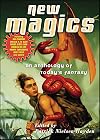
An anthology of modern fantasy, and an absolutely excellent collection. I loved the Ursula K. Le Guin, Orson Scott Card, and Emma Bull stories, but the dark horse contenders were Andy Duncan's "Liza and the Crazy Water Man," (a love story set during the Depression, with a mild little touch of magic) and Sherwood Smith's "Mom and Dad at the Home Front." The Smith story was a surprising take on the old trope of children who find a way to escape to a magical world and have adventures; the story show more is told through the point of view of their parents, who are understandably appalled that their children disappear from their beds each night. The story reminded me of the Buffy episode "The Zeppo," in which a magical apocalypse is narrowly avoided by the *background* characters, and the main story is about a normal human on the periphery of that fight. I love that stuff! show less
Lists
Awards


You May Also Like


Associated Authors
Statistics
- Works
- 14
- Also by
- 21
- Members
- 1,639
- Popularity
- #15,675
- Rating
- 3.9
- Reviews
- 34
- ISBNs
- 27
- Favorited
- 1
