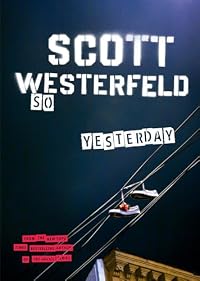
So Yesterday
by Scott Westerfeld
On This Page
Description
Hunter Braque, a New York City teenager who is paid by corporations to spot what is "cool," combines his analytical skills with girlfriend Jen's creative talents to find a missing person and thwart a conspiracy directed at the heart of consumer culture.Tags
Recommendations


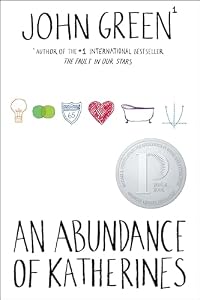
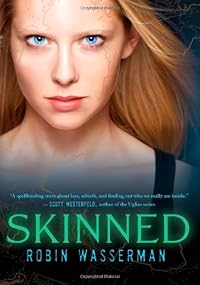
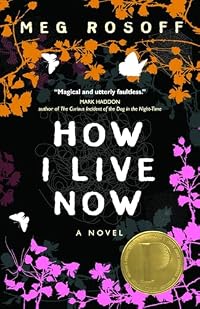
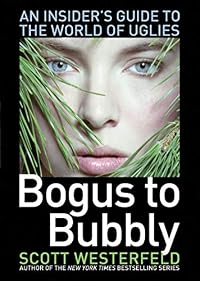
Member Recommendations
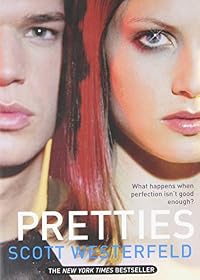
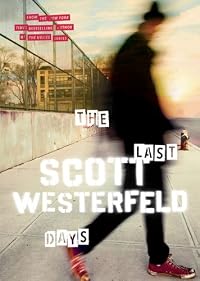
kellyholmes Explores consumerist culture
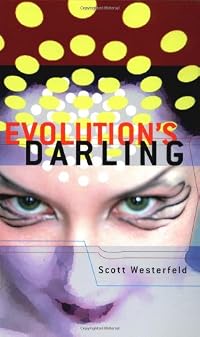
souci Same idea of cool-hunting, all about surface, yet with appearances that are deceiving.
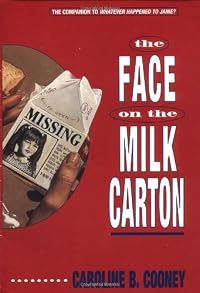
mzonderm Both books are interesting commentaries on how fads get started.
kaledrina similar protagonists
Member Reviews
This was less like Westerfeld's Uglies series and more like David Levithan meets Cory Doctorow (Westerfeld gives a nod to Doctorow for being the first to use the term "future sarcastic"). There is also some obvious tongue-in-cheek humor: the main character, Hunter, is a "cool hunter," scouting for the latest innovations (Innovators are at the top of the cool pyramid) that can be marketed to Early Adopters and Laggards; one character's name is Futura Garamond (incidentally, the book is set in Garamond, with chapter headings in Futura. I never got used to the font).
Hunter meets Jen (definitely an Innovator) and life gets exciting as they play amateur detective in Manhattan - trying to find out where Hunter's boss Mandy has disappeared show more to, they stumble on an "anti-client" bent on playing havoc with the current system of cool.
The flap copy promises that So Yesterday "will make you question everything you've ever believed about how to be cool." I'm not sure I would go that far, but this is definitely an enjoyable read.
"Still, you can't blame the client for following the first rule of consumerism: Never give us what we really want. Cut the dream into pieces and scatter them like ashes. Dole out the empty promises. Package our aspirations and sell them to us, cheaply made enough to fall apart." (223) show less
Hunter meets Jen (definitely an Innovator) and life gets exciting as they play amateur detective in Manhattan - trying to find out where Hunter's boss Mandy has disappeared show more to, they stumble on an "anti-client" bent on playing havoc with the current system of cool.
The flap copy promises that So Yesterday "will make you question everything you've ever believed about how to be cool." I'm not sure I would go that far, but this is definitely an enjoyable read.
"Still, you can't blame the client for following the first rule of consumerism: Never give us what we really want. Cut the dream into pieces and scatter them like ashes. Dole out the empty promises. Package our aspirations and sell them to us, cheaply made enough to fall apart." (223) show less
Summary: You may not realize it, but Coolness is a pyramid. Right at the top are the Innovators ("the first person ever to wear his baseball cap backwards"). Below them are the Trend Setters, who winnow out which innovations are cool and which are crazy. Then come the Early Adopters, followed by the Consumers, and trailed at a distance by the Laggers. Hunter, our narrator, is a Trend Setter and a Cool Hunter - his job is to find the next big fad. However, one day after he meets Jen, an Innovator, his boss goes missing, and he and Jen uncover a conspiracy involving epilepsy cartoons, purple dye, and the coolest pair of shoes either of them has ever seen.
Review: There is absolutely no reason that I should have liked this novel - I'm not a show more teenager, and I'm certainly not (nor ever was) a cool teenager, nor a teenager obsessed with shoes, fashion, or fads, and when laid out in blank terms, the plot of this book looks pretty darn silly. So, I think it's a testament to Scott Westerfeld's skill at writing exciting, action-filled, and believable stories about believable teenagers that I enjoyed this book as much as I did. Also to Westerfeld's credit is that while his books are slick and shiny and action-adventure on the outside, they're actually really intelligent. This was most apparent in Peeps, when the biology was out on the surface, but it's present in his Uglies Trilogy (quadrology, now), and it's present here. He takes what could be a completely vacuous subject and story and injects it with facts about history, sociology, epidemiology, and cultural studies, thereby turning it into something subtly thoughtful and thought-provoking beneath the glitter and Cool. 4 out of 5 stars.
Recommendation: It's a fun, quick, easy read, with something a little deeper but masquerading as pure fluff. Not the best book I've ever read (even with Westerfeld's insights, the plot remains a little silly), but much better than I would have guessed from reading the back cover. show less
Review: There is absolutely no reason that I should have liked this novel - I'm not a show more teenager, and I'm certainly not (nor ever was) a cool teenager, nor a teenager obsessed with shoes, fashion, or fads, and when laid out in blank terms, the plot of this book looks pretty darn silly. So, I think it's a testament to Scott Westerfeld's skill at writing exciting, action-filled, and believable stories about believable teenagers that I enjoyed this book as much as I did. Also to Westerfeld's credit is that while his books are slick and shiny and action-adventure on the outside, they're actually really intelligent. This was most apparent in Peeps, when the biology was out on the surface, but it's present in his Uglies Trilogy (quadrology, now), and it's present here. He takes what could be a completely vacuous subject and story and injects it with facts about history, sociology, epidemiology, and cultural studies, thereby turning it into something subtly thoughtful and thought-provoking beneath the glitter and Cool. 4 out of 5 stars.
Recommendation: It's a fun, quick, easy read, with something a little deeper but masquerading as pure fluff. Not the best book I've ever read (even with Westerfeld's insights, the plot remains a little silly), but much better than I would have guessed from reading the back cover. show less
What is cool? According to Hunter Braque, most people need to be told the answer to this question, and he's one of those who know: he's a 'cool hunter,' meaning he gets paid to inform his boss of the cool things he sees on the streets. When his boss goes missing, however, he must team up with an Innovator (one of those people who effortlessly is cool) to find her.
This was pretty awesome - Hunter is an appealing character, up-front, easy-going and pretty knowledgeable about 'cool,' how 'cool' happens, and how 'cool' spreads. He's also very funny, and his observations (he's a paid observer, and it's what he does best) are pretty often spot-on. As his boss works for 'the client' (a shoe company that's VERY well known) and Hunter's shy of show more endorsements, he almost never names brands, instead talking around them, and it's a lot of fun to try and identify those brands.
Hunter spends a lot of time talking about trends and trendsetters, and how companies have taken a major interest in trendsetters, in the hopes of starting and profiting off of trends themselves, and so the reader gets a lot of mini, yet completely fascinating history lessons on how things - fashion, trends, even viruses - spread.
A lot of this book reminded me of Malcolm Gladwell's The Tipping Point, and I'm now rereading the Tipping Point so I can talk to my book group about it as well as this one.
Again, Westerfeld writes a clever, fast-paced, fully fascinating book (I'm remembering his fully awesome Peeps as I write this).
Highly recommended. show less
This was pretty awesome - Hunter is an appealing character, up-front, easy-going and pretty knowledgeable about 'cool,' how 'cool' happens, and how 'cool' spreads. He's also very funny, and his observations (he's a paid observer, and it's what he does best) are pretty often spot-on. As his boss works for 'the client' (a shoe company that's VERY well known) and Hunter's shy of show more endorsements, he almost never names brands, instead talking around them, and it's a lot of fun to try and identify those brands.
Hunter spends a lot of time talking about trends and trendsetters, and how companies have taken a major interest in trendsetters, in the hopes of starting and profiting off of trends themselves, and so the reader gets a lot of mini, yet completely fascinating history lessons on how things - fashion, trends, even viruses - spread.
A lot of this book reminded me of Malcolm Gladwell's The Tipping Point, and I'm now rereading the Tipping Point so I can talk to my book group about it as well as this one.
Again, Westerfeld writes a clever, fast-paced, fully fascinating book (I'm remembering his fully awesome Peeps as I write this).
Highly recommended. show less
I seriously loved this book, it has all of my favorite things. There are girls on roller skates, tons of quirky information on a range of historical, scientific and social subjects and a great scene where the protagonist calls the New York Public Library to ask how to tie a bow tie.
Hunter's job is to scope out whats cool, in the trend pyramid, he is a trendsetter, someone that follows an innovator. He meets Jen, an innovator who is willing to try anything. Hunter's boss goes missing and Jen decides they need to investigate. What they find is a hidden society looking to change the way trends hit society, way more then they bargained for.
I love Hutner's voice it is totally believable and makes the story highly readable.
Hunter's job is to scope out whats cool, in the trend pyramid, he is a trendsetter, someone that follows an innovator. He meets Jen, an innovator who is willing to try anything. Hunter's boss goes missing and Jen decides they need to investigate. What they find is a hidden society looking to change the way trends hit society, way more then they bargained for.
I love Hutner's voice it is totally believable and makes the story highly readable.
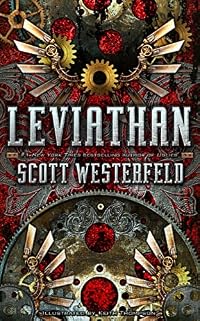
I'm quite impressed with Westerfeld's writing style: evocative without being overly verbose, clean dialogue that suits the characters. The narration and dialogue were clever without being cloying, which was a neat trick to pull off when the whole subtext to the books about "cool" and the people who define it. I almost gave this a five-star rating, but felt the very end of the book didn't quite live up to the previous 90% of it. Still, I will definitely be reading more of Westerfeld books. [UPDATE: Just found out that Westerfeld wrote Leviathan, the new steampunk YA novel. That's gonna be next on my list.]
Set the time machine for today! The main character is a Cool Hunter on the watch for emerging fashions. He blows apart a marketing session by inviting an Innovator, a girl who starts fashions instead of following them. Then someone disappears and fashion gets deadly.
I really like how the plot charges ahead while peeling back the facade of marketing and fashion. The language has a now, post-modern shine (is post-modern already passé?) decorated with brand names. Even the cool hunting protagonist is nearly a brand name, Hunter Braque. He makes an aside early on about mentioning brands when he avoids saying “Google” because it is just too common.
This book even started a meme, the "missing black woman formation", called out in the show more first chapter. More info here: http://scottwesterfeld.com/blog/2008/01/mbw-formation/
It’s good this book is short, because both my son and my wife had to finish it in one sitting. show less
I really like how the plot charges ahead while peeling back the facade of marketing and fashion. The language has a now, post-modern shine (is post-modern already passé?) decorated with brand names. Even the cool hunting protagonist is nearly a brand name, Hunter Braque. He makes an aside early on about mentioning brands when he avoids saying “Google” because it is just too common.
This book even started a meme, the "missing black woman formation", called out in the show more first chapter. More info here: http://scottwesterfeld.com/blog/2008/01/mbw-formation/
It’s good this book is short, because both my son and my wife had to finish it in one sitting. show less
Why did it have to be about shoes? Really, the whole shoe thing is just not one I ever understood (not that I understand much about trends and fashion). But this is a great book that creates an interesting (and probably fairly accurate) scenario about how trends get started, how they spread, and why they seem to come and go so quickly.
But what if there's a group that's trying to undo the work of all the marketers and trendsetters (these would clearly be my people)? Are they the anti-cool? What if they themselves somehow become cool? This is the premise of Westerfeld's book. When Hunter (a Trendsetter) discovers the ultimate shoes in an abandoned building in Chinatown, he's determined to find out where they come from and whether they show more have anything to do with his boss's disappearance (her phone was found in the same building, but nobody seems to know where she is). What he learns about the "cool pyramid" and it's relationship to revolutionary France makes him re-evaluate his own status as a Trendsetter. It also gave me a lot of food for thought on the subject. show less
But what if there's a group that's trying to undo the work of all the marketers and trendsetters (these would clearly be my people)? Are they the anti-cool? What if they themselves somehow become cool? This is the premise of Westerfeld's book. When Hunter (a Trendsetter) discovers the ultimate shoes in an abandoned building in Chinatown, he's determined to find out where they come from and whether they show more have anything to do with his boss's disappearance (her phone was found in the same building, but nobody seems to know where she is). What he learns about the "cool pyramid" and it's relationship to revolutionary France makes him re-evaluate his own status as a Trendsetter. It also gave me a lot of food for thought on the subject. show less
Members
- Recently Added By
Lists

KayStJ's to-read list
1,616 works; 11 members
Author Information

64+ Works 76,263 Members
Scott Westerfeld was born in Dallas, Texas on May 5, 1963. He received a degree in philosophy from Vassar College in 1985. Before becoming a full time writer, he held several jobs including factory worker, software designer, editor, and substitute teacher. His works for young adults include the Uglies series, the Midnighters series, and The Last show more Days. He is the co-author of the Zeroes series written with Margo Lanagan and Deborah Biancotti. He also writes science fiction novels for adults. He has won numerous awards including a Special Citation for the 2000 Philip K. Dick Award for Evolution's Darling, a Victorian Premier's Award for So Yesterday, and an Aurealis Award for The Secret Hour. (Bowker Author Biography) show less
Some Editions
Awards and Honors
Awards
Common Knowledge
- Canonical title
- So Yesterday
- Original publication date
- 2004-08-31
- People/Characters
- Hunter Braque; Jen James; Mandy Wickersham; Futura Garamond; Hillary Hyphen; Tina Catalina (show all 7); Mwadi Wickersham
- Dedication
- To the Innovators. You know who you are.
- First words
- We are all around you.
- Quotations
- So Jen and I are still watching the Jammers, waiting for their next move. But don't try this at home. They're cashed up, dressed to move, and if they catch you messing with them, they will turn your head purple.
- Last words
- (Click to show. Warning: May contain spoilers.)By my reading of history, that's the way it's happened every time.
Classifications
- Genres
- Fiction and Literature, Teen, Young Adult
- DDC/MDS
- 813.54 — Literature & rhetoric American literature in English American fiction in English 1900-1999 1945-1999
- LCC
- PZ7 .W5197 .S — Language and Literature Fiction and juvenile belles lettres Fiction and juvenile belles lettres Juvenile belles lettres
- BISAC
Statistics
- Members
- 1,602
- Popularity
- 14,048
- Reviews
- 78
- Rating
- (3.59)
- Languages
- 8 — Danish, English, Finnish, French, German, Italian, Korean, Swedish
- Media
- Paper, Audiobook, Ebook
- ISBNs
- 26
- ASINs
- 6