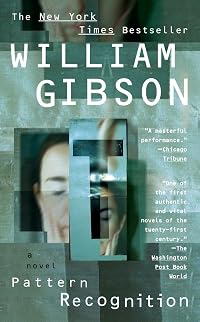
On This Page
Description
Hired to investigate a mysterious video collection that has been appearing on the Internet, market research consultant Cayce Pollard realizes that there is more to the assignment when her computer is hacked.Tags
Recommendations
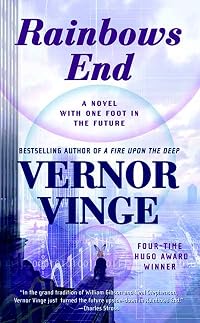
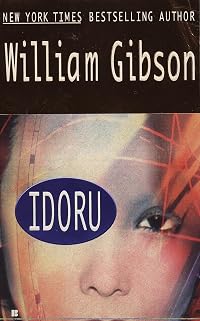
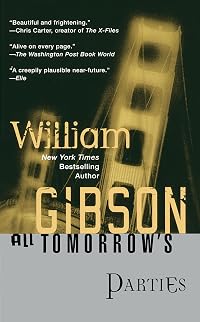
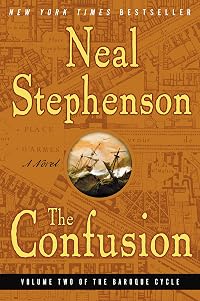


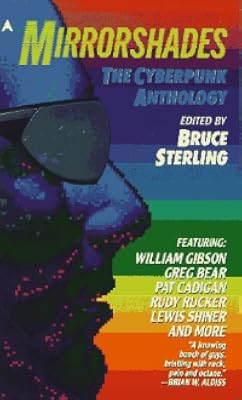
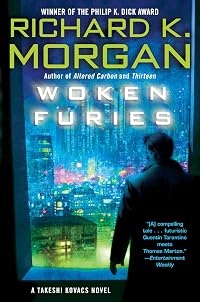
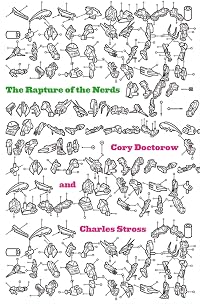
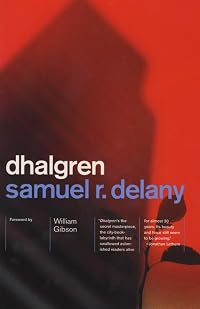
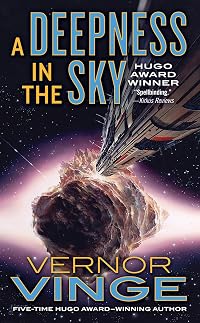
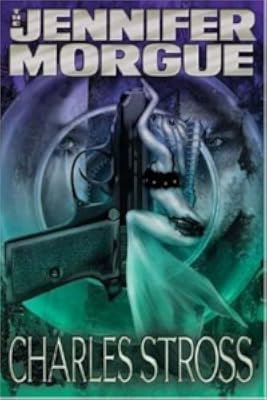
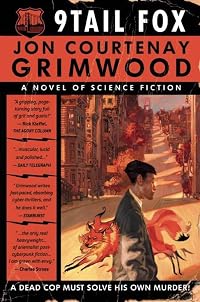
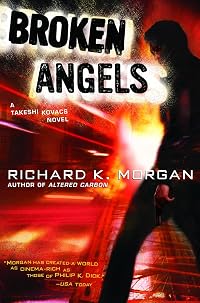
Member Recommendations
Member Reviews
Grand fun. Felt like a John Carre novel, but then it felt like a foreshadowing of the whole QAnon thing. Plenty of twists and turns, but not too too contrived. OK, maybe the resolution was a bit too resolved. Still, wonderfully paced, excellent flavors of places and people.
Gibson evokes the eerie liminal state of the world Post 9-11, which at the time seemed so monumental and strange and epochal and which now seems impossibly distant and remote. Case Pollard with her allergy to brands and sensitivity to corporate logos that allows her to perceive whether they will succeed or not is hired by a marketing magnate to track down the maker of a series of strangely compelling film fragments appearing online. There follows a strange trek through Camden markets and Tokyo dives and run-down caravans on an abandoned military base, all the while dogged by break-ins and surveillance and a creepy bit of curated psychological warfare. Case, haunted by the disappearance of her father on 9-11, pursues the maker of the show more film, of which she is an obsessive fan despite misgivings about her employer, not in the hope of anything as un-post 9-11ish as catharsis or closure, but seeking some sort of connection and understanding. show less
I've followed the progression of Gibson's books ever since I got Neuromancer for Xmas in 1984, and have enjoyed each one immensely. I can especially appreciate his "less is more" approach in the way he's able to pack more slick punch into one or two run-on sentences than someone else would struggle to in the same number of paragraphs.Pattern Recognition is probably Gibson's most contemporary story, set just a year after 9/11. but everything he is good at showing is still there. Cities laid out like neon labyrinths, the internet depicted as both a community and isolation chamber, and artists liberated from the stigmata of obsequiousness. He even self-references Neuromancer by naming his protagonist "Cayce."What I don't remember from show more previous books(or perhaps I'm just more sensitive to it now) is the near-omnipresence of brand names peppered all throughout the book, even integrating themselves into the storyline and Cayce's backstory. Hilfiger, Prada, Sony, British Airways, Hummer, and Apple are all equally represented, especially the latter, from which one can only assume that Gibson is a Mac freak. With this much virtual advertising in a single book, does its mere presence compromise the integrity of the writer, or can the reader simply accept it as the merging of vocabularies. Some writers use slang, others dialects and alien tongues, and Gibson(and his contemporaries) use branding.Excellent throughout, nevertheless. So good, that when I finished it, I wanted to start all over again. show less
One of the best examples of Gibson's ability to assimilate the sum total of modern life into a work of alleged science fiction. I say alleged because with every passing year, the premise of his books seem more plausible.
Pattern Recognition weaves post 9-11paranoia, fashion, post Soviet Union economics, independent film, and Otaku lust into a page turning delight. The author's ability to dive deep into social observation and report the findings back in a fistful of simple, salient words is remarkable. It almost makes me think social ficition, or psyche-fiction would be a more apt term for these kind of books. Like some kind of carnival mirror that shows us a slightly skewed version of our lives.
To be honest, it's more of an ideas, or show more concept book than a sci-fi adventure. More of a chess game than a football game, if you can stomach a sports metaphor. show less
Pattern Recognition weaves post 9-11paranoia, fashion, post Soviet Union economics, independent film, and Otaku lust into a page turning delight. The author's ability to dive deep into social observation and report the findings back in a fistful of simple, salient words is remarkable. It almost makes me think social ficition, or psyche-fiction would be a more apt term for these kind of books. Like some kind of carnival mirror that shows us a slightly skewed version of our lives.
To be honest, it's more of an ideas, or show more concept book than a sci-fi adventure. More of a chess game than a football game, if you can stomach a sports metaphor. show less
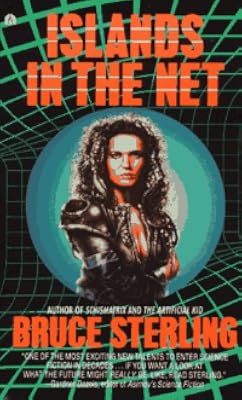
Very impressive. It still feels like a Gibson novel, but he’s evolved as a writer, and it’s a fascinating rethinking of his themes and concerns, and how he goes about telling a story. Initially, the constant brand talk reminded me of American Psycho, but obviously his goals for doing that are completely different. It also reminds me of compatriot writer Bruce Sterling’s Islands in the Net, but this is more interested in culture and art than that novel. The final thing it reminds me a bit of is Lem’s Chain of Chance, in how it deals with coincidence and how we can miss it when evaluating events, and instead search for non existent connections and conspiracies.
I was going to go for another Gibson novel right away, but I don’t show more want to spoil the vibe. The novel might have satisfied my Gibson needs for the moment. Highly recommended. show less
I was going to go for another Gibson novel right away, but I don’t show more want to spoil the vibe. The novel might have satisfied my Gibson needs for the moment. Highly recommended. show less
And so, finally, the real world catches up with William Gibson. In 'Pattern recognition', he was written a typical Bill Gibson novel, but in this case it is unrecognisable as science fiction because his imagination now depicts the world we are living in.
His principal character, Cayce Pollard, makes a living from her acute sensitivity to logos, coupled with a semiotic equivalent to perfect pitch - she can instantly tell whether a logo or house style will work, will 'click' with its intended market and the zeitgeist. If there are no such people at large in the world today, if there is no real-life Cayce Pollard, then there ought to be, because design is so embedded in our modern market-oriented world that it needs to be got right for the show more benefit of companies and the sanity of the rest of us. There have been enough tales of marketing disasters for any acute company to understand the need for such a talent (the one example which comes close to this is the late Woolworth company marketing a range of bedroom furniture for young girls under the name "Lolita"); and such a person with such a talent would probably find other, more ordinary, jobs either unfulfilling or even physically impossible.
The MacGuffin of the novel (though it is essential to the plot) is some found video footage that keeps emerging on the Internet; Pollard is a fan of the footage and contributes to ongoing Internet forums on its origin, background and meaning. Gibson weaves this plot strand into a corporate thriller that spans the globe.
Throughout, Gibson displays a great sensitivity of place. The sections set in North London had the bite of authenticity for me; I accurately predicted where he had stayed and who had put him up, based on those parts of the novel! On that basis, he is probably familiar with the other places in the book.
The plot would have been total science fiction if the book had been written no more than ten years before; the world has changed in that time so fundamentally that a modern reader could never visualise it as such. Looking back to the writing of the book in 2002 from the perspective of nearly ten years later, it hasn't dated, just become more relevant. Indeed, about the one item that might have seemed vaguely science fictional - "a project to build a new kind of visually-based search engine" (p.273 in my edition) - has come to pass. Also: this is the first Gibson novel that I've read that has a lot of humour in it, including a running joke about a major character's name...
In short, the Zeitgeisty novel of our times. show less
His principal character, Cayce Pollard, makes a living from her acute sensitivity to logos, coupled with a semiotic equivalent to perfect pitch - she can instantly tell whether a logo or house style will work, will 'click' with its intended market and the zeitgeist. If there are no such people at large in the world today, if there is no real-life Cayce Pollard, then there ought to be, because design is so embedded in our modern market-oriented world that it needs to be got right for the show more benefit of companies and the sanity of the rest of us. There have been enough tales of marketing disasters for any acute company to understand the need for such a talent (the one example which comes close to this is the late Woolworth company marketing a range of bedroom furniture for young girls under the name "Lolita"); and such a person with such a talent would probably find other, more ordinary, jobs either unfulfilling or even physically impossible.
The MacGuffin of the novel (though it is essential to the plot) is some found video footage that keeps emerging on the Internet; Pollard is a fan of the footage and contributes to ongoing Internet forums on its origin, background and meaning. Gibson weaves this plot strand into a corporate thriller that spans the globe.
Throughout, Gibson displays a great sensitivity of place. The sections set in North London had the bite of authenticity for me; I accurately predicted where he had stayed and who had put him up, based on those parts of the novel! On that basis, he is probably familiar with the other places in the book.
The plot would have been total science fiction if the book had been written no more than ten years before; the world has changed in that time so fundamentally that a modern reader could never visualise it as such. Looking back to the writing of the book in 2002 from the perspective of nearly ten years later, it hasn't dated, just become more relevant. Indeed, about the one item that might have seemed vaguely science fictional - "a project to build a new kind of visually-based search engine" (p.273 in my edition) - has come to pass. Also: this is the first Gibson novel that I've read that has a lot of humour in it, including a running joke about a major character's name...
In short, the Zeitgeisty novel of our times. show less
Normally I read the kind of literary fiction where pages go by without anyone so much as thinking of doing something, let alone actually leaving the house. I'm not allergic to action, but there has to be something in there to engage the brain as well as the adrenal glands. I'm glad to say I was totally taken in by this novel. The plot was perfectly paced for my tastes, it asks interesting questions and the protagonist is totally engaging from very early on. I wanted CayceP to succeed, although it wasn't always clear what that might entail. Most of the other characters were well drawn, although Dorotea, and Hubertus Bigend (!), were a bit overdone. Because Cayce is so interesting I actually wanted to look up the cultural and design show more references I wasn't familiar with, whereas I normally consider that stuff just to be authorial posturing and skim over it. What's more, I found those references did help to flesh out her character, since her aesthetic is such an important part of who she is.
The prose is perfectly judged as well; it's not a genre that is likely to be bogged down by lyricism, but there is wit, precise action and moments of beauty beautifully described. I'll probably return to my usual world of literary fiction for a while, but next time I want a rollicking good story I'll probably turn again to William Gibson. show less
The prose is perfectly judged as well; it's not a genre that is likely to be bogged down by lyricism, but there is wit, precise action and moments of beauty beautifully described. I'll probably return to my usual world of literary fiction for a while, but next time I want a rollicking good story I'll probably turn again to William Gibson. show less
Members
- Recently Added By
Published Reviews
ThingScore 75
"In this, he is basically a conservative author; he doesn't really want to engage with the possibilities of the post-human. His chosen form, the novel, doesn't allow him to do this."
added by bookfitz
"Gibson's best book since Mona Lisa Overdrive should satisfy his hardcore fans while winning plenty of new ones."
added by bookfitz
''Pattern Recognition'' considers these issues with appealing care and, given that this best-selling author is his own kind of franchise, surprising modesty.
added by bookfitz
Lists

Recommend the 20 best books you've read in the last five years
2,168 works; 602 members

Speculative Fiction: Slipstream Literature
166 works; 16 members

Arthur C. Clarke Award Winners and Shortlisted Books
219 works; 14 members

100 Best Thrillers of All Time
100 works; 6 members

Speculative Fiction to Read
706 works; 32 members

Literature which inspired Pop songs
85 works; 9 members
Books We Love to Reread
688 works; 296 members

Mustich's 1000 Books to Read Before You Die: A Life Changing List
1,001 works; 19 members

Mysteries with Female cop, investigator etc.
33 works; 4 members

Books Read in 2006
422 works; 8 members

Books Read in 2020
4,379 works; 124 members
Books Read in 2004
200 works; 7 members

Biggest Disappointments
606 works; 163 members

Favourite Books
1,819 works; 316 members

Unread books
1,063 works; 83 members

KayStJ's to-read list
1,616 works; 11 members

Cryptology - non-fiction and fiction
57 works; 4 members

Books Read in 2014
2,343 works; 86 members

Read in 2014
334 works; 11 members

greasy film of cinematic fiction
36 works; 3 members

Books Set in Great Britain
191 works; 13 members

Best Books Set in London
157 works; 42 members

04
34 works; 1 member
Author Information

82+ Works 95,912 Members
William Gibson was born on March 17, 1948 in Conway, South Carolina. He dropped out of high school and moved to Canada, where he eventually graduated from the University of British Columbia in 1977. He is the author of Mona Lisa Overdrive, The Peripheral, and Neuromancer, which won the Phillip K. Dick Award, the Hugo Award, and the Nebula Award. show more He also wrote the screenplay for the film Johnny Mnemonic. (Bowker Author Biography) show less
Some Editions
Awards and Honors
Awards
Distinctions
Series

Belongs to Publisher Series
Work Relationships
Is contained in
Common Knowledge
- Canonical title
- Pattern Recognition
- Original title
- Pattern Recognition
- Original publication date
- 2003-02
- People/Characters
- Cayce Pollard; Hubertus Bigend; Boone Chu; Peter Gilbert (aka Parkaboy); Stella Volkova; Dorotea Benedetti (show all 9); Bernard Stonestreet; Voytek Biroshak; Pamela Mainwaring
- Important places
- London, England, UK; Moscow, Russia; Tokyo, Japan
- Dedication
- To Jack
- First words
- Five hours' New York jet lag and Cayce Pollard wakes in Camden Town to the dire and ever-circling wolves of disrupted circadian rhythm.
- Quotations
- "Nothing like genderbait for the nerds as I'm sure you well know."
- Last words
- (Click to show. Warning: May contain spoilers.)She kisses his sleeping back and falls asleep.
- Blurbers
- Gaiman, Neil
- Original language
- English
- Canonical DDC/MDS
- 813.6
Classifications
Statistics
- Members
- 9,466
- Popularity
- 1,106
- Reviews
- 176
- Rating
- (3.81)
- Languages
- 17 — Czech, Danish, Dutch, English, Finnish, French, German, Greek, Hungarian, Italian, Japanese, Korean, Polish, Portuguese, Russian, Spanish, Swedish
- Media
- Paper, Audiobook, Ebook
- ISBNs
- 53
- ASINs
- 18