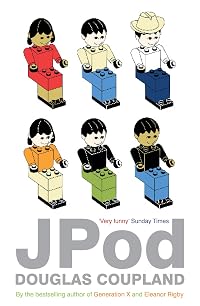
JPod
by Douglas Coupland
On This Page
Description
From the Publisher: JPod, Douglas Coupland's most acclaimed novel to date, is a lethal joyride into today's new breed of tech worker. Ethan Jarlewski and five co-workers whose surnames begin with "J" are bureaucratically marooned in jPod, a no-escape architectural limbo on the fringes of a massive Vancouver game design company. The jPodders wage daily battle against the demands of a boneheaded marketing staff, who daily torture employees with idiotic changes to already idiotic games. show more Meanwhile, Ethan's personal life is shaped (or twisted) by phenomena as disparate as Hollywood, marijuana grow-ops, people-smuggling, ballroom dancing, and the rise of China. JPod's universe is amoral, shameless, and dizzyingly fast-paced like our own. show lessTags
Recommendations



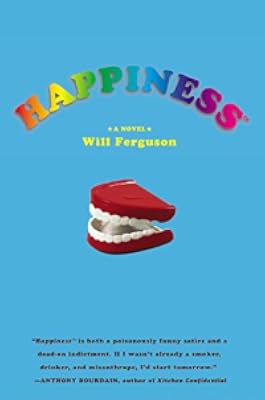
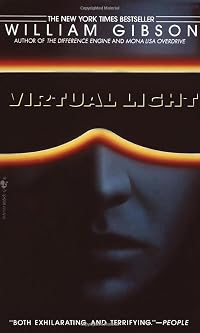
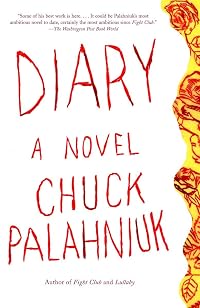
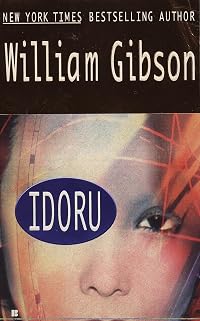













Member Recommendations
ivan.frade Fictionalized life in a video game company.
Member Reviews
Vancouver, the beginning of the 21st century. At a game design company, six designers with surnames starting with J have been assigned to the same cubicle pod. There’s no way out—the company bureaucracy has put them there. So the members of jPod (as it’s known) try to maintain their perspective while faced with the idiocy of the marketing department, the absurd hijinks of their family members, and life in the new millennium.
The book is narrated by Ethan, whose family has more than its fair share of weirdness: grow-ops, human traffickers, and ballroom dancing. All of these play a role in the story, which meanders a bit and is definitely more extreme than its spiritual ancestor, Microserfs. Of the two, I prefer Microserfs, because show more there’s some really weird shit in jPod—the Ronald McDonald origin story in particular had me making horrible faces at the book because I’d forgotten about it from my last read. And I’m not sure that the freedom plot thread ages very well. Microserfs felt more wholesome and innocent.
What I did like was the setting, the commitment to the extreme meta-ness of putting Douglas Coupland in his own novel, and Kaitlin’s creative writing assignments. I also enjoyed the little profiles that the gang wrote up at the beginning of the book, because of how much they reminded me of Microserfs. And some of the absurd storylines were funny when they weren’t super gruesome.
This is certainly a hard book to tell people whether they’re going to like it or not. It’s certainly different. show less
The book is narrated by Ethan, whose family has more than its fair share of weirdness: grow-ops, human traffickers, and ballroom dancing. All of these play a role in the story, which meanders a bit and is definitely more extreme than its spiritual ancestor, Microserfs. Of the two, I prefer Microserfs, because show more there’s some really weird shit in jPod—the Ronald McDonald origin story in particular had me making horrible faces at the book because I’d forgotten about it from my last read. And I’m not sure that the freedom plot thread ages very well. Microserfs felt more wholesome and innocent.
What I did like was the setting, the commitment to the extreme meta-ness of putting Douglas Coupland in his own novel, and Kaitlin’s creative writing assignments. I also enjoyed the little profiles that the gang wrote up at the beginning of the book, because of how much they reminded me of Microserfs. And some of the absurd storylines were funny when they weren’t super gruesome.
This is certainly a hard book to tell people whether they’re going to like it or not. It’s certainly different. show less
I unabashedly love Coupland's Microserfs. To me, JPod is a Twilight Zone paradigm of Microserfs with drugs and Asian gangsters thrown in. Oh, and Mr. Coupland also goes all Stephen King and includes himself as a character. It's all quite bizarre. I'm trying to separate the experience of reading this book from the context of Microserfs, and I can't quite do it. I liked this book, but I'm not sure how I would feel without the glow of my warm feelings for the earlier novel.
The main difference, I think, is that Microserfs, at its core, was pretty warm. You really got a sense that the characters cared for each other (I did, at least). Not so in JPod. It's the same setup: a corps of programmers working together, with the main character dating show more another member of the group, the main character's parents, and a random sprinkling of outsiders. And you get some similar musings on time and identity, but it all seems so much shallower. And maybe that's the point. In that sense, it reminds me of my readings of Ayn Rand's The Fountainhead, which (again, to me) espouses artistic integrity, and Atlas Shrugged, which is a money-grubbing capitalist manifesto. Except Coupland knows how to make his characters seem, you know, human, and also he's not insane. And I don't think he's necessarily trying to push an agenda, just reflecting the changes in the times - Microserfs captured the burgeoning tech culture, where just about everything was cutting-edge and "one-point-oh," whereas it's now become a more jaded thing with the same ills that plague the music, film, and publishing industries (with marketing dictating substance instead of the other way around).
As an aside to Mr. Coupland (who will assuredly never read this, but what the hell), I apologize profusely for bringing Ayn Rand into a discussion of your work, even as a touchstone mostly for my own reference. You deserve better, sir. show less
The main difference, I think, is that Microserfs, at its core, was pretty warm. You really got a sense that the characters cared for each other (I did, at least). Not so in JPod. It's the same setup: a corps of programmers working together, with the main character dating show more another member of the group, the main character's parents, and a random sprinkling of outsiders. And you get some similar musings on time and identity, but it all seems so much shallower. And maybe that's the point. In that sense, it reminds me of my readings of Ayn Rand's The Fountainhead, which (again, to me) espouses artistic integrity, and Atlas Shrugged, which is a money-grubbing capitalist manifesto. Except Coupland knows how to make his characters seem, you know, human, and also he's not insane. And I don't think he's necessarily trying to push an agenda, just reflecting the changes in the times - Microserfs captured the burgeoning tech culture, where just about everything was cutting-edge and "one-point-oh," whereas it's now become a more jaded thing with the same ills that plague the music, film, and publishing industries (with marketing dictating substance instead of the other way around).
As an aside to Mr. Coupland (who will assuredly never read this, but what the hell), I apologize profusely for bringing Ayn Rand into a discussion of your work, even as a touchstone mostly for my own reference. You deserve better, sir. show less
Can there be any doubt that Douglas Coupland is now firmly entrenched as a leading influence in Canadian society? After all, in his new novel jPod, “I feel like a refugee from a Douglas Coupland novel,” are the first words a character utters. It would appear Coupland couldn’t ignore his own cultural impact.
Coupland made a name for both himself and his peer group when he penned the exceedingly popular novel Generation X. Since that time, his output of approximately one novel a year has earned him a unique berth as one of Canada’s premier pop culture commentators.
In jPod, Coupland revisits the motif of arguably his finest novel Microserfs, a work that encapsulated the zeitgeist of the late 1980s computer work force. Not so much a show more literal sequel to Microserfs as it is a thematic one, jPod is vintage Coupland, and whether or not that is a good thing may depend on the mindset of the reader.
jPod is the nickname for six determinedly quirky game designers, all of whose names begin with the letter j. Described as mildly autistic – “poor social skills, the ability to obsess on anything numerical or repetitive, the odd outfits, the paranoia and the sense of continually being judged and measured” – the team is unhappily working on a skateboarding simulation, the hero of which has been unexpectedly re-imagined as a wisecracking turtle.
As the characters follow their daily routines, avoiding work and throwing out Simpsons references as naturally as breathing, one designer, Ethan Jarlewski, suffers a crisis of faith. “I was pleased to be able to earn a living within an industry that’s increasingly more corporate and bland and soul-killing, but…then I got to wondering if I even possessed the ability to fall in love with another human being and…I began to feel like such a module.”
Happily, Coupland’s knack for capturing the mood of a particular time is still intact. He has also not lost his partiality for unorthodox plot twists; illegal refugees, grow-ops, ballroom dancing, and appearances by Coupland himself are only a few of the plot-twists Ethan manoeuvres as he seeks to unearth his own measure of happiness.
Like Microserfs, jPod indulges Coupland’s appetite for abstract wordplay, visual puns, and numerical coding. Many of jPod’s pages consist of nothing but numbers as the designers divert themselves with challenges such as hunting for a displaced number in the first hundred thousand digits of pi.
Yet as enormously diverting as jPod is, it suffers from familiarity. After the emotional heft of the striking Hey Nostradamus! and the gentle humour of the amusing if slight Eleanor Rigby, jPod’s turf is too similar to his early efforts. The setting is new, but jPod all too often seems like Microserfs Redux to its detriment.
jPod, then, is coasting Coupland, engaging yet unsurprising. There is enough of the new to satisfy ardent fans, but those who admired Coupland’s steady progression from unknown quantity to established Canadian talent may view jPod as an inauspicious regression. show less
Coupland made a name for both himself and his peer group when he penned the exceedingly popular novel Generation X. Since that time, his output of approximately one novel a year has earned him a unique berth as one of Canada’s premier pop culture commentators.
In jPod, Coupland revisits the motif of arguably his finest novel Microserfs, a work that encapsulated the zeitgeist of the late 1980s computer work force. Not so much a show more literal sequel to Microserfs as it is a thematic one, jPod is vintage Coupland, and whether or not that is a good thing may depend on the mindset of the reader.
jPod is the nickname for six determinedly quirky game designers, all of whose names begin with the letter j. Described as mildly autistic – “poor social skills, the ability to obsess on anything numerical or repetitive, the odd outfits, the paranoia and the sense of continually being judged and measured” – the team is unhappily working on a skateboarding simulation, the hero of which has been unexpectedly re-imagined as a wisecracking turtle.
As the characters follow their daily routines, avoiding work and throwing out Simpsons references as naturally as breathing, one designer, Ethan Jarlewski, suffers a crisis of faith. “I was pleased to be able to earn a living within an industry that’s increasingly more corporate and bland and soul-killing, but…then I got to wondering if I even possessed the ability to fall in love with another human being and…I began to feel like such a module.”
Happily, Coupland’s knack for capturing the mood of a particular time is still intact. He has also not lost his partiality for unorthodox plot twists; illegal refugees, grow-ops, ballroom dancing, and appearances by Coupland himself are only a few of the plot-twists Ethan manoeuvres as he seeks to unearth his own measure of happiness.
Like Microserfs, jPod indulges Coupland’s appetite for abstract wordplay, visual puns, and numerical coding. Many of jPod’s pages consist of nothing but numbers as the designers divert themselves with challenges such as hunting for a displaced number in the first hundred thousand digits of pi.
Yet as enormously diverting as jPod is, it suffers from familiarity. After the emotional heft of the striking Hey Nostradamus! and the gentle humour of the amusing if slight Eleanor Rigby, jPod’s turf is too similar to his early efforts. The setting is new, but jPod all too often seems like Microserfs Redux to its detriment.
jPod, then, is coasting Coupland, engaging yet unsurprising. There is enough of the new to satisfy ardent fans, but those who admired Coupland’s steady progression from unknown quantity to established Canadian talent may view jPod as an inauspicious regression. show less
"'Microserfs' for the age of Google" is how this is oft-described. That's pretty accurate, really. Stylistically, it's much the same—which was nice, because "Microserfs" is pretty much my favorite Coupland book. (I have now read ALL of them! *sob* Well, except for the one written in Japanese and released only in Japan.) What surprised me is how much more cynical this book is. I mean, not that "Microserfs" is without cynicism, but there's an innocence to it, a wonder. I don't think anyone would have any trouble figuring out that "jPod" is the book written by the older man (and that's even without the authorial self-insertion stuff—which I alternate between finding funny and being made deeply uncomfortable by). "jPod" is like show more "Microserfs" but without the hope for reinvention and redemption. I still enjoyed the book a lot—it's really funny, and the parts that are just Ethan and his fellow jPodders goofing off and being geeky were great. But unlike "Microserfs," the world of "jPod" is not one I would want to live in. It's cold there. show less
"Ethan Jarlewski and five co-workres are bureaucratically marooned in Jpod, a no espcae architechtural limbon on the fringes of a massive Vancover video game design company. The six JPoders wage daily battle against the demands of a bone-headed marketing staff, who daily torture employees with idiotic changes to already idiotic games. Meanwhile, Ethan’s personal life is shaped by phenomena as disparate as Hollywood, marijauan grow-ops, people-smuggling, ballroom dancing, and the rise of China."
Fans of Coupland will love this unofficial follow-up to Microserfs. The same reference a minute style, same use of the unreal to make the real tangible, same clever language. Coupland creates a pop-culture mash-up not just in the content of the show more story but the makeup of the book as the novel is not confined by strict narrative on page. The use of symbols, nonsense, emails, etc. adds a unique communication that defines the time in which the book is set. This book is probably one of the more fun titles from Coupland despite some of the artistic arrogance. Closure might not always be the end goal but it is an entertaining read. show less
Fans of Coupland will love this unofficial follow-up to Microserfs. The same reference a minute style, same use of the unreal to make the real tangible, same clever language. Coupland creates a pop-culture mash-up not just in the content of the show more story but the makeup of the book as the novel is not confined by strict narrative on page. The use of symbols, nonsense, emails, etc. adds a unique communication that defines the time in which the book is set. This book is probably one of the more fun titles from Coupland despite some of the artistic arrogance. Closure might not always be the end goal but it is an entertaining read. show less
This book was... an interesting experience. It follows the experiences of a team of office workers at a tech company. I read this while travelling and the lighthearted silliness of it was perfect for that situation since there were other things going on all around me. Maybe I would have felt differently about this book under different circumstances, but I ended up really enjoying it and chuckling to myself a coupe of times.
This book is incredibly random. I guess that's kind of expected when reading about a bunch of nerd and their shenanigans though. There are lots of jokes and references so some people may find it a bit dated. You get things like discussions about making their own cola flavoured beverage in the office (they can't call show more it coke) and character profiles that contain each character's favourite Simpsons character, room temperature and snack woven in with the story. While this book may look long, there are a lot of pages you'll probably just skip (like 15 pages filled with numbers, one of which isn't prime. There are several such pages - these are challenges one character sets for the others and are not necessary to read for the story).
If you are looking for something random and a little mindless, I think you might enjoy this book. I went in not knowing what to expect, and even so I was somehow still surprised by what I found show less
This book is incredibly random. I guess that's kind of expected when reading about a bunch of nerd and their shenanigans though. There are lots of jokes and references so some people may find it a bit dated. You get things like discussions about making their own cola flavoured beverage in the office (they can't call show more it coke) and character profiles that contain each character's favourite Simpsons character, room temperature and snack woven in with the story. While this book may look long, there are a lot of pages you'll probably just skip (like 15 pages filled with numbers, one of which isn't prime. There are several such pages - these are challenges one character sets for the others and are not necessary to read for the story).
If you are looking for something random and a little mindless, I think you might enjoy this book. I went in not knowing what to expect, and even so I was somehow still surprised by what I found show less
I have read this book twice. The first time, it was super fun, satirical, and witty. The second time, I had trouble getting through it. This book pokes fun at the meaninglessness of everyday existence in our corporate and technological worlds, and it is funny, and it does some aesthetically experimental things (some of which work, to some extent, and some of which waste paper), but it lacks some essence of literature in my opinion. Rather than inspiring me to get more out of life, I felt this book just provoked dark humour, the kind that is funny in limited doses, but slowly kills you over five-hundred pages. I have never met Coupland, but this book feels like it was written by an author who is trying to compensate for an over abundance show more of boredom. If you're looking for something fun, go for it. This book shits fun. show less
Members
- Recently Added By
Lists

Best Satire
188 works; 29 members

The Best of Canadian Literature
235 works; 33 members

Best Laugh Out Loud Books
143 works; 49 members

One Book, Many Authors
441 works; 40 members

Adult Books for YA Readers
194 works; 6 members

stories at work
43 works; 7 members

Books Read in 2015
3,299 works; 126 members

Books Read in 2004
212 works; 7 members

Books Read in 2006
424 works; 8 members
Unshelved Book Clubs
579 works; 5 members

Alphabetical Books
211 works; 3 members

Five star books
1,767 works; 109 members
Author Information

44+ Works 38,750 Members
Douglas Coupland was born December 30, 1961 on a Canadian military base in Baden-Soellingen, Germany. He graduated from Sentinel Secondary School in West Vancouver in 1979 and went on to McGill University. He was unhappy there and went on to Emily Carr College of Art and Design. He has said that these were the best four years of his life. He show more graduated in 1984 with a focus on sculpture and moved on to study at the European Design Institute in Milan. He also completed a two-year course in Japanese business science in Hawaii in 1986.He soon began writing for magazines as a means of paying the bills. He soon started work on his first novel Generation X: Tales for an Accelerated Culture which was published in 1991. His second novel Shampoo Planet focused on the generation after Generation X and was published in 1992. This generation was termed "Global Teens". His career has consisted of writing, sculpting, and editing and he also hosted The Search for Generation X, a PBS documentary, 1991. Douglas Coupland has also worked on a magazine called Wired . He wrote a short story about the life of the employees of Mocrosoft Corporation. This short story provided inspiration for his novel Microserfs. (Bowker Author Biography) show less
Some Editions
Awards and Honors
Common Knowledge
- Canonical title*
- Джей-Под
- Original publication date
- 2006
- People/Characters
- Ethan Harrison Jarlewski; Casper Jesperson (Cowboy); Brianna Jyang (Bree); John Doe; Brandon Mark Jackson (Mark / Evil Mark); Kaitlin Anna Boyd Joyce (show all 9); Kam Fong; Steve Lefkowitz; Douglas Coupland
- Important places
- Vancouver, British Columbia, Canada; British Columbia, Canada
- Related movies
- jPod (2008 | IMDb)
- First words
- "Oh God. I feel like a refugee from a Douglas Coupland novel."
- Last words
- (Click to show. Warning: May contain spoilers.)I mean, what kind of a prick would end a book just when everything's going so well?
*Some information comes from Common Knowledge in other languages. Click "Edit" for more information.
Classifications
Statistics
- Members
- 3,325
- Popularity
- 5,133
- Reviews
- 111
- Rating
- (3.51)
- Languages
- 9 — Dutch, English, French, German, Italian, Portuguese, Russian, Spanish, Swedish
- Media
- Paper, Audiobook, Ebook
- ISBNs
- 27
- ASINs
- 6