On This Page
Description
An ode to George Orwell's "1984" told in alternating male and female voices relates the stories of Aomame, an assassin for a secret organization who discovers that she has been transported to an alternate reality, and Tengo, a mathematics lecturer and novice writer.Tags
Recommendations
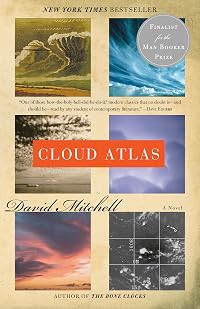
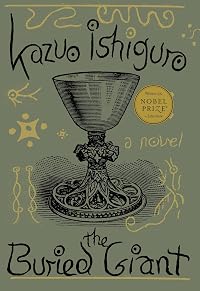
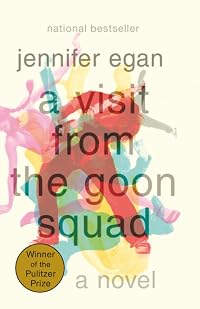
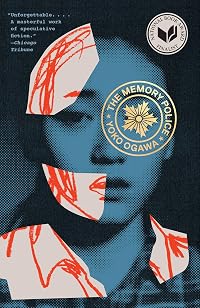

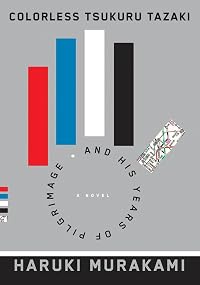
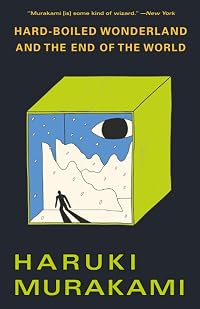
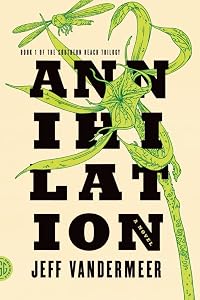
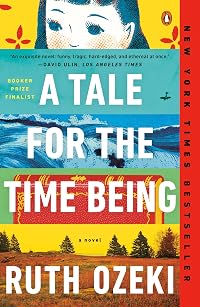




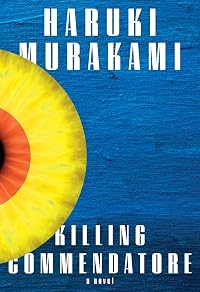
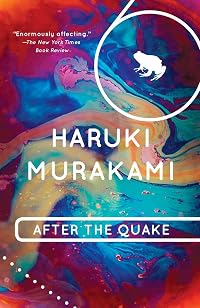
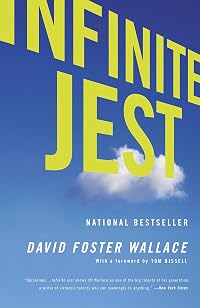
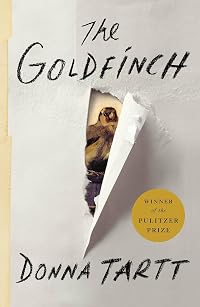

Member Recommendations

Member Reviews
1Q84 is a postmodern masterpiece, rich in intertextuality, literary experimentation, spiritual fanaticism, and a general mistrust for not only society but for reality itself. It proposes the mutual exclusivity of religion, politics, and violence through an air of secrecy and conspiracy behind all the subtle (and progressively less subtle) inconsistencies plaguing the media and even daily life. It is through these inconsistencies, which take place primarily at the most mundane level, that Murakami weaves a tale of star-crossed love in the midst of such quiet unease. It is a representation of everyone's own search for an authentic life in an age where the "facts" are rarely straightforward, intimacy is just a means by which to feel alive, show more and ideologies are thinly veiled justifications to propel the narratives of those most powerful. Murakami teaches us that the most disturbing truths lie just beneath our conscious awareness. show less
It seems that people have strongly divided opinions on this book, and I am among those who liked it. But I can see why some criticize it.
It’s long and allusive and there is not much action –although it has suspense and a lot happening on a level below the surface of the storyline. To enjoy the book, or to get much from it at all, a reader has to surrender to it and enter into the world Murakami has created. It is a world where strange and magical things happen, some creepy, some very discomforting. But underlying the story line is a simple romance, the story of Tengo and Aomame, connected in some inexplicable way who overcome personal challenges and physical threats to come together – reminding me at times of The Magic Flute or show more Dr. Zhivago. At this level, the story is a touching one as we learn about the strange turns in their lives (and the mundane details) and the slow path by which they finally come together. The sweet scene in which they re-unite is touchingly simple. It would not feel so satisfying if we readers had not gone through so much waiting and expectation.
Of course, there’s much more than this and most of it is very mysterious, so for a reader who likes to know what’s going on (and often I am), this could be frustrating. Just what this parallel world is, why the bill collector keeps knocking so insistently at people’s doors, whether some of the characters are even real – for me as a reader, these are puzzles that keep me interested while the plot makes its slow progress. That they are mostly unresolved in the end is somehow okay, because in surrendering to the book, I know that the world is just different here.
I think this is one of the themes of the book: how the writer creates a new world for the reader, which can come to exist in the reader’s mind for a while and allow the reader to experience something that would not be possible in the mundane world. Writerly preoccupations often come up in the story, as Tengo is an aspiring novelist who proceeds to create the world in which the story takes place (twice), a sort of Moebius strip plotline. And this is what authors do, they create a world that is more or less like the reader’s world and allow the reader to live in it for a while, accepting the realistic or illogical details as part of the story. When Murakami describes the concrete details of his characters’ lives, he makes his imagined world more real, and gives the reader a way to relate to the sometimes strange events that his story describes. And perhaps this has something to do with his frequent references to other books and authors who create rules for writers (such as Chekhov’s rule that if you introduce a gun in Act 1, you have to fire it by the end of the play, a rule that Murakami shows is not necessarily true in this world, and perhaps in others) or long meditations on life (such as Proust’s Remembrance of Times Past). And his frequent humorous notes, including the reminder that, in a story so focussed on the moon, it’s only a paper moon.
Also, I love the creative book design with its mirrors, shifts and layers, imaginative, playful and entirely appropriate to the text. show less
It’s long and allusive and there is not much action –although it has suspense and a lot happening on a level below the surface of the storyline. To enjoy the book, or to get much from it at all, a reader has to surrender to it and enter into the world Murakami has created. It is a world where strange and magical things happen, some creepy, some very discomforting. But underlying the story line is a simple romance, the story of Tengo and Aomame, connected in some inexplicable way who overcome personal challenges and physical threats to come together – reminding me at times of The Magic Flute or show more Dr. Zhivago. At this level, the story is a touching one as we learn about the strange turns in their lives (and the mundane details) and the slow path by which they finally come together. The sweet scene in which they re-unite is touchingly simple. It would not feel so satisfying if we readers had not gone through so much waiting and expectation.
Of course, there’s much more than this and most of it is very mysterious, so for a reader who likes to know what’s going on (and often I am), this could be frustrating. Just what this parallel world is, why the bill collector keeps knocking so insistently at people’s doors, whether some of the characters are even real – for me as a reader, these are puzzles that keep me interested while the plot makes its slow progress. That they are mostly unresolved in the end is somehow okay, because in surrendering to the book, I know that the world is just different here.
I think this is one of the themes of the book: how the writer creates a new world for the reader, which can come to exist in the reader’s mind for a while and allow the reader to experience something that would not be possible in the mundane world. Writerly preoccupations often come up in the story, as Tengo is an aspiring novelist who proceeds to create the world in which the story takes place (twice), a sort of Moebius strip plotline. And this is what authors do, they create a world that is more or less like the reader’s world and allow the reader to live in it for a while, accepting the realistic or illogical details as part of the story. When Murakami describes the concrete details of his characters’ lives, he makes his imagined world more real, and gives the reader a way to relate to the sometimes strange events that his story describes. And perhaps this has something to do with his frequent references to other books and authors who create rules for writers (such as Chekhov’s rule that if you introduce a gun in Act 1, you have to fire it by the end of the play, a rule that Murakami shows is not necessarily true in this world, and perhaps in others) or long meditations on life (such as Proust’s Remembrance of Times Past). And his frequent humorous notes, including the reminder that, in a story so focussed on the moon, it’s only a paper moon.
Also, I love the creative book design with its mirrors, shifts and layers, imaginative, playful and entirely appropriate to the text. show less
A modern day Brothers Grimm, patching together violence, cruelty, sexuality and romance; 1Q84 weaves disparate strands of storyline into a slowly converging, surprisingly satisfying, boy-meets-girl narrative. Murakami’s trademark touches and eye for odd angles are condensed and distilled, then expanded to an epic length — expect the Disney adaptation, 20 years hence, to do a rather reasonable job of things.
Despite the length, this book had a flow to it that made it feel much shorter. I'd call it tight plotting except that Murakami seems to have almost Neal Stephenson-esque digressions and a similar love of loose ends. And yet even as I write what should be criticisms, I find myself not even a smidge worried about their impact on my enjoyment; as a cohesive story 1Q84 all makes sense at the end and I was left feeling satisfied.
While I found it to be a relatively smooth read, this is a dense book with themes of magical realism and a deep-down questioning of reality that reminds me of a Philip K. Dick story. Murakami's not shy about meta-fictional discussions either; in several places a smile came to my face as one of the main characters -- show more an aspiring novelist -- talks about the mechanics of writing with an editor friend, and I couldn't help but thinking how Murakami was in some sense talking about his own construction of the book. And the meta-fictional theme intersects with the questionable nature of reality as a key premise of the story, linking the two main characters with something like a fairy tale.
I'd certainly rate this as one of the better books I've read, not despite its quirks but because of them. show less
While I found it to be a relatively smooth read, this is a dense book with themes of magical realism and a deep-down questioning of reality that reminds me of a Philip K. Dick story. Murakami's not shy about meta-fictional discussions either; in several places a smile came to my face as one of the main characters -- show more an aspiring novelist -- talks about the mechanics of writing with an editor friend, and I couldn't help but thinking how Murakami was in some sense talking about his own construction of the book. And the meta-fictional theme intersects with the questionable nature of reality as a key premise of the story, linking the two main characters with something like a fairy tale.
I'd certainly rate this as one of the better books I've read, not despite its quirks but because of them. show less
I'm really not sure what to think of this book. At times, very overrated. At other times, absolutely beautiful. But ultimately, I think I found it to dream like with no real point. And, I found some of the chapters disturbing, from non-consensual sex, initiated by an underage girl! To over the top descriptions of women's bodies, repeatedly.
However, I find myself thinking about it randomly. So. Should you read this? I don't know.
However, I find myself thinking about it randomly. So. Should you read this? I don't know.
“If you can’t understand it without an explanation, you can’t understand it with an explanation.”
If you strip away everything else, at its heart, 1Q84 is a love story. But there’s quite a lot to the “everything else.” Haruki Murakami’s epic novel is the story of Aomame and Tengo, and the first two-thirds of the novel are told in chapters alternating between the viewpoints of the two. (In the last third, a new character and POV are added to the mix.)
Aomame narrates first. She’s a young professional stuck in the back of a cab. She’s hopelessly mired in traffic and concerned about being late for a meeting. Her driver proposes a way she could make it that might be a little “extreme.” Aomame follows his suggestion, show more and before she departs the cab, he reminds her, “things are not what they seem.” Aomame does not know it yet, but she has just gone down the rabbit hole.
In the second chapter, we are introduced to Tengo. Tengo teaches math by day. “What do I like about math? Math is like water. It has a lot of difficult theories, of course, but its basic logic is very simple. Just as water flows from high to low over the shortest possible distance, figures can only flow in one direction. You just have to keep your eye on them for the route to reveal itself. That’s all it takes. You don’t have to do a thing. Just concentrate your attention and keep your eyes open, and the figures make everything clear to you. In this whole, wide world, the only thing that treats me so kindly is math.” That’s Tengo in a nutshell. He’s a straight forward, honest guy. As we meet him, he’s discussing literary fraud, because by night he writes fiction. Fraud is the sort of thing Tengo would prefer to avoid, but he’s just received an offer he can’t refuse. He doesn’t know it yet, but he’s just gone down the rabbit hole.
In the third chapter, we learn more about Aomame’s “meeting” and discover that everything we thought we knew about her is wrong. It’s the first of many times that author Murakami shows who’s really holding the cards in this unfolding story. Now clearly, I can’t summarize nearly 1,000 pages of complex, strange, fantastic fiction. Gradually, both Aomame and Tengo realize that their world has altered, although they are not sure how many other people have noticed. Aomame believes she has left her present in 1984 and entered the world of 1Q84. She posits, “At some point in time, the world I knew either vanished or withdrew, and another world came to take its place. Like the switching of a track.” Later on, Tengo adds, “The boundary between the real world and the imaginary one has grown obscure.” It seems a fictional world that he helped create has become their reality.
1Q84 has been called an homage to Orwell’s 1984, and there are several references to the work: “George Orwell introduced the dictator Big Brother in his novel 1984, as I’m sure you know. The book was an allegorical treatment of Stalinism, of course. And ever since then, the term ‘Big Brother’ has functioned as a social icon. That was Orwell’s great accomplishment. But now in the real year 1984, Big Brother is all too famous and all too obvious. If Big Brother were to appear before us now, we’d point to him and say, ‘Watch out! He’s Big Brother!’ There’s no longer a place for a Big Brother in this real world of ours. Instead, these so-called Little People have come on the scene. Interesting verbal contrast, don’t you think?”
Who those Little People are, you’ll have to discover for yourself. They are one of the many, many mysteries of this dense novel. There is so much going on within these pages on so many levels. Despite its length, the novel is quite accessible. The plot is engaging, suspenseful, and emotionally satisfying. It’ll keep you turning the pages. The characters are… They are so many things: idiosyncratic, erudite, isolated, intriguing. The language is gorgeous. I quoted heavily from the novel in this review for the simple pleasure of sharing Murakami’s words. They’re a joy to read. (Although, there were a few instances of textual redundancy that seemed slightly strange to me, and I wonder if it is an artifact of the novel having been published in three separate volumes in Japan?)
Having read this novel in a marathon week-long session, I have a great appreciation for Murakami’s achievement. And yet, I feel that having now gotten the complete picture, I would be well-served starting over at the beginning. There’s more to be discovered. And I wonder if I wouldn’t feel that way after any number of readings. There is beauty and fantasy and all kinds of social commentary, but in the end I return to where I began. It’s a romance. And as Aomame says, “I did have one person I fell in love with. It happened when I was ten. I held his hand.” show less
If you strip away everything else, at its heart, 1Q84 is a love story. But there’s quite a lot to the “everything else.” Haruki Murakami’s epic novel is the story of Aomame and Tengo, and the first two-thirds of the novel are told in chapters alternating between the viewpoints of the two. (In the last third, a new character and POV are added to the mix.)
Aomame narrates first. She’s a young professional stuck in the back of a cab. She’s hopelessly mired in traffic and concerned about being late for a meeting. Her driver proposes a way she could make it that might be a little “extreme.” Aomame follows his suggestion, show more and before she departs the cab, he reminds her, “things are not what they seem.” Aomame does not know it yet, but she has just gone down the rabbit hole.
In the second chapter, we are introduced to Tengo. Tengo teaches math by day. “What do I like about math? Math is like water. It has a lot of difficult theories, of course, but its basic logic is very simple. Just as water flows from high to low over the shortest possible distance, figures can only flow in one direction. You just have to keep your eye on them for the route to reveal itself. That’s all it takes. You don’t have to do a thing. Just concentrate your attention and keep your eyes open, and the figures make everything clear to you. In this whole, wide world, the only thing that treats me so kindly is math.” That’s Tengo in a nutshell. He’s a straight forward, honest guy. As we meet him, he’s discussing literary fraud, because by night he writes fiction. Fraud is the sort of thing Tengo would prefer to avoid, but he’s just received an offer he can’t refuse. He doesn’t know it yet, but he’s just gone down the rabbit hole.
In the third chapter, we learn more about Aomame’s “meeting” and discover that everything we thought we knew about her is wrong. It’s the first of many times that author Murakami shows who’s really holding the cards in this unfolding story. Now clearly, I can’t summarize nearly 1,000 pages of complex, strange, fantastic fiction. Gradually, both Aomame and Tengo realize that their world has altered, although they are not sure how many other people have noticed. Aomame believes she has left her present in 1984 and entered the world of 1Q84. She posits, “At some point in time, the world I knew either vanished or withdrew, and another world came to take its place. Like the switching of a track.” Later on, Tengo adds, “The boundary between the real world and the imaginary one has grown obscure.” It seems a fictional world that he helped create has become their reality.
1Q84 has been called an homage to Orwell’s 1984, and there are several references to the work: “George Orwell introduced the dictator Big Brother in his novel 1984, as I’m sure you know. The book was an allegorical treatment of Stalinism, of course. And ever since then, the term ‘Big Brother’ has functioned as a social icon. That was Orwell’s great accomplishment. But now in the real year 1984, Big Brother is all too famous and all too obvious. If Big Brother were to appear before us now, we’d point to him and say, ‘Watch out! He’s Big Brother!’ There’s no longer a place for a Big Brother in this real world of ours. Instead, these so-called Little People have come on the scene. Interesting verbal contrast, don’t you think?”
Who those Little People are, you’ll have to discover for yourself. They are one of the many, many mysteries of this dense novel. There is so much going on within these pages on so many levels. Despite its length, the novel is quite accessible. The plot is engaging, suspenseful, and emotionally satisfying. It’ll keep you turning the pages. The characters are… They are so many things: idiosyncratic, erudite, isolated, intriguing. The language is gorgeous. I quoted heavily from the novel in this review for the simple pleasure of sharing Murakami’s words. They’re a joy to read. (Although, there were a few instances of textual redundancy that seemed slightly strange to me, and I wonder if it is an artifact of the novel having been published in three separate volumes in Japan?)
Having read this novel in a marathon week-long session, I have a great appreciation for Murakami’s achievement. And yet, I feel that having now gotten the complete picture, I would be well-served starting over at the beginning. There’s more to be discovered. And I wonder if I wouldn’t feel that way after any number of readings. There is beauty and fantasy and all kinds of social commentary, but in the end I return to where I began. It’s a romance. And as Aomame says, “I did have one person I fell in love with. It happened when I was ten. I held his hand.” show less
“Constipation was one of the things she hated most in the world, on par with despicable men who commit domestic violence and narrow-minded religious fundamentalists.”
People seem divided on Murakami. His stories don’t always feel “right” to western audiences because we’re used to certain fictional tropes and have expectations for how stories are told based on our own cultural framing. I’ve read a couple other books by him and honestly, they were ok. But this book? This book blew me away. My personal reaction is based on how much of this story feels like it was taken from my own life, so I’m not sure there’s any way for me to be objective about it. There were times when I was reading it felt like it had been written show more specifically for me. 1Q84 is magical realism at it’s finest. Disorienting, often poetic, and unpredictable; I couldn’t stop. It stayed with me for weeks after I was finished. I’ll probably read it again next year. And maybe every year after that. show less
People seem divided on Murakami. His stories don’t always feel “right” to western audiences because we’re used to certain fictional tropes and have expectations for how stories are told based on our own cultural framing. I’ve read a couple other books by him and honestly, they were ok. But this book? This book blew me away. My personal reaction is based on how much of this story feels like it was taken from my own life, so I’m not sure there’s any way for me to be objective about it. There were times when I was reading it felt like it had been written show more specifically for me. 1Q84 is magical realism at it’s finest. Disorienting, often poetic, and unpredictable; I couldn’t stop. It stayed with me for weeks after I was finished. I’ll probably read it again next year. And maybe every year after that. show less
Members
- Recently Added By
Published Reviews
ThingScore 75
Murakami name-drops George Orwell's laugh-riot 1984 several times. Both books deal with the concept of manipulated realities. And while Murakami's book is more than three times as long, it's also more fun to read.
added by WeeklyAlibi
As always, the experience is a bit like watching a Hollywood-influenced Japanese movie in a version that’s been dubbed by American actors. This time, sad to say, it also reminded me of stretches of the second season of Twin Peaks: familiar characters do familiar things, with the expected measure of weirdness, but David Lynch has squabbled with the network and left the show.
added by alluvia
I finished 1Q84 feeling that its spiritual project was heroic and beautiful, that its central conflict involved a pitched battle between realism and unrealism (while being scrupulously fair to both sides), and that, in our own somewhat unreal times, younger readers, unlike me, would have no trouble at all believing in the existence of Little People and replicants. What they may have trouble show more with is the novel’s absolute faith in the transformative power of love. show less
added by alluvia
Lists

1001 Books You Must Read Before You Die
1,448 works; 1,134 members

Recommend the 20 best books you've read in the last five years
2,168 works; 606 members

Best 21st Century Books (So Far)
670 works; 86 members

Best of World Literature
435 works; 52 members

Magic Realism
371 works; 52 members

Japanese Literature
230 works; 40 members

Top Five Books of 2013
1,562 works; 721 members

TED 2013 Summer Reading List
190 works; 13 members

Favourite Books
1,819 works; 316 members
Haruki Murakami's Books
16 works; 5 members

Top Five Books of 2014
1,064 works; 398 members

Best Japanese Fiction
41 works; 10 members

Significant works of postmodern fiction
86 works; 25 members

Vulture's 100 Best Books of the 21st Century (So Far)
98 works; 9 members

Books Read in 2014
2,343 works; 89 members
International IMPAC Dublin Literary Award
179 works; 6 members

Stories featuring characters who are mathematicians
42 works; 5 members

Five star books
1,767 works; 110 members

2017 Goal
18 works; 2 members

Books Read in 2023
5,547 works; 145 members

Books Read in 2017
4,249 works; 130 members

Maybe This Year? Books to Look Forward To
412 works; 9 members
Overdue Podcast
806 works; 9 members

Books With Numbers in the Title
308 works; 13 members

SHOULD Read Books!
354 works; 9 members
Books to Reread Someday
53 works; 7 members

Top Five Books of 2024
795 works; 264 members

Hilos Invisibles: Sincronicidad y el Azar en la Literatura
12 works; 1 member

NYT Readers best of 21st C
100 works; 8 members

Books That Changed Our Perspective
423 works; 168 members

Book Worlds We'd Like To Visit
322 works; 158 members
Books We Want To Read Again For The First Time
384 works; 160 members

Favorite Books in Translation
320 works; 133 members

Biggest Disappointments
606 works; 168 members

Books Read in 2024
4,623 works; 126 members
Books We'd Want on a Desert Island
203 works; 131 members

Books Read in 2018
4,360 works; 110 members

Allie's Wishlist
217 works; 2 members

A Novel Cure
742 works; 23 members

Tagged Parallel Worlds
43 works; 11 members
Favorite Long Books
330 works; 42 members

You Couldn't Pay Me to Read That (Take 2)
203 works; 86 members
Talk Discussions
Past Discussions
1001 Group Read - April, 2013: 1Q84 in 1001 Books to read before you die (May 2013)
1Q84 Group Read in Author Theme Reads (January 2013)
1Q84 Group Read in 75 Books Challenge for 2012 (November 2012)
Author Information

292+ Works 174,840 Members
Haruki Murakami was born on January 12, 1949 in Kyoto, Japan and studied at Tokyo's Waseda University. He opened a coffeehouse/jazz bar in the capital called Peter Cat with his wife. He became a full-time author following the publication of his first novel, Hear the Wind Sing, in 1979. He writes both fiction and non-fiction works. His fiction show more works include Norwegian Wood, Colorless Tsukuru Tazaki and His Years of Pilgrimage, The Strange Library, and Men Without Women. Several of his stories have been adapted for the stage and as films. His nonfiction works include What I Talk About When I Talk About Running. He has received numerous literary awards including the Franz Kafka Prize for Kafka on the Shore, the Yomiuri Prize for The Wind-Up Bird Chronicle, and the Jerusalem Prize. He has translated into Japanese literature written by F. Scott Fitzgerald, Raymond Carver, Truman Capote, John Irving, and Paul Theroux. (Bowker Author Biography) show less
Some Editions
Awards and Honors
Awards
Distinctions
Notable Lists
Series

Belongs to Publisher Series
Work Relationships
Contains
Is abridged in
Was inspired by
Has as a reference guide/companion
Common Knowledge
- Canonical title*
- 1Q84
- Original title
- 1Q84 (ichi-kyû-hachi-yon) (ichi-kyû-hachi-yon)
- Original publication date
- 2009 (vol 1-2) (vol 1-2); 2010 (vol 3) (vol 3); 2011-10-25 (1-3) (English) (1-3 | English)
- People/Characters
- Masami Aomame; Tengo Kawana; Toshiharu Ushikawa; Tamaru; Eriko Fukada; Yuji Komatsu (show all 9); Takayuki Ebisuno; Ayumi Nakano; Shizue Ogata (the dowager)
- Important places
- Tokyo, Japan
- Epigraph
- It's a Barnum and Bailey world,
just as phoney as it can be,
But it wouldn't be make-believe
if you believed in me
"It's Only a Paper Moon,"
~~ Billy Rose and E. Y. "Yip" Harburg - First words
- The taxi's radio was tuned to a classical FM broadcast.
- Quotations
- I'm taking you straight to bald heaven, nonstop.
Don't let appearances fool you. There's always only one reality.
Please remember: things are not what they seem.
Sit back, relax and enjoy the smell of evil - Last words
- (Click to show. Warning: May contain spoilers.)Until it was nothing more than a gray paper moon, hanging in the sky.
- Original language
- Japanese
- Canonical DDC/MDS
- 895.635
- Canonical LCC
- PL856.U673
- Disambiguation notice
- This is those works (sets, single-volume editions) containing the complete text of 1Q84. Please do not combine with any single volumes from multi-book versions.
*Some information comes from Common Knowledge in other languages. Click "Edit" for more information.
Classifications
- Genres
- General Fiction, Fiction and Literature, Science Fiction
- DDC/MDS
- 895.635 — Literature & rhetoric Literatures of other languages Literatures of East and Southeast Asia Japanese Japanese fiction 1945–2000
- LCC
- PL856 .U673 — Language and Literature Languages and literatures of Eastern Asia, Africa, Oceania Languages of Eastern Asia, Africa, Oceania Japanese language and literature Japanese literature Individual authors and works
- BISAC
Statistics
- Members
- 10,733
- Popularity
- 885
- Reviews
- 390
- Rating
- (3.80)
- Languages
- 21 — Catalan, Chinese, Danish, Dutch, English, Finnish, French, German, Hebrew, Italian, Japanese, Norwegian (Bokmål), Farsi/Persian, Polish, Portuguese, Romanian, Russian, Slovenian, Spanish, Swedish, Turkish
- Media
- Paper, Audiobook, Ebook
- ISBNs
- 75
- UPCs
- 1
- ASINs
- 32