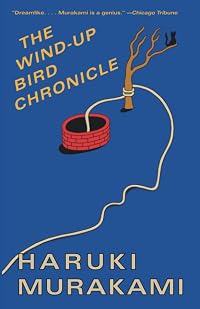
The Wind-Up Bird Chronicle: A Novel
by Haruki Murakami
On This Page
Description
Having quit his job, Toru Okada is enjoying a pleasant stint as a "house husband", listening to music and arranging the dry cleaning and doing the cooking - until his cat goes missing, his wife becomes distant and begins acting strangely, and he starts meeting enigmatic people with fantastic life stories. They involve him in a world of psychics, shared dreams, out-of-body experiences, and shaman-like powers, and tell him stories from Japan's war in Manchuria, about espionage on the border show more with Mongolia, the battle of Nomonhan, the killing of the animals in Hsin-ching's zoo, and the fate of Japanese prisoners-of-war in the Soviet camps in Siberia. show lessTags
Recommendations












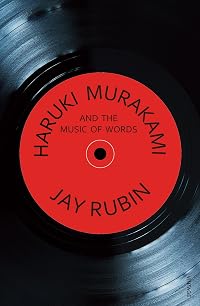


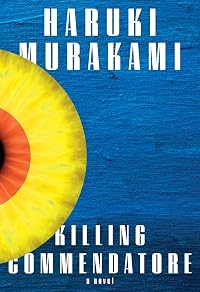
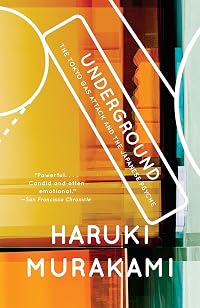
Member Recommendations

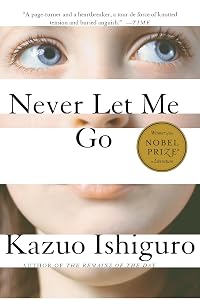
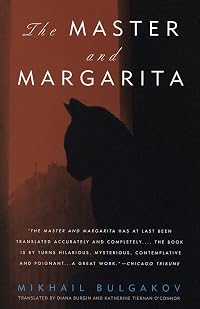
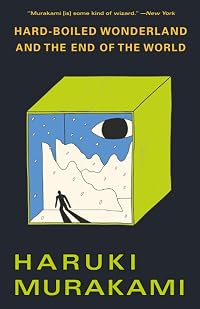
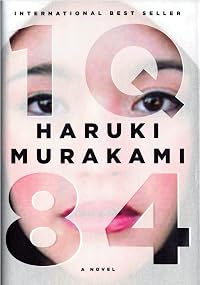
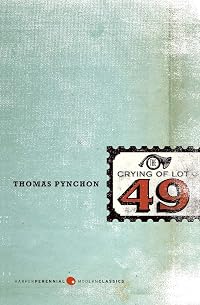
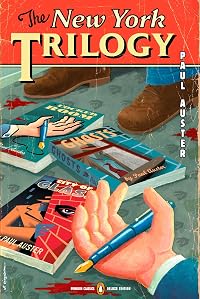
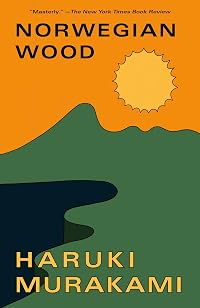
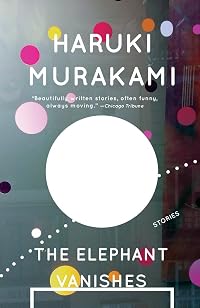
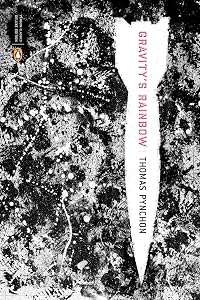
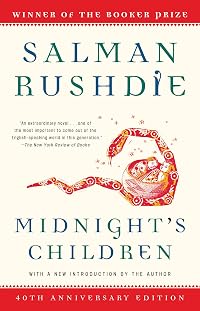
andomck Both books, besides having science fiction/magical realism elements, discuss bloody episodes of WWII from the point of view of everyday people.
61
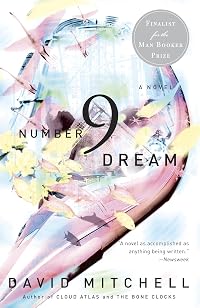
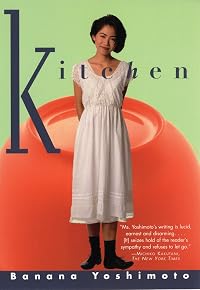
DeDeNoel Both this and Wind-Up Bird are about a man dealing with odd circumstances and going through a change. If you like the way Murakami writes, you probably will enjoy Mark Haddon's writing.
30


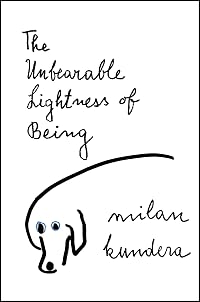
booklove2 Both books involve a displaced from the world character searching for clues to solve mysteries.

Member Reviews
The Short of It:
A wildly imaginative work. Quite possibly the most interesting literary experience I’ve had. Ever.
The Rest of It:
If I had to sum this book up with one sentence, I’d say this:
Nothing, is as it seems.
Toru Okada is a normal guy. But when his cat goes missing, and then his wife Kumiko follows shortly thereafter, what at first seems normal suddenly becomes surreal and odd. So odd, that Toru apends time in an abandoned well to sort it all out.
In the mean time, he meets a cast of very strange characters:
•May Kasahara – a young neighbor girl who thinks about death a lot. She has a very matter-of-fact way of talking and acts as a sounding board for Toru.
•Noboru Wataya – the brother of Kumiko. Toru cannot stand show more him as his political ideals differ from his. He’s also a bully when it comes to his sister Kumiko. The lost cat is also named after him, which is odd in and of itself given that Kumiko and Toru really do not like the guy.
•Lieutenant Mamiya – an officer who witnessed the brutal death of a another officer. He is scarred over that event and has spent his own time down in a well. He has been tasked with carrying out a request in a will which is what brings him to Toru.
•Malta Kano – acts as a medium. Kumiko hires her to help them find their cat. She sees things, but she’s not all that clear when she translates it to those who need the information.
•Creta Kano – Creta is Malta’s sister. She too, has a talent but her talent is unpracticed and involves inhabiting people’s minds. She is also called a “prostitute of the mind” and gets to know Toru quite well.
•Nutmeg Akasaka – the businesswoman who first sees Toru while observing people in the city. She is attracted to the blueblack mark on his face. A mark that her father also bore many years ago. Later, she makes him a proposition that he finds hard to refuse.
•Cinammon Akasaka – the son of Nutmeg. He does not speak but uses a strange form of sign language to communicate. He carries out the wishes of his mother but is exceptionally good at what he does and what he does involves looking out for Toru on many levels.
•The Wind-Up Bird – a bird that only certain characters hear. This bird makes a screeching noise and when Toru hears it, he is immediately reminded of a spring and how it needs to be wound in order to keep the world going. If you pay attention while reading, the appearance of the bird can clue you in to what is going on at that point in time.
There isn’t a right or wrong way to describe this book. The story is simple, but the things that happen within the story beg to be discussed. The personalities of the characters, their history and how they all play their own part in the story is what makes a Murakami book an “experience” more than just a good read. It’s walks a crazy fine line between what’s normal and what’s not and throws in bits and pieces to shake you up and to jolt you back into reality, or what you think is reality. It’s the type of book that will have you asking questions for days, but somehow Murakami manages to bring it all together by those last few pages. Not to say that your questions have been fully answered. No, can’t say that. But I can say that as a reader, I was satisfied when I turned that last page.
Murakami’s writing is very accessible and simple to follow. Most first-time readers feel intimidated by what they’ve heard about him, but the writing is not complex. The meaning behind what is written though, can boggle the mind, but not in a bad way. His books have a palate cleansing effect which I find very pleasing. He challenges you to think outside of the box and if you give in to it, usually you’re rewarded with a positive reading experience. Usually. There are those that are completely turned off by the oddness of it, and I understand that too. Murakami is not for everyone but what a reading experience it is!
Reading this book was like taking two Benadryls, drinking a couple glasses of wine and then having one heck of a strange dream afterward. You wake, but you don’t wake and you sort of like it that way.
As with his other novels, this book shares many of the same themes but mostly alienation and loneliness. There are some graphic depictions of sex and rape but not as much as some of his other novels. There is also a particularly gruesome act of violence but it’s brief and not drawn out so I found it tolerable although some of the other readers in the read-along found it hard to read.
Compared to his other books, The Wind-Up Bird Chronicle is probably one of my favorites. It’s right up there with Kafka on the Shore but I found it much easier to follow than Kafka. It’s long. Over 600 pages long but much of it reads very quickly. In the six weeks that we had to finish the book, I think most finished well before the deadline. However, it was maybe 50 pages too long. I understand that two chapters were removed from the English translation and that they had to do with Toru’s relationship with Creta. I know it would have made the book longer but I wish I had those chapters now.
If you are intrigued and want to give it a try, do so with an open mind and give yourself plenty of time to absorb what you’ve read. It also doesn’t hurt to take a week or two when done to just ponder the story. I found it very hard to focus on other books after finishing Wind-Up.
For more reviews, visit my blog: Book Chatter. show less
A wildly imaginative work. Quite possibly the most interesting literary experience I’ve had. Ever.
The Rest of It:
If I had to sum this book up with one sentence, I’d say this:
Nothing, is as it seems.
Toru Okada is a normal guy. But when his cat goes missing, and then his wife Kumiko follows shortly thereafter, what at first seems normal suddenly becomes surreal and odd. So odd, that Toru apends time in an abandoned well to sort it all out.
In the mean time, he meets a cast of very strange characters:
•May Kasahara – a young neighbor girl who thinks about death a lot. She has a very matter-of-fact way of talking and acts as a sounding board for Toru.
•Noboru Wataya – the brother of Kumiko. Toru cannot stand show more him as his political ideals differ from his. He’s also a bully when it comes to his sister Kumiko. The lost cat is also named after him, which is odd in and of itself given that Kumiko and Toru really do not like the guy.
•Lieutenant Mamiya – an officer who witnessed the brutal death of a another officer. He is scarred over that event and has spent his own time down in a well. He has been tasked with carrying out a request in a will which is what brings him to Toru.
•Malta Kano – acts as a medium. Kumiko hires her to help them find their cat. She sees things, but she’s not all that clear when she translates it to those who need the information.
•Creta Kano – Creta is Malta’s sister. She too, has a talent but her talent is unpracticed and involves inhabiting people’s minds. She is also called a “prostitute of the mind” and gets to know Toru quite well.
•Nutmeg Akasaka – the businesswoman who first sees Toru while observing people in the city. She is attracted to the blueblack mark on his face. A mark that her father also bore many years ago. Later, she makes him a proposition that he finds hard to refuse.
•Cinammon Akasaka – the son of Nutmeg. He does not speak but uses a strange form of sign language to communicate. He carries out the wishes of his mother but is exceptionally good at what he does and what he does involves looking out for Toru on many levels.
•The Wind-Up Bird – a bird that only certain characters hear. This bird makes a screeching noise and when Toru hears it, he is immediately reminded of a spring and how it needs to be wound in order to keep the world going. If you pay attention while reading, the appearance of the bird can clue you in to what is going on at that point in time.
There isn’t a right or wrong way to describe this book. The story is simple, but the things that happen within the story beg to be discussed. The personalities of the characters, their history and how they all play their own part in the story is what makes a Murakami book an “experience” more than just a good read. It’s walks a crazy fine line between what’s normal and what’s not and throws in bits and pieces to shake you up and to jolt you back into reality, or what you think is reality. It’s the type of book that will have you asking questions for days, but somehow Murakami manages to bring it all together by those last few pages. Not to say that your questions have been fully answered. No, can’t say that. But I can say that as a reader, I was satisfied when I turned that last page.
Murakami’s writing is very accessible and simple to follow. Most first-time readers feel intimidated by what they’ve heard about him, but the writing is not complex. The meaning behind what is written though, can boggle the mind, but not in a bad way. His books have a palate cleansing effect which I find very pleasing. He challenges you to think outside of the box and if you give in to it, usually you’re rewarded with a positive reading experience. Usually. There are those that are completely turned off by the oddness of it, and I understand that too. Murakami is not for everyone but what a reading experience it is!
Reading this book was like taking two Benadryls, drinking a couple glasses of wine and then having one heck of a strange dream afterward. You wake, but you don’t wake and you sort of like it that way.
As with his other novels, this book shares many of the same themes but mostly alienation and loneliness. There are some graphic depictions of sex and rape but not as much as some of his other novels. There is also a particularly gruesome act of violence but it’s brief and not drawn out so I found it tolerable although some of the other readers in the read-along found it hard to read.
Compared to his other books, The Wind-Up Bird Chronicle is probably one of my favorites. It’s right up there with Kafka on the Shore but I found it much easier to follow than Kafka. It’s long. Over 600 pages long but much of it reads very quickly. In the six weeks that we had to finish the book, I think most finished well before the deadline. However, it was maybe 50 pages too long. I understand that two chapters were removed from the English translation and that they had to do with Toru’s relationship with Creta. I know it would have made the book longer but I wish I had those chapters now.
If you are intrigued and want to give it a try, do so with an open mind and give yourself plenty of time to absorb what you’ve read. It also doesn’t hurt to take a week or two when done to just ponder the story. I found it very hard to focus on other books after finishing Wind-Up.
For more reviews, visit my blog: Book Chatter. show less
Murakami is a genius. He manages to create a different, dream-like labyrinth that is anchored in our world. Everything felt surreal like a Salvador Dali painting. Everything felt like dream-like sequences but you're not asleep. At times "The Wind-Up Bird Chronicle" feels like "Inception" wherein you're in dream world and you can bend reality. However, some things are too VAGUE or OPEN-ENDED, wherein you just have to use your imagination. A lot of unanswered mysteries that you just like to unfold. I want to go down a well and go to that hotel just to unravel the mysteries that can't put me to sleep at night. Only several authors can make me lay awake at night, I hate it and I love it at the same time. :)
Here is a story that names are not show more that important. But even if the character's names are hard to remember (because Japanese names are used) they're gonna stick to you even in your sleep. Murakami reminds me of Butch Dalisay (a Filipino writer) not because they have writing style (they don't) but because they're both obsessed with personal histories. They use several chapters/paragraphs just to show where a certain character came from even if its a minor character. And coincidentally, I love HISTORY, hehe.
He also reminds me of Gabriel Garcia-Marquez and Isabelle Allende, both are writers of magic realism. But Murakami's novels have a different kind of magic. I always loved magic realism books.
I also love the way Murakami embedded history in this book specifically the Russian-Japanese war. This war, in a way, was close to Pinoy's heart because for a brief time we have been occupied by the Japanese. The Japanese were cruel to us. But through Murakami's book you would see the war through Japanese eyes. The soldiers were demoralized and tired of it too. I'm not offering some sympathy but I can say "quits na kami". If you love historical fiction, romance and magic you'll surely love this. show less
Here is a story that names are not show more that important. But even if the character's names are hard to remember (because Japanese names are used) they're gonna stick to you even in your sleep. Murakami reminds me of Butch Dalisay (a Filipino writer) not because they have writing style (they don't) but because they're both obsessed with personal histories. They use several chapters/paragraphs just to show where a certain character came from even if its a minor character. And coincidentally, I love HISTORY, hehe.
He also reminds me of Gabriel Garcia-Marquez and Isabelle Allende, both are writers of magic realism. But Murakami's novels have a different kind of magic. I always loved magic realism books.
I also love the way Murakami embedded history in this book specifically the Russian-Japanese war. This war, in a way, was close to Pinoy's heart because for a brief time we have been occupied by the Japanese. The Japanese were cruel to us. But through Murakami's book you would see the war through Japanese eyes. The soldiers were demoralized and tired of it too. I'm not offering some sympathy but I can say "quits na kami". If you love historical fiction, romance and magic you'll surely love this. show less
Every time I read Murakami it shakes me up. Not always in the same way, but I don't think I've ever put down a book of his unaffected.
The Wind-up Bird Chronicle isn't an easy or straightforward book -At times you have almost no idea what's going on, or where things are going. Even so, it's an extremely compelling read, like a puzzle that needs solving it drives you on, trying to make the pieces match. When you're done (or when I was, at least) You're left with the feeling that everything you've read actually do match up - you're jut not sure as to how. Almost everything seems laden with symbolism: baseball bats, cats, the act of smoking or eating, every piece of music... it's a trip into the personal mythological world of the author, show more but with no map provided. show less
The Wind-up Bird Chronicle isn't an easy or straightforward book -At times you have almost no idea what's going on, or where things are going. Even so, it's an extremely compelling read, like a puzzle that needs solving it drives you on, trying to make the pieces match. When you're done (or when I was, at least) You're left with the feeling that everything you've read actually do match up - you're jut not sure as to how. Almost everything seems laden with symbolism: baseball bats, cats, the act of smoking or eating, every piece of music... it's a trip into the personal mythological world of the author, show more but with no map provided. show less
I want to start off this review by saying that I’m no stranger to Murakami, but perhaps I am when it comes to some of his more surreal novels. I’ve read Norwegian Wood, After Dark and after the quake but The Wind-up Bird Chronicle is the biggest Murakami I’ve tackled to date.
Murakami has one of the most beautiful ways with words that I’ve ever seen (although I suppose Jay Rubin, the English translator helps to maintain the beauty in English) and his prose paints perfectly detailed pictures in your mind. This book is no exception and I could picture everything – Toru’s, the well, May Kasahara and Kumiko as I read.
The plot starts out in a linear fashion – Toru is recently unemployed and his wife, Kumiko, is upset that their show more cat has gone missing. The search puts him in touch with the quirky teen May Kasahara and the odd Malta and Creta Kano. Over Toru looms the figure of Kumiko’s brother, Noboru Wataya (which also happens to be the cat’s name).
Everything starts going a bit surreal after that. Why does Toru go down the well after the Lieutenant mentions his experience? Why do Malta and Creta disappear halfway through the book? What exactly is going on with Nutmeg and Cinnamon? What’s the significance of the woman on the phone? Is there any significance?
I am of a fairly scientific mind and it threw me a little to try and justify all of Toru’s adventures in reality and tie up all the loose ends- which isn’t possible I think, you need to wonder and discuss this book. Toru’s character frustrated me in that he was so passive of almost everything- being trapped in the well and joining Nutmeg and Cinnamon. His fixation on Kumiko was also a bit strange but I guess it was sweet that he was willing to wait for her no matter what.
May Kasahara was my favourite character. Her ability to blurt out morbid and strange thoughts as well as take anything in her stride was uplifting. I’d love to mind out how she ended up.
This book was mesmerizing and although at times I wanted to put it down because I couldn’t figure it out, it wasn’t possible. I think the trick is not to force it to be linear and just accept that you can’t explain anything. Rather like life, really. show less
Murakami has one of the most beautiful ways with words that I’ve ever seen (although I suppose Jay Rubin, the English translator helps to maintain the beauty in English) and his prose paints perfectly detailed pictures in your mind. This book is no exception and I could picture everything – Toru’s, the well, May Kasahara and Kumiko as I read.
The plot starts out in a linear fashion – Toru is recently unemployed and his wife, Kumiko, is upset that their show more cat has gone missing. The search puts him in touch with the quirky teen May Kasahara and the odd Malta and Creta Kano. Over Toru looms the figure of Kumiko’s brother, Noboru Wataya (which also happens to be the cat’s name).
Everything starts going a bit surreal after that. Why does Toru go down the well after the Lieutenant mentions his experience? Why do Malta and Creta disappear halfway through the book? What exactly is going on with Nutmeg and Cinnamon? What’s the significance of the woman on the phone? Is there any significance?
I am of a fairly scientific mind and it threw me a little to try and justify all of Toru’s adventures in reality and tie up all the loose ends- which isn’t possible I think, you need to wonder and discuss this book. Toru’s character frustrated me in that he was so passive of almost everything- being trapped in the well and joining Nutmeg and Cinnamon. His fixation on Kumiko was also a bit strange but I guess it was sweet that he was willing to wait for her no matter what.
May Kasahara was my favourite character. Her ability to blurt out morbid and strange thoughts as well as take anything in her stride was uplifting. I’d love to mind out how she ended up.
This book was mesmerizing and although at times I wanted to put it down because I couldn’t figure it out, it wasn’t possible. I think the trick is not to force it to be linear and just accept that you can’t explain anything. Rather like life, really. show less
This book sucked me into its web of strangeness. It has a hypnotic quality that makes it different from anything else I have read. Some parts are very gruesome and disturbing which was quite upsetting. However, I had to continue. There seemed to be no choice about that!
The novel consists of several layers of stories within stories and dreams within reality as well as some episodes where it is difficult to be sure what is real and what is a dream. The stories are linked in bizarre and obscure ways - through a well or water, or through a voice in a telephone or several other ways. The characters telling these stories are each the hero (or villain)of their tale and all are fascinating.
What an imagination! An amazing book.
The novel consists of several layers of stories within stories and dreams within reality as well as some episodes where it is difficult to be sure what is real and what is a dream. The stories are linked in bizarre and obscure ways - through a well or water, or through a voice in a telephone or several other ways. The characters telling these stories are each the hero (or villain)of their tale and all are fascinating.
What an imagination! An amazing book.
It's been a really long time since a book captivated me so much I grew impatient with real life. With a two-hour train trip coming up, I found myself actually looking forward to it, simply so that I could sit motionlessly and guiltlessly and devour the rest of Murakami's fabulous world. This was definitely one of those books that I was sorry to see end.
What is it about these diffident, slightly hapless, determinedly directionless narrators? Someone like Strethers from James' The Ambassadors, or Fitzgerald's Nick Carraway (The Great Gatsby) really sucks me in. Toru Okada, a thirty-year old unemployed legal assistant, is the opposite of the stereotypical salaryman; his only dilemma is how to fill in the hours stretching endlessly before show more him each day: should he cook spaghetti bolognaise? read a book? go shopping? Instead, it's his wife, Kumiko, who is the breadwinner, and the obligatory pants-wearer, ringing him up to delegate tasks to him which only rival each other in mundanity: pick up the laundry, buy the toilet paper, find the cat.
Then the mystery begins - and once it begins, it multiplies and folds in upon itself. An anonymous woman rings the house, who insists not only that Toru knows her well - "Ten minutes, please. That's all we need to understand each other" - but that Toru know her very well: "Try picturing me. From my voice. Imagine what I'm like. Where I am. How I'm dressed."
Toru has scarcely any time to work this one out before Kumiko sends him in pursuit of their missing cat, Notoru Wataya, a feline saddled with the appallingly weighty name of Kumiko's brother-in-law, a Machiavellian politician rising through the ranks. To find the cat, Toru leaps into the blocked-off alley behind their house, where he meets the mercurial May Kasahara, an enigmatic sixteen-year old with a pronounced limp and a two-inch scar on her cheek. May cheerfully assumes command over the somewhat apathetic Toru, dubbing him "Mr Wind-up Bird", after the particular bird-call he hears echo in the neighbourhood, a call which sounds like the springs of the world are being wound up: "Every day it would come to the stand of trees in our neighbourhood and wind the spring of our quiet little world."
Springs in a mechanical sense - for much of the novel concerns the idea of life and fate; life as a great machine, which some hidden higher power is preparing - but for what? But springs also work in the geographical sense, for the flow of water is integral to the plot of the book, drawing together the dry well Toru finds in an abandoned house backing on to the blocked-off alleyway; the warnings of their mystical family friend, Mr Honda; the religious austerities of clairvoyant Malta Kano whom Kumiko employs to find their cat. And then Kumiko herself goes missing.
Toru's search for Kumiko will take him deep into the historical depths of Manchukuo, the ill-fated Japanese settlement at the heart of Mainland China; into a dreamlike world where the women in his life endlessly segue into another; into utter darkness at the bottom of a dried-up well; and ultimately, most irrevocably, into the mysterious, pitch-black Room 208. Through all of this reverberates the call of the wind-up bird.
Murakami traverses a dazzling array of landscapes in his sprawling novel. His world is rich and resonant with the stories of many characters - and I haven't even managed to yet find a place for Cinnamon and Nutmeg Asakasa, whose spiritual powers will be of huge influence on Toru. Here the reader will find, labyrinthine and Pynchon-like, a troubling range of echoes and references gathering momentum into an increasingly claustrophobic world. In the end, the mysteries can only be solved by coming to grips with the obscure figure of Noboru Wataya (the man, not the cat) and the ineluctable pull towards Room 208 where Toru keeps returning in trance: here he will confront an unknown assailant in a confrontation that will enmesh them all.
Transformation is at the heart of what I admire most about Murakami - from the quiet, almost innocuous way he is able to take his protagonist from cooking spaghetti and ironing shirts to the brutalities of the Sino-Russian border in WWII and the metaphysical depths of the dried-up well. He is entirely equal both to the expression of the mundane to the expression of the ineffable. Here is Toru trying to rationalise his antagonism towards his brother-in-law Noboru Wataya:
It was like a persistent low-grade fever. I never had a television in the house, but by some uncanny coincidence, whenever I glanced at a TV somewhere, he would be on it, making some pronouncement. If I flipped through the pages of a magazine in a doctor's waiting room, there would be a picture of Noboru Wataya, with an article he had written. I felt as if Noboru Wataya were lying in wait for me just around every corner in the known world.
OK, let's face it. I hated the guy.
Now here's Toru, sitting in self-imposed exile at the bottom of the well:
It felt extremely strange not to be able to see my own body with my own eyes, though I knew it must be there. Staying very still in the darkness, I became less and less convinced of the fact that I actually existed. To cope with that, I woould clear my throat now and then, or run my hand over my face. That way, my ears could check on the existnece of my voice, my hand could check on the existence of my face, and my face could check on the existence of my hand.
Despite these efforts, my body began to lose its density and weight, the sand gradually being washed away by flowing water. I felt as if a fierce and wordless tug-of-war were going on inside me, a contest in which my mind was slowly dragging my body into its own territory. The darkness was disrupting the proper balance between the two. The thought struck me that my own body was a mere provisional husk that had been prepared for my mind by a rearrangement of the signs known as chromosomes. If the signs were rearraned yet again, I would find myself inside a wholly different body than before. "Prostitute of the mind"...
And, for powerful writing, don't even get me started on Boris and his Mongolian. I think I'll remember that scene for life.
One word of warning, though. If you're looking for a story that makes sense, this isn't it. A lot of riddles are solved along the way but, if the postmodernists will allow my borrowing of the phrase, all we end up with is a chain of signifiers attached to nothing but themselves. But dissatisfied? Hardly. Dive into this book, be pulled into the mystery of all these missing things and finally resurface with a rich meditation on the enigma of identity and the notion of the true self, of historical inevitability and the possibililty of personal transformation.
And listen to the winding of the springs. show less
What is it about these diffident, slightly hapless, determinedly directionless narrators? Someone like Strethers from James' The Ambassadors, or Fitzgerald's Nick Carraway (The Great Gatsby) really sucks me in. Toru Okada, a thirty-year old unemployed legal assistant, is the opposite of the stereotypical salaryman; his only dilemma is how to fill in the hours stretching endlessly before show more him each day: should he cook spaghetti bolognaise? read a book? go shopping? Instead, it's his wife, Kumiko, who is the breadwinner, and the obligatory pants-wearer, ringing him up to delegate tasks to him which only rival each other in mundanity: pick up the laundry, buy the toilet paper, find the cat.
Then the mystery begins - and once it begins, it multiplies and folds in upon itself. An anonymous woman rings the house, who insists not only that Toru knows her well - "Ten minutes, please. That's all we need to understand each other" - but that Toru know her very well: "Try picturing me. From my voice. Imagine what I'm like. Where I am. How I'm dressed."
Toru has scarcely any time to work this one out before Kumiko sends him in pursuit of their missing cat, Notoru Wataya, a feline saddled with the appallingly weighty name of Kumiko's brother-in-law, a Machiavellian politician rising through the ranks. To find the cat, Toru leaps into the blocked-off alley behind their house, where he meets the mercurial May Kasahara, an enigmatic sixteen-year old with a pronounced limp and a two-inch scar on her cheek. May cheerfully assumes command over the somewhat apathetic Toru, dubbing him "Mr Wind-up Bird", after the particular bird-call he hears echo in the neighbourhood, a call which sounds like the springs of the world are being wound up: "Every day it would come to the stand of trees in our neighbourhood and wind the spring of our quiet little world."
Springs in a mechanical sense - for much of the novel concerns the idea of life and fate; life as a great machine, which some hidden higher power is preparing - but for what? But springs also work in the geographical sense, for the flow of water is integral to the plot of the book, drawing together the dry well Toru finds in an abandoned house backing on to the blocked-off alleyway; the warnings of their mystical family friend, Mr Honda; the religious austerities of clairvoyant Malta Kano whom Kumiko employs to find their cat. And then Kumiko herself goes missing.
Toru's search for Kumiko will take him deep into the historical depths of Manchukuo, the ill-fated Japanese settlement at the heart of Mainland China; into a dreamlike world where the women in his life endlessly segue into another; into utter darkness at the bottom of a dried-up well; and ultimately, most irrevocably, into the mysterious, pitch-black Room 208. Through all of this reverberates the call of the wind-up bird.
Murakami traverses a dazzling array of landscapes in his sprawling novel. His world is rich and resonant with the stories of many characters - and I haven't even managed to yet find a place for Cinnamon and Nutmeg Asakasa, whose spiritual powers will be of huge influence on Toru. Here the reader will find, labyrinthine and Pynchon-like, a troubling range of echoes and references gathering momentum into an increasingly claustrophobic world. In the end, the mysteries can only be solved by coming to grips with the obscure figure of Noboru Wataya (the man, not the cat) and the ineluctable pull towards Room 208 where Toru keeps returning in trance: here he will confront an unknown assailant in a confrontation that will enmesh them all.
Transformation is at the heart of what I admire most about Murakami - from the quiet, almost innocuous way he is able to take his protagonist from cooking spaghetti and ironing shirts to the brutalities of the Sino-Russian border in WWII and the metaphysical depths of the dried-up well. He is entirely equal both to the expression of the mundane to the expression of the ineffable. Here is Toru trying to rationalise his antagonism towards his brother-in-law Noboru Wataya:
It was like a persistent low-grade fever. I never had a television in the house, but by some uncanny coincidence, whenever I glanced at a TV somewhere, he would be on it, making some pronouncement. If I flipped through the pages of a magazine in a doctor's waiting room, there would be a picture of Noboru Wataya, with an article he had written. I felt as if Noboru Wataya were lying in wait for me just around every corner in the known world.
OK, let's face it. I hated the guy.
Now here's Toru, sitting in self-imposed exile at the bottom of the well:
It felt extremely strange not to be able to see my own body with my own eyes, though I knew it must be there. Staying very still in the darkness, I became less and less convinced of the fact that I actually existed. To cope with that, I woould clear my throat now and then, or run my hand over my face. That way, my ears could check on the existnece of my voice, my hand could check on the existence of my face, and my face could check on the existence of my hand.
Despite these efforts, my body began to lose its density and weight, the sand gradually being washed away by flowing water. I felt as if a fierce and wordless tug-of-war were going on inside me, a contest in which my mind was slowly dragging my body into its own territory. The darkness was disrupting the proper balance between the two. The thought struck me that my own body was a mere provisional husk that had been prepared for my mind by a rearrangement of the signs known as chromosomes. If the signs were rearraned yet again, I would find myself inside a wholly different body than before. "Prostitute of the mind"...
And, for powerful writing, don't even get me started on Boris and his Mongolian. I think I'll remember that scene for life.
One word of warning, though. If you're looking for a story that makes sense, this isn't it. A lot of riddles are solved along the way but, if the postmodernists will allow my borrowing of the phrase, all we end up with is a chain of signifiers attached to nothing but themselves. But dissatisfied? Hardly. Dive into this book, be pulled into the mystery of all these missing things and finally resurface with a rich meditation on the enigma of identity and the notion of the true self, of historical inevitability and the possibililty of personal transformation.
And listen to the winding of the springs. show less
An astonishing book. Essentially an urban epic about losing your cat and your wife and your grip on reality, the plot moves dreamily through the mundane world of a man living an aimless, blameless life as he experiences erotic phone-calls, the philosophical musings of a teenage neighbour, horrifying stories from Japan's military campaign in China, a fascination with an abandoned well, two sisters named after islands and their strange vocation, and, frankly, a whole lot of other stuff. The writing is plain but addictive, and though the plot is full of ambiguities, complexities and perplexing enigmas, many of which are left for the reader to resolve, it is nonetheless a supremely satisfying read.
Members
- Recently Added By
Published Reviews
ThingScore 50
By the book's midway point, the novelist-juggler has tossed so many balls into the air that he inevitably misses a few on the way down. Visionary artists aren't always neat: who reads Kafka for his tight construction? In ''The Wind-Up Bird Chronicle'' Murakami has written a bold and generous book, and one that would have lost a great deal by being tidied up.
added by Shortride
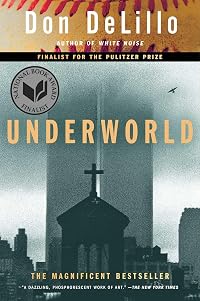
Mr. Murakami seems to have tried to write a book with the esthetic heft and vision of, say, Don DeLillo's ''Underworld'' or Salman Rushdie's ''The Moor's Last Sigh,'' he is only intermittently successful. ''Wind-Up Bird'' has some powerful scenes of antic comedy and some shattering scenes of historical power, but such moments do not add up to a satisfying, fully fashioned novel. In trying to show more depict a fragmented, chaotic and ultimately unknowable world, Mr. Murakami has written a fragmentary and chaotic book. show less
added by Shortride
Lists

The Guardian's 1000 Novels Everyone Must Read
1,005 works; 548 members

1001 Books You Must Read Before You Die
1,448 works; 1,133 members

Best Contemporary Literary Fiction (Around the Last 30 Years)
388 works; 122 members

Japanese Literature
230 works; 40 members

Magic Realism
371 works; 52 members

Best of World Literature
436 works; 52 members

Recommend the 20 best books you've read in the last five years
2,168 works; 606 members
20th Century Literature
1,161 works; 55 members

Favourite Books
1,820 works; 316 members

Favorite Long Books
330 works; 42 members
Top-Rated Books on LibraryThing
272 works; 117 members

Metafiction
86 works; 23 members

Top Five Books of 2013
1,562 works; 721 members

Weird and Weirder Fiction
270 works; 35 members
Best Political Fiction
92 works; 12 members

Best Psychological Fiction
81 works; 16 members

Slipstream or Interstitial Fiction
160 works; 19 members

100 books to read in a lifetime
102 works; 37 members

1990s
309 works; 17 members
Haruki Murakami's Books
16 works; 5 members

magic realism novels
44 works; 10 members

Top Five Books of 2018
802 works; 265 members

Speculative Fiction: Slipstream Literature
166 works; 16 members

100 New Classics
101 works; 13 members

Story Within a Story
65 works; 17 members

Dark Books for Winter Reading
71 works; 11 members

Best Japanese Fiction
41 works; 10 members

Blue Pyramid 1,276 Best Books of All Time
1,248 works; 32 members

Books tagged favorites
390 works; 30 members

1,001 BYMRBYD Concensus
723 works; 27 members

Literature by People of Color
81 works; 9 members

Books Read in 2023
5,638 works; 147 members

Top Five Books of 2016
795 works; 229 members

A Novel Cure
742 works; 23 members

SF & Fantasy in Translation
95 works; 18 members
Love Triangles in Literature
108 works; 15 members

International IMPAC Dublin Literary Award
179 works; 6 members

Reiny
17 works; 2 members
Fake Top 100 Fiction
81 works; 4 members

Asia
178 works; 7 members

Allie's Favourite 150 Books
145 works; 3 members

Unread books
1,063 works; 86 members

Books Read in 2017
4,249 works; 130 members

recalling favorites...
105 works; 2 members

hopes
34 works; 1 member

SHOULD Read Books!
354 works; 9 members
Animals in the Title
498 works; 11 members

Literature in Translation
113 works; 5 members
SantaThing 2014 Gifts
299 works; 17 members

Books Read in 2015
3,299 works; 126 members

Plan to Read Books
75 works; 1 member

Speculative Fiction from around the World
610 works; 18 members

Books Read in 2022
5,226 works; 112 members
5 Best 5 Years
71 works; 4 members

Reading Globally
136 works; 16 members
Literature About Adultery
69 works; 10 members

My favourite books
96 works; 3 members

Retrospective of 20th- and 21st-century literature
154 works; 1 member
Books recommended by Calgary Public Library staff
1,588 works; 4 members

Emo Books
14 works; 1 member
DigitalDreamDoor top 300
300 works; 4 members

.
194 works; 2 members

Favorite Books in Translation
320 works; 133 members
Books We Love to Reread
688 works; 297 members

Biggest Disappointments
606 works; 163 members

Books mentioned in Vandermeer's Wonderbook
34 works; 2 members

Books With the Most Memorable Titles
478 works; 158 members

Mustich's 1000 Books to Read Before You Die: A Life Changing List
1,001 works; 20 members

Recommended Literary Books
111 works; 1 member

Books Read in 2018
4,360 works; 110 members

Books Read in 2011
684 works; 20 members

Books Read in 2012
816 works; 34 members

Global Reads: Books Set in East Asia
139 works; 12 members

The Five Books That Represent Us
391 works; 149 members
Talk Discussions
Past Discussions
Group Read: Wind-Up Bird Chronicle in 75 Books Challenge for 2017 (December 2017)
Asian Author, Unemployed young man, Goes into a Well to relax?escape? in Name that Book (September 2015)
The Wind-Up Bird Chronicle Group Read: Non-Spoiler Thread in 75 Books Challenge for 2011 (August 2011)
The Wind-Up Bird Chronicle: Week 1 (Spoiler) in 75 Books Challenge for 2011 (August 2011)
Group Read: The Wind-Up Bird Chronicle by Haruki Murakami in 1001 Books to read before you die (April 2010)
Author Information

311+ Works 175,032 Members
Haruki Murakami was born on January 12, 1949 in Kyoto, Japan and studied at Tokyo's Waseda University. He opened a coffeehouse/jazz bar in the capital called Peter Cat with his wife. He became a full-time author following the publication of his first novel, Hear the Wind Sing, in 1979. He writes both fiction and non-fiction works. His fiction show more works include Norwegian Wood, Colorless Tsukuru Tazaki and His Years of Pilgrimage, The Strange Library, and Men Without Women. Several of his stories have been adapted for the stage and as films. His nonfiction works include What I Talk About When I Talk About Running. He has received numerous literary awards including the Franz Kafka Prize for Kafka on the Shore, the Yomiuri Prize for The Wind-Up Bird Chronicle, and the Jerusalem Prize. He has translated into Japanese literature written by F. Scott Fitzgerald, Raymond Carver, Truman Capote, John Irving, and Paul Theroux. (Bowker Author Biography) show less
Some Editions
Awards and Honors
Awards
Distinctions
Notable Lists
Series
Belongs to Publisher Series
Work Relationships
Is contained in
Contains
Has the adaptation
Has as a reference guide/companion
Common Knowledge
- Canonical title*
- Vieterilintukronikka
- Original title
- Nejimaki-dori kuronikure
- Alternate titles*
- Die Chroniken des Herrn Aufziehvogel
- Original publication date
- 1995
- People/Characters
- Toru Okada; Kumiko Okada; Noboru Wataya; May Kasahara; Lieutenant Mamiya; Malta Kano (show all 9); Creta Kano; Nutmeg Akasaka; Cinnamon Akasaka
- Important places
- Japan; Mongolia; Manchukuo
- Important events
- Japanese invasion of Manchuria, 1931; Japanese Occupation; World War II, Pacific Theater
- First words
- When the phone rang I was in the kitchen, boiling a potful of spaghetti and whistling along with an FM broadcast of the overture to Rossini's The Thieving Magpie, which has to be the perfect music for cooking pasta.
- Quotations*
- «Ah, così lei ama la letteratura! – mi avrebbero detto, – anch'io. Da giovane ho letto parecchio». Per loro la letteratura era qualcosa che si leggeva da giovani. Come in primavera si colgono le fragole, e in autunno s... (show all)i vendemmia.
«Io ho solo sedici anni, e il mondo non lo conosco ancora bene, ma una cosa sola posso affermare con sicurezza: se io sono pessimista, un adulto che non lo sia, in questo mondo, è proprio un cretino». - Last words
- (Click to show. Warning: May contain spoilers.)In a place far away from anyone or anywhere, I drifted off for a moment.
- Original language
- Japanese
*Some information comes from Common Knowledge in other languages. Click "Edit" for more information.
Classifications
- Genres
- General Fiction, Fiction and Literature, Fantasy
- DDC/MDS
- 895.635 — Literature & rhetoric Literatures of other languages Literatures of East and Southeast Asia Japanese Japanese fiction 1945–2000
- LCC
- PL856 .U673 .N4513 — Language and Literature Languages and literatures of Eastern Asia, Africa, Oceania Languages of Eastern Asia, Africa, Oceania Japanese language and literature Japanese literature Individual authors and works
- BISAC
Statistics
- Members
- 19,692
- Popularity
- 297
- Reviews
- 405
- Rating
- (4.17)
- Languages
- 29 — Albanian, Bosnian, Catalan, Chinese, Czech, Danish, Dutch, English, Finnish, French, German, Greek, Hebrew, Hungarian, Italian, Japanese, Lithuanian, Norwegian (Nynorsk), Norwegian (Bokmål), Polish, Portuguese, Romanian, Russian, Slovenian, Spanish, Swedish, Thai, Turkish, Vietnamese
- Media
- Paper, Audiobook, Ebook
- ISBNs
- 121
- UPCs
- 4
- ASINs
- 41