
Chip Kidd
Author of The Cheese Monkeys: A Novel in Two Semesters
About the Author
Chip Kidd has designed book jackets for Alfred A. Knopf for over a decade. His work has been featured in "Vanity Fair", "Print", "Entertainment Weekly", "The New Republic", "Time", "The New York Times", "Graphis", "New York", and "ID" magazine. He lives in New York City. (Publisher Provided) Chip show more Kidd was born in 1964. He is an author, editor and graphic designer. He has become known for his book covers. He is the associate art director at Knopf, an imprint of Random House. He first joined the Knopf design team in 1986, when he was hired as a junior assistant. Turning out jacket designs at an average of 75 a year. Kidd also supervises graphic novels at Pantheon, and in 2003 he collaborated with Art Spiegelman on a biography of cartoonist Jack Cole, Jack Cole and Plastic Man: Forms Stretched to Their Limits. His design for Michael Crichton's Jurassic Park novel was carried over into marketing for the film adaptation. Oliver Sacks and other authors have contract clauses stating that Kidd design their books. Publishers Weekly described his book jackets as "creepy, striking, sly, smart, unpredictable covers that make readers appreciate books as objects of art as well as literature." USA Today also called him "the closest thing to a rock star" in graphic design today, while author James Ellroy has called him the world's greatest book-jacket designer. Kidd is as a fan of comic book media, particularly Batman, and has written and designed book covers for several DC Comics publications, including The Complete History of Batman, Superman, and Wonder Woman, The Golden Age of DC Comics: 365 Days, and Jack Cole and Plastic Man. He also designed Mythology: The DC Comics Art of Alex Ross and wrote an exclusive Batman/Superman story illustrated by Ross for the book. In 2014 his title, Go: A Kidd's Guide to Graphic Design, made The New York Times Best Seller List. (Bowker Author Biography) show less
Image credit: Midtown Comics signing @ New York Comic-Con 2007, photo by Lampbane
Series
Works by Chip Kidd
The Cheese Monkeys: A Novel in Two Semesters (2001) — Cover designer, some editions — 1,198 copies, 27 reviews
Only What's Necessary: Charles M. Schulz and the Art of Peanuts (2015) — Designer — 166 copies, 2 reviews
TED Books Box Set: The Completist (The Terrorist's Son; The Art of Stillness; The Mathematics of Love; The Future of Architecture in 100 Buildings; Follow Your Gut; Beyond… (2015) — Contributor — 5 copies
DC Premium Hardcover #83 - Batman: Bauwerke des Todes (2013, Panini) ***Limitiert auf 444 Exemplare!*** (2013) 1 copy
Make Good Art 1 copy
TED Books Box Set: The Creative Mind (The Art of Stillness; The Future of Architecture; Judge This) (2015) — Contributor — 1 copy
Associated Works
The Wind-Up Bird Chronicle: A Novel (1995) — Cover designer, some editions — 19,700 copies, 405 reviews
Dress Your Family in Corduroy and Denim (2004) — Cover designer, some editions — 14,003 copies, 213 reviews
Musicophilia: Tales of Music and the Brain (2007) — Cover designer, some editions — 6,083 copies, 129 reviews
What I Talk About When I Talk About Running: A Memoir (2007) — Cover designer, some editions — 5,909 copies, 203 reviews
Colorless Tsukuru Tazaki and His Years of Pilgrimage (2013) — Cover designer, some editions — 5,447 copies, 232 reviews
Slouching Towards Bethlehem: Essays (1968) — Cover designer, some editions — 5,106 copies, 102 reviews
An Anthropologist On Mars: Seven Paradoxical Tales (1995) — Cover designer, some editions — 4,651 copies, 66 reviews
What We Talk About When We Talk About Love: Stories (1981) — Cover designer, some editions — 4,387 copies, 71 reviews
Where I'm Calling From: New and Selected Stories (1998) — Cover designer, some editions — 3,657 copies, 42 reviews
A Cook's Tour: Global Adventures in Extreme Cuisines (2001) — Cover designer, some editions — 3,238 copies, 66 reviews
Gulp: Adventures on the Alimentary Canal (2013) — Cover designer, some editions — 2,952 copies, 186 reviews
Underground: The Tokyo Gas Attack and the Japanese Psyche (1997) — Cover designer, some editions — 2,891 copies, 65 reviews
Will You Please Be Quiet, Please?: Stories (1976) — Cover designer, some editions — 2,098 copies, 22 reviews
Soon I Will Be Invincible: A Novel (2007) — Cover designer, some editions — 2,046 copies, 116 reviews
The Secret History of Wonder Woman (2014) — Cover designer, some editions — 1,645 copies, 72 reviews
Spillover: Animal Infections and the Next Human Pandemic (2012) — Cover designer, some editions — 1,552 copies, 50 reviews
The New New Thing: A Silicon Valley Story (2000) — Cover designer, some editions — 1,476 copies, 22 reviews
Batman: The Dark Knight Strikes Again (2002) — Cover designer, some editions — 1,441 copies, 26 reviews
Faster: The Acceleration of Just About Everything (1999) — Cover designer, some editions — 1,382 copies, 18 reviews
The Shock of the New: Art and the Century of Change (1980) — Cover designer, some editions — 1,344 copies, 7 reviews
Endurance: A Year in Space, A Lifetime of Discovery (2017) — Cover designer, some editions — 1,062 copies, 51 reviews
Buddha, Volume 2: The Four Encounters (1974) — Cover designer, some editions — 762 copies, 13 reviews
Noisy Outlaws, Unfriendly Blobs, and Some Other Things . . .: That Aren't as Scary, Maybe, Depending on How You Feel Abo (2005) — Cover designer — 695 copies, 13 reviews
Buddha, Volume 4: The Forest of Uruvela (2004) — Cover designer, some editions — 583 copies, 12 reviews
The Extraordinary Journey of the Fakir Who Got Trapped in an IKEA Wardrobe (2013) — Cover designer, some editions — 562 copies, 28 reviews
Nothing If Not Critical: Selected Essays on Art and Artists (1990) — Cover designer, some editions — 543 copies, 3 reviews
Call If You Need Me: The Uncollected Fiction and Other Prose (2000) — Cover designer, some editions — 507 copies, 7 reviews
American Fantastic Tales : Terror and the Uncanny from the 1940's to Now (2009) — Cover designer, some editions — 298 copies, 5 reviews
Watching the Watchmen: The Definitive Companion to the Ultimate Graphic Novel (2008) — Designer — 297 copies, 8 reviews
American Fantastic Tales : Terror and the Uncanny from Poe to the Pulps (2009) — Cover designer, some editions — 289 copies, 4 reviews
The Mark Inside: A Perfect Swindle, a Cunning Revenge, and a Small History of the Big Con (2012) — Cover designer, some editions — 150 copies, 3 reviews
What is Obscenity?: The Story of a Good For Nothing Artist and her Pussy (2016) — Cover Design, some editions — 83 copies, 3 reviews
Batman Cover to Cover: The Greatest Comic Book Covers of the Dark Knight (2005) — Contributor — 56 copies, 2 reviews
J-Horror: The Definitive Guide to The Ring, The Grudge and Beyond (2007) — Cover designer, some editions — 32 copies, 1 review
Tagged
Common Knowledge
- Canonical name
- Kidd, Chip
- Legal name
- Kidd, Charles
- Birthdate
- 1964
- Gender
- male
- Education
- Pennsylvania State University (Graphic design, 1986)
- Occupations
- designer
book cover designer - Relationships
- McClatchy, J.D. (husband)
- Nationality
- USA
- Birthplace
- Reading, Pennsylvania, USA
- Associated Place (for map)
- Pennsylvania, USA
Members
Reviews
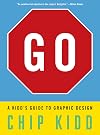
Fun, whimsical, and informative, "Go: A Kidd's Guide to Graphic Design" is a laudable introduction to the fundamentals of communicating through design. Chip Kidd, a renowned graphic designer who has hundreds of book covers to his credit (including the iconic "Jurassic Park" skeleton), skimps on nothing; even the end pages are carefully orchestrated to lure the reader, with an appealing invitation to explore the world of design and a witty exploration of the copyright logo.
Throughout, Kidd show more emphasizes the ubiquity of design, both all around us and in our everyday decision-making. He has a knack for merging the theoretical and the concrete, offering insight into the ways in which form, typography, concept, and content work together by providing hundreds of real-world examples. In many cases, the examples themselves serve as explanation, as when he playfully shows us what kerning is by smooshing the letters together in the sentence "This kerning is too tight." In the chapter on concept, Kidd makes what could have been a too-esoteric discussion of visual metaphor perfectly accessible, and the suggested projects at the end of the book are a great way to start immersing oneself in design.
This book would serve as a fine handbook for a school's yearbook staff, and would be at home in any beginner's design class. show less
Throughout, Kidd show more emphasizes the ubiquity of design, both all around us and in our everyday decision-making. He has a knack for merging the theoretical and the concrete, offering insight into the ways in which form, typography, concept, and content work together by providing hundreds of real-world examples. In many cases, the examples themselves serve as explanation, as when he playfully shows us what kerning is by smooshing the letters together in the sentence "This kerning is too tight." In the chapter on concept, Kidd makes what could have been a too-esoteric discussion of visual metaphor perfectly accessible, and the suggested projects at the end of the book are a great way to start immersing oneself in design.
This book would serve as a fine handbook for a school's yearbook staff, and would be at home in any beginner's design class. show less
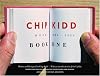
It's particularly cool to read this extraordinary book as a librarian --so many of the books covers inside are familiar and recognizable as the popular works. I'm purely amazed at how this book, which could come off as Chip Kidd's scrapbook of celebrity encounters instead reads as a humble offering. It's probably the best chronicle of the last 20 years of graphic design in the united states and it comes across as modest, approachable and endlessly fascinating.
(Reprinted from the Chicago Center for Literature and Photography [cclapcenter.com]. I am the original author of this essay, as well as the owner of CCLaP; it is not being reprinted here illegally.)
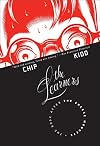
Any graphic designer worth their salt will already know who Chip Kidd is; he's the one who single-handedly transformed the subject of book design as we know it, the very first designer to regularly demand that his name appear on a book's dust jacket or copyright page. And in fact, back in 2001 show more Kidd caught the writing bug himself, and ended up putting out a small yet well-regarded novel entitled The Cheese Monkeys, set in the Modernist '60s and dealing with the noble frustrations of graphic design, specifically in a college setting during the years when the subject of design was first starting to be taken seriously by the academic community. I read and enjoyed The Cheese Monkeys myself, in fact, years before opening CCLaP which is why I've never done a write-up of it; so needless to say, I was happy to see that Kidd had actually written a sequel this year, entitled The Learners and putting our previous student hero now in New York and working his first corporate job.
So ask me how shocked and disappointed I was, then, to actually read The Learners last month and discover that something with Kidd and his writing has gone horribly, horribly wrong in the seven years since Cheese Monkeys; this novel is flat where the original was bubbly, fussy and pretentious where the original was charming and illuminating. And for the life of me, I can't figure out what the problem is either; maybe it's that the setting has moved from a college environment to a corporate one? Because, see, I have this clear recollection of Cheese Monkeys' obsessive fastidiousness about All Things Design to be a delightful treat, a warm love letter from Kidd to this industry he so obviously adores, full of the exact kinds of incisive yet obscure topics of the world that only designers seem to think about on a regular basis; but in The Learners, this fastidiousness just comes off as dysfunctionally nerdy, elitist horsesh-t, the exact kind of stuff you might hear some shaved-head black-glasses NPR Weenie spouting about in the corner of a cocktail party, that makes you just want to walk over and punch him as hard as you possibly can in the middle of his smug little Helvetica-worshipping face. (And yes, I mean both the typeface and the 2007 Gary Hustwit documentary, you f-cking nerd, and man, you really are looking for a punch in the face today, aren't you?) It was a real disappointment, even more of a frustrating experience by not being able to tell where exactly it all starts going wrong; unless you're a graphic designer at a corporate agency yourself, I recommend skipping the book altogether.
Out of 10: 4.4 show less
Any graphic designer worth their salt will already know who Chip Kidd is; he's the one who single-handedly transformed the subject of book design as we know it, the very first designer to regularly demand that his name appear on a book's dust jacket or copyright page. And in fact, back in 2001 show more Kidd caught the writing bug himself, and ended up putting out a small yet well-regarded novel entitled The Cheese Monkeys, set in the Modernist '60s and dealing with the noble frustrations of graphic design, specifically in a college setting during the years when the subject of design was first starting to be taken seriously by the academic community. I read and enjoyed The Cheese Monkeys myself, in fact, years before opening CCLaP which is why I've never done a write-up of it; so needless to say, I was happy to see that Kidd had actually written a sequel this year, entitled The Learners and putting our previous student hero now in New York and working his first corporate job.
So ask me how shocked and disappointed I was, then, to actually read The Learners last month and discover that something with Kidd and his writing has gone horribly, horribly wrong in the seven years since Cheese Monkeys; this novel is flat where the original was bubbly, fussy and pretentious where the original was charming and illuminating. And for the life of me, I can't figure out what the problem is either; maybe it's that the setting has moved from a college environment to a corporate one? Because, see, I have this clear recollection of Cheese Monkeys' obsessive fastidiousness about All Things Design to be a delightful treat, a warm love letter from Kidd to this industry he so obviously adores, full of the exact kinds of incisive yet obscure topics of the world that only designers seem to think about on a regular basis; but in The Learners, this fastidiousness just comes off as dysfunctionally nerdy, elitist horsesh-t, the exact kind of stuff you might hear some shaved-head black-glasses NPR Weenie spouting about in the corner of a cocktail party, that makes you just want to walk over and punch him as hard as you possibly can in the middle of his smug little Helvetica-worshipping face. (And yes, I mean both the typeface and the 2007 Gary Hustwit documentary, you f-cking nerd, and man, you really are looking for a punch in the face today, aren't you?) It was a real disappointment, even more of a frustrating experience by not being able to tell where exactly it all starts going wrong; unless you're a graphic designer at a corporate agency yourself, I recommend skipping the book altogether.
Out of 10: 4.4 show less
I've always had a sort of bittersweet relationship with alternative takes on the Batman mythology. They interest me enough to explore, but I just can't consider them canonical to the Batman universe in any way. Still, these stand-alone stories show the way in which this hero resonates with nearly all of us in some way or another, and are often worth the read.
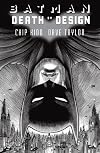
Death by Design was an unknown to me, but the premise was enough to grab my attention. The author, in the preface, indicates that his show more inspiration came from two historical events: the demolition of the original Pennsylvania Station in 1963, and the construction crane collapses in Manhattan in 2008. Weaving these events in to a "glorious, golden age" in Gotham city, Chip Kidd draws us into a noir-ish mystery featuring a young Bruce Wayne who is early in his career as the Batman. The Dark Knight must solve the mystery of industrial neglect that has resulted in lost lives and that is connected far more intimately than he cares to realize to the Wayne legacy. Along the way he meets an anti-hero, Exacto, that is taking the situation into his own hands in a way that he views as impossible for others.
Besides writing the Batman into an entertaining mystery, Kidd uses Exacto to call into question the line that Batman walks between hero and vigilante. Exacto crosses the lines that Batman will not, drawing a contrast to the police's perception of the Batman, who view him as an out-of-control vigilante, even though he adheres to his personal code of not killing those who are guilty, despite the fact that they are guilty. Exacto has no such hesitance, yet the Batman's heroism is not seen in any favorable light by the authorities.
Kidd brings technology into the story that feels to be too far-flung and science-fiction-like to have a place in the mythology of Batman, especially if we're to see the story as a period piece in a "glorious, golden age." The grappling gun is one thing, but a small device that emits a stasis field in order to prevent harmful impacts? My suspension of disbelief is broken at that point.
The Joker is written poorly by Kidd, but I have trouble holding this against him. This is an extremely nuanced villain who is difficult to get right, as difficult as the Batman in his own right.
Bruce Wayne's introspective voice, however, is significantly out of character, something else that broke my ability to completely inhabit the story on more than one occasion. He feels too flippant, too eager for the disturbed, fractured, traumatized man that is the Dark Night Detective.
And yet, for all of my misgivings, there is the art....
The art...
Dave Taylor draws us into this noir world with black-and-white art work that is nothing short of stunning. A two-page spread of Batman sailing across Gotham's skyline is worth reading the book in itself, and the close-ups of Cyndia Syl's face are breath-taking. There is just enough color to make these panels pop without breaking the murder-mystery feel, and Taylor draws your eyes across his pages masterfully.
This is an entertaining mystery with fantastic art, but it just doesn't connect with the Batman story as we know it. The departures are simply too drastic to ignore at times, but the capturing of the genre into which our hero is placed makes the book at least somewhat worth reading. I wish Kidd would have spent more time exploring the contrasts between Batman and Exacto, because there is potential to have saved this story here, instead of simply encountering another custom-written villain to balance the story. I would have difficulty recommending this for a dedicated Batman fan, unless you're just looking for a quick weekend read. show less
Death by Design was an unknown to me, but the premise was enough to grab my attention. The author, in the preface, indicates that his show more inspiration came from two historical events: the demolition of the original Pennsylvania Station in 1963, and the construction crane collapses in Manhattan in 2008. Weaving these events in to a "glorious, golden age" in Gotham city, Chip Kidd draws us into a noir-ish mystery featuring a young Bruce Wayne who is early in his career as the Batman. The Dark Knight must solve the mystery of industrial neglect that has resulted in lost lives and that is connected far more intimately than he cares to realize to the Wayne legacy. Along the way he meets an anti-hero, Exacto, that is taking the situation into his own hands in a way that he views as impossible for others.
Besides writing the Batman into an entertaining mystery, Kidd uses Exacto to call into question the line that Batman walks between hero and vigilante. Exacto crosses the lines that Batman will not, drawing a contrast to the police's perception of the Batman, who view him as an out-of-control vigilante, even though he adheres to his personal code of not killing those who are guilty, despite the fact that they are guilty. Exacto has no such hesitance, yet the Batman's heroism is not seen in any favorable light by the authorities.
Kidd brings technology into the story that feels to be too far-flung and science-fiction-like to have a place in the mythology of Batman, especially if we're to see the story as a period piece in a "glorious, golden age." The grappling gun is one thing, but a small device that emits a stasis field in order to prevent harmful impacts? My suspension of disbelief is broken at that point.
The Joker is written poorly by Kidd, but I have trouble holding this against him. This is an extremely nuanced villain who is difficult to get right, as difficult as the Batman in his own right.
Bruce Wayne's introspective voice, however, is significantly out of character, something else that broke my ability to completely inhabit the story on more than one occasion. He feels too flippant, too eager for the disturbed, fractured, traumatized man that is the Dark Night Detective.
And yet, for all of my misgivings, there is the art....
The art...
Dave Taylor draws us into this noir world with black-and-white art work that is nothing short of stunning. A two-page spread of Batman sailing across Gotham's skyline is worth reading the book in itself, and the close-ups of Cyndia Syl's face are breath-taking. There is just enough color to make these panels pop without breaking the murder-mystery feel, and Taylor draws your eyes across his pages masterfully.
This is an entertaining mystery with fantastic art, but it just doesn't connect with the Batman story as we know it. The departures are simply too drastic to ignore at times, but the capturing of the genre into which our hero is placed makes the book at least somewhat worth reading. I wish Kidd would have spent more time exploring the contrasts between Batman and Exacto, because there is potential to have saved this story here, instead of simply encountering another custom-written villain to balance the story. I would have difficulty recommending this for a dedicated Batman fan, unless you're just looking for a quick weekend read. show less
Lists
Awards


You May Also Like


Associated Authors
Statistics
- Works
- 31
- Also by
- 133
- Members
- 4,653
- Popularity
- #5,424
- Rating
- 3.9
- Reviews
- 116
- ISBNs
- 105
- Languages
- 10
- Favorited
- 7