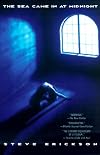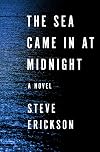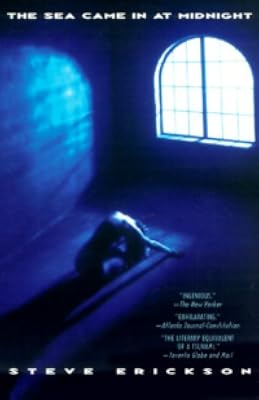
The Sea Came in at Midnight
by Steve Erickson
On This Page
Description
"If you read one philosophical-doomsday kinky-sex road-trip novel this year, make it this one." --Salon It's New Year's Eve 1999, and the members of a powerful cult are about to commit ritual suicide. Fleeing their ranks at the final moment, teenager Kristin lands in Tokyo, where she gains employment listening to clients' stories in a "memory hotel" designed to address the decay of Japanese collective memory after the Second World War. But Kristin herself has a startling odyssey: Among other show more things, it involves answering a personal ad only to wind up imprisoned, naked, in an empty house presided over by a man known as the Occupant, hard at work on a millennial calendar that has serious implications for the future. The Sea Came in at Midnight is a breathtaking fable of redemption and one of Erickson's most impressive visions to date. show lessTags
Recommendations










Member Recommendations
Member Reviews
Let's say I'm faithlessness made flesh, the modern age's leap of faith stopped dead in its tracks, fucking around with apocalypse and chaos only because in some broken part of me, among any wreckage of honor or altruism or commitment of compassion, or the bits and pieces of moral vanity, I really believed the abyss was always just the playground of my imagination, and I was its bully.
The errant effects and disputed origins of the drugs would have been more central; however such causal chains were lost amidst the shrieking of the John Zorn playing overhead. Mr. E stepped back into an alcove, nearly door-stopping an Asian woman explaining her theory of Brakhage to her snoring Nordic boyfriend. Oops, he muttered, but only to his soul. One show more day, he droned, I'll write a perfect novel, one which captures the amniotic insanity of cinema and how we are nascent suicides forever reaching out in the dark, afraid of the admission cost for our ugly demeanors. A novel like that At The Drive-In song about eating their young. Oh, of course, I'll have to situate punk somewhere in this birth of tragedy, Apollo on our doorsteps with an evil eye. That's heavy, dude, he mused. Maybe I should prime the pump by spraying out a novel about memory-geishas and milk carton children: that would be a hoot. show less
The errant effects and disputed origins of the drugs would have been more central; however such causal chains were lost amidst the shrieking of the John Zorn playing overhead. Mr. E stepped back into an alcove, nearly door-stopping an Asian woman explaining her theory of Brakhage to her snoring Nordic boyfriend. Oops, he muttered, but only to his soul. One show more day, he droned, I'll write a perfect novel, one which captures the amniotic insanity of cinema and how we are nascent suicides forever reaching out in the dark, afraid of the admission cost for our ugly demeanors. A novel like that At The Drive-In song about eating their young. Oh, of course, I'll have to situate punk somewhere in this birth of tragedy, Apollo on our doorsteps with an evil eye. That's heavy, dude, he mused. Maybe I should prime the pump by spraying out a novel about memory-geishas and milk carton children: that would be a hoot. show less
I HAVE SEEN THE TERRIFYING FACE TO FACE. I DO NOT FLEE IN HORROR. BUT THOUGH I APPROACH WITH COURAGE, I KNOW VERY WELL IT IS NOT THE COURAGE OF FAITH.
-KIERKEGAARD
I'M A FOUNTAIN OF BLOOD IN THE SHAPE OF A GIRL.
-BJORK
In her off hours she writes her memoirs in a notebook, saying to herself, Well now Kristin, this is a little presumptuous, don't you think? To be writing your memoirs at age seventeen? But she concludes that, after all, the months since she left home have been interesting, and if she herself isn't worthy of a memoir, maybe they are.
- page 5
It is an amazing achievement to create one character, one thread of story that can take us away from ourselves, to ourselves. It is a wonder of the world to create one after the other as show more Erickson does here, life after interconnected life, each one a reconnection of our own selves to our own broken world. Not a single miss, not even with the characters introduced in the last chapters of the book. The writing is so beautiful, I think I highlighted half the book. And the story? (How's the story, right?) Have mercy. The story is perfect. And wrapped up in that perfect story? Memory and faith and death and chaos and God, and so many things in between, and still not a miss anywhere. I expect this will be my best book of the year. Right now I would just like to shout it from all the rooftops: You must read this!
It has to be some kind of sin that this was ever out of print. (And the people who wrote [b:1001 Books You Must Read Before You Die|452208|1001 Books You Must Read Before You Die|Peter Boxall|https://d.gr-assets.com/books/1320483996s/452208.jpg|814053] deserve a stern talking to for leaving this off.) And special thanks goes out to Karen for all the work she puts in championing good books for the rest of us; I might have left this on my TBR indefinitely without her recommendation.)
In any case, it is available now on both Kindle and Nook, and if you are a reader of dead trees do yourself a favor and track it down ASAP. (And if you have it, for the love of what is good in the world, drop whatever else you're doing and read it now. It's that good.)
As for myself, I will be off reading the sequel, [b:Our Ecstatic Days|184924|Our Ecstatic Days|Steve Erickson|https://d.gr-assets.com/books/1348296065s/184924.jpg|178737], and all of the rest of Mr. Erickson's works. show less
-KIERKEGAARD
I'M A FOUNTAIN OF BLOOD IN THE SHAPE OF A GIRL.
-BJORK
In her off hours she writes her memoirs in a notebook, saying to herself, Well now Kristin, this is a little presumptuous, don't you think? To be writing your memoirs at age seventeen? But she concludes that, after all, the months since she left home have been interesting, and if she herself isn't worthy of a memoir, maybe they are.
- page 5
It is an amazing achievement to create one character, one thread of story that can take us away from ourselves, to ourselves. It is a wonder of the world to create one after the other as show more Erickson does here, life after interconnected life, each one a reconnection of our own selves to our own broken world. Not a single miss, not even with the characters introduced in the last chapters of the book. The writing is so beautiful, I think I highlighted half the book. And the story? (How's the story, right?) Have mercy. The story is perfect. And wrapped up in that perfect story? Memory and faith and death and chaos and God, and so many things in between, and still not a miss anywhere. I expect this will be my best book of the year. Right now I would just like to shout it from all the rooftops: You must read this!
It has to be some kind of sin that this was ever out of print. (And the people who wrote [b:1001 Books You Must Read Before You Die|452208|1001 Books You Must Read Before You Die|Peter Boxall|https://d.gr-assets.com/books/1320483996s/452208.jpg|814053] deserve a stern talking to for leaving this off.) And special thanks goes out to Karen for all the work she puts in championing good books for the rest of us; I might have left this on my TBR indefinitely without her recommendation.)
In any case, it is available now on both Kindle and Nook, and if you are a reader of dead trees do yourself a favor and track it down ASAP. (And if you have it, for the love of what is good in the world, drop whatever else you're doing and read it now. It's that good.)
As for myself, I will be off reading the sequel, [b:Our Ecstatic Days|184924|Our Ecstatic Days|Steve Erickson|https://d.gr-assets.com/books/1348296065s/184924.jpg|178737], and all of the rest of Mr. Erickson's works. show less
Recently I gave myself a treat by buying a stack of cheap second hand books off eBay. They had all been on my to read list for a long time, most of them so long that I’d forgotten precisely why I intended to read them in the first place. The summaries all seemed intriguing, however, so I decided to trust my past self. I must say, the first three have been rather a let down, this one especially so. From the blurb, I anticipated that this novel would be a literary examination of the apocalyptic atmosphere of the millennium. Perhaps it thought it was, but what actually dominated it was men sexually abusing women. All the main female characters were sex workers at one time or another and horrible things happened to all of them. The main show more male character, the so-called Occupant, was a rapist. He rapes several women during the novel, although these are not explicitly acknowledged as rapes by the narrative. Frankly, I have a big problem with that. Although the writing was good quality and the complex looping chronology quite interesting, I did not see why so much sexual abuse was remotely necessary. In short, all the male characters were hateful and all the female characters suffered for it, to no literary end. It’s so depressing to start a novel full of hope that it will be enjoyable and enlightening, only to be blindsided by intense and sustained misogyny. Just like bloody Hemingway all over again. The two stars are for the intricate chronology, which deserved to be populated with better character arcs. show less
I wasn't sure what to expect when I ventured into this web that Erickson created… but Wow! I am pleasantly surprised! I thoroughly enjoyed this and desire more from this author!
I was brought here after reading a review that stated if I enjoyed Kathe Koja's writing, that I would probably enjoy Erickson, they were absolutely right! But mind you: they are both unique to their own style and really shouldn't be compared. Honestly, I normally wouldn’t have reached for a novel of this genre, had it not been referenced to a similar style of Koja, because she is one of my favorite authors ever!
So that all being said, don't expect this story to be spoon fed to you, you will actually have to work for it, and you MUST pay attention to all the show more intricate details.
I am not here to spill the beans on what the plot is, you must find it out yourself!
I really enjoyed how this story flowed from one character to another, so effortlessly. It almost seemed like you walked hand and hand with an individual- exploring their world and their point of view. You begin to start caring about them and are so curious to find out more. But! -- then they are introduced to a new character, and then you are abruptly forced to venture down a new path with the new character, while you remain longing after the previous character who left you behind. Until you are so burning with curiosity to learn about this new character, BUT! - Then we meet a new person who intertwines with our original character …. And so the cycle seems to repeat every time we meet someone new, we then explore their world and their backstory and point of view.
All this continuously happens while in the background the author is spinning a web that somehow connect all the characters with each other by the end.
I can see how some did not "get" this story. You didn't take your time to absorb it and think. I bet my review doesn’t even make sense to you… that is why you should read it! I bet you are burning with curiosity, as I was, and still am!
It is like Easton Ellis crossed paths with Kathe Koja and produced an abstract story in which you must work to interpret the outcome in order to feel satisfied.
It was heart wrenching at times, but not overly depressing where you absorb any negativity.
It makes you feel a bit frantic and nerve wrecking and at times even a bit emotional, all while forever burning with curiosity and the desire to dig into these character’s brains.
I plan to read a bunch more from this author, his style is so original and different from the norm! show less
I was brought here after reading a review that stated if I enjoyed Kathe Koja's writing, that I would probably enjoy Erickson, they were absolutely right! But mind you: they are both unique to their own style and really shouldn't be compared. Honestly, I normally wouldn’t have reached for a novel of this genre, had it not been referenced to a similar style of Koja, because she is one of my favorite authors ever!
So that all being said, don't expect this story to be spoon fed to you, you will actually have to work for it, and you MUST pay attention to all the show more intricate details.
I am not here to spill the beans on what the plot is, you must find it out yourself!
I really enjoyed how this story flowed from one character to another, so effortlessly. It almost seemed like you walked hand and hand with an individual- exploring their world and their point of view. You begin to start caring about them and are so curious to find out more. But! -- then they are introduced to a new character, and then you are abruptly forced to venture down a new path with the new character, while you remain longing after the previous character who left you behind. Until you are so burning with curiosity to learn about this new character, BUT! - Then we meet a new person who intertwines with our original character …. And so the cycle seems to repeat every time we meet someone new, we then explore their world and their backstory and point of view.
All this continuously happens while in the background the author is spinning a web that somehow connect all the characters with each other by the end.
I can see how some did not "get" this story. You didn't take your time to absorb it and think. I bet my review doesn’t even make sense to you… that is why you should read it! I bet you are burning with curiosity, as I was, and still am!
It is like Easton Ellis crossed paths with Kathe Koja and produced an abstract story in which you must work to interpret the outcome in order to feel satisfied.
It was heart wrenching at times, but not overly depressing where you absorb any negativity.
It makes you feel a bit frantic and nerve wrecking and at times even a bit emotional, all while forever burning with curiosity and the desire to dig into these character’s brains.
I plan to read a bunch more from this author, his style is so original and different from the norm! show less
It is a good thing I like fiction that's off the beaten path because this book is definitely out there. Very dark, very deep and I'm sure I'm going to read it again in the near future because I'm sure many of the nuances in the book have escaped me. It is totally a novel about coincidence on a majorly cosmic scale; full of symbolism that I can't even begin to explain (but there are several scholarly treatises on this novel that do so that I plan to peruse over the next few days).
In the year 999 a group of 999 Celtic villagers take to the sea in boats to escape the tidal wave that will usher in the new millenium. There were supposed to be 1000; one of them, a 17-year old girl, is left in a tower overlooking the sea. In the year 1999, show more 2000 women & children are ushered off the cliff into the sea by a group of white-robed cultists. Actually, there were only 1,999; again, history repeats itself as one of its numbers realizes the significance of events and flees her fate. This is Kristin; from there her life takes her to LA, where, at the end of her rope, answers a bizarre personal ad from someone looking for someone in the depths of despair. Eventually the man who placed the ad finds her and takes her to his house in the Hills. The man has no name; he is known only as The Occupant, and he is an apocalypser -- but not in terms of the apocalypse of millenial time, but in terms of chaos & the horror of a world run amok. He starts the millenium clock ticking at a time of his boyhood, when he wakes up one night to the noise of a gunshot,goes down the hall to have his mother usher him away from the scene of the killing of a young girl in her & his father's bedroom; then he is thrust out into the chaos of anarchy in the Paris streets, never to see his mother again. He notes that Kristin is the center of chaos, and labels in indelible ink a date which at first is insignificant but later the reader understands the meaning of this date as only part of a chain of surreal links in the cosmic chain.
I don't think once through the novel can give anyone a handle on the story; my take on it is that the characters themselves don't really matter in the long run but it is human history of chaos and entropy that counts here, along with the notion that things have a habit of replaying themselves, and that all of history is a long chain into which humans time and again form their connections, regardless of space, place or time.
If you like postmodern literature, you're going to love this one. Definitely NOT recommended for readers who want the book to do their work for them...this one demands full participation. show less
In the year 999 a group of 999 Celtic villagers take to the sea in boats to escape the tidal wave that will usher in the new millenium. There were supposed to be 1000; one of them, a 17-year old girl, is left in a tower overlooking the sea. In the year 1999, show more 2000 women & children are ushered off the cliff into the sea by a group of white-robed cultists. Actually, there were only 1,999; again, history repeats itself as one of its numbers realizes the significance of events and flees her fate. This is Kristin; from there her life takes her to LA, where, at the end of her rope, answers a bizarre personal ad from someone looking for someone in the depths of despair. Eventually the man who placed the ad finds her and takes her to his house in the Hills. The man has no name; he is known only as The Occupant, and he is an apocalypser -- but not in terms of the apocalypse of millenial time, but in terms of chaos & the horror of a world run amok. He starts the millenium clock ticking at a time of his boyhood, when he wakes up one night to the noise of a gunshot,goes down the hall to have his mother usher him away from the scene of the killing of a young girl in her & his father's bedroom; then he is thrust out into the chaos of anarchy in the Paris streets, never to see his mother again. He notes that Kristin is the center of chaos, and labels in indelible ink a date which at first is insignificant but later the reader understands the meaning of this date as only part of a chain of surreal links in the cosmic chain.
I don't think once through the novel can give anyone a handle on the story; my take on it is that the characters themselves don't really matter in the long run but it is human history of chaos and entropy that counts here, along with the notion that things have a habit of replaying themselves, and that all of history is a long chain into which humans time and again form their connections, regardless of space, place or time.
If you like postmodern literature, you're going to love this one. Definitely NOT recommended for readers who want the book to do their work for them...this one demands full participation. show less
So fine, and a rarity: this puts wild "science" into science fiction. Stunningly vivid characters speed through this novel like frames in a zoetrope, united by an unfamiliar way of interpreting life. To get to know Louise Blumenthal (snuff film screenwriter, grieving mother), or Kristen, or Angie is to get to know a new way of thinking of time, of memory and life story.
A sort of Pynchon derivative that, while not painfully bad, can pretty much be passed over. Erickson traces a circuitous pathway through some of the late twentieth century's worst and weirdest moments using an emotionally damaged Northern California girl called Kristen as a conduit. The problem is that much of the reference points here are too obvious, the book's surrealism feels forced, and Erickson's not much of a prose stylist. There's a good deal of fin-de-siecle paranoia here, but Erickson lacks the chops to pull it off: it's more "X-Files" than "Gravity's Rainbow". And there are parts of "The Sea Came in at Midnight" that deal with some pretty grotesque sexual violence. One wonders if the author was going for "dark" or show more "transgressive" ended up falling short, somewhere between "exploitative" and "deeply unpleasant" instead. At its best, "The Sea Came In at Midnight" can be spacily, creepily sensual, and the book seems to get some forward motion going: Erickson keeps you reading just to see what'll happen to these people he's created. And I suppose some of the imagery here is pleasantly dreamlike. But there are much better novels out there for you to read. This registers -- or rather, doesn't register, maybe -- as pretty forgettable. show less
Members
- Recently Added By
Lists

Speculative Fiction: Slipstream Literature
166 works; 16 members
Author Information

38+ Works 3,077 Members
Steve Erickson teaches writing at the California Institute of the Arts and is also the film critic for Los Angeles magazine.
Awards and Honors
Notable Lists
Common Knowledge
- Original publication date
- 1999
Classifications
Statistics
- Members
- 332
- Popularity
- 95,929
- Reviews
- 13
- Rating
- (3.76)
- Languages
- 6 — English, French, German, Italian, Japanese, Russian
- Media
- Paper, Ebook
- ISBNs
- 11
- ASINs
- 4