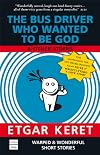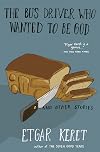
The Bus Driver Who Wanted To Be God & Other Stories
by Etgar Keret
On This Page
Description
Classic warped and wonderful stories from a "genius" (The New York Times) and master storyteller. Brief, intense, painfully funny, and shockingly honest, Etgar Keret's stories are snapshots that illuminate with intelligence and wit the hidden truths of life. As with the best writers of fiction, hilarity and anguish are the twin pillars of his work. Keret covers a remarkable emotional and narrative terrain--from a father's first lesson to his boy to a standoff between soldiers caught up in show more the Middle East conflict to a slice of life where nothing much happens. New to Riverhead's list, these wildly inventive, uniquely humane stories are for fans of Etgar Keret's inimitable style and readers of transforming, brilliant fiction. show lessTags
Recommendations





































Member Recommendations

2810michael På dansk: "8% af ingenting"

2810michael På dansk: "En ting er en ting"
2810michael På dansk: "Buschaufføren der ville være Gud - og andre historier"
Member Reviews
The first collection of short stories by Israeli writer Etgar Keret published in English starts out brilliantly, with several surreal and fantastic tales that seem to be a witches' brew of the best of Jorge Luis Borges, mixed with a splash of Julio Cortázar and José Donoso. In the title story, a principled but misunderstood bus driver invokes a higher calling to serve one of his passengers, though with an unexpected result. In "Uterus", a young man despairs when his mother's organ, preserved for prosperity in a local museum, is sold and then hijacked by eco-terrorists. And, in "A Souvenir of Hell", a young Uzbek woman works at a convenience store which primarily serves the residents of Hell, who emerge from its mouth for one day of show more freedom every 100 years. However, the stories in the latter half of the book, particularly the lengthy Kneller's Happy Campers, were very disappointing to this reader. Despite this, I was sufficiently impressed and enthralled with many of Keret's stories in this collection, and despite my mediocre rating of The Bus Driver Who Wanted to Be God I will eagerly search for more of his books soon. show less
There is a direct path between Keret's fevered imagination and his written page. There are no speed limits or detours. The stories won't be inhibited by oppressive laws of physics, or even by reality. These are short intense bursts of 'what ifs'.
In "One Last Story and That's It", a demon shows up to the house of a writer, to take away his talent. The writer begs him to let him do just one more story. Well, ok, the demon agrees, and so he just hangs out for a bit, watching tv and drinking lemonade. Finally the time comes, and the demon pulls out the talent, folds it neatly and packs it away into a box lined with styrofoam peanuts. The writer half-jokes, hey if you get overstocked on that talent, I'll be glad to take it back. And the show more demon starts to think, this job is such a crock of shit. Just two more stops til the end of the day.
"A Souvenir of Hell" is about a tourist village, located at the mouth of the entrance to Hell. It capitalises on the tourist traffic going to Hell. "Hole in the Wall" is a place to yell wishes in to, so a man wishes for and gets an angel, who is some stooped skinny guy that wears a trench coat to hide his wings.
Surreal, bizarre, funny. show less
In "One Last Story and That's It", a demon shows up to the house of a writer, to take away his talent. The writer begs him to let him do just one more story. Well, ok, the demon agrees, and so he just hangs out for a bit, watching tv and drinking lemonade. Finally the time comes, and the demon pulls out the talent, folds it neatly and packs it away into a box lined with styrofoam peanuts. The writer half-jokes, hey if you get overstocked on that talent, I'll be glad to take it back. And the show more demon starts to think, this job is such a crock of shit. Just two more stops til the end of the day.
"A Souvenir of Hell" is about a tourist village, located at the mouth of the entrance to Hell. It capitalises on the tourist traffic going to Hell. "Hole in the Wall" is a place to yell wishes in to, so a man wishes for and gets an angel, who is some stooped skinny guy that wears a trench coat to hide his wings.
Surreal, bizarre, funny. show less
Flash fiction has always been a bit of a mystery to me, that is, until I picked up this book. Keret is a genius at writing a vignette that looks small (a mere 3-4 pages), but which contains an entire universe. I just fell in love with Keret's writing and his insight into the human heart. The stories are so varied that most everyone will find something to love - from endearing stories like "Breaking the Pig," where a little boy releases his piggybank into the wild rather than be forced to break it with a hammer to heart-wrenching stories like "Cocked and Loaded," which describes with painful poignancy the impotent rage many Israeli soldiers feel towards the Palestinian population. Trivia: For those who have seen the movie Wristcutters, show more the original story ("Kneller's Happy Campers") can be found in this collection. show less
There is a direct path between Keret's fevered imagination and his written page. There are no speed limits or detours. The stories won't be inhibited by oppressive laws of physics, or even by reality. These are short intense bursts of 'what ifs'.
In "One Last Story and That's It", a demon shows up to the house of a writer, to take away his talent. The writer begs him to let him do just one more story. Well, ok, the demon agrees, and so he just hangs out for a bit, watching tv and drinking lemonade. Finally the time comes, and the demon pulls out the talent, folds it neatly and packs it away into a box lined with styrofoam peanuts. The writer half-jokes, hey if you get overstocked on that talent, I'll be glad to take it back. And the show more demon starts to think, this job is such a crock of shit. Just two more stops til the end of the day.
"A Souvenir of Hell" is about a tourist village, located at the mouth of the entrance to Hell. It capitalises on the tourist traffic going to Hell. "Hole in the Wall" is a place to yell wishes in to, so a man wishes for and gets an angel, who is some stooped skinny guy that wears a trench coat to hide his wings.
Surreal, bizarre, funny. show less
In "One Last Story and That's It", a demon shows up to the house of a writer, to take away his talent. The writer begs him to let him do just one more story. Well, ok, the demon agrees, and so he just hangs out for a bit, watching tv and drinking lemonade. Finally the time comes, and the demon pulls out the talent, folds it neatly and packs it away into a box lined with styrofoam peanuts. The writer half-jokes, hey if you get overstocked on that talent, I'll be glad to take it back. And the show more demon starts to think, this job is such a crock of shit. Just two more stops til the end of the day.
"A Souvenir of Hell" is about a tourist village, located at the mouth of the entrance to Hell. It capitalises on the tourist traffic going to Hell. "Hole in the Wall" is a place to yell wishes in to, so a man wishes for and gets an angel, who is some stooped skinny guy that wears a trench coat to hide his wings.
Surreal, bizarre, funny. show less
This collection brings together some of his earliest work, mostly dating from the early 1990s, the stuff which made his reputation in Israel, where he is a best seller and prize winner.
All the hallmarks of Keret's very short stories - generally 3-5 pages - are already here. His surreal, funny and blackly inventive imagination brings us the gift shop at the gates of Hell, which are apparently in Uzbekistan. A man bails out of a commercial airliner only to watch it crash into the sea. Many of the scenarios he creates are worthy of his hero, Kurt Vonnegut, a very obvious influence in many of the stories.
Their brevity lends some of the funnier tales the air of shaggy dog stories as they work their way towards a punchline, but there's also show more a tender side. A boy falls in love with his piggy bank, and won't break it open to get the money he has saved. In "Good Intentions" a hitman finds he cannot bring himself to kill his intended victim.
These being stories of contemporary Israel, inevitably relations between Jews and Arabs are part of the focus. "Cocked and Loaded" depicts an army sentry face to face with an armed Arab, only for both to discover their guns don't work. The Holocaust is also touched on in the story "Shoes".
About a third of the book is taken up with "Kneller's Happy Campers", an epic by Keret's standards at more than 40 pages, which has also been made into a graphic novel and filmed as "Wristcutters". It tells the story of a search for love in an afterlife where everyone has committed suicide. In fact, death is often dealt with in quite a matter-of-fact way, perhaps not surprising for stories set in such a conflict torn country.
Etgar Keret continues to impress me as one of the most entertaining short story writers around. show less
All the hallmarks of Keret's very short stories - generally 3-5 pages - are already here. His surreal, funny and blackly inventive imagination brings us the gift shop at the gates of Hell, which are apparently in Uzbekistan. A man bails out of a commercial airliner only to watch it crash into the sea. Many of the scenarios he creates are worthy of his hero, Kurt Vonnegut, a very obvious influence in many of the stories.
Their brevity lends some of the funnier tales the air of shaggy dog stories as they work their way towards a punchline, but there's also show more a tender side. A boy falls in love with his piggy bank, and won't break it open to get the money he has saved. In "Good Intentions" a hitman finds he cannot bring himself to kill his intended victim.
These being stories of contemporary Israel, inevitably relations between Jews and Arabs are part of the focus. "Cocked and Loaded" depicts an army sentry face to face with an armed Arab, only for both to discover their guns don't work. The Holocaust is also touched on in the story "Shoes".
About a third of the book is taken up with "Kneller's Happy Campers", an epic by Keret's standards at more than 40 pages, which has also been made into a graphic novel and filmed as "Wristcutters". It tells the story of a search for love in an afterlife where everyone has committed suicide. In fact, death is often dealt with in quite a matter-of-fact way, perhaps not surprising for stories set in such a conflict torn country.
Etgar Keret continues to impress me as one of the most entertaining short story writers around. show less
Funny and intriguing. I'd wished I was knowledgeable enough to understand some of its references but it certainly made me take a step back to consider each entry. Was a pleasure to read and a disappointment to finish.
I'm going to be honest, the only reason I picked up The Bus Driver Who Wanted To Be Godby Etgar Keret was for the story "Kneller's Happy Campers," which was adapted into the film Wristcutters. I haven't watched movie yet, mostly because I wanted to read the story. It's silly, I know, but sometimes reading the story first allows me to watch the movie comfortably. What I didn't know was that Etgar Keret's collection of short stories is a translation. I've mentioned how translations tend to mess with my mind sometimes.
Either way, the book is brilliant. From start to finish - which just happens to be "Kneller's Happy Campers" - the book is filled with stories that are a little bit amusing, a little bit lovely and downright weird. Warped show more and Wonderful, as the quip says at the bottom of the cover. It's not lie. From grandfathers coming back as sneakers, finding Heaven within a pipe or a man who is afflicted with a crippling disability of being too nice, the stories never have pause to ask whether or not they're believable. You simply accept them.
Much like Bizarro fiction - from authors such as Carlton Mellick III - Etgar Keret engages us with themes that we can relate to or recognize while dazzling our senses with a slice of imagination that we normally don't read in contemporary literature. His voice carries through the pages, description wrapping us. show less
Either way, the book is brilliant. From start to finish - which just happens to be "Kneller's Happy Campers" - the book is filled with stories that are a little bit amusing, a little bit lovely and downright weird. Warped show more and Wonderful, as the quip says at the bottom of the cover. It's not lie. From grandfathers coming back as sneakers, finding Heaven within a pipe or a man who is afflicted with a crippling disability of being too nice, the stories never have pause to ask whether or not they're believable. You simply accept them.
Much like Bizarro fiction - from authors such as Carlton Mellick III - Etgar Keret engages us with themes that we can relate to or recognize while dazzling our senses with a slice of imagination that we normally don't read in contemporary literature. His voice carries through the pages, description wrapping us. show less
Members
- Recently Added By
Lists

Middle East Fiction
179 works; 16 members

Best Israeli Reading
55 works; 12 members

A High School Trip to Israel
30 works; 2 members
Author Information

64+ Works 4,000 Members
Etgar Keret was born on August 20, 1967 in Israel. He is an Israeli-Polish writer known for his short stories, graphic novels, and scriptwriting for film and television. He is a lecturer at Ben-Gurion University of the Negev in Beer Sheva, and at Tel Aviv University. Keret's first published work was Pipelines, a collection of short stories. His show more second book, Missing Kissinger, a collection of fifty very short stories, caught the attention of the general public. He has also co-authored several comic books, among them Nobody Said It Was Going to Be Fun with Rutu Modan and Streets of Fury with Asaf Hanuka. In 1998, Keret published Kneller's Happy Campers, He also wrote a children's book Dad Runs Away with the Circus. In 2016 his title The Seven Good Years made the New Zealand Best Seller List. (Bowker Author Biography) show less
All Editions
Some Editions
Series
Belongs to Publisher Series
Work Relationships
Contains
Common Knowledge
- Canonical title
- The Bus Driver Who Wanted To Be God & Other Stories
- Original title
- The Bus Driver Who Wanted To Be God & Other Stories
- Original publication date
- 2015
- Related movies
- Wristcutters: A Love Story [from "Kneller's Happy Campers" short story] (2006 | IMDb)
- Original language
- Hebrew
Classifications
- Genres
- General Fiction, Fiction and Literature
- DDC/MDS
- 892.436 — Literature & rhetoric Literatures of other languages Afro-Asiatic literatures Jewish, Israeli, and Hebrew Hebrew fiction 1947–2000
- LCC
- PJ5054 .K375 .A23 — Language and Literature Oriental languages and literatures Oriental philology and literature Hebrew Literature Individual authors and works
- BISAC
Statistics
- Members
- 664
- Popularity
- 43,381
- Reviews
- 21
- Rating
- (3.90)
- Languages
- 11 — Danish, English, German, Galician, Greek, Lithuanian, Norwegian (Bokmål), Portuguese, Russian, Spanish, Turkish
- Media
- Paper, Audiobook, Ebook
- ISBNs
- 21
- ASINs
- 6