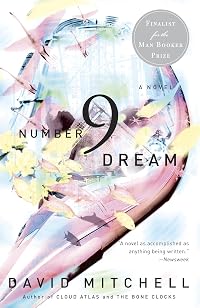
Number9Dream
by David Mitchell
On This Page
Description
"In outward form, Number9Dream is a Dickensian coming -of-age journey: Young dreamer Eiji Miyake, from remote rural Japan, thrust out on his own by his sister's death and his mother's breakdown, comes to Tokyo in pursuit of the father who abandoned him. Stumbling around this strange, awesome city, he trips over and crosses - through a hidden destiny or just monstrously bad luck - a number of its secret power centers." From the bookjacket.Tags
Recommendations
















Member Recommendations

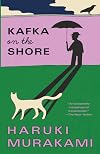
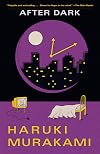
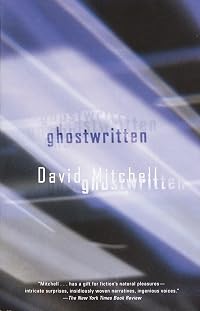
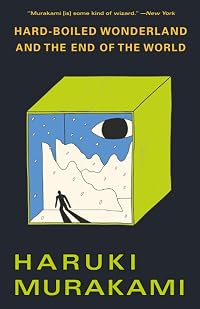
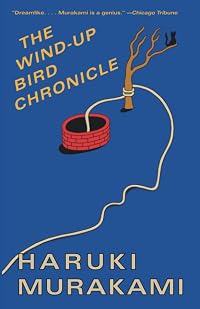
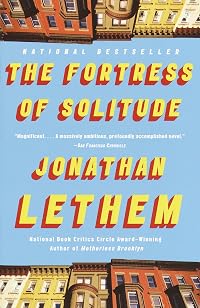
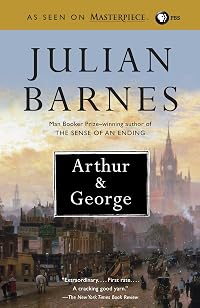
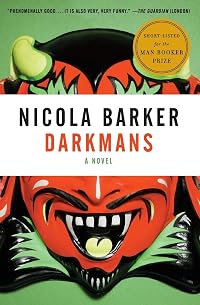
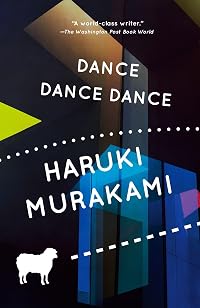
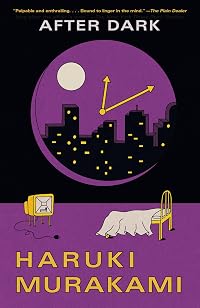
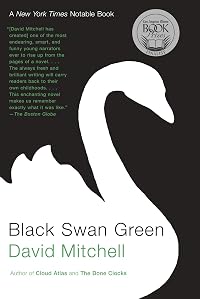
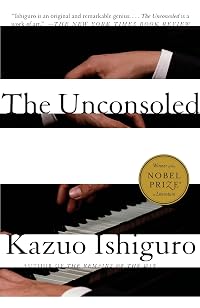
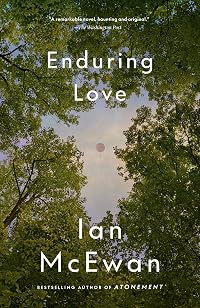
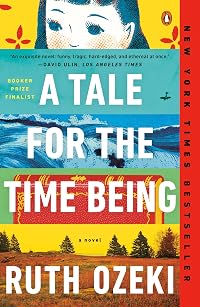
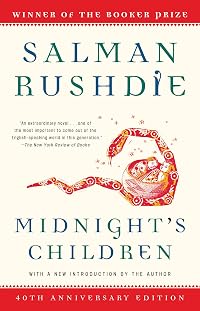
isigfethera Both are slightly surreal coming-of-age-ish stories set in Tokyo, with a similar style.
Member Reviews
Another chiaroscuro novel from Mitchell. Instead of multiple viewpoints and multiple narratives we have what might be multiple dreams or fantasies, visions of modern Japan through the mind and experiences of a boy searching for his father, haunted by his sister and bothered by his mother. Eiji Miyake is established early on as a slightly unreliable narrator, with a preference for elaborate flights of fancy over concrete actions. Nonetheless, he returns to shabby, knotty, tricky reality at the end of each initial flight, so when the story progresses through some strange and horrible adventures and misadventures, all propelled by his search for his father, the reader is left with a nagging suspicion about the nature of Eiji's reality. show more Then it no longer seems to matter, as at worst we are reading a made-up story by a made-up character in a made-up book. number9dream charms and horrifies and breaks the heart and heals it a little as one dream proceeds from the next. show less
After enjoying David Mitchell’s debut novel, Ghostwritten, I was eager for more. However, his follow-up, Number9Dream, was more difficult to like. Its protagonist, Eiji Miyake, a young boy from a rural island in southwest Japan, comes to Tokyo searching for his father. He doesn’t know the man’s name; his only point of contact is a lawyer through whom financial support had been channeled.
In the opening chapter, Eiji sits in a coffee shop across from the skyscraper housing the law office and fantasizes about various ways of meeting the lawyer and obtaining the name of his father. It took me a while to catch on to this —- I took the first fantasy for narrative rather than daydream and, from it, concluded that the story was set in show more a futuristic Blade Runner world (except for a few anachronistic details). By the time he gathers his courage and sallies forth, I wasn’t sure this, too, wasn’t a daydream.
This first chapter confused and irritated me with its several false starts. I considered giving up on the novel. Even in subsequent chapters, the ostensible narrative is interspersed with other stories. One is a fairy tale involving a goatwriter, and another is the diary of a Kaiten pilot in the closing days of the second world war. Even frequent dreams are often the seeds of possible short stories. Taken together, they gave me the impression of a supremely imaginative author still wrestling with how to harness his vision.
The chapter containing the goatwriter fairy tale ends “Reality is the page. Life is the word.” I’m still trying to decide if this is preternaturally profound or pretentious.
The title is relevant in two ways. First, dreams play a prominent role in the plot, as well as various attempts to define a dream. Example: “Dreams are shores where the ocean of spirit meets the land of matter.” At the same time, it is the title of a John Lennon song. Eiji is fascinated with Lennon; there are allusions to several of his other songs and snatches of lyrics from others, such as Bob Dylan and Joni Mitchell.
Spoiler alert: Eiji finally sees his father without revealing that he is the abandoned son. “I feel that I found what I searched for, but no longer want what I found.” More satisfying, surprisingly, is his reconciliation with his alcoholic mother, whom he hadn’t seen in nine years, shortly before the death by drowning of his adventurous twin sister, Anju.
At heart, this is a classic quest. The young protagonist must endure hardship (one chapter is particularly gruesome), undertake arduous journeys, and learn who his allies and foes are through trial and error. But, in the end, discovering the identity of his father and meeting him is only the means to achieve the true goal of his quest, self-knowledge.
So now I’ve read my second David Mitchell. Will I read more? Probably. After all, Mitchell embedded a road sign forward in this text: “the cloud atlas turns its pages over.” show less
In the opening chapter, Eiji sits in a coffee shop across from the skyscraper housing the law office and fantasizes about various ways of meeting the lawyer and obtaining the name of his father. It took me a while to catch on to this —- I took the first fantasy for narrative rather than daydream and, from it, concluded that the story was set in show more a futuristic Blade Runner world (except for a few anachronistic details). By the time he gathers his courage and sallies forth, I wasn’t sure this, too, wasn’t a daydream.
This first chapter confused and irritated me with its several false starts. I considered giving up on the novel. Even in subsequent chapters, the ostensible narrative is interspersed with other stories. One is a fairy tale involving a goatwriter, and another is the diary of a Kaiten pilot in the closing days of the second world war. Even frequent dreams are often the seeds of possible short stories. Taken together, they gave me the impression of a supremely imaginative author still wrestling with how to harness his vision.
The chapter containing the goatwriter fairy tale ends “Reality is the page. Life is the word.” I’m still trying to decide if this is preternaturally profound or pretentious.
The title is relevant in two ways. First, dreams play a prominent role in the plot, as well as various attempts to define a dream. Example: “Dreams are shores where the ocean of spirit meets the land of matter.” At the same time, it is the title of a John Lennon song. Eiji is fascinated with Lennon; there are allusions to several of his other songs and snatches of lyrics from others, such as Bob Dylan and Joni Mitchell.
Spoiler alert: Eiji finally sees his father without revealing that he is the abandoned son. “I feel that I found what I searched for, but no longer want what I found.” More satisfying, surprisingly, is his reconciliation with his alcoholic mother, whom he hadn’t seen in nine years, shortly before the death by drowning of his adventurous twin sister, Anju.
At heart, this is a classic quest. The young protagonist must endure hardship (one chapter is particularly gruesome), undertake arduous journeys, and learn who his allies and foes are through trial and error. But, in the end, discovering the identity of his father and meeting him is only the means to achieve the true goal of his quest, self-knowledge.
So now I’ve read my second David Mitchell. Will I read more? Probably. After all, Mitchell embedded a road sign forward in this text: “the cloud atlas turns its pages over.” show less
As it says on the cover, David Mitchell's Number9dream was a Man Booker finalist, so you know the quality is there. It is a bizarre tale he tells; I felt like I fell down a Murakami hole into Tokyo Dreamland. Our narrator Eiji Miyake is a 20-year-old Japanese student, newly arrived in Tokyo in search of his never-met father. His persistence in his quest is heroic, as no one, including his father, wants Eiji to find him. We find ourselves in some kind of cyberpunk detective story strewn with Yakuza, while a charming romance slowly and unexpectedly develops. Armchair travelers will love the sensation of being right there in Tokyo's streets with Eiji.
Be prepared to feel unmoored, though; sometimes what is happening is only in Eiji's show more imagination, and connections between scenes can be dreamlike. This is an early Mitchell book (his second, I think), and some sections feel amateurish. The main one for me was the "Goatwriter" material in the latter part of the book, fables that didn't aid the plot and seemed self-indulgent.
But Mitchell is so talented, this is still a fun read. Eiji gets to meet John Lennon, who wrote the song "#9dream", and there's even a hint that he has read Murakami. Those who enjoy Mitchell will get a kick out of this forerunner of such great books as Cloud Atlas, Bone Clocks and Slade House. show less
Be prepared to feel unmoored, though; sometimes what is happening is only in Eiji's show more imagination, and connections between scenes can be dreamlike. This is an early Mitchell book (his second, I think), and some sections feel amateurish. The main one for me was the "Goatwriter" material in the latter part of the book, fables that didn't aid the plot and seemed self-indulgent.
But Mitchell is so talented, this is still a fun read. Eiji gets to meet John Lennon, who wrote the song "#9dream", and there's even a hint that he has read Murakami. Those who enjoy Mitchell will get a kick out of this forerunner of such great books as Cloud Atlas, Bone Clocks and Slade House. show less
By the end I enjoyed David Mitchell's Number9dream but there were times I wanted to give up on this novel it was so bizarre. It begins easily enough, the narrator, Eiji Miyake, is a 20-year-old newly arrived in Tokyo from a faraway Japanese island. He is in search of his father who he has never met and has no name for, just the name of a lawyer who deals with the maintenance this father pays. Eiji is persistent as the reader is fed bits of his back story, including the story of his alcoholic mother who he has little contact with. Eiji has adventures, jobs and meets people in Tokyo while thinking up new ways to find his father. There are gruesome sections with gangsters in his search and a love interest. This is all played around the show more streets and neigbourhoods of a hot and humid Tokyo, which came alive as he walked and ran through the city. The difficult parts were dream sequences and fantasies that occasionally had a clumsy feel to them but were also as disconcerting for a reader as I guess David Mitchell wanted them to be. Eiji is lost in the city and often feels alone and the reader walks by his side. There were also fairytales that were intreesting but didn't move the plot on. All in all it was a good read that sometimes took a little sticking to. show less
Strange, funny, clever, moving, and a bit surreal. Generally Mitchell is fantastic, but each of his books has something that bugs me. In this one, he's trying a little too hard to out-Murakami Murakami, and to show off just how much he knows about the weird and wacky (from a Western perspective) stuff he knows about Japanese culture. But if you can get past that, it's a great read.
A book where “Ah! böwakawa poussé, poussé” meets “All that we see or seem, is but a dream within a dream” meets “Number 9, number 9, number 9, number 9…”
The basic premise is straightforward: a twenty-year-old man comes to Tokyo to find his father, who had an affair with his mother and abandoned her. He doesn’t know his father’s name and has little to go on. He’s also still trying to come to terms with his mother, an alcoholic and loose woman who gave him up to be raised by relatives, and his twin sister, who drowned when they were 11 and he was away at a soccer match.
As in the other books I’ve read by Mitchell, the novel has great breadth. I love his humor, word play, ability to write in multiple styles, and to show more weave stories together. There is philosophy, budding love, action, and sentimentality all in the right dosages. I was unaware of ‘Kaiten’, the manned suicide torpedoes the Japanese used towards the end of WWII, and loved the perspective of the soldiers he offered in one of the chapters. There are daydreams and fantasy as well, and this contributes to the overall dreamy feel of the book. He may go a little overboard with the “9” references and the book is ambitious, but he’s successful, and I enjoyed it all the way through. Loved the ending too.
Last point, and a footnote I suppose, for myself: I detected only a couple of references to his other books: “The cloud atlas turns its pages over” (of course a forward reference), and the government top-secret project in Texas from Ghostwritten hiring a hacker here.
Quotes:
On cruel words:
“I think the most powerful poison is the malicious word. Its effects may last a lifetime and there is no serum. Forgiveness may soothe the inflammation later, sure, but there is no actual serum.”
On dreams:
“Dreams are the shores where the ocean of spirit meets the land of matter. Dreams are beaches where the yet-to-be, the once-were, the will-never-be may walk awhile with the still-are.”
On love, loved the wording, know the feeling:
“How drop-dead cool can a girl be and not burn a hole in this dimension?”
And this one:
“Ai looks at me in a strange way. I see her face as a very old woman, and also as a very little girl. Slow seconds come and go. I have never looked at anyone this long, this close up, in silence, since my who-blinks-last-wins games with Anju. If this were a movie and not McDonald’s we would kiss. I think. Maybe this is more intimate than kissing. Loyalty, grief, good news, bad days.”
On the meaning of life:
“’Well, I was always curious about the meaning of life.’
‘Easy. Eating macadamia ice cream and listening to Debussy.’
‘Be serious.’
‘Well,’ Ai shifts, ‘your question is wrong.’
I imagine her lying here. ‘What should my question be, then?’
‘It should be ‘What is my meaning of life.’”
On men who have affairs:
“Like all weak men, he thought that if he acted confused enough, everyone would forgive him.”
On nightmares:
“In my homeland, it is said nightmares are our wilder ancestors returning to reclaim land. Land tamed and grazed by our softer, fatter, modern, waking selves … Nightmares are messengers, sent by who, or what, we really are, underneath. ‘Don’t forget where you come from,’ the nightmare tells us, ‘Don’t forget your true self.’”
On war:
“’What food? We are under siege, if you hadn’t noticed!’
‘A siege?’
‘They call them ‘sanctions’ these days.’”
On writers:
“’You know, we are all of us writers, busy writing our own fictions about how the world is, and how it came to be this way. We concoct plots and ascribe motives that may, or may not, coincide with the truth.’ I scowl at the envelope, wondering. ‘Take your mother. You write her part for her. Have you ever wondered how she writes her part?’”
Not possible to categorize this one, but loved the description of looking at a couple in a photograph:
“He is about to break into laughter at whatever she has just said. She is reading my reaction to see if I genuinely enjoyed her story, or if I am just being polite. Weird. Her face is familiar. Familiar, and impossible to lie to. ‘True,’ she seems to say to me, ‘but see if you can piece the puzzle together yourself.’ We watch each other for a while, then I go back to her garden where the dragonflies live out their whole lives.” show less
The basic premise is straightforward: a twenty-year-old man comes to Tokyo to find his father, who had an affair with his mother and abandoned her. He doesn’t know his father’s name and has little to go on. He’s also still trying to come to terms with his mother, an alcoholic and loose woman who gave him up to be raised by relatives, and his twin sister, who drowned when they were 11 and he was away at a soccer match.
As in the other books I’ve read by Mitchell, the novel has great breadth. I love his humor, word play, ability to write in multiple styles, and to show more weave stories together. There is philosophy, budding love, action, and sentimentality all in the right dosages. I was unaware of ‘Kaiten’, the manned suicide torpedoes the Japanese used towards the end of WWII, and loved the perspective of the soldiers he offered in one of the chapters. There are daydreams and fantasy as well, and this contributes to the overall dreamy feel of the book. He may go a little overboard with the “9” references and the book is ambitious, but he’s successful, and I enjoyed it all the way through. Loved the ending too.
Last point, and a footnote I suppose, for myself: I detected only a couple of references to his other books: “The cloud atlas turns its pages over” (of course a forward reference), and the government top-secret project in Texas from Ghostwritten hiring a hacker here.
Quotes:
On cruel words:
“I think the most powerful poison is the malicious word. Its effects may last a lifetime and there is no serum. Forgiveness may soothe the inflammation later, sure, but there is no actual serum.”
On dreams:
“Dreams are the shores where the ocean of spirit meets the land of matter. Dreams are beaches where the yet-to-be, the once-were, the will-never-be may walk awhile with the still-are.”
On love, loved the wording, know the feeling:
“How drop-dead cool can a girl be and not burn a hole in this dimension?”
And this one:
“Ai looks at me in a strange way. I see her face as a very old woman, and also as a very little girl. Slow seconds come and go. I have never looked at anyone this long, this close up, in silence, since my who-blinks-last-wins games with Anju. If this were a movie and not McDonald’s we would kiss. I think. Maybe this is more intimate than kissing. Loyalty, grief, good news, bad days.”
On the meaning of life:
“’Well, I was always curious about the meaning of life.’
‘Easy. Eating macadamia ice cream and listening to Debussy.’
‘Be serious.’
‘Well,’ Ai shifts, ‘your question is wrong.’
I imagine her lying here. ‘What should my question be, then?’
‘It should be ‘What is my meaning of life.’”
On men who have affairs:
“Like all weak men, he thought that if he acted confused enough, everyone would forgive him.”
On nightmares:
“In my homeland, it is said nightmares are our wilder ancestors returning to reclaim land. Land tamed and grazed by our softer, fatter, modern, waking selves … Nightmares are messengers, sent by who, or what, we really are, underneath. ‘Don’t forget where you come from,’ the nightmare tells us, ‘Don’t forget your true self.’”
On war:
“’What food? We are under siege, if you hadn’t noticed!’
‘A siege?’
‘They call them ‘sanctions’ these days.’”
On writers:
“’You know, we are all of us writers, busy writing our own fictions about how the world is, and how it came to be this way. We concoct plots and ascribe motives that may, or may not, coincide with the truth.’ I scowl at the envelope, wondering. ‘Take your mother. You write her part for her. Have you ever wondered how she writes her part?’”
Not possible to categorize this one, but loved the description of looking at a couple in a photograph:
“He is about to break into laughter at whatever she has just said. She is reading my reaction to see if I genuinely enjoyed her story, or if I am just being polite. Weird. Her face is familiar. Familiar, and impossible to lie to. ‘True,’ she seems to say to me, ‘but see if you can piece the puzzle together yourself.’ We watch each other for a while, then I go back to her garden where the dragonflies live out their whole lives.” show less
I really enjoyed this book. Like all David Mitchell books the characters were rich, complex and deep; the imagery was original and creative; and the narrative structure was engaging. If [b:Cloud Atlas|49628|Cloud Atlas|David Mitchell|https://d.gr-assets.com/books/1406383769s/49628.jpg|1871423] is a series of nesting dolls, and [b:Ghostwritten|6819|Ghostwritten|David Mitchell|https://d.gr-assets.com/books/1320415093s/6819.jpg|1094555] is a spider's web then Number 9 Dream is something else entirely-- maybe a long hallway with corridors branching off to the side that we glance down as we pass on our journey to the end? I don't know, I obviously don't have Mitchell's talent for imagery. But it's a rich and exciting book which feels more show more similar in style to his [b:Black Swan Green|14316|Black Swan Green|David Mitchell|https://d.gr-assets.com/books/1320562118s/14316.jpg|2166883], or [b:The Thousand Autumns of Jacob de Zoet|7141642|The Thousand Autumns of Jacob de Zoet|David Mitchell|https://d.gr-assets.com/books/1320540908s/7141642.jpg|7405757], in that we follow the narrative of a single character (pretty much) linearly through time; though I will say that those two books benefited a lot from including some hints of a supernatural aspect taking place behind the scenes, and while this book does flirt with that briefly through the introduction of a dream eating old woman on a bus it doesn't really add anything to the plot, even though it seemed like it could add a lot to the portions with the yakuza.
The only complaint that I would make is that without any kind of supernatural aspect added in, or an intentional ratcheting up of the level of surrealness over the course of the book the narrative is very odd when considered after the fact- with Eiji being thrown into conflict with the yakuza for a pretty poorly supported reason. At the time when you're reading it doesn't really feel that way, as Eiji is constantly having bizarre daydreams and Mitchell manages to describe the mundane in such a creative and exciting way that it doesn't even seem like a contrast when compared to something dramatic and exciting. What I would have preferred to see would have been something more along the lines of the structure of [b:The Bone Clocks|20819685|The Bone Clocks|David Mitchell|https://d.gr-assets.com/books/1398205538s/20819685.jpg|26959610], where we get a very logical progression from the everyday normal to the intensely bizarre early in the book. I think Number 9 Dream would have benefited from this as the contrast between the ordinary mundane and the surreal helps to emphasize aspects of both. show less
The only complaint that I would make is that without any kind of supernatural aspect added in, or an intentional ratcheting up of the level of surrealness over the course of the book the narrative is very odd when considered after the fact- with Eiji being thrown into conflict with the yakuza for a pretty poorly supported reason. At the time when you're reading it doesn't really feel that way, as Eiji is constantly having bizarre daydreams and Mitchell manages to describe the mundane in such a creative and exciting way that it doesn't even seem like a contrast when compared to something dramatic and exciting. What I would have preferred to see would have been something more along the lines of the structure of [b:The Bone Clocks|20819685|The Bone Clocks|David Mitchell|https://d.gr-assets.com/books/1398205538s/20819685.jpg|26959610], where we get a very logical progression from the everyday normal to the intensely bizarre early in the book. I think Number 9 Dream would have benefited from this as the contrast between the ordinary mundane and the surreal helps to emphasize aspects of both. show less
Members
- Recently Added By
Lists

Top Five Books of 2013
1,562 works; 715 members

Magic Realism
371 works; 52 members

Booker Prize
491 works; 62 members

Man Booker Prize Longlist 2001
24 works; 2 members

Books Read in 2016
4,666 works; 199 members

Books Read in 2019
4,052 works; 108 members

living room bookshelf
150 works; 1 member

01
20 works; 1 member
Author Information

18+ Works 50,314 Members
Some Editions
Awards and Honors
Common Knowledge
- Canonical title
- Number9Dream
- Original title
- Number9Dream
- Original publication date
- 2001
- People/Characters
- Eiji Miyake; Ai Imago; Buntaro; Anju Miyake
- Important places
- Tokyo, Japan
- Epigraph
- 'It is so much simpler to bury reality than it is to dispose of dreams.'
- Don Delillo, Americana - Dedication
- For Keiko
- First words
- It is a simple matter. I know your name, and you know mine, once upon a time: Eiji Miyake.
- Quotations
- Dreams are the shores where the ocean of spirit meets the land of matter. Dreams are beaches where the yet-to-be, the once-were, the will-never-be may walk awhile with the still-are.
- Last words*
- (Click to show. Warning: May contain spoilers.)En ik begin te hollen
*Some information comes from Common Knowledge in other languages. Click "Edit" for more information.
Classifications
Statistics
- Members
- 3,448
- Popularity
- 4,833
- Reviews
- 90
- Rating
- (3.84)
- Languages
- 10 — Czech, Dutch, English, German, Italian, Japanese, Polish, Romanian, Russian, Turkish
- Media
- Paper, Audiobook, Ebook
- ISBNs
- 35
- ASINs
- 14