
Colorless Tsukuru Tazaki and His Years of Pilgrimage
by Haruki Murakami
On This Page
Description
"The new novel--a book that sold more than a million copies the first week it went on sale in Japan--from the internationally acclaimed author, his first since IQ84"--Tags
Recommendations





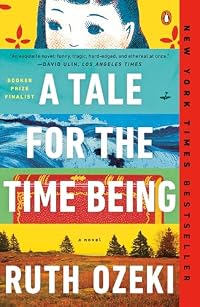



















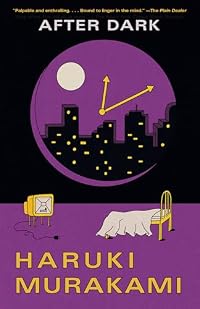






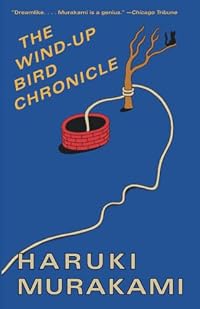

















Member Recommendations



Member Reviews
In high school, Tsukuru Tazaki is in a tight-knit group of five friends, the other four of whom all have names that reflect a color: red, blue, white, and black. Only Tsukuru is "colorless," and he feels that it is an accurate description of his personality as well. He goes to Tokyo to college—he has always wanted to build train stations—whereas the other four remain in their hometown. On one trip home his sophomore year, he is abruptly cut off from all contact with his friends. They want nothing more to do with him, and it cuts him deeply. Now, sixteen years later, he is encouraged by his girlfriend to track down his friends and resolve the mystery of why he was ostracized, and perhaps heal the pain that he has lived with for show more so long.
I loved this novel: the writing, the characters, the tone, and even the book design (the cover overlays a map of Japanese train stations). The other two books that I have read by Murakami were representative of his magical-surrealist style, and while I enjoyed them, I found them difficult reading. This one is completely different. There are no talking cats or parallel universes, just characters that I could relate to and empathize with, dealing with problems of belonging, self-awareness, and the unfathomable nature of relationships. show less
I loved this novel: the writing, the characters, the tone, and even the book design (the cover overlays a map of Japanese train stations). The other two books that I have read by Murakami were representative of his magical-surrealist style, and while I enjoyed them, I found them difficult reading. This one is completely different. There are no talking cats or parallel universes, just characters that I could relate to and empathize with, dealing with problems of belonging, self-awareness, and the unfathomable nature of relationships. show less
Maybe my favorite Murakami to date. Pensive, grounded, plenty of dreamy nostalgia; maybe similar to Wind-up Bird, if a bit more coherent. Lots of loose ends though just left hanging, abandoned. I have to say this wasn't a bad thing: a predicable lead-up that's then ignored, never to reach its destination, is a nicely subverted expectation. I don't know if I can get over the fact that this was done for the ending, though. I can appreciate it, but that doesn't mean I'm not grumpy.
I really wanted to like this one, but it was a huge disappointment. I lived in Japan for 5 years so I recognized many of the locales and foods in the story, about the damaged psyche of a 20 something year old male whose friends dump him suddenly in his early college years. He rambles around feeling sorry for himself, contemplating suicide, and struggling to relate to women until he can find out why he got booted off the team. The ending is particularly "meh." Frankly,the first word of the title describes the entire book perfectly; "COLORLESS". Although the author would have us think this is his purpose to describe poor Tsukuru's life, it works for the whole book: it's just plain boring. The book jacket is the best part of the book.
Haruki Murakami's books, as diverse and unpredictable as they are, can generally be divided into two kinds: bizarre, dream-like fantasies that include Hard-Boiled Wonderland and the End of the World, The Wind-up Bird Chronicle, Kafka on the Shore, and 1Q84, and more traditional narratives that explore romantic longings and feelings of isolation, like Norwegian Wood, Sputnik Sweetheart and his newest, Colorless Tsukuru Tazaki and His Years of Pilgrimage. I'm more a fan of the former group, which showcases Murakami's formidable imagination and spellbinding ability to draw us into foreign yet somehow familiar worlds. But I've also enjoyed his more straightforward stories, and they have the advantage of being a gateway into his work for show more readers not immediately drawn to his weirder offerings. Norwegian Wood was his first big hit in Japan, and I suspect Colorless Tsukuru will gain him many new fans internationally, as it is his most easily accessible book in quite some time. Its reasonable 300+ page length will likely be another attraction.
In his mid-30s, Tsukuru works at a Tokyo firm that designs and renovates train stations. As Tsukuru puts it, he "builds train stations". He thinks of himself as "colorless" and drab. This is in part because he was part of a special group of four other friends in his small town's high school, two boys and two girls, whose names all contained a reference to a color (red, blue, white and black). In contrast, his name, given to him by his father, means "builder". Yet it is his colorful passion for train stations that has drawn Tsukuru from his hometown to Tokyo, to obtain the necessary engineering education, while his friends stayed behind. In some of the book's sweeter passages, he sits in train stations for the peace they bring him, thinking about the workings of the stations, and watching the trains and the people using them.
The relationship he has with his four high school friends is unusually close and harmonious, and they all assiduously work to keep romantic or sexual feelings from disrupting the fulfilling, womb-like experience. However, after Tsukuru goes to Tokyo, for reasons they won't explain and he feels unable to question, his four friends turn on him, cutting off all ties and casting him out forever. He later explains: "It felt like I was on the deck of a ship at night and was suddenly hurled into the ocean, all alone. . . . I don't know if someone pushed me off, or whether I fell overboard on my own. Either way, the ship sails on and I'm in the dark, freezing water, watching the lights on deck fade into the distance." He sinks into despair, contemplating suicide, and isn't even sure why "he hadn't taken this final step. Crossing that threshold between life and death would have been easier than swallowing down a raw, slick egg."
Once burned (or drowned), twice shy, and his relationships with women, or anyone, from then on, are cautious and distant. His life seems half-asleep, but he has passionate, discomfiting sexual dreams. He finally meets a young man, Haida, while swimming, who is a kindred spirit. Among other things, Haida introduces him to the enjoyment of classical music. That notably includes Franz Liszt's "Year of Pilgrimage" and its haunting piece, "Le mal du pays", which can be translated as homesickness. As readers of Murakami's other books know, he often features pieces of music to beautiful effect. This is no exception. The friendship with Haida is Tsukuru's first step toward re-connecting, and he subsequently begins a romance with sharp, business-like Sara. She convinces him that he must revisit his old friends and find out why they shunned him. "You need to come face-to-face with the past, not as some naive, easily wounded boy, but as a grown-up, independent professional. Not to see what you want to see, but what you must see".
I can't tell you what Tsukuru finds out on his pilgrimage, which includes a trip to Finland to visit one of the relocated friends. It is at once disturbing and unfair. At the same time, it offers insight and transporting moments. "Like a pair of dancers who had stopped mid-step, they simply held each other quietly . . . Nothing came between their two bodies, as her warm breath brushed his neck. Tsukuru shut his eyes, letting the music wash over him as he listened to Eri's heartbeat. The beating of her heart kept time with the slap of the little boat against the pier."
As with many of Murakami's books, there is a mystery to be solved here, and once it is, more mystery may take its place. Will what Tsukuru learns be enough? In part this is a story of the sometimes life-changing cruelty teens can inflict on each other, and in part it's about the hard work of healing after heartbreak. We've all been there. It has been different for each of us, but the aches and longings are shared. Hurled into the dark water, all alone, and needing to find a way back. Murakami has captured this piercingly, with living and breathing characters, haunting music, and our friend Tsukuru, who is trying to find a way to re-build his life. Four and a half stars. show less
In his mid-30s, Tsukuru works at a Tokyo firm that designs and renovates train stations. As Tsukuru puts it, he "builds train stations". He thinks of himself as "colorless" and drab. This is in part because he was part of a special group of four other friends in his small town's high school, two boys and two girls, whose names all contained a reference to a color (red, blue, white and black). In contrast, his name, given to him by his father, means "builder". Yet it is his colorful passion for train stations that has drawn Tsukuru from his hometown to Tokyo, to obtain the necessary engineering education, while his friends stayed behind. In some of the book's sweeter passages, he sits in train stations for the peace they bring him, thinking about the workings of the stations, and watching the trains and the people using them.
The relationship he has with his four high school friends is unusually close and harmonious, and they all assiduously work to keep romantic or sexual feelings from disrupting the fulfilling, womb-like experience. However, after Tsukuru goes to Tokyo, for reasons they won't explain and he feels unable to question, his four friends turn on him, cutting off all ties and casting him out forever. He later explains: "It felt like I was on the deck of a ship at night and was suddenly hurled into the ocean, all alone. . . . I don't know if someone pushed me off, or whether I fell overboard on my own. Either way, the ship sails on and I'm in the dark, freezing water, watching the lights on deck fade into the distance." He sinks into despair, contemplating suicide, and isn't even sure why "he hadn't taken this final step. Crossing that threshold between life and death would have been easier than swallowing down a raw, slick egg."
Once burned (or drowned), twice shy, and his relationships with women, or anyone, from then on, are cautious and distant. His life seems half-asleep, but he has passionate, discomfiting sexual dreams. He finally meets a young man, Haida, while swimming, who is a kindred spirit. Among other things, Haida introduces him to the enjoyment of classical music. That notably includes Franz Liszt's "Year of Pilgrimage" and its haunting piece, "Le mal du pays", which can be translated as homesickness. As readers of Murakami's other books know, he often features pieces of music to beautiful effect. This is no exception. The friendship with Haida is Tsukuru's first step toward re-connecting, and he subsequently begins a romance with sharp, business-like Sara. She convinces him that he must revisit his old friends and find out why they shunned him. "You need to come face-to-face with the past, not as some naive, easily wounded boy, but as a grown-up, independent professional. Not to see what you want to see, but what you must see".
I can't tell you what Tsukuru finds out on his pilgrimage, which includes a trip to Finland to visit one of the relocated friends. It is at once disturbing and unfair. At the same time, it offers insight and transporting moments. "Like a pair of dancers who had stopped mid-step, they simply held each other quietly . . . Nothing came between their two bodies, as her warm breath brushed his neck. Tsukuru shut his eyes, letting the music wash over him as he listened to Eri's heartbeat. The beating of her heart kept time with the slap of the little boat against the pier."
As with many of Murakami's books, there is a mystery to be solved here, and once it is, more mystery may take its place. Will what Tsukuru learns be enough? In part this is a story of the sometimes life-changing cruelty teens can inflict on each other, and in part it's about the hard work of healing after heartbreak. We've all been there. It has been different for each of us, but the aches and longings are shared. Hurled into the dark water, all alone, and needing to find a way back. Murakami has captured this piercingly, with living and breathing characters, haunting music, and our friend Tsukuru, who is trying to find a way to re-build his life. Four and a half stars. show less
Haruki Murakami in a Japanese author best known in western culture for the 2011 success of his epic dystopian novel,1Q84. Colorless Tsukuru Tazaki and His Years of Pilgrimage is his highly anticipated newest title.
Colorless Tsukuru Tazaki and His Years of Pilgrimage is the story of a man who has never really recovered from being inexplicably exiled by a group of close friends he met in high school. Drifting through his life, engineer Tsukuru is now in his mid thirties, single and largely friendless, until he meets a woman who encourages him to confront his painful past.
Throughout Colorless Tsukuru Tazaki and His Years of Pilgrimage, Murukami explores the themes of identity, friendship, alienation and mental health. Tsukuru views himself show more as having; “…no personality, no defined color. [With] nothing to offer to others…like an empty vessel”, and as such feels disconnected from other people and destined to be alone. This feeling can be traced back to the brutal abandonment of his friends and to redefine himself Tsukuru must resolve the lingering hurts and resentments.
I thought the symbolism in the novel was fairly heavy handed and the dream slips didn’t always make sense to me. I didn’t find the writing particularly special though I found it more accessible and grounded than I was expecting.
I really wasn’t sure what to expect from Colorless Tsukuru Tazaki and His Years of Pilgrimage, not having read Murakami previously though I have read plenty of opinions about several of his earlier works, but I’m pretty sure this wasn’t quite it. Essentially this seems to me to be lad lit (think Nick Hornby), perhaps given gravitas primarily because the protagonist, and the author, is Japanese. Don’t get me wrong, I enjoyed the story of Tsukuru’s journey to make peace with his past and redefine his sense of self, but I was largely underwhelmed by the whole thing. show less
Colorless Tsukuru Tazaki and His Years of Pilgrimage is the story of a man who has never really recovered from being inexplicably exiled by a group of close friends he met in high school. Drifting through his life, engineer Tsukuru is now in his mid thirties, single and largely friendless, until he meets a woman who encourages him to confront his painful past.
Throughout Colorless Tsukuru Tazaki and His Years of Pilgrimage, Murukami explores the themes of identity, friendship, alienation and mental health. Tsukuru views himself show more as having; “…no personality, no defined color. [With] nothing to offer to others…like an empty vessel”, and as such feels disconnected from other people and destined to be alone. This feeling can be traced back to the brutal abandonment of his friends and to redefine himself Tsukuru must resolve the lingering hurts and resentments.
I thought the symbolism in the novel was fairly heavy handed and the dream slips didn’t always make sense to me. I didn’t find the writing particularly special though I found it more accessible and grounded than I was expecting.
I really wasn’t sure what to expect from Colorless Tsukuru Tazaki and His Years of Pilgrimage, not having read Murakami previously though I have read plenty of opinions about several of his earlier works, but I’m pretty sure this wasn’t quite it. Essentially this seems to me to be lad lit (think Nick Hornby), perhaps given gravitas primarily because the protagonist, and the author, is Japanese. Don’t get me wrong, I enjoyed the story of Tsukuru’s journey to make peace with his past and redefine his sense of self, but I was largely underwhelmed by the whole thing. show less
I am an avowed fan of Haruki Murakami. I look forward to his new books like they're Harry Potter sequels. But besides my usual excitement, I had especially good feelings about this one. I loved the title. I loved the cover art. And best of all:
It's about a third the size of 1Q84. Domo arigato, Murakami-san. While I liked 1Q84, at 925 pages it did feel a little flabby. Colorless Tsukuru Tazaki went the opposite route in that it left me wanting more.
At face-value, Tsukuru Tazaki is another one of Murakami's passive male protagonists. In high school, Tsukuru is haunted by the fear that he is an uninteresting person. He's smart but not brilliant; he doesn't play a sport or an instrument; and he is not artistic, funny, or charming. The only show more thing that seems to set him apart is his love of railway stations.
Tsukuru also feels "colorless" in a more literal sense. He and four other students form a complementary, inseparable group of friends. His friends aren't just talented, they all have colors in their last names: Aka (red) is a brilliant student. Ao (blue) is an energetic rugby player. Shiro (white) is a beautiful pianist. Kuro (black) is a sarcastic bookworm. Tsukuru loves these friends but is unsure why they accept him, as he doesn't have either a special quality or a color.
One day, Tsukuru is shut out from the group without any explanation. They tell him they do not want to talk to him or see him ever again. In typical Murakami-fashion that is both maddening and understandable, Tsukuru doesn't protest. He moves on as best as he can, but the damage has been done to his psyche. Now an unmarried 36-year-old living in Tokyo, he has a job designing and renovating railway stations. He avoids forming close relationships until he begins dating a woman named Sara, who urges him to seek out his former friends and gain some closure.
Every Murakami novel I've read has a wonderful dreamlike quality, and Colorless Tsukuru Tazaki is no exception. In this case, the tone is more similar to Sputnik Sweetheart than the what-the-fuckery of Kafka on the Shore. These touches of magical realism provide depth to what is a pretty simple story. Murakami also has a gift for taking the mundane and making it seem precious. Take the protagonist. For all his proclaimed colorlessness, Tsukuru has some rather endearing traits. What do you do when you have time to kill and no desire to go back home? Some people might go a bar and get drunk. Tsukuru goes to the nearest railway station and watches the trains arrive and depart.
I can't write an unbiased review of this book. Everything about Haruki Murakami's writing that I love is present, and everything that I would make fun of is kept to a minimum. This is my first 5-star book of the year. show less
It's about a third the size of 1Q84. Domo arigato, Murakami-san. While I liked 1Q84, at 925 pages it did feel a little flabby. Colorless Tsukuru Tazaki went the opposite route in that it left me wanting more.
At face-value, Tsukuru Tazaki is another one of Murakami's passive male protagonists. In high school, Tsukuru is haunted by the fear that he is an uninteresting person. He's smart but not brilliant; he doesn't play a sport or an instrument; and he is not artistic, funny, or charming. The only show more thing that seems to set him apart is his love of railway stations.
Tsukuru also feels "colorless" in a more literal sense. He and four other students form a complementary, inseparable group of friends. His friends aren't just talented, they all have colors in their last names: Aka (red) is a brilliant student. Ao (blue) is an energetic rugby player. Shiro (white) is a beautiful pianist. Kuro (black) is a sarcastic bookworm. Tsukuru loves these friends but is unsure why they accept him, as he doesn't have either a special quality or a color.
One day, Tsukuru is shut out from the group without any explanation. They tell him they do not want to talk to him or see him ever again. In typical Murakami-fashion that is both maddening and understandable, Tsukuru doesn't protest. He moves on as best as he can, but the damage has been done to his psyche. Now an unmarried 36-year-old living in Tokyo, he has a job designing and renovating railway stations. He avoids forming close relationships until he begins dating a woman named Sara, who urges him to seek out his former friends and gain some closure.
Every Murakami novel I've read has a wonderful dreamlike quality, and Colorless Tsukuru Tazaki is no exception. In this case, the tone is more similar to Sputnik Sweetheart than the what-the-fuckery of Kafka on the Shore. These touches of magical realism provide depth to what is a pretty simple story. Murakami also has a gift for taking the mundane and making it seem precious. Take the protagonist. For all his proclaimed colorlessness, Tsukuru has some rather endearing traits. What do you do when you have time to kill and no desire to go back home? Some people might go a bar and get drunk. Tsukuru goes to the nearest railway station and watches the trains arrive and depart.
I can't write an unbiased review of this book. Everything about Haruki Murakami's writing that I love is present, and everything that I would make fun of is kept to a minimum. This is my first 5-star book of the year. show less
I had been waiting for this book for quite some time, and even deferred reading it so that it would be not merely the 100th book I have read this year but also the 4000th book I have read since starting my list back on 1 January 1980. I have had my fingers burnt in the past, looking forward with gleeful anticipation to books which, in the event, have proved to be disappointing beyond measure. Still, I was pretty confident that Murakami would deliver, and he did, magnificently.
During his teenage years growing up in the city of Nagoya Tsukuru Tazaki became very friendly with four other youngsters (two men and two women), and they gradually all became inseparable. By coincidence, all of the other four had names which included a colour, show more and in occasional moments of depression Tsukuru wondered whether he was lacking in any natural brightness or vigour.
When the group come to go to university the other four all decide to stay in Nagoya, but Tsukuru had always dreamt of building railway stations, and went to study in Tokyo. When he returned home at the end of the first semester he is told by the others that they don't want to see him again, or have anything further to do with him. They offer no explanation and, though he is stunned by the announcement, Tsukuru accepts the situation.
Now, sixteen years later, Tsukuru is working as a railway engineer and has a beautiful girlfriend, Sara. He tells her about the abrupt cessation of his strong friendship with the other four, and she advises him to try to discover what had caused the abrupt severance.
As ever, Murakami, being a master at suspending his readers' disbelief, makes everything seem immensely plausible. Tsukuru is an odd but deeply empathetic character, with a charming lack of self-delusion.
Though the book lacks the excitement and the constant sense of a huge surprise just around the corner that peppered 1Q84, this book is no less gripping. My only disappointment was that it was over so soon. Ah well, I will just have to wait another four of five years for the next one! show less
During his teenage years growing up in the city of Nagoya Tsukuru Tazaki became very friendly with four other youngsters (two men and two women), and they gradually all became inseparable. By coincidence, all of the other four had names which included a colour, show more and in occasional moments of depression Tsukuru wondered whether he was lacking in any natural brightness or vigour.
When the group come to go to university the other four all decide to stay in Nagoya, but Tsukuru had always dreamt of building railway stations, and went to study in Tokyo. When he returned home at the end of the first semester he is told by the others that they don't want to see him again, or have anything further to do with him. They offer no explanation and, though he is stunned by the announcement, Tsukuru accepts the situation.
Now, sixteen years later, Tsukuru is working as a railway engineer and has a beautiful girlfriend, Sara. He tells her about the abrupt cessation of his strong friendship with the other four, and she advises him to try to discover what had caused the abrupt severance.
As ever, Murakami, being a master at suspending his readers' disbelief, makes everything seem immensely plausible. Tsukuru is an odd but deeply empathetic character, with a charming lack of self-delusion.
Though the book lacks the excitement and the constant sense of a huge surprise just around the corner that peppered 1Q84, this book is no less gripping. My only disappointment was that it was over so soon. Ah well, I will just have to wait another four of five years for the next one! show less
Members
- Recently Added By
Published Reviews
ThingScore 75
This is a book for both the new and experienced reader. It has a strange casualness, as if it unfolded as Murakami wrote it; at times, it seems like a prequel to a whole other narrative. The feel is uneven, the dialogue somewhat stilted, either by design or flawed in translation. Yet there are moments of epiphany gracefully expressed, especially in regard to how people affect one another.
added by ozzer
added by Josep_Ferres
Lists

Recommend the 20 best books you've read in the last five years
2,168 works; 601 members

Japanese Literature
230 works; 37 members

Top Five Books of 2014
1,064 works; 398 members

Top Five Books of 2017
757 works; 230 members
Haruki Murakami's Books
16 works; 5 members

Books Read in 2014
2,341 works; 86 members

2016 Book Club Choices
52 works; 7 members

Books Read in 2015
3,298 works; 126 members

Phi Beta Kappa reading list
260 works; 8 members

Dublin Literary Award Longlist 2016
148 works; 4 members

Books Read in 2017
4,249 works; 129 members

Overdue Podcast
803 works; 9 members

Top Five Books of 2025
950 works; 302 members

Kirkus Reviews Best Fiction of 2014
100 works; 7 members

Books Read in 2025
4,090 works; 97 members

The Books I Read in 2017
96 works; 1 member

el
1,139 works; 1 member
Talk Discussions
Past Discussions
Colorless Tsukuru Tazaki Group Read in 75 Books Challenge for 2014 (November 2014)
Author Information

279+ Works 173,937 Members
Haruki Murakami was born on January 12, 1949 in Kyoto, Japan and studied at Tokyo's Waseda University. He opened a coffeehouse/jazz bar in the capital called Peter Cat with his wife. He became a full-time author following the publication of his first novel, Hear the Wind Sing, in 1979. He writes both fiction and non-fiction works. His fiction show more works include Norwegian Wood, Colorless Tsukuru Tazaki and His Years of Pilgrimage, The Strange Library, and Men Without Women. Several of his stories have been adapted for the stage and as films. His nonfiction works include What I Talk About When I Talk About Running. He has received numerous literary awards including the Franz Kafka Prize for Kafka on the Shore, the Yomiuri Prize for The Wind-Up Bird Chronicle, and the Jerusalem Prize. He has translated into Japanese literature written by F. Scott Fitzgerald, Raymond Carver, Truman Capote, John Irving, and Paul Theroux. (Bowker Author Biography) show less
Some Editions
Awards and Honors
Awards
Distinctions
Series
Belongs to Publisher Series
Work Relationships
Reference guide/companion to
Common Knowledge
- Canonical title
- Colorless Tsukuru Tazaki and His Years of Pilgrimage
- Original title
- 色彩を持たない多崎つくると、 彼の巡礼の年; 色彩を持たない多崎つくると、彼の巡礼の年; Shikisai o motanai Tazaki Tsukuru to, kare no junrei no toshi
- Alternate titles*
- Colorless Tsukuru Tazaki and His Years of Pilgrimage
- Original publication date
- 2013-04 (Japanese) (Japanese); 2014 (English: Gabriel) (English: Gabriel); 2013-10 (Argentina) (Argentina); 2014 (Danish) (Danish); 2014 (Nederlands) (Nederlands)
- People/Characters
- Tsukuru Tazaki; Tsukura Tazaki; Aka/Red; Kei Akamatsu; Ao/Blue; Yoshio Oumi (show all 12); Shiro/White; Yuzuki Shirane; Kuro/Black; Eri Kurono Haatainen; Sara Kimoto; Fumiaki Haida
- Important places
- Nagoya, Japan; Tokyo, Japan; Japan; Helsinki, Finland
- First words
- From July of his sophomore year in college until the following January, all Tsukuru Tazaki could think about was dying.
- Quotations
- "It's sort of weird if you think about it," Sara said. "We live in a pretty apathetic age, yet we're surrounded by an enormous amount of information about other people. If you feel like it, you can easily gather that informat... (show all)ion about them. Having said that, we still hardly know anything about people."
And in that moment, he was finally able to accept it all. In the deepest recesses of his soul, Tsukuru Tazaki understood. One heart is not connected to another through harmony alone. They are, instead, linked deeply through t... (show all)heir wounds. Pain linked to pain, fragility to fragility. There is no silence without a cry of grief, no forgiveness without bloodshed, no acceptance without a passage through acute loss. That is what lies at the root of true harmony.
Jealousy—at least as far as he understood it from his dream—was the most hopeless prison in the world. Jealousy was not a place he was forced into by someone else, but a jail in which the inmate entered voluntarily, locke... (show all)d the door, and threw away the key. And not another soul in the world knew he was locked inside. Of course if he wanted to escape, he could do so. The prison was, after all, his own heart. But he couldn't make that decision. His heart was as hard as a stone wall. This was the very essence of jealousy.
All that remained now was a sort of quiet resignation. A colorless, neutral, empty feeling. He was sitting alone in a huge, old vacant house, listening as a massive grandfather clock hollowly ticked away time. His mouth was c... (show all)losed, his eyes fixed on the clock as he watched the hands move forward. His feelings were wrapped in layer upon layer of thin membrane and his heart was still a blank, as he aged, one hour at a time. - Last words
- (Click to show. Warning: May contain spoilers.)All that remained was the sound of the wind slipping through a stand of white birch trees.
- Original language
- Japanese
*Some information comes from Common Knowledge in other languages. Click "Edit" for more information.
Classifications
- Genres
- General Fiction, Fiction and Literature
- DDC/MDS
- 895.63 — Literature & rhetoric Literatures of other languages Literatures of East and Southeast Asia Japanese Japanese fiction
- LCC
- PL856 .U673 .S5513 — Language and Literature Languages and literatures of Eastern Asia, Africa, Oceania Languages of Eastern Asia, Africa, Oceania Japanese language and literature Japanese literature Individual authors and works
- BISAC
Statistics
- Members
- 5,395
- Popularity
- 2,475
- Reviews
- 231
- Rating
- (3.80)
- Languages
- 26 — Catalan, Chinese, Czech, Danish, Dutch, English, Estonian, Finnish, French, German, Greek, Hebrew, Hungarian, Italian, Japanese, Korean, Lithuanian, Norwegian (Bokmål), Polish, Portuguese, Romanian, Russian, Slovenian, Spanish, Swedish, Turkish
- Media
- Paper, Audiobook, Ebook
- ISBNs
- 104
- UPCs
- 1
- ASINs
- 38