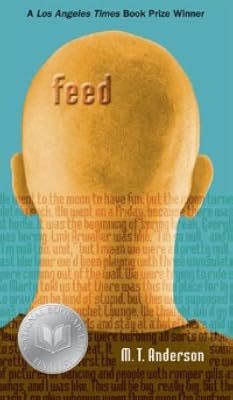
Feed
by M. T. Anderson
On This Page
Description
In a future where most people have computer implants in their heads to control their environment, a boy meets an unusual girl who is in serious trouble.Tags
Recommendations
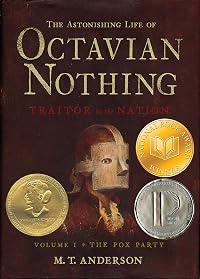
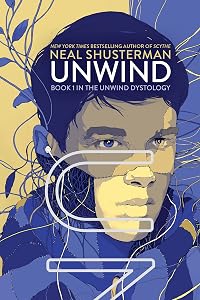
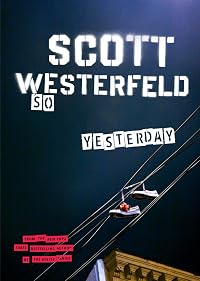
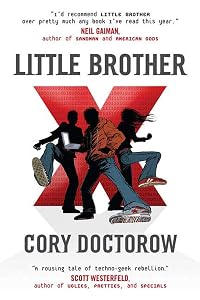
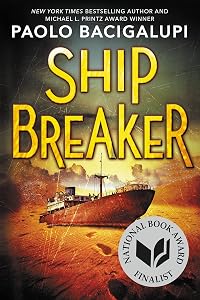
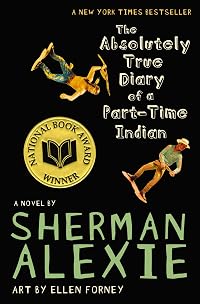

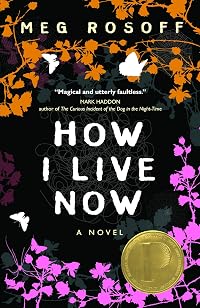
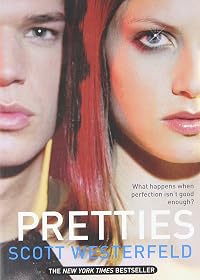




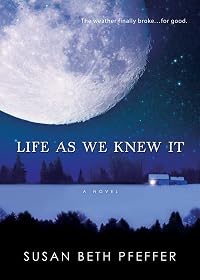
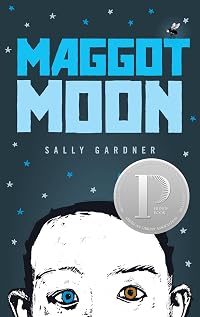
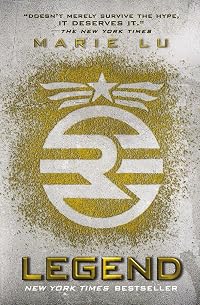
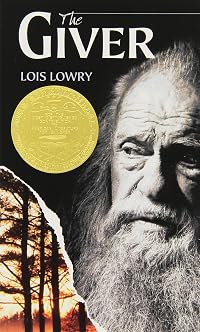
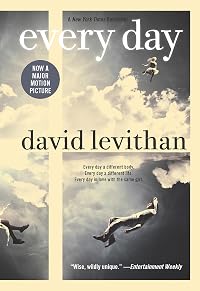

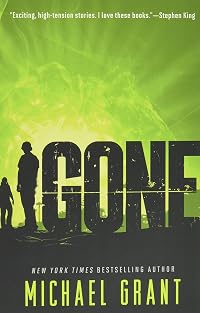

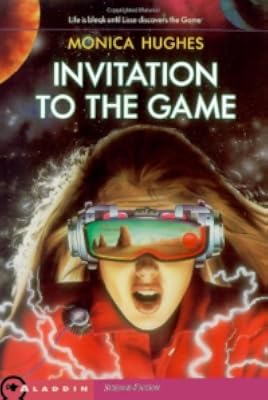
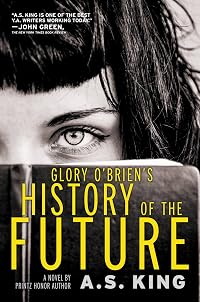

Member Recommendations


Member Reviews
Summary: In the dystopian future of Feed, most Americans are connected to the internet by means of a chip set directly into their brain. Information is instantaneously available, chatting with friends takes the form of telepathy, and advertisers have direct access to your user profile... and your brain itself. While on an otherwise lame spring break trip to the moon, Titus meets the odd but charming Violet, who is unlike any of his other friends. When they're hijacked by a radical group at a nightclub, they're taken for medical treatment to have their feeds reset. However, Violet's treatment doesn't go quite right, and Titus finds himself caught between the girl he might really like, and the life and friends and thought processes he's show more always known.
Review: I have to admit, I found this book kind of terrifying. It's even more so given the fact that it was published in 2002, well before the advent of the Facebook news feed, targeted Google ads based on your search history, and customer profiles so refined that Target knows you're pregnant whether you want them to or not. The fact that Feed was dead-on right about all of that makes me wonder how prescient it might be about other stuff... and that's a seriously disquieting thought. Anderson's world-building is spot-on, creating a universe that's so over the top that you want to find it silly, but plausible enough that you can't.
The story itself was a surprise to me; based on the world-building, and the whole first section with the kids' feeds getting hacked, I was expecting a more Little Brother-ish techno-thriller. It turns out that the feed-hacking has very little bearing on the plot, and that the story is mostly focused on Titus and Violet's relationship. A sizable part of their relationship's evolution does deal with their differing attitudes towards the technology in their heads, but I was still surprised how much the focus was on the people. That had its positives and its negatives; Titus behaved and thought very much like a typical teenaged boy (I would assume, never having been inside the head of a typical teenaged boy), but that meant that there were definitely times I didn't like him as a protagonist very much. I also didn't entirely buy in to the language of the book. Obviously future teenagers are not going to talk like current teenagers, but I think authors trying to predict the evolution of teenage slang always come off sounding kind of self-conscious and silly; Anderson makes it feel more organic to his world than a lot of other books I've read, but it's still not all the way there. 4 out of 5 stars.
Recommendation: Recommended to fans of YA dystopian novels, particularly those interested in individuality and privacy in the face of an increasingly corporate world. show less
Review: I have to admit, I found this book kind of terrifying. It's even more so given the fact that it was published in 2002, well before the advent of the Facebook news feed, targeted Google ads based on your search history, and customer profiles so refined that Target knows you're pregnant whether you want them to or not. The fact that Feed was dead-on right about all of that makes me wonder how prescient it might be about other stuff... and that's a seriously disquieting thought. Anderson's world-building is spot-on, creating a universe that's so over the top that you want to find it silly, but plausible enough that you can't.
The story itself was a surprise to me; based on the world-building, and the whole first section with the kids' feeds getting hacked, I was expecting a more Little Brother-ish techno-thriller. It turns out that the feed-hacking has very little bearing on the plot, and that the story is mostly focused on Titus and Violet's relationship. A sizable part of their relationship's evolution does deal with their differing attitudes towards the technology in their heads, but I was still surprised how much the focus was on the people. That had its positives and its negatives; Titus behaved and thought very much like a typical teenaged boy (I would assume, never having been inside the head of a typical teenaged boy), but that meant that there were definitely times I didn't like him as a protagonist very much. I also didn't entirely buy in to the language of the book. Obviously future teenagers are not going to talk like current teenagers, but I think authors trying to predict the evolution of teenage slang always come off sounding kind of self-conscious and silly; Anderson makes it feel more organic to his world than a lot of other books I've read, but it's still not all the way there. 4 out of 5 stars.
Recommendation: Recommended to fans of YA dystopian novels, particularly those interested in individuality and privacy in the face of an increasingly corporate world. show less
Every time I have to prove a point about how insidious and seductive, and perhaps ultimately socially destructive the internet is, I end up citing this book. Especially with the dawn of the iPhone - Feed is our future. It is our generation's 1984, or Brave New World. It establishes MT Anderson as one of the greats, when it comes to the dystopian future. If I were a junior high or high school teacher, all of my classes would read this book. Adults should read it too - but it's harder to implement forced reading plans for them. If I would, I could. It's that great.
Wow. I mean, wow. This is an extraordinary novel. It's Y.A. but definitely not for the really young ones, as it takes a very dark look at where our society could be headed. As I told my sci-fi students, its a little bit like the attitude behind "Wall-E", but with all the cuteness and hope sucked out. The novel is written from the first-person perspective of a teenage boy who has all his life had a "feed" connected directly to his brain, like 73% of the American population in this future. Imagine being bio-wired to the Internet. No need to learn -- anything you don't know, just think about it and the answer is looked up and transmitted to your brain. No need for TVs and DVDs or even game consoles -- watch everything in your head and feel show more like you are actually in the game. Want to shop? Constant customized advertising is streamed directly to your mind, and you know about every sale as soon as the markdowns happen. It's possibly one of the most disturbing future visions I have ever read, made even more so from the written perspective. This is so compelling, I'm thinking seriously about assigning it for a future course, but it's not a pleasurable book. I had to take a few minutes after I finished reading it just to cry and lament the all-too-plausible events. Read it. Seriously. Read it and then do anything you can to make sure it doesn't happen. show less
In a future America where the internet is inside everyone's head, Titus and his friends are regular teenagers just looking for a good time. At a club on the moon during spring break, they meet Violet, a homeschooled outsider hoping to experience regular teenage life. After their feeds are hacked by dissidents, Violet's feed begins to malfunction, and Titus must choose between this interesting girl he's just met and his longtime but shallow friends. I'm not going to lie to you: Titus is not a good or admirable person, but he's actually pretty realistic. He's self-absorbed and wishes bad things would just go away and not bother him. I'm sure many of us have wished an inconveniently ill person could just "get over it" but unlike Titus, we show more readers have a moral compass reminding us that their trauma is not about us. This is a dystopia clearly inspired by the inanity of the internet; most of the characters talk like they're on Tumblr. I found it an interesting and worthwhile read, but if you need to have some level of fondness for the main character in a book, this story will likely be pretty hard to take. If nothing else, it reminded me of the importance of empathy and kindness. show less
5Q, 5P. Constant communication with your friends. The ability to buy an item just by thinking about wanting it. Unlimited access to your favorite shows. Never worrying about being bored or lonely. It's a world that seems perfect - or it would have seemed perfect to my 14 year old self, at any rate. As we follow Titus and his friends through the story, it becomes excruciatingly clear that we must be careful what we wish for - and that this particular dystopic future is not unreasonably far from our current technology-driven lives.
This book provides readers with an honest glimpse into the world that Titus lives in, the emotional connections he makes (or sometimes fails to make), and the consequences of living in a consumer-driven world. show more In addition to being highly entertaining, Feed carefully teaches a lesson about the consequences of the choices we make every day - without preaching or lecturing or trying too hard. show less
This book provides readers with an honest glimpse into the world that Titus lives in, the emotional connections he makes (or sometimes fails to make), and the consequences of living in a consumer-driven world. show more In addition to being highly entertaining, Feed carefully teaches a lesson about the consequences of the choices we make every day - without preaching or lecturing or trying too hard. show less
5Q, 5P. This book is, hands-down, amazing. M.T. Anderson has a brilliant mind for storytelling. In Feed, Anderson has crafted a powerful, eery, poignant tale of a futuristic dystopian world where humankind is consumed by the feed, a digital device implanted into the brain at infancy that tells you what you want even before you know you want it. An intelligent and provocative look at consumerism and technological advancements. Anderson has mastered the pleasures and tangles of teenage relationships. I was at once enamored with Titus and Violet's desire for each other yet could completely empathize with Titus' repulsion to death and dying. Similarly, Anderson's writing enabled me to feel the disconnected immaturity alongside show more precociousness in Feed's characters. Feed is a must read for older young adults and will no doubt be liked and found intriguing my many. show less
A bleak vision of the future where the children of the rich cavort in nightclubs on the moon while high on designer drugs and broadcasting their brains directly onto a combination of internet, television, and radio called the Feed. Each of them has a chip in their brain that lets them access all human knowledge at all times. They can also chat directly with their friends inside their heads as well as share experiences directly. All this media overload is great when the world is literally dying and everyone is beset by strange lesions caused by some unknown and unexamined manufacturing byproduct.
During spring break on the moon, our protagonist meets a girl who is different. Her name is violent and she's wearing clothes made of actual show more cloth. She's been homeschooled and her parents are weird technology-averse people essentially raised on a compound. They saved all year to send their daughter to the moon for spring break. Unfortunately, they are all caught it some sort of terror attack that temporarily disables their Feed chip.
While convalescing in the hospital, the protagonist and Violet bond. They begin dating and Violet has all sorts of strange interests and hobbies. She keeps encouraging the protagonist to think more deeply about their world. Unfortunately, Violet is having a hard time recovering from the attack. She's suffering long-term affects and it seems like her chip has been fatally damaged. Now she's slowly losing control of her body and her mind. She has dreams of really living before she dies but the protagonist is too freaked out by it all and ends up breaking up with her. Of course, this doesn't help and so he has to watch her die slowly knowing that he's made her suffering worse.
A grim but compelling book that reminds me of A Clockwork Orange with the way new slang is seamlessly incorporated throughout. Dark but funny and beautiful. show less
During spring break on the moon, our protagonist meets a girl who is different. Her name is violent and she's wearing clothes made of actual show more cloth. She's been homeschooled and her parents are weird technology-averse people essentially raised on a compound. They saved all year to send their daughter to the moon for spring break. Unfortunately, they are all caught it some sort of terror attack that temporarily disables their Feed chip.
While convalescing in the hospital, the protagonist and Violet bond. They begin dating and Violet has all sorts of strange interests and hobbies. She keeps encouraging the protagonist to think more deeply about their world. Unfortunately, Violet is having a hard time recovering from the attack. She's suffering long-term affects and it seems like her chip has been fatally damaged. Now she's slowly losing control of her body and her mind. She has dreams of really living before she dies but the protagonist is too freaked out by it all and ends up breaking up with her. Of course, this doesn't help and so he has to watch her die slowly knowing that he's made her suffering worse.
A grim but compelling book that reminds me of A Clockwork Orange with the way new slang is seamlessly incorporated throughout. Dark but funny and beautiful. show less
Members
- Recently Added By
Published Reviews
ThingScore 100
Subversive, vigorously conceived, painfully situated at the juncture where funny crosses into tragic, ''Feed'' demonstrates that young-adult novels are alive and well and able to deliver a jolt. The fact that it is a finalist for the National Book Award is in itself a good sign.
added by stephmo
Lists

Best Dystopias
280 works; 277 members

Best Young Adult
413 works; 102 members

NPRs your favorites: 100 Best Ever Teen Novels
237 works; 49 members
Most thought-provoking novels
30 works; 28 members

Dystopian and Apocalyptic Literature
350 works; 74 members

Recommend the 20 best books you've read in the last five years
2,168 works; 607 members

Great Audiobooks
96 works; 10 members

Most Popular Young Adult Lit on LT
100 works; 4 members

Main Character is aged 10-19
363 works; 6 members

Vlogbrothers Book Recommendations
307 works; 4 members

Books recommended by Calgary Public Library staff
1,588 works; 4 members

College Reads (Lit Edition)
75 works; 5 members

Florida's Book Bans and Challenges
311 works; 4 members

Books Read in 2004
212 works; 7 members

B-B to Get
131 works; 1 member

Books Read in 2021
5,361 works; 113 members

Books You Read During High School (For School)
301 works; 52 members

Books Read in 2015
3,299 works; 129 members

Research/Inquiry - mentor texts
43 works; 2 members

Same Title
115 works; 3 members

SantaThing 2014 Gifts
299 works; 17 members
Modern Books for Young Adults
87 works; 11 members

Children's and YA Dystopias
123 works; 11 members

Alternate Americas
15 works; 7 members

I See the Moon and the Moon Sees Me
24 works; 7 members

Books Read in 2012
816 works; 34 members
Children's Science Fiction
33 works; 3 members

Favorite Science Fiction
457 works; 220 members
Author Information

39+ Works 17,014 Members
Some Editions
Awards and Honors
Awards
Distinctions
Notable Lists
Work Relationships
Has as a student's study guide
Common Knowledge
- Original title
- Feed
- Original publication date
- 2002
- People/Characters
- Titus; Violet; Pro Bono (William Williams); Marty; Nsia; Link (show all 12); Dr. Trefusis; Calista; Pomp; Quendy; Slant; Loga
- Important places
- Earth; Gwynn's Island, Virginia, USA (fictional); The Moon; Boston, Massachusetts, USA; space; Creville Heights, USA (fictional)
- Epigraph
- “O dear white children casual as birds,
Playing among the ruined languages,
So small beside their large confusing words,
So gay against the greater silences
Of dreadful things you did …”
<... (show all)br>—from “Anthem for St. Cecilia’s Day,”
W. H. Auden - Dedication
- To all those who resist the feed-M.T.A
- First words
- We went to the moon to have fun, but the moon turned out to completely suck.
- Quotations
- "Everything we've grown up with the stories on the feed, the games, all of that it's all streamlining our personalities so we're easier to sell to."
You know, I think death is shallower now. It used to be a hole you fell into and kept falling. Now it's just a blank.
But we have entered a new age. We are a new people. It is now the age of oneiric culture, the culture of dreams. - Last words
- (Click to show. Warning: May contain spoilers.)Everything must go.
(Click to show. Warning: May contain spoilers.)And so I light out for the unknown regions. - Publisher's editor
- Liz Bicknell; Kara LaReau
- Original language
- English
Classifications
- Genres
- Teen, Fiction and Literature, Science Fiction, Young Adult
- DDC/MDS
- 813.54 — Literature & rhetoric American literature in English American fiction in English 1900-1999 1945-1999
- LCC
- PZ7 .A54395 .F — Language and Literature Fiction and juvenile belles lettres Fiction and juvenile belles lettres Juvenile belles lettres
- BISAC
Statistics
- Members
- 5,629
- Popularity
- 2,359
- Reviews
- 444
- Rating
- (3.77)
- Languages
- 5 — English, French, Italian, Japanese, Spanish
- Media
- Paper, Audiobook, Ebook
- ISBNs
- 41
- UPCs
- 1
- ASINs
- 12