On This Page
Description
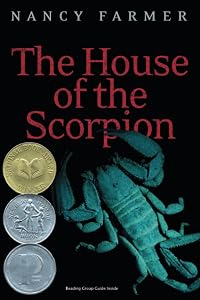
In a future where humans despise clones, Matt enjoys special status as the young clone of El Patrón, the 142-year-old leader of a corrupt drug empire nestled between Mexico and the United States.Tags
Recommendations



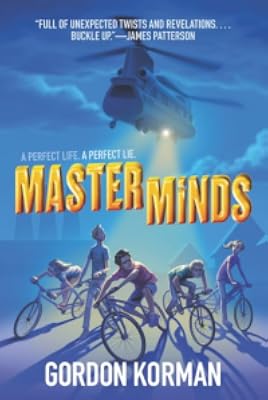
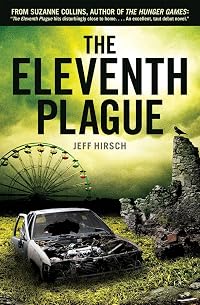
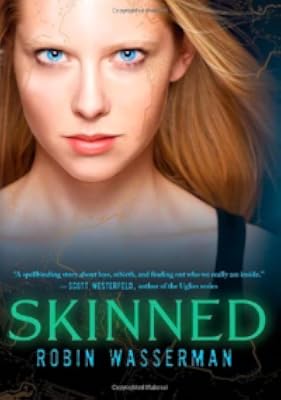
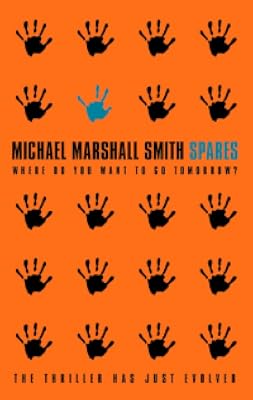



Member Recommendations

Member Reviews
Cross-posted from: http://childrenofanidlemindreviews.blogspot.com/2012/07/july-is-for-ladies-house...
So this was unexpectedly amazing. I don’t know why it should have been amazing--after all Nancy Farmer is pretty awesome and this thing is plastered with awards. I guess the amazing part was the fact that I hadn’t read it before. I actually even recall rejecting it! Rejecting a futuristic sci-fi young adult book with clones and zombies? Why?
Because the main character is a boy, of course. There were so many futuristic sci-fi or classic fantasy young adult books (though none with clones) with girl characters to read, why read this one?
This is something of a shame. The House of the Scorpion has combined the huge scientific morality show more questions--are clones an ethical means of medical research? what happens when science and technology begin to destroy humanity?--with the simplicity and grace of language that examines the human condition without being obnoxiously philosophical. This is a novel about science and drugs and politics, but it is also a novel about families and human relationships.
In The House of the Scorpion, Farmer creates a new country out of the borders of the US and Mexico, a country that has existed under the power of an ancient despot, El Patrón. Matteo Alacrán is his clone, grown from skin cells and harvested from a cow. Matt is the child of technology, but he is more human than the Alacrán family that surrounds him. Matt’s self-discovery guides the reader through a book half fairy-tale and half sci-fi.
This is pretty nearly a perfect book. My only regret is not reading it when I was younger. Please, please read it, so I can talk about the ending! show less
So this was unexpectedly amazing. I don’t know why it should have been amazing--after all Nancy Farmer is pretty awesome and this thing is plastered with awards. I guess the amazing part was the fact that I hadn’t read it before. I actually even recall rejecting it! Rejecting a futuristic sci-fi young adult book with clones and zombies? Why?
Because the main character is a boy, of course. There were so many futuristic sci-fi or classic fantasy young adult books (though none with clones) with girl characters to read, why read this one?
This is something of a shame. The House of the Scorpion has combined the huge scientific morality show more questions--are clones an ethical means of medical research? what happens when science and technology begin to destroy humanity?--with the simplicity and grace of language that examines the human condition without being obnoxiously philosophical. This is a novel about science and drugs and politics, but it is also a novel about families and human relationships.
In The House of the Scorpion, Farmer creates a new country out of the borders of the US and Mexico, a country that has existed under the power of an ancient despot, El Patrón. Matteo Alacrán is his clone, grown from skin cells and harvested from a cow. Matt is the child of technology, but he is more human than the Alacrán family that surrounds him. Matt’s self-discovery guides the reader through a book half fairy-tale and half sci-fi.
This is pretty nearly a perfect book. My only regret is not reading it when I was younger. Please, please read it, so I can talk about the ending! show less
The first time I read this book, I was in my first year of high school, I think. It was on display at the school library, with all its awards, and I couldn't resist. I don't remember much from my first impression of this book, except that I had a notebook filled with my book ratings from back then, and there was just a big solid question mark beside The House of the Scorpion. This book was the first book to blow my mind, and I'll never forget that.
Book content warnings:
child abuse
drug addiction/abuse
alcohol addiction/abuse
Matteo Alacrán isn't "human"; he's a clone. A clone of El Patrón, to be exact, the drug lord of Opium, a country between the United States and what was once Mexico. Treated like an animal by everyone but El Patrón show more himself, who admires him like one would admire an old school picture, Matt has to find his own path in life.
But it's like . . . way darker than that. I forgot how bleak and chilling this book is and how terrifying it can get.
I'm so glad it has characters like María (and later, Fidelito) who add a brighter note to the story and its general atmosphere. María is spirited and surprisingly quite flawed for a love interest/main female character, and it just makes her feel more realistic and lovable. She's excitable, quick to anger but quick to find beauty in the unremarkable. She's not one to immediately fall for, given that her view of Matt isn't too different from those around her for a while ("too different" as in, he's just like her dog, Furball, who doesn't know right from wrong, etc.). In that way, her character arc is so much more understandable and relatable.
And Matt. God, Matt. It's not surprising this book has as many awards as it does, because the plot and especially the main character, Matt, are so well written. He has conflicting feelings towards El Patrón, an evil man, but a man who also bestowed kindness unto him. He should hate him, but despite himself, he always feels a wave of affection when the man's name is mentioned. Abusive relationship at its finest (and other factors too that I might not understand).
I'm also so glad the second half of the book is so different from the first. It takes Matt outside the setting he's used to, and outside his "comfort zone" when it comes to his social standing. He has a chance to start over and become a new person. To find his own way, find his own personality, self worth, etc.
I can't wait to see what else happens to Matt. The sequel was published more than ten years after The House of the Scorpion. It's been a long wait! show less
Book content warnings:
child abuse
drug addiction/abuse
alcohol addiction/abuse
Matteo Alacrán isn't "human"; he's a clone. A clone of El Patrón, to be exact, the drug lord of Opium, a country between the United States and what was once Mexico. Treated like an animal by everyone but El Patrón show more himself, who admires him like one would admire an old school picture, Matt has to find his own path in life.
But it's like . . . way darker than that. I forgot how bleak and chilling this book is and how terrifying it can get.
I'm so glad it has characters like María (and later, Fidelito) who add a brighter note to the story and its general atmosphere. María is spirited and surprisingly quite flawed for a love interest/main female character, and it just makes her feel more realistic and lovable. She's excitable, quick to anger but quick to find beauty in the unremarkable. She's not one to immediately fall for, given that her view of Matt isn't too different from those around her for a while ("too different" as in, he's just like her dog, Furball, who doesn't know right from wrong, etc.). In that way, her character arc is so much more understandable and relatable.
And Matt. God, Matt. It's not surprising this book has as many awards as it does, because the plot and especially the main character, Matt, are so well written. He has conflicting feelings towards El Patrón, an evil man, but a man who also bestowed kindness unto him. He should hate him, but despite himself, he always feels a wave of affection when the man's name is mentioned. Abusive relationship at its finest (and other factors too that I might not understand).
I'm also so glad the second half of the book is so different from the first. It takes Matt outside the setting he's used to, and outside his "comfort zone" when it comes to his social standing. He has a chance to start over and become a new person. To find his own way, find his own personality, self worth, etc.
I can't wait to see what else happens to Matt. The sequel was published more than ten years after The House of the Scorpion. It's been a long wait! show less
Matt is the clone of an evil and powerful man, a drug lord who controls a huge chunk of land along what used to be the border between the United States and Mexico. As a clone, Matt is considered less than human and treated accordingly, but fortunately not everybody is on board with this.
This book has apparently won a bunch of awards, including the Newbery, and I can see why. The SF tropes it features are pretty familiar by now, maybe even over-familiar, but Farmer handles them really well, in a way that made me almost forget I'd seen them so often before. She does a good job with the world-building, too, letting us gradually come to understand the world Matt was born into, in all its horrors, as he slowly comes to understand it himself. show more And it is pretty horrible. I'm not sure exactly what age group this is primarily aimed at -- by the writing style and the age of the protagonist by the end of the book, I'd guess middle school and up -- but it strikes me as surprisingly dark for a kids' book. But it's effectively so, and the story, the world, and the characters are engaging and real-feeling. Heck, even the over-the-top evil of the drug lord character somehow feels believable and human.
Rating: 4/5, although if this wasn't adult me rating a book whose writing is aimed at kids, I suspect I'd be giving it a half star more. show less
This book has apparently won a bunch of awards, including the Newbery, and I can see why. The SF tropes it features are pretty familiar by now, maybe even over-familiar, but Farmer handles them really well, in a way that made me almost forget I'd seen them so often before. She does a good job with the world-building, too, letting us gradually come to understand the world Matt was born into, in all its horrors, as he slowly comes to understand it himself. show more And it is pretty horrible. I'm not sure exactly what age group this is primarily aimed at -- by the writing style and the age of the protagonist by the end of the book, I'd guess middle school and up -- but it strikes me as surprisingly dark for a kids' book. But it's effectively so, and the story, the world, and the characters are engaging and real-feeling. Heck, even the over-the-top evil of the drug lord character somehow feels believable and human.
Rating: 4/5, although if this wasn't adult me rating a book whose writing is aimed at kids, I suspect I'd be giving it a half star more. show less
There have been many books regarding the consequences of recreating human life, but none have been so effective at showing the human, adolescent side to the cloning question than Nancy Farmer's The House of the Scorpion.
Mexico has become Opium, a country dedicated to the proliferation and exportation of the drug. Matt, the hero, is a clone of the druglord El Patron. He is raised apart from other people and treated as less than human throughout his upbringing.
The setting is beautiful and full of culture that will broaden the minds of younger readers, and the characters are compelling and intriguing.
It raises fascinating questions on what it is to be human, and to behave humanely, and to grow up.
Wonderful for a YA classroom.
Mexico has become Opium, a country dedicated to the proliferation and exportation of the drug. Matt, the hero, is a clone of the druglord El Patron. He is raised apart from other people and treated as less than human throughout his upbringing.
The setting is beautiful and full of culture that will broaden the minds of younger readers, and the characters are compelling and intriguing.
It raises fascinating questions on what it is to be human, and to behave humanely, and to grow up.
Wonderful for a YA classroom.
Matt is growing up on the vast estate of El Patrón, the immensely wealthy and powerful drug overlord, who controls the land between the US and Aztlan, formerly known as Mexico. He experiences the benefits of El Patrón's favor: a good education, excellent food, and life in the palace, but he is also an outcast, and considered by nearly all but the master as no better than an animal. He is El Patrón's clone, and therefore less that human. When he finally realizes why he's been created and that his life is in danger, the few friends he has help him plan an escape to Aztlan, but will he make it, and if he does, what kind of life will he find there?
This Newbery Honor Book feels more like a YA than a middle grade novel; it's dark and grim show more in places, and I suspect that some younger readers might be troubled by it. But regardless of whether it should be in the Newbery or Printz categories (it did win a Printz award, too), this was an excellent read. It pulled me in from the start and the unique story and good pacing kept me turning pages as fast as I could. show less
This Newbery Honor Book feels more like a YA than a middle grade novel; it's dark and grim show more in places, and I suspect that some younger readers might be troubled by it. But regardless of whether it should be in the Newbery or Printz categories (it did win a Printz award, too), this was an excellent read. It pulled me in from the start and the unique story and good pacing kept me turning pages as fast as I could. show less
Note: This review contains mild spoilers.
The House of the Scorpion is a novel intended for young adults, but it is only distinguishable as that by the youth of its main characters and the sometimes simplistic straightforwardness of the writing. The themes it addresses — the outsider, the moral obligations of those in power, the determination of nature vs. nurture — are much more complex and will appeal to readers of any age.
The House of the Scorpion is set 140 years in the future, in a dystopian country called Opium or Dreamland, located between the U.S. and Mexican (now Aztlan) borders. Opium was founded by a drug lord named El Patrón in a deal with its bordering countries to eliminate illegal immigration and funnel the drug trade show more to Asia, Europe and Africa. El Patrón rules Opium absolutely, modeling it on a fantasy version of his childhood Mexico. His Farm Patrol captures illegals and lobotomizes them, turning them into slaves called “eejits” or “zombies” to work the opium fields. El Patrón keeps himself alive by harvesting organs and tissue as needed from clones of himself, whose brains are also destroyed.
Except, in his hubris, El Patrón decides to keep the brain of of one his clones, a boy named Matt, intact. The novel is divided into sections based on Matt’s age and important periods in his life, from youth to middle age to old age. Never intended to have a long life, Matt’s “death” — and most critical turning point — comes at age 14, when he discovers that his true purpose is not to take over the family business from El Patrón, but to supply his next heart. The House of the Scorpion is Matt’s coming-of-age story, and at this point when Matt escapes to Aztlan, he begins the final process of becoming himself: no longer a despised, inferior clone, an outsider, but a true leader.
Sharing El Patrón’s genetics, Matt also shares many of his characteristics: pride, innate leadership, the drive to do what is necessary to achieve his goals. For most of his youth, although he is largely ostracized, Matt is not completely alone. Three people highly influence him: Celia, the woman who raises him and loves him unconditionally; Tam Lin, his bodyguard, who teaches him about the world and who believes in him; and Maria, his childhood friend who shows Matt that he is capable of being loved, despite being a clone. These are influences that El Patrón lacked. So when Matt comes into his own as a leader, he has the potential to do what El Patrón never could: to correct the egregious moral sins of his culture.
The House of the Scorpion won many honors, including the Newbery Award and the National Book Award for young adult literature. show less
The House of the Scorpion is a novel intended for young adults, but it is only distinguishable as that by the youth of its main characters and the sometimes simplistic straightforwardness of the writing. The themes it addresses — the outsider, the moral obligations of those in power, the determination of nature vs. nurture — are much more complex and will appeal to readers of any age.
The House of the Scorpion is set 140 years in the future, in a dystopian country called Opium or Dreamland, located between the U.S. and Mexican (now Aztlan) borders. Opium was founded by a drug lord named El Patrón in a deal with its bordering countries to eliminate illegal immigration and funnel the drug trade show more to Asia, Europe and Africa. El Patrón rules Opium absolutely, modeling it on a fantasy version of his childhood Mexico. His Farm Patrol captures illegals and lobotomizes them, turning them into slaves called “eejits” or “zombies” to work the opium fields. El Patrón keeps himself alive by harvesting organs and tissue as needed from clones of himself, whose brains are also destroyed.
Except, in his hubris, El Patrón decides to keep the brain of of one his clones, a boy named Matt, intact. The novel is divided into sections based on Matt’s age and important periods in his life, from youth to middle age to old age. Never intended to have a long life, Matt’s “death” — and most critical turning point — comes at age 14, when he discovers that his true purpose is not to take over the family business from El Patrón, but to supply his next heart. The House of the Scorpion is Matt’s coming-of-age story, and at this point when Matt escapes to Aztlan, he begins the final process of becoming himself: no longer a despised, inferior clone, an outsider, but a true leader.
Sharing El Patrón’s genetics, Matt also shares many of his characteristics: pride, innate leadership, the drive to do what is necessary to achieve his goals. For most of his youth, although he is largely ostracized, Matt is not completely alone. Three people highly influence him: Celia, the woman who raises him and loves him unconditionally; Tam Lin, his bodyguard, who teaches him about the world and who believes in him; and Maria, his childhood friend who shows Matt that he is capable of being loved, despite being a clone. These are influences that El Patrón lacked. So when Matt comes into his own as a leader, he has the potential to do what El Patrón never could: to correct the egregious moral sins of his culture.
The House of the Scorpion won many honors, including the Newbery Award and the National Book Award for young adult literature. show less
The first 4/5 of novel this is an excellent hard to read at times but also hard to put down coming of age story, very much like a Dickens novel that uses the life of a small child to highlight social ills, except these ills are in the future. The setting is a future Mexico that has split into the small independent Opium, devoted to the growing, processing, and selling of said narcotic, and Aztlan, the rest of former Mexico, about which we learn more late in the book. Matteo is the only surviving member of 36 clones of the drug lord El Patron. Born in a cow, raised in isolation, Matteo understands almost nothing of the world, but I think any YA reader knows exactly what his fate is to be and why the first few section titles are "Youth: 0 show more to 6", "Middle age: 7 to 11" and "Old age: 12 to 14". His early years with his caretaker Celia are fine, but then he's found. As a clone, he is no more than cattle. He' taken to an orphanage and locked in a room filled with chicken litter to absorb his piss and shit. Things do improve from that, but this is a very dark young adult story. What makes it work so well is the richness of the key characters and their interrelationships-- Matteo, Maria, El Patron, and Tam Lin. Unfortunately, for me, the book drops into to more standard YA adventure in the final section "La vida nueva", heavy on plot, but lacking the complexity and sharp edges of what has gone before.
Still highly recommended. show less
Still highly recommended. show less
Members
- Recently Added By
Lists

Best Dystopias
280 works; 273 members

Best Science Fiction Novels
816 works; 430 members

Best Young Adult
399 works; 101 members

NPRs your favorites: 100 Best Ever Teen Novels
237 works; 49 members

Diversity in Fantasy and Science Fiction
219 works; 33 members

Dystopian and Apocalyptic Literature
350 works; 74 members

Best Contemporary Literary Fiction (Around the Last 30 Years)
388 works; 124 members

Most Popular Young Adult Lit on LT
100 works; 4 members

Books Read in 2024
4,727 works; 128 members

Which house?
423 works; 16 members

Newbery Honor Books By year - II - 1981-2035
143 works; 4 members

Must-Read Books About the Southwest
98 works; 2 members

Books Read in 2009
464 works; 11 members

Latin America
45 works; 6 members

Satori Smiles Children's Book List
262 works; 7 members

National Book Award winners
65 works; 11 members

Books Read in 2014
2,343 works; 89 members

Children's and YA Dystopias
123 works; 11 members

Fantasy by Women Who Broke Away from Europe
144 works; 12 members

Best Newbery Honor Books
257 works; 32 members

storage
51 works; 1 member
Best Newbery Medal Winners
97 works; 54 members
Author Information

23+ Works 17,164 Members
Some Editions
Awards and Honors
Awards
Distinctions
Series

Work Relationships
Is contained in
Has as a student's study guide
Common Knowledge
- Original publication date
- 2002
- People/Characters
- Matteo Alacrán; El Patrón (Matteo Alacrán); Gustavo Alacrán; Justin Alacrán; Felicia Alacrán; Angus MacGregor (show all 35); Benito Alacrán; Steven Alacrán; Tom; Maria Mendoza; Emilia Mendoza; Esperanza Mendoza; Senator Mendoza; Celia; Tam Lin; Daft Donald; Willum; Rosa; Mr. Ortega; Hugh; Ralf; Wee Wullie; Raúl; Carlos; Jorge; Chacho; Fidelito; Ton-Ton; Flaco; Luna; Guapo; Consuela; Sister Inéz; Furball; Teacher
- Important places
- Opium; Aztlan (formerly Mexico)
- Dedication
- To Harold for his unfailing love and support, and to Daniel, our son. To my brother, Dr. Elmon Lee Coe, and my sister, Mary Marimon Stout. Lastly, and no less importantly, to Richard Jackson, il capo di tutti capi of children... (show all)'s book editors.
- First words
- In the beginning there were thirty-six of them, thirty-six droplets of life so tiny that Eduardo could see them only under a microscope. He studied them anxiously in the darkened room.
- Last words
- (Click to show. Warning: May contain spoilers.)"I know I can," said Matt, smiling back.
- Blurbers
- Le Guin, Ursula K.
Classifications
- Genres
- Fiction and Literature, Teen, Kids, Tween, Science Fiction, Young Adult
- DDC/MDS
- 813.54 — Literature & rhetoric American literature in English American fiction in English 1900-1999 1945-1999
- LCC
- PZ7 .F23814 .H — Language and Literature Fiction and juvenile belles lettres Fiction and juvenile belles lettres Juvenile belles lettres
- BISAC
Statistics
- Members
- 6,842
- Popularity
- 1,752
- Reviews
- 248
- Rating
- (4.09)
- Languages
- 14 — Chinese, Danish, English, French, German, Hungarian, Italian, Latvian, Lithuanian, Norwegian (Bokmål), Polish, Romanian, Russian, Spanish
- Media
- Paper, Audiobook, Ebook
- ISBNs
- 55
- UPCs
- 1
- ASINs
- 18