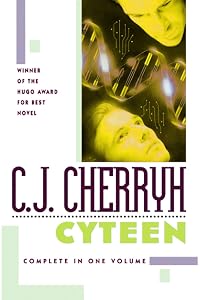
Cyteen
by C. J. Cherryh
Cyteen (1), Alliance-Union Universe: The Era of Rapprochement, Unionside (2), Alliance-Union Universe (12 (Unionside 02)), Alliance-Union Universe: Publication (20)
On This Page
Description
The Hugo Award-winning SF saga is now available in one complete trade paperback edition, containing Cyteen: The Betrayal, The Rebirth and The Vindication. "A psychological novel, a murder mystery and an examination of power on a grand scale, encompassing light years and outsize lifetimes".--Locus.Tags
Recommendations




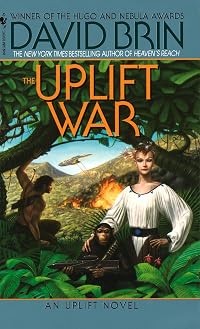
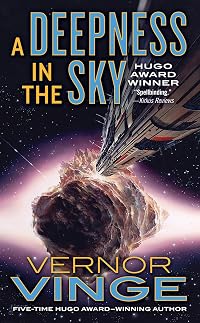
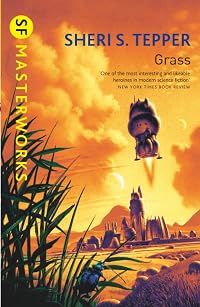
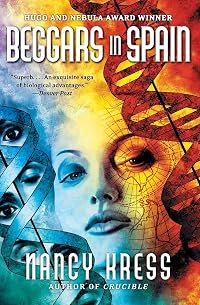




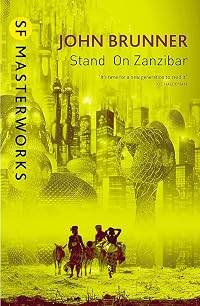
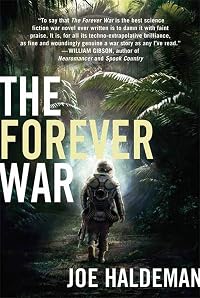
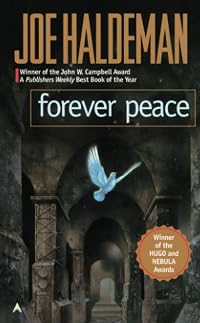
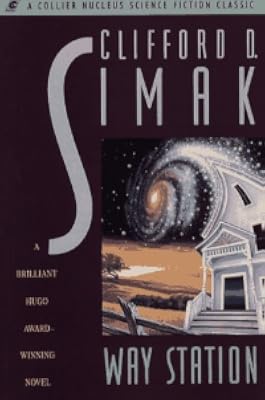



Member Recommendations

VictoriaPL Another clone/originator story - examination of identity.
Member Reviews
I have a complicated history with Cyteen. It was the first novel by Cherryh that I read - about 20 years ago, in Bulgarian, in a botched translation that randomly removed parts of the story including the end of the novel (considering that there is a murder mystery in the book, removing the end was particularly bad but considering all the other removed parts, even if they had left it in, it probably would not have made sense). I loved the ideas. I found the execution... weird (and I could not understand how this can win a Hugo). But that bad translation (and the even weirder decisions made when a previous novel was published) made it impossible for the author to get published in Bulgarian again so I kinda forgot about her.
Then in 2008, show more 20 years after this book was initially published, a direct sequel was announced for early 2009. I was reading English books mostly in English at that point so I figured I should try Cherryh again - with reading Cyteen and then its sequel. The book made a LOT more sense and a few years later I started reading all Cherryh's books - mostly in order. And here I am back to Cyteen. I considered skipping it but considering that I had read the other 19 books in the Alliance-Union Universe written before that one, I figured I should reread it. And I was right - a lot of things that flew over my head last time registered now.
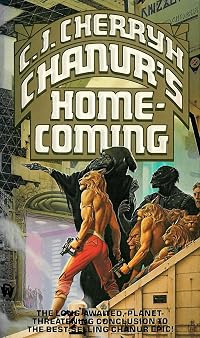
As most of the books in this universe, the book is designed as a standalone (the obvious exceptions - the Chanur books, the Mri novels and so on - are not even exceptions if you consider them as one work in multiple volumes). All the back story you need is in the book. All the references to what happened before are in the book. But only the ones that matter to the story are explained. There is a reference to the Compact and the Sol issues with it. It explains some of the actions of some people but you do not need to know anything more than the fact that there is a whole alien group of planets somewhere on the other side of the Sun and they really did not like humans when they met them. But if you had read the Chanur novels (the 4 published before Cyteen), you know what the Compact is and you know exactly why the humans got in trouble (and you finally connect some things from the Chanur books to the bigger story - because the Chanur books can be read on their own and you don't need to know anything about any other books - unless you want to connect some references). That's how this whole universe works - like a set of history books - one book adding a clue to allow you to unlock a connection from another...
But back to Cyteen. The novel is the second novel to deal with the Union side of the human split in the universe explicitly. There are some references in other novels and some others that can be counted as Union side novels ([Port Eternity] for example) but the one that really introduced the culture of Union is [Forty Thousand in Gehenna]. While Cyteen is not really a sequel to it, it deals with the aftermath of Gehenna and if you have read the Gehenna story before Cyteen, you have a baseline for azis and a lot better understanding of what is normal (or not).
At the core of the novel "Cyteen" are two main stories: a murder one and a quest for power one. None of them is fully resolved in the novel - you have an idea what happened in both but there is still enough ambiguity left for a "but what if". But these two stories are interweaved with story of the azis (the human clones who are educated by tape since the cradle and thus not allowed to have certain logical and brain pathways which are developed in normal people) - the whole Union side of the universe is very clearly on the Nurture side of the Nature vs. Nurture conversation - the only difference between a human and an azi is how they were brought up, even humans can be cloned but they don't get fed tape so early. Add to that the persecution of a boy (and then a man) who did nothing wrong (and yet seems to be always considered dangerous), the political games of the Union, the big and very wealthy clone-factory/laboratory and a little girl who needs to navigate a world she was brought into not because anyone wanted her but because she needed to be someone. There is a lot of cruelty in the book, there are moments where you are not sure who is on the good side really (shades of grey which I missed the last time I read the novel) and you never know just what might happen next - when money, power and long lives get combined, things get a bit skewed. But there is also friendship (although there is also the moral question of how much that exists if you are programmed to like someone). And even love (well.. with the same note).
It is a very long novel and yet it did not feel long enough. I wanted more of it, I wanted more details, more conversations, just more of everything. I had the same reaction last time I read it - it almost feels like a tease in places. And yet, it is an organized whole. But as with a lot of Cherryh's novels it can be a bit rambly and the characters' internal struggles can make Hamlet look like someone with a very definite grasp of the "to be or not to be" question (or his sanity). I enjoyed this side of the novel but it probably will be too much for someone who does not expect it or is not used to it. show less
Then in 2008, show more 20 years after this book was initially published, a direct sequel was announced for early 2009. I was reading English books mostly in English at that point so I figured I should try Cherryh again - with reading Cyteen and then its sequel. The book made a LOT more sense and a few years later I started reading all Cherryh's books - mostly in order. And here I am back to Cyteen. I considered skipping it but considering that I had read the other 19 books in the Alliance-Union Universe written before that one, I figured I should reread it. And I was right - a lot of things that flew over my head last time registered now.
As most of the books in this universe, the book is designed as a standalone (the obvious exceptions - the Chanur books, the Mri novels and so on - are not even exceptions if you consider them as one work in multiple volumes). All the back story you need is in the book. All the references to what happened before are in the book. But only the ones that matter to the story are explained. There is a reference to the Compact and the Sol issues with it. It explains some of the actions of some people but you do not need to know anything more than the fact that there is a whole alien group of planets somewhere on the other side of the Sun and they really did not like humans when they met them. But if you had read the Chanur novels (the 4 published before Cyteen), you know what the Compact is and you know exactly why the humans got in trouble (and you finally connect some things from the Chanur books to the bigger story - because the Chanur books can be read on their own and you don't need to know anything about any other books - unless you want to connect some references). That's how this whole universe works - like a set of history books - one book adding a clue to allow you to unlock a connection from another...
But back to Cyteen. The novel is the second novel to deal with the Union side of the human split in the universe explicitly. There are some references in other novels and some others that can be counted as Union side novels ([Port Eternity] for example) but the one that really introduced the culture of Union is [Forty Thousand in Gehenna]. While Cyteen is not really a sequel to it, it deals with the aftermath of Gehenna and if you have read the Gehenna story before Cyteen, you have a baseline for azis and a lot better understanding of what is normal (or not).
At the core of the novel "Cyteen" are two main stories: a murder one and a quest for power one. None of them is fully resolved in the novel - you have an idea what happened in both but there is still enough ambiguity left for a "but what if". But these two stories are interweaved with story of the azis (the human clones who are educated by tape since the cradle and thus not allowed to have certain logical and brain pathways which are developed in normal people) - the whole Union side of the universe is very clearly on the Nurture side of the Nature vs. Nurture conversation - the only difference between a human and an azi is how they were brought up, even humans can be cloned but they don't get fed tape so early. Add to that the persecution of a boy (and then a man) who did nothing wrong (and yet seems to be always considered dangerous), the political games of the Union, the big and very wealthy clone-factory/laboratory and a little girl who needs to navigate a world she was brought into not because anyone wanted her but because she needed to be someone. There is a lot of cruelty in the book, there are moments where you are not sure who is on the good side really (shades of grey which I missed the last time I read the novel) and you never know just what might happen next - when money, power and long lives get combined, things get a bit skewed. But there is also friendship (although there is also the moral question of how much that exists if you are programmed to like someone). And even love (well.. with the same note).
It is a very long novel and yet it did not feel long enough. I wanted more of it, I wanted more details, more conversations, just more of everything. I had the same reaction last time I read it - it almost feels like a tease in places. And yet, it is an organized whole. But as with a lot of Cherryh's novels it can be a bit rambly and the characters' internal struggles can make Hamlet look like someone with a very definite grasp of the "to be or not to be" question (or his sanity). I enjoyed this side of the novel but it probably will be too much for someone who does not expect it or is not used to it. show less
In a nutshell: Great sf read! More specifically..... the story of Ariane Emory, the genius behind the 'programmed people' - the azi that make Union different from the other human colonies and cultures. Clones, essentially, and manipulated by deep programming into being quite different from 'flux' dominated 'born-men'. The azi operates from deep logic and the kind of seat-of-the-pants balancing act that 'we' do is what they have to learn. This makes them both tougher and more vulnerable than we are. Unless rattled emotionally they aren't distracted by non-task related thoughts and can focus, move fast, etc. But making decisions, dealing with the unexpected (unless they are alphas and 'programmed' to cope and improvise and have worked at show more it) is not in their 'skill-set' generally. It's very disturbing to contemplate for it turns out that both born-men and women generally end up with their life partner being azi...... eg, not a person who will question your judgment, but a person toward whom you have to behave a certain way (very humanely) or they will not function. Only very 'high-up' can get a license for an azi companion..... well, I'm getting distracted here, the main thing is that you can replicate yourself and it is decided that Ariane must be replicated so she is - then the question is how far do you/can you go replicating her childhood circumstances and how much does that affect who she (or any) replicate will become - Ariane2 does, of course, turn out differently, the question being for the first 2/3 of the book, which way will she go, better or worse..... and I won't tell! The drive behind this questionable ethical effort was to have 'more' soldiers and people who would work well, quickly, in difficult situations - but that is clearly bogus, these scientists are totally into the thrill of 'can it be done' - disciples of Morgoth/Sauron, really when you get down to it..... very dangerous play. There are wonderful characters and situations and as with all Cherryh, take nothing for granted and read carefully. I might change this to a five star.......****1/2
I'll be reading [40,000 in Gehenna] next - a book that is mentioned in Cyteen - Ariane Emory was 'forced' by the military to colonize a planet with mostly azi/born-men to ensure that it would end up being a Union planet - but it is abandoned for various reasons, to its own fate and then later rediscovered...... I'm looking forward to it! show less
I'll be reading [40,000 in Gehenna] next - a book that is mentioned in Cyteen - Ariane Emory was 'forced' by the military to colonize a planet with mostly azi/born-men to ensure that it would end up being a Union planet - but it is abandoned for various reasons, to its own fate and then later rediscovered...... I'm looking forward to it! show less
1988! EIGHTY-EIGHT. Absolutely nothing dates this book, there are no cringe fashion moments, no ridiculous formerly high tech gadgets. There's just concrete character building, like.. her characters are morally gray, but these books cause YOU to have a moral dilemma. (Or several actually.)
The world! The politics! The absolute lack of sexism, two of the main relationships are homosexual, the other relationship is RIDICULOUSLY complicated with NO ROMANTIC cop outs. Jesus Christ.
1988!
These books are just so SATISFYING.
The world! The politics! The absolute lack of sexism, two of the main relationships are homosexual, the other relationship is RIDICULOUSLY complicated with NO ROMANTIC cop outs. Jesus Christ.
1988!
These books are just so SATISFYING.
I will confess it up front. I love this book.
Yes, it's long. It was originally published in three volumes in paperback, in the late 1980s. That made sense from a physical size point of view; it doesn't make sense in terms of the story. This is, like The Lord of the Rings, a long, single novel.
It is, as another review commented, a murder mystery in which the mystery is never solved, and features a conspiracy which is partially but never completely explained. We don't get all the answers.
That's part of what makes it the fascinating, complex book that it is.
Ariane Emory is over a century old, a scientist, head of Reseune, the primary cloning facility on Cyteen, the primary planet of the political entity Union, in Cherryh's Union-Alliance show more universe. Union and Alliance have a lot of reasons for their conflict, but one of them is the azi, Reseune's clones. Along with being genetically designed to have certain aptitudes and traits, they are also tape-trained from birth to both educate and condition them to their intended roles. They don't have a normal range of free will, though neither are they anything close to automata. There's also internal conflict, both inside Union, and inside Reseune. We see Ariane Emory, or Ari, as very intelligent, very capable, with what may be good goals, but very, very Machiavellian. She's involved in a contest of will that in part involves another clone designer, Jordan Warrick, his cloned son Justin (a clone, but not an azi; Justin is a citizen), and Justin's azi companion, Grant.
And then, quite suddenly, Ari is dead, and it appears to be murder, and of all the people who might have wanted her dead, Jordan Warrick is the one who was there.
The bulk of this novel is about Ari II, a clone of Ariane Emory, initially a deep, deep secret. She's not just a clone, like Justin. She's intended to be a true recreation of Ariane Emory, with all her abilities and ruthlessness.
It's not the plotters we identify with. It is, on the one hand, Justin and Grant, living under constant suspicion and surveillance, and on the other hand, Ari II, struggling to understand how she's being manipulated and why. As a young child, friends she has too much conflict with disappear, they and their families being transferred to distant locations like Fargone Station. Her Maman, Jane Stassen, gets transferred to Fargone without Ari, when she's barely preteen, for reasons that never make sense to her. Her uncles, Denis and Geraud Nye, major powers in Reseune, are her guardians--and Denis at least seems loving and kind, but even at this young age she knows there's more going on than she's being told.
It's not clear how much the Nyes and their allies understood how determined and devious young Ari would be in looking for the answers.
And along the way, Ari is introduced to the resources Ari I left behind for her, because Ari did plan this even if her death didn't happen as she anticipated, and we start to learn a great deal more about the original Ari, about Reseune, about Union, and about the Nyes.
Ari II also starts to acquire friends and allies of her own.
Everyone here is more complicated, layered, and conflicted than they appear at first glance.
It's long, complicated, intricate, absorbing. Highly recommended, though I reluctantly concede that no, it's not for everyone. But, really, highly recommended.
I bought this audiobook. show less
Yes, it's long. It was originally published in three volumes in paperback, in the late 1980s. That made sense from a physical size point of view; it doesn't make sense in terms of the story. This is, like The Lord of the Rings, a long, single novel.
It is, as another review commented, a murder mystery in which the mystery is never solved, and features a conspiracy which is partially but never completely explained. We don't get all the answers.
That's part of what makes it the fascinating, complex book that it is.
Ariane Emory is over a century old, a scientist, head of Reseune, the primary cloning facility on Cyteen, the primary planet of the political entity Union, in Cherryh's Union-Alliance show more universe. Union and Alliance have a lot of reasons for their conflict, but one of them is the azi, Reseune's clones. Along with being genetically designed to have certain aptitudes and traits, they are also tape-trained from birth to both educate and condition them to their intended roles. They don't have a normal range of free will, though neither are they anything close to automata. There's also internal conflict, both inside Union, and inside Reseune. We see Ariane Emory, or Ari, as very intelligent, very capable, with what may be good goals, but very, very Machiavellian. She's involved in a contest of will that in part involves another clone designer, Jordan Warrick, his cloned son Justin (a clone, but not an azi; Justin is a citizen), and Justin's azi companion, Grant.
And then, quite suddenly, Ari is dead, and it appears to be murder, and of all the people who might have wanted her dead, Jordan Warrick is the one who was there.
The bulk of this novel is about Ari II, a clone of Ariane Emory, initially a deep, deep secret. She's not just a clone, like Justin. She's intended to be a true recreation of Ariane Emory, with all her abilities and ruthlessness.
It's not the plotters we identify with. It is, on the one hand, Justin and Grant, living under constant suspicion and surveillance, and on the other hand, Ari II, struggling to understand how she's being manipulated and why. As a young child, friends she has too much conflict with disappear, they and their families being transferred to distant locations like Fargone Station. Her Maman, Jane Stassen, gets transferred to Fargone without Ari, when she's barely preteen, for reasons that never make sense to her. Her uncles, Denis and Geraud Nye, major powers in Reseune, are her guardians--and Denis at least seems loving and kind, but even at this young age she knows there's more going on than she's being told.
It's not clear how much the Nyes and their allies understood how determined and devious young Ari would be in looking for the answers.
And along the way, Ari is introduced to the resources Ari I left behind for her, because Ari did plan this even if her death didn't happen as she anticipated, and we start to learn a great deal more about the original Ari, about Reseune, about Union, and about the Nyes.
Ari II also starts to acquire friends and allies of her own.
Everyone here is more complicated, layered, and conflicted than they appear at first glance.
It's long, complicated, intricate, absorbing. Highly recommended, though I reluctantly concede that no, it's not for everyone. But, really, highly recommended.
I bought this audiobook. show less
[Four and 1/2 stars]
Well! It took me an *embarrassingly* long time to read this, because it's so dense and clinical, and I found that I needed to really be in the mood for it (I always do for Cherryh, who is never an easy read - but always a rewarding one). But it was absolutely worth persevering with (and totally deserving of its Hugo Award in 1988), as it's a magnificent book, delving into the ethics of cloning and pondering identity, the nature of genius, and all sorts of complicated moral quandaries. Unlike the faceless, emotionless soldiers we saw in Downbelow Station (my first foray into the Alliance-Union universe), here we actually got to see the azi (the clones) up close, both as individuals and as a functioning sub-culture, show more and it's as fascinating and murky a situation as you'd expect. The protagonists and subsidiary characters were very well-written, with all sorts of interestingly-fractured fault lines running through their personalities. For a story written in the late 80s, very little about the book has really dated (it refers to 'tape' for the kind of deep-sleep/virtual reality learning they all do, and that's about it). I'm giving it four and a half stars, as there may have been a few dropped threads, and the ending does feel somewhat rushed to me. This is a book I'll definitely have to return to at some point! show less
Well! It took me an *embarrassingly* long time to read this, because it's so dense and clinical, and I found that I needed to really be in the mood for it (I always do for Cherryh, who is never an easy read - but always a rewarding one). But it was absolutely worth persevering with (and totally deserving of its Hugo Award in 1988), as it's a magnificent book, delving into the ethics of cloning and pondering identity, the nature of genius, and all sorts of complicated moral quandaries. Unlike the faceless, emotionless soldiers we saw in Downbelow Station (my first foray into the Alliance-Union universe), here we actually got to see the azi (the clones) up close, both as individuals and as a functioning sub-culture, show more and it's as fascinating and murky a situation as you'd expect. The protagonists and subsidiary characters were very well-written, with all sorts of interestingly-fractured fault lines running through their personalities. For a story written in the late 80s, very little about the book has really dated (it refers to 'tape' for the kind of deep-sleep/virtual reality learning they all do, and that's about it). I'm giving it four and a half stars, as there may have been a few dropped threads, and the ending does feel somewhat rushed to me. This is a book I'll definitely have to return to at some point! show less
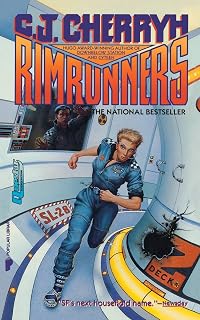
I first read Cyteen in 1988, the year it came out. Now, 21 years later, Cherryh has produced a sequel and I felt I needed to go back and refresh my memory of the first book. Cyteen is her densest novel, both in terms of sheer volume and in terms of untangling the various story lines and characters…so dense, in fact, that some publishers broke it into three volumes. If you're somewhat familiar with Cherryh's works, this takes places in her Alliance-Union Universe, one of the two settings where she places the vast majority of her books, and takes place on Cyteen shortly after the Company Wars…roughly after Rimrunners and before Forty Thousand in Gehenna.
Ariane Emory was one of the handful of geniuses so significant that the government show more declared her a Special Ward of the State, immune to most laws and controls. The greatest geneticist and psychologist of all time, she is the head of Reseune, the laboratories that produce the most important product of her planet: people. The "azi" are cloned humans, sculpted both physically and mentally to fit a niche, anything from doctor to soldier to farm worker, and vital to humanity's expansion through space at a speed that outstrips birth rates. Absolutely ruthless, more than a little sadistic, a manipulator of people almost without peer, Ari is also the dominating political force in Union. Then, at the height of her power, she is assassinated.
Cyteen is the story of Ari 2, an effort by Reseune to recreate Ariane Emory. Creating a genetic double is trivial for her labs, but previous attempts with other great minds have shown that the clone is usually brilliant, but the spark of genius is usually gone. Based upon Ariane Emory's own theories, they pursue a plan that nurture is as important as nature in this effort, and that they must construct an upbringing for Ari 2 that exactly mirrors that of her predecessor…right down to disappearances due to death…while keeping her ignorant of her situation in a world that is polarized upon learning of her existence, a world where blackmail, coercion and even murder are not uncommon tools.
Cherryh's science fiction is almost always heavily psychological and sociological in its nature, and this one is, perhaps, the most so. If you're not familiar with her work, this isn't the book you should try first. It's too dense; it assumes too much background knowledge of her universe. However, if you have read a bit, particularly those stories set on this side of human exploration (as opposed to the Chanur books which take place out the other way in the galaxy), this ties a lot together, giving us a good look at the azi, closing out the War years and leading the reader into the Gehenna story line.
As a side note, Asimov is famous for the Three Law of Robotics which, by their very simplicity, form the organizing principle for human control of robotics in his (and followers') stories. One of my favorite moments in Cyteen is almost an echo. The motivational makeup of a particular azi was normally monumentally complex—computers kept track of the rules and interactions—but, what motivation to do you give to an azi who is being sent to colonize an unknown world? The Three Statements: You are sent to build a new world…discover its rules. Live as long as you can. Teach your children all the things that seem important. From that, she was able to give us everything else. show less
Ariane Emory was one of the handful of geniuses so significant that the government show more declared her a Special Ward of the State, immune to most laws and controls. The greatest geneticist and psychologist of all time, she is the head of Reseune, the laboratories that produce the most important product of her planet: people. The "azi" are cloned humans, sculpted both physically and mentally to fit a niche, anything from doctor to soldier to farm worker, and vital to humanity's expansion through space at a speed that outstrips birth rates. Absolutely ruthless, more than a little sadistic, a manipulator of people almost without peer, Ari is also the dominating political force in Union. Then, at the height of her power, she is assassinated.
Cyteen is the story of Ari 2, an effort by Reseune to recreate Ariane Emory. Creating a genetic double is trivial for her labs, but previous attempts with other great minds have shown that the clone is usually brilliant, but the spark of genius is usually gone. Based upon Ariane Emory's own theories, they pursue a plan that nurture is as important as nature in this effort, and that they must construct an upbringing for Ari 2 that exactly mirrors that of her predecessor…right down to disappearances due to death…while keeping her ignorant of her situation in a world that is polarized upon learning of her existence, a world where blackmail, coercion and even murder are not uncommon tools.
Cherryh's science fiction is almost always heavily psychological and sociological in its nature, and this one is, perhaps, the most so. If you're not familiar with her work, this isn't the book you should try first. It's too dense; it assumes too much background knowledge of her universe. However, if you have read a bit, particularly those stories set on this side of human exploration (as opposed to the Chanur books which take place out the other way in the galaxy), this ties a lot together, giving us a good look at the azi, closing out the War years and leading the reader into the Gehenna story line.
As a side note, Asimov is famous for the Three Law of Robotics which, by their very simplicity, form the organizing principle for human control of robotics in his (and followers') stories. One of my favorite moments in Cyteen is almost an echo. The motivational makeup of a particular azi was normally monumentally complex—computers kept track of the rules and interactions—but, what motivation to do you give to an azi who is being sent to colonize an unknown world? The Three Statements: You are sent to build a new world…discover its rules. Live as long as you can. Teach your children all the things that seem important. From that, she was able to give us everything else. show less
This is an amazing, powerful, and difficult book--and perhaps not the best place to start reading C.J. Cherryh. But a masterpiece.
One of the things I've always valued about Cherryh's books is her stubborn insistence that the story not know more about the events than her characters. Since her characters are always missing key facts--that's a part of the human condition, after all--the stories often seem out of control in ways that other novelists simply don't--probably can't--manage.
Another strength is her ability to sympathetically present conflicting points of view. Her stories' disagreements are honest; people really do disagree, and she goes to some length to show that conflict is often born of real differences in perception, some of show more which are irreconcilable. Fascinating stuff.
I originally read all these Earth/Alliance/Union novels when they were first published, and am rereading them now coincidentally as Cherryh releases another in the set. They're a wonderful thing: Some are close-focused on an individual who's trapped by circumstance, others follow decision-makers as they navigate treacherous shoals. The range of perspective is truly amazing. Each is well told, though some folks find the author's stylistic quirks annoying.
That said, this one's very different; it's Union-side, for starters, and is essentially about how some high-level politics plays out in a culture where they can literally manufacture people. But, like every book in the set, there's a perhaps-paranoid young man near the center of the action.
Not a fun read, and the first two hundred pages, though probably necessary, are not easy reading. But a fascinating story.
This review is also available on a dabbler's journal. show less
One of the things I've always valued about Cherryh's books is her stubborn insistence that the story not know more about the events than her characters. Since her characters are always missing key facts--that's a part of the human condition, after all--the stories often seem out of control in ways that other novelists simply don't--probably can't--manage.
Another strength is her ability to sympathetically present conflicting points of view. Her stories' disagreements are honest; people really do disagree, and she goes to some length to show that conflict is often born of real differences in perception, some of show more which are irreconcilable. Fascinating stuff.
I originally read all these Earth/Alliance/Union novels when they were first published, and am rereading them now coincidentally as Cherryh releases another in the set. They're a wonderful thing: Some are close-focused on an individual who's trapped by circumstance, others follow decision-makers as they navigate treacherous shoals. The range of perspective is truly amazing. Each is well told, though some folks find the author's stylistic quirks annoying.
That said, this one's very different; it's Union-side, for starters, and is essentially about how some high-level politics plays out in a culture where they can literally manufacture people. But, like every book in the set, there's a perhaps-paranoid young man near the center of the action.
Not a fun read, and the first two hundred pages, though probably necessary, are not easy reading. But a fascinating story.
This review is also available on a dabbler's journal. show less
Members
- Recently Added By
Lists

Best Science Fiction Novels
816 works; 430 members

Favorite Science Fiction by Women Authors
737 works; 202 members

Hugo Award Winning Novels
63 works; 23 members

Science fiction novels with a female protagonist
105 works; 30 members

Hugo Awards - Best Novel
69 works; 10 members
Locus Award for Best Novel/SF Novel
53 works; 6 members
Broderick and Di Filippo's Science Fiction: The 101 Best Novels 1985-2010
103 works; 7 members

Gays in Space - Novels
43 works; 4 members

Best SciFi and Fantasy Classics
53 works; 6 members

Space Colonization
100 works; 26 members

Books Read in 2016
4,666 works; 199 members

Books Read in 2017
4,249 works; 130 members

Books I Read Before The Invention Of The Internet.
144 works; 1 member

Favourite Books
1,819 works; 316 members
Favorite Science Fiction
456 works; 218 members
Author Information

256+ Works 74,908 Members
A multiple award-winning author of more than thirty novels, C. J. Cherryh received her B.A. in Latin from the University of Oklahoma, and then went on to earn a M.A. in Classics from Johns Hopkins University. Cherryh's novels, including Tripoint, Cyteen, and The Pride of Chanur, are famous for their knife-edge suspense and complex, realistic show more characters. Cherryh won the John W. Campbell Award for Best New Writer in 1977. She was also awarded the Hugo Award for her short story Cassandra in 1979, and the novels Downbelow Station in 1982 and Cyteen in 1989. (Bowker Author Biography) show less
Some Editions
Awards and Honors
Awards
Distinctions
Notable Lists
Series

Cyteen
2 works (1)

Alliance-Union Universe: The Era of Rapprochement
2 works

Unionside
3 works (2)

Alliance-Union Universe
39 works (12 (Unionside 02))

Alliance-Union Universe: Publication
34 works (20)
Belongs to Publisher Series
Work Relationships
Common Knowledge
- Alternate titles
- Cyteen: Complete in One Volume
- Original publication date
- 1988-05
- People/Characters
- Ariane Emory I; Ariane Emory II; Florian AF; Catlin AC; Denys Nye; Giraud Nye (show all 20); Jane Strassen; Grant ALX; Jordan Warrick; Justin Warrick; Abban AA; Seely; Nelly; Oliver Strassen; Mikhail Corain; Yanni Schwartz; Petros Ivanov; Amy Carnath; Vladislaw Khalid; Petros Ivanov
- Important places
- Cyteen, Union (fictional planet); Reseune, Cyteen; Novgorod, Cyteen
- First words
- Imagine all the variety of the human species confined to a single world, a world sown with the petrified bones of human ancestors, a planet dotted with the ruins of ten thousand years of forgotten human civilizations--a plane... (show all)t on which at the time human beings first flew in space, humans still hunted a surplus of animals, gathered wild plants, farmed with ancient methods, spun natural yarns by hand and cooked over wood fires.
- Quotations
- "Do you know why they put PR on a CIT number?"
"Because they're a Parental Replicate."
"Do you know what that means?"
She nodded, definitely. "That means they're a twin to their own maman or their papa."
"Just any... (show all) kind of twin?"
"No. Identical."
"Identical all the way down to their genesets, right?"
She nodded.
"You don't have a PR on your number. But you could have."
It's spooky to know you're an experiment, and to watch yourself work. - Last words
- (Click to show. Warning: May contain spoilers.)After which they had the lounge to themselves, Ari had said, for as long as they wanted; and the sole surviving bus waiting out under the portico, to get them back up the hill.
- Blurbers
- Anderson, Poul; del Rey, Lester
- Original language
- English
Classifications
Statistics
- Members
- 1,984
- Popularity
- 10,640
- Reviews
- 56
- Rating
- (4.04)
- Languages
- 7 — Armenian, Bulgarian, English, German, Italian, Polish, Spanish
- Media
- Paper, Audiobook
- ISBNs
- 15
- ASINs
- 14