
On This Page
Description
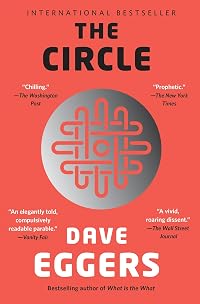
"The Circle is the exhilarating new novel from Dave Eggers, best-selling author of A Hologram for the King, a finalist for the National Book Award. When Mae Holland is hired to work for the Circle, the world's most powerful internet company, she feels she's been given the opportunity of a lifetime. The Circle, run out of a sprawling California campus, links users' personal emails, social media, banking, and purchasing with their universal operating system, resulting in one online identity show more and a new age of civility and transparency. As Mae tours the open-plan office spaces, the towering glass dining facilities, the cozy dorms for those who spend nights at work, she is thrilled with the company's modernity and activity. There are parties that last through the night, there are famous musicians playing on the lawn, there are athletic activities and clubs and brunches, and even an aquarium of rare fish retrieved from the Marianas Trench by the CEO. Mae can't believe her luck, her great fortune to work for the most influential company in the world--even as life beyond the campus grows distant, even as a strange encounter with a colleague leaves her shaken, even as her role at the Circle becomes increasingly public. What begins as the captivating story of one woman's ambition and idealism soon becomes a heart-racing novel of suspense, raising questions about memory, history, privacy, democracy, and the limits of human knowledge"-- show lessTags
Recommendations














Member Recommendations
sparemethecensor The Circle could easily have ended with the line, "Mae loved Big Brother."
140
JuliaMaria Die totale Überwachung: einmal unfreiwillig, das andere Mal völlig freiwillig
91
vwinsloe The insidiousness of the internet, corporations and being constantly online.
20

The Language of the Third Reich: LTI -- Lingua Tertii Imperii: A Philologist's Notebook by Victor Klemperer
Jozefus Voor de opmerkelijke overeenkomst tussen de kretologie van de IT-wereld en de retoriek van het Derde Rijk
isabelx both are set in societies where privacy is becoming a thing of the past
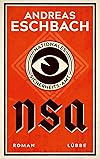
Florian_Brennstoff Dataism becoming Totalitarism and vice versa. The Circle adresses the totalitarian threat, rising from a corporation that openly promotes total transparency. NSA shows what happened when a totalitarian regime gets hold of the vital data of all the citizens.
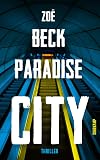
JuliaMaria Spannende Romane, die in der nahen Zukunft spielen. Gesundheitsüberwachung ist in beiden wichtiges, aber nicht das einzige Thema.
by djryan

Member Reviews
A dystopian satire (although at times it feels barely satirical) about social media and tech companies, featuring a corporation called The Circle, which is sort of like Google, Facebook, and Twitter all rolled into one and then made even more cult-like. The folks at The Circle not only fail to value privacy and cheerfully subordinate it to the desires of capitalism, they actually regard it as something akin to a moral evil. And they see it as their mission to make the world a better place.
It's a good premise, very Black Mirror-ish, and I appreciate the way Eggers carefully avoids straw-manning his targets (even to the extent of being willing to stipulate to some of the positive effects of the Circle's approach that I really don't show more personally find particularly creditable). But I'm afraid I never liked it anywhere near as much as I wanted to. The whole thing just feels entirely too heavy-handed. Certainly we did not need 400 pages to get the point, and I can't help thinking that it would have been far, far more effective if cut down to the length of a novella. show less
It's a good premise, very Black Mirror-ish, and I appreciate the way Eggers carefully avoids straw-manning his targets (even to the extent of being willing to stipulate to some of the positive effects of the Circle's approach that I really don't show more personally find particularly creditable). But I'm afraid I never liked it anywhere near as much as I wanted to. The whole thing just feels entirely too heavy-handed. Certainly we did not need 400 pages to get the point, and I can't help thinking that it would have been far, far more effective if cut down to the length of a novella. show less
Update: Life imitates art. I keep my distance from Facebook these days, and so it was only recently that I learned that Zuckerberg has rebranded his baby as “Meta”, as part of the Metaverse: It’s the metaverse — defined most simply as a virtual world where people can socialize, work, and play — and Facebook’s CEO Mark Zuckerberg believes it is the future of the internet and of his trillion-dollar company. The Circle, in other words…
This book made me very tense. Not in the way that I feel when a character in a thriller may - or may not - escape discovery, or a horrible death.
No, this was the kind of stress that, for me, comes from too little privacy and too many inputs.
At the Google-meets-1984 company that is The Circle, show more all personnel are required to integrate their personal social media accounts onto the company's network, and to actively participate on all social media platforms on an ongoing basis.
This would be the first level of hell for me. Aside from GR, any social media interaction has become unpleasant for me.
The next level would be the mandatory participation in social activities on The Circle campus. When reading about this I was reminded of the new COO at a company I worked for who insisted on participation in a company Happy Hour every Friday. At that time my work hours were 6:00 to 3:00, and hanging around for 2 hours for the opportunity of spending even more time with the people I worked with all day made me flinch. Doing that multiple times a week, regardless of the event, would have had me weeping.
Then there are the inputs and trackers. Multiple screens with multiple data feeds and earbuds with different messages and wristbands monitoring health and location. For crying out loud, there are times when I want to throw my Apple watch against the wall when it keeps reminding me to stand up. And I struggle with multiple simultaneous audio inputs under any circumstances. Open office environments make me nuts. At this point in the book I'm approaching that frozen wasteland that is Dante's 9th circle of hell.
And all this was before the main plot began.
So, not a book that I am going to be able to appreciate solely on its literary merits. I grew anxious to finish it just so that I could make the stress stop. (I am not kidding about this!)
But with all that said, the book was entertaining and thought-provoking. It is alluring to succumb to the ease and efficiency of integrating the electronic components of our lives - but how far is too far?
Four smiles. show less
This book made me very tense. Not in the way that I feel when a character in a thriller may - or may not - escape discovery, or a horrible death.
No, this was the kind of stress that, for me, comes from too little privacy and too many inputs.
At the Google-meets-1984 company that is The Circle, show more all personnel are required to integrate their personal social media accounts onto the company's network, and to actively participate on all social media platforms on an ongoing basis.
This would be the first level of hell for me. Aside from GR, any social media interaction has become unpleasant for me.
The next level would be the mandatory participation in social activities on The Circle campus. When reading about this I was reminded of the new COO at a company I worked for who insisted on participation in a company Happy Hour every Friday. At that time my work hours were 6:00 to 3:00, and hanging around for 2 hours for the opportunity of spending even more time with the people I worked with all day made me flinch. Doing that multiple times a week, regardless of the event, would have had me weeping.
Then there are the inputs and trackers. Multiple screens with multiple data feeds and earbuds with different messages and wristbands monitoring health and location. For crying out loud, there are times when I want to throw my Apple watch against the wall when it keeps reminding me to stand up. And I struggle with multiple simultaneous audio inputs under any circumstances. Open office environments make me nuts. At this point in the book I'm approaching that frozen wasteland that is Dante's 9th circle of hell.
And all this was before the main plot began.
So, not a book that I am going to be able to appreciate solely on its literary merits. I grew anxious to finish it just so that I could make the stress stop. (I am not kidding about this!)
But with all that said, the book was entertaining and thought-provoking. It is alluring to succumb to the ease and efficiency of integrating the electronic components of our lives - but how far is too far?
Four smiles. show less
This was more of a scary, creepy dystopian novel than I was expecting. The Circle is an all encompassing social media company (think Facebook combined with Google combined with Darpa). A young wide-eyed girl is hired at the Circle and becomes our narrator and main focus for a company that is gradually taking over all parts of our lives (social and otherwise). A very possible near-term science fiction/twilight zone tale.
"But secondly, don't presume the benevolence of your leaders. For years there was this happy time when those controlling the major internet conduits were actually decent enough people Or at least they weren't predatory and vengeful."
"But secondly, don't presume the benevolence of your leaders. For years there was this happy time when those controlling the major internet conduits were actually decent enough people Or at least they weren't predatory and vengeful."
I have a feeling that Dave Eggers tried to write a 1984 type book for the modern era. The parallels are there. However, it doesn't really hit the mark, and yet it somewhat does. Hence my conflicted thoughts.
So first off: I really enjoyed how he made the setting, the campus, the main engine that was driving the story forward, and our protagonist was mostly responding back to it. There are only a few instances where she moves the story forward but mostly Mae is a vessel to move the story of the circle forward. It's the first book I have read that does that and I loved it.
Secondly: Mae is a very well-thought-out
Thirdly: The story itself is very interesting. From the get-go, the first project that the circle takes is soooo outlandish that you just shake your head and go, "No way, this is happening." But it does. And then he keeps amping the outlandish ideas up and I keep thinking where is it all going to go. It was interesting to see these many ideas flowing in the book.
So why on earth am I conflicted about it?
Well because it does not work when you step back and think about it.
1: The side characters seem like idiots when they should not have been since they are the smartest in this book's universe.
Ty chooses to trust Mae with a piece of crucial information when in reality he had no reason to do so. Mae is the person who had been forcing her parents to go under cameras within a few weeks of her working there. She was under Bailey's spell from the moment she met him. So much so that she modified her personality around his ideology and actively started wearing cameras everywhere. She led to Mercer's death and thought she was blameless. That person, you think, can take a 180-degree turn and tell the whole world how it was all evil. Really? And the reason the author gives is that she had access to a large audience watching her. Tyler was one of the 3 wise men who could come out himself and get a bigger number any day of his choosing just cause he was that important. He did not need Mae. This was stupid. So stupid that I was shaking my head like why???
Then comes Annie. Annie was literally telling everyone that Mae was going to be her colleague at a high level in just a few months. And when Mae did, suddenly the author in the case of MenWritingWomen decides to immediately go for a jealousy angle. Annie is now ridiculously jealous. Wow!
Then to make the rivalry seem obvious to us there is a to-and-fro that happens in a meeting where Annie has to be a dumb person and get schooled by higher-ups. Why would Annie ask such stupid questions when she was herself running around removing bureaucratic hurdles in countries for circle's programs? She would know the extent Circle could go for from the beginning of her career there. She was dumbed down only so she could try to win favour by offering herself for another project as a test example. Anyone who comes from Old Money esp in a country like America would not do this. You get an idea about your family's history even if it is not explicitly explained to you. You know shit had happened. Why would she do that? Why couldn't she do some other thing to win the favours? She was running around doing important tasks. One small hiccup wasn't going to ruin her. All this because Dave wanted to put her in a coma. That does not make sense, none of it does.
Introduce another character to take the test and then show how Annie realises that we are not supposed to know it all and leave the company. While Mae decides to stay. That works better, not this.
2: There is no opposition whatsoever to circle in common people. I started to think that there were bots employed to hype Mae up. Seriously! It looked like she was talking to robots. That bothered me a lot. I think the author was trying to show that when we get our name attached to our accounts, we can't criticise people or authority and have to hide our true intentions. However, one look at Facebook and you realise that is not true especially when it comes to anti-vaxxers, 9/11 deniers, Holocaust deniers, and flat earthers, and so on. There is always a rival movement going on. Mercer was not going to be a single person like this out there.
Anyway, there is a lot of interesting stuff there. The darkness that would descend upon Mae that she would try to avoid by taking more and more work was very interesting.
Overall a great book that makes for a good book club discussion.
From the beginning, when Mae spends her first day at The Circle, on the idlyllic California campus near San Francisco, you kind of know, from the headlong pace and Mae's own delight in everything she encounters, where this is headed and it's nowhere good. This is a near-future dystopic novel and under Mae's chirpy cheerfulness it is really really creepy, the message being that you don't lose your right to privacy all of a sudden, but one gizmo cool app at a time . . . This one tracks kids, that one tracks your health, why not wear a camera all the time, why not put mini-cameras everywhere, why not track criminals, why not . . . Mae quickly becomes the 'face' of The Circle, and she thrives on all of it, on being part of something big, on show more having several million followers. Meanwhile her parents and her former boyfriend are unable to get through her enthusiastic endorsement of everything The Circle does with terrible consequences. I love Library Thing and I have many connections on the internet that I highly value, but I also know, so far, when it is time to check out, maybe even for a day or two. It's when you get on to see who has come by and you were on just ten minutes ago, or you find who's reading your blog lately and start looking at where they live. . . signing up for this and that, liking on FB . . . you can waste a whole day . . . or maybe even a whole life. The style of the writing I would characterize as breathless--any bit of independent Mae can't sustain itself against the idea of being connected to so many people and such a cool thing ..... Mae is, in fact, horribly boring and quite horrible, so there is a weird tediousness to the book, but that is the point! I appreciate The Circle. The four stars are for the perfectly pitched execution of an idea, not because I enjoyed it. It's a sobering 'it-could-happen' and well done. **** show less
Summary: Dystopian fiction exploring the potential in a digital, online age to create a world where nothing is secret, and whether that is a utopia or a nightmare.
Imagine a world where you can know anything, and nothing is hidden or kept secret. Imagine a world where every person has a digital profile that collects all your health, educational, commercial, and social data, every picture by or of you, and makes this available to all. Imagine a world where we have embedded chips so that anyone can know where we are. Imagine we all wear body cameras that record our interactions and activity throughout the day. Imagine that all the archival information in the world may be searched to put together your family history, dark sides and show more all,.
This is the world Mae finds herself in when she gets a job with The Circle with the help of her friend Annie, a higher up in The Circle. She begins working in Customer Experience, but soon discovers that The Circle wants far more of her than to get a 100 rating on every customer interaction. They want her to share her life with the rest of The Circle--to give opinions via a headset, to give them her digital life, to join groups, to interact with others in The Circle.
This alone would probably have creeped me out and had me running for the hills. But Mae has been rescued from a dead end job with a local utility. She has a father with MS struggling with his health insurer--until The Circle finds out and adds him to their plan. The hooks go deeper even as she is cut off from much of her former life, eventually moving into a Circle dorm. After an incident caught on Circle's SeeChange cameras catches her "borrowing" a kayak after hours, she meets one of the three leaders of The Circle, its public voice, Eamon Bailey. He helps her to recognize that the worst part of her act was keeping secrets, that we are better people when we do not hide but rather openly share our lives with the world. And in her "evolved" state of insight, she agrees to go "clear" and wear a camera recording all her activity, and becomes an celebrity both within The Circle, and in the wider public who love watching Mae's life.
She tries to usher her former boyfriend Mercer into the wonders of being connected with the world through The Circle. He will have none of it, and when she attempts to promote his business, he leaves the grid, writing her a long letter warning her of what she is getting into. He is not the only one. She encounters a shadowy figure, Kalden, who also tries to warn her of what would happen if they should succeed in "closing the Circle," creating a world where The Circle becomes a vehicle by which all is known, seen, and nothing remains secret. She is disturbed, and also fascinated by him, reflected in some rather kinky hookups in bathrooms. Yet she goes further and deeper into the Circle's plans. What will this mean for Mae? Her parents? Mercer? Her friend Annie?
I'll leave you to discover what happens if you have not read the book or seen the recent movie version (trailer here). I will also leave you with the thought that everything the book describes, as far as I could tell, is technologically possible today. More than that, the amount of information we voluntarily surrender about ourselves via social media, online and offline purchasing with credit cards, our banking and credit histories, the photos and files we store in the cloud, the customer cards we use at various stores and more, is staggering. Increasingly our medical records and health history is digitized and shared between providers and insurers, and we agree to it all. And the GPS chips in our smartphones track our every move. Everything in The Circle could or is being done. The only thing forestalling the tyranny Kalden and Mercer foresee is the lack of sufficient will and impetus to do it. We've laid much of the groundwork for such things either willingly or unknowingly.
More intriguing yet is the effort to usher in a utopia, the effort to perfect human nature, this time through stripping us of any secret worlds. Such a world substitutes social conformity (and who decides what conformity is?) for the harder won integrity that consists of living truthfully, living consistently with what one values when no one is looking. Instead of living one's life coram deo (before the face of God), we substitute the human god of the grid, and the much more capricious fancies of its controllers and the mentality of the online mob.
Finally, the book raises the question of whether it is really a good thing to be able to know everything. Is the steady stream of status updates, online surveys, likes, tweets, news stories really making us more informed? More wise? Perhaps if nothing else, Eggers book makes us reflect on all the information we offer up, our addiction to the little rectangles we carry in our pockets, and the illusions all this fosters of a kind of omniscience that may be too much for our little brains to handle. show less
Imagine a world where you can know anything, and nothing is hidden or kept secret. Imagine a world where every person has a digital profile that collects all your health, educational, commercial, and social data, every picture by or of you, and makes this available to all. Imagine a world where we have embedded chips so that anyone can know where we are. Imagine we all wear body cameras that record our interactions and activity throughout the day. Imagine that all the archival information in the world may be searched to put together your family history, dark sides and show more all,.
This is the world Mae finds herself in when she gets a job with The Circle with the help of her friend Annie, a higher up in The Circle. She begins working in Customer Experience, but soon discovers that The Circle wants far more of her than to get a 100 rating on every customer interaction. They want her to share her life with the rest of The Circle--to give opinions via a headset, to give them her digital life, to join groups, to interact with others in The Circle.
This alone would probably have creeped me out and had me running for the hills. But Mae has been rescued from a dead end job with a local utility. She has a father with MS struggling with his health insurer--until The Circle finds out and adds him to their plan. The hooks go deeper even as she is cut off from much of her former life, eventually moving into a Circle dorm. After an incident caught on Circle's SeeChange cameras catches her "borrowing" a kayak after hours, she meets one of the three leaders of The Circle, its public voice, Eamon Bailey. He helps her to recognize that the worst part of her act was keeping secrets, that we are better people when we do not hide but rather openly share our lives with the world. And in her "evolved" state of insight, she agrees to go "clear" and wear a camera recording all her activity, and becomes an celebrity both within The Circle, and in the wider public who love watching Mae's life.
She tries to usher her former boyfriend Mercer into the wonders of being connected with the world through The Circle. He will have none of it, and when she attempts to promote his business, he leaves the grid, writing her a long letter warning her of what she is getting into. He is not the only one. She encounters a shadowy figure, Kalden, who also tries to warn her of what would happen if they should succeed in "closing the Circle," creating a world where The Circle becomes a vehicle by which all is known, seen, and nothing remains secret. She is disturbed, and also fascinated by him, reflected in some rather kinky hookups in bathrooms. Yet she goes further and deeper into the Circle's plans. What will this mean for Mae? Her parents? Mercer? Her friend Annie?
I'll leave you to discover what happens if you have not read the book or seen the recent movie version (trailer here). I will also leave you with the thought that everything the book describes, as far as I could tell, is technologically possible today. More than that, the amount of information we voluntarily surrender about ourselves via social media, online and offline purchasing with credit cards, our banking and credit histories, the photos and files we store in the cloud, the customer cards we use at various stores and more, is staggering. Increasingly our medical records and health history is digitized and shared between providers and insurers, and we agree to it all. And the GPS chips in our smartphones track our every move. Everything in The Circle could or is being done. The only thing forestalling the tyranny Kalden and Mercer foresee is the lack of sufficient will and impetus to do it. We've laid much of the groundwork for such things either willingly or unknowingly.
More intriguing yet is the effort to usher in a utopia, the effort to perfect human nature, this time through stripping us of any secret worlds. Such a world substitutes social conformity (and who decides what conformity is?) for the harder won integrity that consists of living truthfully, living consistently with what one values when no one is looking. Instead of living one's life coram deo (before the face of God), we substitute the human god of the grid, and the much more capricious fancies of its controllers and the mentality of the online mob.
Finally, the book raises the question of whether it is really a good thing to be able to know everything. Is the steady stream of status updates, online surveys, likes, tweets, news stories really making us more informed? More wise? Perhaps if nothing else, Eggers book makes us reflect on all the information we offer up, our addiction to the little rectangles we carry in our pockets, and the illusions all this fosters of a kind of omniscience that may be too much for our little brains to handle. show less
I often feel the need to think things through slowly, to go through each step, starting with assumptions, to explore them one after the next. I know people find this annoying. What I first liked about Eggers, years ago, was a recognition of that process in his writing. I view his books as journals - he is writing it out for himself, at whatever pace it takes, working through a thought, a sloughing; and my reading of the finished work is welcome, but not the point.
So when just a few chapters into the Circle I started saying "Yes, and...? Yes, AND...?" it interested me. I stopped thinking about the narrative and started thinking about the thought process, the tangents, the triggers for further contemplation. The exasperating things about show more the story itself stopped bothering me as much.
I don't know, I don't think I have a rating yet, so I'll stick to the middle. I read a few reviews and I agree as much with the 1-stars as the 5-stars. That interests me too. There's a lot I could almost dismiss as already going over ground that's been widely discussed. But then, so many people have said to me some variation of "if you're not doing anything wrong, you have nothing to fear", that I want to encourage any new discussion on this topic, at whatever level. And there's a lot of fair criticism about characterization and narrative, which I won't dispute - I just feel that way about a lot of his writing, and I'm ok with it.
I'm going to let it sit for a while. I'm going to see what, if any, moments come back into my thoughts, add into other musings, wake me up in the middle of the night. Because the parts that got my mind wandering weren't about the main narrative. They were about the language of advertising, the endless search for balance between safety and freedom, the constant question of how we can know a person, and how we can know ourselves. The moment Mae deals with emotional turmoil by going back to a mindless task, the solace of routine and structure and clear answers with immediate rewards. How readers, as much as Mae, take the responses of people who comment to her as the response of all people everywhere. The interaction where a client uses the need to be positive and friendly and responsive to bully her into doing him a favor. What I would say if someone dared ask me why I thought a moment of moonlight on an empty beach belonged just to me. The memories of every moment of moonlight on an empty beach that do, in fact, belong just to me.
I read most of this book on a cool breezy day, cocooned in my garden without phone, laptop, camera, visitors. I am thankful for the book, and I am thankful for the garden. show less
So when just a few chapters into the Circle I started saying "Yes, and...? Yes, AND...?" it interested me. I stopped thinking about the narrative and started thinking about the thought process, the tangents, the triggers for further contemplation. The exasperating things about show more the story itself stopped bothering me as much.
I don't know, I don't think I have a rating yet, so I'll stick to the middle. I read a few reviews and I agree as much with the 1-stars as the 5-stars. That interests me too. There's a lot I could almost dismiss as already going over ground that's been widely discussed. But then, so many people have said to me some variation of "if you're not doing anything wrong, you have nothing to fear", that I want to encourage any new discussion on this topic, at whatever level. And there's a lot of fair criticism about characterization and narrative, which I won't dispute - I just feel that way about a lot of his writing, and I'm ok with it.
I'm going to let it sit for a while. I'm going to see what, if any, moments come back into my thoughts, add into other musings, wake me up in the middle of the night. Because the parts that got my mind wandering weren't about the main narrative. They were about the language of advertising, the endless search for balance between safety and freedom, the constant question of how we can know a person, and how we can know ourselves. The moment Mae deals with emotional turmoil by going back to a mindless task, the solace of routine and structure and clear answers with immediate rewards. How readers, as much as Mae, take the responses of people who comment to her as the response of all people everywhere. The interaction where a client uses the need to be positive and friendly and responsive to bully her into doing him a favor. What I would say if someone dared ask me why I thought a moment of moonlight on an empty beach belonged just to me. The memories of every moment of moonlight on an empty beach that do, in fact, belong just to me.
I read most of this book on a cool breezy day, cocooned in my garden without phone, laptop, camera, visitors. I am thankful for the book, and I am thankful for the garden. show less
Members
- Recently Added By
Published Reviews
ThingScore 57
Van alle romans die ik dit jaar las, is De Cirkel van Dave Eggers het meest blijven na-ijlen. Niet omdat het literair het beste boek is, maar vanwege de verontrustende beelden die het oproept, beelden die na de laatste bladzijde niet langzaam wegebben, maar hinderlijk blijven doorspoken. De Cirkel is het 1984 van het internettijdperk genoemd, maar beschrijft een werkelijkheid die veel nabijer show more lijkt en daardoor dreigender voelt dan Orwells tijdloze boek. show less
added by sneuper
Even as satire, The Circle is disappointing as a novel: the plot is too easy, the prose simple, the characters flat and undistinguishable. Due to these same qualities, however, The Circle succeeds as commentary on the era of big data and transparency. The scary part is that the Silicon Valley of The Circle barely seems like a caricature. The easiest comparison of the Circle is to Google — show more whose Mountain View campus keeps its employees fed, fit, massaged, and, well, kept. The Circle’s mottos and mantras are the same buzzwords already posted on billboards and batted around in cafes and bars. show less
added by Jozefus
Some will call The Circle a “dystopia,” but there’s no sadistic slave-whipping tyranny on view in this imaginary America: indeed, much energy is expended on world betterment by its earnest denizens. Plagues are not raging, nor is the planet blowing up or even warming noticeably. Instead we are in the green and pleasant land of a satirical utopia for our times, where recycling and show more organics abound, people keep saying how much they like each another, and the brave new world of virtual sharing and caring breeds monsters. show less
added by BeckyJG
Lists

Best Dystopias
280 works; 271 members
1001 Books You Must Read Before You Die
1,448 works; 1,131 members

Recommend the 20 best books you've read in the last five years
2,168 works; 606 members

Top Five Books of 2013
1,562 works; 721 members

Best Science Fiction Novels
816 works; 430 members

Dishonourable Mentions of 2013
189 works; 63 members

Slipstream or Interstitial Fiction
160 works; 19 members

Top Five Books of 2014
1,064 works; 398 members

Dystopian and Apocalyptic Literature
350 works; 74 members

Books Set in California
112 works; 15 members

Top Five Books of 2017
757 works; 231 members

Top Five Books of 2015
811 works; 241 members

Speculative Fiction: Slipstream Literature
166 works; 16 members

Read-alike - Infinite Detail by Tim Maughan
8 works; 1 member

Books Read in 2017
4,249 works; 130 members

My TBR
371 works; 3 members

Science and Techno Thrillers
9 works; 2 members

KayStJ's to-read list
1,616 works; 11 members

Letters or Epistles
28 works; 1 member

Read in 2016
107 works; 7 members

Our digital age
79 works; 5 members

Most thought-provoking novels
30 works; 28 members

Books Read in 2013
1,630 works; 51 members

Florida
366 works; 3 members
Talk Discussions
Past Discussions
The Circle: Theological undertones in "The Circle" in One LibraryThing, One Book (January 2015)
The Circle: Introduce Yourself! in One LibraryThing, One Book (March 2014)
The Circle: Explicit References to 1984 Could Have Helped in Book talk (February 2014)
The Circle: General Likes/Dislikes in One LibraryThing, One Book (January 2014)
The Circle: First Impressions in One LibraryThing, One Book (December 2013)
The Circle: A Horror Novel? in One LibraryThing, One Book (December 2013)
The Circle: How did it go? in One LibraryThing, One Book (December 2013)
The Circle: What rang true for you? in One LibraryThing, One Book (December 2013)
The Circle: Author's Style in One LibraryThing, One Book (November 2013)
The Circle: Non-spoiler Oddities in One LibraryThing, One Book (November 2013)
Author Information

166+ Works 73,259 Members
Dave Eggers was born on March 12th, 1970, in Boston, Massachusetts. His family moved to Lake Forest, Illinois when he was a child. Eggers attended the University of Illinois at Urbana-Champaign, until his parents' deaths in 1991 and 1992. The loss left him responsible for his eight-year-old brother and later became the inspiration for his highly show more acclaimed memoir "A Heartbreaking Work of Staggering Genius". Published in 2000, the memoir was nominated for a nonfiction Pulitzer the following year. Eggers edits the popular "The Best American Nonrequired Reading" published annually. In 1998, he founded the independent publishing house, McSweeney's which publishes a variety of magazines and literary journals. Eggers has also opened several nonprofit writing centers for high school students across the United States. Eggers has written several novels and his title, A Hologram for the King, was a finalist for the 2012 National Book Award. His most recent work of fiction, entitled The Circle, was published in 2013. His recent nonfiction books are The Monk of Mokha (January 2018) and What Can a Citizen Do? (Illustrated by Shawn Harris)(September 2018). (Bowker Author Biography) show less
Some Editions
Awards and Honors
Awards
Distinctions
Series

Belongs to Publisher Series
Gallimard, Folio (6330)
Common Knowledge
- Canonical title*
- De Cirkel
- Original title
- The Circle
- Original publication date
- 2013-10-08
- People/Characters
- Mae Holland; Ty Gospodinov; Eamon Bailey; Tom Stenton; Francis Garaventa; Annie Allerton (show all 9); Mercer Medeiros; Gus Khazeni; Dr. Villalobos
- Important places
- California, USA; Fresno, California, USA; San Francisco, California, USA; The Circle campus
- Related movies
- The Circle (2017 | IMDb)
- Epigraph
- There wasn't any limit, no boundary at all, to the future. And it would be so a man wouldn't have room to store his happiness.
John Steinbeck
East of Eden - First words
- My God, Mae thought. It's heaven.
- Quotations
- Overnight, all comment boards became civil, all posters held accountable. The trolls, who had more or less overtaken the internet, were driven back into the darkness.
Outside the walls of the Circle, all was noise and struggle, failure and filth. But here, all had been perfected. The best people had made the best systems and the best systems had reaped funds, unlimited funds, that made pos... (show all)sible this, the best place to work. And it was natural that it was so, Mae thought. Who else but utopians could make utopia?
"We will become all-seeing, all-knowing." The audience was standing now. The applause thundered through the room. Mae rested her head on Annie's shoulder. "All that happens will be known," Annie whispered.
Having a matrix of preferences presented as your essence, the whole you? Maybe that was it. It was some kind of mirror, but it was incomplete, distorted.
"You're always looking at me through a hundred other people's eyes."
Your tools have elevated gossip, hearsay and conjecture to the level of valid, mainstream communication.
"I've entered some inverted zone, some mirror world where the dorkiest shit in the world is completely dominant. The world has dorkified itself."
"There's this new neediness--it pervades everything."
"You know how you finish a bag of chips and you hate yourself? You know you've done nothing good for yourself. That's the same feeling, and you know it is, after some digital binge. You feel wasted and hollow and diminished."
They had access to virtually every movie and television show extant, and spent five minutes noting different things they could see, then thinking of something else that was like it but better.
"The Rights of Humans in a Digital Age." Mae scanned it, catching passages: "We must all have the right to anonymity." "Not every human activity can be measured." "The ceaseless pursuit of data to quantify the value of any en... (show all)deavor is catastrophic to true understanding." "The barrier between public and private must remain unbreachable." At the end she found one line, written in red ink: "We must all have the right to disappear."
"Homelessness could be helped or fixed, she knew, once the gamification of shelter allotment and public housing in general was complete."
Secrets Are Lies / Sharing Is Caring / Privacy Is Theft - Last words
- (Click to show. Warning: May contain spoilers.)The world deserved nothing less and would not wait.
- Original language
- English
- Canonical DDC/MDS
- 813.6
- Canonical LCC
- PS3605.G48
*Some information comes from Common Knowledge in other languages. Click "Edit" for more information.
Classifications
Statistics
- Members
- 6,956
- Popularity
- 1,704
- Reviews
- 450
- Rating
- (3.38)
- Languages
- 15 — Bosnian, Dutch, English, Estonian, French, German, Greek, Italian, Polish, Portuguese, Serbian, Croatian, Spanish, Swedish, Turkish
- Media
- Paper, Audiobook, Ebook
- ISBNs
- 76
- ASINs
- 23
