
David Shafer
Author of Whiskey Tango Foxtrot
About the Author
Image credit: By Stoneybatter - Own work, CC BY-SA 4.0, https://commons.wikimedia.org/w/index.php?curid=38177204
Works by David Shafer
Associated Works
Better Than Fiction 2: True Adventures from 30 Great Fiction Writers (2015) — Contributor — 34 copies
Tagged
Common Knowledge
Members
Reviews
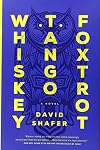
A sprawling and funny novel that speculates chillingly on the future of surveilliance and online life. The slightly bonkers techno-thriller plot is gripping, but the three memorable characters that drive it are really what raise this to the next level. The writing is sharp and witty, finding a good balance between propulsive action and more literary flourishes. A lot of reviewers have complained about the slightly abrupt ending, but it's hard to imagine how Shafer could have finished this show more off more satisfyingly - still, if you need your plot loose ends all tied up, you're going to be frustrated by this one. There's a definite DeLillo/Pynchon vibe going on here, but Shafer's writing is much more accessible than either and reminded me more of the more gripping bits of [b:Infinite Jest|6759|Infinite Jest|David Foster Wallace|https://d.gr-assets.com/books/1437328527s/6759.jpg|3271542]. The ambition is a bit more constrained, but the themes and tone are similar. show less
Three main characters in their mid-thirties, seemingly unconnected, become unwitting players in a control for online information. This edgy, dark but also comedic novel describes a potential dystopian state of affairs in which personal data becomes the property of large corporations, who want to use it as they wish, and sell it back to you for a price.
Leila Majnoun is an attractive American woman trying to make a difference in health care in Myanmar, when she inadvertently stumbles upon show more evidence that the U.S. Government is involved in something she shouldn’t have seen. Leo Crane, a good-hearted but misguided and substance-abusing neer-do-well, has just lost his job as a preschool teacher in Portland, Oregon. And Mark Deveraux is a drug-addled, alcohol-addicted self-help guru in New York who has come to the attention of wealthy and powerful James Straw, the “squillionaire” of SineCo, a digital search-and-storage conglomerate.
SineCo is supported by a clandestine U.S. intelligence organization called the Central Security Service, or CSS, the mission of which, since 9/11, has been “to build and maintain the world’s supreme electronic intelligence-gathering apparatus and cyberdefense infrastructure.” The CSS uses a few private-sector endeavors for intellectual capital and leading-edge technology. In return, the CSS provides cover for the companies’ R& D “that, in order to be valuable and effective, must take place in zones unattached to a particular jurisdiction.”
With the help of the CSS, SineCo has formed “The Committee,” dedicated to privatizing any and all information found anywhere online, and putting it to their own uses. A secret counter-movement, called “Dear Diary” has also arisen to try and stop The Committee.
What Leila found in Myanmar was an operation run by The Committee. Even though she had no idea what she saw, she was curious about it, and emailed a few reporter friends with questions. This was enough for the CSS to arrange for her eviction from Myanmar.
Before leaving however, she receives a cryptic warning from Ned Swain. Ned is a CSS operative who has been a little shocked and disaffected by the increasingly nefarious direction CSS has been taking. He advises Leila to contact Dear Diary. Dear Diary is afraid that The Committee wants to do more than just influence the thought and language and culture and social order. They have seen documents indicating that The Committee is considering a “targeted genocide" program. In ten years or so, they will have collected enough biological and genetic material to have computers determine which five percent of the population should live so they can begin the world again with “Enhanced Humanity.”
With Dear Diary's help, soon Leila connects with both Leo and Mark, and the three of them get involved in a scheme to help take down The Committee.
But Leila, Leo and Mark have to grapple with a critically important question: how do they know that Dear Diary won’t also turn into an organization like The Committee? As Mark points out, revolutionaries usually end up eating their children, or as he phrases it, “distributors always become the assholes.”
Dear Diary alleges it has a way to help keep its adherents honest, called “The Test.” All three of them take it, and it gives them a new perspective on reality, and on each other. But is it enough to save the world?
Discussion: This is one of the growing number of books in a genre that looks at the (invariably deleterious) repercussions of the proliferation of online information and diminution of privacy. It is similar in a way to Dave Eggers’ book The Circle, but this one is less allegorical. I like to wonder if it is more or less over the top than Eggers, but that’s because I like to pretend that these cautionary tales are all over the top.
There are some very funny satirical moments in this book, both subtle and overt - I especially loved the insider Proust joke. But I thought there was a bit too much rehashing of the main characters’ inner angst, and not enough development of some of the side characters, like Ned and James Straw, neither of whom I felt I really understood.
Evaluation: While this book just brushes the edges of being a thriller, I would categorize it more as political fiction, with a dark, satirical edge. Recommended for those who like to think about the possibilities for abuses of information collection and privacy. show less
Leila Majnoun is an attractive American woman trying to make a difference in health care in Myanmar, when she inadvertently stumbles upon show more evidence that the U.S. Government is involved in something she shouldn’t have seen. Leo Crane, a good-hearted but misguided and substance-abusing neer-do-well, has just lost his job as a preschool teacher in Portland, Oregon. And Mark Deveraux is a drug-addled, alcohol-addicted self-help guru in New York who has come to the attention of wealthy and powerful James Straw, the “squillionaire” of SineCo, a digital search-and-storage conglomerate.
SineCo is supported by a clandestine U.S. intelligence organization called the Central Security Service, or CSS, the mission of which, since 9/11, has been “to build and maintain the world’s supreme electronic intelligence-gathering apparatus and cyberdefense infrastructure.” The CSS uses a few private-sector endeavors for intellectual capital and leading-edge technology. In return, the CSS provides cover for the companies’ R& D “that, in order to be valuable and effective, must take place in zones unattached to a particular jurisdiction.”
With the help of the CSS, SineCo has formed “The Committee,” dedicated to privatizing any and all information found anywhere online, and putting it to their own uses. A secret counter-movement, called “Dear Diary” has also arisen to try and stop The Committee.
What Leila found in Myanmar was an operation run by The Committee. Even though she had no idea what she saw, she was curious about it, and emailed a few reporter friends with questions. This was enough for the CSS to arrange for her eviction from Myanmar.
Before leaving however, she receives a cryptic warning from Ned Swain. Ned is a CSS operative who has been a little shocked and disaffected by the increasingly nefarious direction CSS has been taking. He advises Leila to contact Dear Diary. Dear Diary is afraid that The Committee wants to do more than just influence the thought and language and culture and social order. They have seen documents indicating that The Committee is considering a “targeted genocide" program. In ten years or so, they will have collected enough biological and genetic material to have computers determine which five percent of the population should live so they can begin the world again with “Enhanced Humanity.”
With Dear Diary's help, soon Leila connects with both Leo and Mark, and the three of them get involved in a scheme to help take down The Committee.
But Leila, Leo and Mark have to grapple with a critically important question: how do they know that Dear Diary won’t also turn into an organization like The Committee? As Mark points out, revolutionaries usually end up eating their children, or as he phrases it, “distributors always become the assholes.”
Dear Diary alleges it has a way to help keep its adherents honest, called “The Test.” All three of them take it, and it gives them a new perspective on reality, and on each other. But is it enough to save the world?
Discussion: This is one of the growing number of books in a genre that looks at the (invariably deleterious) repercussions of the proliferation of online information and diminution of privacy. It is similar in a way to Dave Eggers’ book The Circle, but this one is less allegorical. I like to wonder if it is more or less over the top than Eggers, but that’s because I like to pretend that these cautionary tales are all over the top.
There are some very funny satirical moments in this book, both subtle and overt - I especially loved the insider Proust joke. But I thought there was a bit too much rehashing of the main characters’ inner angst, and not enough development of some of the side characters, like Ned and James Straw, neither of whom I felt I really understood.
Evaluation: While this book just brushes the edges of being a thriller, I would categorize it more as political fiction, with a dark, satirical edge. Recommended for those who like to think about the possibilities for abuses of information collection and privacy. show less
Very enjoyable & accomplished debut. It was as if T. C. Boyle, William Gibson, and Carl Hiassen decided to collaborate on a humorous, character driven, bleeding edge, sci-fi tinged conspiracy thriller. It was fascinating, well plotted, the character development was out of this world (the characters' vividly rendered inner monologues were very reminiscent of Boyle), and it was peppered with laugh-out-loud-funny one liners. I'm okay with the ambiguous conclusion but I'm also hoping for a show more sequel. The author's bio says "there will be more. Oh yes, there WILL be more." Yes, please. show less
I could go and list the MANY delightful moments in this book (Shafer’s writing in general, the rehab facility, the daycare, the various watercraft, the USPS and specifically postal inspection service as the one uncorrupted agency in the US government, and so on) but it’s more fun to discover them yourself. While the novel takes a little time to get used to (it drops you right in the middle of things and doesn’t do you any favors), it’s a delightfully unhinged romp through modern-day show more conspiracies. I had a blast.
More at RB: http://ragingbiblioholism.com/2015/04/20/whiskey-tango-foxtrot/
PLUS a So Many Damn Books episode: http://t.co/4HJyyN2igF show less
More at RB: http://ragingbiblioholism.com/2015/04/20/whiskey-tango-foxtrot/
PLUS a So Many Damn Books episode: http://t.co/4HJyyN2igF show less
Lists
Awards


You May Also Like


Associated Authors
Statistics
- Works
- 2
- Also by
- 1
- Members
- 504
- Popularity
- #49,150
- Rating
- 3.4
- Reviews
- 31
- ISBNs
- 15
- Languages
- 1