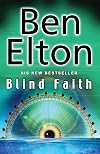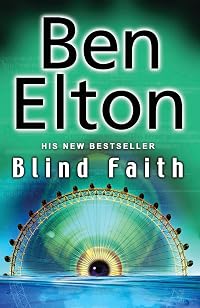
Blind Faith
by Ben Elton
On This Page
Description
Ben Elton's dark, savagely comic novel imagines a post-apocalyptic society where religious intolerance combines with a confessional sex obsessed, self-centric culture to create a world where nakedness is modesty, ignorance is wisdom and privacy is a dangerous perversion.Tags
Recommendations






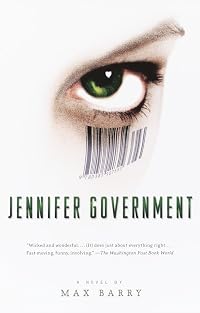
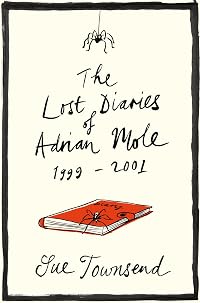

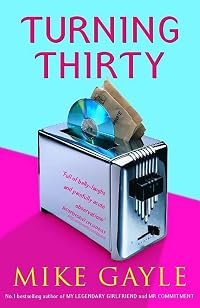
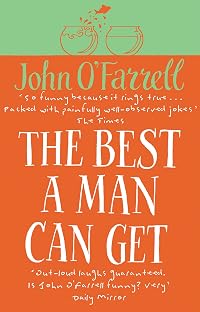
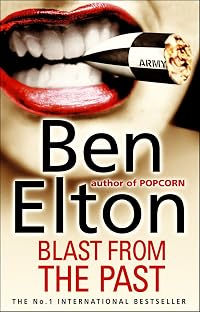
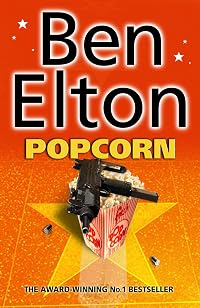
Member Recommendations
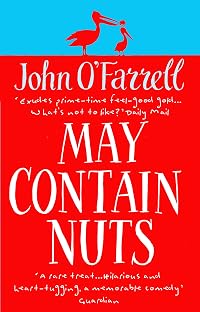
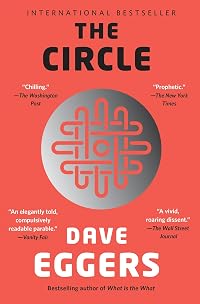
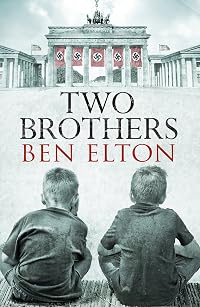
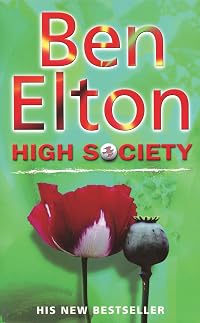
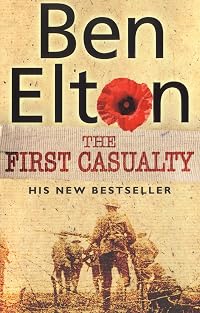
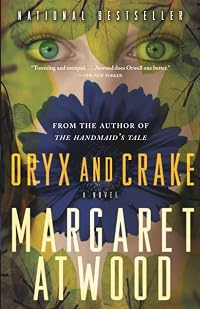
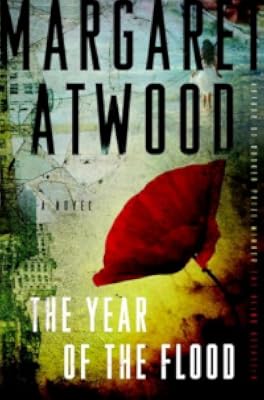
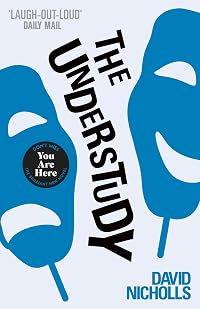
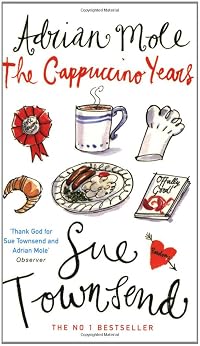
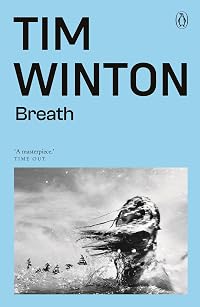
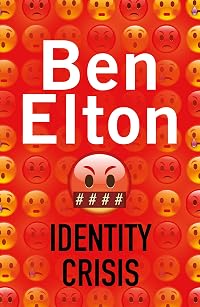
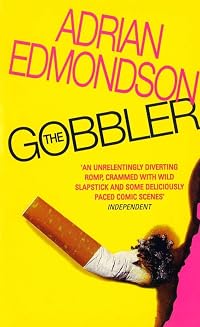
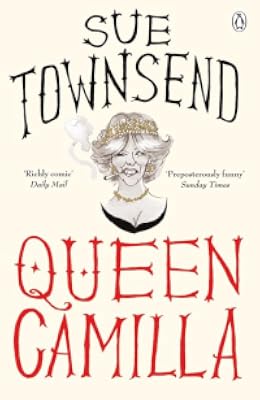
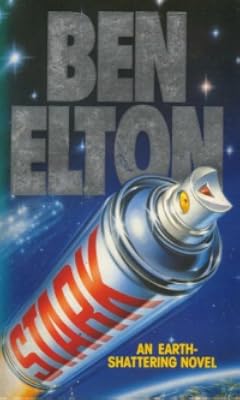
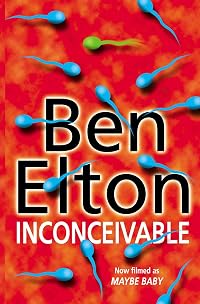
isabelx both are set in societies where privacy becoming a thing of the past
Member Reviews
Ben Elton has a talent for seeing past the surface of things to the reality lurking beneath. In "Dead Famous" he showed us how little reality there is in Reality TV. In "Chart Throb" he exposed how the outcomes of TV talent shows are manipulated. In "Blind Faith" he shows us where we may get to if current trends in attitudes towards privacy, intellect, and the dominance of passionate opinion over factual analysis continue.
I've found previous Ben Elton books to be fun as well as insightful. He uses wit, humour and careful observation to make me smile at the gaps between the world as it is presented to us and the reality that he uncovers.
"Blind Faith" is not like that. "Blind Faith" is so in your face and so horribly plausible that it show more make "1984" and "Fahrenheit 451" feel like light-hearted romps. Watching the plot unfold made me feel as if I were rubbernecking on a car wreck: the nice part of me wanted to look away but the reptile wrapped around my hindbrain was fascinated by the reality of the disaster.
"Blind Faith" is set in a post-flood near-future London, where the people are packed together so tightly there is only room to shuffle, not enough to walk. Social media are always on in your living room. Privacy is regarded as the kind of deviant behaviour only pedo pervert would need. Cherry-popping videos are part of everyone's online bio, laws are set by mass vote, a populist, live it large church guides all decisions, reading is illegal and vaccinations are seen as a lack of faith in God.
In the midst of all this, an ordinary man, trying to do his best and being overwhelmed.
This is a memorable book but it is not a comfortable read. The text began to make me feel as hemmed in as the characters in the novel and as overwhelmed as our hero. Ben Elton offers no comfort and no solutions, just a brutal warning. show less
I've found previous Ben Elton books to be fun as well as insightful. He uses wit, humour and careful observation to make me smile at the gaps between the world as it is presented to us and the reality that he uncovers.
"Blind Faith" is not like that. "Blind Faith" is so in your face and so horribly plausible that it show more make "1984" and "Fahrenheit 451" feel like light-hearted romps. Watching the plot unfold made me feel as if I were rubbernecking on a car wreck: the nice part of me wanted to look away but the reptile wrapped around my hindbrain was fascinated by the reality of the disaster.
"Blind Faith" is set in a post-flood near-future London, where the people are packed together so tightly there is only room to shuffle, not enough to walk. Social media are always on in your living room. Privacy is regarded as the kind of deviant behaviour only pedo pervert would need. Cherry-popping videos are part of everyone's online bio, laws are set by mass vote, a populist, live it large church guides all decisions, reading is illegal and vaccinations are seen as a lack of faith in God.
In the midst of all this, an ordinary man, trying to do his best and being overwhelmed.
This is a memorable book but it is not a comfortable read. The text began to make me feel as hemmed in as the characters in the novel and as overwhelmed as our hero. Ben Elton offers no comfort and no solutions, just a brutal warning. show less
I haven't read any of Elton's other novels other than Stark and Gridlock, although considering how much I enjoyed them and how much I enjoyed Blind Faith, I really really should.
Elton takes us on a wild ride down reductio ad absurdum street and takes us to a place where those of us who have blogs and personal websites are forced to reconsider our positions in the world.
It speaks to the skeptic in me. It is set in post-global-warming-sea-levels-rising London, and everything that we skeptics fear has happened. Society has returned to the dark ages - with woo and theocracy replacing science and democracy. This is blended with the rise of the voyeur society through constant internet communication.
The protagonist (Thurston) is one of what show more appears to be a very few people who value privacy. He doesn't want every tiny detail of his life broadcast on the building's chatroom. Unfortunately in this dystopia, privacy is not only a crime, it is a sin.
I won't go further into the plot itself - you should read the book for that. But the madly dysfunctional society that Elton has created is based entirely on things that we can see happening today.
Ben Elton's earlier books are black comedic social commentary, and while this book is humourous in parts, it is the social aspects that really made me squirm. We skeptics often ask what would happen if the anti-evolution lobby gained real political power. This book shows us. We ask how the world would be if psychic healing, spiritualism and the power of prayer replaced evidence-based medicine. This book shows us. As I said, it is an extensive reductio ad absurdum of current societal trends, and the end result is truly scary.
I really don't know how to say more about the book without giving away major plot points.
I'm not sure who would benefit more from reading this book - confirmed skeptics like me, or the woos we argue with. In either case it's fantastic. I couldn't put it down - I read it in two days. show less
Elton takes us on a wild ride down reductio ad absurdum street and takes us to a place where those of us who have blogs and personal websites are forced to reconsider our positions in the world.
It speaks to the skeptic in me. It is set in post-global-warming-sea-levels-rising London, and everything that we skeptics fear has happened. Society has returned to the dark ages - with woo and theocracy replacing science and democracy. This is blended with the rise of the voyeur society through constant internet communication.
The protagonist (Thurston) is one of what show more appears to be a very few people who value privacy. He doesn't want every tiny detail of his life broadcast on the building's chatroom. Unfortunately in this dystopia, privacy is not only a crime, it is a sin.
I won't go further into the plot itself - you should read the book for that. But the madly dysfunctional society that Elton has created is based entirely on things that we can see happening today.
Ben Elton's earlier books are black comedic social commentary, and while this book is humourous in parts, it is the social aspects that really made me squirm. We skeptics often ask what would happen if the anti-evolution lobby gained real political power. This book shows us. We ask how the world would be if psychic healing, spiritualism and the power of prayer replaced evidence-based medicine. This book shows us. As I said, it is an extensive reductio ad absurdum of current societal trends, and the end result is truly scary.
I really don't know how to say more about the book without giving away major plot points.
I'm not sure who would benefit more from reading this book - confirmed skeptics like me, or the woos we argue with. In either case it's fantastic. I couldn't put it down - I read it in two days. show less
Blind Faith is Ben Elton’s take on the post-apocalyptic future. He predicts everyone will share every intimate detail of their lives with those around them, not having a faith will be illegal and outrageous bureaucrat-spin will dumbly be accepted as fact in a way our present-day politicians probably dream of. The hero of the novel, a new dad named Trafford, has the heretical desire NOT to video blog his every waking moment and he finds some kindred spirits on his travels through the scary, emotion- filled future.
Although I have something of a Pavlovian, wallet-opening response to seeing Elton’s name on a book jacket I haven’t truly revelled in the reading of one of his books since Gridlock. But, perhaps because this particular show more glimpse into the future mirrors my own waking nightmares or perhaps because he’s returned to form, I enjoyed this one much more than I anticipated. For me Elton’s brilliance has always been in the way he juxtaposes the unbelievably of an extreme premise with satirically well-observed and utterly familiar situations and events. When done well, as in Blind Faith, this melding of the familiar (e.g. the endless cake-fuelled celebrations of nothing that take place in the modern office) with the ludicrous (it is impossible to have too much of the things we like such as sugar) creates something that feels credible as a whole.
The book is a little scary, in a Nineteen Eighty Four kind of way, but it’s a helluva lot funnier than Orwell and, for me anyway, ultimately positive. The notion that regardless of how much pressure there is to be part of the mob there will always be rebels like Trafford fills me with more than a little relief. And how could I as a book-a-holic not love a story in which books are the saviour of humanity? show less
Although I have something of a Pavlovian, wallet-opening response to seeing Elton’s name on a book jacket I haven’t truly revelled in the reading of one of his books since Gridlock. But, perhaps because this particular show more glimpse into the future mirrors my own waking nightmares or perhaps because he’s returned to form, I enjoyed this one much more than I anticipated. For me Elton’s brilliance has always been in the way he juxtaposes the unbelievably of an extreme premise with satirically well-observed and utterly familiar situations and events. When done well, as in Blind Faith, this melding of the familiar (e.g. the endless cake-fuelled celebrations of nothing that take place in the modern office) with the ludicrous (it is impossible to have too much of the things we like such as sugar) creates something that feels credible as a whole.
The book is a little scary, in a Nineteen Eighty Four kind of way, but it’s a helluva lot funnier than Orwell and, for me anyway, ultimately positive. The notion that regardless of how much pressure there is to be part of the mob there will always be rebels like Trafford fills me with more than a little relief. And how could I as a book-a-holic not love a story in which books are the saviour of humanity? show less
In a world where you are obliged to blog about everything, where mortality is very high, mostly because science is a dirty word, where the church is more concerned with keeping people happy than the truth, Trafford Sewell struggles to keep going.
It's a world that's not all to unbelievable, scarily, with roots in 1984 and other dystopias and like other dystopias Trafford is vaguely dissatisfied, where everyone is supposed to blog about everything he keeps secrets even if it will risk his life.
It's interesting, felt a little forced occasionally as if the idea didn't quite keep pace with the characters but still an interesting story, and all to believable.
It's a world that's not all to unbelievable, scarily, with roots in 1984 and other dystopias and like other dystopias Trafford is vaguely dissatisfied, where everyone is supposed to blog about everything he keeps secrets even if it will risk his life.
It's interesting, felt a little forced occasionally as if the idea didn't quite keep pace with the characters but still an interesting story, and all to believable.
The old ways and beliefs of the Monkey men were sinful and blasphemous, and The Lord punished them with The Flood. Now, faith is mandatory, science is heresy, and the most intimate details of everyone's lives are expected to be made available for public consumption 24/7 - after all, if you try to hide something then you must be ashamed of it, right?
And yet, Trafford Sewell yearns for privacy, for knowledge, for freedom of thought and expression - so dangerous and subversive that if anyone found out they would kill him for it. But, just maybe, he's not alone...?
This is the first book of Ben Elton's I've read, and I'm now feeling an urge to go out and find more. Deliciously cynical observations - and yet, disturbingly prophetic. I'd like show more to think it couldn't happen, but it already is....! show less
And yet, Trafford Sewell yearns for privacy, for knowledge, for freedom of thought and expression - so dangerous and subversive that if anyone found out they would kill him for it. But, just maybe, he's not alone...?
This is the first book of Ben Elton's I've read, and I'm now feeling an urge to go out and find more. Deliciously cynical observations - and yet, disturbingly prophetic. I'd like show more to think it couldn't happen, but it already is....! show less
I have been thinking about how I was going to write a review for Blind Faith since I had started reading it. Every time I was reading I would think about how this book related to some events or similarities between our real world and the world depicted in Blind Faith.
Blind Faith is a novel about a world that has been punished by the 'Love' aka 'God'. Everyone in this world has Blind Faith in 'The Love'. They believe that God gives you things, such as life, food, air, children etc and yet will also take it away if you don't worship the Love.
The people are 'ruled' by the Temple that sets all the rules. You are not allowed to keep secrets or have privacy. Everything you do is always being filmed. People walk around barely clothed. Women show more are told to get Breasts implants. If a woman doesn't get breast implants then they must not love the love. Because the Love wants you to love your body by making it sexy with fake boobs. Everything on the Earth is created by the love.
Some of the similarities I related to in the book to the real world is the fact that the people are always being filmed. That made me think about how so many people will create videos and upload them to their web pages, blogs, youtube etc. In Blind Faith you need to post videos of you having sex with your current wife, the birth of a child and other things. If you don't then you must not love yourself and you can be punished for all this. The temple preaches that marriage is not meant to be you get married once and you last with that person until you die; the temple preaches that you are supposed to be married multiple times. When I read about the idea of marriage it made me think about how some people will get a divorce instead of trying to either work things out and possibly save the marriage.
I found the story entertaining and quite laughable with the contradictions with in the Temple beliefs. When the Children died they were sent to a better place. Yet the Children that live on the Earth are blessed and in a better place too. Just seeing how people can be easily manipulated to believe things when professed over and over again.
I am glad that I was able to read this book and be introduced to another new author. show less
Blind Faith is a novel about a world that has been punished by the 'Love' aka 'God'. Everyone in this world has Blind Faith in 'The Love'. They believe that God gives you things, such as life, food, air, children etc and yet will also take it away if you don't worship the Love.
The people are 'ruled' by the Temple that sets all the rules. You are not allowed to keep secrets or have privacy. Everything you do is always being filmed. People walk around barely clothed. Women show more are told to get Breasts implants. If a woman doesn't get breast implants then they must not love the love. Because the Love wants you to love your body by making it sexy with fake boobs. Everything on the Earth is created by the love.
Some of the similarities I related to in the book to the real world is the fact that the people are always being filmed. That made me think about how so many people will create videos and upload them to their web pages, blogs, youtube etc. In Blind Faith you need to post videos of you having sex with your current wife, the birth of a child and other things. If you don't then you must not love yourself and you can be punished for all this. The temple preaches that marriage is not meant to be you get married once and you last with that person until you die; the temple preaches that you are supposed to be married multiple times. When I read about the idea of marriage it made me think about how some people will get a divorce instead of trying to either work things out and possibly save the marriage.
I found the story entertaining and quite laughable with the contradictions with in the Temple beliefs. When the Children died they were sent to a better place. Yet the Children that live on the Earth are blessed and in a better place too. Just seeing how people can be easily manipulated to believe things when professed over and over again.
I am glad that I was able to read this book and be introduced to another new author. show less
Ben Elton has to be the most notorious triggerer of "Tall Poppy Syndrome" in Britain today. Judging by some of the sneering I've read, it would appear that any famous person who publicly espouses left-wing principles is bound by law to assume a state of poverty. Apparently they should automatically give all profits from their works to the needy, and preferably dwell naked in a cave off the coast of Dumfries.
Should such a famous left-leaner amass a personal fortune as a result of their own efforts, and hold onto that fortune, they will immediately be greeted with accusations of "hypocrisy" and "selling out". It's all somewhat unfair, especially when one considers how socially relevant Elton's writing still is.
His early works dealt with show more the abuse of the environment by big business (STARK, GRIDLOCK, GASPING, THIS OTHER EDEN): More recently he's been bold enough to consider a world where drugs are legalized (HIGH SOCIETY), he's skewered the cynical exploitation inherent in reality television shows (DEAD FAMOUS, CHART THROB), and this book presents his most inflammatory thesis yet - that religion is the root of all evil.
In BLIND FAITH, the central character, Trafford, is part of a generation that grew up a few decades After The Flood, an environmental disaster which destroyed much of London and required humanity to start again. In the wake of the disaster, religious leaders seized control (claiming that the rising water had been "God's punishment") and used their public support to establish a state where everyone must account for themselves publicly at all times. Privacy is dangerous; books, atheism and vaccinations are banned; surveillance and conformity are the order of the day. Our hero Trafford had been a willing supporter of the status quo until the death of his first daughter, and the subsequent break-up of his marriage. Now with a new partner and child, Trafford is offered a chance to have his daughter vaccinated - and to join the Humanists, an undercover organization which promotes free thought.
Elton's vision of a post-apocalyptic London isn't intended as solid, realistic sci-fi worldbuilding and shouldn't be taken as such. Although the initial scenario is a rewrite of 1984 with overtones of FAHRENHEIT 451 (and a touch of Ken Russell's THE DEVILS thrown in), Elton's aim is to satirize the worst excesses of contemporary society. This isn't the future, this is the present notched up just a little higher.
In a gripping and well-structured storyline Elton takes pot-shots at the dangers of distrusting proven science (the trendy refusal of infant vaccinations, evolution seen as an "optional" theory), at the "capture-everything" YouTube and blogging culture colliding with government surveillance, and demonstrates his usual dead-on ear for the vacuous, cliche-ridden monologues which are standard issue on TRISHA or JEREMY KYLE: "And if my sister can't keep her husband interested, then I've got every right to get in there and sort him out. He's fantastic and I love him and we have amazing sex and he really understands the needs of a woman and he's dead sensitive and caring and that and we do everything together and he says I'm the best he's ever had and he's never had nothing like it..."
Now, Elton-haters might argue that, in such parodies, Elton is turning his gunfire on the very working-classes he once fought for. Frankly, I'd disagree: his target is the recognizable trend of unapologetic ignorance and aggressive self-assertion, and at least he can make us laugh whilst we're being appalled.
Of course, this novel didn't please me entirely. With one exception, Elton's portrayal of women is of weak-minded, illogical, bitchy creatures who use floaty concepts of the Divine as a refuge from the strain of having to think for themselves. His visceral hatred of fat people also comes shining through - fat is equated throughout with offensiveness, deliberate rudeness and stupidity.
Now, I'm a woman, and I'm - ahem - rather "well-upholstered". I should loathe this novel, right? However, it's written with so much passion and creativity that Elton's lack of political correctness in these areas really doesn't matter too much to me. (For the record I don't agree with Elton's parodistic reduction of faith either, but his central thesis - that religion often brings out the worst in humanity - is pretty much unanswerable.)
So yes, certainly give this book a try - especially if you enjoyed Orwell's dystopia and would like to see a modern update. show less
Should such a famous left-leaner amass a personal fortune as a result of their own efforts, and hold onto that fortune, they will immediately be greeted with accusations of "hypocrisy" and "selling out". It's all somewhat unfair, especially when one considers how socially relevant Elton's writing still is.
His early works dealt with show more the abuse of the environment by big business (STARK, GRIDLOCK, GASPING, THIS OTHER EDEN): More recently he's been bold enough to consider a world where drugs are legalized (HIGH SOCIETY), he's skewered the cynical exploitation inherent in reality television shows (DEAD FAMOUS, CHART THROB), and this book presents his most inflammatory thesis yet - that religion is the root of all evil.
In BLIND FAITH, the central character, Trafford, is part of a generation that grew up a few decades After The Flood, an environmental disaster which destroyed much of London and required humanity to start again. In the wake of the disaster, religious leaders seized control (claiming that the rising water had been "God's punishment") and used their public support to establish a state where everyone must account for themselves publicly at all times. Privacy is dangerous; books, atheism and vaccinations are banned; surveillance and conformity are the order of the day. Our hero Trafford had been a willing supporter of the status quo until the death of his first daughter, and the subsequent break-up of his marriage. Now with a new partner and child, Trafford is offered a chance to have his daughter vaccinated - and to join the Humanists, an undercover organization which promotes free thought.
Elton's vision of a post-apocalyptic London isn't intended as solid, realistic sci-fi worldbuilding and shouldn't be taken as such. Although the initial scenario is a rewrite of 1984 with overtones of FAHRENHEIT 451 (and a touch of Ken Russell's THE DEVILS thrown in), Elton's aim is to satirize the worst excesses of contemporary society. This isn't the future, this is the present notched up just a little higher.
In a gripping and well-structured storyline Elton takes pot-shots at the dangers of distrusting proven science (the trendy refusal of infant vaccinations, evolution seen as an "optional" theory), at the "capture-everything" YouTube and blogging culture colliding with government surveillance, and demonstrates his usual dead-on ear for the vacuous, cliche-ridden monologues which are standard issue on TRISHA or JEREMY KYLE: "And if my sister can't keep her husband interested, then I've got every right to get in there and sort him out. He's fantastic and I love him and we have amazing sex and he really understands the needs of a woman and he's dead sensitive and caring and that and we do everything together and he says I'm the best he's ever had and he's never had nothing like it..."
Now, Elton-haters might argue that, in such parodies, Elton is turning his gunfire on the very working-classes he once fought for. Frankly, I'd disagree: his target is the recognizable trend of unapologetic ignorance and aggressive self-assertion, and at least he can make us laugh whilst we're being appalled.
Of course, this novel didn't please me entirely. With one exception, Elton's portrayal of women is of weak-minded, illogical, bitchy creatures who use floaty concepts of the Divine as a refuge from the strain of having to think for themselves. His visceral hatred of fat people also comes shining through - fat is equated throughout with offensiveness, deliberate rudeness and stupidity.
Now, I'm a woman, and I'm - ahem - rather "well-upholstered". I should loathe this novel, right? However, it's written with so much passion and creativity that Elton's lack of political correctness in these areas really doesn't matter too much to me. (For the record I don't agree with Elton's parodistic reduction of faith either, but his central thesis - that religion often brings out the worst in humanity - is pretty much unanswerable.)
So yes, certainly give this book a try - especially if you enjoyed Orwell's dystopia and would like to see a modern update. show less
Members
- Recently Added By
Lists

Best Dystopias
280 works; 276 members
Author Information

76+ Works 15,327 Members
Born May 3, 1959 in Catford, South London, Ben Elton began life as a member of an upper-class academic family. During the war his family had been forced to flee Prague when Hitler invaded. In Godalming Grammar School young Elton participated in amateur dramatics and wrote his first play when he was fifteen years old. He later attended Manchester show more University and earned a degree in drama. He started his career as a stand-up comedian in 1980. Joining Rik Mayall and Adrian Edmondson in the Comedy Store in Leicester Square in London, Elton soon became one of the regular masters of ceremony. He continued to do stand-up in order to perform his own material. Soon, however, he branched out into plays, novels, and films. His first novel, Stark (1989), sold well in Britain and Australia. Popcorn, published in 1996, opened as a play in April 1997 and won the Laurence Olivier Award for best comedy in 1998. (Bowker Author Biography) Ben Elton is the author of four previous novels, Stark, Gridlock, This Other Eden, and Popcorn. He lives with his wife in London. (Bowker Author Biography) Ben Elton has written the British comedy series The Young Ones. His novels include Popcorn. (Bowker Author Biography) show less
Series
Belongs to Publisher Series
Common Knowledge
- Alternate titles*
- Слепая вера
- Original publication date
- 2007-11-07
- People/Characters
- Trafford Sewell
- Dedication
- For my wife and children
- First words
- Trafford said goodbye to his wife, kissed their tiny baby on the forehead and began to unlock the various bolts and deadlocks that secured their front door.
- Last words
- (Click to show. Warning: May contain spoilers.)Trafford knew that natural selection would save the world, as it had done before when other tyrants had tried to crush the human spirit, and that one day the Confessors of the Temple would be extinct.
*Some information comes from Common Knowledge in other languages. Click "Edit" for more information.
Classifications
Statistics
- Members
- 767
- Popularity
- 36,496
- Reviews
- 35
- Rating
- (3.61)
- Languages
- English, Polish
- Media
- Paper, Audiobook, Ebook
- ISBNs
- 13
- ASINs
- 4