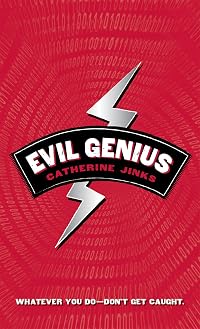
On This Page
Description
Cadel Piggott has a genius IQ and a fascination with systems of all kinds. At seven, he was illegally hacking into computers. Now he's fourteen and studying for his World Domination degree, taking classes like embezzlement, forgery, and infiltration at the institute founded by criminal mastermind Dr. Phineas Darkkon. Although Cadel may be advanced beyond his years, at heart he's a lonely kid. When he falls for the mysterious and brilliant Kay-Lee, he begins to question the moral implications show more of his studies. But is it too late to stop Dr. Darkkon from carrying out his evil plot?This ebook includes a sample chapter of GENIUS SQUAD.
. show less
Tags
Recommendations

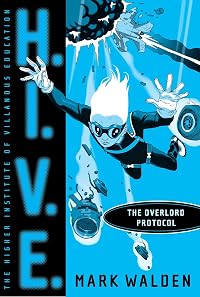
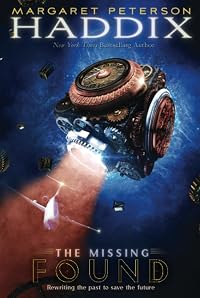
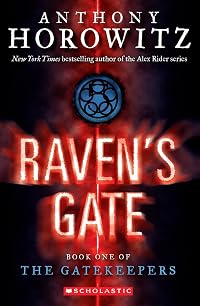
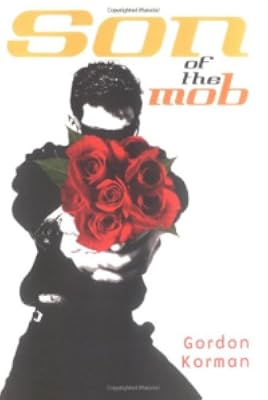
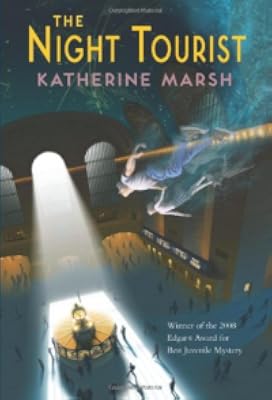
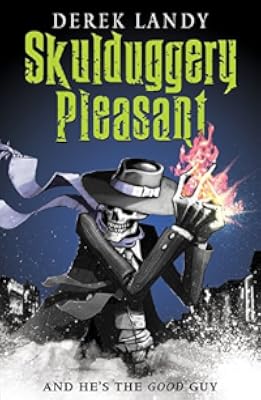
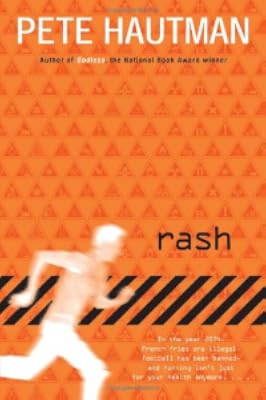
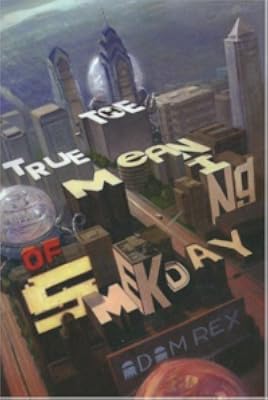
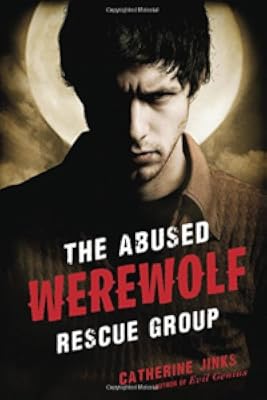
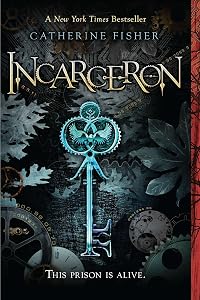
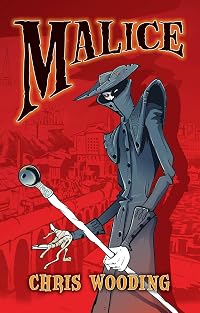
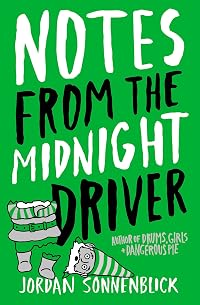



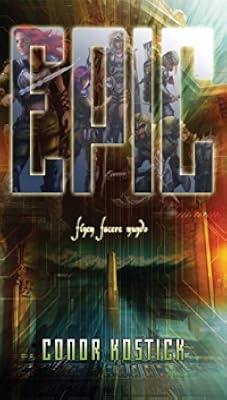
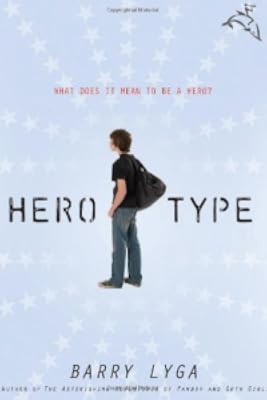
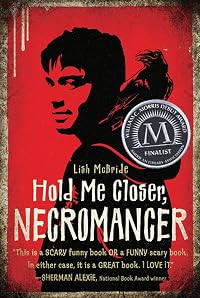
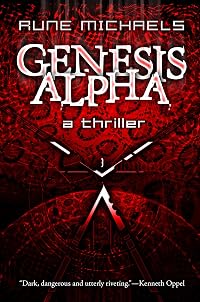

Member Recommendations
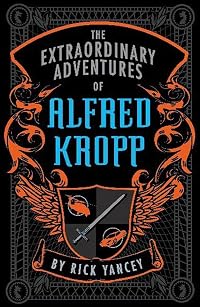
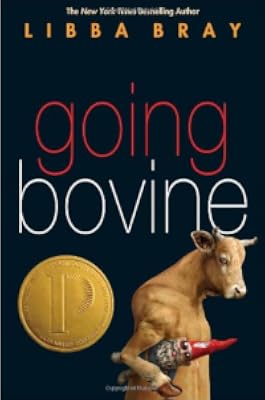
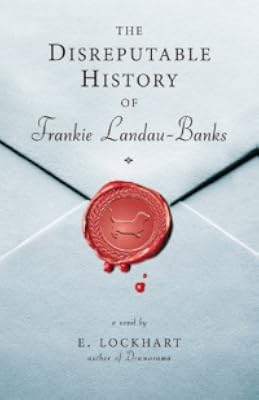
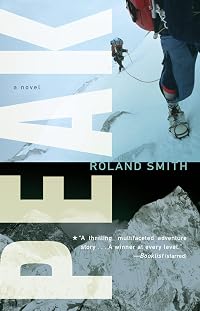
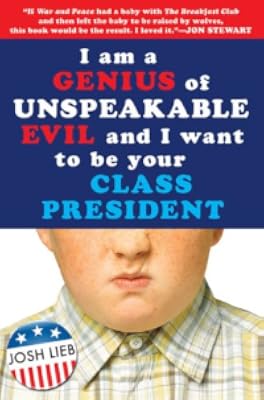
BrynDahlquis Both books are about child geniuses, though the setting and stories are quite different.
Member Reviews
Cadel Piggott is inarguably a genius. Not a very nice genius, but that's okay -- in fact, Cadel's father (his real father, not his foster father, who's a bit wet, really) and his psychiatrist are in complete agreement that Cadel should be as evil as possible. The important thing, after all, is not to get caught.
Incredibly bright, and equally socially inept (he graduates high school at 14, with no friends and a good grasp of the principles of revenge), Cadel is maneuvered, manipulated and ultimately enrolled in the Axis Institute, a school with peculiar classes, a suspect faculty, and a distinctly fishy agenda. Cadel slowly comes to realize the error of his ways, but has he gotten in too deep to escape?
Jinks' manages to make Cadel show more simultaneously obnoxious, odd, annoying and sympathetic. The first part of what will be at least a duology peers in to the mindset of a potential anti-hero, and examines the motives and the outcomes of what might happen at a school exactly the opposite of Charles Xavier's. No X-Men here, just a story that's compelling, morally complex, thought provoking.
If anyone's managed to decode Il Primo's final message, let me know! show less
Incredibly bright, and equally socially inept (he graduates high school at 14, with no friends and a good grasp of the principles of revenge), Cadel is maneuvered, manipulated and ultimately enrolled in the Axis Institute, a school with peculiar classes, a suspect faculty, and a distinctly fishy agenda. Cadel slowly comes to realize the error of his ways, but has he gotten in too deep to escape?
Jinks' manages to make Cadel show more simultaneously obnoxious, odd, annoying and sympathetic. The first part of what will be at least a duology peers in to the mindset of a potential anti-hero, and examines the motives and the outcomes of what might happen at a school exactly the opposite of Charles Xavier's. No X-Men here, just a story that's compelling, morally complex, thought provoking.
If anyone's managed to decode Il Primo's final message, let me know! show less
Evil Genius, by Catherine Jinks, is a fresh and clever young adult novel written about a misunderstood child prodigy.
Cadel Piggott is a genius, especially with computers. When he gets into some trouble with the law at the age of seven, he foster parents take him to a psychologist who helps him discover his full potential. And eventually tells Cadel that his real father is none other than the villainous Dr. Phineas Darkkon.
Cadel's psychologist encourages his family to send Cadel to the Axis Institute. But the college is more than it seems. Also known as the Axis Institute for World Domination, it's actually a higher learning center for students who want to study from one of the three schools of Deception, Destruction, and Organic show more Distortion (also known as Applied Arts, Environmental Science, and Biomedical Science). When Cadel's classmates begin dropping out (and dying) one-by-one, he begins second guessing his decisions. And the more secrets and evil that he uncovers, the less he likes who he has become.
Evil Genius is full of incredibly unique and creative characters. When I first began reading this, Cadel seemed to be the antithesis of Harry Potter. But Cadel actually has more depth to his character. And this is no story for smaller children. There are many deaths, though none are graphic. This is marketed to 12 years and up, and I agree. But a warning that the book is lengthy, with plenty of technical jargon, that I tended to skim over.
With more twists and turns than the Los Angeles freeway system, Evil Genius show less
Cadel Piggott is a genius, especially with computers. When he gets into some trouble with the law at the age of seven, he foster parents take him to a psychologist who helps him discover his full potential. And eventually tells Cadel that his real father is none other than the villainous Dr. Phineas Darkkon.
Cadel's psychologist encourages his family to send Cadel to the Axis Institute. But the college is more than it seems. Also known as the Axis Institute for World Domination, it's actually a higher learning center for students who want to study from one of the three schools of Deception, Destruction, and Organic show more Distortion (also known as Applied Arts, Environmental Science, and Biomedical Science). When Cadel's classmates begin dropping out (and dying) one-by-one, he begins second guessing his decisions. And the more secrets and evil that he uncovers, the less he likes who he has become.
Evil Genius is full of incredibly unique and creative characters. When I first began reading this, Cadel seemed to be the antithesis of Harry Potter. But Cadel actually has more depth to his character. And this is no story for smaller children. There are many deaths, though none are graphic. This is marketed to 12 years and up, and I agree. But a warning that the book is lengthy, with plenty of technical jargon, that I tended to skim over.
With more twists and turns than the Los Angeles freeway system, Evil Genius show less
And now for something a bit, but not quite completely, different. Catherine Jinks has given us an anti-hero with a touch of Artemis Fowl, but has added a greater measure of consideration and development (this is definitely more of a grown-up book – not that I don’t love Artemis Fowl). Cadel Piggott is a genius, one whose heart isn’t of gold, just very, very human. Like many geniuses, he feels completely apart from society, peers, and people in general, and that alienation drives the progress of the novel.
Jinks has given us a lot of meat on the bones of a story that has, at least partly, been told before. Familiar elements include not just the anti-hero, but also the “special school”, the older mentor/wise old man archetype, show more the sidekick, the uncomprehending and unsympathetic parents, the computer nerds who run the world, and the “hey, guess what, you actually have tons of money” fantasy. Fortunately for us, by the end of the novel, every one of those presumably predictable elements has been turned on its head, or at least tilted a bit, and combined in brilliant little twists that make reading this book even more fun.
In addition, there is a level of realistic internal development that is unprecedented in all the young hero/anti-hero epics that have been manifesting out of the ether lately. Cadel is not inherently noble, nor is he naturally evil. His is a mind that struggles with the reality of the world and his own place within it, with his exceptional intelligence but also with his incredible naivete (in fact, the reader does occasionally feel like shouting “Sheesh, kid, don’t you get it yet?” at the page). The details and insights as we really get to know Cadel are what feed the reader’s urge to turn the next page and the next. I had a great time reading this and I look forward to the inevitable (like I said, not quite completely different) sequel. show less
Jinks has given us a lot of meat on the bones of a story that has, at least partly, been told before. Familiar elements include not just the anti-hero, but also the “special school”, the older mentor/wise old man archetype, show more the sidekick, the uncomprehending and unsympathetic parents, the computer nerds who run the world, and the “hey, guess what, you actually have tons of money” fantasy. Fortunately for us, by the end of the novel, every one of those presumably predictable elements has been turned on its head, or at least tilted a bit, and combined in brilliant little twists that make reading this book even more fun.
In addition, there is a level of realistic internal development that is unprecedented in all the young hero/anti-hero epics that have been manifesting out of the ether lately. Cadel is not inherently noble, nor is he naturally evil. His is a mind that struggles with the reality of the world and his own place within it, with his exceptional intelligence but also with his incredible naivete (in fact, the reader does occasionally feel like shouting “Sheesh, kid, don’t you get it yet?” at the page). The details and insights as we really get to know Cadel are what feed the reader’s urge to turn the next page and the next. I had a great time reading this and I look forward to the inevitable (like I said, not quite completely different) sequel. show less
I listened to the audiobook version of Evil Genius. It was almost halfway through this long book before things got to be really interesting to me. Were I doing a regular read, I'm not sure I would have stuck it through that long. I say that by way of encouraging others to keep on plugging.
The whole book seemed to be built on a premise like "what if Harry Potter had a much more ambiguous moral compass?" I did find myself frequently thinking, "would I really want young teens reading this?" It wasn't a question of sex or inappropriate language (there is none). Rather, it was just the fairly casual way that the lead character accepted and/or participated in hurtful, illegal actions with almost no qualms or reflection. When he does show more eventually come around to the "good" side, it isn't because of any great moral conviction but rather out of pique at his erstwhile companions. Not exactly the sort of reinforcement one hopes that young readers are receiving.
I will say that I appreciated the fact that the ending wasn't exactly a complete success for Cadel. Real life rarely has a neat wrap-up, and this story reflects that fact. show less
The whole book seemed to be built on a premise like "what if Harry Potter had a much more ambiguous moral compass?" I did find myself frequently thinking, "would I really want young teens reading this?" It wasn't a question of sex or inappropriate language (there is none). Rather, it was just the fairly casual way that the lead character accepted and/or participated in hurtful, illegal actions with almost no qualms or reflection. When he does show more eventually come around to the "good" side, it isn't because of any great moral conviction but rather out of pique at his erstwhile companions. Not exactly the sort of reinforcement one hopes that young readers are receiving.
I will say that I appreciated the fact that the ending wasn't exactly a complete success for Cadel. Real life rarely has a neat wrap-up, and this story reflects that fact. show less
“You never hear nobody call himself evil. … De concept of evil is as flexible as a hunka clay. You can fashion it into practically any shape you want.”
This book was great in theory, but the execution didn’t work for me.
I loved the idea of an evil child genius growing up, but there were so many cliches in this book I did not like. Of course Cadel is conveniently an orphan and his parents are absent minded and average. His ‘real’ parents are immediately revealed and put up as a goal for him to reach. Other kids are dumb or bullies or both and he is far too good for them.
During the first part of the book, Cadel grows from 7 to 14 and causes havoc without ever getting caught. I wanted to see HOW he pulled all his tricks show more off.
Don’t tell me that he’s so smart and clever, show me how he uses this skills. It’s the process that interests me and makes him interesting as a character. Especially since most other kids are mean, awful or shallow in some way or another. Instead of making Cadel stand out through his actions, it’s everyone else who gets dumbed down.
After 1/4th of the book Cadel goes to some villain school to get a World Domination degree. I also love the idea of teaching crime. Manipulating the morals of young people and teaching them exactly how to do wrong is an interesting concept. All the courses (misinformation, decomposition, forgery and more!) sounded good too, but once again I felt like there were stock mean classmates. Some of whom sound straight out of a superhero comic and out of place in what I hoped would be a grounded spy/crime/thriller book.
There are some murders that felt like arbitrary suspense. Of course a bunch of villainy degree students are going to turn their skills onto each other! There is a rule of no killing on campus, unless no one can prove you did it. Sounds nice, but I guess I just wasn’t very invested in any of the dying characters or whatever grand conspiracy was going on as main plot.
Then there’s the internet friend/crush. I liked the fact that Kay-Lee and Cadel were both lying about their identity on the internet and that their friendship was of the quiet comfortable sort.
Kay-Lee (and to a lesser extent Gazo) got an important role in Cadel’s character arc in the second half, and that was the part I genuinely loved about this book. Underneath all the weird supervillainy and killings, this is the story of a lonely fourteen year old.
The intellect that set Cadel apart and got him bullied made him valuable to the villains with the superiority complex. Yet that superiority complex comes directly at the cost of people like Kay-Lee and Gazo, who are probably the only people decently nice in this book. The conflicting feelings that arise from this were great. It’s a shame it took until 50% of the book to appear, and even after that the main plot I did not really care for took centre stage.
Also, this book is very long for a middle grade or YA book. show less
This book was great in theory, but the execution didn’t work for me.
I loved the idea of an evil child genius growing up, but there were so many cliches in this book I did not like. Of course Cadel is conveniently an orphan and his parents are absent minded and average. His ‘real’ parents are immediately revealed and put up as a goal for him to reach. Other kids are dumb or bullies or both and he is far too good for them.
During the first part of the book, Cadel grows from 7 to 14 and causes havoc without ever getting caught. I wanted to see HOW he pulled all his tricks show more off.
Don’t tell me that he’s so smart and clever, show me how he uses this skills. It’s the process that interests me and makes him interesting as a character. Especially since most other kids are mean, awful or shallow in some way or another. Instead of making Cadel stand out through his actions, it’s everyone else who gets dumbed down.
After 1/4th of the book Cadel goes to some villain school to get a World Domination degree. I also love the idea of teaching crime. Manipulating the morals of young people and teaching them exactly how to do wrong is an interesting concept. All the courses (misinformation, decomposition, forgery and more!) sounded good too, but once again I felt like there were stock mean classmates. Some of whom sound straight out of a superhero comic and out of place in what I hoped would be a grounded spy/crime/thriller book.
There are some murders that felt like arbitrary suspense. Of course a bunch of villainy degree students are going to turn their skills onto each other! There is a rule of no killing on campus, unless no one can prove you did it. Sounds nice, but I guess I just wasn’t very invested in any of the dying characters or whatever grand conspiracy was going on as main plot.
Then there’s the internet friend/crush. I liked the fact that Kay-Lee and Cadel were both lying about their identity on the internet and that their friendship was of the quiet comfortable sort.
Kay-Lee (and to a lesser extent Gazo) got an important role in Cadel’s character arc in the second half, and that was the part I genuinely loved about this book. Underneath all the weird supervillainy and killings, this is the story of a lonely fourteen year old.
The intellect that set Cadel apart and got him bullied made him valuable to the villains with the superiority complex. Yet that superiority complex comes directly at the cost of people like Kay-Lee and Gazo, who are probably the only people decently nice in this book. The conflicting feelings that arise from this were great. It’s a shame it took until 50% of the book to appear, and even after that the main plot I did not really care for took centre stage.
Also, this book is very long for a middle grade or YA book. show less
All kinds of awesome. Adults can enjoy this book, as it's more nuanced than the blurb indicates.
I'm interested in super-genius characters. Since my novels feature a super-genius or two, I'm hyper-critical when reading such characters. The good news: I totally believed Cadel as a super-genius. Well done. The bad news: the plot hinges on his feelings of betrayal when people he trusts can no longer be trusted. I saw that problem coming at him a mile away. On the whole, I think a genius would be more curious about the people in his life, not so blindly faithful and trusting, but I was willing to go with his flaw there. His character is consistently presented as someone who doesn't truly understand human beings. The other major characters show more are colorful, and the dialogue is brilliant. The story had plenty of unpredictable twists. In the end, I respected Cadel, and thoroughly enjoyed this book.
One of the best things: The Axis Institute is presented in a real-world way. It's justified as a place that can actually exist. Very clever world-building, there. I was laughing out loud at the teachers and students. This is one of those books I wish was a movie.
The first few chapters have a heavily narrated style, a la Harry Potter. I had trouble liking Cadel at first, due to the distance in POV and his apparently privileged childhood. When a girl told him off, I cheered out loud. I can see a lot of readers putting aside this book, worried that Cadel won't be a redeemable or likable character. But towards the middle, it turns into a different sort of book, with a much closer POV and a more likable protagonist.
I listened to this on audiobook, and although the narrator was very good, I wish they'd chosen a male due to all the male characters.
Five stars! Loved it. show less
I'm interested in super-genius characters. Since my novels feature a super-genius or two, I'm hyper-critical when reading such characters. The good news: I totally believed Cadel as a super-genius. Well done. The bad news: the plot hinges on his feelings of betrayal when people he trusts can no longer be trusted. I saw that problem coming at him a mile away. On the whole, I think a genius would be more curious about the people in his life, not so blindly faithful and trusting, but I was willing to go with his flaw there. His character is consistently presented as someone who doesn't truly understand human beings. The other major characters show more are colorful, and the dialogue is brilliant. The story had plenty of unpredictable twists. In the end, I respected Cadel, and thoroughly enjoyed this book.
One of the best things: The Axis Institute is presented in a real-world way. It's justified as a place that can actually exist. Very clever world-building, there. I was laughing out loud at the teachers and students. This is one of those books I wish was a movie.
The first few chapters have a heavily narrated style, a la Harry Potter. I had trouble liking Cadel at first, due to the distance in POV and his apparently privileged childhood. When a girl told him off, I cheered out loud. I can see a lot of readers putting aside this book, worried that Cadel won't be a redeemable or likable character. But towards the middle, it turns into a different sort of book, with a much closer POV and a more likable protagonist.
I listened to this on audiobook, and although the narrator was very good, I wish they'd chosen a male due to all the male characters.
Five stars! Loved it. show less
Genius Cadel Piggot is sentenced to therapy after hacking his way into a lot of trouble. He would have been sent to jail if it weren't for the fact that he was still a minor. Cadel is seven years old and no one knows what to do with him. Not the police and NOT his oh-so-stupid adoptive parents. So he is sent to see Dr. Thaddeus Roth who, it turns out, is not just your average child therapist. Thaddeus reveals to Cadel the truth about his father, something of a genius himself, who was sent to prison shortly after Cadel was born. His real mother? Dead. Under Thaddeus and his newly discovered father's tutelage, Cadel is brought into a whole new world. One where he learns to use his genius to manipulate the clumsy high school students show more around him.
After he effectively brings down his high school and graduates, Cadel is sent to the Axis Institute, an exclusive college that was started by his father and caters to those with... exceptional skills. Cadel takes classes in forgery, infiltration, and pure evil. But after finding a friend in the mysterious Kay-Lee, Cadel isn't sure that this is the route he wants to take anymore. The professors at his school are all against one another and the students are dropping like flies. Cadel now just wants out. Perhaps this Evil Genius can use his crafty mind for good instead.
I loved this book. Cadel, for all his intimidating genius is so heart-achingly clueless to so many things. This is a coming of age novel with a twist and I enjoyed the crazy-silly-evil characters and all their strange quirks. Despite the carnage Cadel causes, you are rooting for him to succeed at everything he does. Jinks has a winner here and I can't wait to read the next installment. show less
After he effectively brings down his high school and graduates, Cadel is sent to the Axis Institute, an exclusive college that was started by his father and caters to those with... exceptional skills. Cadel takes classes in forgery, infiltration, and pure evil. But after finding a friend in the mysterious Kay-Lee, Cadel isn't sure that this is the route he wants to take anymore. The professors at his school are all against one another and the students are dropping like flies. Cadel now just wants out. Perhaps this Evil Genius can use his crafty mind for good instead.
I loved this book. Cadel, for all his intimidating genius is so heart-achingly clueless to so many things. This is a coming of age novel with a twist and I enjoyed the crazy-silly-evil characters and all their strange quirks. Despite the carnage Cadel causes, you are rooting for him to succeed at everything he does. Jinks has a winner here and I can't wait to read the next installment. show less
Members
- Recently Added By
Author Information

58 Works 6,261 Members
Catherine Jinks was born November 17, 1963 in Brisbane, Queensland. She received a degree in medieval history from the University of Sydney in 1986. After college, she worked as a journalist and editor before becoming a full-time writer. She has written more than 30 books for both children and adults including Pagan's Vows, Eye to Eye, Piggy in show more the Middle, The Reformed Vampire Support Group, and The Abused Werewolf Rescue Group. She is also the author of the Pagan Chronicles and Allie's Ghost Hunters series. She has won numerous awards including the Children's Book Council of Australia Book of the Year Award three times, the Victorian Premier's Literary Award, the Aurealis Award for Science Fiction, the Australian Ibby Award, and the Davitt Award for Crime Fiction. (Bowker Author Biography) show less
Awards and Honors
Awards
Distinctions
Series

Belongs to Publisher Series
Knaur Taschenbuch (50041)
Work Relationships
Is contained in
Common Knowledge
- Canonical title
- Evil Genius
- Original publication date
- 2005-04-01
- People/Characters
- Cadel Piggott; Dr. Phineas Darkkon; Kay-Lee
- Important places
- Australia
- Dedication
- To Robert Jinks,
Without whose
Professor Gangrene Doll
This book would not
have been written - First words
- Cadel Piggott was just seven years old when he first met Thaddeus Roth.
- Last words
- (Click to show. Warning: May contain spoilers.)I guess I'm not so smart after all.
Classifications
- Genres
- Fiction and Literature, Tween, Kids, Teen, Young Adult
- DDC/MDS
- 371 — Society, government, & culture Education Schools and their activities; special education
- LCC
- PZ7 .J5754 .E — Language and Literature Fiction and juvenile belles lettres Fiction and juvenile belles lettres Juvenile belles lettres
- BISAC
Statistics
- Members
- 1,420
- Popularity
- 16,607
- Reviews
- 78
- Rating
- (3.60)
- Languages
- English, French, German, Portuguese
- Media
- Paper, Audiobook, Ebook
- ISBNs
- 17
- ASINs
- 7