After
by Francine Prose
On This Page
Description
In the aftermath of a nearby school shooting, a grief and crisis counselor takes over Central High School and enacts increasingly harsh measures to control students, while those who do not comply disappear.Tags
Recommendations















Member Recommendations
Member Reviews
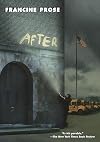
Prose’s propulsive young adult novel, written a few years after Columbine and shortly after 911, presents us with a world in which the controversial control and surveillance issues that arose out of those events have been pushed even further. The book is engagingly narrated in the first person by Tom Bishop, a smart-talking student who attends Central High, a small secondary school in rural Massachusetts. As the story opens, a mass shooting has just occurred at Pleasant Valley High, a school fifty miles from Central. This is too close for comfort for school authorities, though Tom and his friends—Brian, Silas, and Avery—think that the proximity of the recent massacre actually decreases the chance that their school will experience show more something similar.
Central High brings in a sinister grief and crisis counsellor, Dr. Willner, who introduces “protective” measures to prevent a mass shooting from occurring there. Metal detectors are installed at all entrances; guards are hired to go through students’ gym bags and backpacks; there is a Zero Tolerance policy for weapons and substance abuse, and since the Pleasant Valley High killers wore red clothing and trench coats, both are forbidden at Central. When a much admired girl continues to wear a red ribbon in memory of her brother who died of AIDS, she disappears. Because she has not complied with a rule, she’s sent to an “Operation Turnaround” facility for troubled youth. These places had a bad rap even before the Pleasant Valley mass shooting—bad enough for TV news magazine 60 Minutes to report on them. God knows what’s going on at them now.
Nightly emails are sent out to inform parents of the school’s seemingly endless new rules and initiatives for keeping kids safe, and adults are supportive of the measures. What could be wrong with being proactive about protecting young people? Parents and teachers fall in line, using the new therapeutic jargon that peppers the messages from the school. There’s an abundance of psychobabble about “working through our fear and grief” and “the hard work of healing and recovery.” The film Invasion of the Body Snatchers is frequently invoked by Tom and his friends; they observe that adults have become “pod people,” incapable of independent thought, brainwashed and robotic.
In the earliest messages from the school, parents are exhorted to monitor their kids for signs of distress. Later they’re urged remind sons and daughters to report suspicious behaviour—anything that might suggest doubt about the narrative that’s being fed to them. Cell phones are banned in school; so are certain books. A social studies teacher who once encouraged regular open class discussion goes on an emergency health leave, and the unassuming school principal, sidelined by the malevolent Dr. Willner, takes early retirement. Alarmingly, Tom’s friend Silas is sent off to a wilderness rehab camp in the Arizona desert, ostensibly to manage his problem with marijuana, detected during a random urinalysis in gym class. While under a form of house arrest before he leaves, Silas tells his visiting friends to go to the library to look up Stalin. Tom does, only to discover books on the dictator have been removed. It turns out that Silas’s paranoia, always attributed to his overuse of pot, has some foundation in reality. As the saying goes, just because you’re paranoid doesn’t mean they aren’t out to get you.
The story briefly turns into one of student resistance, but then . . . it just peters out. There are suggestions that what’s happening at Tom’s school is occurring at others and that the terrifying Dr. Willner is only a cog in a larger machine. As a reader, I expected to find an announcement for a sequel, an AfterAfter if you will. The conclusion certainly leaves you dangling.
Fear is a great controlling device. If you make people scared enough, you can get them to give up a lot on the pretext that their sacrifices are for their own and others’ good. Privacy and freedom—of speech, movement, association, and even thought—are compromised. Language is managed. Stilted psychological and ideological jargon creeps into everyday speech until everyone starts to sound the same as everybody else, or tries to, for fear of what will happen if they don’t. What begins as seeming concern for the common good morphs into oppression. In spite of its unsatisfying conclusion, Prose’s quick-paced and readable novel raises thought-provoking questions about matters of freedom and social control, the good of the group versus the rights and autonomy of the individual. Given our last two years, when some scientific voices have been de-platformed or silenced for challenging the dominant narrative about a virus, it’s not hard to argue that novels like this one are more relevant than ever. show less
Central High brings in a sinister grief and crisis counsellor, Dr. Willner, who introduces “protective” measures to prevent a mass shooting from occurring there. Metal detectors are installed at all entrances; guards are hired to go through students’ gym bags and backpacks; there is a Zero Tolerance policy for weapons and substance abuse, and since the Pleasant Valley High killers wore red clothing and trench coats, both are forbidden at Central. When a much admired girl continues to wear a red ribbon in memory of her brother who died of AIDS, she disappears. Because she has not complied with a rule, she’s sent to an “Operation Turnaround” facility for troubled youth. These places had a bad rap even before the Pleasant Valley mass shooting—bad enough for TV news magazine 60 Minutes to report on them. God knows what’s going on at them now.
Nightly emails are sent out to inform parents of the school’s seemingly endless new rules and initiatives for keeping kids safe, and adults are supportive of the measures. What could be wrong with being proactive about protecting young people? Parents and teachers fall in line, using the new therapeutic jargon that peppers the messages from the school. There’s an abundance of psychobabble about “working through our fear and grief” and “the hard work of healing and recovery.” The film Invasion of the Body Snatchers is frequently invoked by Tom and his friends; they observe that adults have become “pod people,” incapable of independent thought, brainwashed and robotic.
In the earliest messages from the school, parents are exhorted to monitor their kids for signs of distress. Later they’re urged remind sons and daughters to report suspicious behaviour—anything that might suggest doubt about the narrative that’s being fed to them. Cell phones are banned in school; so are certain books. A social studies teacher who once encouraged regular open class discussion goes on an emergency health leave, and the unassuming school principal, sidelined by the malevolent Dr. Willner, takes early retirement. Alarmingly, Tom’s friend Silas is sent off to a wilderness rehab camp in the Arizona desert, ostensibly to manage his problem with marijuana, detected during a random urinalysis in gym class. While under a form of house arrest before he leaves, Silas tells his visiting friends to go to the library to look up Stalin. Tom does, only to discover books on the dictator have been removed. It turns out that Silas’s paranoia, always attributed to his overuse of pot, has some foundation in reality. As the saying goes, just because you’re paranoid doesn’t mean they aren’t out to get you.
The story briefly turns into one of student resistance, but then . . . it just peters out. There are suggestions that what’s happening at Tom’s school is occurring at others and that the terrifying Dr. Willner is only a cog in a larger machine. As a reader, I expected to find an announcement for a sequel, an AfterAfter if you will. The conclusion certainly leaves you dangling.
Fear is a great controlling device. If you make people scared enough, you can get them to give up a lot on the pretext that their sacrifices are for their own and others’ good. Privacy and freedom—of speech, movement, association, and even thought—are compromised. Language is managed. Stilted psychological and ideological jargon creeps into everyday speech until everyone starts to sound the same as everybody else, or tries to, for fear of what will happen if they don’t. What begins as seeming concern for the common good morphs into oppression. In spite of its unsatisfying conclusion, Prose’s quick-paced and readable novel raises thought-provoking questions about matters of freedom and social control, the good of the group versus the rights and autonomy of the individual. Given our last two years, when some scientific voices have been de-platformed or silenced for challenging the dominant narrative about a virus, it’s not hard to argue that novels like this one are more relevant than ever. show less
Francine Prose's novel After opens with the news that three students at Pleasant Valley High School just killed five kids and three teachers and critically wounded fourteen others. As word of the shooting spree spreads through nearby Central High School, the students are understandably shocked.
Little do they know the worst is yet to come at their own school.
In her first book written for young adult readers, Prose (Blue Angel, Household Saints) paints a terrifying picture of conservative politics run amok as overzealous adults try to strip away civil liberties. Out of grief comes a witch hunt designed to root out non-conformity and individual expression.
Heady stuff for a novel geared to teens, but Prose pulls it off masterfully with a show more plot that tightens the tension as it goes along. The 330 pages can be read in one sitting, but the nightmarish paranoia continues to cling long after you've set the book aside.
As the title suggests, it's what happens after the Pleasant Valley shootings that's at the heart of the book. First, a grief and crisis counselor named Dr. Willner arrives at Central. Then come the metal detectors, and the strict dress code (no Commie red is allowed), then the random drug tests and the subversive "Bus TV" where students watch ultra-patriotic "Great Moments in History" every day on the ride to and from school.
The story is chillingly familiar. We read about these things in our newspapers all the time—for every catastrophic event, there's an equally catastrophic overreaction.
For Tom Bishop, the novel's narrator, and his best friends Brian, Avery and Silas (part of a sub-clique known as the "Smart Jocks"), life gets increasingly more rigid and unforgiving with each ring of the school bell. A far cry from life at Central before the school killings: Everyone had a place; you were allowed to be who you were. I mean, whoever you were. It was totally live and let live. But after Pleasant Valley, all that began to change.
It all starts with Willner, the creepy counselor. Dr. Willner was very tall, with a beard. He looked a little like Abraham Lincoln, but without the sweet-natured saintly part. He reminds Tom of the Lincoln robot at Disney World, which should remind astute horror fans that the Hall of Presidents is where one of those Stepford husbands used to work. In one way, Willner wants to turn the entire school population into robots. The Stepford Students.
Willner speaks in a stream of psychobabble and, in nightly e-mails sent home to the parents, he encourages them to start lacing their conversations with "sharing," "reaching out," and "exploring our feelings." Those parents who succumb to Willner's suggestions soon begin acting like pod people straight out of Invasion of the Body Snatchers (a movie which becomes central to the novel's plot).
The repression begins cloaked in good intentions (as most repression does) as the adults merely want to prevent another Pleasant Valley tragedy from happening in their town. At his first school assembly, Willner tells the student body: "We can no longer pretend to ourselves that it can't happen here. And so we must change our lifestyle to keep our community safe and make sure that it won't happen. It means sharing our feelings, becoming better people. Beginning the hard work of healing and recovery. Working through our fear and grief. And in the process maybe giving up some of the privileges that we may have taken for granted. I am afraid that circumstances make it a virtual certainty that some of the privileges that we all have enjoyed may have to be taken away."
Remind you of something someone in the echelons of our government might have said in the past two years? Under the Willner Plan, students are expected to put the good of society before their own individual well-being. After echoes with the loud goose-steps of civil-liberty threats from McCarthyism to the Patriot Act. (I have to be careful what I write—I never know when They might be listening)
After only loses some of its toxic bite in its final pages as Prose tries to pull out of the story's bleak nose-dive into a paranoid nightmare worthy of The Twilight Zone. The novel ends on a note of half-hearted optimism—as if the author stepped back to take a look at the dystopian landscape she'd painted and realized it might be too apocalyptic for young minds to handle. After all, things could never really get that bad, could they? Could they? show less
Little do they know the worst is yet to come at their own school.
In her first book written for young adult readers, Prose (Blue Angel, Household Saints) paints a terrifying picture of conservative politics run amok as overzealous adults try to strip away civil liberties. Out of grief comes a witch hunt designed to root out non-conformity and individual expression.
Heady stuff for a novel geared to teens, but Prose pulls it off masterfully with a show more plot that tightens the tension as it goes along. The 330 pages can be read in one sitting, but the nightmarish paranoia continues to cling long after you've set the book aside.
As the title suggests, it's what happens after the Pleasant Valley shootings that's at the heart of the book. First, a grief and crisis counselor named Dr. Willner arrives at Central. Then come the metal detectors, and the strict dress code (no Commie red is allowed), then the random drug tests and the subversive "Bus TV" where students watch ultra-patriotic "Great Moments in History" every day on the ride to and from school.
The story is chillingly familiar. We read about these things in our newspapers all the time—for every catastrophic event, there's an equally catastrophic overreaction.
For Tom Bishop, the novel's narrator, and his best friends Brian, Avery and Silas (part of a sub-clique known as the "Smart Jocks"), life gets increasingly more rigid and unforgiving with each ring of the school bell. A far cry from life at Central before the school killings: Everyone had a place; you were allowed to be who you were. I mean, whoever you were. It was totally live and let live. But after Pleasant Valley, all that began to change.
It all starts with Willner, the creepy counselor. Dr. Willner was very tall, with a beard. He looked a little like Abraham Lincoln, but without the sweet-natured saintly part. He reminds Tom of the Lincoln robot at Disney World, which should remind astute horror fans that the Hall of Presidents is where one of those Stepford husbands used to work. In one way, Willner wants to turn the entire school population into robots. The Stepford Students.
Willner speaks in a stream of psychobabble and, in nightly e-mails sent home to the parents, he encourages them to start lacing their conversations with "sharing," "reaching out," and "exploring our feelings." Those parents who succumb to Willner's suggestions soon begin acting like pod people straight out of Invasion of the Body Snatchers (a movie which becomes central to the novel's plot).
The repression begins cloaked in good intentions (as most repression does) as the adults merely want to prevent another Pleasant Valley tragedy from happening in their town. At his first school assembly, Willner tells the student body: "We can no longer pretend to ourselves that it can't happen here. And so we must change our lifestyle to keep our community safe and make sure that it won't happen. It means sharing our feelings, becoming better people. Beginning the hard work of healing and recovery. Working through our fear and grief. And in the process maybe giving up some of the privileges that we may have taken for granted. I am afraid that circumstances make it a virtual certainty that some of the privileges that we all have enjoyed may have to be taken away."
Remind you of something someone in the echelons of our government might have said in the past two years? Under the Willner Plan, students are expected to put the good of society before their own individual well-being. After echoes with the loud goose-steps of civil-liberty threats from McCarthyism to the Patriot Act. (I have to be careful what I write—I never know when They might be listening)
After only loses some of its toxic bite in its final pages as Prose tries to pull out of the story's bleak nose-dive into a paranoid nightmare worthy of The Twilight Zone. The novel ends on a note of half-hearted optimism—as if the author stepped back to take a look at the dystopian landscape she'd painted and realized it might be too apocalyptic for young minds to handle. After all, things could never really get that bad, could they? Could they? show less
A high school administration overreacts to a school shooting at a neighboring district, and implements a set of increasingly restrictive "security measures." Stark, chilling, dystopian. A good way to get teens thinking and talking about the civil liberties they take for granted, and what can happen when you sacrifice certain freedoms for a sense of security.
In the aftermath of a nearby school shooting, a counselor takes over Central High School and enacts increasingly harsh measures to control students and their parents. Everyone agrees that this is a good thing because it will protect students and keep them safe. But students begin to notice that those who do not obey the new rules... disappear.
CW: Reference to school shooting and suicide of shooters (off page).
After takes place in a high school, just after a school shooting at a different high school not far away. The story follows the bizarre and frightening aftermath of the shooting, as the school installs a new administrator and enacts ever-tightening security and stricter rules. While pretty obviously an allusion to the erosion of civil liberties after 9/11, I think Prose manages this parallel gracefully. To a teen reader, I imagine it reads more subtly than it did to me. After really reminded me of early YA lit, like The Chocolate War and I am the Cheese, which I mean as a compliment. I'm again surprised I didn't hear about this one earlier--if it got attention, I completely missed it.
After – Francine Prose 15-19
Susan says: The creepiness of this book begins after there is a school shooting about fifty miles away from the school where Tom goes. They are immediately assigned a grief counselor, and then some weird things begin to happen. Students and teachers begin disappearing, and the parents begin to act sort of brainwashed, repeating phrases that have been used in emails from the counselor. Then Tom’s friends begin disappearing, and he begins to fight back. This is a really creepy book, and it does not really end reassuringly. Tom’s father only resists the brainwashing because he has not been called into school, and hasn’t been reading the school emails. There are a lot of allusions to thinking for yourself show more and the movie Invasion of the Body Snatchers. The book feels a little unfinished, but that’s the point – there are so many things that have been covered up and ignored, and the people of Tom’s town let it happen. I chose this book thinking it would be a good book club book, and while it might be, it doesn’t look like there are still enough paperbacks through B&T. Creepy! show less
Susan says: The creepiness of this book begins after there is a school shooting about fifty miles away from the school where Tom goes. They are immediately assigned a grief counselor, and then some weird things begin to happen. Students and teachers begin disappearing, and the parents begin to act sort of brainwashed, repeating phrases that have been used in emails from the counselor. Then Tom’s friends begin disappearing, and he begins to fight back. This is a really creepy book, and it does not really end reassuringly. Tom’s father only resists the brainwashing because he has not been called into school, and hasn’t been reading the school emails. There are a lot of allusions to thinking for yourself show more and the movie Invasion of the Body Snatchers. The book feels a little unfinished, but that’s the point – there are so many things that have been covered up and ignored, and the people of Tom’s town let it happen. I chose this book thinking it would be a good book club book, and while it might be, it doesn’t look like there are still enough paperbacks through B&T. Creepy! show less
Members
- Recently Added By
Author Information

64+ Works 12,976 Members
Francine Prose was born on April 1, 1947. She graduated from Radcliffe College in 1968. She received the PEN Translation Prize in 1988 and received a Guggenheim fellowship in 1991. Francine Prose novel The Glorious Ones, has been adapted into a musical with the same title by Lynn Ahrens and Stephen Flaherty. It ran at the Mitzi E. Newhouse Theater show more at Lincoln Center in New York City in the fall of 2007. Prose has served as president of PEN American Center, a New York City based literary society of writers, editors, and translators that works to advance literature in 2007 and 2008. Prose novel, Blue Angel, a satire about sexual harassment on college campuses, was a finalist for the National Book Award. One of her novels, Household Saints, was adapted for a movie by Nancy Savoca. In 2014 her title Lovers at the Chameleon Club - Paris 1932, made The New York Times Best Seller List. (Bowker Author Biography) show less
Awards and Honors
Awards
Distinctions
Notable Lists
Common Knowledge
- Original publication date
- 2003
- Dedication
- For Bruno and Leon
- First words
- Minutes after the shootings, everybody's cell phone rang.
- Last words
- (Click to show. Warning: May contain spoilers.)Somewhere where no one had ever heard about Pleasant Valley, or about what happened after.
Classifications
Statistics
- Members
- 429
- Popularity
- 71,775
- Reviews
- 23
- Rating
- (3.40)
- Languages
- English, French, German
- Media
- Paper, Ebook
- ISBNs
- 9
- ASINs
- 2