On This Page
Description
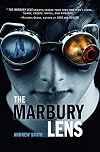
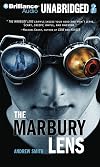
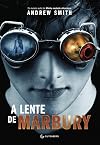
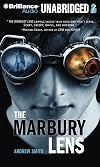
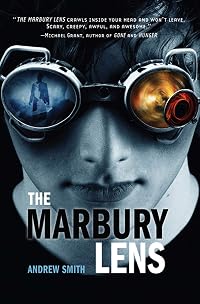
After being kidnapped and barely escaping, sixteen-year-old Jack goes to London with his best friend Connor, where someone gives him a pair of glasses that send him to an alternate universe where war is raging, he is responsible for the survival of two younger boys, and Connor is trying to kill them all.Tags
Recommendations
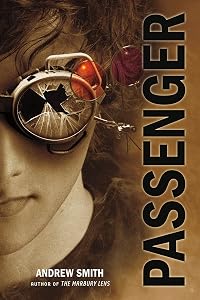
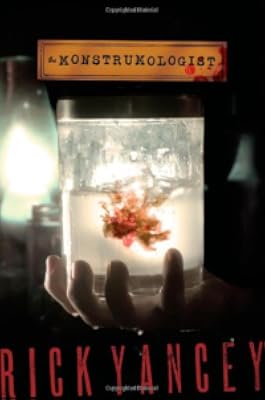
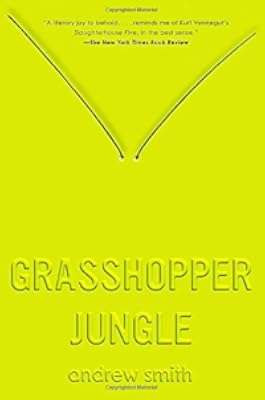

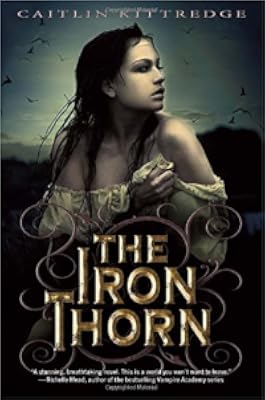
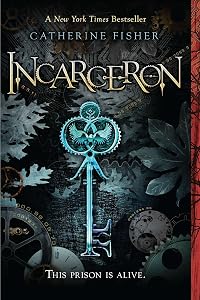
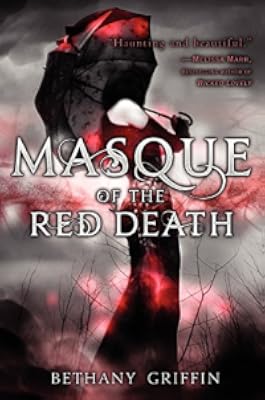
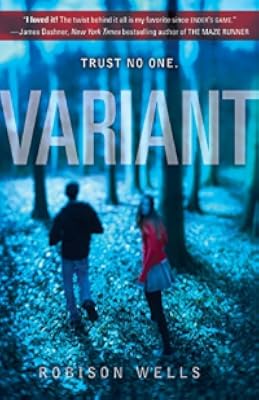
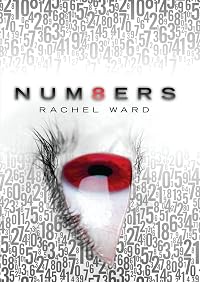
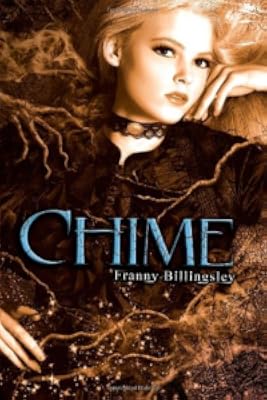


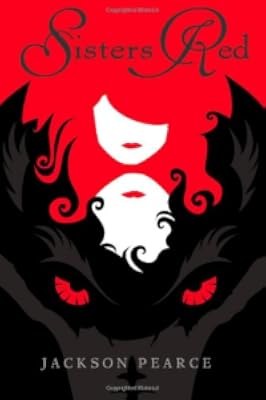
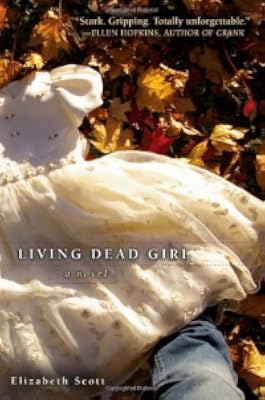
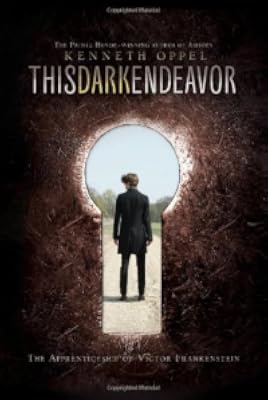
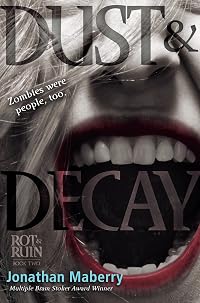
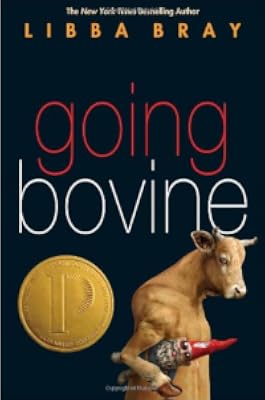

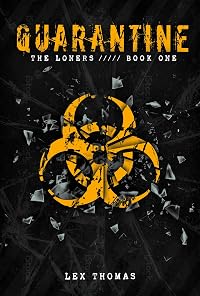
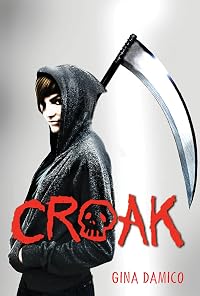
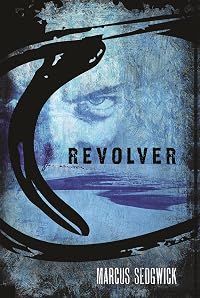
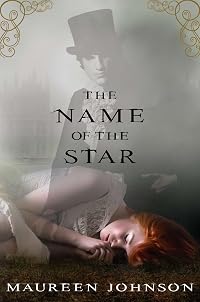
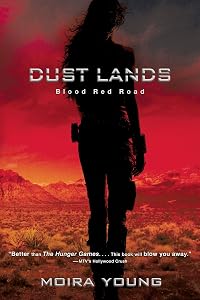
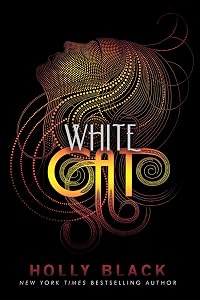
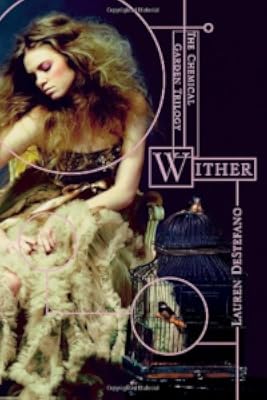

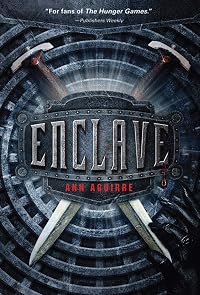
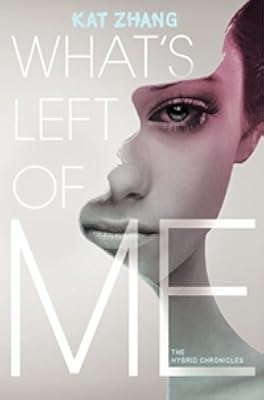
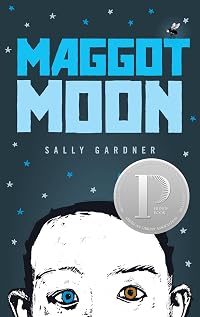
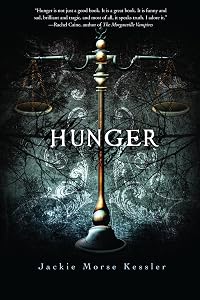
Member Recommendations
Member Reviews
I'm not incredibly certain what I was expecting to get when I first picked up The Marbury Lens. There are certain expectations that come with YA fiction, yes, but after reading Barry Lyga's Boy Toy I think that most of those were shattered for me. Still. The Marbury Lens took my expectations of YA literature and broke them further, and still further, and quite possibly traumatized me in the process.
A good book makes a lasting impression. I'm not entirely certain that I will ever fully escape The Marbury Lens.
To say that the book is sci-fi, horror, psychological thriller, or any of those sort of genres is doing a disservice to the book. To say that the book is traumatizing or revolutionary or any such thing is doing a disservice to the show more book. In recommending it to a friend I compared it to Shutter Island and House of Leaves in terms of what reading it is like.. but those, too, are doing a disservice to the book.
The Marbury Lens takes reality and fractures it, and then fractures it still further. It's like a bug rattling around in your skull, digging deeper and deeper until the thoughts somewhat consume you. It makes you wonder, question, and then flips everything right back on its head. The book has a strange ethereal quality to it. it's something that I found I had to put down time and again just to take another look around, take a deep breath, and calm down. The book isn't horrifying in a jump-out-of-your-seat way, it's disquieting in a whole different, and much deeper, manner.
Lovecraft turned horror into a cosmic experience of maddening grandeur; I feel The Marbury Lens is equally revolutionary in what it has done to the genre.
Read it. Learn. show less
A good book makes a lasting impression. I'm not entirely certain that I will ever fully escape The Marbury Lens.
To say that the book is sci-fi, horror, psychological thriller, or any of those sort of genres is doing a disservice to the book. To say that the book is traumatizing or revolutionary or any such thing is doing a disservice to the show more book. In recommending it to a friend I compared it to Shutter Island and House of Leaves in terms of what reading it is like.. but those, too, are doing a disservice to the book.
The Marbury Lens takes reality and fractures it, and then fractures it still further. It's like a bug rattling around in your skull, digging deeper and deeper until the thoughts somewhat consume you. It makes you wonder, question, and then flips everything right back on its head. The book has a strange ethereal quality to it. it's something that I found I had to put down time and again just to take another look around, take a deep breath, and calm down. The book isn't horrifying in a jump-out-of-your-seat way, it's disquieting in a whole different, and much deeper, manner.
Lovecraft turned horror into a cosmic experience of maddening grandeur; I feel The Marbury Lens is equally revolutionary in what it has done to the genre.
Read it. Learn. show less
Why is it that other forms of entertainment have warnings on the labels but books don't? Movies and video games have ratings that state what the rating is there for, whether it be for explicit language, nudity, sexual content, violence, etc. Using that scale, this should be rated R. It should NOT, by any means, be a young adult book. I'm horrified that this was in the children's section, yes children's section in the library. That aside, I'll get to the actual review . . .
Trigger warnings:
-attempted rape
-physical abuse
-mental abuse
-a thousand gay jokes
-some slut-shaming
Let me begin by saying this was one of the most disturbing books I've ever read. Oh, because of the gore and the other world being so cruel, Jack's troubled mind and his show more obsession with the Marbury lens? Noo. This book was disturbing solely because of its actual content and the way Smith chose to execute his storyline (if it could be considered an actual storyline). If you couldn't tell, this review is going to be overwhelmingly negative. I always feel bad giving one-star ratings and then nearly writing a novella about what I disliked about something that an author spent so much of their life working so hard on, but quite frankly I'm disgusted enough that this book got published at all that I can overlook that nagging feeling in this case.
In the first 28 pages, we've already got a 16-year-old boy getting plastered at a party, walking in on his best friend having sex, getting kidnapped, abused, and nearly raped. This book is 358 pages and it doesn't get any better.
The protagonist, Jack, an unsympathetic douchebag who randomly narrates in third person to annoy the heck out of anybody sorry enough to pick up this book, is probably the most unlikeable character I've ever read. His best friend Connor was even worse. I can't believe a book with so many gay jokes ended up being published. It came out in 2010! Just three years ago, and publishers are letting gay jokes like that slide. It's a mess. Maybe Smith was trying to be "realistic" in portraying 16-year-old boys: hollow things whose only wants in life are beer, sex, and cruel humor. However, there's trying to be realistic, and there's being responsible as a writer. We owe it to our young adult audience to take responsibility for what we're putting in our novels and what we're showing them and what examples we're setting. AND not to mention what practices we're portraying as normal. What Smith has done here is damaging and cruel and it does go beyond the page.
Speaking of trying to be realistic, yeah young boys curse, but is it really necessary to have cusses in every other sentence?
Going beyond those problems, I had had major issues with the book itself and its structure. What was the plot? Where was the resolution? What was the point of Marbury at all? The jacket description had me thrilled, but the novel failed to deliver anything even remotely interesting. Marbury's this wasteland plagued by a war that seemingly had no point or beginning. Jack's thrown into the middle of it and by the book ends, there's no even slight resolution. There's no reason for Marbury, for the war, for the reason he's there, for the reason Connor's there, for the reason there's a lens, it's all just a mess we're expected to believe somehow. What was the point of those monstrous bugs? Where was the world-building? There was maybe a paragraph delving into the subject, but it was abandoned and forgotten. Maybe this is all explained later in the trilogy, but even if it's part of a longer series, a book is still a book, and it needs some sort of beginning, middle, and end.
What I enjoyed most was Seth's story (in particular, the roll, tap tap tap bit being figured out). Unfortunately, it didn't make any sense in the bigger picture. What was the point of him and his story? He was a convenient plot device, but he didn't connect with anything. I kept waiting for something to happen with him, but it didn't. I wanted to throw this story when it was over and nothing got resolved with his story. Maybe I knew nothing else would be settled, but I wanted him to have some sort of ending, at least! I felt so cheated!
Everything was disjointed, nothing made sense, I didn't root for any of the characters, and there was very little I enjoyed. show less
Trigger warnings:
-attempted rape
-physical abuse
-mental abuse
-a thousand gay jokes
-some slut-shaming
Let me begin by saying this was one of the most disturbing books I've ever read. Oh, because of the gore and the other world being so cruel, Jack's troubled mind and his show more obsession with the Marbury lens? Noo. This book was disturbing solely because of its actual content and the way Smith chose to execute his storyline (if it could be considered an actual storyline). If you couldn't tell, this review is going to be overwhelmingly negative. I always feel bad giving one-star ratings and then nearly writing a novella about what I disliked about something that an author spent so much of their life working so hard on, but quite frankly I'm disgusted enough that this book got published at all that I can overlook that nagging feeling in this case.
In the first 28 pages, we've already got a 16-year-old boy getting plastered at a party, walking in on his best friend having sex, getting kidnapped, abused, and nearly raped. This book is 358 pages and it doesn't get any better.
The protagonist, Jack, an unsympathetic douchebag who randomly narrates in third person to annoy the heck out of anybody sorry enough to pick up this book, is probably the most unlikeable character I've ever read. His best friend Connor was even worse. I can't believe a book with so many gay jokes ended up being published. It came out in 2010! Just three years ago, and publishers are letting gay jokes like that slide. It's a mess. Maybe Smith was trying to be "realistic" in portraying 16-year-old boys: hollow things whose only wants in life are beer, sex, and cruel humor. However, there's trying to be realistic, and there's being responsible as a writer. We owe it to our young adult audience to take responsibility for what we're putting in our novels and what we're showing them and what examples we're setting. AND not to mention what practices we're portraying as normal. What Smith has done here is damaging and cruel and it does go beyond the page.
Speaking of trying to be realistic, yeah young boys curse, but is it really necessary to have cusses in every other sentence?
Going beyond those problems, I had had major issues with the book itself and its structure. What was the plot? Where was the resolution? What was the point of Marbury at all? The jacket description had me thrilled, but the novel failed to deliver anything even remotely interesting. Marbury's this wasteland plagued by a war that seemingly had no point or beginning. Jack's thrown into the middle of it and by the book ends, there's no even slight resolution. There's no reason for Marbury, for the war, for the reason he's there, for the reason Connor's there, for the reason there's a lens, it's all just a mess we're expected to believe somehow. What was the point of those monstrous bugs? Where was the world-building? There was maybe a paragraph delving into the subject, but it was abandoned and forgotten. Maybe this is all explained later in the trilogy, but even if it's part of a longer series, a book is still a book, and it needs some sort of beginning, middle, and end.
What I enjoyed most was Seth's story (in particular, the roll, tap tap tap bit being figured out). Unfortunately, it didn't make any sense in the bigger picture. What was the point of him and his story? He was a convenient plot device, but he didn't connect with anything. I kept waiting for something to happen with him, but it didn't. I wanted to throw this story when it was over and nothing got resolved with his story. Maybe I knew nothing else would be settled, but I wanted him to have some sort of ending, at least! I felt so cheated!
Everything was disjointed, nothing made sense, I didn't root for any of the characters, and there was very little I enjoyed. show less
Disjointed.
That's the perfect word to sum up _The Marbury Lens_, in all its negative and positive connotations. On the one hand, the disjointed nature of the story really reflects what is going on in the psyche of the main character, Jack Conner. On the other hand, it makes it a bear to read.
Jack, rather early on in the story, is abducted, almost raped, escapes, and then goes on vacation to England. Disjointed already, right?
Once in London, he is given a mysterious pair of glasses that transport him to the world of Marbury, a brutal, post-apocalyptic landscape that has some sort of connection with our current world, though it is hard to figure out what that is – and don’t expect any answers in this volume.
In Marbury Jack is the show more leader of a small band of boys who may well be the last people on earth. They have to fight horrible monsters while they trek across a wasted landscape in the hopes of finding other people. Along the way, Jack will meet the nega-world versions of people from his “real” life, including his former captor. This is in stark contrast to “real world” Jack who is just falling the hell apart. He comes off like a crazed junkie with no self-respect.
This actually sounds a bit more interesting than it is. The majority of the text seems to deal with Jack’s almost addiction-like problem with travelling to Marbury. There’s a whole lot of internal monologue of “don’t do it, Jack,” “I can’t help it. I have to go.” Blah. Blah. Blah. And then there’s a lot of back and forth. Back to Marbury, back to the random “ghost story,” then back to London… disjointed again.
And the whole book starts off with what I like to call the “Thelma and Louise” problem. A great deal of Jack’s internal torture could have been dealt with if he’d *just gone to the police in the first place*. Who gets abducted, almost raped, escapes and then doesn’t think it is a good idea to tell someone? This sort of conceit in a story (and it is used all. the. time. in stories) drives me nuts.
If I can bite that, and sometimes I can, I’ve still got to deal with the fact that Marbury is just… brutal. A bit too gritty for my tastes. If I had a dime for every description of viscera, I’d still be a little queasy, but at least I’d have some dimes. There are horrible giant bugs that graphically feast on corpses, freaky monster people that wear scalps for codpieces and I-don’t-remember-what-else. And that’s just Marbury. Remember the “real” world includes abductions, explicitly described rape scenes, a rather unnecessary invitation to a threesome and copious use of the word, “f*ck.”
So it is fair to say this one isn’t one you’ll want to hand to just any reader.
That said, I think there’s a market for this story, depending on how the sequel(s) goes. Because the ending is also remarkably unsatisfying. Definitely a cliffhanger. I’m not sure I was compelled enough by this volume to pick it up, but perhaps, like Jack, I’ll find myself going back to Marbury whether I want to or not. show less
That's the perfect word to sum up _The Marbury Lens_, in all its negative and positive connotations. On the one hand, the disjointed nature of the story really reflects what is going on in the psyche of the main character, Jack Conner. On the other hand, it makes it a bear to read.
Jack, rather early on in the story, is abducted, almost raped, escapes, and then goes on vacation to England. Disjointed already, right?
Once in London, he is given a mysterious pair of glasses that transport him to the world of Marbury, a brutal, post-apocalyptic landscape that has some sort of connection with our current world, though it is hard to figure out what that is – and don’t expect any answers in this volume.
In Marbury Jack is the show more leader of a small band of boys who may well be the last people on earth. They have to fight horrible monsters while they trek across a wasted landscape in the hopes of finding other people. Along the way, Jack will meet the nega-world versions of people from his “real” life, including his former captor. This is in stark contrast to “real world” Jack who is just falling the hell apart. He comes off like a crazed junkie with no self-respect.
This actually sounds a bit more interesting than it is. The majority of the text seems to deal with Jack’s almost addiction-like problem with travelling to Marbury. There’s a whole lot of internal monologue of “don’t do it, Jack,” “I can’t help it. I have to go.” Blah. Blah. Blah. And then there’s a lot of back and forth. Back to Marbury, back to the random “ghost story,” then back to London… disjointed again.
And the whole book starts off with what I like to call the “Thelma and Louise” problem. A great deal of Jack’s internal torture could have been dealt with if he’d *just gone to the police in the first place*. Who gets abducted, almost raped, escapes and then doesn’t think it is a good idea to tell someone? This sort of conceit in a story (and it is used all. the. time. in stories) drives me nuts.
If I can bite that, and sometimes I can, I’ve still got to deal with the fact that Marbury is just… brutal. A bit too gritty for my tastes. If I had a dime for every description of viscera, I’d still be a little queasy, but at least I’d have some dimes. There are horrible giant bugs that graphically feast on corpses, freaky monster people that wear scalps for codpieces and I-don’t-remember-what-else. And that’s just Marbury. Remember the “real” world includes abductions, explicitly described rape scenes, a rather unnecessary invitation to a threesome and copious use of the word, “f*ck.”
So it is fair to say this one isn’t one you’ll want to hand to just any reader.
That said, I think there’s a market for this story, depending on how the sequel(s) goes. Because the ending is also remarkably unsatisfying. Definitely a cliffhanger. I’m not sure I was compelled enough by this volume to pick it up, but perhaps, like Jack, I’ll find myself going back to Marbury whether I want to or not. show less
The Marbury Lens by Andrew Smith explores the terrifying experiences of a teen dealing with a horrifying experience. After being drugged and held hostage, Jack becomes increasingly unstable. Jack grapples with his sanity through the help of friends and a set of purple-tinted glasses. This frightening page-turner immerses the reader in complex characters and a thought-provoking plot.
Jack's experience in the world of Marbury reminded me of virtual worlds and multi-player gaming. As these worlds become more immersive I can see how easily the line between fantasy and reality could blur.
I felt like Jack's experiences were rooted in post-traumatic stress disorder, but I thought the author did a great job expanding the connection to include show more alternative reality, parallel universes, and the supernatural world. When we lose a sense such as sight, our other senses such as hearing are enhanced. I wonder if this could be true of traumatic situations. When one aspect of our subconscious shuts down because of trauma, could other areas of our brain be activated? This is just one of the many ways this book engaged my mind.
Although the conclusion fit well with the story, I was really hoping for a "mind blowing" incident that brought everything together. Instead, the author left the door open for a sequel.
Both the book and the reading experience were strange for me. I got about half-way through the novel and got side-tracked with trips and other reading activities. I didn't want to re-start reading until I'd have time to finish. I was amazed how quickly I jumped right back into the plot.
On a side-note, this book reminded me of something Stephen King might have written. Characters from one novel like The Stand or Dark Tower series would appear in another novel. I felt like Marbury could have been part of the world of the Dark Tower. show less
Jack's experience in the world of Marbury reminded me of virtual worlds and multi-player gaming. As these worlds become more immersive I can see how easily the line between fantasy and reality could blur.
I felt like Jack's experiences were rooted in post-traumatic stress disorder, but I thought the author did a great job expanding the connection to include show more alternative reality, parallel universes, and the supernatural world. When we lose a sense such as sight, our other senses such as hearing are enhanced. I wonder if this could be true of traumatic situations. When one aspect of our subconscious shuts down because of trauma, could other areas of our brain be activated? This is just one of the many ways this book engaged my mind.
Although the conclusion fit well with the story, I was really hoping for a "mind blowing" incident that brought everything together. Instead, the author left the door open for a sequel.
Both the book and the reading experience were strange for me. I got about half-way through the novel and got side-tracked with trips and other reading activities. I didn't want to re-start reading until I'd have time to finish. I was amazed how quickly I jumped right back into the plot.
On a side-note, this book reminded me of something Stephen King might have written. Characters from one novel like The Stand or Dark Tower series would appear in another novel. I felt like Marbury could have been part of the world of the Dark Tower. show less
3.5 star review.
Well, this was a whopper. Truly, and honestly, a doozy of a story. Frighteningly realistic, scary, chilling and very riveting. This is a page turner you can't put down until you've reached the end.
17 year old Jack Whitmore, born a bastard on his mother's kitchen floor, grows up with his grandparents since his parents chose to not participate in his rearing. Getting drunk one night at a party with his best friend Conn has Jack hitting the streets to walk off his stupor. Stopping in the local park on his way home, he collapses on a park bench only to be woken the next morning by a man dressed in hospital scrubs asking him if he was ok. This mysterious doctor offers Jack a ride home and foolishly Jack accepts. But Jack is show more not taken home. Horrible things are done to Jack, things of your worst nightmares. Luckily Jack escapes & heads to Conn's house to tell him what has happened. These two young men then plot, plan, and execute, a brutal revenge.
Putting the horror behind them, Jack and Conn travel to London for a holiday. While alone, Jack is approached by a man who seems to know him, hands him a pair of odd looking purple glasses, then walks away. Not being able to resist such an oddity, Jack puts the glasses on. His world, from that point on, turns upside down, backwards and forwards, and a rollercoaster ride from hell ensues. Through the glasses, there is a post apocalypse world of war that has ravished the land. Murderous gangs of teenagers fight for survival, & savagely fight against each for dominance..and food. This desolate world is called Marbury and when Jack arrives, he becomes part of something terrifying, and abominable. There on the other side, the person out to kill him is his real life friend Conn. Fine lines of love & friendship, loyalty & betrayal, bleed into both worlds and Jack slowly comes undone.
Jettisoned back and forth from trying to maintain reality and normalcy in London, and finding himself addicted to fixing the wrongs in Marbury, Jack begins to get very ill. He is dying, he is bleeding, he is seeing things...even ghosts. What is real, what is imagined? Is Jack hallucinating from his traumatic kidnapping event, or is there really an alternative world on the other side of those glasses? Marbury Lens is a finely tuned, well written, thought provoking story, that holds characters very authentic that you will feel for. The plot is extremely engaging, the whole well rounded package will have you on the edge of your seat. It will keep you awake at night with both fear and awe due to the author's talent to tell a tale that will not be forgotten soon.
However, as much as I LOVED THE BOOK UNTIL THE END, the final page really pissed me off. The reader gets NO answers, all questions go without resolution, the mystery of Marbury is not revealed. What the heck? Are we suppose to provide our own ending? Leave it up to our own imaginations? I'm sorry, right up to the next to the last page I was on a 5 star rating track. This ending was so unacceptable to me, and frankly, kicked my review rating down to a 3.5. To write such an phenomenal story, and leave the ending hanging, with no word of whether there is more to come in a sequel...just plain doesn't wash clean. This book was so very creative, awesomely different. A cool psycho thriller, horror chiller blend. How could the author totally ruin such a masterpiece with this gaping hole as a finale?
In addition, there is something here I need to say. I put a high PARENT ALERT on this book due to heavy content not appropriate in my opinion for teens under 16. There are serious adult issues in this novel that I actually found hard to believe a publisher would categorize as "Young Adult" literature. Kidnapping, rape, drinking, sex, murder, heavy violence and killing, emotional and psychological trauma issues. I read a lot of Young Adult sci-fi/ fantasy and I'm beginning to think that a new level of age rating should be created. Middle Readers are 7-9 yrs old, Young Adult is considered 12 and up. With the current trend of books for teens that I've read lately, all heavy with violence, I believe a new category for 15 and up should be put in place. Perhaps something called MTRs for Mature Teen Reads? There is no way, that I would give this book The Marbury Lens to a 12 year old. Perfectly acceptable for adults, with the questionable ending included, but not in my eyes a teen read. show less
Well, this was a whopper. Truly, and honestly, a doozy of a story. Frighteningly realistic, scary, chilling and very riveting. This is a page turner you can't put down until you've reached the end.
17 year old Jack Whitmore, born a bastard on his mother's kitchen floor, grows up with his grandparents since his parents chose to not participate in his rearing. Getting drunk one night at a party with his best friend Conn has Jack hitting the streets to walk off his stupor. Stopping in the local park on his way home, he collapses on a park bench only to be woken the next morning by a man dressed in hospital scrubs asking him if he was ok. This mysterious doctor offers Jack a ride home and foolishly Jack accepts. But Jack is show more not taken home. Horrible things are done to Jack, things of your worst nightmares. Luckily Jack escapes & heads to Conn's house to tell him what has happened. These two young men then plot, plan, and execute, a brutal revenge.
Putting the horror behind them, Jack and Conn travel to London for a holiday. While alone, Jack is approached by a man who seems to know him, hands him a pair of odd looking purple glasses, then walks away. Not being able to resist such an oddity, Jack puts the glasses on. His world, from that point on, turns upside down, backwards and forwards, and a rollercoaster ride from hell ensues. Through the glasses, there is a post apocalypse world of war that has ravished the land. Murderous gangs of teenagers fight for survival, & savagely fight against each for dominance..and food. This desolate world is called Marbury and when Jack arrives, he becomes part of something terrifying, and abominable. There on the other side, the person out to kill him is his real life friend Conn. Fine lines of love & friendship, loyalty & betrayal, bleed into both worlds and Jack slowly comes undone.
Jettisoned back and forth from trying to maintain reality and normalcy in London, and finding himself addicted to fixing the wrongs in Marbury, Jack begins to get very ill. He is dying, he is bleeding, he is seeing things...even ghosts. What is real, what is imagined? Is Jack hallucinating from his traumatic kidnapping event, or is there really an alternative world on the other side of those glasses? Marbury Lens is a finely tuned, well written, thought provoking story, that holds characters very authentic that you will feel for. The plot is extremely engaging, the whole well rounded package will have you on the edge of your seat. It will keep you awake at night with both fear and awe due to the author's talent to tell a tale that will not be forgotten soon.
However, as much as I LOVED THE BOOK UNTIL THE END, the final page really pissed me off. The reader gets NO answers, all questions go without resolution, the mystery of Marbury is not revealed. What the heck? Are we suppose to provide our own ending? Leave it up to our own imaginations? I'm sorry, right up to the next to the last page I was on a 5 star rating track. This ending was so unacceptable to me, and frankly, kicked my review rating down to a 3.5. To write such an phenomenal story, and leave the ending hanging, with no word of whether there is more to come in a sequel...just plain doesn't wash clean. This book was so very creative, awesomely different. A cool psycho thriller, horror chiller blend. How could the author totally ruin such a masterpiece with this gaping hole as a finale?
In addition, there is something here I need to say. I put a high PARENT ALERT on this book due to heavy content not appropriate in my opinion for teens under 16. There are serious adult issues in this novel that I actually found hard to believe a publisher would categorize as "Young Adult" literature. Kidnapping, rape, drinking, sex, murder, heavy violence and killing, emotional and psychological trauma issues. I read a lot of Young Adult sci-fi/ fantasy and I'm beginning to think that a new level of age rating should be created. Middle Readers are 7-9 yrs old, Young Adult is considered 12 and up. With the current trend of books for teens that I've read lately, all heavy with violence, I believe a new category for 15 and up should be put in place. Perhaps something called MTRs for Mature Teen Reads? There is no way, that I would give this book The Marbury Lens to a 12 year old. Perfectly acceptable for adults, with the questionable ending included, but not in my eyes a teen read. show less
Oh my, this book scared the bejesus out of me! I thought this would be more of a fantasy, sci-fi type of read and instead I was taken into this maniacal, twisted world that gave me nightmares. I am serious! I still think about this book and I read it over a week ago.
Jack lives in two worlds - he lives in our world and he also lives in Marbury. Just thinking about Marbury brings me chills. Jack who is kidnapped by a sadistic, murdering rapist - and then the visions of Marbury begin. Marbury with its desert-like facade, demons, flesh-eating beetles and dismembered bodies. Marbury which is almost like an addiction for Jack. When he is in the real world (or is it real?) dreams of Marbury and finding his way back there.
There was so much show more going through my mind when I read this. Where the heck did this Marbury stem from? Was it something like The Matrix, was Jack dead, was he hallucinating or high? This book made me paranoid and it was just a hot mess. But I still found myself riveted to its pages. The premise and its cover were what originally captured my attention but once I actually started reading it - Mr. Smith's writing, Jack and his terrible ordeal, Marbury itself - were just so disturbing that I could not put it down. (I'm a masochist, I know).
I have never read anything like this book before. It was truly disturbing - and I say that in a good way! It was unpredictable, action-packed and just plain Awesome!
I do have to forewarn though, this is a very dark book and although it is geared for young adults - I'd recommend it for an older crowd (as within its pages you will find profanity (and lots of it), an attempted rape, dismembered corpses and even cannibalism). I'm just saying. show less
Jack lives in two worlds - he lives in our world and he also lives in Marbury. Just thinking about Marbury brings me chills. Jack who is kidnapped by a sadistic, murdering rapist - and then the visions of Marbury begin. Marbury with its desert-like facade, demons, flesh-eating beetles and dismembered bodies. Marbury which is almost like an addiction for Jack. When he is in the real world (or is it real?) dreams of Marbury and finding his way back there.
There was so much show more going through my mind when I read this. Where the heck did this Marbury stem from? Was it something like The Matrix, was Jack dead, was he hallucinating or high? This book made me paranoid and it was just a hot mess. But I still found myself riveted to its pages. The premise and its cover were what originally captured my attention but once I actually started reading it - Mr. Smith's writing, Jack and his terrible ordeal, Marbury itself - were just so disturbing that I could not put it down. (I'm a masochist, I know).
I have never read anything like this book before. It was truly disturbing - and I say that in a good way! It was unpredictable, action-packed and just plain Awesome!
I do have to forewarn though, this is a very dark book and although it is geared for young adults - I'd recommend it for an older crowd (as within its pages you will find profanity (and lots of it), an attempted rape, dismembered corpses and even cannibalism). I'm just saying. show less
Let's just start this review off with: wow. I've always been interested in fantasies that dabble in the idea that, "Hey, this might not be as real as we think it is." Part fantasy, part psychological thriller, Andrew Smith takes the reader through three stories: the story of Jack, the story of Seth, and the story of Marbury. Because of this, sometimes it feels like the pace is lacking. Just as it picks up in one storyline, we move to another and we lose most of the dramatic tension. I didn't mind this while reading and it was only about 3/4 of the way through the book that I was beginning to grow a little frustrated. I wanted to shake Jack and tell him to get over his moping and get back to Marbury, but that is probably just my show more interpretation.
Smith's characters have a quiet way of coming alive. I think the greatest thing about this book is the relationship between Jack and Conner, and to a lesser degree, Jack and Ben and Griffin. Even though Jack is a cynical character, he gains a lot of sympathy through his relationship with Conner. Their contrasting personalities really complement each other, and my favorite parts of the book were when they were interacting in some way.
Smith's writing style is blunt, to say the least. If you're a big fan of description and flowery writing, this may not be your cup of tea. Though since Jack appears to be more of an unobservant character, this is possibly a reflection of how he views the world. The repetition of phrases that Jack uses doesn't become stale, but in fact really shows how Jack copes with all the things that are happening to him. You'd think after four hundred pages of "Freddie Horvath did something to my brain and I need to get help" it would be obnoxious, but somehow he managed to make it tolerable.
I think the only thing I had a huge problem with was his resolution. I promise I will be as spoiler-free as possible while I'm talking about this. Seth's story came to a close that I really enjoyed. The Marbury storyline did come to a close, but not in a way that really felt finished to me. And Jack's storyline was completely unfinished. Throughout most of the book, he struggled with the differences between Marbury and the real world and the fact that he really couldn't have both. Despite this, at the end of the story he doesn't seem to have any answers. It felt like his story could have gone on forever as it was, with his struggling, going back and forth and getting sicker and sicker, alienating more and more people in the process. I felt like, since his entire story was chaotic, he needed a more definitive end to put things back into balance.
Regardless, the Marbury Lens was a fascinating read, and I recommend it to anyone who has a bit of a tougher stomach. It's definitely a "boy book" so if there are any guy readers who have a hard time with YA, introduce them to Jack's world of chaos and mystic. They won't be disappointed.
Overall: 4/5 stars. show less
Smith's characters have a quiet way of coming alive. I think the greatest thing about this book is the relationship between Jack and Conner, and to a lesser degree, Jack and Ben and Griffin. Even though Jack is a cynical character, he gains a lot of sympathy through his relationship with Conner. Their contrasting personalities really complement each other, and my favorite parts of the book were when they were interacting in some way.
Smith's writing style is blunt, to say the least. If you're a big fan of description and flowery writing, this may not be your cup of tea. Though since Jack appears to be more of an unobservant character, this is possibly a reflection of how he views the world. The repetition of phrases that Jack uses doesn't become stale, but in fact really shows how Jack copes with all the things that are happening to him. You'd think after four hundred pages of "Freddie Horvath did something to my brain and I need to get help" it would be obnoxious, but somehow he managed to make it tolerable.
I think the only thing I had a huge problem with was his resolution. I promise I will be as spoiler-free as possible while I'm talking about this. Seth's story came to a close that I really enjoyed. The Marbury storyline did come to a close, but not in a way that really felt finished to me. And Jack's storyline was completely unfinished. Throughout most of the book, he struggled with the differences between Marbury and the real world and the fact that he really couldn't have both. Despite this, at the end of the story he doesn't seem to have any answers. It felt like his story could have gone on forever as it was, with his struggling, going back and forth and getting sicker and sicker, alienating more and more people in the process. I felt like, since his entire story was chaotic, he needed a more definitive end to put things back into balance.
Regardless, the Marbury Lens was a fascinating read, and I recommend it to anyone who has a bit of a tougher stomach. It's definitely a "boy book" so if there are any guy readers who have a hard time with YA, introduce them to Jack's world of chaos and mystic. They won't be disappointed.
Overall: 4/5 stars. show less
Members
- Recently Added By
Lists

Eyeglasses, fantasy in children's/young adult fiction
25 works; 4 members
Author Information

17+ Works 3,944 Members
Andrew Smith is Professor of English Studies at the University of Glamorgan His publications include Gothic Literature (2007), Victorian demons (2004) and Gothic Radicalism (2000)
Some Editions
Awards and Honors
Series

Common Knowledge
- Original publication date
- 2010-11-09
- People/Characters
- Jack Whitmore; Conner
- Important places
- London, England, UK; Marbury
Classifications
- Genres
- Teen, Fiction and Literature, Horror, Young Adult
- DDC/MDS
- 813.6 — Literature & rhetoric American literature in English American fiction in English 2000-
- LCC
- PZ7 .S64257 .M — Language and Literature Fiction and juvenile belles lettres Fiction and juvenile belles lettres Juvenile belles lettres
- BISAC
Statistics
- Members
- 453
- Popularity
- 67,499
- Reviews
- 33
- Rating
- (3.49)
- Languages
- English, Portuguese (Portugal)
- Media
- Paper, Audiobook, Ebook
- ISBNs
- 11
- ASINs
- 5