
On This Page
Description
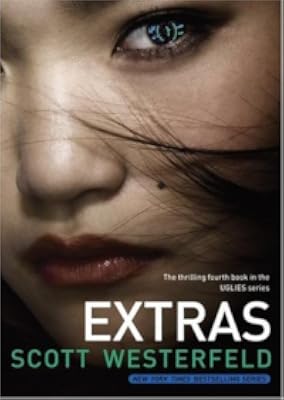
The final installment of Scott Westerfeld's New York Times bestselling and award-winning Uglies series—a global phenomenon that started the dystopian trend.A few years after rebel Tally Youngblood takes down the Specials regime, a cultural renaissance sweeps the world. "Tech-heads" flaunt their latest gadgets, "kickers" spread gossip and trends, and "surge monkeys" are hooked on extreme plastic surgery. Popularity rules, and everyone craves fame.
Fifteen-year-old Aya Fuse is no show more exception. But Aya's face rank is so low, she's a total nobody. An extra. Her only chance at stardom is to kick a wild and unexpected story.
Then she stumbles upon a big secret. Aya knows she is on the cusp of celebrity. But the information she is about to disclose will change both her fate...and that of the brave new world. show less
Tags
Recommendations
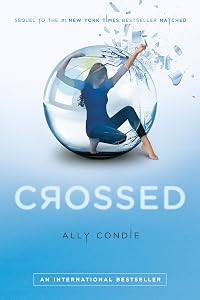
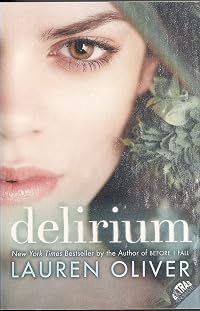

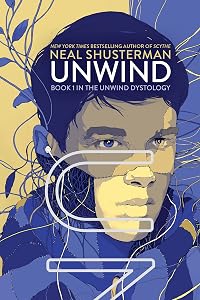
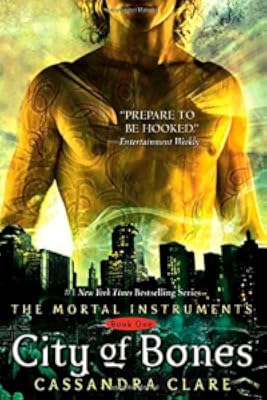













Member Recommendations
by Furu
Member Reviews
I don't know what it was, but it is possible I loved this book more than any of the original "Uglies" trilogy. Maybe it was that Westerfeld got the chance to take his world in a new direction, or maybe it was the awesome new characters. But this was one companion novel that did it right.
Aya Fuse lives in a city in what today we would know as Japan, several years after Tally Youngblood toppled the hierarchy of the cities and brought about the "mind-rain." Now, the population of the cities is focused on a new form of hierarchy; popularity. All over the city, cliques and individuals try to boost their social status using strange surgery, new technology, weird concepts, and filmed news stories called "kicks" that are akin to modern day show more blogs. And Tally, who has achieved hero status, is the most famous of all, though no one has ever seen her.
Aya is a relative unknown in the shadow of her famous older brother Hiro, who is ruthless in his stories. But her whole life changes when she meets the Sly Girls, an exclusive clique who do daredevil tricks and find off-limits secrets. And when Aya and the Sly Girls discover strange humanoid figures loading equipment into a mountain, Aya may have the chance to kick the biggest story ever; the end of the world.
Aya herself is a worthy heroine follow-up to Tally, adventurous but still trying to unravel the ethics and identity behind her desire to be popular. Fun new characters bring a whole different level of awesome: Aya's cocky brother Hiro, his tech-head friend Ren, and Aya's crush Frizz Mizuno, a sweet, gorgeous guy with a Radical Honesty brain surge that renders him incapable of lying (and my favorite guy of the whole series ;) ). Add in an encounter with the famous Tally, along with her group of friends (yes, including Shay and David), and the mysterious danger of the humanoid aliens, and this is just a riot of adventure, and proof that the future of the "Uglies" world is going to do okay. show less
Aya Fuse lives in a city in what today we would know as Japan, several years after Tally Youngblood toppled the hierarchy of the cities and brought about the "mind-rain." Now, the population of the cities is focused on a new form of hierarchy; popularity. All over the city, cliques and individuals try to boost their social status using strange surgery, new technology, weird concepts, and filmed news stories called "kicks" that are akin to modern day show more blogs. And Tally, who has achieved hero status, is the most famous of all, though no one has ever seen her.
Aya is a relative unknown in the shadow of her famous older brother Hiro, who is ruthless in his stories. But her whole life changes when she meets the Sly Girls, an exclusive clique who do daredevil tricks and find off-limits secrets. And when Aya and the Sly Girls discover strange humanoid figures loading equipment into a mountain, Aya may have the chance to kick the biggest story ever; the end of the world.
Aya herself is a worthy heroine follow-up to Tally, adventurous but still trying to unravel the ethics and identity behind her desire to be popular. Fun new characters bring a whole different level of awesome: Aya's cocky brother Hiro, his tech-head friend Ren, and Aya's crush Frizz Mizuno, a sweet, gorgeous guy with a Radical Honesty brain surge that renders him incapable of lying (and my favorite guy of the whole series ;) ). Add in an encounter with the famous Tally, along with her group of friends (yes, including Shay and David), and the mysterious danger of the humanoid aliens, and this is just a riot of adventure, and proof that the future of the "Uglies" world is going to do okay. show less
Extras started strong, and for a bit I thought that it may have been a return to the strength of Uglies and Pretties after the comparitively weak showing of Specials. The shift to a new protagonist and a new location made things feel fresh and interesting, and I found myself caught up in Aya and her struggles with fame and loyalty.
Unfortunately, the book fell apart for me right when it should have been getting interesting. Our heroine from the previous books has turned into something of a Deus ex Machina, and not a very interesting one at that. I realize that any time you step out of a character's mind and view them from afar things look different, but the Tally here is neither interesting nor likable, and if I'd have to read about her show more for the previous 1200 or so pages, I never would have finished. She doesn't jive - and worse, she takes time away from our established and interesting heroes and heroines from Japan (the location is a nice touch, by the way).
I would have been much happier with this book if it had settled into its original premise and focused more on Aya and her group and their struggle in the reputation economy. The adventure of the 'Extras' was fine and good, but it would have been better without the Cutters, and without the oh-so-cute duplication of the name (Extra Extra!).
Onto the positives:
The book is more interesting than the average 'it's tolerable' sort of book - carried by strong characters in Aya's group and an interesting world. Westerfield does a fantastic job with his dialog, and his made-up slang is some of the best I've seen in awhile, feeling neither heavy nor tedious. The world he creates is imminently believable and understandable, and it sweeps you up easily.
One thing I really admire about Westerfield is his willingness to push beyond the usual sort of dystopian struggle-against-the-man piece. His characters have done that, and it was a fascinating ride - but here we see the aftermath, a place few books really go. He's not afraid to make us wonder whether overcoming the horrific status quo has left the world in a /better/ place, or to explore the problems, old and new, that arise from the new state of being.
This could have been a really excellent thought-piece-wrapped-in-adventure, as his first two books were. Unfortunately, it seems to rather lose itself in the middle and forget what it's doing.
I think primarily my disappointment is linked to how very much I enjoyed the first two books. I know what he's capable of. This, sadly, is not it. show less
Unfortunately, the book fell apart for me right when it should have been getting interesting. Our heroine from the previous books has turned into something of a Deus ex Machina, and not a very interesting one at that. I realize that any time you step out of a character's mind and view them from afar things look different, but the Tally here is neither interesting nor likable, and if I'd have to read about her show more for the previous 1200 or so pages, I never would have finished. She doesn't jive - and worse, she takes time away from our established and interesting heroes and heroines from Japan (the location is a nice touch, by the way).
I would have been much happier with this book if it had settled into its original premise and focused more on Aya and her group and their struggle in the reputation economy. The adventure of the 'Extras' was fine and good, but it would have been better without the Cutters, and without the oh-so-cute duplication of the name (Extra Extra!).
Onto the positives:
The book is more interesting than the average 'it's tolerable' sort of book - carried by strong characters in Aya's group and an interesting world. Westerfield does a fantastic job with his dialog, and his made-up slang is some of the best I've seen in awhile, feeling neither heavy nor tedious. The world he creates is imminently believable and understandable, and it sweeps you up easily.
One thing I really admire about Westerfield is his willingness to push beyond the usual sort of dystopian struggle-against-the-man piece. His characters have done that, and it was a fascinating ride - but here we see the aftermath, a place few books really go. He's not afraid to make us wonder whether overcoming the horrific status quo has left the world in a /better/ place, or to explore the problems, old and new, that arise from the new state of being.
This could have been a really excellent thought-piece-wrapped-in-adventure, as his first two books were. Unfortunately, it seems to rather lose itself in the middle and forget what it's doing.
I think primarily my disappointment is linked to how very much I enjoyed the first two books. I know what he's capable of. This, sadly, is not it. show less
I didn't like this one as much as I liked the first three, but it was still enjoyable. It's interesting seeing how a city different from Tally's city responded to the changes. I also found it interesting how similar the reputation economy is to the influencers of today. Since this book was published in 2007, it seems almost like a prediction of Tik Tok. There were times where I felt the Japanese influence could've been better handled, as with Aya always talking about sushi as if that is the only thing Japanese people eat. Also, I wasn't sure if the timeline of events was totally accurate. Overall, I enjoyed the story and may check out Westerfeld's other novels that take place in the same universe.
This book reads like bad fanfiction. It's just terrible. It's not even fun to read, which the previous books in this series all were, even if the plots started to get holes in them and there was often too much camping in the woods. This was just miserable.
The problems started with the protagonist, fifteen-year-old Aya. This is the same age that Tally was at the start of Uglies, but Aya is not Tally, and consistently behaves like she's much younger. She is completely obsessed with achieving fame, but she doesn't seem to have any friends at all – just a small flying robot, Moggle. She does have a brother (Hiro), who seems to find her a nuisance, and her brother also has a friend (Rem, I think) who she seems to treat as a friend of her show more own, even though at one point in the novel he makes her swim to the bottom of a deep lake to collect the robot Moggle, instead of like, using a net or something. Oh also, early in the book she meets a reasonably famous guy (Frizz) at a party who develops a crush on her, even though he's so committed to telling the truth that he got brain surgery to make him incapable of telling lies and she lies all the time.
And you see, this lying is related to why she seems to have no friends – she is so desperate to achieve fame that when she does become part of a particular clique, it's only so she can expose their secret (illegal) thrill-seeking and somehow achieve fame that way. Which, as a plan, does not even make sense. But nonetheless, Aya seems to regard other people as mere tools to be used in the pursuit of fame, being so astoundingly self-absorbed that she is really, really unlikeable.
Also, she doesn't seem to have any parents or anything. In general, she seems very ungrounded – which again, is a huge contrast to when we were introduced to Tally in Uglies, who we knew to have parents (hell, her parents even appeared in one scene), and also friends (Peris, although he'd already been prettified). Aya has none of this background; she could almost be a robot with false memories who hadn't existed until just when the novel began. It probably would have been more interesting if that was the case.
Anyway, if Aya is unrelatable and unlikeable, so too is everyone else. Hiro just seems kind of unpleasant early in the book, Rem has the incident with the lake, and Frizz is just a walking plot device. When characters from the previous books arrive – Tally, Shay and co. – not only are they really dislikeable but they're not even in character. In the intervening time since Pretties (which, by the way, is only THREE YEARS – the entire social structure this book describes was established and stabilised in THREE YEARS, what?!), Tally has somehow gone from how she was then to a gruff and celibate type who thinks nothing about getting random teenagers kidnapped by the people she thinks are the bad guys. Just... callous.
The main plot, honestly, is pretty boring (although probably my contempt for most of the characters helped to shape my opinion), and an economy based on reputation doesn't even really make sense, although I'd be willing to forgive it that if it had done anything interesting with the concept.
There was some interesting stuff around social media gone too far (I guess) – people in Aya's city seem to have Facebook (although it isn't called Facebook) installed directly into their eye sockets, so at any moment they can look up "their" feeds, and the feeds of others, and have these things projected directly onto their eyes. Kind of like Google Glass, but weirder. So that was interesting conceptually, but it added a whole extra level onto the narration – I think Westerfeld wrote more about what Aya saw on her feed than what she saw in the actual physical world – and it meant this book had a very different feel to the three that came before it. Honestly, I think it would've been better if he'd just written a standalone novel, with better characters.
So in the end... I came away from this very disappointed. I felt like this book sullied my memory of the other ones, and particularly of the character of Tally. Uglies wasn't a perfect book, but it was interesting and I really liked it on the reread. The other books may have let it down a little, but this one did in a big way. I wish I hadn't read it. Man. show less
The problems started with the protagonist, fifteen-year-old Aya. This is the same age that Tally was at the start of Uglies, but Aya is not Tally, and consistently behaves like she's much younger. She is completely obsessed with achieving fame, but she doesn't seem to have any friends at all – just a small flying robot, Moggle. She does have a brother (Hiro), who seems to find her a nuisance, and her brother also has a friend (Rem, I think) who she seems to treat as a friend of her show more own, even though at one point in the novel he makes her swim to the bottom of a deep lake to collect the robot Moggle, instead of like, using a net or something. Oh also, early in the book she meets a reasonably famous guy (Frizz) at a party who develops a crush on her, even though he's so committed to telling the truth that he got brain surgery to make him incapable of telling lies and she lies all the time.
And you see, this lying is related to why she seems to have no friends – she is so desperate to achieve fame that when she does become part of a particular clique, it's only so she can expose their secret (illegal) thrill-seeking and somehow achieve fame that way. Which, as a plan, does not even make sense. But nonetheless, Aya seems to regard other people as mere tools to be used in the pursuit of fame, being so astoundingly self-absorbed that she is really, really unlikeable.
Also, she doesn't seem to have any parents or anything. In general, she seems very ungrounded – which again, is a huge contrast to when we were introduced to Tally in Uglies, who we knew to have parents (hell, her parents even appeared in one scene), and also friends (Peris, although he'd already been prettified). Aya has none of this background; she could almost be a robot with false memories who hadn't existed until just when the novel began. It probably would have been more interesting if that was the case.
Anyway, if Aya is unrelatable and unlikeable, so too is everyone else. Hiro just seems kind of unpleasant early in the book, Rem has the incident with the lake, and Frizz is just a walking plot device. When characters from the previous books arrive – Tally, Shay and co. – not only are they really dislikeable but they're not even in character. In the intervening time since Pretties (which, by the way, is only THREE YEARS – the entire social structure this book describes was established and stabilised in THREE YEARS, what?!), Tally has somehow gone from how she was then to a gruff and celibate type who thinks nothing about getting random teenagers kidnapped by the people she thinks are the bad guys. Just... callous.
The main plot, honestly, is pretty boring (although probably my contempt for most of the characters helped to shape my opinion), and an economy based on reputation doesn't even really make sense, although I'd be willing to forgive it that if it had done anything interesting with the concept.
There was some interesting stuff around social media gone too far (I guess) – people in Aya's city seem to have Facebook (although it isn't called Facebook) installed directly into their eye sockets, so at any moment they can look up "their" feeds, and the feeds of others, and have these things projected directly onto their eyes. Kind of like Google Glass, but weirder. So that was interesting conceptually, but it added a whole extra level onto the narration – I think Westerfeld wrote more about what Aya saw on her feed than what she saw in the actual physical world – and it meant this book had a very different feel to the three that came before it. Honestly, I think it would've been better if he'd just written a standalone novel, with better characters.
So in the end... I came away from this very disappointed. I felt like this book sullied my memory of the other ones, and particularly of the character of Tally. Uglies wasn't a perfect book, but it was interesting and I really liked it on the reread. The other books may have let it down a little, but this one did in a big way. I wish I hadn't read it. Man. show less
I almost didn’t read this book at all. I was so upset at the end of Specials that I figured I might as well just give up on the series, since Extras was supposed to be just sort of an additional story rather than a continuation. But a friend of mine convinced me to give it a try and I am so glad I did. While the first three Uglies books took place somewhere on the west coast of what used to be the United States, for this book we have been transported to Japan. It's been a few years since Tally's adventures and the Mind Rain (the removal of the lesions causing people to be Pretty-heads) has caused the world to go a little bit crazy. In Japan, Aya lives in a world of face rank - measures to fame compared to the other people in her city. show more They live in a reputation economy, where relative fame means more credit to purchase items. Aya is a kicker - what we’d call a vlogger - and in order to become famous she goes undercover with a secret clique of fame-shunning maglev-surfing girls. When she unwittingly stumbles upon the biggest story in the world, she attracts a whole lot of unwanted attention.
This isn’t just another story taking place in the same universe as the rest of the series: it actually is connected. Loose ends are tied up and I felt extremely satisfied by the end - and getting there was a hell of a lot of fun as well. Radical Honesty - the physical inability to lie or even hold back the truth - was an interesting plot device that ended up being more funny than contrived. I loved all the new characters and while I guessed at the truth behind the mystery pretty early on, I still enjoyed watching them figure it out. And, of course, the appearance of some of my beloved characters from the previous books was much appreciated. Definitely a worthy finale to the series. show less
This isn’t just another story taking place in the same universe as the rest of the series: it actually is connected. Loose ends are tied up and I felt extremely satisfied by the end - and getting there was a hell of a lot of fun as well. Radical Honesty - the physical inability to lie or even hold back the truth - was an interesting plot device that ended up being more funny than contrived. I loved all the new characters and while I guessed at the truth behind the mystery pretty early on, I still enjoyed watching them figure it out. And, of course, the appearance of some of my beloved characters from the previous books was much appreciated. Definitely a worthy finale to the series. show less
SPOILERS for Uglies, Pretties, Specials, and Extras
Oddly, although there were many things I disliked about this book, I actually think it was the most clever of the series. It is set about three and a half years after the "mind-rain," the name that history has given to Tally Youngblood's overthrow of the uglies-pretties-specials regime. The world is exploding with new trends, new creations, and expansion. The main character, Aya Fuse, is a 15-year-old normal (no surgeries or anything) who is trying desperately to improve her "face rank." After the mind-rain, societies needed some way to regulate the out-of-control consumption that occurred when people stopped being content and pretty-minded. Aya's society, which seems to be futuristic show more Japan, has converted to a reputation-based economy, in which resources are allocated by fame. Everyone is ranked by how much "buzz" they are getting and nearly everyone competes to improve or maintain their rank by getting people to watch their feeds - essentially video blogs. Aya is a "kicker" - a kind of person who tries to improve her fame by reporting interesting or weird stories.
The plot pacing of this one needed some work, I think. I know that Westerfeld is taking the series in a new direction and needs to set things up, but the first two-thirds of the book were just set-up for a crazy discovery that Aya "kicks" that leads her into some really significant adventures. Until this point, I found that the stakes in this book seemed so much lower than in the previous books, where Tally & Co. were risking brainwashing, imprisonment, and death all the time. By contrast, Aya seemed to be risking either obscurity or exclusion from the cool kids. Not exactly dramatic. Of course, things take a sharp turn towards the dramatic, and soon Aya is wrapped up in a plot to save the world. But even so, this is really more about events overtaking her.
As I said, this one is more clever than the first three, where the plot developments always seemed sort of obvious and the surprises were generally just re-hashes of the surprise from the previous book (becoming pretty hurts your mind, becoming Special hurts your mind in a different way, etc....). I was genuinely surprised by the developments at the end and the kind of double-meaning in the title. The social commentary is also more biting than in the first three, because (techno-gadgetry weirdness aside) the society is actually closer to our current one - not everyone can become beautiful at age 16 or a killing machine or whatever, but everyone can become famous and self-exposure seems like a virtue. At one point, Aya says something like she feels more real when she is being filmed than when she's not. Its such a perfect book for a time when "famous-for-being-famous" is so common, every washed up non-celebrity has a reality show, and it seems like everyone blogs or uses myspace. (Even I am listing the books that I read on a public website, a level of self-exposure that I never thought I would be comfortable with - a pseudonym helps, I guess - like Jai/Kai/Lai, not all of us want to be famous).
Despite these positives, I really missed the characters from the previous books. I was so impatient for them to show up, and even though Aya yells at Tally at one point that this is her story, not Tally's (in reference to "kicking" something, but how self-referential....), I didn't really care about Aya at all. Aya never really shapes her own world or destiny the way Tally did. Also, at the end of the book, Aya doesn't really seem to have changed or learned very much. At the book's beginning, she desperately wanted to be famous; at its end, she is more famous than she ever dreamed. She has gotten exactly what she wanted and has had to sacrifice nothing. (Given what has happened to the people the heroine cared about in the previous books, I kept waiting for Aya's friends, brother, or boyfriend to die and was shocked that no one actually did!) This is a big contrast with Tally, who tended to get exactly what she thought she had wanted only after realizing how horrible getting it would actually be and who had to endure a whole lot of loss and pain along the way. I think its this difference that makes Tally, even when she is blowing stuff up and being bitchy and mean, a compelling and sympathetic character, while Aya is kind of just there.
So when Tally and her friends burst in and started kicking a**, I felt relieved. Only at that point did the plot really start to get interesting. It was strange to see Tally as a historical figure, someone Aya and her friends read about in books, and I felt angry when Aya criticized Tally - like she had any idea of what Tally had gone through. Isn't that funny? I never thought I would get attached to these characters.
Overall, a fun read, but really more of a post-script than the beginning of a new set of stories. It was interesting to see what had happened to the world a few years after Tally changed it, but I wished the book could have been more about Tally, Shay, and David and what they were doing than about some silly kids who wanted to be famous. If Westerfeld does choose to revisit this world, I hope he keeps the focus on Tally. I also thought it might have been fun to see how Tally's home city was functioning. Or to focus on the city of Diego, where Shay and the other Cutters were living. show less
Oddly, although there were many things I disliked about this book, I actually think it was the most clever of the series. It is set about three and a half years after the "mind-rain," the name that history has given to Tally Youngblood's overthrow of the uglies-pretties-specials regime. The world is exploding with new trends, new creations, and expansion. The main character, Aya Fuse, is a 15-year-old normal (no surgeries or anything) who is trying desperately to improve her "face rank." After the mind-rain, societies needed some way to regulate the out-of-control consumption that occurred when people stopped being content and pretty-minded. Aya's society, which seems to be futuristic show more Japan, has converted to a reputation-based economy, in which resources are allocated by fame. Everyone is ranked by how much "buzz" they are getting and nearly everyone competes to improve or maintain their rank by getting people to watch their feeds - essentially video blogs. Aya is a "kicker" - a kind of person who tries to improve her fame by reporting interesting or weird stories.
The plot pacing of this one needed some work, I think. I know that Westerfeld is taking the series in a new direction and needs to set things up, but the first two-thirds of the book were just set-up for a crazy discovery that Aya "kicks" that leads her into some really significant adventures. Until this point, I found that the stakes in this book seemed so much lower than in the previous books, where Tally & Co. were risking brainwashing, imprisonment, and death all the time. By contrast, Aya seemed to be risking either obscurity or exclusion from the cool kids. Not exactly dramatic. Of course, things take a sharp turn towards the dramatic, and soon Aya is wrapped up in a plot to save the world. But even so, this is really more about events overtaking her.
As I said, this one is more clever than the first three, where the plot developments always seemed sort of obvious and the surprises were generally just re-hashes of the surprise from the previous book (becoming pretty hurts your mind, becoming Special hurts your mind in a different way, etc....). I was genuinely surprised by the developments at the end and the kind of double-meaning in the title. The social commentary is also more biting than in the first three, because (techno-gadgetry weirdness aside) the society is actually closer to our current one - not everyone can become beautiful at age 16 or a killing machine or whatever, but everyone can become famous and self-exposure seems like a virtue. At one point, Aya says something like she feels more real when she is being filmed than when she's not. Its such a perfect book for a time when "famous-for-being-famous" is so common, every washed up non-celebrity has a reality show, and it seems like everyone blogs or uses myspace. (Even I am listing the books that I read on a public website, a level of self-exposure that I never thought I would be comfortable with - a pseudonym helps, I guess - like Jai/Kai/Lai, not all of us want to be famous).
Despite these positives, I really missed the characters from the previous books. I was so impatient for them to show up, and even though Aya yells at Tally at one point that this is her story, not Tally's (in reference to "kicking" something, but how self-referential....), I didn't really care about Aya at all. Aya never really shapes her own world or destiny the way Tally did. Also, at the end of the book, Aya doesn't really seem to have changed or learned very much. At the book's beginning, she desperately wanted to be famous; at its end, she is more famous than she ever dreamed. She has gotten exactly what she wanted and has had to sacrifice nothing. (Given what has happened to the people the heroine cared about in the previous books, I kept waiting for Aya's friends, brother, or boyfriend to die and was shocked that no one actually did!) This is a big contrast with Tally, who tended to get exactly what she thought she had wanted only after realizing how horrible getting it would actually be and who had to endure a whole lot of loss and pain along the way. I think its this difference that makes Tally, even when she is blowing stuff up and being bitchy and mean, a compelling and sympathetic character, while Aya is kind of just there.
So when Tally and her friends burst in and started kicking a**, I felt relieved. Only at that point did the plot really start to get interesting. It was strange to see Tally as a historical figure, someone Aya and her friends read about in books, and I felt angry when Aya criticized Tally - like she had any idea of what Tally had gone through. Isn't that funny? I never thought I would get attached to these characters.
Overall, a fun read, but really more of a post-script than the beginning of a new set of stories. It was interesting to see what had happened to the world a few years after Tally changed it, but I wished the book could have been more about Tally, Shay, and David and what they were doing than about some silly kids who wanted to be famous. If Westerfeld does choose to revisit this world, I hope he keeps the focus on Tally. I also thought it might have been fun to see how Tally's home city was functioning. Or to focus on the city of Diego, where Shay and the other Cutters were living. show less
Summary: It's three years after Tally Youngblood started the "mind-rain" that cured the world of Pretty-ness. In coping with their newfound independence, Aya Fuse's city has transformed itself into a culture of celebrity - where everything in your life is determined by how famous you are. Aya, unfortunately, is an Extra: not famous at all... yet. She's got her eye on a big story to kick - a group of girls who disdain fame and pull crazy stunts like surfing the high-speed mag-lev trains. But then Aya stumbles across an even bigger story - a group of strange not-quite-humans who have built a weapon capable of wiping out the human race once and for all.
Review: Like the rest of the series, Extras was fun, slick, and exciting. The book zips show more along at a breakneck pace, moving from hoverboard chase to train surfing to skydiving with barely a pause for breath. Westerfeld's world is seamless, and a very (slightly frighteningly) real potential future. I think this is probably my favorite since Uglies - I like Aya as a narrator, the story is gripping, and while part of me thought "Aliens? Really?" when that angle was introduced, the narrative pulled me along until the end. I will admit that I'm not quite satisfied with the ending, although I can't put my finger on what would have been better. I think part of the problem is that in the first three books, there's quite a bit of morally grey areas and thorny ethical issues, and in this one, everything winds up being a little more clear-cut good or bad.
Recommendation: Exciting and fun to read, and the series benefits from having some new blood in the form of Aya. This isn't a really stand-alone - I doubt a lot of it would make sense without having read the previous three books, but if you even vaguely enjoyed Uglies or its sequels, it's is worth the read. show less
Review: Like the rest of the series, Extras was fun, slick, and exciting. The book zips show more along at a breakneck pace, moving from hoverboard chase to train surfing to skydiving with barely a pause for breath. Westerfeld's world is seamless, and a very (slightly frighteningly) real potential future. I think this is probably my favorite since Uglies - I like Aya as a narrator, the story is gripping, and while part of me thought "Aliens? Really?" when that angle was introduced, the narrative pulled me along until the end. I will admit that I'm not quite satisfied with the ending, although I can't put my finger on what would have been better. I think part of the problem is that in the first three books, there's quite a bit of morally grey areas and thorny ethical issues, and in this one, everything winds up being a little more clear-cut good or bad.
Recommendation: Exciting and fun to read, and the series benefits from having some new blood in the form of Aya. This isn't a really stand-alone - I doubt a lot of it would make sense without having read the previous three books, but if you even vaguely enjoyed Uglies or its sequels, it's is worth the read. show less
Members
- Recently Added By
Published Reviews
ThingScore 100
With its combination of high-stakes melodrama, cinematic action and thought-provoking insight into some really thorny questions of human nature, the new novel, like its predecessors, is a superb piece of popular art, reminiscent less of other young adult books than of another pop masterpiece, the revived “Battlestar Galactica.”
added by Aerrin99
Aya and her friends are some of the most interesting, flawed and inspirational people I've met in a young adult novel, making this yet another great Westerfeld to use in turning your kids onto sf.
added by lampbane
Lists

Diversity in Fantasy and Science Fiction
219 works; 33 members

NPRs your favorites: 100 Best Ever Teen Novels
237 works; 49 members

Speculative Fiction to Read
706 works; 32 members

Children's and YA Dystopias
123 works; 11 members
Author Information

65+ Works 76,455 Members
Scott Westerfeld was born in Dallas, Texas on May 5, 1963. He received a degree in philosophy from Vassar College in 1985. Before becoming a full time writer, he held several jobs including factory worker, software designer, editor, and substitute teacher. His works for young adults include the Uglies series, the Midnighters series, and The Last show more Days. He is the co-author of the Zeroes series written with Margo Lanagan and Deborah Biancotti. He also writes science fiction novels for adults. He has won numerous awards including a Special Citation for the 2000 Philip K. Dick Award for Evolution's Darling, a Victorian Premier's Award for So Yesterday, and an Aurealis Award for The Secret Hour. (Bowker Author Biography) show less
Some Editions
Awards and Honors
Series

Work Relationships
Common Knowledge
- Canonical title
- Extras
- Original publication date
- 2007-10-02
- People/Characters
- Aya Fuse; Hiro Fuse; Tally Youngblood; Moggle; Ren Machino; Eden Maru (show all 12); Toshi Banana; Frizz Mizuno; Shay; David; Fausto; Andrew Simpson Smith
- Important places
- Japan
- Epigraph
- Part I: Watch This
You all say you need us. Well, maybe you do, but not to help you. You have enough help, with the millions of bubbly new minds about to be unleashed, with all the cities coming awake at last. Together... (show all), you're more than enough to change the world without us. So from now on, David and I are here to stand in your way. You see, freedom has a way of destroying things.
- Tally Youngblood - Dedication
- To everyone who wrote to me to reveal the secret definition of the word "trilogy."
- First words
- "Moggle," Aya whispered. "You awake?"
- Last words
- (Click to show. Warning: May contain spoilers.)"Come on, it's almost midnight. Let's go watch them cut the cake."
- Original language
- English
Classifications
- Genres
- Fiction and Literature, Teen, Young Adult, Science Fiction
- DDC/MDS
- 813.6 — Literature & rhetoric American literature in English American fiction in English 2000-
- LCC
- PZ7 .W5197 .E — Language and Literature Fiction and juvenile belles lettres Fiction and juvenile belles lettres Juvenile belles lettres
- BISAC
Statistics
- Members
- 6,680
- Popularity
- 1,800
- Reviews
- 168
- Rating
- (3.64)
- Languages
- 8 — Czech, English, Estonian, French, German, Japanese, Portuguese, Spanish
- Media
- Paper, Audiobook, Ebook
- ISBNs
- 53
- ASINs
- 11