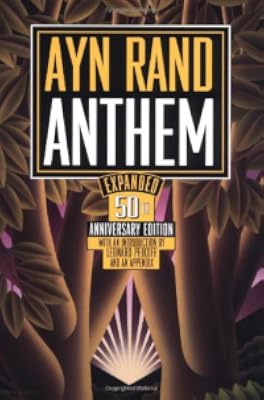
Anthem
by Ayn Rand 
On This Page
Description
Anthem takes place in a dark, dystopian future. Collectivism and socialist economics have driven mankind to a technological standstill. The individual is not acknowledged in this society, the word "I" having been eliminated from speech altogether. Rand explores the tension between collectivism and individualism and equates the errors or triumphs of these with socialism and capitalism..
Tags
Recommendations
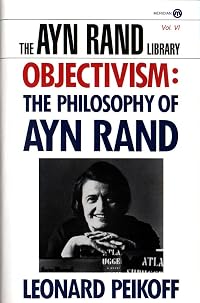
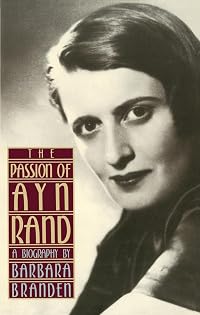
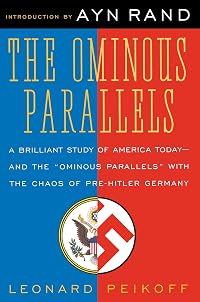
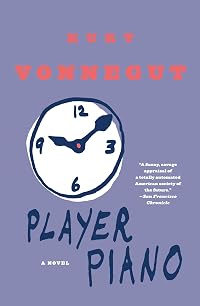

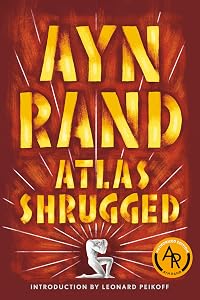
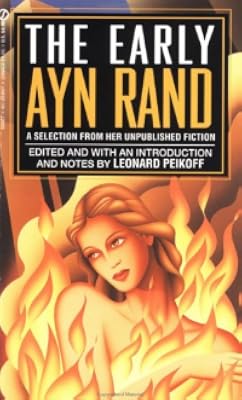

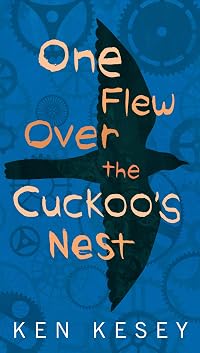
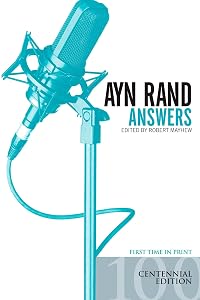












Member Recommendations
MMSequeira Both 1984 and Anthem we're inspired by Zamyatin's We. Both are worth reading, as cautionary tales.
114

mcaution Gain a deeper understanding and appreciation of Rand's novella through this unique collection of scholarly criticism.
40


by anonymous user
Member Reviews
Ayn Rand is a point of fascination for me. On a completely selfish level her philosophy, Objectivism, makes perfect sense. But then, in the words of another great philosopher George Carlin, I do this stupid thing called 'thinking'. I start thinking about how, like or hate it (and I hate it), humanity either stands together or falls apart (oh look, something resembling a pun). And the ones, the supposed 'true' individuals are either all facade (surrounded by coruscating hypocrisies such as supportive family and friends, good jobs, no real actual problems to individuate themselves against) or, the other 'true' individuals who care nothing for nobody and anything save themselves....what's that word for those people? Sociopaths.
Look, Rand. show more Morality's a bugaboo, I hear you, really I do. And (organized) religion and factory style spiritualism (pumped out by a funny hat leader of your preference or obligation) have made the curse of it worse. But without connectivity, without interactivity, without our fellow men (and women, if I can reference Batman Returns in a very overly circuitous way) our only alternative is either suicide (hey, Camus), sociopathy (too many to list) or such an intense solitude (ala Gogol and his straw eating self) that you render yourself God unto yourself (narcissism supreme) or simply hide yourself into complete irrelevance. I enjoy Objectivism (as shown in Anthem and in my continued laborious scaling of The Fountainhead) but merely as an extended thought experiment. Nothing more.
And don't even ask me about the Libertarians. show less
Look, Rand. show more Morality's a bugaboo, I hear you, really I do. And (organized) religion and factory style spiritualism (pumped out by a funny hat leader of your preference or obligation) have made the curse of it worse. But without connectivity, without interactivity, without our fellow men (and women, if I can reference Batman Returns in a very overly circuitous way) our only alternative is either suicide (hey, Camus), sociopathy (too many to list) or such an intense solitude (ala Gogol and his straw eating self) that you render yourself God unto yourself (narcissism supreme) or simply hide yourself into complete irrelevance. I enjoy Objectivism (as shown in Anthem and in my continued laborious scaling of The Fountainhead) but merely as an extended thought experiment. Nothing more.
And don't even ask me about the Libertarians. show less
My absolute favorite read of the year, and it isn't even close. This is a masterpiece in the world of the novella, one that rivals The Metamorphosis and easily beats out Heart of Darkness. It also is the greatest work of dystopia I've read, surpassing even 1984. I'll leave the hot takes at that.
Anthem is beautiful. I don't often describe books in that way, but there isn't a better word for it. It does a haunting job of describing the world, and it does a beautiful job of making its characters exist in that world. The dystopia aspect is simple, and not anything groundbreaking, but the response is what gives this its kick. Small rebellions lead to false hope which turns into an angry escape.
The word usage is also brilliant. The writing is show more perfect for the story beats, which makes sense once you read it. Rand didn't just tell a story, she WROTE it, and that is what defines classics in my opinion. And that is what makes this the best one day read I could ever recommend to any reading skill level, period. show less
Anthem is beautiful. I don't often describe books in that way, but there isn't a better word for it. It does a haunting job of describing the world, and it does a beautiful job of making its characters exist in that world. The dystopia aspect is simple, and not anything groundbreaking, but the response is what gives this its kick. Small rebellions lead to false hope which turns into an angry escape.
The word usage is also brilliant. The writing is show more perfect for the story beats, which makes sense once you read it. Rand didn't just tell a story, she WROTE it, and that is what defines classics in my opinion. And that is what makes this the best one day read I could ever recommend to any reading skill level, period. show less
Ugh. Rand's simplistic allegory paints the world in black and white - there is the individual vs. the collective, a struggle which ultimately stands for freedom vs. totalitarianism. If she had read Freud or Darwin, she would know that human beings are a communal species - while it is true that individual rights should be protected and genius should be nurtured, you can not completely take a person out of the context of the community. This novel, and indeed all of her writing, is based on a false dichotomy, which was probably her reaction to seeing the results of the Russian Revolution - a reactionary response to a reactionary period in history. Unfortunately for Rand and the Soviets she despised, the world is much more nuanced than show more their respective dogmas will admit. I might have given this book two stars for the coherence of its philosophy, but a star was deducted for packaging the brief story with a sycophantic introduction by Rand disciple Leonard Peikoff, along with additional materials tailored to the Randroid cult of personality. show less
I found this slim novel fascinating. It is a tour-de-force against collectivism in all its forms, and from all ends of the political and religious spectrum, placing one man at the centre of his own life and teaching him to value himself.
Yet, from a modern perspective, particularly looking back over the capitalist me-first 1980s, I see shadows, pitfalls and darkness in Equality 7-2521's enlightenment. His enthusiasm for the discovery of "I" is all-consuming and it is difficult to see how it would be possible for everyone to live at this extreme without generating huge amounts of conflict. It is also intriguing that in describing his vision of his new world and the people who will share it with him, he does not seem to contemplate the show more possibility that each of these individuals in whom he intends to generate this same sense of self-discovery and self-importance (in the non-perjorative sense) may disagree with his vision of how man shall live.
The role of the Golden One also intrigued me as, even in their enlightenment, she seems subservient - Equality 7-2521 names her, rather than allowing her to discover for herself the ideas he has encountered and name herself. This surprised me, given the author is a woman. Of course, to explore the implications of a world inhabited by individualists would be a whole other novel and from that perspective, such a discussion would detract from the central message of Rand's novel, diluting the message and creating too much ambiguity. If the purpose is to expose the dystopian end-results of the increasing trend for collectivist thinking in the 1930s (both fascist and communist), an in-depth and thoughtful exploration of whether it is possible for all people to live at the extreme opposite end of individualism is not the way to do it, and to illustrate her point and create a powerful novel, Rand had to occupy the extremes. I am certainly keen now to explore Rand's other works to see how these ideas continued and developed.
The parallels between this and other dystopian novels by Rand's contemporaries are of course inescapable and yet she brings a fresh voice to the discussions, choosing to characterise the collectivists as having retreated from the advances of industrialised life rather than creating an even more modern and stylised future filled with technology and science.
Her prose is engaging and absorbing. The use of language is clever and yet, like all good writing, much of the workings are hidden, creating the intended effect in the reader but leaving them to unpick later how she did it. The use of grammar captured perfectly the dehumanising power of collectivism and the idea that you can be both within a group and utterly alone at the same time. The novel is well-paced and tightly written - every sentence advancing the story or the ideas within it.
"Anthem" is a thoroughly absorbing and entertaining way to spend an afternoon and yet will leave you thinking for many years. show less
Yet, from a modern perspective, particularly looking back over the capitalist me-first 1980s, I see shadows, pitfalls and darkness in Equality 7-2521's enlightenment. His enthusiasm for the discovery of "I" is all-consuming and it is difficult to see how it would be possible for everyone to live at this extreme without generating huge amounts of conflict. It is also intriguing that in describing his vision of his new world and the people who will share it with him, he does not seem to contemplate the show more possibility that each of these individuals in whom he intends to generate this same sense of self-discovery and self-importance (in the non-perjorative sense) may disagree with his vision of how man shall live.
The role of the Golden One also intrigued me as, even in their enlightenment, she seems subservient - Equality 7-2521 names her, rather than allowing her to discover for herself the ideas he has encountered and name herself. This surprised me, given the author is a woman. Of course, to explore the implications of a world inhabited by individualists would be a whole other novel and from that perspective, such a discussion would detract from the central message of Rand's novel, diluting the message and creating too much ambiguity. If the purpose is to expose the dystopian end-results of the increasing trend for collectivist thinking in the 1930s (both fascist and communist), an in-depth and thoughtful exploration of whether it is possible for all people to live at the extreme opposite end of individualism is not the way to do it, and to illustrate her point and create a powerful novel, Rand had to occupy the extremes. I am certainly keen now to explore Rand's other works to see how these ideas continued and developed.
The parallels between this and other dystopian novels by Rand's contemporaries are of course inescapable and yet she brings a fresh voice to the discussions, choosing to characterise the collectivists as having retreated from the advances of industrialised life rather than creating an even more modern and stylised future filled with technology and science.
Her prose is engaging and absorbing. The use of language is clever and yet, like all good writing, much of the workings are hidden, creating the intended effect in the reader but leaving them to unpick later how she did it. The use of grammar captured perfectly the dehumanising power of collectivism and the idea that you can be both within a group and utterly alone at the same time. The novel is well-paced and tightly written - every sentence advancing the story or the ideas within it.
"Anthem" is a thoroughly absorbing and entertaining way to spend an afternoon and yet will leave you thinking for many years. show less
This novella takes place sometime in the far distant future in a totally controlled society and it will surely make you stop and think long after you turn the final page. It is about a dystopian society, yet I wonder if it is not really about what some would consider a utopian society. Everything is decided by a Council. There is no danger to speak of. There are no uprisings. There is no dissent. If there should be, it is halted immediately and the guilty one is subjected to severe physical punishment. There is no due process. All societal threats have been removed because of the severe consequences for infractions. Conversation is controlled and limited so no new ideas are generated. Children are raised in group homes. There is no show more parental involvement. Adults live in homes organized by profession. Older adults are consigned to Homes for the Useless to await the end of their days at about age 40. No one is educated unless they are chosen to be by the Council of Vocations. Careers are not chosen but assigned. Mating and procreation is strictly controlled. It is basically a slave society, but the slaves don’t know anything else but that life, and so they meekly obey.
The author has written a prescient tale of an America that becomes unrecognizable. The time of its publication is pertinent. Written in 1937 and published in 1938, it echoes the rising number of abuses instituted by Adolf Hitler, practices which were gaining enormous support. The theme of Arbeit Macht Frei on the gates of the Concentration Camps, “work will make you free” is a repetitive theme in the novella. Mating is conducted according to a strict schedule with mates chosen by the Council of Eugenics, This harkens back to Hitler’s Lebensborn program, created to raise a society of pure Aryans. It illuminates his effort to control thought and behavior with the rising popularity of the Hitler youth movement; the young were trained and taught to hate those that were different, those that were not pure Aryans. They were taught to blindly obey, even if it meant betraying their own family and friends for the benefit of Hitler’s Germany. The survival of the whole, the Fatherland, was of utmost importance.
In the society of the book, everyone is supposed to be the same. Individuals are identified by numbers because individuality is forbidden. The individual exists only for the benefit of the group, not for themselves. Free thought and free choice is forbidden. Feelings are forbidden. Strict schedules guide and govern daily life. Children are raised in group homes. At 15 a Council decides their futures. Hard work is the main goal in life. Ambition does not exist. There is no need for political correctness; politics, and conversation are both forbidden. Obedience is absolute. In this new world, it is forbidden to make mention of the past “Unmentionable Times”. History has disappeared entirely. The “we” is worshipped as a “G-d”. There is no “I” allowed. Nameless people are identified by a number and occupation, i.e. equality 7-2521 is a street cleaner. Others are in groups that are scholars, others are half-brains like Union 5-3992. Liberty 5-3000 is a woman. It is a crime to think, smile or walk about without purpose. It is a crime to be too tall because it makes you stand out, it makes you different. Even those who live past 40 are gaped at like animals in a zoo.
Men and women do not fraternize. This keeps emotions in check, which reminded me of religious rules forcing women to cover their bodies in burqas to prevent men from having sexual thoughts about them. Women are separated from men except at times of mating. Mates are chosen by the Council of Eugenics. Love does not exist, nor do any other human emotions because all opportunity to experience feelings has been removed. Equality 7-2521 refers to everyone as they and himself as we. He has no self-identification because everyone exists for the benefit of everyone else, not for one man alone.
Candles light the world. There are no mirrors so Equality does not know what he looks like. He has been told he is evil. He is too tall. His eyes are too bright. He thinks and it is not allowed. He knows that he is different. He thinks that hard work will redeem his sins, but he has no idea what his sins actually are. Soon, he begins to break rules. He believes he is doing something that is good, but he is not allowed to believe in what he does, only what the group does. He is committing more and more sins. He is learning and for him, further education has been forbidden. When he comes upon Liberty, during his work as street sweeper, he begins to feel something he has not felt before. It awakens something unknown in his body. Before long, she acknowledges similar feelings. They communicate without speaking.
How will their relationship change the existing society? With individualism will the sins of jealousy and greed renew again? Will humans form their own groups and will they shut others out or be inclusive? Will selfishness once again rear its head and survive? What new sins will be birthed by their transgressions? Will free will and choice bring about a new beginning that is doomed to end? Will the story of Adam and Eve be relived with Prometheus and Gaea, aka Equality and Liberty? Will they lose interest in the needs of others to further benefit only themselves? Will there be no happy medium? Will the “absolute and unbridled” thirst for knowledge ultimately corrupt them too, as in the Unmentionable Times? Will the desire to seek their own pleasure destroy their desire for righteousness and compassion? Will they be too naïve to make the necessary changes and march forward into a better future?
Is there a middle ground between dystopia and utopia? Can overregulation be curbed to the point where it does no harm? Can socialism find a way to fund all without benefitting the few at the top who are protected from the tentacles of its policies? Can non-conformity by positive before it becomes too negative and demanding of others for constant approval? Is it like the bible story of Adam and Eve? Will the sins of Gaea and Prometheus benefit or injure the new world they wish to create? If obsession with self becomes more prevalent, does it always mean selfishness will be the end result? Can obsession be prevented?
This book makes one think hard about society and its needs. In this brief little tale, the sins of our current society are evident. Our history is being rewritten, revised, as I write. Political Correctness demands it, as it has curbed free speech as well. Some think they have the one right way for all and demand to be followed. If they don’t get there way they find means to achieve it that may not be politic. Where the many ruled, times are changing, as in the tale. Now the individual has begun to take a supreme place in the dialogue of the day. Small groups of individuals band together and rise up, like Occupy Wall Street and Black Lives Matter. They demand that everyone agree with their ideas or they riot or commit acts of civil disobedience which go unpunished. Some ideas are “over thought”. Fear rules most of our daily lives; there is the fear of terrorism, of some uses of science as in cloning and stem cell research, of some religious beliefs, some life choices, some alternate lifestyles, of the unknown, of change, and of those that make rules for others but exempt themselves. Is our Council of Elders, i.e. Congress, guilty of making too many rules, or of not following those they made? Will Americans have to find a place to “hide” to find peace and freedom eventually, like Equality and Liberty eventually did? What awaits us in the future? show less
The author has written a prescient tale of an America that becomes unrecognizable. The time of its publication is pertinent. Written in 1937 and published in 1938, it echoes the rising number of abuses instituted by Adolf Hitler, practices which were gaining enormous support. The theme of Arbeit Macht Frei on the gates of the Concentration Camps, “work will make you free” is a repetitive theme in the novella. Mating is conducted according to a strict schedule with mates chosen by the Council of Eugenics, This harkens back to Hitler’s Lebensborn program, created to raise a society of pure Aryans. It illuminates his effort to control thought and behavior with the rising popularity of the Hitler youth movement; the young were trained and taught to hate those that were different, those that were not pure Aryans. They were taught to blindly obey, even if it meant betraying their own family and friends for the benefit of Hitler’s Germany. The survival of the whole, the Fatherland, was of utmost importance.
In the society of the book, everyone is supposed to be the same. Individuals are identified by numbers because individuality is forbidden. The individual exists only for the benefit of the group, not for themselves. Free thought and free choice is forbidden. Feelings are forbidden. Strict schedules guide and govern daily life. Children are raised in group homes. At 15 a Council decides their futures. Hard work is the main goal in life. Ambition does not exist. There is no need for political correctness; politics, and conversation are both forbidden. Obedience is absolute. In this new world, it is forbidden to make mention of the past “Unmentionable Times”. History has disappeared entirely. The “we” is worshipped as a “G-d”. There is no “I” allowed. Nameless people are identified by a number and occupation, i.e. equality 7-2521 is a street cleaner. Others are in groups that are scholars, others are half-brains like Union 5-3992. Liberty 5-3000 is a woman. It is a crime to think, smile or walk about without purpose. It is a crime to be too tall because it makes you stand out, it makes you different. Even those who live past 40 are gaped at like animals in a zoo.
Men and women do not fraternize. This keeps emotions in check, which reminded me of religious rules forcing women to cover their bodies in burqas to prevent men from having sexual thoughts about them. Women are separated from men except at times of mating. Mates are chosen by the Council of Eugenics. Love does not exist, nor do any other human emotions because all opportunity to experience feelings has been removed. Equality 7-2521 refers to everyone as they and himself as we. He has no self-identification because everyone exists for the benefit of everyone else, not for one man alone.
Candles light the world. There are no mirrors so Equality does not know what he looks like. He has been told he is evil. He is too tall. His eyes are too bright. He thinks and it is not allowed. He knows that he is different. He thinks that hard work will redeem his sins, but he has no idea what his sins actually are. Soon, he begins to break rules. He believes he is doing something that is good, but he is not allowed to believe in what he does, only what the group does. He is committing more and more sins. He is learning and for him, further education has been forbidden. When he comes upon Liberty, during his work as street sweeper, he begins to feel something he has not felt before. It awakens something unknown in his body. Before long, she acknowledges similar feelings. They communicate without speaking.
How will their relationship change the existing society? With individualism will the sins of jealousy and greed renew again? Will humans form their own groups and will they shut others out or be inclusive? Will selfishness once again rear its head and survive? What new sins will be birthed by their transgressions? Will free will and choice bring about a new beginning that is doomed to end? Will the story of Adam and Eve be relived with Prometheus and Gaea, aka Equality and Liberty? Will they lose interest in the needs of others to further benefit only themselves? Will there be no happy medium? Will the “absolute and unbridled” thirst for knowledge ultimately corrupt them too, as in the Unmentionable Times? Will the desire to seek their own pleasure destroy their desire for righteousness and compassion? Will they be too naïve to make the necessary changes and march forward into a better future?
Is there a middle ground between dystopia and utopia? Can overregulation be curbed to the point where it does no harm? Can socialism find a way to fund all without benefitting the few at the top who are protected from the tentacles of its policies? Can non-conformity by positive before it becomes too negative and demanding of others for constant approval? Is it like the bible story of Adam and Eve? Will the sins of Gaea and Prometheus benefit or injure the new world they wish to create? If obsession with self becomes more prevalent, does it always mean selfishness will be the end result? Can obsession be prevented?
This book makes one think hard about society and its needs. In this brief little tale, the sins of our current society are evident. Our history is being rewritten, revised, as I write. Political Correctness demands it, as it has curbed free speech as well. Some think they have the one right way for all and demand to be followed. If they don’t get there way they find means to achieve it that may not be politic. Where the many ruled, times are changing, as in the tale. Now the individual has begun to take a supreme place in the dialogue of the day. Small groups of individuals band together and rise up, like Occupy Wall Street and Black Lives Matter. They demand that everyone agree with their ideas or they riot or commit acts of civil disobedience which go unpunished. Some ideas are “over thought”. Fear rules most of our daily lives; there is the fear of terrorism, of some uses of science as in cloning and stem cell research, of some religious beliefs, some life choices, some alternate lifestyles, of the unknown, of change, and of those that make rules for others but exempt themselves. Is our Council of Elders, i.e. Congress, guilty of making too many rules, or of not following those they made? Will Americans have to find a place to “hide” to find peace and freedom eventually, like Equality and Liberty eventually did? What awaits us in the future? show less
Ayn Rand tried so hard to be so emphatic and lacking in subtlety in creating her heavy-handed tales of state conspiracies in hyper-socialism that this novel lacks anything moving or alive. This is fiction as screen, not story.
I have never read any Ayn Rand before, and if I had to read anything, it might as well be this, her shortest work of fiction. It was a Retro Hugo nominated novella for 1939, which is why I picked it up.
Anthem was originally published in the UK. Its first US publication, in 1946, by a small libertarian publishing house, wasn't widely distributed. The book didn't get a major US edition until 1953. Rand revised the text for the '46 edition, and that's the version I read.
It's a dystopia, and after all of these years, its basic tropes are very familiar -- collective decision making; no room for joy, fun, or spontaneity; individuality thoroughly removed from society.
So thoroughly, in fact, that our protagonist, a young man named Equality show more 7-2521, refers to himself as "we" and "us." He meets and falls in love -- forbidden love, for it is unthinkable to prefer the company of any one person over that of any other -- with the beautiful Liberty 5-3000(*). Together, they run away and discover some of the forbidden knowledge of the Unmentionable Times. Those discoveries include -- I suppose this is a spoiler -- the word "I," and the final chapters are essentially a sermon/hymn to the glory of "I" and the self.
(* -- If you can read the name "Liberty 5-3000" without chanting it to the approximate rhythm of Glenn Miller's "Pennsylvania 6-5000," well, you're a better man than I am, Gunga Din.)
It is, of course, not fair to put all of the blame on Rand for the fact that her tropes feel stale and tired in 2023; people have been riffing on those ideas for more than 80 years. But she can certainly be blamed for the hamfisted way in which she pounds her political drum; for the childish selfishness of her philosophy; and for the general ineptitude of her prose, which is clunky and awkward even by the relatively low standards of late 1930s SF. show less
Anthem was originally published in the UK. Its first US publication, in 1946, by a small libertarian publishing house, wasn't widely distributed. The book didn't get a major US edition until 1953. Rand revised the text for the '46 edition, and that's the version I read.
It's a dystopia, and after all of these years, its basic tropes are very familiar -- collective decision making; no room for joy, fun, or spontaneity; individuality thoroughly removed from society.
So thoroughly, in fact, that our protagonist, a young man named Equality show more 7-2521, refers to himself as "we" and "us." He meets and falls in love -- forbidden love, for it is unthinkable to prefer the company of any one person over that of any other -- with the beautiful Liberty 5-3000(*). Together, they run away and discover some of the forbidden knowledge of the Unmentionable Times. Those discoveries include -- I suppose this is a spoiler -- the word "I," and the final chapters are essentially a sermon/hymn to the glory of "I" and the self.
(* -- If you can read the name "Liberty 5-3000" without chanting it to the approximate rhythm of Glenn Miller's "Pennsylvania 6-5000," well, you're a better man than I am, Gunga Din.)
It is, of course, not fair to put all of the blame on Rand for the fact that her tropes feel stale and tired in 2023; people have been riffing on those ideas for more than 80 years. But she can certainly be blamed for the hamfisted way in which she pounds her political drum; for the childish selfishness of her philosophy; and for the general ineptitude of her prose, which is clunky and awkward even by the relatively low standards of late 1930s SF. show less
Members
- Recently Added By
Lists

Best Dystopias
280 works; 272 members

Unread books
1,063 works; 87 members

Favorite Science Fiction by Women Authors
737 works; 202 members

20th Century Literature
1,161 works; 55 members

Libertarian Books
102 works; 19 members

Books Read in 2014
2,344 works; 89 members

Amanda's Guaranteed Books
110 works; 5 members

Books Read in 2016
4,666 works; 197 members

1930s
262 works; 5 members

Books featured on I Don't Even Own a Television
167 works; 3 members

Books Read in 2024
4,727 works; 128 members

Top Five Books of 2024
795 works; 264 members

Books We Want To Read Again For The First Time
384 works; 160 members

Llibres que he llegit el 2025
81 works; 2 members

Speculative Fiction to Read
706 works; 32 members

Blue Pyramid 1,276 Best Books of All Time
1,248 works; 32 members
Author Information

181+ Works 76,776 Members
Ayn Rand, 1905 - 1982 Novelist and philosopher Ayn Rand was born Alice Rosenbaum on February 2, 1905 in St. Petersburg, Russia. She graduated with highest honors in history from the University of Petrograd in 1924, and she came to the United States in 1926 with dreams of becoming a screenwriter. In 1929, she married actor Charles "Frank" O'Connor. show more After arriving in Hollywood, Rand was spotted by Cecil B. DeMille standing at the gate of his studio and gave her a job as an extra in King of Kings. She also worked as a script reader and a wardrobe girl and, in 1932, she sold Red Pawn to Universal Studios. In the 1950's, she returned to New York City where she hosted a Saturday night group she called "the collective." It was also during this time that Rand received a fan letter from a young man, Nathaniel Branden. She was impressed with his letter, and she wrote him back. Her correspondence with him eventually led to an affair that lasted over a decade. He became her chief spokesperson and codified the principles of her novels into a strict philosophical system (objectivism) and founded an institute bearing his name. Their affair ended in 1968 when Branden got involved with another one of Rand's disciples. According to Rand, people are inherently selfish and act only out of personal interest making a selfish act, a rational one. It is from this belief that her characters play out their lives. Rand's first novel was "We the Living" (1936) and was followed by "Anthem" (1938), "The Fountainhead" (1943), and "Atlas Shrugged" (1957). All four of her novels made the top ten of the controversial list of the 100 Best Novels of the 20th Century. On March 6, 1982, Ayn Rand died in her New York City apartment. (Bowker Author Biography) show less
Ayn Rand has a Legacy Library. Legacy libraries are the personal libraries of famous readers, entered by LibraryThing members from the Legacy Libraries group.
All Editions
Some Editions
Awards and Honors
Awards
Notable Lists
Series
Belongs to Publisher Series
Work Relationships
Is contained in
Has the (non-series) sequel
Has the adaptation
Is an expanded version of
Is expanded in
Was inspired by
Has as a reference guide/companion
Has as a study
Has as a student's study guide
Has as a teacher's guide
Common Knowledge
- Original publication date
- 1938 ; 1946 (revised edition) (revised edition)
- People/Characters
- Equality 7-2521 (Prometheus); Liberty 5-3000 (The Golden One | Gaea); International 4-8818; Collective 0-0009; Council of Vocations; Union 5-3992 (show all 7); World Council of Scholars
- Important places
- UnCharted Forest; Home of the Infants; Home of the Students; Home of the Street Sweepers; Palace of Corrective Detention; Home of the Scholars
- First words
- It is a sin to write this. It is a sin to think words no others think and to put them down upon a paper no others are to see. It is base and evil. It is as if we were speaking alone to no ears but our own. And we know well th... (show all)at there is no transgression blacker than to do or think alone. We have broken the laws. The laws say that men may not write unless the Council of Vocations bid them so. May we be forgiven!
- Quotations
- This, my body and spirit, this is the end of the quest.
Rather would we be damned with you than blessed with all our brothers.
The fortunes of my spirit are not to be made into coins of brass and be flung into the wind as alms for the poor of spirit.
I understood that centuries of chains and lashes will not kill the spirit of man nor the sense of truth within him. - Last words
- (Click to show. Warning: May contain spoilers.)And here, over the portals of my fort, I shall cut in the stone the word which is to be my beacon and my banner. The word which will not die, should we all perish in battle. The word which can never die on this earth, for it is the heart of it and the meaning and the glory.
The sacred word: EGO - Original language
- English
- Canonical DDC/MDS
- 813.52
- Canonical LCC
- PS3535.A547
Classifications
Statistics
- Members
- 11,867
- Popularity
- 748
- Reviews
- 231
- Rating
- (3.56)
- Languages
- 16 — Chinese, Czech, Dutch, English, French, German, Italian, Norwegian (Bokmål), Norwegian, Polish, Portuguese, Romanian, Russian, Spanish, Swedish, Turkish
- Media
- Paper, Audiobook, Ebook
- ISBNs
- 297
- UPCs
- 4
- ASINs
- 126