
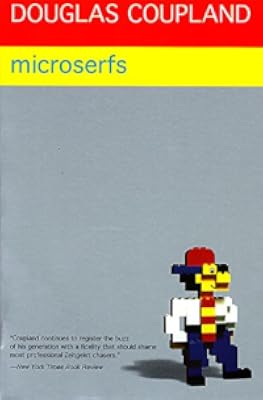
Microserfs
by Douglas Coupland
On This Page
Description
They are Microserfs--six code-crunching computer whizzes who spend upward of sixteen hours a day "coding" and eating "flat" foods (food which, like Kraft singles, can be passed underneath closed doors) as they fearfully scan company e-mail to learn whether the great Bill is going to "flame" one of them. But now there's a chance to become innovators instead of cogs in the gargantuan Microsoft machine. The intrepid Microserfs are striking out on their own--living together in a shared digital show more flophouse as they desperately try to cultivate well-rounded lives and find love amid the dislocated, subhuman whir and buzz of their computer-driven world. show lessTags
Recommendations



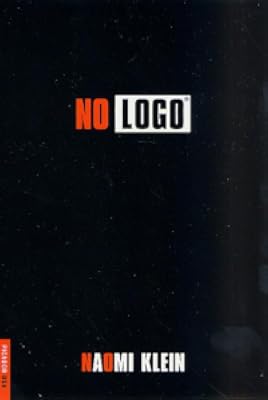
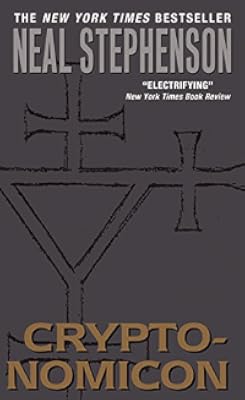


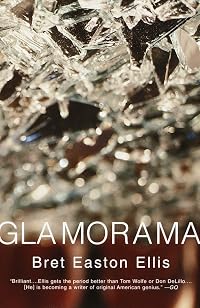
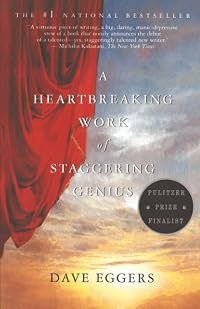
Member Recommendations
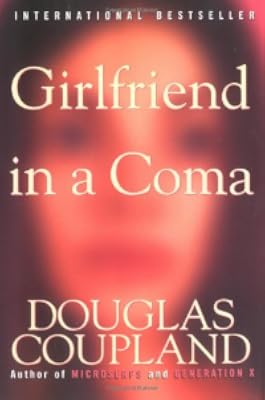
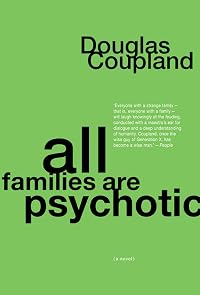
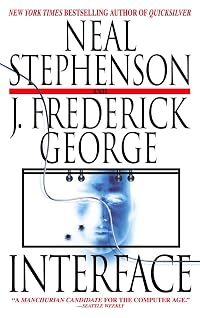
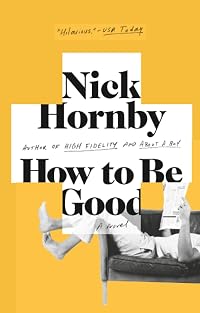
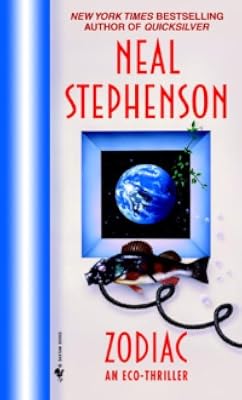
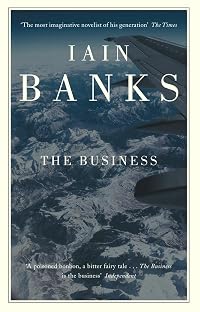
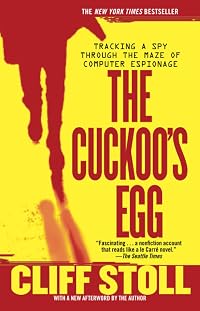
cransell Two fictional looks at working at Microsoft.
beyondthefourthwall Tech employees, human connections, urges to anthropomorphise the hardware, playful slight postmodernism.
Member Reviews
Dan Underwood is one of many overworked, under-personal-lived “Microserfs”: coders and testers and programmers and others at Microsoft who crank out the code that bring Microsoft products to life. He’s 26, living in a “geek house” with five roommates, and not sure where to go to get himself a life. Then one of the roommates, Michael, moves to California, the land of technological opportunity. Will the others cling to security at Microsoft or make a leap into the unknown?
This is one of my all-time favourite books. I picked it up at the age of 12 simply because my dad’s hardcover edition had a Lego man on the cover (it is relevant to the plot), and I fell in love. It’s told through diary entries and shot through with sarcasm show more but also deep contemplation and philosophy.
It was a little strange to be reading it now, because I am now older than all of the protagonists (not Dan’s parents, but all of the core characters), yet at the same time they are still “older” than I am (and they would be, if they existed in real life). And because I am that much older, the really sad bits of the story hit me that much harder, even though I knew they were coming).
Also, the technological and social elements of this book feel almost trapped in amber: the book feels so innovative and cutting-edge, yet at the same time incredibly dated. The internet is only just starting to become a big deal—heck, area codes didn’t even have digits other than 1 or 0 in the middle—and there is not a word about smartphones, streaming music, or YouTube. Not that I expected there to be, of course. But I love reading books at the cutting edge of technology long after that edge has been blunted. It feels like time travel in a way.
I loved this book, but I know it is probably not for everyone. show less
This is one of my all-time favourite books. I picked it up at the age of 12 simply because my dad’s hardcover edition had a Lego man on the cover (it is relevant to the plot), and I fell in love. It’s told through diary entries and shot through with sarcasm show more but also deep contemplation and philosophy.
It was a little strange to be reading it now, because I am now older than all of the protagonists (not Dan’s parents, but all of the core characters), yet at the same time they are still “older” than I am (and they would be, if they existed in real life). And because I am that much older, the really sad bits of the story hit me that much harder, even though I knew they were coming).
Also, the technological and social elements of this book feel almost trapped in amber: the book feels so innovative and cutting-edge, yet at the same time incredibly dated. The internet is only just starting to become a big deal—heck, area codes didn’t even have digits other than 1 or 0 in the middle—and there is not a word about smartphones, streaming music, or YouTube. Not that I expected there to be, of course. But I love reading books at the cutting edge of technology long after that edge has been blunted. It feels like time travel in a way.
I loved this book, but I know it is probably not for everyone. show less
This was a surprise. I really really loved this novel. A fascinating snapshot of the 1990's tech industry from the POV of an early Gen X software tester and programmer. Doesn't sound like it would be entertaining? It blew me away, it was so fun and hilarious, from the pseudo-deification of Bill Gates (referred to only as "Bill"---said with the gravity of saying "God"), to the Lego decorated office, to the pet hamsters named "Look" and "Feel," to the typical 90's Gen-X conversations--philosophizing over pop culture (cereals, 70's TV shows, childhood toys, etc).
There were more serious themes too, such as finding love, how older generations are lost on the new tides of the technology boom, finding purpose and meaning in life after the show more success-driven 1980's. So, even though it was a fun book, it wasn't shallow. show less
There were more serious themes too, such as finding love, how older generations are lost on the new tides of the technology boom, finding purpose and meaning in life after the show more success-driven 1980's. So, even though it was a fun book, it wasn't shallow. show less
Quirky, funny, and touching. Not my usual genre, and I'm not a geek, so I can't imagine what possessed me to pick this book up in the first place, but I'm so glad I did. It's so well written, and about far more than the world of programming and computers. I just loved it.
I probably should not have read JPod before reading Microserfs. Microserfs came out in the mid-nineties, and tells the story of a group of Microsoft employees and their startup. This is before the internet became big, before the bubble, before everything really.... Jpod is its noughties counterpart.
Because I have read JPod before, and because JPod was more of "my" decade, I didn't like Microserfs as much as I thought I would. I found the writing style (the diary of Dan), which is the same type as in JPod, gimmicky, while I loved it in Jpod. All in all it was a nice book, but a bit of a disappointment.
Because I have read JPod before, and because JPod was more of "my" decade, I didn't like Microserfs as much as I thought I would. I found the writing style (the diary of Dan), which is the same type as in JPod, gimmicky, while I loved it in Jpod. All in all it was a nice book, but a bit of a disappointment.
I read a great deal of negative reviews of this book but I thought it was hillarious! It was like a diary or stream of consousness but there were so many "weird" facts and theories intertwined that it really made me think. I thought the end was very different from the tone of the rest of the book but it really made me think. I wouldnt exactly give it 5 stars because Im trying to be more conservative with stars, but I really enjoyed it!
It's not quite five stars, but there are enough good points it's more than 4.
What a weird ride! This covers so much of the tech and attitudes of geek culture in the early 90s, and ideas about the changing landscape of technology and society, it's fascinating.
This is the story of a particular coder working at Microsoft, and his journey into other areas, and exploring the difference between Seattle and Silicon Valley, and even Las Vegas. A big tech convention (CES) meets in Las Vegas. This is a much more realistic look at geeks and nerds of the time, and doesn't exploit them the way they do in Big Bang Theory, which makes sense, a book has a different kind of audience, and can tell a story more on its own terms than a TV show can.
I show more liked the way things unfolded, and there are some real moments that don't *quite* fit the story, but they feel like life, things happen, and you deal with them, the best you can. show less
What a weird ride! This covers so much of the tech and attitudes of geek culture in the early 90s, and ideas about the changing landscape of technology and society, it's fascinating.
This is the story of a particular coder working at Microsoft, and his journey into other areas, and exploring the difference between Seattle and Silicon Valley, and even Las Vegas. A big tech convention (CES) meets in Las Vegas. This is a much more realistic look at geeks and nerds of the time, and doesn't exploit them the way they do in Big Bang Theory, which makes sense, a book has a different kind of audience, and can tell a story more on its own terms than a TV show can.
I show more liked the way things unfolded, and there are some real moments that don't *quite* fit the story, but they feel like life, things happen, and you deal with them, the best you can. show less
Near perfect in form, presentation and emotional drain. A handful of similarly quirky but unqiue characters handle similarly quirky but unique situations through a variety of historical, current and futuristic technologies, all while building a LEGO simulator that will put their new gaming company on the map. Great portrayl of Bill Gates and the Microsoft culture, as well as the campuses and lifestyles of a variety of other tech companies of the time. Fairly unique in presentation, often incorporating a literal reprinting of computer-related topics presented in each chapter, including the main character's computer's "sub-conscious" files acting as barriers between chapters. Taught me many a random factoid - the amounts of chemicals in show more the human body and the various uses for them, the body as a form of memory, flatland foods - and many a life lesson - why talking to someone through "license plate" speak can be the most heartbreaking and hopeful communication in the world. Touching, honest, hilarious and surprisingly warm look at the computer industry, nerds, and the Silicon Valley. show less
Members
- Recently Added By
Lists

The Guardian's 1000 Novels Everyone Must Read
1,005 works; 550 members

The Best of Canadian Literature
235 works; 33 members

Favourite Books
1,817 works; 316 members

Best Friendship Stories
205 works; 16 members
Best Satire
188 works; 29 members
LibraryThingers' 1001 Books You Must Read Before You Die
442 works; 30 members

Epistolary Books
105 works; 24 members

1990s
309 works; 17 members

Books tagged "feel good"
129 works; 20 members

A Novel Cure
742 works; 23 members

Allie's Favourite 150 Books
145 works; 3 members

What are your favourite books?
121 works; 11 members
Best Books of the 20th Century
193 works; 5 members

Favourite Books by Male Authors
29 works; 2 members

Books Read in 2008
335 works; 8 members

My favourite books
96 works; 3 members

Favourite Books
50 works; 1 member

to get
244 works; 2 members

Books Read in 2012
816 works; 34 members

Books That Made Us Cry
278 works; 145 members

Books We Couldn't Put Down
443 works; 197 members

Books Read in 1995
22 works; 1 member

Five star books
1,755 works; 108 members
Author Information

44+ Works 38,696 Members
Douglas Coupland was born December 30, 1961 on a Canadian military base in Baden-Soellingen, Germany. He graduated from Sentinel Secondary School in West Vancouver in 1979 and went on to McGill University. He was unhappy there and went on to Emily Carr College of Art and Design. He has said that these were the best four years of his life. He show more graduated in 1984 with a focus on sculpture and moved on to study at the European Design Institute in Milan. He also completed a two-year course in Japanese business science in Hawaii in 1986.He soon began writing for magazines as a means of paying the bills. He soon started work on his first novel Generation X: Tales for an Accelerated Culture which was published in 1991. His second novel Shampoo Planet focused on the generation after Generation X and was published in 1992. This generation was termed "Global Teens". His career has consisted of writing, sculpting, and editing and he also hosted The Search for Generation X, a PBS documentary, 1991. Douglas Coupland has also worked on a magazine called Wired . He wrote a short story about the life of the employees of Mocrosoft Corporation. This short story provided inspiration for his novel Microserfs. (Bowker Author Biography) show less
Some Editions
Awards and Honors
Notable Lists
Series
Belongs to Publisher Series
Common Knowledge
- Canonical title*
- Microsklaven
- Original title
- Microserfs
- Original publication date
- 1995-05-04
- People/Characters
- Daniel Underwood; Karla; Bug Barbeque; Amy (Barcode); Dusty; Ethan (show all 10); Michael (Kraft Slices); Susan; Todd; Mrs. Underwood
- Important places
- Redmond, Washington, USA; Silicon Valley, California, USA; Microsoft Headquarters, Redmond, Washington, USA; California, USA; Washington, USA; Palo Alto, California, USA (show all 7); Las Vegas, Nevada, USA
- Dedication
- thanks:
John Battelle
Elizabeth Dunn
Ian Ferrell
James Glave
James Joaquin
Kevin Kelley
Jane Metcalfe
Judith Regan
Louis Rossetto
Nathan Shedroff
Michael Tchao
Ian Verchere - First words
- This morning, just after 11:00, Michael locked himself in his office and won't come out.
- Quotations
- I stared at an entire screen full of these words and they dissolved and lost meaning, the way words do when you repeat them over and over — the way anything loses meaning when context is removed — the way we can quickly e... (show all)nter the world of the immaterial using the simplest of devices, like multiplication.
- Last words
- (Click to show. Warning: May contain spoilers.)I'm worried about Mom... and I'm thinking about Jed, and suddenly I look around at Bug and Susan and Michael and everybody and I realize, that what's been missing for so long isn't missing anymore. hellojed
- Original language
- English
*Some information comes from Common Knowledge in other languages. Click "Edit" for more information.
Classifications
Statistics
- Members
- 5,135
- Popularity
- 2,677
- Reviews
- 66
- Rating
- (3.87)
- Languages
- 14 — Danish, Dutch, English, Finnish, French, German, Italian, Norwegian (Bokmål), Polish, Portuguese, Russian, Spanish, Swedish, Turkish
- Media
- Paper, Audiobook, Ebook
- ISBNs
- 43
- UPCs
- 1
- ASINs
- 16