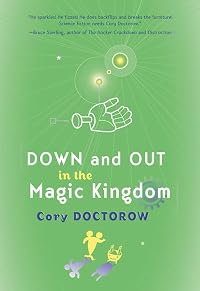
Down and Out in the Magic Kingdom
by Cory Doctorow
On This Page
Description
On The Skids In The Transhuman Future Jules is a young man barely a century old. He's lived long enough to see the cure for death and the end of scarcity, to learn ten languages and compose three symphonies...and to realize his boyhood dream of taking up residence in Disney World. Disney World! The greatest artistic achievement of the long-ago twentieth century. Now in the keeping of a network of "ad-hocs" who keep the classic attractions running as they always have, enhanced with only the show more smallest high-tech touches. Now, though, the "ad hocs" are under attack. A new group has taken over the Hall of the Presidents, and is replacing its venerable audioanimatronics with new, immersive direct-to-brain interfaces that give guests the illusion of being Washington, Lincoln, and all the others. For Jules, this is an attack on the artistic purity of Disney World itself. Worse: it appears this new group has had Jules killed. This upsets him. (It's only his fourth death and revival, after all.) Now it's war.... show lessTags
Recommendations




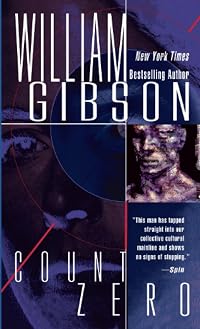
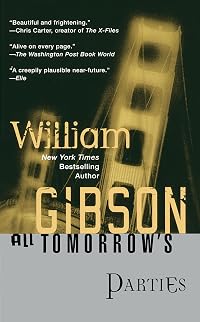

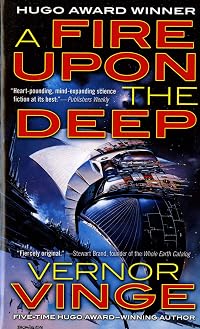
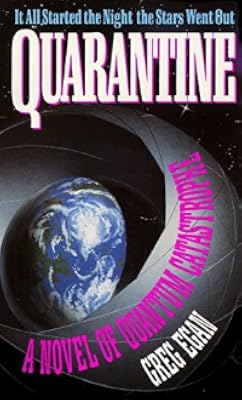
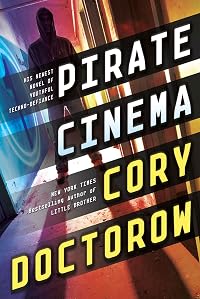
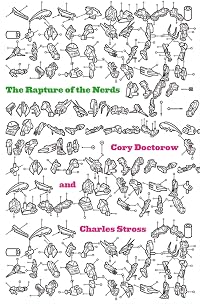
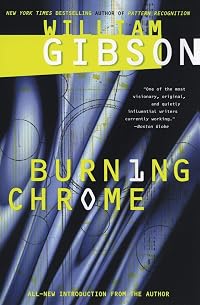
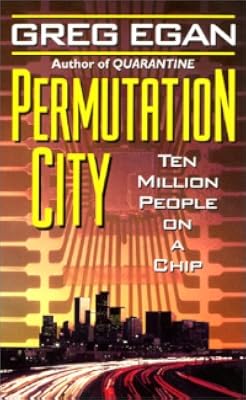
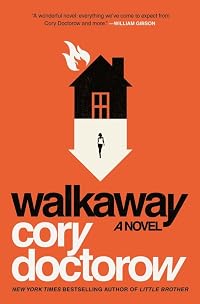

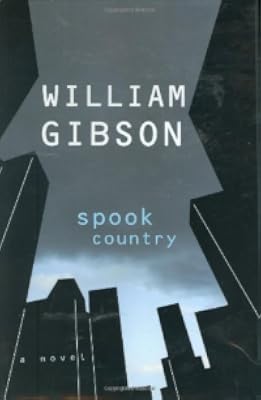
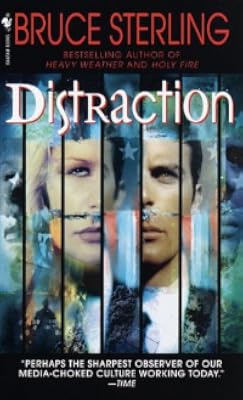
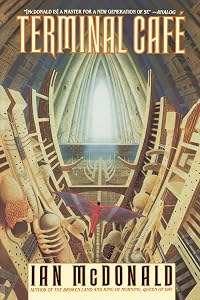
Member Recommendations


by jshrop

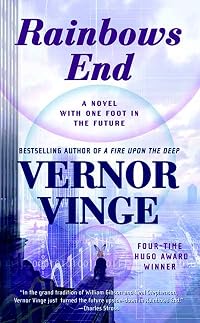
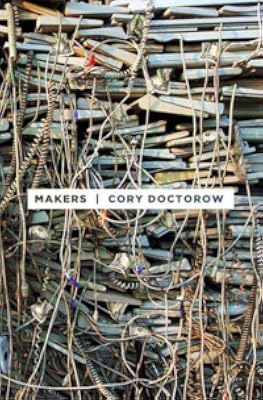
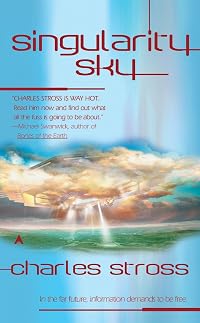
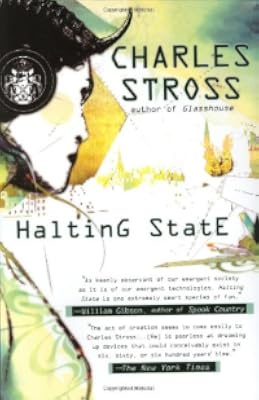
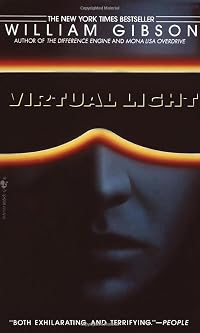
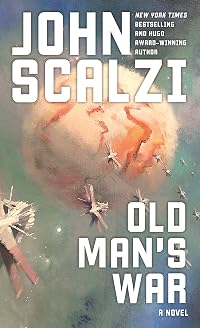
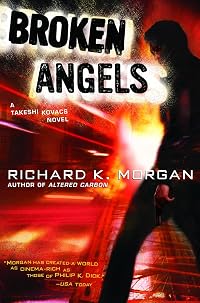
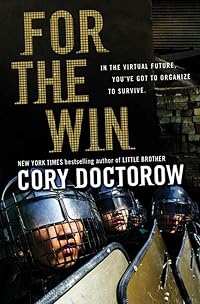
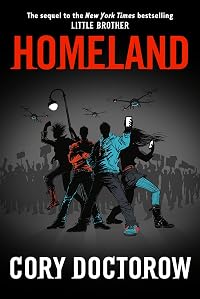
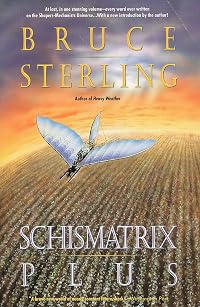
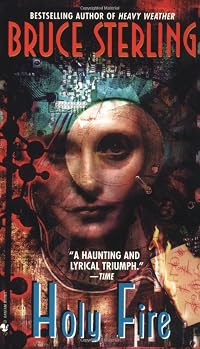
lampbane Another look at the concept of a reputation economy, where wealth is measured by how famous a person is, and the main character desperately wants to stop being an "extra": just another face in the crowd.
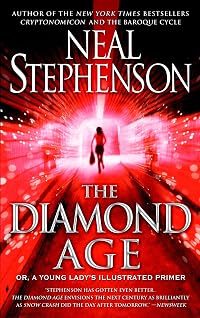
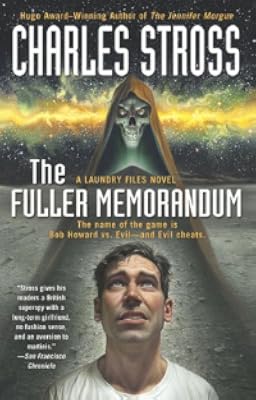
MonographicalyMe These titles share an interesting mix of the absurd and fantastical and the real challenges and natural quirks of human nature.
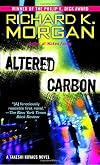
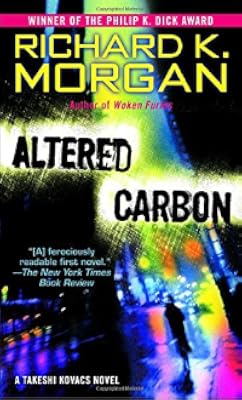
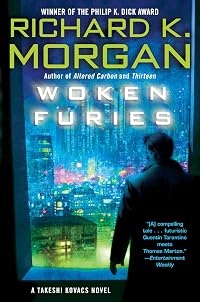
erikrebooted A darker, gritter take on downloadable consciousness and replacement bodies.
Member Reviews
First off, in full disclosure, I didn't finish the book.
Now, Onto why I didn't finish the book. Good things, its an interesting world and it feels very plausible, even with the book written in 2003. I'm not sure if I would want to live in this (almost) utopian society. Death has been overcome, energy is now free and instead of money, a persons status is created from his commitment to the community. It works a bit like the "Like" button on Facebook. I call this an almost utopian society because human nature hasn't been changed.
What I find most amazing about this book is the Bitchun Society that arose when energy became free, traditional work more or less became meaningless, and all of a sudden, the world population had a lot of time on show more its hands, and no worries about death. The society is so plausible, and this book is way ahead of its time. This book takes todays social networking (think twitter plus facebook, plus skype, and smart phones all rolled into one) and manages to extend the trend to the future. Whats really amazing about this is that the book was written in 2003! Before social networking was even on the American psyche! Truly amazing.
I tried. Really I did. But after attempt number two, I gave up. Why couldn't I finish this book?. Well, the characters are not pleasant. I found jules to be a boring, egotistical, and whining character. The girlfriend to be too down to earth. The whole Disney world ad-hoc committees to be over-zealous and distasteful. The characters were well written, but they reminded me of that one person no one likes in an office, the one who go on and on about health problems, celebrity gossip, and thinks people actually care.
So, to conclude: the world is amazing, but the characters unlikable. show less
Now, Onto why I didn't finish the book. Good things, its an interesting world and it feels very plausible, even with the book written in 2003. I'm not sure if I would want to live in this (almost) utopian society. Death has been overcome, energy is now free and instead of money, a persons status is created from his commitment to the community. It works a bit like the "Like" button on Facebook. I call this an almost utopian society because human nature hasn't been changed.
What I find most amazing about this book is the Bitchun Society that arose when energy became free, traditional work more or less became meaningless, and all of a sudden, the world population had a lot of time on show more its hands, and no worries about death. The society is so plausible, and this book is way ahead of its time. This book takes todays social networking (think twitter plus facebook, plus skype, and smart phones all rolled into one) and manages to extend the trend to the future. Whats really amazing about this is that the book was written in 2003! Before social networking was even on the American psyche! Truly amazing.
I tried. Really I did. But after attempt number two, I gave up. Why couldn't I finish this book?. Well, the characters are not pleasant. I found jules to be a boring, egotistical, and whining character. The girlfriend to be too down to earth. The whole Disney world ad-hoc committees to be over-zealous and distasteful. The characters were well written, but they reminded me of that one person no one likes in an office, the one who go on and on about health problems, celebrity gossip, and thinks people actually care.
So, to conclude: the world is amazing, but the characters unlikable. show less
In the future, it's a time of endless luxury and transhumanism reigns. Everyone is wired, their personalities are backed up, and death is a choice. If your current body dies, you can simply grow a new cloned one and program it with your backup consciousness/personality. And Whuffie scores - are constantly updated as a means of how much respect should be afforded to you. Whuffie works like money, in that it’s easier to get stuff if you have a lot of it, and people also judge you based on your Whuffie. And yet, in this dystopic future of cyborg extremes, we can't escape the grasp of nostalgia - and the vice-like grip Disney in particular has had on America and the world.
Disney World remains a primary tourist attraction, and its most show more ardent supporter is clueless protagonist Jules, who works there with girlfriend Lil. When a new team of engineers plan to remake the old-school Disney attractions like the Hall of Presidents and the Haunted Mansion into virtual reality all-sensory assaults, Jules feels strangely protective. Is his nostalgia clouding his judgement? He’s already died and been rebooted three times, so it’s not that big a deal, but when Jules’s competitors have him shot and killed, it’s still irritating. Meanwhile, Jules is trying to help out his suicidal friend Greg and also wondering why he shouldn’t just do like more and more of the bored population and simply deadhead—go intro cryogenic sleep until the world gets more interesting.
Jule's needs to find out who killed him, and find a way stop the ad-hoc group from destroying something precious before he decides to deadhead. Can he figure the mystery out while navigating his love life and helping his friend Greg? You must read to find out.
Cory Doctorow's Down and Out in the Magic Kindgom is packed full of intriguing and disturbing ideas, and sizzles and pops with a frenetic speed and some fun language. This sci-fi thriller is reminiscent of John Scalzi, Andy Weir, Philip K. Dick, and Black Crouch, so if you like those authors, you'll dig this. I found the ending to be a bit rushed and the solution to the mystery to be a bit obvious/unsatisfactory. However, this book is very fun to read and the ideas presented within (such as choosing your time to die, the uploading of consciousness, new sources for currency, the nostalgia for "old technology" versus new technology), are all thought provoking ideas. The novel explores the inherent problems with immortality, and the approaches that people might have to it in the real-world. It explores how a purer meritocracy might differ from our current capitalist society (spoiler: not much) and the potential weaknesses of that system. And yet, it's basic storyline misses the landing.
I enjoyed this quite a lot but you can tell that this is an early Doctorow novel. It's full of great ideas, but the ending execution is lacking. It just lands rather quickly.
But still, this is a minor complaint for me. The storyline isn't necessarily complex, because it acts simply a device for exploring the strengths and weaknesses of this (potentially) utopian future. And I found that to be intriguing.
Come for the fascinating exploration of ideas. show less
Disney World remains a primary tourist attraction, and its most show more ardent supporter is clueless protagonist Jules, who works there with girlfriend Lil. When a new team of engineers plan to remake the old-school Disney attractions like the Hall of Presidents and the Haunted Mansion into virtual reality all-sensory assaults, Jules feels strangely protective. Is his nostalgia clouding his judgement? He’s already died and been rebooted three times, so it’s not that big a deal, but when Jules’s competitors have him shot and killed, it’s still irritating. Meanwhile, Jules is trying to help out his suicidal friend Greg and also wondering why he shouldn’t just do like more and more of the bored population and simply deadhead—go intro cryogenic sleep until the world gets more interesting.
Jule's needs to find out who killed him, and find a way stop the ad-hoc group from destroying something precious before he decides to deadhead. Can he figure the mystery out while navigating his love life and helping his friend Greg? You must read to find out.
Cory Doctorow's Down and Out in the Magic Kindgom is packed full of intriguing and disturbing ideas, and sizzles and pops with a frenetic speed and some fun language. This sci-fi thriller is reminiscent of John Scalzi, Andy Weir, Philip K. Dick, and Black Crouch, so if you like those authors, you'll dig this. I found the ending to be a bit rushed and the solution to the mystery to be a bit obvious/unsatisfactory. However, this book is very fun to read and the ideas presented within (such as choosing your time to die, the uploading of consciousness, new sources for currency, the nostalgia for "old technology" versus new technology), are all thought provoking ideas. The novel explores the inherent problems with immortality, and the approaches that people might have to it in the real-world. It explores how a purer meritocracy might differ from our current capitalist society (spoiler: not much) and the potential weaknesses of that system. And yet, it's basic storyline misses the landing.
I enjoyed this quite a lot but you can tell that this is an early Doctorow novel. It's full of great ideas, but the ending execution is lacking. It just lands rather quickly.
But still, this is a minor complaint for me. The storyline isn't necessarily complex, because it acts simply a device for exploring the strengths and weaknesses of this (potentially) utopian future. And I found that to be intriguing.
Come for the fascinating exploration of ideas. show less
This book was highly recommended on r/printsf, and the major plot points sounded intriguing: They've conquered disease/death! They live at Disneyland! Society based on popularity/likes like that one (awesome) episode of Black Mirror!
Unfortunately, I didn't end up liking the *actual* plot which was, "guy goes more and more insane and alienates his girlfriend and friends trying to figure out who murdered him as well as protect his favorite-est Disney ride from being modernized"
Also interestingly, I thought I remembered really liking Cory Doctorow, but I just checked and this is the only one of his books I've ever read. Maybe I just like him on Twitter.
Unfortunately, I didn't end up liking the *actual* plot which was, "guy goes more and more insane and alienates his girlfriend and friends trying to figure out who murdered him as well as protect his favorite-est Disney ride from being modernized"
Also interestingly, I thought I remembered really liking Cory Doctorow, but I just checked and this is the only one of his books I've ever read. Maybe I just like him on Twitter.
Cory Doctorow's first novel, Down and Out in the Magic Kingdom, heralds the arrival of a major literary talent. On the surface just another science-fiction novel, Doctorow's prose practically crackles with intriguing ideas.
Jules is barely a century old. He is living his dream of working in and maintaining Disney World. Yes, that Disney World. In this future of no money, no worries, people work together in ad-hocs (groups that meet for a specific purpose). Leaders are determined by their Whuffie, essentially a popularity rating as determined by everyone living. In this future of fantastic concepts, the two most interesting and important are that everyone backs up their minds in a huge collective computer, and that immortality through show more cloning is not just a reality, but an everyday occurrence.
Early in the book, Jules gets murdered, which turns out to be the fourth time he has died. But it's the first time he has been killed. Jules' murder is just part of a fascinating plot centering around a war between two ad-hocs for the soul of the Magic Kingdom.
Cory Doctorow meshes all of these outlandish ideas into a novel of power and skill. His story is told on many levels, with a surprising complexity and the perfect touch of humor. Like all good science fiction, Doctorow tackles the issues of today, tomorrow. Morality, cloning, socialism, poverty, right to die, freedom of choice, pratfalls of hubris, and the cult of celebrity are all explored in what may be the best debut science-fiction novel since Neuromancer.
Down and Out in the Magic Kingdom is not for everyone. If you prefer your literature linear or your ideas staid, then give this one a pass. Using the tropes of the genre to blaze a new path, it showcases the talents and skills that popular literature needs to survive and thrive in the 21st century.
This review originally appeared in The Austin Chronicle
Link: [http://www.austinchronicle.com/gyrobase/Issue/story?oid=oid:148399] show less
Jules is barely a century old. He is living his dream of working in and maintaining Disney World. Yes, that Disney World. In this future of no money, no worries, people work together in ad-hocs (groups that meet for a specific purpose). Leaders are determined by their Whuffie, essentially a popularity rating as determined by everyone living. In this future of fantastic concepts, the two most interesting and important are that everyone backs up their minds in a huge collective computer, and that immortality through show more cloning is not just a reality, but an everyday occurrence.
Early in the book, Jules gets murdered, which turns out to be the fourth time he has died. But it's the first time he has been killed. Jules' murder is just part of a fascinating plot centering around a war between two ad-hocs for the soul of the Magic Kingdom.
Cory Doctorow meshes all of these outlandish ideas into a novel of power and skill. His story is told on many levels, with a surprising complexity and the perfect touch of humor. Like all good science fiction, Doctorow tackles the issues of today, tomorrow. Morality, cloning, socialism, poverty, right to die, freedom of choice, pratfalls of hubris, and the cult of celebrity are all explored in what may be the best debut science-fiction novel since Neuromancer.
Down and Out in the Magic Kingdom is not for everyone. If you prefer your literature linear or your ideas staid, then give this one a pass. Using the tropes of the genre to blaze a new path, it showcases the talents and skills that popular literature needs to survive and thrive in the 21st century.
This review originally appeared in The Austin Chronicle
Link: [http://www.austinchronicle.com/gyrobase/Issue/story?oid=oid:148399] show less
When it comes to fiction, especially concerning the genre of the fantastic, there must be some thought given to the suspension of disbelief when it comes to setting. It is relatively easy for any reader to buy into the worlds created by ‘realistic’ authors such as Carol Shields and Roddy Doyle, as they fashion planes of existence that mirror day-to-day existence; it does not take a huge leap of faith to believe in stories of the mundane, as these are worlds in which we all find ourselves in, to varying degrees. Likewise, it does not stretch the imagination too far to be able to embrace, say, the gritty universes of Ed McBain, or the boggy trenches of Erich Maria Remarque. While these particular literary planes are personally show more unfamiliar to most, they are not outside the realm of possibility; we can believe these worlds exist, even if we have no first-hand knowledge, because we read the news, we watch television, we are aware that such people and events occur, even if they never touch us personally. Consequently, an author could skimp on details, or spend less time in the depiction of setting, as the reader can be expected to fill in missing elements with personal observations. This is not to impugn that authors are necessarily lazy when it comes to setting; a truly fine author will always pay attention to the details of setting. My life would be a little emptier without Raymond Chandler’s elegiac L.A., Doyle’s vivid Dublin, or Rohinton Mistry’s effervescent India. It’s just, well, a touch easier to cheat a bit in present-day realistic fiction. So what if the author never actually wrote that the police officer carried a gun? He’s a police officer, we all know they carry guns, and so, the bridge between the reader and the story is established.
Not so the fabulists. Where fantasy and science fiction is concerned, the world the authors create can make or break the story. It doesn’t matter if the characters are sterling, or the plot scintillating; if the reader doesn’t buy the world, at least in theory, then the story as a whole will never fully engage the reader. I could never get fully engaged with Tolkien’s dialogue, but his Middle-Earth was intensely real to me. Philip K. Dick’s decrepit world of rampant kipple and fake animals continues to haunt my dreams, and seems more real, more vital, with each passing year. Contrast these with the sci-fi shoot-‘em-up universes of John Ringo, an energetic writer whose stories entertain somewhat in the manner of lesser Star Trek episodes, but never linger in the dark recesses of your soul in the same way that those of Thomas M. Disch and Theodore Sturgeon do. Susanna Clarke recently wove a miraculous England of enchantment and magic in Jonathan Strange and Mr. Norell, a phantasmagoria of fairies, sprites, and spells that never felt anything less than real. Eric Idle, on the other hand, collapsed into tedium with The Road to Mars, a slightly humourous, Douglas Adams-lite sci-fi comedy that never convinced the reader that what was occurring was even remotely plausible, even to the characters that roamed its pages.
It’s not easy, is what I’m trying to say. Cory Doctorow sure makes it look that way, though.
Down and Out in the Magic Kingdom, Doctorow’s first novel, is a spectacularly inventive and incisive look at a future that, although implausible, is never outside the realm of possibility. Like the best authors, he crafts a world that functions on its own, and characters who behave as if this world is the way it has always been. Doctorow is not interested in presenting a thesis on future possibilities for humanity; neither (as anyone familiar with his fabulous work with Creative Commons, the Internet, and his website BoingBoing.net can attest) is he ignorant of the many pathways our species currently finds itself at the crossroads of. Like the best of Dick, Bruce Sterling, Neal Stephenson et al., Doctorow creates a future world to subtly comment on the past, i.e. our present.
In Doctorow’s future, death, by a fashion, is now obsolete. Technology allows the citizenry to archive their memories, creating a backup. Should the person happen to die, a clone body, complete with memory, can be up-and-running in less than a week. As well, people now can “deadhead;” that is, they can put themselves into suspended animation of a sort, hibernating for a few centuries, then waking up to see what’s new. In short, death is meaningless.
As well, Earth is now run by the “Bitchun society,” whereby energy is plentiful, labour is unnecessary, and money is archaic. Instead of money, people guide their lives by the amount of “Wuffie” they have, a continually updated ratings system that measures how much respect and admiration people have for you. The higher the rating, the easier it is to get by, as a high Wuffie ensures that you easily obtain items considered scarce, you get the best tables in restaurants, and you can jump to the head of the queue. It’s a strange, unique, and remarkably realized civilization, and the highest praise one can give Doctorow’s achievement is that it all seems remarkably plausible.
Into this utopia Doctorow drops Jules, an intelligent young man on his third life who has finally earned enough Wuffie to obtain his dream job: working at the Haunted Mansion at Disneyworld. Disneyworld is an anomaly, a perfectly intact antique of the twentieth century that is now run by rival ad-hoc committees that compete to gather the most Wuffie from their guests. While working on keeping the amusement ride open and operating, he also has to contend with plans a rival ad-hoc has to update the rides from their current/classic animatronic style to direct neural imprinting.
It is a strange, strange world, wholly distinctive yet highly familiar, and Doctorow layers it all together so perfectly as to make it seem effortless. As Jules becomes more involved, and more unhinged – he is murdered during the course of the plot, after all, and it is a mark of Doctorow’s complexity and style that revealing this does not ruin the story in the slightest – he realizes that technological advance is not inherently a good thing. In its way, Down and Out has an old-fashioned soul.
Doctorow is not a spectacular wordsmith; his true strength lies in story, not style, and consequently Down and Out lacks the lyrical quality of contemporaries such as Neal Stephenson or Jeff Noon. But Down and Out, like the best sci-fi fiction, feels completely real. Doctorow’s first novel is a gift, and a reminder of what the best science fiction can achieve.
Shelf Monkey: Down and Out in the Magic Kingdon - thoughts show less
Not so the fabulists. Where fantasy and science fiction is concerned, the world the authors create can make or break the story. It doesn’t matter if the characters are sterling, or the plot scintillating; if the reader doesn’t buy the world, at least in theory, then the story as a whole will never fully engage the reader. I could never get fully engaged with Tolkien’s dialogue, but his Middle-Earth was intensely real to me. Philip K. Dick’s decrepit world of rampant kipple and fake animals continues to haunt my dreams, and seems more real, more vital, with each passing year. Contrast these with the sci-fi shoot-‘em-up universes of John Ringo, an energetic writer whose stories entertain somewhat in the manner of lesser Star Trek episodes, but never linger in the dark recesses of your soul in the same way that those of Thomas M. Disch and Theodore Sturgeon do. Susanna Clarke recently wove a miraculous England of enchantment and magic in Jonathan Strange and Mr. Norell, a phantasmagoria of fairies, sprites, and spells that never felt anything less than real. Eric Idle, on the other hand, collapsed into tedium with The Road to Mars, a slightly humourous, Douglas Adams-lite sci-fi comedy that never convinced the reader that what was occurring was even remotely plausible, even to the characters that roamed its pages.
It’s not easy, is what I’m trying to say. Cory Doctorow sure makes it look that way, though.
Down and Out in the Magic Kingdom, Doctorow’s first novel, is a spectacularly inventive and incisive look at a future that, although implausible, is never outside the realm of possibility. Like the best authors, he crafts a world that functions on its own, and characters who behave as if this world is the way it has always been. Doctorow is not interested in presenting a thesis on future possibilities for humanity; neither (as anyone familiar with his fabulous work with Creative Commons, the Internet, and his website BoingBoing.net can attest) is he ignorant of the many pathways our species currently finds itself at the crossroads of. Like the best of Dick, Bruce Sterling, Neal Stephenson et al., Doctorow creates a future world to subtly comment on the past, i.e. our present.
In Doctorow’s future, death, by a fashion, is now obsolete. Technology allows the citizenry to archive their memories, creating a backup. Should the person happen to die, a clone body, complete with memory, can be up-and-running in less than a week. As well, people now can “deadhead;” that is, they can put themselves into suspended animation of a sort, hibernating for a few centuries, then waking up to see what’s new. In short, death is meaningless.
As well, Earth is now run by the “Bitchun society,” whereby energy is plentiful, labour is unnecessary, and money is archaic. Instead of money, people guide their lives by the amount of “Wuffie” they have, a continually updated ratings system that measures how much respect and admiration people have for you. The higher the rating, the easier it is to get by, as a high Wuffie ensures that you easily obtain items considered scarce, you get the best tables in restaurants, and you can jump to the head of the queue. It’s a strange, unique, and remarkably realized civilization, and the highest praise one can give Doctorow’s achievement is that it all seems remarkably plausible.
Into this utopia Doctorow drops Jules, an intelligent young man on his third life who has finally earned enough Wuffie to obtain his dream job: working at the Haunted Mansion at Disneyworld. Disneyworld is an anomaly, a perfectly intact antique of the twentieth century that is now run by rival ad-hoc committees that compete to gather the most Wuffie from their guests. While working on keeping the amusement ride open and operating, he also has to contend with plans a rival ad-hoc has to update the rides from their current/classic animatronic style to direct neural imprinting.
It is a strange, strange world, wholly distinctive yet highly familiar, and Doctorow layers it all together so perfectly as to make it seem effortless. As Jules becomes more involved, and more unhinged – he is murdered during the course of the plot, after all, and it is a mark of Doctorow’s complexity and style that revealing this does not ruin the story in the slightest – he realizes that technological advance is not inherently a good thing. In its way, Down and Out has an old-fashioned soul.
Doctorow is not a spectacular wordsmith; his true strength lies in story, not style, and consequently Down and Out lacks the lyrical quality of contemporaries such as Neal Stephenson or Jeff Noon. But Down and Out, like the best sci-fi fiction, feels completely real. Doctorow’s first novel is a gift, and a reminder of what the best science fiction can achieve.
Shelf Monkey: Down and Out in the Magic Kingdon - thoughts show less
The premise was what caught my eye. Julius lives in Walt Disney World in the not-so-distant future, in a world ruled by the Bitchun Society. That society has managed to eradicate both death and money: if you die you simply restore yourself using a quick-grown clone made with a backup of your brain, and all wealth is based on reputation - the higher people's opinions of you, the more you can "buy." The world is not run by governments, but rather small committee-like groups called adhocracies. This particular story revolves around the ad-hocs that run the Hall of Presidents and Haunted Mansion in the Magic Kingdom.I spent a little too much of this book feeling exasperated - Julius is hot-headed and does some pretty stupid stuff for no show more particular reason - but things work out in the end, and it's short enough (just over 200 pages) that it's worth the minor amount of effort required to stick it out. It's a clever little what-if story and I enjoyed the sly pop-culture jokes (like the name of the Bitchun Society, for one). If you're looking for something that deals with the headier questions of immortality, economics, and social interaction, this book would probably be a bit too shallow for you. However, if you're interested in a quick bit of light Sci Fi, check this one out. show less
I am a big fan of the House of Mouse, so the title really intrigued me; what's not to like about the Magic Kingdom? In truth , the story centered around 2 attractions (Hall of Presidents and the Haunted Mansion) with a brief mention of a 3rd (Pirates of the Caribbean ... My favorite) as the back drop to a story of power and greed that should have no place in a [post scarcity] society where all of our needs are taken care of and old fashioned money doesn't define power anymore. True wealth (power) is now defined by reputation ... Where public respect for what you are doing gives you "Whuffie" (street creed or political capital) that helps you accomplish things in the future. This is a lot like how bloggers work; readers vote on how much show more they liked or respected a particular article, which then helps increase its visibility and subsequently a bloggers audience giving the blogger greater power to influence society; not surprisingly, Cory Doctorow got his start as a blogger. Doctorow was not the first person to talk about a reputation economy, but his was the first pure portrayal of such that got me thinking about how it would truly work ... Or not. The more things change, the more they stay the same.
The second major theme of the story was more post [or trans] humanism. The new 'Bitchin Society (aka BS) is based upon the surreal assumption that we can effectively eliminate the supply constraint (curve) on our economy and thereby get whatever we need in any quality needed ... Including artificial extensions on life itself. Doctorow does this with a combination of information technology (or personal backups) and cloning technology (to provide a custom platform into which your backup can be restored). This concept is taken to an extreme where clones are destroyed and backups restored to a new clone simply as a common way to avoid the inconvenience of a boredom while traveling long distances or the effects of the common cold. Now comes the question ... What exactly is a human? Can our essential self be so defined that a backup is even possible? What happens if the previous clone is not destroyed and you now have two persons with the same starting consciousness that now have two different experiences? Are they now two different people? Doctorow doesn't really answer these questions well, but you can see his characters struggling with the answers enough to start thinking on your own. show less
The second major theme of the story was more post [or trans] humanism. The new 'Bitchin Society (aka BS) is based upon the surreal assumption that we can effectively eliminate the supply constraint (curve) on our economy and thereby get whatever we need in any quality needed ... Including artificial extensions on life itself. Doctorow does this with a combination of information technology (or personal backups) and cloning technology (to provide a custom platform into which your backup can be restored). This concept is taken to an extreme where clones are destroyed and backups restored to a new clone simply as a common way to avoid the inconvenience of a boredom while traveling long distances or the effects of the common cold. Now comes the question ... What exactly is a human? Can our essential self be so defined that a backup is even possible? What happens if the previous clone is not destroyed and you now have two persons with the same starting consciousness that now have two different experiences? Are they now two different people? Doctorow doesn't really answer these questions well, but you can see his characters struggling with the answers enough to start thinking on your own. show less
Members
- Recently Added By
Lists

Best Science Fiction Novels
816 works; 430 members

Exploration of alternative economical systems
40 works; 3 members

Dystopian and Apocalyptic Literature
350 works; 74 members

Books Set in Florida
25 works; 8 members

Biggest Disappointments
606 works; 168 members

Books Read in 2014
2,343 works; 89 members

Stories Set at Carnivals, Circuses, and Theme Parks
39 works; 6 members

Literary Travelogue of the United States Challenge
133 works; 6 members

Books Read in 2024
4,623 works; 126 members
Favorite Science Fiction
456 works; 218 members
Author Information

121+ Works 25,954 Members
Writer and activist Cory Doctorow was born in Toronto, Canada on July 17, 1971. In 1999 he co-founded a free software company called Opencola and served as Canadian Regional Director of the Science Fiction and Fantasy Writers of America. For four years he worked as European Affairs Coordinator for the Electronic Frontier Foundation and in 2007 won show more its Pioneer Award. His first novel, Down and Out in the Magic Kingdom, won a Locus Award for Best First Novel. His short story collection A Place So Foreign and Eight More won a Sunburst Award, and his bestselling novel Little Brother received the 2009 Prometheus Award, a Sunburst Award, and the John W. Campbell Memorial Award. Doctorow also writes nonfiction books and articles, and he co-edits the blog Boing Boing. (Bowker Author Biography) show less
Some Editions
Awards and Honors
Awards
Series
Belongs to Publisher Series
Gallimard, Folio SF (308)
Work Relationships
Is contained in
Common Knowledge
- Canonical title
- Down and Out in the Magic Kingdom
- Original title
- Down and Out in the Magic Kingdom
- Original publication date
- 2003
- People/Characters
- Julius; Lil; Dan; Debra; Suneep; Kim Wright
- Important places
- Walt Disney World, Orlando, Florida, USA
- First words
- I lived long enough to see the cure for death; to see the rise of the Bitchun Society, to learn ten languages; to compose three symphonies; to realize my boyhood dream of taking up residence in Disney World; to see the death ... (show all)of the workplace and of work.
- Quotations
- You don't want to be a post-person. You want to stay human.
- Last words
- (Click to show. Warning: May contain spoilers.)We've both got a lot of living to do before we know what's what.
- Publisher's editor
- Nielsen Hayden, Patrick
- Blurbers
- Sterling, Bruce; Lessig, Lawrence; Link, Kelly; Frauenfelder, Mark; Schroeder, Karl; Rucker, Rudy (show all 12); Rheingold, Howard; Rushkoff, Douglas; O'Reilly, Tim; Schneier, Bruce; Dozois, Gardner; Kapor, Mitch
Classifications
Statistics
- Members
- 2,675
- Popularity
- 6,956
- Reviews
- 125
- Rating
- (3.52)
- Languages
- English, French, German, Spanish
- Media
- Paper, Audiobook, Ebook
- ISBNs
- 24
- ASINs
- 10