
James Frenkel
Author of True Names and the Opening of the Cyberspace Frontier
About the Author
Image credit: Cory Doctorow
Works by James Frenkel
Associated Works
The Year's Best Fantasy and Horror: Tenth Annual Collection (1997) — Contributor — 301 copies, 5 reviews
The Year's Best Fantasy and Horror: Fifteenth Annual Collection (2002) — Contributor — 275 copies, 4 reviews
The Year's Best Fantasy and Horror: Ninth Annual Collection (1996) — Contributor — 258 copies, 3 reviews
The Year's Best Fantasy and Horror: Fourteenth Annual Collection (2001) — Contributor — 257 copies, 2 reviews
The Year's Best Fantasy & Horror 2006: 19th Annual Collection (2006) — Contributor — 244 copies, 4 reviews
The Year's Best Fantasy and Horror: Seventeenth Annual Collection (2004) — Contributor — 241 copies, 9 reviews
The Year's Best Fantasy and Horror: Sixteenth Annual Collection (2003) — Contributor — 240 copies, 2 reviews
The Year's Best Fantasy and Horror: Eighteenth Annual Collection (2005) — Contributor — 231 copies, 5 reviews
The Year's Best Fantasy & Horror 2007: 20th Annual Collection (2007) — Foreword — 222 copies, 3 reviews
The Year's Best Fantasy and Horror: Second Annual Collection (1987) — Contributor — 207 copies, 1 review
The Year's Best Fantasy and Horror: Third Annual Collection (1988) — Contributor — 193 copies, 2 reviews
The Year's Best Fantasy and Horror 2008: 21st Annual Collection (2008) — Foreword — 176 copies, 5 reviews
Gateways: A Feast of Great New Science Fiction Honoring Grand Master Frederik Pohl (2010) — Afterword — 111 copies, 2 reviews
Tagged
Common Knowledge
- Legal name
- Frenkel, James Raymond
- Birthdate
- 1948-12
- Gender
- male
- Occupations
- editor
publisher - Organizations
- Tom Doherty Associates
Science Fiction Forum
Bluejay Books - Relationships
- Vinge, Joan D. (spouse)
- Nationality
- USA
- Birthplace
- Queens, New York, USA
- Places of residence
- Queens, New York, USA
Madison, Wisconsin, USA
Green Valley, Arizona, USA - Associated Place (for map)
- USA
Members
Reviews
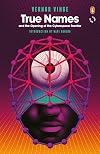
Like many science fiction novels, True Names is a prophetic book. However, it is also a short story, a novella, rather than a full-length novel. Vernor Vinge’s narrative focuses primarily on the adventures of two computer hackers–called warlocks–who live and operate in an alternate reality.
As in today’s world, the warlocks have assumed names and personas that express their image of themselves, much like the avatars people adopt today. The two main characters, “Mr. Slippery” and show more “Erythrina,” must navigate this world without giving up their real names, or else the ‘True Enemy” will force them to work for them. “The Great Enemy” is the US Government in this case.
The FBI discovers the actual name of Mr Slippery, forcing him and Erythrina to investigate a mysterious person called ‘The Mailman.’
I will not reveal more than this because I’d be giving away the plot. While the book has been called a science fiction classic, I consider the narrative confusing. The confusing, fluid narrative may reflect how we inhabit the virtual world.
The edition I own has several essays before the novella starts and an essay by Mr. Minsky after the narrative ends. It is critical to remember that the authors wrote these essays in the final decade of the last century when they were speculating on the future. Some of us today may consider the material in the book and the novella humdrum. Still, we must remember that Vernor Vinge wrote this book more than a decade before we even knew about the multiverse, virtual reality, and other such esoteric concepts.
When reading the essays that precede and succeed the main story, it is critical to view them as eerily prescient essays, anticipating both technological progress and societal changes occurring because of technological change. show less
As in today’s world, the warlocks have assumed names and personas that express their image of themselves, much like the avatars people adopt today. The two main characters, “Mr. Slippery” and show more “Erythrina,” must navigate this world without giving up their real names, or else the ‘True Enemy” will force them to work for them. “The Great Enemy” is the US Government in this case.
The FBI discovers the actual name of Mr Slippery, forcing him and Erythrina to investigate a mysterious person called ‘The Mailman.’
I will not reveal more than this because I’d be giving away the plot. While the book has been called a science fiction classic, I consider the narrative confusing. The confusing, fluid narrative may reflect how we inhabit the virtual world.
The edition I own has several essays before the novella starts and an essay by Mr. Minsky after the narrative ends. It is critical to remember that the authors wrote these essays in the final decade of the last century when they were speculating on the future. Some of us today may consider the material in the book and the novella humdrum. Still, we must remember that Vernor Vinge wrote this book more than a decade before we even knew about the multiverse, virtual reality, and other such esoteric concepts.
When reading the essays that precede and succeed the main story, it is critical to view them as eerily prescient essays, anticipating both technological progress and societal changes occurring because of technological change. show less
This book is, in a sense, two different things.
One is the 1981 story by Vernor Vinge. It is a little fantabulous, taking place partly in "cyberspace"--but a cyberspace that, despite its level of detail, acknowledges its dependence on the imagination of a community of users. The story revolves around one individual, a successful writer who is also a successful protester within cyberspace, who must deal with the myriad threats to the safety of this cyberspace, including both the government and show more "rogue" threats.
The rest--the bulk--of the volume is a number of essays written throughout the 1990's that respond to, critique, or extend the story from a socio-technological viewpoint. Reading this for the first time in 2008, I was amazed at the prescience of these essays and their importance for our time.
Danny Hillis takes a quick stab at a coming technological symbiosis, something that is coming true as certain white-collar groups are now always on, all the time, via cell phones, blackberries, Twitter linkages, etc. Timothy May describes several different applications of strong cryptography, and rants a bit. John M. Ford muses on what the computers of the future will think of us. Alan Wexelblat compares the datamining techniques of government and industry to a panopticon prison, where we do not own our own identity profiles. Pattie Maes mentions software agents.
The next few pieces are, to my mind, essential. RMS writes a beautiful parable on "the right to read," i.e. a right to be able to own anything that contains intellectual property--a right that has been limited in a post DMCA age where people no longer have physical books and the like but can only license individual access for a short time. Leonard Foner describes the history of cryptography policy and its pitfalls. Morningstar & Farmer give an account of the late-80's Habitat community, sharing the technological (separate content and presentation!) and social lessons (don't break the conventions) they learned.
Mark Pesce wraps up the essay section with a meditation on symbol, mearnings, and animism. Then the Vinge story is reprinted (with only typographical corrections made), followed by the 1983 afterword by Marvin Minsky, which tackles consciousness, language, and the human mind as computer. This is a whole topic of its own, but his piece was not a bad entrée into this area.
A couple of different essays point out that during and after crises, citizens usually lose rights, being watched more closely for tinier infringements (such as wrong-thinking) by more powerful governments. They further suggest that there are two attractor basins: one towards a free, possibly slightly anarchist, society where people have speech and privacy rights supported by high technology, the other towards a totalitarian society run by individuals who are terrified by high technology and strictly regulate its use. Optimists believed that we were heading towards the former; in the wake of the September 11, 2001 killings, it is not so clear. How can we preserve the rights of man in a post-human world?
Highly recommended. show less
One is the 1981 story by Vernor Vinge. It is a little fantabulous, taking place partly in "cyberspace"--but a cyberspace that, despite its level of detail, acknowledges its dependence on the imagination of a community of users. The story revolves around one individual, a successful writer who is also a successful protester within cyberspace, who must deal with the myriad threats to the safety of this cyberspace, including both the government and show more "rogue" threats.
The rest--the bulk--of the volume is a number of essays written throughout the 1990's that respond to, critique, or extend the story from a socio-technological viewpoint. Reading this for the first time in 2008, I was amazed at the prescience of these essays and their importance for our time.
Danny Hillis takes a quick stab at a coming technological symbiosis, something that is coming true as certain white-collar groups are now always on, all the time, via cell phones, blackberries, Twitter linkages, etc. Timothy May describes several different applications of strong cryptography, and rants a bit. John M. Ford muses on what the computers of the future will think of us. Alan Wexelblat compares the datamining techniques of government and industry to a panopticon prison, where we do not own our own identity profiles. Pattie Maes mentions software agents.
The next few pieces are, to my mind, essential. RMS writes a beautiful parable on "the right to read," i.e. a right to be able to own anything that contains intellectual property--a right that has been limited in a post DMCA age where people no longer have physical books and the like but can only license individual access for a short time. Leonard Foner describes the history of cryptography policy and its pitfalls. Morningstar & Farmer give an account of the late-80's Habitat community, sharing the technological (separate content and presentation!) and social lessons (don't break the conventions) they learned.
Mark Pesce wraps up the essay section with a meditation on symbol, mearnings, and animism. Then the Vinge story is reprinted (with only typographical corrections made), followed by the 1983 afterword by Marvin Minsky, which tackles consciousness, language, and the human mind as computer. This is a whole topic of its own, but his piece was not a bad entrée into this area.
A couple of different essays point out that during and after crises, citizens usually lose rights, being watched more closely for tinier infringements (such as wrong-thinking) by more powerful governments. They further suggest that there are two attractor basins: one towards a free, possibly slightly anarchist, society where people have speech and privacy rights supported by high technology, the other towards a totalitarian society run by individuals who are terrified by high technology and strictly regulate its use. Optimists believed that we were heading towards the former; in the wake of the September 11, 2001 killings, it is not so clear. How can we preserve the rights of man in a post-human world?
Highly recommended. show less
I think I've mentioned before that I love short story anthologies, especially by well-established authors in the field. They're great because I don't end up spending an entire day reading instead of doing chores and homework and other necessary stuff. Short stories = quickly wrapped up slices of interest that send me back on my way.
Of course, I still love long books, I just often don't have the time. The difficulty with short story anthologies is finding absolutely brilliant, show more thought-provoking ones that showcase both up-and-coming and established authors. It can be a bit of a gamble.
Bangs and Whimpers delivers on all fronts. Every time I've started to tell someone about this book, intending to tell them about just one short story in particular I think they would find of interest, I find myself saying something like, "Oh, yeah, and there was this other one that explored an end-of-the-world scenario where we planted the seeds to a new creation by . . . "
This book is amazing. Each short story approached the Ending of All Things from a different vantage point and perception. Where one author chose to think that the annihilation of life on earth meant the end of life forever, another author saw a thin thread of hope in the distant future. Where one author wrote with detached omniscience, another wrote in intimate first-person. Each story has a unique style and vision, but they all have one thing in common -- they are brilliantly, captivatingly written. This book should not be missed. show less
Of course, I still love long books, I just often don't have the time. The difficulty with short story anthologies is finding absolutely brilliant, show more thought-provoking ones that showcase both up-and-coming and established authors. It can be a bit of a gamble.
Bangs and Whimpers delivers on all fronts. Every time I've started to tell someone about this book, intending to tell them about just one short story in particular I think they would find of interest, I find myself saying something like, "Oh, yeah, and there was this other one that explored an end-of-the-world scenario where we planted the seeds to a new creation by . . . "
This book is amazing. Each short story approached the Ending of All Things from a different vantage point and perception. Where one author chose to think that the annihilation of life on earth meant the end of life forever, another author saw a thin thread of hope in the distant future. Where one author wrote with detached omniscience, another wrote in intimate first-person. Each story has a unique style and vision, but they all have one thing in common -- they are brilliantly, captivatingly written. This book should not be missed. show less
In the not so distant future, Earth's future survival is in jeopardy. The Great Die Off has already taken place that effected billions of the world's population. The hand full of survivors must find an energy sourse to replace the Earth's depleted supply. Tech genius, Robert Eisenbraun, joins a team of scientists in Antarctica on a mission to Jupiter’s moon Europa to mine a rare ore that would provide for this long-term energy needs. But as he and the rest of the team train under the ice show more shelf in preparation for the long journey, trouble erupts, and before they embark Eisenbraun is the odd man out, put into cold sleep against his will….
When he awakes he finds the ship deserted and unfunctional and the Earth bears no resemblance to the Earth he knew and he faces an enemy and a makes a friend , both of an unlikely source. The game has changed and the outcome is in his hands alone.
I have read and throughly enjoyed all of Steve Alten's books to date. Who wouldn't love a giant eons old shark? But...that is another book. Alten presents scientific realism to his his novels that not only enhance the story but makes some very interesting reading. If I had any complaint about this book. it was that it was over too soon. show less
When he awakes he finds the ship deserted and unfunctional and the Earth bears no resemblance to the Earth he knew and he faces an enemy and a makes a friend , both of an unlikely source. The game has changed and the outcome is in his hands alone.
I have read and throughly enjoyed all of Steve Alten's books to date. Who wouldn't love a giant eons old shark? But...that is another book. Alten presents scientific realism to his his novels that not only enhance the story but makes some very interesting reading. If I had any complaint about this book. it was that it was over too soon. show less
Awards

You May Also Like


Associated Authors
Statistics
- Works
- 5
- Also by
- 28
- Members
- 812
- Popularity
- #31,426
- Rating
- 4.0
- Reviews
- 16
- ISBNs
- 26
- Languages
- 1
