
M. K. Wren (1938–2016)
Author of A Gift Upon the Shore
About the Author
Martha Kay Renfroe was born in Amarillo, Texas on June 5, 1938. She wrote mystery and science fiction novels under the pen name M. K. Wren. Her books included the Conan Flagg series, the Phoenix Legacy Trilogy, A Gift Upon the Shore, and Nitty Gritties: The Pursuit of the Perfect Manuscript. She show more was also an artist whose work was shown in galleries and shows. She died on August 20, 2016 at the age of 78. (Bowker Author Biography) show less
Series
Works by M. K. Wren
The Conan Flagg Mysteries, Bundle #2: Oh, Bury Me Not; Northing's Certain but Death; and Seasons of Death (2015) 1 copy
The Conan Flagg Mysteries, Bundle #1: Curiosity Didn't Kill the Cat and A Multitude of Sins (2015) 1 copy
The Conan Flagg Mysteries, Bundle #3: Dead Matter; Wake Up, Darlin' Corey; and King of the Mountain (2016) 1 copy
Nothings Certain But Death 1 copy
Oh Bury Me Not 1 copy
Shadow of the Swan 1 copy
Associated Works
Slay-Ride | Curiosity Didn't Kill the Cat | The Lester Affair (1974) — Contributor; Contributor — 7 copies
Honeymoon With Death | A Multitude Of Sins | The White Lie Assignment (1975) — Contributor — 2 copies
Tagged
Common Knowledge
- Canonical name
- Wren, M. K.
- Legal name
- Renfroe, Martha Kay
- Birthdate
- 1938-06-05
- Date of death
- 2016-08-20
- Gender
- female
- Occupations
- writer
- Nationality
- USA
- Birthplace
- Amarillo, Texas, USA
- Places of residence
- Amarillo, Texas, USA
Oregon, USA - Place of death
- Lincoln City, Oregon, USA
- Associated Place (for map)
- Oregon, USA
Members
Discussions
Post-Apocalyptic Novel From '80's in Name that Book (October 2009)
end of the world- 2 women left --written by a woman in Name that Book (July 2009)
Reviews

A Gift Upon the Shore is a post-apocalyptic tale written in 1990. It is, first and formost, a tale of women both good and bad, about their strengths, their beliefs, and their role in this new apocalyptic society. Rebecca and Mary have fought off other attackers, have survived alone in Rebecca's farmhouse, and believe it is their duty to save and preserve any books they can find; Miriam, a member of a religious group which survived several miles down the shore, believes it is her duty to show more protect future generations from the decadence of the old world. She believes in a literal translation of the Bible and no other book should be allowed. Although the groups are led by men both at the Ark and later at the farmhouse, they tend to be either controlling or ineffective. They may lead but it is the women who are the backbone of the groups. Beyond their work, much of their importance lies in their ability to bear children although most women (and men) are sterile. Despite the clash between their other beliefs, both groups believe that the continuance of the species is what matters most.
There has been some criticism of this book as anti-Christian. I am not sure that is a fair criticism. I think it would be fairer to say that the book is against the kind of religious fundamentalism that would ban all books but the Bible which is to be taken literally and that would deny science. On the other hand, it may just be that author MK Wren was just positing which groups would most likely survive an apocalypse, in this case, loners like Rebecca who live in remote areas, Survivalists, and certain religious groups who believe that the end is nigh and have prepared for the Rapture by moving to remote areas away from large cities long before any actual event. Regardless, I found the clash between fundamentalism and humanism interesting but I realize that there are many who might not.
The religious aspects aside, the book is beautifully written but somewhat slow moving, more Margaret Atwood than Stephen King. Although there is some violence, it takes up very little of the story which is divided really between two narratives. Although it's Mary's voice speaking in both, in one she talks of the present as she clashes with Miriam over what is acceptable to teach the children and, in the other, she tells a young boy whom she hopes will replace her as teacher someday, the story of Rebecca.
It took me awhile to get into the novel, but once I did, I thoroughly enjoyed it. I won't say it kept me up at night but it did make me think and that's never a bad thing. show less
There has been some criticism of this book as anti-Christian. I am not sure that is a fair criticism. I think it would be fairer to say that the book is against the kind of religious fundamentalism that would ban all books but the Bible which is to be taken literally and that would deny science. On the other hand, it may just be that author MK Wren was just positing which groups would most likely survive an apocalypse, in this case, loners like Rebecca who live in remote areas, Survivalists, and certain religious groups who believe that the end is nigh and have prepared for the Rapture by moving to remote areas away from large cities long before any actual event. Regardless, I found the clash between fundamentalism and humanism interesting but I realize that there are many who might not.
The religious aspects aside, the book is beautifully written but somewhat slow moving, more Margaret Atwood than Stephen King. Although there is some violence, it takes up very little of the story which is divided really between two narratives. Although it's Mary's voice speaking in both, in one she talks of the present as she clashes with Miriam over what is acceptable to teach the children and, in the other, she tells a young boy whom she hopes will replace her as teacher someday, the story of Rebecca.
It took me awhile to get into the novel, but once I did, I thoroughly enjoyed it. I won't say it kept me up at night but it did make me think and that's never a bad thing. show less

Tells the story (and the story of the story) of Rachel and Mary, who literally decide to survive the end of the world, in order to preserve (again literally) the books that represent what's left of their civilization. It is told half in flashbacks of that end time and half from the first person perspective of Mary, who now lives with a group of fundamentalist Christians, who believe there is only truth and one book worth reading. The villian of the story is a woman who takes this belief to show more its "logical" and lethal conclusion--her character is that perfect combination of traits, utter ignorance of history and science and the unwavering conviction that the one idea in her head is the whole and unimpeachable truth. Sound familiar? She is a caricature to be sure, and there is one other character in the book as extreme as she is, and it is Mary's conviction, and the theme of the book, that this is a form of insanity and ultimately evil. There's nothing subtle about the treatment of this theme in the book, but the other characters in it are more three-dimensional and sympathetic than the two crackpots, and the relationships between them and Mary are more complex and nuanced. The flashbacks to the apocalypse are appropriately horrific and tragic, and the glue that holds the book together is the character of Rachel, an atheist who represents everything one could ask of a friend and helper through the end of the world, or any other troubles. To call it simply a battle between religious lunacy and agnostic sanity would be an over simplification, but that's the thrust of the book, at least the parts that deal with Mary's "present." All of that said, it is beautifully written, with an almost unbearable sense of what is lost and a powerful belief in what is worth preserving. I'd recommend it to any fan of these kinds of books. show less
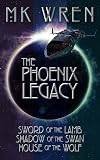
It seems like in a constant (and oft unsuccessful) search for new science-fiction authors whose work is worthwhile. Granted, I probably have a very different set of standards of judgment, largely because my love for science fiction is really rooted in the way it can wrestle so openly with the deepest philosophical questions of life with its limitless ability to construct alternative worlds. (I suppose no one would be surprised at this point if I admitted that I enjoy Star Trek more than Star show more Wars, though I can honestly say I like them both.)
There really is nothing new here in the premise of the book. It is set in the 33rd century of human existence, long after a worldwide apocalypse known only as "The Disasters" has given way to a highly-advanced but feudal interstellar civilization. Humanity exists in three distinct classes: the Elite, the Fesh (short for "Professionals"), and the Bond. It is a civilization that is, once again, teetering on the brink of chaos because of unrest amongst the servile Bonds.
All religions have merged into one "super-religion" known as Mezionism (which appears to be a kind of stand-in for Catholicism), which is especially influential amongst the Bond and Fesh classes and is--you guessed it--perceived by the Elite as a means of "controlling the masses" (thank you, Karl Marx). The focus of the book is on two brothers of the Elite class, Alexand and Richard DeKoven Wolf, and their two-part plan to prevent a Bond revolt that would plunge the world into a third "Dark Age," and then to reintroduce democratic systems to replace feudalism. I find it interesting that the story ends with this transformation still future.
The twist here is that it is the principles of Mezionism--the religion that keeps the Bonds pacified--that lead the heroes to their conclusions about the need for new democratic structures that elevate the status of the Bonds. The brothers' initial interactions with Mezionism are rooted in their political interests but slowly over the course of the story both brothers undergo very different kinds of "conversion," essentially becoming Mezion "saints."
It appears to me that Wren has been influenced by some very secular perspectives on the nature and use of religious feeling; however, for all its secular elements, she does still present I think a rather nuanced understanding of religion's role in human society as simultaneously (and paradoxically) a means of oppression and liberation. Given the secular underpinnings, I was surprised to see several truly miraculous elements included within the plot (especially the "soul weft" of Lord Alexand and his love Lady Adrien Carmine Eliseer). They were neither contrived nor forced nor over-wrought; they were simply "there," as miracles usually are in the real world.
These are the first works I've read by this author. I would say it is well-written: the characters are well-drawn, the plot moves at a steady pace largely devoid of rambling, and the descriptions are not terribly overdone (most of the time). Two elements that were a bit awkward were the attempts to "create" new idiomatic terms (e.g., "montector" for "monitor detector" or "imagraph" for "image-graphic"). Place names receive the same hackneyed treatment: the continent of Australia is now Conta Austrail; North America is now Noramerica. It was easy to see that this was an attempt to image how language will morph and memory will change over centuries, but it still felt awkward and wooden (though I must give her high marks for consistency in these matters).
The last element that seemed at odds is the way that Wren chose to provide the "back story" of the book, essentially the history beginning from just after "the Disasters" (a nuclear holocaust at some early point in the 21st century up until the story's action itself). She elected to do this through a series of "lectures" given by Richard that serve as appendices to the chapters). This works in the sense that it gives Wren the space she needs to devote to telling that story, but it failed for me in that I always expected these short "history lessons" to offer some unique insight into the current action...but that never really materialized. It's almost as if Wren might have been better served to take OUT those appendices and create a stand-alone "prequel trilogy." But we all know how well that turned out for the Star Wars movie franchise, so perhaps hers is the wise approach.
I'm not a qualified literary critic by any measure, and my interests in the books I read don't seem to match any other reader's, but I did find this to be largely enjoyable and sometimes thought-provoking, especially about the looming "disasters" that threaten our world and the role that religious faith should play in averting them. show less
There really is nothing new here in the premise of the book. It is set in the 33rd century of human existence, long after a worldwide apocalypse known only as "The Disasters" has given way to a highly-advanced but feudal interstellar civilization. Humanity exists in three distinct classes: the Elite, the Fesh (short for "Professionals"), and the Bond. It is a civilization that is, once again, teetering on the brink of chaos because of unrest amongst the servile Bonds.
All religions have merged into one "super-religion" known as Mezionism (which appears to be a kind of stand-in for Catholicism), which is especially influential amongst the Bond and Fesh classes and is--you guessed it--perceived by the Elite as a means of "controlling the masses" (thank you, Karl Marx). The focus of the book is on two brothers of the Elite class, Alexand and Richard DeKoven Wolf, and their two-part plan to prevent a Bond revolt that would plunge the world into a third "Dark Age," and then to reintroduce democratic systems to replace feudalism. I find it interesting that the story ends with this transformation still future.
The twist here is that it is the principles of Mezionism--the religion that keeps the Bonds pacified--that lead the heroes to their conclusions about the need for new democratic structures that elevate the status of the Bonds. The brothers' initial interactions with Mezionism are rooted in their political interests but slowly over the course of the story both brothers undergo very different kinds of "conversion," essentially becoming Mezion "saints."
It appears to me that Wren has been influenced by some very secular perspectives on the nature and use of religious feeling; however, for all its secular elements, she does still present I think a rather nuanced understanding of religion's role in human society as simultaneously (and paradoxically) a means of oppression and liberation. Given the secular underpinnings, I was surprised to see several truly miraculous elements included within the plot (especially the "soul weft" of Lord Alexand and his love Lady Adrien Carmine Eliseer). They were neither contrived nor forced nor over-wrought; they were simply "there," as miracles usually are in the real world.
These are the first works I've read by this author. I would say it is well-written: the characters are well-drawn, the plot moves at a steady pace largely devoid of rambling, and the descriptions are not terribly overdone (most of the time). Two elements that were a bit awkward were the attempts to "create" new idiomatic terms (e.g., "montector" for "monitor detector" or "imagraph" for "image-graphic"). Place names receive the same hackneyed treatment: the continent of Australia is now Conta Austrail; North America is now Noramerica. It was easy to see that this was an attempt to image how language will morph and memory will change over centuries, but it still felt awkward and wooden (though I must give her high marks for consistency in these matters).
The last element that seemed at odds is the way that Wren chose to provide the "back story" of the book, essentially the history beginning from just after "the Disasters" (a nuclear holocaust at some early point in the 21st century up until the story's action itself). She elected to do this through a series of "lectures" given by Richard that serve as appendices to the chapters). This works in the sense that it gives Wren the space she needs to devote to telling that story, but it failed for me in that I always expected these short "history lessons" to offer some unique insight into the current action...but that never really materialized. It's almost as if Wren might have been better served to take OUT those appendices and create a stand-alone "prequel trilogy." But we all know how well that turned out for the Star Wars movie franchise, so perhaps hers is the wise approach.
I'm not a qualified literary critic by any measure, and my interests in the books I read don't seem to match any other reader's, but I did find this to be largely enjoyable and sometimes thought-provoking, especially about the looming "disasters" that threaten our world and the role that religious faith should play in averting them. show less

Earth is nearing the End - a deadly new strain of flu, cataclysmic natural disasters, overpopulation, famine, wars. Mary Hope, a 20-something aspiring author, flees the city hoping to find refuge and solace at the beach house she inherited from her aunt. But disaster is everywhere and Mary nearly dies when the bus she is traveling on is attacked by a gang of road rovers.
She is rescued by Rachel, a reclusive artist who gives Mary a home when she learns that her aunt’s home is a derelict show more ruin that has been overtaken by squatters. Not long after, the End does come - in the form of a nuclear bomb. Over the next decade, Mary and Rachel struggle to survive in a devastated wasteland ravaged by nuclear winter. And together they embark on a project to preserve the thousands of books that Rachel owns because they believe that these may be the only books available for future generations (if there are any other survivors out there).
And then one day a stranger arrives at their home, a man from a fundamentalist Christian cult who has gone out in search of survivors. Though his beliefs clash with the more pagan nature-based spirituality that Rachel and Mary subscribe to, Mary falls in love with Luke and decides to abandon Rachel and return with Luke to the cult.
Mary is barely accepted by the 50ish members of the cult. When Rachel arrives a few months later, gravely wounded and needing medical attention, the cult leader brands her a witch and turns her away. Her eyes finally opened to the narrow-minded hate of the cult, Mary leaves with Rachel and attempts to nurse her back to health. When she fails she returns to Rachel’s home, alone, and continues the book preservation project.
Several years later, members of the cult appear at Mary’s home, seeking refuge after a fever has nearly wiped out their membership. Mary accepts them into her home but only after they are willing to accept the terms of agreement she sets. The cult’s beliefs are still practiced, however, and their teachings are passed on to the next generation. Ultimately, there is a violent clash between their beliefs and Mary’s, and both her life and the books she has preserved are endangered.
The story is told from two perspectives - the present, several years after the cult members arrive at Mary’s home, and the past, which is the basis for a book that Mary is writing, The Chronicles of Rachel.
Mary’s development through the novel is remarkably well done - from a naïve idealistic young woman to a resilient survivor; from a woman willing to sacrifice friendship and beliefs for a chance at a new beginning to an old woman who is wise and strong with a faith that she has handcrafted from all she has endured. The author shows Mary at each of these stages of her life, making the transitions believable, and truly makes her come alive upon the pages.
There is much to ponder in the story about spirituality and faith. Though on the surface the author seems to be claiming that there is something inherently wrong with Christianity as a whole (as evidenced by the beliefs and actions of the cult), I think the message is much broader than that. What is wrong is any religion that is narrow-minded, judgmental, and insular. When a belief system demands that it’s followers adhere to a particular dogma without questioning it, it becomes something damaging rather than affirming.
As Mary says in the book, “When you can say ‘I don’t know’ you’ve freed yourself to find the answer.”
That truly is what this story is about - a quest for truth and faith and answers. Mary has to discover spirituality, rather than blindly accepting what was right for Rachel or what was taught by the cult. She has to seek the God that can answer the questions in her own heart, just as we all do. God is multifaceted with many interpretations.
And the books that Rachel and Mary preserve are an integral part of this search for truth, because in each book there are clues that lead to understanding. God is found not only in the Bible but in every volume of poetry, in every science textbook, in every novel.
Near the end of the book, someone is reading the poetry of Emily Dickinson and Mary comments, “I think of the reclusive Emily reaching across an ivy-covered stone wall more than a century and a half thick to cast wildflowers in his path.”
Yes, for those who know how to see, one can discover God’s beauty and grace in an Emily Dickinson poem.
In addition to all this profundity, the novel is quite simply a beautiful work of art - full of vivid description and raw emotion - and it is very well crafted and well written. Though it may not appeal to everyone, for the right reader it truly is a gift. show less
She is rescued by Rachel, a reclusive artist who gives Mary a home when she learns that her aunt’s home is a derelict show more ruin that has been overtaken by squatters. Not long after, the End does come - in the form of a nuclear bomb. Over the next decade, Mary and Rachel struggle to survive in a devastated wasteland ravaged by nuclear winter. And together they embark on a project to preserve the thousands of books that Rachel owns because they believe that these may be the only books available for future generations (if there are any other survivors out there).
And then one day a stranger arrives at their home, a man from a fundamentalist Christian cult who has gone out in search of survivors. Though his beliefs clash with the more pagan nature-based spirituality that Rachel and Mary subscribe to, Mary falls in love with Luke and decides to abandon Rachel and return with Luke to the cult.
Mary is barely accepted by the 50ish members of the cult. When Rachel arrives a few months later, gravely wounded and needing medical attention, the cult leader brands her a witch and turns her away. Her eyes finally opened to the narrow-minded hate of the cult, Mary leaves with Rachel and attempts to nurse her back to health. When she fails she returns to Rachel’s home, alone, and continues the book preservation project.
Several years later, members of the cult appear at Mary’s home, seeking refuge after a fever has nearly wiped out their membership. Mary accepts them into her home but only after they are willing to accept the terms of agreement she sets. The cult’s beliefs are still practiced, however, and their teachings are passed on to the next generation. Ultimately, there is a violent clash between their beliefs and Mary’s, and both her life and the books she has preserved are endangered.
The story is told from two perspectives - the present, several years after the cult members arrive at Mary’s home, and the past, which is the basis for a book that Mary is writing, The Chronicles of Rachel.
Mary’s development through the novel is remarkably well done - from a naïve idealistic young woman to a resilient survivor; from a woman willing to sacrifice friendship and beliefs for a chance at a new beginning to an old woman who is wise and strong with a faith that she has handcrafted from all she has endured. The author shows Mary at each of these stages of her life, making the transitions believable, and truly makes her come alive upon the pages.
There is much to ponder in the story about spirituality and faith. Though on the surface the author seems to be claiming that there is something inherently wrong with Christianity as a whole (as evidenced by the beliefs and actions of the cult), I think the message is much broader than that. What is wrong is any religion that is narrow-minded, judgmental, and insular. When a belief system demands that it’s followers adhere to a particular dogma without questioning it, it becomes something damaging rather than affirming.
As Mary says in the book, “When you can say ‘I don’t know’ you’ve freed yourself to find the answer.”
That truly is what this story is about - a quest for truth and faith and answers. Mary has to discover spirituality, rather than blindly accepting what was right for Rachel or what was taught by the cult. She has to seek the God that can answer the questions in her own heart, just as we all do. God is multifaceted with many interpretations.
And the books that Rachel and Mary preserve are an integral part of this search for truth, because in each book there are clues that lead to understanding. God is found not only in the Bible but in every volume of poetry, in every science textbook, in every novel.
Near the end of the book, someone is reading the poetry of Emily Dickinson and Mary comments, “I think of the reclusive Emily reaching across an ivy-covered stone wall more than a century and a half thick to cast wildflowers in his path.”
Yes, for those who know how to see, one can discover God’s beauty and grace in an Emily Dickinson poem.
In addition to all this profundity, the novel is quite simply a beautiful work of art - full of vivid description and raw emotion - and it is very well crafted and well written. Though it may not appeal to everyone, for the right reader it truly is a gift. show less
Lists
5 Best 5 Years (1)
You May Also Like


Associated Authors
Statistics
- Works
- 22
- Also by
- 6
- Members
- 1,658
- Popularity
- #15,500
- Rating
- 3.8
- Reviews
- 28
- ISBNs
- 77
- Languages
- 4
- Favorited
- 4