On This Page
Description
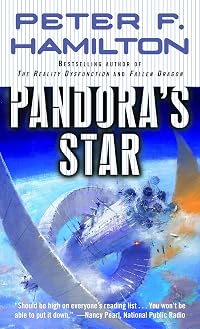
Critics have compared the engrossing space operas of Peter F. Hamilton to the classic sagas of such SF giants as Isaac Asimov and Frank Herbert. But Hamilton's bestselling fiction-powered by a fearless imagination and world-class storytelling skills-has also earned him comparison to Tolstoy and Dickens. Hugely ambitious, wildly entertaining, philosophically stimulating: the novels of Peter F. Hamilton will change the way you think about science fiction. Now, with Pandora's Star, he begins a show more new multivolume adventure, one that promises to be his most mind-blowing yet. The year is 2380. The Intersolar Commonwealth, a sphere of stars some 400 light-years in diameter, contains more than 600 worlds, interconnected by a web of transport "tunnels" known as wormholes. At the farthest edge of the Commonwealth, astronomer Dudley Bose observes the impossible: Over 1,000 light-years away, a star…vanishes. It does not go supernova. It does not collapse into a black hole. It simply disappears. Since the location is too distant to reach by wormhole, a faster-than-light starship, the Second Chance, is dispatched to learn what has occurred and whether it represents a threat. In command is Wilson Kime, a five-time rejuvenated ex-NASA pilot whose glory days are centuries behind him.Opposed to the mission are the Guardians of Selfhood, a cult that believes the human race is being manipulated by an alien entity they call the Starflyer. Bradley Johansson, leader of the Guardians, warns of sabotage, fearing the Starflyer means to use the starship's mission for its own ends.Pursued by a Commonwealth special agent convinced the Guardians are crazy but dangerous, Johansson flees. But the danger is not averted. Aboard the Second Chance, Kime wonders if his crew has been infiltrated. Soon enough, he will have other worries. A thousand light-years away, something truly incredible is waiting: a deadly discovery, the unleashing of which will threaten to destroy the Commonwealth…and humanity itself. Could it be that Johansson was right? show lessTags
Recommendations

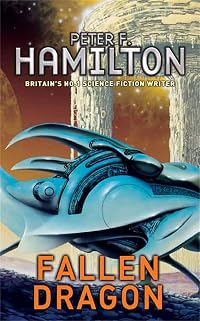
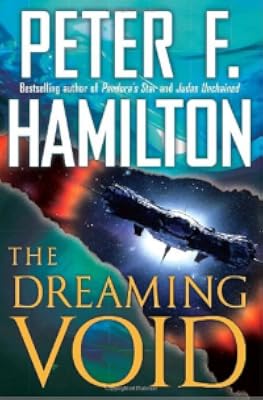
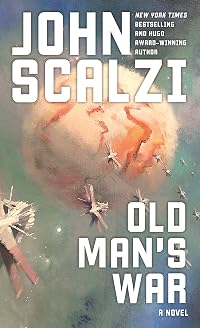
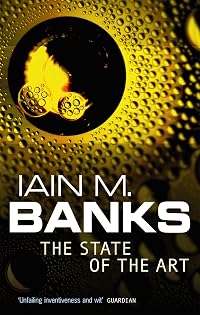
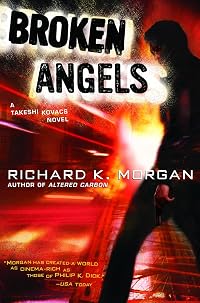
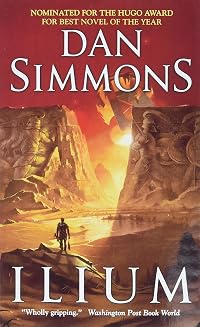
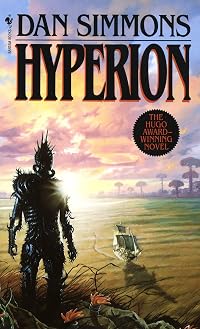
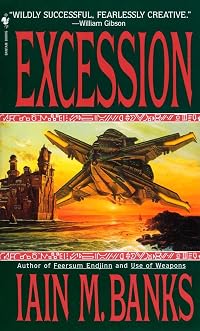
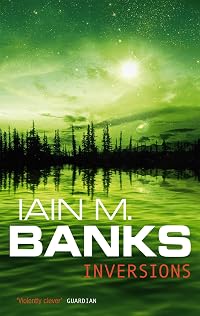
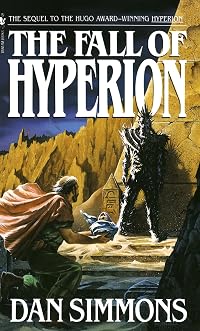

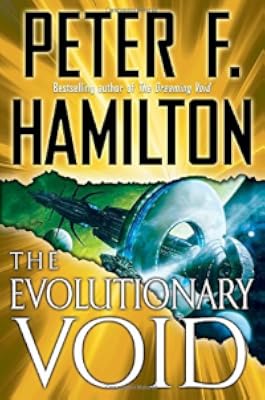
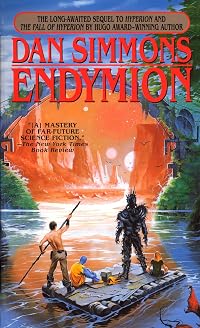

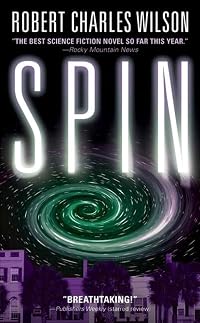
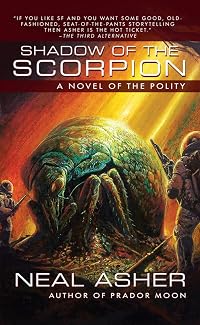
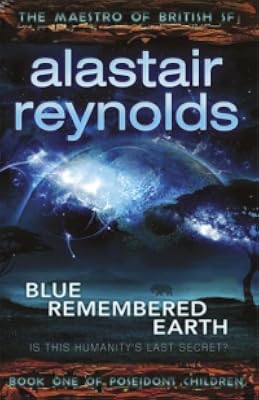
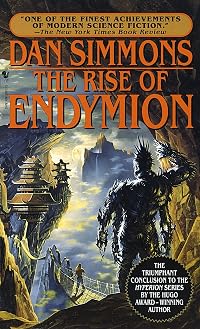
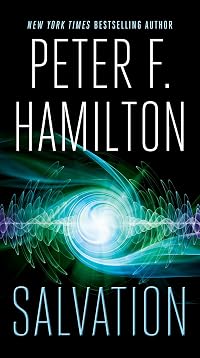
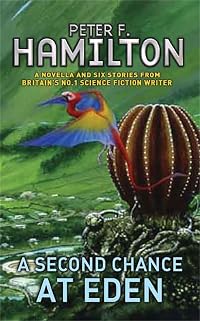
Member Recommendations
orange_epsilon If you like reading about space travel and alien cultures, then this is the book for you.
42
kay.emme Both are set in rich, fictional universes with a large cast of diverse characters. In each book, chapters focus on different character(s) story lines with overlapping and connecting events between characters. Lastly, both are complex and epic in scope, but are engaging, gripping, enjoyable reads.
11
Member Reviews
This is the most over-written and under-edited book I have ever read; however filled with intriguing storylines and engaging characters, this mare's nest of activity saw NO winnowing at all! Author and editor treated every idea as of equal value but they are not, and the dizzying jumps across time and space between plots can absolutely bewilder the reader, trying to remember who the hell these names are and what is going on with them. I don't care what make and model some land vehicle in another world in 2381 is, especially if it isn't germane to the story; why waste our shared time filling a paragraph with it??
While the construction and presentation of this book barely earns 1 star from me, the story (as I understand it), general show more world-building and stage-dressing, and one particular sub-plot (Ozzie and Orion, for the win) together have me sufficiently engaged to find the second half of this ludicrously dense duology to see what happens. That makes the overall effect worth a grudged 2.5 stars, but I'm still kind of pissed about it.
And to the author: Hey, Hamilton; why is it your future reads like "Lifestyles of the Fabulously Rich and Beautiful"? Obsessed with aristocracy and wealth a bit, are you? show less
While the construction and presentation of this book barely earns 1 star from me, the story (as I understand it), general show more world-building and stage-dressing, and one particular sub-plot (Ozzie and Orion, for the win) together have me sufficiently engaged to find the second half of this ludicrously dense duology to see what happens. That makes the overall effect worth a grudged 2.5 stars, but I'm still kind of pissed about it.
And to the author: Hey, Hamilton; why is it your future reads like "Lifestyles of the Fabulously Rich and Beautiful"? Obsessed with aristocracy and wealth a bit, are you? show less
This was a beast of a book, but I'm glad I listened to it. I think going with an audiobook of this was better than trying to read it because it was very slow going. I might have lost interest had I been trying to read it. We have a huge cast of characters and we learn a lot about them and their interests and goals, so much so that it almost bogs down the plot, but I learned to enjoy those elements because it made the story that much more real and epic to me. There are many different plot elements, not all of them achieving anything close to a resolution in this first novel, but again, that's okay. The brilliance of this book is the slow burn and showing the dichotomy of human civilization and how messy, chaotic, and inefficient it is show more compared to Morning Light Mountain's singular, efficient killer focus. There are a ton of interesting ideas and concepts here, especially the idea of being able to extend our lifespans by going through a rejuvenation process, and of course the wormhole technology which makes manned space flight obsolete, until it suddenly, catastrophically isn't. Fans of hard sci-fi but also character driven stories will find a lot to like here, if they have the patience to read through the world-building details that make up much of the book. I enjoy that sort of thing, so it wasn't a problem, but for those looking for a fast plot, you might be happier skipping this one. show less
Holy f*ck this was a great, great book. I'd been intending to delve into this doorstopper for years, but I wasn't sure if I wanted commit to a 1000 science fiction novel, when that genre has disappointed me a lot (Downbelow Station, Bright in the Sky, Sun of Suns, etc.)But, finally I took the plunge, and man, Hamilton's talent is quite honestly staggering. Read on as below I will turn into a slathering fanboy...
This book combines absolutely flawless, transparent prose as good as any "literary" novel with a brain-bogglingly epic science fiction plot featuring not one but several intriguing mysteries spread out among an extensive cast of fully fleshed out characters (including an alien that is truly *alien*)in a richly imagined future. show more Sound too good to be true? yeah, that's what I thought too when I heard Hamilton being compared to Dickens and Tolstoy. Gotta be pure hyperbole, right? Uh, no.
The way Mr. Hamilton is able to choreograph his ambitious, complicated story is awesome. He is like a puppet master, all the many many moving parts move together brilliantly, Many times something mentioned in passing would end up really being key, causing me to say "riiight" and nod my head appreciatively. I never lost track of what was going on with the charecters or who was who.
The book is sci-fi, but it blends in mystery, spy thriller, action, and even horror elements (one particular chapter involving an alien is absolutely blood-curdling, in addition to the aforementioned literary craft. And oh, yeah, there a few laugh out loud funny moments as well.
If I had to split hairs, I'd point out that some of the characters are not as fleshed out as others. But trust me, that really is nitpicking. It is a testament to the awesomeness of this book that I after reading this 1000 , I am thinking of jumping right into Judas Unchained, which is the second, even longer half of what is essentially one immense novel. show less
This book combines absolutely flawless, transparent prose as good as any "literary" novel with a brain-bogglingly epic science fiction plot featuring not one but several intriguing mysteries spread out among an extensive cast of fully fleshed out characters (including an alien that is truly *alien*)in a richly imagined future. show more Sound too good to be true? yeah, that's what I thought too when I heard Hamilton being compared to Dickens and Tolstoy. Gotta be pure hyperbole, right? Uh, no.
The way Mr. Hamilton is able to choreograph his ambitious, complicated story is awesome. He is like a puppet master, all the many many moving parts move together brilliantly, Many times something mentioned in passing would end up really being key, causing me to say "riiight" and nod my head appreciatively. I never lost track of what was going on with the charecters or who was who.
The book is sci-fi, but it blends in mystery, spy thriller, action, and even horror elements (one particular chapter involving an alien is absolutely blood-curdling, in addition to the aforementioned literary craft. And oh, yeah, there a few laugh out loud funny moments as well.
If I had to split hairs, I'd point out that some of the characters are not as fleshed out as others. But trust me, that really is nitpicking. It is a testament to the awesomeness of this book that I after reading this 1000 , I am thinking of jumping right into Judas Unchained, which is the second, even longer half of what is essentially one immense novel. show less
‘La estrella de Pandora’, del inglés Peter F. Hamilton, es una de las mejores space opera de los últimos tiempos. Aunque la variedad de temas que toca la novela no se quedan únicamente en este subgénero. Trama política, especulación, novela policíaca, ciencia ficción militar, primer contacto, aventuras, misterio, todos estos temas también están presentes en ‘La estrella de Pandora’.
La historia nos sitúa a finales del siglo XXIV, en una sociedad transformada por los grandes avances tecnológicos. De entre éstos, los que más destacan son los agujeros de gusano, que han abierto las puertas a la colonización de planetas. Igualmente, cabe destacar las técnicas de rejuvenecimiento y clonación, que junto a la show more posibilidad de guardar la memoria del individuo, permiten vivir un tiempo prácticamente ilimitado. La vida transcurre pacíficamente en la Federación, hasta que se detecta una anomalía en el Par Dyson, dos estrellas situadas a mil años luz: alguien ha colocado una barrera artificial encerrando ambos sistemas.
Perter F. Hamilton nos ofrece una novela coral, donde el peso de la historia recae sobre varios personajes principales, situados en varias tramas paralelas que irán confluyendo a lo largo de la narración. El universo que nos ofrece el autor es rico en detalles, y no escatima a la hora de desarrollar sociedades, culturas, costumbres, economías, políticas, en una perfecta visión del futuro de la raza humana.
Sin duda, ‘La estrella de Pandora’ nos devuelve la grandeza y el gusto por la buena ciencia ficción, aquella que nos acerca a un posible futuro, plausible y verosímil, sin dejar de lado el sentido de la maravilla y las ideas propias de las grandes novelas del género, lo que la ha convertido en todo un referente. Ahora, a por la continuación, ‘Judas desencadenado’. show less
La historia nos sitúa a finales del siglo XXIV, en una sociedad transformada por los grandes avances tecnológicos. De entre éstos, los que más destacan son los agujeros de gusano, que han abierto las puertas a la colonización de planetas. Igualmente, cabe destacar las técnicas de rejuvenecimiento y clonación, que junto a la show more posibilidad de guardar la memoria del individuo, permiten vivir un tiempo prácticamente ilimitado. La vida transcurre pacíficamente en la Federación, hasta que se detecta una anomalía en el Par Dyson, dos estrellas situadas a mil años luz: alguien ha colocado una barrera artificial encerrando ambos sistemas.
Perter F. Hamilton nos ofrece una novela coral, donde el peso de la historia recae sobre varios personajes principales, situados en varias tramas paralelas que irán confluyendo a lo largo de la narración. El universo que nos ofrece el autor es rico en detalles, y no escatima a la hora de desarrollar sociedades, culturas, costumbres, economías, políticas, en una perfecta visión del futuro de la raza humana.
Sin duda, ‘La estrella de Pandora’ nos devuelve la grandeza y el gusto por la buena ciencia ficción, aquella que nos acerca a un posible futuro, plausible y verosímil, sin dejar de lado el sentido de la maravilla y las ideas propias de las grandes novelas del género, lo que la ha convertido en todo un referente. Ahora, a por la continuación, ‘Judas desencadenado’. show less
I've read this and Judas Unchained three times now (over at least 15 years), and feel like I'm starting to get a handle on them. There are a lot of characters to keep track of, and a lot of story lines, weaving in and out of each other to make a wonderful pattern. The Police Detective, Paula Myo, sticks out in my memory. When I first encountered her this time around, I found myself getting excited for her part of the story. Melanie Roscorro, on the other hand, I found to be way more cringy than I remembered. She had most of the sex scenes, which were more explicit than they needed to be to service the story.
I'm looking forward to reading the duology again some day. I'm getting old, and not usually interested in revisiting books, but show more these had so much going on that I think I will enjoy them at least one more time. show less
I'm looking forward to reading the duology again some day. I'm getting old, and not usually interested in revisiting books, but show more these had so much going on that I think I will enjoy them at least one more time. show less
This kind of book was once my bread and butter, but I don't think I've read any space opera for more than 20 years. According to Wikipedia, Peter F. Hamilton is the most commercially successful living practitioner of the genre, producing the sort of giant multi-volume sagas typical of modern fantasy, so he seemed a good place to pick it up again. "Pandora's Star" at 1,144 pages, is only the first half of the gargantuan "Commonwealth Saga".
It is 2380, and humanity has settled on planets across the galaxy linked by a network of wormholes and the unisphere, a futuristic version of the internet. Its citizens, should they so choose, are effectively immortal thanks to rejuvenation and re-life procedures, and power largely rests in the hands show more of a small elite who control most of the industries and wealth.
Astronomer Dudley Bose spots a pair of stars many light years away suddenly wink out of existence. It seems impossible. In order to investigate, the first faster than light starship is built to travel to the pair. On arrival, the crew discovers the stars have been enclosed by a shield, the work of a technology far in advance of humans. While there, they inadvertantly switch the shields off, unleashing the aggressive Primes, the aliens the shield is designed to contain. The Commonwealth has to put itself on a war footing rapidly.
Although largely peaceful, the Commonwealth does harbour a terrorist cell, the Guardians of Selfhood, who believe human activity is being manipulated by a mysterious alien they call the Starflyer. Policewoman Paula Myo has been investigating their activities for decades without success. Events in the book lead her increasingly to believe that the Guardians might actually be onto something.
These are just two strands of an intricately plotted, panoramic book. As it is essentially only the first half of an even longer novel none of the strands is resolved by the novel's end. Reading it is like immersing yourself in a sci-fi TV series like "Battlestar Galactica" or "Babylon 5". As with those series, as well as spinning a yarn Hamilton has taken the opportunity to use his future society to examine a few 21st century issues too. Not that he has much profound to say, mind.
Nor is there much here of great originality. The conjoined minds of the Primes and their desire to subjugate are a straightforward steal from Star Trek's Borg, for example. Overall, though, it is to Hamilton's credit that his aliens are very, well, alien.
As with most very long books I've ever come across, "Pandora's Star" doesn't justify having quite so much wood pulped to make it. Hamilton can't resist describing every aspect of his future society in enormous detail - its transport, its planets, how the dynasties came by their wealth etc. Much of it could have been cut down or chopped out.
This is reading candy, undemanding entertainment written in unambitious prose designed to fill apathetic hours when literary fiction seems too much like hard work. I'm looking forward to "Judas Unchained", the conclusion of the saga, in the same way one looks forward to a night vegging in front of the TV. We all need books like this once in a while. Very much a guilty pleasure. show less
It is 2380, and humanity has settled on planets across the galaxy linked by a network of wormholes and the unisphere, a futuristic version of the internet. Its citizens, should they so choose, are effectively immortal thanks to rejuvenation and re-life procedures, and power largely rests in the hands show more of a small elite who control most of the industries and wealth.
Astronomer Dudley Bose spots a pair of stars many light years away suddenly wink out of existence. It seems impossible. In order to investigate, the first faster than light starship is built to travel to the pair. On arrival, the crew discovers the stars have been enclosed by a shield, the work of a technology far in advance of humans. While there, they inadvertantly switch the shields off, unleashing the aggressive Primes, the aliens the shield is designed to contain. The Commonwealth has to put itself on a war footing rapidly.
Although largely peaceful, the Commonwealth does harbour a terrorist cell, the Guardians of Selfhood, who believe human activity is being manipulated by a mysterious alien they call the Starflyer. Policewoman Paula Myo has been investigating their activities for decades without success. Events in the book lead her increasingly to believe that the Guardians might actually be onto something.
These are just two strands of an intricately plotted, panoramic book. As it is essentially only the first half of an even longer novel none of the strands is resolved by the novel's end. Reading it is like immersing yourself in a sci-fi TV series like "Battlestar Galactica" or "Babylon 5". As with those series, as well as spinning a yarn Hamilton has taken the opportunity to use his future society to examine a few 21st century issues too. Not that he has much profound to say, mind.
Nor is there much here of great originality. The conjoined minds of the Primes and their desire to subjugate are a straightforward steal from Star Trek's Borg, for example. Overall, though, it is to Hamilton's credit that his aliens are very, well, alien.
As with most very long books I've ever come across, "Pandora's Star" doesn't justify having quite so much wood pulped to make it. Hamilton can't resist describing every aspect of his future society in enormous detail - its transport, its planets, how the dynasties came by their wealth etc. Much of it could have been cut down or chopped out.
This is reading candy, undemanding entertainment written in unambitious prose designed to fill apathetic hours when literary fiction seems too much like hard work. I'm looking forward to "Judas Unchained", the conclusion of the saga, in the same way one looks forward to a night vegging in front of the TV. We all need books like this once in a while. Very much a guilty pleasure. show less
Yes, it's long, yes, it's like eating a favorite candy (you're full and somewhat sick, but you can't stop), yes, it's sometimes silly, but wow is it fun! The book has interesting, if sometimes unbelieveable science, entertaining, if sometimes unbelieveable people, high adventure, politics, and many storylines that do, in the course of both books, come together in totally satisfying ways. I particularly enjoyed (and was spooked by) the detailed development of the alien culture, the Prime, that threatens the Commonwealth. They are not evil and do not set out to destroy humanity specifically, but are obeying the dictates of their evolution which impels them to expand. They do not think or reason as humans do and cannot be negotiated with. show more How do you fight such an enemy? I will not remember "Pandora's Star" and it's sequel, "Judas Unchained", as great SF literature, but will greatly enjoy thinking about them and how much fun they were to read. show less
Members
- Recently Added By
Lists

Best Science Fiction Novels
816 works; 426 members

Unbound Worlds 100 Best SF Books
100 works; 8 members

Isaac Arthur’s Book Recommendations
98 works; 3 members

Unshelved Book Clubs
579 works; 5 members

Books Read in 2014
2,344 works; 89 members

Books Read in 2015
3,299 works; 129 members

Books Read in 2017
4,249 works; 130 members

Books Read in 2025
4,128 works; 98 members
Favorite Science Fiction
457 works; 223 members
Talk Discussions
Past Discussions
Pandora's Star in Science Fiction Fans (February 2011)
Author Information

127+ Works 42,885 Members
Peter F. Hamilton was born in Rutland, England on March 2, 1960. He started writing in 1987 and sold his first short story to Fear magazine in 1988. His first novel, Mindstar Rising, was published in 1993. His other works include the Night's Dawn series; Fallen Dragon; and the Void series. (Bowker Author Biography)
Some Editions
Awards and Honors
Notable Lists
Series


Belongs to Publisher Series
Bastei Science Fiction-Abenteuer (23290)
Work Relationships
Common Knowledge
- Canonical title
- Pandora's Star
- Original publication date
- 2004
- People/Characters
- Dudley Bose; MorningLightMountain; Starflyer; The Guardians of Selfhood; The Sentient Intelligence; Wilson Kime (show all 13); Bradley Johansson; Paula Myo; Ozzie Fernandez Issac; Lee Ki; Nigel Sheldon; Kazimir McFoster; Justine Bernelli
- First words
- Mars completely dominated space outside the Ulysses, the bloated dirty-ginger crescent of a planet that never quite made it as a world.(Prologue)
The star vanished from the center of the telescope's image in less time than a single human heartbeat. - Last words
- (Click to show. Warning: May contain spoilers.)The Pathfinder fell off the edge of the world.
(Click to show. Warning: May contain spoilers.)Above him, bright Californian sunlight shone in through the physics lab's open windows. (Prologue)
Classifications
Statistics
- Members
- 4,452
- Popularity
- 3,350
- Reviews
- 110
- Rating
- (3.96)
- Languages
- English, French, Romanian, Spanish
- Media
- Paper, Audiobook, Ebook
- ISBNs
- 26
- ASINs
- 17