
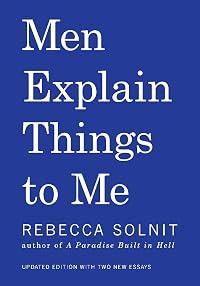
Men Explain Things to Me {updated edition}
by Rebecca Solnit
On This Page
Description
"In her comic, scathing essay "Men Explain Things to Me," Rebecca Solnit took on what often goes wrong in conversations between men and women. She wrote about men who wrongly assume they know things and wrongly assume women don't, about why this arises, and how this aspect of the gender wars works, airing some of her own hilariously awful encounters. She ends on a serious note-- because the ultimate problem is the silencing of women who have something to say, including those saying things show more like, "He's trying to kill me!" This book features that now-classic essay with six perfect complements, including an examination of the great feminist writer Virginia Woolf 's embrace of mystery, of not knowing, of doubt and ambiguity, a highly original inquiry into marriage equality, and a terrifying survey of the scope of contemporary violence against women"-- show lessTags
Recommendations




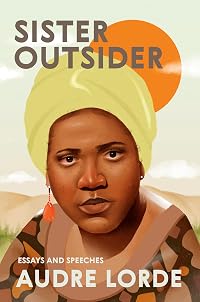


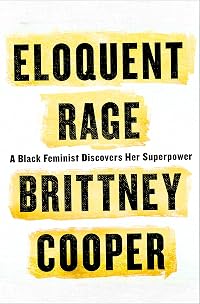
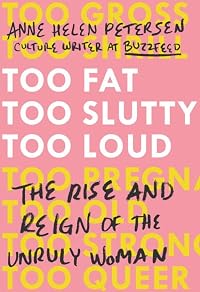
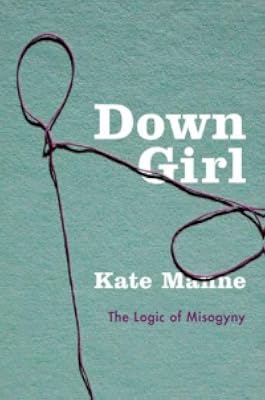


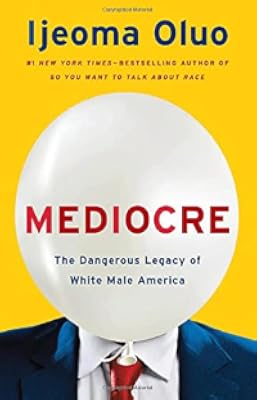
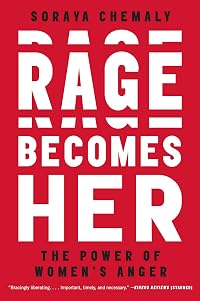

Member Reviews
Given recent political events, it seemed a good time to revisit Rebecca Solnit. I'd read the opening essay in Men Explain Things to Me and a few other articles by her and she has an ability to cut to the heart of an issue and clearly explain what is going on. The title essay begins with her encounter of an older, well-to-do man at a party who, upon hearing she'd written a book about a fairly esoteric subject, proceeded to lecture her about a very important book on the subject that had just been published. When she was finally able to interrupt him long enough to communicate that the book he was telling her about was indeed the book she had written, and which he had only read a review of, his reaction was not to apologize and ask her show more questions, but to continue his lecture. While this is a particularly blatant example of the phenomenon she discusses in this essay, it's something that happens more often than one would suspect. Her initial essay on the subject led to other women working in academia to also talk about their similar experiences, and then to the coining of the term "mansplaining." Solnit has, as a result, become a polarizing figure.
Which is a shame, because her writing is balanced and relentlessly fair. There's no broad sweeps being made at any group. She's interested in how the conversation surrounding equality has moved forward, and there's no doubt, she says, that we have moved forward, and compares where we were as a society in the 1970s when it came to racial, sexual or gender equality. We are still working towards a more just society, but what we're fighting for has changed.
Solnit is an academic and historian and so her essays are serious and well-reasoned. She's interested in the environment and anti-war activism as well. Men Explain Things To Me is a hopeful and determined look at our progress toward a more just world, with a clear-eyed look at where we are now and why it matters. show less
Which is a shame, because her writing is balanced and relentlessly fair. There's no broad sweeps being made at any group. She's interested in how the conversation surrounding equality has moved forward, and there's no doubt, she says, that we have moved forward, and compares where we were as a society in the 1970s when it came to racial, sexual or gender equality. We are still working towards a more just society, but what we're fighting for has changed.
Solnit is an academic and historian and so her essays are serious and well-reasoned. She's interested in the environment and anti-war activism as well. Men Explain Things To Me is a hopeful and determined look at our progress toward a more just world, with a clear-eyed look at where we are now and why it matters. show less
I had already read the title essay from this collection, which is sometimes credited for spawning the term "mansplaining," though that word does not occur in the essay. I enjoyed reading it again, as I also very much enjoyed reading the rest of the essays in this collection.
For one reason and another, my Ms. magazines have been piling up unread lately, so it was very refreshing to read essays that did not need to justify their feminism, distance themselves from other feminists, or be followed by a rage-inducing comment section that makes you want to weep for humanity. These essays are smart, unapologetic, make fascinating connections, and somehow make me feel hopeful even as they make it very clear how far feminism still has to show more go.
Between this book and the last I read, it's clear I really need to read some more Virginia Woolf.
HIghly recommended. A quick and thought-provoking read. show less
For one reason and another, my Ms. magazines have been piling up unread lately, so it was very refreshing to read essays that did not need to justify their feminism, distance themselves from other feminists, or be followed by a rage-inducing comment section that makes you want to weep for humanity. These essays are smart, unapologetic, make fascinating connections, and somehow make me feel hopeful even as they make it very clear how far feminism still has to show more go.
Between this book and the last I read, it's clear I really need to read some more Virginia Woolf.
HIghly recommended. A quick and thought-provoking read. show less
I've been working my way through this book of essays, and finally finished it today. Some of it has aged very well, but the last essay just about broke my heart. Solnit writes from the perspective of 2014, about the progress the Women's Movement has made over the years, and the then current state of recognition and empowerment. But it takes a long time to change the culture, and many backlashes along the way, and we are in the midst of one now. The demise of Roe V. Wade, Trump's Barbie Doll legion of women who should know better, the dismantling of support for the poor, the sick, the working class, the menace of a political climate of power versus morality - it all makes 2014 sound pretty good.
Solnit's title essay, "Men Explain Things to Me," has been a conversation-starter since it first appeared (http://www.tomdispatch.com/post/174918/), but it's worth re-reading, and all of the seven essays in this collection is well-researched, articulately written, thought-provoking, and not a little angry-making. Solnit raises issues of gender that have not been part of the cultural conversation and examines why that is and what needs to change. Essential reading for everyone of every gender.
Quotes
From "The Longest War"
Violence doesn't have a race, a class, a religion, or a nationality, but it does have a gender. (21)
So many men murder their partners and former partners that we have well over a thousand homicides of that kind a year - show more meaning that every three years the death toll tops 9/11's casualties, though no one declares a war on this particular kind of terror. (23)
Increasingly men are becoming good allies - and there always have been some. Kindness and gentleness never had a gender, and neither did empathy. (36)
From "Grandmother Spider"
Motherhood was an emotional and biological tie that the generals then in charge of the country could not portray as merely left wing or as criminal. (Las Madres de la Plaza de Mayo, Buenos Aires) (76)
[After a campus rape], the authorities responded by telling all the women students not to go out alone after dark or not to be out at all....Some pranksters put up a poster announcing another remedy, that all men be excluded from campus after dark. It was an equally logical solution, but men were shocked at being asked to disappear, to lose their freedom to move and participate, all because of the violence of one man. (77)
From "Woolf's Darkness"
We know less when we erroneously think we know than when we recognize that we don't. (88)
To me, the grounds for hope are simply that we don't know what will happen next, and that the unlikely and unimaginable transpire quite regularly. (94)
...we often think the purpose of criticism is to nail things down....What escapes categorization can escape detection altogether. (100)
..."the tyranny of the quantifiable," ...the way what can be measured almost always take precedence over what cannot: private profit over public good; speed and efficiency over enjoyment and quality; the utilitarian over the mysteries and meanings that are of greater use to our survival and to more than our survival, to lives that have some purpose and value that survive beyond us to make a civilization worth having. (105)
From "Pandora's Box and the Volunteer Police Force"
Finding ways to appreciate advances without embracing complacency is a delicate task. (114) show less
Quotes
From "The Longest War"
Violence doesn't have a race, a class, a religion, or a nationality, but it does have a gender. (21)
So many men murder their partners and former partners that we have well over a thousand homicides of that kind a year - show more meaning that every three years the death toll tops 9/11's casualties, though no one declares a war on this particular kind of terror. (23)
Increasingly men are becoming good allies - and there always have been some. Kindness and gentleness never had a gender, and neither did empathy. (36)
From "Grandmother Spider"
Motherhood was an emotional and biological tie that the generals then in charge of the country could not portray as merely left wing or as criminal. (Las Madres de la Plaza de Mayo, Buenos Aires) (76)
[After a campus rape], the authorities responded by telling all the women students not to go out alone after dark or not to be out at all....Some pranksters put up a poster announcing another remedy, that all men be excluded from campus after dark. It was an equally logical solution, but men were shocked at being asked to disappear, to lose their freedom to move and participate, all because of the violence of one man. (77)
From "Woolf's Darkness"
We know less when we erroneously think we know than when we recognize that we don't. (88)
To me, the grounds for hope are simply that we don't know what will happen next, and that the unlikely and unimaginable transpire quite regularly. (94)
...we often think the purpose of criticism is to nail things down....What escapes categorization can escape detection altogether. (100)
..."the tyranny of the quantifiable," ...the way what can be measured almost always take precedence over what cannot: private profit over public good; speed and efficiency over enjoyment and quality; the utilitarian over the mysteries and meanings that are of greater use to our survival and to more than our survival, to lives that have some purpose and value that survive beyond us to make a civilization worth having. (105)
From "Pandora's Box and the Volunteer Police Force"
Finding ways to appreciate advances without embracing complacency is a delicate task. (114) show less
I sometimes find myself wondering what the purpose of books like this is. You're not very likely to buy this if you're a rapist, wife-beater and/or conservative politician (and even if you did, it's not likely to make you change ideas which were never based on rational argument in the first place); if you're a lefty-liberal petition-signing banner-carrying feminist then you know all this stuff already from the newspapers you read, and the only obvious reason to buy the book is to advertise your political credentials by displaying it on your shelf.
But that's missing the point, of course. This isn't written for Guardian readers or the religious right. The people for whom campaigning books like this are really important are the people the show more book is talking about - in this case women who are victims of male violence or unable to make their voices heard. Reading something like this, even if it is only setting out the problems and not really offering concrete solutions, helps you to realise that you aren't alone, that these are subjects that can be talked about and should be, and that talking about the problem openly and getting others to accept that it is a problem can be the first step on the way to changing the world.
Solnit writes with a good deal of understandable anger and frustration, but the points she makes struck me as fair and balanced - where there's a standard counter-argument she doesn't hesitate to stop and give it a fair hearing (before blasting it out of the water...). A worthwhile book, definitely. show less
But that's missing the point, of course. This isn't written for Guardian readers or the religious right. The people for whom campaigning books like this are really important are the people the show more book is talking about - in this case women who are victims of male violence or unable to make their voices heard. Reading something like this, even if it is only setting out the problems and not really offering concrete solutions, helps you to realise that you aren't alone, that these are subjects that can be talked about and should be, and that talking about the problem openly and getting others to accept that it is a problem can be the first step on the way to changing the world.
Solnit writes with a good deal of understandable anger and frustration, but the points she makes struck me as fair and balanced - where there's a standard counter-argument she doesn't hesitate to stop and give it a fair hearing (before blasting it out of the water...). A worthwhile book, definitely. show less
Solnit is always great, and this brief collection is no exception. Curiously enough, even though I was impressed by the titular essay when it originally ran online, I actually found it to be one of the weaker pieces here. More damning is a piece where Solnit catalogues the violence against women in the world today: an epidemic that so fills your vision that it's hard to even parse as a discrete thing and not just background noise or a bunch of disconnected events.
The essays here might be a good way into Solnit for those unfamiliar or intimidated by her bigger stuff, but most are nowhere near her longer works like River of Shadows, a personal favorite. But hey, hard for me to complain about more published stuff by one of the more show more exciting and incisive thinkers today. show less
The essays here might be a good way into Solnit for those unfamiliar or intimidated by her bigger stuff, but most are nowhere near her longer works like River of Shadows, a personal favorite. But hey, hard for me to complain about more published stuff by one of the more show more exciting and incisive thinkers today. show less
Wow! An intelligent and angry person writes intelligent and angry essays about feminism, rape culture and toxic masculinity. I agree with everything she says (well, except maybe that ode to Virginia Woolf), and reading this book made me want to be a better man. I know I have a long way to go, but Solnit makes me want to try harder.
Members
- Recently Added By
Lists

Female Author
1,235 works; 67 members

Non-Fiction
68 works; 1 member
Author Information

47+ Works 17,138 Members
Rebecca Solnit writes extensively on photography and landscape. She is a contributing editor to Art Issues and Creative Camera and is the author of three books. She has contributed essays to several museum catalogues including Crimes and Splendors: The Desert Cantos of Richard Misrach and the Whitney Museum's Beat Culture and the New America. She show more was a 1993 recipient of a National Endowment for the Arts Fellowship. (Bowker Author Biography) show less
Awards and Honors
Work Relationships
Contains
Common Knowledge
- Canonical title
- Men Explain Things to Me {updated edition}
- Original title
- Men Explain Things to Me
- Original publication date
- 2015-09
- People/Characters
- Rebecca Solnit; Ana Teresa Fernandez; Tariq Ali; Marina Shrin; Todd Akin; Mason Mayer (show all 41); Laurie Penny; Jyoti Singh; Dominique Strauss-Kahn; Piroska Nagy; Bill Clinton; Meg Whitman; Nicky Diaz; Nafissatou Diallo; Edna O'Brien; Ariel Castro; Serena Dandino; Francisco de Zurbarán; Virginia Woolf; Laurence Gonzalez; Susan Sontag; Cassandra (prophet of Troy); Rush Limbaugh; Sandra Fluke; Rachel Carson; Sigmund Freud; Judith Herman; Susan Brison; Anita Hill; Clarence Thomas; David Brock; Woody Allen; Dylan Farrow; Mia Farrow; T. M. Luhrmann; Jennifer Pozner; Betty Friedan; Susan Faludi; David Graeber; Emma Fulu; Marie Sheer
- Important places
- Aspen, Colorado, USA; Berlin, Germany; San Francisco, California, USA; India; Buenos Aires, Argentina; Isla Vista, California, USA
- First words
- I still don't know why Sallie and I bother to go to that party in the forest slope above Aspen.
- Last words
- (Click to show. Warning: May contain spoilers.)Here's the box Pandora held and the bottles the genies were released from; they look like prisons and coffins now. People die in this war, but the ideas cannot be erased.
- Blurbers
- Dunham, Lena
- Original language
- English
- Canonical DDC/MDS
- 305.42
- Canonical LCC
- HQ1155
- Disambiguation notice
- This updated edition with two new essays of this national bestseller book features that now-classic essay as well as "#YesAllWomen," an essay written in response to 2014 Isla Vista killings and the grassroots movement that ar... (show all)ose with it to end violence against women and misogyny, and the essay "Cassandra Syndrome." See contents under Members Descriptions on Community page.
Classifications
- Genres
- Sexuality and Gender Studies, General Nonfiction, Nonfiction
- DDC/MDS
- 305.42 — Society, government, & culture Social sciences, sociology & anthropology Social group - Age, Gender, Ethnicity Women Social role and status of women
- LCC
- HQ1155 — Social sciences The family. Marriage, Women and Sexuality The Family. Marriage. Women Women. Feminism
- BISAC
Statistics
- Members
- 2,428
- Popularity
- 8,016
- Reviews
- 84
- Rating
- (3.91)
- Languages
- 5 — English, Finnish, German, Swedish, Turkish
- Media
- Paper, Ebook
- ISBNs
- 12
- ASINs
- 3