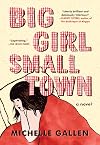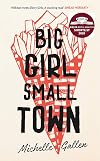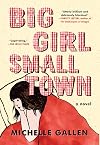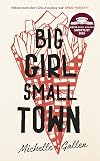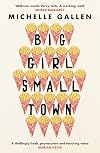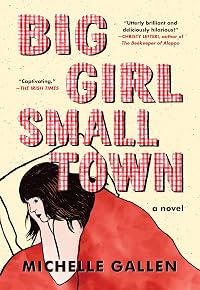
Big Girl, Small Town
by Michelle Gallen
On This Page
Description
"Majella is happiest out of the spotlight, living a quiet life away from neighbors' stares and the gossips of the small town in Northern Ireland where she grew up during the Troubles. But underneath her seemingly predictable existence, she doesn't know where her father is, and every person in her town has been changed by the lingering divide between Protestants and Catholics. When Majella's grandmother dies, she comes to realize there may be more to life than the gossips of Aghybogey, the show more pub, and the chip shop. In fact, there just may be a whole big world outside her small town"-- show lessTags
Recommendations









Member Reviews
Thanks to Workman publishing for the ARC in exchange for an honest review.
Tell Majella O’Neill no tales of wild, romantic Northern Ireland. Her town, Aghybogey, is intolerable, and so are nearly all of the people in it—except, occasionally, her coworker Marty. Majella’s a large, grubby, 27-year-old working in a “chipper,” a restaurant that we in the U. S. would call a “greasy spoon.”
Majella tries to retain clarity and personal agency by maintaining a detailed list of what she likes and dislikes. Each section in the book is named for one of these likes or dislikes. By imposing personal preferences on each event, she keeps herself separate and well-defined within the hellhole of Aghybogey, even if booze is on the Dislike show more list and she gets drunk on Sunday nights. Nothing can happen outside of Majella's tidy like/dislike frames.
The reader never leaves Majella’s dark comic perspective and I felt encamped there rather too intimately for comfort. The reader may want to put on clean underwear and/or take a shower every few chapters, and yet Majella is a clean and beauty-loving person by nature. "Dirt and Disorder" are on the Dislike List. She’s simply been swamped by the filth all around her. The nastiness of Northern Ireland during the Troubles killed family members and pets, plunged her mother into addiction and hoarding behaviors, and almost blots out the sun. Majella works long hours at a low-wage job for a hateful employer.
Rocking back and forth and flicking her fingers are ways for Majella to maintain her sanity. She takes smoking breaks to avoid overstimulation at work. She has rules: you must say your rosary and wait a respectful length of time before “wanking” (masturbating, Good Stuff Item 9.1) before bed, to avoid sacrilege.
The author, Michelle Gellen, keeps the book from getting too dark and despairing by making Majella body positive, sex positive, and just plain spunky under the circumstances.
I felt that all of the bodily fluids got in the way of plot development, which may have been the point: they are one of many things holding Majella back from figuring out the next steps in her life: she is after all neurodivergent, on codeine, grieving, and easily distracted. The inept British security forces who occupy her town (PissNI) can’t figure out who beat her granny to death and their investigation is a terror to Majella and her mum, not a source of hope or comfort. It may not help Majella's levels of motivation that her diet is entirely composed of grease, salt, and sugar.
U. S. readers may read sociopolitical implications into the ending and be puzzled by what it means, but maybe no one in Ireland can figure it out either. Gallen reveals one thing Majella is planning to do but I was left feeling dissatisfied. Having come with her this far, I wanted to walk in her big greasy shoes in some decisive direction, preferably positive. Perhaps it's a sequel setup?
If you like the main character, you’ll like the book; if you don’t you won’t. I did like Majella, very much. As a book club pick (and the book club guide will have a much-needed Irish slang glossary) this will give thoughful book clubs plenty to discuss. show less
Tell Majella O’Neill no tales of wild, romantic Northern Ireland. Her town, Aghybogey, is intolerable, and so are nearly all of the people in it—except, occasionally, her coworker Marty. Majella’s a large, grubby, 27-year-old working in a “chipper,” a restaurant that we in the U. S. would call a “greasy spoon.”
Majella tries to retain clarity and personal agency by maintaining a detailed list of what she likes and dislikes. Each section in the book is named for one of these likes or dislikes. By imposing personal preferences on each event, she keeps herself separate and well-defined within the hellhole of Aghybogey, even if booze is on the Dislike show more list and she gets drunk on Sunday nights. Nothing can happen outside of Majella's tidy like/dislike frames.
The reader never leaves Majella’s dark comic perspective and I felt encamped there rather too intimately for comfort. The reader may want to put on clean underwear and/or take a shower every few chapters, and yet Majella is a clean and beauty-loving person by nature. "Dirt and Disorder" are on the Dislike List. She’s simply been swamped by the filth all around her. The nastiness of Northern Ireland during the Troubles killed family members and pets, plunged her mother into addiction and hoarding behaviors, and almost blots out the sun. Majella works long hours at a low-wage job for a hateful employer.
Rocking back and forth and flicking her fingers are ways for Majella to maintain her sanity. She takes smoking breaks to avoid overstimulation at work. She has rules: you must say your rosary and wait a respectful length of time before “wanking” (masturbating, Good Stuff Item 9.1) before bed, to avoid sacrilege.
The author, Michelle Gellen, keeps the book from getting too dark and despairing by making Majella body positive, sex positive, and just plain spunky under the circumstances.
I felt that all of the bodily fluids got in the way of plot development, which may have been the point: they are one of many things holding Majella back from figuring out the next steps in her life: she is after all neurodivergent, on codeine, grieving, and easily distracted. The inept British security forces who occupy her town (PissNI) can’t figure out who beat her granny to death and their investigation is a terror to Majella and her mum, not a source of hope or comfort. It may not help Majella's levels of motivation that her diet is entirely composed of grease, salt, and sugar.
U. S. readers may read sociopolitical implications into the ending and be puzzled by what it means, but maybe no one in Ireland can figure it out either. Gallen reveals one thing Majella is planning to do but I was left feeling dissatisfied. Having come with her this far, I wanted to walk in her big greasy shoes in some decisive direction, preferably positive. Perhaps it's a sequel setup?
If you like the main character, you’ll like the book; if you don’t you won’t. I did like Majella, very much. As a book club pick (and the book club guide will have a much-needed Irish slang glossary) this will give thoughful book clubs plenty to discuss. show less
What a relief not to be 27 year old Majella O'Neill of the miserable small town of Aghybogey, N. Ireland, near the Free State border, a place just as awful as its name sounds. Working in A Salt and Battered!, a chipper (fast food /fried fish shop) and observing its patrons endlessly to the tune of "Wha can I get chew?", Majella's beloved Gran has been robbed, beaten, and has died from an assault, her Ma is an alcoholic, and her Da disappeared after his cousin died during the Troubles. Now there's a shaky peace, but Majella is stuck, with few friends and little to look forward to. Somewhat paralyzed by her inertia and her obsessive-compulsive, self-soothing habits, even a trip to a bigger town to buy a new comforter requires a major show more decision and a dreaded excursion. For all that's negative, there's something about Majella that is admirable and sympathetic, mostly her sense of humor and her hilariously brutal analysis of the foibles of her neighbors. For an American reader, poring through the unfamiliar slang, the casual cruelty, the sex and gossip, is like being exposed to an entirely new world – completely enjoyable to visit but relief that it isn’t your home. But, as is told, joy could come in the morning. show less
Majella O'Neill lives in the small town of Aghybogey in Northern Ireland; it's after the Troubles, but only just. She works at a chip shop with Marty, and lives with her ma in her childhood home; her dad disappeared years ago. Majella hoped he would turn up recently, when his mother - her grandmother - was assaulted and killed; his failure to reappear convinces Majella that he's dead, like her Uncle Bobby. The results of her grandmother's will come as a surprise: instead of leaving her land to Aunt Marie, as everyone expected, she left it to Majella.
Majella seems to be neurodiverse, using coping strategies such as rocking and finger-flicking to calm herself, though she has been shamed for these strategies by her mother and teachers and show more only does them in private now. She has a long list of things that irritate her (loud noises, etc.), which boils down mostly to "other people." Yet, unlike Eleanor (Eleanor Oliphant Is Completely Fine), Majella does not really come any further out of her shell or her patterns.
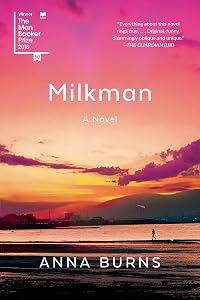
I can't say I agree with the positive reviews for this book (starred review from Booklist!). At first, it did remind me of Eleanor Oliphant is Completely Fine crossed with Milkman by Anna Burns - only, unlike Eleanor, Majella O'Neill shows little to no character development over the week the book takes place - no change, no growth. I kept reading in the hopes that something would happen or change, and on the last page or two there's a hint of it, but nothing near like what I'd hoped for. Admirable recreation of a time and place, but ultimately a letdown.
See also: Milkman by Anna Burns, Eleanor Oliphant Is Completely Fine by Gail Honeyman, Normal People by Sally Rooney, Skippy Dies by Paul Murray
Quotes
Throughout her childhood, the local news had been a litany of deaths, explosions, and murder attempts. Things only got worse after peace broke out. (8)
It was a town in which there was nowhere to hide, so people hid stuff in plain sight. (15)
She hated fighting with her ma. Neither of them ever won. (108)
She had learned a long time ago that it was a bad idea to tell people what she was really thinking. (132)
As hard as it was to figure out what people meant from the actual words they used, she found figuring looks out near impossible. (208)
Majella had yet to see the magic in the human journey... (256)
The main problem Majella had found in Aghybogey was that the lads weren't reading the same magazines as the girls, so they weren't engaged in any self-improvement program... (276) show less
Majella seems to be neurodiverse, using coping strategies such as rocking and finger-flicking to calm herself, though she has been shamed for these strategies by her mother and teachers and show more only does them in private now. She has a long list of things that irritate her (loud noises, etc.), which boils down mostly to "other people." Yet, unlike Eleanor (Eleanor Oliphant Is Completely Fine), Majella does not really come any further out of her shell or her patterns.
I can't say I agree with the positive reviews for this book (starred review from Booklist!). At first, it did remind me of Eleanor Oliphant is Completely Fine crossed with Milkman by Anna Burns - only, unlike Eleanor, Majella O'Neill shows little to no character development over the week the book takes place - no change, no growth. I kept reading in the hopes that something would happen or change, and on the last page or two there's a hint of it, but nothing near like what I'd hoped for. Admirable recreation of a time and place, but ultimately a letdown.
See also: Milkman by Anna Burns, Eleanor Oliphant Is Completely Fine by Gail Honeyman, Normal People by Sally Rooney, Skippy Dies by Paul Murray
Quotes
Throughout her childhood, the local news had been a litany of deaths, explosions, and murder attempts. Things only got worse after peace broke out. (8)
It was a town in which there was nowhere to hide, so people hid stuff in plain sight. (15)
She hated fighting with her ma. Neither of them ever won. (108)
She had learned a long time ago that it was a bad idea to tell people what she was really thinking. (132)
As hard as it was to figure out what people meant from the actual words they used, she found figuring looks out near impossible. (208)
Majella had yet to see the magic in the human journey... (256)
The main problem Majella had found in Aghybogey was that the lads weren't reading the same magazines as the girls, so they weren't engaged in any self-improvement program... (276) show less
Big Girl, Small Town recounts a week in the life of Majella O'Neill, not long after the signing of the Good Friday Agreement and the murder of Majella's own grandmother. Majella lives in a small, poor Border town and comes from a small, poor family—her mother's an unemployed alcoholic and it's implied that her father was disappeared by the IRA—and works a dead-end job in a local chipper. She is almost certainly autistic, but undiagnosed, and lives a life of narrowly constrained routine.
This is a tough book to rate in that Michelle Gallen clearly sets out to achieve certain things, and does so, but they're not necessarily things I enjoy or am interested in reading about right now. As a pen portrait of Majella and the town of show more Agheyboghey, it's vivid and convincing: I could absolutely believe in her as a person and Agheyboghey as a claustrophobic small Irish town in the early 2000s. Majella's deadpan observations are often morbidly funny, and Gallen's got a great ear for naturalistic dialogue.
But while Gallen's attention to sensory detail is just as precise, all of the mentions of body odour and bodily fluids soon became overwhelming, and I actually started to feel nauseated from the number of times Majella mashes and crams chips into her mouth. The choice to render the dialogue phonetically grated with me (it always does), I thought the pacing was off, and for me there was a little too much emphasis on character observation over character development. In many ways, a really strong first novel—just one I didn't click with. show less
This is a tough book to rate in that Michelle Gallen clearly sets out to achieve certain things, and does so, but they're not necessarily things I enjoy or am interested in reading about right now. As a pen portrait of Majella and the town of show more Agheyboghey, it's vivid and convincing: I could absolutely believe in her as a person and Agheyboghey as a claustrophobic small Irish town in the early 2000s. Majella's deadpan observations are often morbidly funny, and Gallen's got a great ear for naturalistic dialogue.
But while Gallen's attention to sensory detail is just as precise, all of the mentions of body odour and bodily fluids soon became overwhelming, and I actually started to feel nauseated from the number of times Majella mashes and crams chips into her mouth. The choice to render the dialogue phonetically grated with me (it always does), I thought the pacing was off, and for me there was a little too much emphasis on character observation over character development. In many ways, a really strong first novel—just one I didn't click with. show less
Twenty-seven-year-old Majella O’Neill is an overweight reclusive who lives with her alcoholic mother in Aghybogey, a small town in Northern Ireland near the Irish Republic border. She works in a fish-and-chip shop called A Salt and Battered! The novel depicts a week of her life.
The book is set in 2003, five years after the Good Friday Agreement that ended most of the violence of the Troubles; however, the legacy of the Troubles looms over Aghybogey which remains a community divided between Taigs (Catholics) and Prods (Protestants), with little contact between the groups. Certainly, Majella's family has been affected: years ago her uncle died in a bomb explosion and her father “disappeared”; recently her grandmother died because of show more a beating.
The book begins with a list of things Majella dislikes which extends to “ninety-seven items, with subcategories for each item.” There are seven chapters, organized by day of the week and chronologically by time, but within each chapter there are sub-headings based on Majella’s dislikes. For example, “4:04 p.m. - Item 12.2: Conversations: Rhetorical questions” and “7:15 p.m. - Item 3.4: Noise: Shite singing” and “10:00 p.m. - Item 8.4: Jokes: Repeated jokes” and “11:07 p.m. - Item 4.1: Bright lights: Fluorescent bulbs” are some of the subtitles in the Monday chapter. This structure effectively elaborates items on Majella’s list.
The character sketch of Majella is the book’s greatest strength. Though the term is never used, it is quite clear that she is on the autism spectrum. She craves routine, enjoys repetitive actions, has difficulty reading faces for emotions, and finds social situations awkward. To relieve stress, she has a habit of rocking and flicking her fingers. She dislikes change so the monotonous routine of her job is perfect for her. She tends to be gruff and straight to the point but is also kind-hearted.
Majella’s observations of life in Aghybogey and her comments about its residents are astute. The tensions between the Catholics and Protestants are mentioned often. Though she is Catholic, Majella sees flaws in her religion too. A priest tells Majella they have not been able to find her father to notify him that his mother has died: “the Catholic Church had feelers stretching into every home that hung a crucifix on its wall, a reach wider, deeper, creepier than the police.” One of Majella’s co-workers is Polish and though everyone accepts them because they’re hardworking, she knows that in truth, “the Poles were welcomed because they were Not Prods. Every Pole who came over to Northern Ireland tipped the scales another wee bit lower in favor of the Catholic side. Majella reckoned it’d be a different story if the Poles were Muslim.” And typical of a small town, before the day is over, everyone knows that Majella went to a lawyer for a reading of the grandmother’s will and even knows the contents of that will.
The dialogue is phonetic. For example, Majella greets customers with “’What can ah get chew?’” Some dialect does present some confusion. Oxters, craic, gurning, minging, boke, stocious, guldered, cleastered, rifted and redd are some of the words that had me checking a dictionary. Like Majella’s Polish co-worker, I learned some new words for drunk: blootered, lamped, mouldy, peeshed, lashed, stoven, langered, goothered, and gee-eyed.
There is considerable humour. Someone who has drunk too much can be described as “full as a sheugh” or “full as a bingo bus” or “full as a Catholic school”! Some of the humour arises from Majella’s literalness. When Marty complains about a constantly flickering fluorescent light by saying, “’Well, fuck me if ah don’t take a hammer tae that light the nights,’” Majella’s thought process is hilarious: “Majella knew Marty didn’t have a hammer and so wasn’t likely to attack the light. She was not sure of the relationship between him not hammering the light and her having to fuck him.” When a woman wants to build bridges across community divisions, Majella has to be told that the bridges are not literal bridges: “This struck Majella as a much more difficult engineering project, one complicated by the fact that although most people would see the need for rebuilding the literal bridges, no one had an eye for invisible bridges. Majella herself did wonder why no one had considered drawbridges in the whole scheme of things, which could serve as bridges when the need arose.”
This is not an action-packed novel. It focuses on life in a small Irish town as seen through the eyes of an usual protagonist who simply wants to live an untroubled life. Majella will remain with the reader long after the book is closed.
Note: Please check out my reader's blog (https://schatjesshelves.blogspot.com/) and follow me on Twitter (@DCYakabuski). show less
The book is set in 2003, five years after the Good Friday Agreement that ended most of the violence of the Troubles; however, the legacy of the Troubles looms over Aghybogey which remains a community divided between Taigs (Catholics) and Prods (Protestants), with little contact between the groups. Certainly, Majella's family has been affected: years ago her uncle died in a bomb explosion and her father “disappeared”; recently her grandmother died because of show more a beating.
The book begins with a list of things Majella dislikes which extends to “ninety-seven items, with subcategories for each item.” There are seven chapters, organized by day of the week and chronologically by time, but within each chapter there are sub-headings based on Majella’s dislikes. For example, “4:04 p.m. - Item 12.2: Conversations: Rhetorical questions” and “7:15 p.m. - Item 3.4: Noise: Shite singing” and “10:00 p.m. - Item 8.4: Jokes: Repeated jokes” and “11:07 p.m. - Item 4.1: Bright lights: Fluorescent bulbs” are some of the subtitles in the Monday chapter. This structure effectively elaborates items on Majella’s list.
The character sketch of Majella is the book’s greatest strength. Though the term is never used, it is quite clear that she is on the autism spectrum. She craves routine, enjoys repetitive actions, has difficulty reading faces for emotions, and finds social situations awkward. To relieve stress, she has a habit of rocking and flicking her fingers. She dislikes change so the monotonous routine of her job is perfect for her. She tends to be gruff and straight to the point but is also kind-hearted.
Majella’s observations of life in Aghybogey and her comments about its residents are astute. The tensions between the Catholics and Protestants are mentioned often. Though she is Catholic, Majella sees flaws in her religion too. A priest tells Majella they have not been able to find her father to notify him that his mother has died: “the Catholic Church had feelers stretching into every home that hung a crucifix on its wall, a reach wider, deeper, creepier than the police.” One of Majella’s co-workers is Polish and though everyone accepts them because they’re hardworking, she knows that in truth, “the Poles were welcomed because they were Not Prods. Every Pole who came over to Northern Ireland tipped the scales another wee bit lower in favor of the Catholic side. Majella reckoned it’d be a different story if the Poles were Muslim.” And typical of a small town, before the day is over, everyone knows that Majella went to a lawyer for a reading of the grandmother’s will and even knows the contents of that will.
The dialogue is phonetic. For example, Majella greets customers with “’What can ah get chew?’” Some dialect does present some confusion. Oxters, craic, gurning, minging, boke, stocious, guldered, cleastered, rifted and redd are some of the words that had me checking a dictionary. Like Majella’s Polish co-worker, I learned some new words for drunk: blootered, lamped, mouldy, peeshed, lashed, stoven, langered, goothered, and gee-eyed.
There is considerable humour. Someone who has drunk too much can be described as “full as a sheugh” or “full as a bingo bus” or “full as a Catholic school”! Some of the humour arises from Majella’s literalness. When Marty complains about a constantly flickering fluorescent light by saying, “’Well, fuck me if ah don’t take a hammer tae that light the nights,’” Majella’s thought process is hilarious: “Majella knew Marty didn’t have a hammer and so wasn’t likely to attack the light. She was not sure of the relationship between him not hammering the light and her having to fuck him.” When a woman wants to build bridges across community divisions, Majella has to be told that the bridges are not literal bridges: “This struck Majella as a much more difficult engineering project, one complicated by the fact that although most people would see the need for rebuilding the literal bridges, no one had an eye for invisible bridges. Majella herself did wonder why no one had considered drawbridges in the whole scheme of things, which could serve as bridges when the need arose.”
This is not an action-packed novel. It focuses on life in a small Irish town as seen through the eyes of an usual protagonist who simply wants to live an untroubled life. Majella will remain with the reader long after the book is closed.
Note: Please check out my reader's blog (https://schatjesshelves.blogspot.com/) and follow me on Twitter (@DCYakabuski). show less
First off, I enjoyed this book immensely, not because it was a “page-turner” in the traditional sense, or that it was an incredible and extraordinary story, but because it was absolutely ordinary, sometimes crass and graphic, and 100% real.
Another in the long line of books I’ve read this year set in Ireland, I was taken from the usual scenic landscapes or busy cities to a small, gritty town with a tense past. Beginning with a tragedy, the story follows Majella through her everyday routine and interactions, specifying her likes and dislikes outright. I was absolutely thrilled that despite her less than “fit” physique or being classically attractive, Majella is comfortable in her own skin, confident in her abilities, and show more content in her unremarkable life. She’s honest and loyal without gushing and responsible without ambition.
I like to describe these types of books as being more about the journey than the destination. Focusing on relationships and engagements, recalling significant events and memories, and reveling in the tasks at hand, this brand of storytelling takes talent and finesse to be successful. Gallen has proven that she knows how to capture the reader’s attention with the perfect blend of commonplace and introspection. Taking a walk in Majella’s shoes and experiencing her life firsthand allows the reader to get a sense of what it’s like to live in post-conflict Northern Ireland with its unique trials and adversity.
It would be remiss for me to not warn the reader about the challenge of reading this book on an empty stomach. Descriptions in this book are so vivid and detailed that I craved fish and chips throughout the entire story and ended up making them upon finishing the book. They were delicious and I devoured them as quickly as I devoured this novel.
Thank you Algonquin Books and Michelle Gallen for an advanced copy of this book. The opinions are my own. show less
Another in the long line of books I’ve read this year set in Ireland, I was taken from the usual scenic landscapes or busy cities to a small, gritty town with a tense past. Beginning with a tragedy, the story follows Majella through her everyday routine and interactions, specifying her likes and dislikes outright. I was absolutely thrilled that despite her less than “fit” physique or being classically attractive, Majella is comfortable in her own skin, confident in her abilities, and show more content in her unremarkable life. She’s honest and loyal without gushing and responsible without ambition.
I like to describe these types of books as being more about the journey than the destination. Focusing on relationships and engagements, recalling significant events and memories, and reveling in the tasks at hand, this brand of storytelling takes talent and finesse to be successful. Gallen has proven that she knows how to capture the reader’s attention with the perfect blend of commonplace and introspection. Taking a walk in Majella’s shoes and experiencing her life firsthand allows the reader to get a sense of what it’s like to live in post-conflict Northern Ireland with its unique trials and adversity.
It would be remiss for me to not warn the reader about the challenge of reading this book on an empty stomach. Descriptions in this book are so vivid and detailed that I craved fish and chips throughout the entire story and ended up making them upon finishing the book. They were delicious and I devoured them as quickly as I devoured this novel.
Thank you Algonquin Books and Michelle Gallen for an advanced copy of this book. The opinions are my own. show less
The cover of 'Big Girl, Small Town' describes it as 'Milkman meets Derry Girls'. That essentially convinced me to read it, as I love Derry Girls and was hoping for similarly dark and chaotic humour. Perhaps I should have paid more attention to the other half of the comparison, as I haven't read [b:Milkman|36047860|Milkman|Anna Burns|https://i.gr-assets.com/images/S/compressed.photo.goodreads.com/books/1526985855l/36047860._SY75_.jpg|57622946]. 'Big Girl, Small Town' follows Majella, an autistic woman who works at a chip shop and lives with her alcoholic mother. Her father disappeared during the Troubles and her grandmother has just died as the narrative begins. I thought that perhaps the mysteries of both deaths would drive the plot, show more but the focus is in fact on Majella's daily routine. Her inner life and experience is evoked with vividness and sensitivity. The repeated scenes in the chip shop have a bit of comedy about them, while Majella's home life is consistently tragic. Her relationship with her mother and the flashbacks to her childhood are grimly sad. The poverty in her local area is also clearly shown. Although the novel takes place after the Good Friday Agreement, the legacy of the Troubles is evident.
The chapters are loosely structured around things that Majella likes and dislikes. I liked the attention to details of sensation, which made her perspective immersive. The dialogue was also a strength. Nonetheless, I wasn't as gripped as I'd expected. It seemed to me as though the narrative didn't embrace humour, plot, or social commentary quite enough. Although I found Majella an appealing and sympathetic character, the decision she makes on the last page seemed very sudden. I would perhaps have preferred the first half of the novel to cover her daily routine, then the second half to explore the implications of that decision. As it was, the novel relied upon the distinctiveness of her narrative perspective for interest. I quickly became accustomed to this, so wanted a bit more to chew on. By contrast, [b:Convenience Store Woman|38357895|Convenience Store Woman|Sayaka Murata|https://i.gr-assets.com/images/S/compressed.photo.goodreads.com/books/1523623053l/38357895._SY75_.jpg|51852264], another novel about a seemingly austistic woman working a retail job, disrupts the protagonist's routine with plot developments early on. I found that more involving, although both novels have thoughtfully written main characters. show less
The chapters are loosely structured around things that Majella likes and dislikes. I liked the attention to details of sensation, which made her perspective immersive. The dialogue was also a strength. Nonetheless, I wasn't as gripped as I'd expected. It seemed to me as though the narrative didn't embrace humour, plot, or social commentary quite enough. Although I found Majella an appealing and sympathetic character, the decision she makes on the last page seemed very sudden. I would perhaps have preferred the first half of the novel to cover her daily routine, then the second half to explore the implications of that decision. As it was, the novel relied upon the distinctiveness of her narrative perspective for interest. I quickly became accustomed to this, so wanted a bit more to chew on. By contrast, [b:Convenience Store Woman|38357895|Convenience Store Woman|Sayaka Murata|https://i.gr-assets.com/images/S/compressed.photo.goodreads.com/books/1523623053l/38357895._SY75_.jpg|51852264], another novel about a seemingly austistic woman working a retail job, disrupts the protagonist's routine with plot developments early on. I found that more involving, although both novels have thoughtfully written main characters. show less
Members
- Recently Added By
Lists

Maybe This Year? Books to Look Forward To
409 works; 9 members
Author Information
2+ Works 369 Members
Some Editions
Awards and Honors
Awards
Common Knowledge
- Canonical title
- Big Girl, Small Town
- Original publication date
- 2020
- People/Characters
- Majella O'Neill
- Important places
- Northern Ireland; Aghybogey, Northern Ireland
- Important events
- The Troubles
- Epigraph
- What if we accept these points of light, their translucence, their brightness; what if we let ourselves enjoy this, stop fearing it, get used to it; what if we come to believe in it, to expect it, to be impressed upon by it; ... (show all)what if we take hope and forgo our ancient heritage and instead, and infused, begin to entrain with it, with ourselves then to radiate it; what if we do that, get educated up to that, and then, just like that, the light goes off or is snatched away?
Milkman, Anna Burns - Dedication
- For Mehdi, who sees clearly
- First words
- Majella kept a list of stuff in her head that she wasn't keen on.
- Last words
- (Click to show. Warning: May contain spoilers.)For she'd a solicitor to talk to in the morning about the price of land.
Classifications
Statistics
- Members
- 217
- Popularity
- 150,109
- Reviews
- 21
- Rating
- (3.33)
- Languages
- English, French
- Media
- Paper, Audiobook, Ebook
- ISBNs
- 12
- ASINs
- 5