On This Page
Description
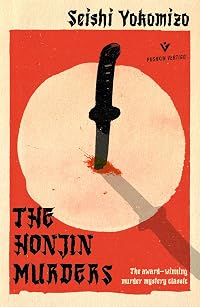
A Town & Country “Best Classic Murder Mystery Books of All Time”Japan’s Agatha Christie introduces the beloved Detective Kindaichi in this 1930s classic locked room mystery—now translated into English for the first time!
In the winter of 1937, the village of Okamura is abuzz with excitement over the forthcoming wedding of a son of the grand Ichiyanagi family. But amid the gossip over the approaching festivities, there is also a worrying rumor—it seems a sinister masked man has show more been asking questions around the village.
Then, on the night of the wedding, the Ichiyanagi household are woken by a terrible scream, followed by the sound of eerie music. Death has come to Okamura, leaving no trace but a bloody samurai sword, thrust into the pristine snow outside the house. Soon, amateur detective Kosuke Kindaichi is on the scene to investigate what will become a legendary murder case, but can this scruffy sleuth solve a seemingly impossible crime? show less
Tags
Recommendations







Member Reviews
A good mystery – classic and clever
It’s 1937, and a wedding is about to take place. The heir of a prominent family has chosen a bride of a “common” lineage and the family does not approve. Just before the wedding, a suspicious stranger appears. Then there is a horrible tragedy. We have a locked room mystery! There are lots of puzzling details, including the sounds of koto being played. (Naturally, I had to check how koto sounds. I suggest you do the same, it’s beautiful.)
A private detective appears on the scene! Kosuke Kindaichi, I think I like you. Kosuke doesn’t care about his appearance, is very charming and speaks with a stutter. He is the perfect private detective in a mystery novel:
”Challenge accepted! If it was show more brains and logic and wit that were required, I was ready to do battle.”
All the classic Japanese mysteries I have read so far love to reference Western mystery classics. I like these nods very much. I do appreciate meta things! At one point, the characters discuss mystery novels. That discussion becomes important later in the book.
The solution to the mystery is very clever. It is also horrifying, heartbreaking and sickening.
I thought the beginning of the book was very slow, so that I began to wonder whether I was going to enjoy it or not. Then it became more interesting. I also wish The Honjin Murders was a bit longer – to flesh out the characters more and make the setting more real. I still enjoyed it, though. Apparently, there are 77 books (!!!) in the Kosuke Kindaichi series, but only 7 have been translated into English. Maybe it’s a good thing… since now there is one more Japanese mystery author I want to read more of.
Another quote:
”To sum up, the Ichiyanagi family had suffered for generations from stubborn, headstrong men and their intense personalities.” (Me: maybe you are not the only ones.) show less
It’s 1937, and a wedding is about to take place. The heir of a prominent family has chosen a bride of a “common” lineage and the family does not approve. Just before the wedding, a suspicious stranger appears. Then there is a horrible tragedy. We have a locked room mystery! There are lots of puzzling details, including the sounds of koto being played. (Naturally, I had to check how koto sounds. I suggest you do the same, it’s beautiful.)
A private detective appears on the scene! Kosuke Kindaichi, I think I like you. Kosuke doesn’t care about his appearance, is very charming and speaks with a stutter. He is the perfect private detective in a mystery novel:
”Challenge accepted! If it was show more brains and logic and wit that were required, I was ready to do battle.”
All the classic Japanese mysteries I have read so far love to reference Western mystery classics. I like these nods very much. I do appreciate meta things! At one point, the characters discuss mystery novels. That discussion becomes important later in the book.
The solution to the mystery is very clever. It is also horrifying, heartbreaking and sickening.
I thought the beginning of the book was very slow, so that I began to wonder whether I was going to enjoy it or not. Then it became more interesting. I also wish The Honjin Murders was a bit longer – to flesh out the characters more and make the setting more real. I still enjoyed it, though. Apparently, there are 77 books (!!!) in the Kosuke Kindaichi series, but only 7 have been translated into English. Maybe it’s a good thing… since now there is one more Japanese mystery author I want to read more of.
Another quote:
”To sum up, the Ichiyanagi family had suffered for generations from stubborn, headstrong men and their intense personalities.” (Me: maybe you are not the only ones.) show less
When Kenzo and Katsuko are found dead on their wedding night, suspicion falls on a mysterious three-fingered man who had been seen asking for directions to and hanging around the house earlier that day. The bride's uncle calls in renowned private detective Kosuke Kindaichi to investigate.
3/4 of the way through I was thinking, "ingenious but maybe a bit too ingenious for its own good" but then the explanation for the ingenuity came along and made it into something quite excellent such that I can see why Seishi Yokomizo has such a great reputation.
3/4 of the way through I was thinking, "ingenious but maybe a bit too ingenious for its own good" but then the explanation for the ingenuity came along and made it into something quite excellent such that I can see why Seishi Yokomizo has such a great reputation.
The Ichiyanagi family is considered to be of notable lineage because it can claim descent from the owners of a honjin, or an inn for government officials. Kenzo, the heir to the head branch of the family, is getting married at the ripe old age of 40, and the festivities are lavish. But on the wedding night, murder strikes. The crime seems impossible: a locked room, a house surrounded by snow and betraying no footprints, and mysterious strangers who seem to have vanished. How was the crime perpetrated? Enter Kasuko Kindaichi, an eccentric amateur detective whose unalloyed enthusiasm for crime novels lulls his suspects into a false sense of security.
This is considered to be a classic among the Japanese locked-room mystery canon; it show more name-checks and draws upon many locked-room mystery practitioners from the English-speaking world, most notably John Dickson Carr. In a way the characters discoursing on locked-room mysteries reminded me of Carr’s The Hollow Man, which contains Dr. Fell’s famous lecture on the subject. The style comes across as rather formal, and the nameless narrator breaks the fourth wall occasionally, referring directly to the readers as “ladies and gentlemen”. An element I particularly liked about this book was how it would introduce Japanese words by italicizing on first use, then dropping the italics on subsequent uses to make them part of the story, instead of “othering” the words by keeping them italicized all the time. There were a couple of challenges associated with translating dialogue about a letter written in Japanese, but overall I think the translator did a good job.
This was one of those books where I exclaimed out loud when the solution was revealed, so if you are similarly susceptible to surprises, you might like this book. I’d recommend this more if you’re already familiar with the locked-room genre, and particularly if you’ve read The Plague Court Murders, by John Dickson Carr, or The Mystery of the Yellow Room, by Gaston Leroux, because those are name-checked in ways that might be slight spoilers. show less
This is considered to be a classic among the Japanese locked-room mystery canon; it show more name-checks and draws upon many locked-room mystery practitioners from the English-speaking world, most notably John Dickson Carr. In a way the characters discoursing on locked-room mysteries reminded me of Carr’s The Hollow Man, which contains Dr. Fell’s famous lecture on the subject. The style comes across as rather formal, and the nameless narrator breaks the fourth wall occasionally, referring directly to the readers as “ladies and gentlemen”. An element I particularly liked about this book was how it would introduce Japanese words by italicizing on first use, then dropping the italics on subsequent uses to make them part of the story, instead of “othering” the words by keeping them italicized all the time. There were a couple of challenges associated with translating dialogue about a letter written in Japanese, but overall I think the translator did a good job.
This was one of those books where I exclaimed out loud when the solution was revealed, so if you are similarly susceptible to surprises, you might like this book. I’d recommend this more if you’re already familiar with the locked-room genre, and particularly if you’ve read The Plague Court Murders, by John Dickson Carr, or The Mystery of the Yellow Room, by Gaston Leroux, because those are name-checked in ways that might be slight spoilers. show less
I can see why this is a classic Japanese golden age locked room mystery. It starts with a scream heard in the middle of the night and the discordant sound of a koto being plucked savagely. It ends with the moon shining on a bloody katana stuck into the snow with no footprints around it, outside of a locked room in which two newlyweds have been slaughtered on their wedding night. It features a strange three-fingered man with a scar across his face, a young girl who sleepwalks in search of the ghost of her dead cat, a rich family ridden with intrigue, a son fascinated by Western mystery novels, and an eccentric, untidy, stammering private detective joyfully unravelling it all.
The imagery is stark, beautiful and, to my Anglo eyes, exotic. show more I kept imagining it as a manga, drawn only in black white and blood-red or like the animation in 'Sin City', dark, violent and accented with sprays of blood.
The storytelling style was a little unexpected. The novel opens like a documentary, narrated in the first person by a writer of detective fiction who is documenting what he has learnt about the murders at a wedding in the house of a wealthy family near the village to which he has recently been evacuated during the war. The murders, he tells us as he looks through the fence at a once-grand but now slightly dilapidated house, took place some years earlier, in 1937. He displays what I felt was a slightly ghoulish fascination with the murders because they are a locked room mystery set in a room where the beams and the woodwork were freshly painted red ochre and with the music of a koto playing at all the key moments. He compares the murders to the mysteries of John Dixon Carr but says the atmosphere is most similar to Gastón Leroux’s ‘The Mystery Of The Yellow Room.' So, despite the documentary style, his taste for fiction colours what he sees, turning a tragedy into a puzzle and lethal violence into an intriguing challenge.
Still in documentary style, the narrator shares the story of the Honjin murders in the form of reports from various eyewitnesses, like an historian share his source material. This style of presentation didn't lend itself to much tension or excitement.
Only when the strange young private detective, Kosuke Kindaichi, arrives do we get a narrative with pace, immediacy and humour. Fortunately, those scenes account for about half of the book.
The plot is ingenious and the solution to the locked room mystery is rather splendid. Sadly, the exposition isn't as fresh and exciting as the idea. The final section of the book dragged a little, having the same appeal as listening to a magician explain at length and in detail the mechanics of his magic trick.
On the whole, I had fun reading this. It was nice to step outside my own time and culture and to be presented with an absorbing mystery.
I liked the young detective, Kosuke Kindaichiso enough that I'm curious to read the other three novels about him that have been translated into English: Death on Gokumon Island, The Village of Eight Graves, and The Inugami Clan (a.k.a The Inugami Curse). show less
Great detective novel; I read it straight through eight hours last night 6PM t0 2AM.
its a Japanese "locked room" murder mystery. A couple on their wedding night get brutally killed. The bloodied katana is found outside their house sticking out of the snowy ground. No footprints are found.All the doors of the house remain locked from the inside.
A major theme of the novel is murder mysteries themselves. The narrator is an author of fictional versions, who relays the story second hand, and one of the characters is a big aficianado of Arthur Conan Doyle and Agatha Christie.
Not mentioned in the text, but I suspect another influence is Edgar Allan Poe, in particular his short story "The Black Cat".
Along with the main suspect, a sinister show more wandering three fingered tramp, the other most interesting character is Suzuko, youngest daughter of the widowed matriarch, "considered a bit slow". Prone to sleepwalking, and troubled by her pet cats death.
Yokomizo uses a similar technique to Poe, of stacking eerie coincidences in the plot, while ostensibly dismissing superstitious nonsense, for example about ghost cats, in the surface narrative.
The murders happen against a back story of an old island feud, sinister strains of a koto playing at night, and the old hangovers of the hierarchies of feudal Japan.
Ending paragraphs are so poignant that the story stays with you after you've finished reading.
A great read. show less
its a Japanese "locked room" murder mystery. A couple on their wedding night get brutally killed. The bloodied katana is found outside their house sticking out of the snowy ground. No footprints are found.All the doors of the house remain locked from the inside.
A major theme of the novel is murder mysteries themselves. The narrator is an author of fictional versions, who relays the story second hand, and one of the characters is a big aficianado of Arthur Conan Doyle and Agatha Christie.
Not mentioned in the text, but I suspect another influence is Edgar Allan Poe, in particular his short story "The Black Cat".
Along with the main suspect, a sinister show more wandering three fingered tramp, the other most interesting character is Suzuko, youngest daughter of the widowed matriarch, "considered a bit slow". Prone to sleepwalking, and troubled by her pet cats death.
Yokomizo uses a similar technique to Poe, of stacking eerie coincidences in the plot, while ostensibly dismissing superstitious nonsense, for example about ghost cats, in the surface narrative.
The murders happen against a back story of an old island feud, sinister strains of a koto playing at night, and the old hangovers of the hierarchies of feudal Japan.
Ending paragraphs are so poignant that the story stays with you after you've finished reading.
A great read. show less
I wavered between 3.5 and 4 stars; ultimately, I'm going with 4. This is a really well-written, cleverly plotted ode to the Golden Age of mystery, specifically, the golden age of locked room mysteries (I loved all the name dropping!). Even though it's written much later, everything about it harkens back to those magic days when mystery writing was new and full of unexplored nooks and crannies. The device that the plot turned on was fiendish, but part of me wants to quibble about the mechanics - specifically the speed which everything happened, but that's just pickiness - the buildings could have been further apart, the people slower, or the water faster than I'm imagining them.
None of that matters anyway, it didn't detract a bit from my show more enjoyment of the book. The only thing that ticked me off is the same thing that's been ticking me off about historic literature since Bronte and Austen: the affectation of using O– instead of just putting the damn village/town/city name in. Just seeing "the –shire" makes me itch in irritation, and the liberal use of it in this book had the same effect. I don't care why they did it, it's irritating.
I borrowed this from the library, and I have to say, I enjoyed it enough that I'll be looking for my own copy to add to my personal collection. I'm sort of curious, too, to read the next one, which my library happens to have as well. show less
None of that matters anyway, it didn't detract a bit from my show more enjoyment of the book. The only thing that ticked me off is the same thing that's been ticking me off about historic literature since Bronte and Austen: the affectation of using O– instead of just putting the damn village/town/city name in. Just seeing "the –shire" makes me itch in irritation, and the liberal use of it in this book had the same effect. I don't care why they did it, it's irritating.
I borrowed this from the library, and I have to say, I enjoyed it enough that I'll be looking for my own copy to add to my personal collection. I'm sort of curious, too, to read the next one, which my library happens to have as well. show less
The Honjin Murders is set in Japan in 1937, and was first published in 1946. It is a classic locked room murder with a Japanese twist, and concerns itself as much with the history and mechanics of locked room mysteries as it does with its own plot. The detective even stops mid-investigation to give a review of locked room mysteries. His own preference is for those that forego the use of mechanical contrivances, and his favourite of these is The Yellow Room by Gaston Leroux.
Back to the plot. Honjin families belong to the upper-crust and take pride in their lineage and traditions. The marriage of the oldest son of a Honjin family gives rise to the deaths in a locked annexe. He has insisted on marrying a young woman who, while capable and show more well-educated, comes from a family of a much lower class. His mother and brothers are unhappy, but he is the head of the family and cannot be swayed.
I liked this mystery for its glimpse into prewar Japanese society: the clothes; the buildings; the traditions; the customs; the music. I was also entertained by the writer's affection for locked room mysteries. It didn't help the plot in any way, but the oddness was appealing.
I enjoyed The Honjin Murders not for being a well-plotted mystery with believable characters, because it's not, but for its strangeness. show less
Back to the plot. Honjin families belong to the upper-crust and take pride in their lineage and traditions. The marriage of the oldest son of a Honjin family gives rise to the deaths in a locked annexe. He has insisted on marrying a young woman who, while capable and show more well-educated, comes from a family of a much lower class. His mother and brothers are unhappy, but he is the head of the family and cannot be swayed.
I liked this mystery for its glimpse into prewar Japanese society: the clothes; the buildings; the traditions; the customs; the music. I was also entertained by the writer's affection for locked room mysteries. It didn't help the plot in any way, but the oddness was appealing.
I enjoyed The Honjin Murders not for being a well-plotted mystery with believable characters, because it's not, but for its strangeness. show less
Members
- Recently Added By
Lists

#ReadingBingo2020
25 works; 1 member
#MysteryBingo2020Gold(Original)
36 works; 1 member
#MysteryBingo2020Gold(Revised)
36 works; 1 member
#JustTheFacts2020Gold
48 works; 1 member

Books Read in 2022
5,166 works; 114 members

Japanese Literature
230 works; 40 members

PushkinPress Japan
3 works; 1 member

Books Read in 2024
4,623 works; 126 members

Books Read in 2025
4,091 works; 97 members

Finished in 2025
23 works; 1 member
Author Information

55+ Works 3,021 Members
Some Editions
Awards and Honors
Series

Belongs to Publisher Series
Pushkin Vertigo (28)
Common Knowledge
- Canonical title
- The Honjin Murders
- Original title
- Honjin satsujin jiken; 本陣殺人事件
- Original publication date
- 1946
- People/Characters
- Kosuke Kindaichi; Ginzo Kubo; Kenzo Ichiyanagi; Katsuko Kubo; Saburo Ichiyanagi; Suzuko Ichiyanagi (show all 13); Itoko Ichiyanagi; Ryosuke Ichiyanagi; Akiko Ichiyanagi; Ryuji Ichiyanagi; Inspector Isokawa; Sergeant Kimura; Genshichi
- Important places
- Okayama Prefecture, Japan; Yamanoya, Okayama Prefecture, Japan
- Related movies
- Death at an Old Mansion (1975 | IMDb)
- First words
- Before recording the strange history that follows, I felt I ought to take a look at the house where such a gruesome murder was committed.
- Last words
- (Click to show. Warning: May contain spoilers.)I couldn't help imagining they were soaked in the blood of poor, sweet Suzuko.
- Original language
- Japanese
Classifications
- Genres
- Fiction and Literature, Mystery
- DDC/MDS
- 895.6344 — Literature & rhetoric Literatures of other languages Literatures of East and Southeast Asia Japanese Japanese fiction Meiji/Taishō periods 1868–1945 1912–1945
- LCC
- PL842 .O55 .H6613 — Language and Literature Languages and literatures of Eastern Asia, Africa, Oceania Languages of Eastern Asia, Africa, Oceania Japanese language and literature Japanese literature Individual authors and works
- BISAC
Statistics
- Members
- 1,003
- Popularity
- 25,992
- Reviews
- 47
- Rating
- (3.54)
- Languages
- 6 — Chinese, English, German, Italian, Japanese, Spanish
- Media
- Paper, Audiobook, Ebook
- ISBNs
- 23
- ASINs
- 8