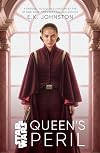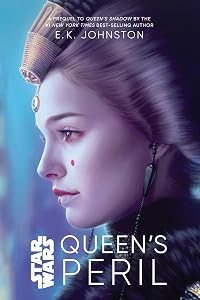
Queen's Peril
by E. K. Johnston
Queen's Shadow (2), Star Wars: Canon - chronological order (32 BBY, Republic Era), Star Wars: Canon - publication order (32 BBY), Star Wars Universe
On This Page
Description
When fourteen-year-old Padmé Naberrie wins the election for Queen of Naboo, she adopts the name Amidala and leaves her family to the rule from the royal palace. To keep her safe and secure, she'll need a group of skilled handmaidens who can be her assistants, confidantes, defenders, and decoys. Each girl is selected for her particular talents, but it will be up to Padmé to unite them as a group. When Naboo is invaded by forces of the Trade Federation, Queen Amidala and her handmaidens will show more face the greatest test--of themselves, and of each other. show lessTags
Recommendations








Member Reviews
Another wonderful dip into the Star Wars universe. I loved this look at how the newly elected Queen Amidala had to shape her reign, choosing how her new handmaidens would help her as bodyguards but also as body doubles and friends. And the bracketing of the first and last chapters again brought tears to my eyes (E.K. Johnston you do this to me all the time!)--moments of reflection by the "girl in white" who is the young Queen and then the "girl in white" who is her daughter Leia. Sniff...
The second book in the Queen's Trilogy—and the first chronologically—leans much more heavily into its YA identity. At times, it even feels like it skews younger, bordering on Middle Grade. The story positions itself as an aspirational tale for young girls, focusing less on Padmé as the central character and choosing instead to split its attention among the group of handmaidens and Captain Panaka. The first half serves as a prelude to Episode I: The Phantom Menace, while the second half overlaps with the events of the film. The epilogue jumps forward in time to feature Leia.
In contrast to Queen’s Shadow, which benefitted from an older cast and the trilogy's hard constraints on Padmé's growth within the Senate; in Queen's Peril, show more Naboo's semi-utopian setting (and its government system, which would have proven a challenge to depict in an adult novel) allows the author a bit more free reign. I wasn't a huge fan of the direction she settled for.
Many of the tropes and story elements typical of a power fantasy are much more pervasive here. These include:
* The absence of true failure.
* Adult characters and authority figures who are constantly rendered overly incompetent in order to highlight the girls’ cleverness.
* Problems created for the sake of being solved, instead of having been built organically in the world—such as outdated systems and traditions existing primarily as obstacles for the protagonists to easily challenge and reform. (Why does so much of the narrative and problem-solving showcased in the story hinge on the planet's, frankly baffling, lack of digitalization?)
Some of these elements could have provided opportunities for deeper worldbuilding—exploring why certain systems persist or how Naboo's values shaped its traditions. Instead, its politics and social complexities are largely simplified and left unexamined. The narrative is focused on demonstrating the girls’ resourcefulness and competence, in order to establish them as child prodigies. And... despite their demonstrated skills, Padmé and the handmaidens definitely, often, come across as immature, bickering children. There is a very deliberate attempt to portray their youth. The royal palace sometimes feels less like a seat of governance and more like a playground.
There are also very brief interludes that explore the POV of some of the movie's main characters. They're small windows into what is happening to them at the time—but they are so short, their contributions to the narrative are, by design, very limited. I would say that they mainly serve the purpose of acting as reminders to the reader of the movie's larger plot, and function as both scene breaks and chronological signposts. In this, they're successful, as the story doesn't waste a lot of time rethreading the movie's scenes and is more focused on fleshing out events that have only been alluded to, or scenes in-between.
Overall, while I grew attached to the girls and *wanted* to like this book—I can't say I enjoyed it. I think it has a much less broad appeal compared to the first one and caters more exclusively to its target demographic. show less
In contrast to Queen’s Shadow, which benefitted from an older cast and the trilogy's hard constraints on Padmé's growth within the Senate; in Queen's Peril, show more Naboo's semi-utopian setting (and its government system, which would have proven a challenge to depict in an adult novel) allows the author a bit more free reign. I wasn't a huge fan of the direction she settled for.
Many of the tropes and story elements typical of a power fantasy are much more pervasive here. These include:
* The absence of true failure.
* Adult characters and authority figures who are constantly rendered overly incompetent in order to highlight the girls’ cleverness.
* Problems created for the sake of being solved, instead of having been built organically in the world—such as outdated systems and traditions existing primarily as obstacles for the protagonists to easily challenge and reform. (Why does so much of the narrative and problem-solving showcased in the story hinge on the planet's, frankly baffling, lack of digitalization?)
Some of these elements could have provided opportunities for deeper worldbuilding—exploring why certain systems persist or how Naboo's values shaped its traditions. Instead, its politics and social complexities are largely simplified and left unexamined. The narrative is focused on demonstrating the girls’ resourcefulness and competence, in order to establish them as child prodigies. And... despite their demonstrated skills, Padmé and the handmaidens definitely, often, come across as immature, bickering children. There is a very deliberate attempt to portray their youth. The royal palace sometimes feels less like a seat of governance and more like a playground.
There are also very brief interludes that explore the POV of some of the movie's main characters. They're small windows into what is happening to them at the time—but they are so short, their contributions to the narrative are, by design, very limited. I would say that they mainly serve the purpose of acting as reminders to the reader of the movie's larger plot, and function as both scene breaks and chronological signposts. In this, they're successful, as the story doesn't waste a lot of time rethreading the movie's scenes and is more focused on fleshing out events that have only been alluded to, or scenes in-between.
Overall, while I grew attached to the girls and *wanted* to like this book—I can't say I enjoyed it. I think it has a much less broad appeal compared to the first one and caters more exclusively to its target demographic. show less
Queen’s Peril is E.K. Johnston’s second novel about Padmé Amidala and her handmaidens and, in true Star Wars fashion, it takes place chronologically before her previous book, Queen’s Shadow. I guess that makes Queen’s Peril the prequel to a prequel era novel.
(I’m having too much fun with this.)
Anyway, back on target, Queen’s Peril takes place when Padmé is elected Queen of Naboo and follows her reign up through the events of TPM. In Queen’s Shadow we got to see how Padmé and her handmaidens operated like a well-oiled machine, but Queen’s Peril shows the work these young girls put into developing their roles and relationships in the group, and not everything is smooth sailing. I loved seeing how each of the girls were show more recruited by Panaka and the people they were behind the unified front of handmaidens.
There are many POVs throughout the story besides Padmé and handmaidens (Palpatine, Panaka, Maul, Shmi, etc.) and each show a different aspect of the events leading up to and during TPM. I have mixed feelings about how the story was told concurrently with TPM. I do like that we get to see the events from different perspectives, but this part of the novel cannot stand on its own without a knowledge of the movie. Although I don’t want all of TPM retold to me, the style of vignettes meant that at one point you’re reading about Padmé the night before Anakin’s pod race, and the next moment she’s already called to replace Chancellor Valorum. It’s possible that it won’t bother me whenever I read the novel again, but I found it jarring and disappointing on first impression. That being said, the events aligned with TPM are only about one-quarter of the total book.
Johnston delivers another great installment in the adventures of Padmé and her handmaidens. I would love to see another novel before the events of ROTS or even one with just Sabé after ROTS. I also want to mention that Johnston writes the most beautiful beginnings and endings to her Padmé novels. I was in tears with a smile on my face. If you loved Queen’s Shadow then you’re going to enjoy Queen’s Peril as well. If you haven’t read Queen’s Shadow, then you get to decide between chronological order and release order—that should be a familiar decision at this point. show less
(I’m having too much fun with this.)
Anyway, back on target, Queen’s Peril takes place when Padmé is elected Queen of Naboo and follows her reign up through the events of TPM. In Queen’s Shadow we got to see how Padmé and her handmaidens operated like a well-oiled machine, but Queen’s Peril shows the work these young girls put into developing their roles and relationships in the group, and not everything is smooth sailing. I loved seeing how each of the girls were show more recruited by Panaka and the people they were behind the unified front of handmaidens.
There are many POVs throughout the story besides Padmé and handmaidens (Palpatine, Panaka, Maul, Shmi, etc.) and each show a different aspect of the events leading up to and during TPM. I have mixed feelings about how the story was told concurrently with TPM. I do like that we get to see the events from different perspectives, but this part of the novel cannot stand on its own without a knowledge of the movie. Although I don’t want all of TPM retold to me, the style of vignettes meant that at one point you’re reading about Padmé the night before Anakin’s pod race, and the next moment she’s already called to replace Chancellor Valorum. It’s possible that it won’t bother me whenever I read the novel again, but I found it jarring and disappointing on first impression. That being said, the events aligned with TPM are only about one-quarter of the total book.
Johnston delivers another great installment in the adventures of Padmé and her handmaidens. I would love to see another novel before the events of ROTS or even one with just Sabé after ROTS. I also want to mention that Johnston writes the most beautiful beginnings and endings to her Padmé novels. I was in tears with a smile on my face. If you loved Queen’s Shadow then you’re going to enjoy Queen’s Peril as well. If you haven’t read Queen’s Shadow, then you get to decide between chronological order and release order—that should be a familiar decision at this point. show less
I was given an ARC of this book from Netgalley in exchange for an honest review.
I have such nostalgia for The Phantom Menace that it was heartwarming to travel back to the invasion of Naboo through the Queen's eyes. This book tells the story of not only Padmé but all of her handmaidens. It was a joy to uncover their individual backstories, personalities, and skills as they grow into the unit that saves their planet. Queen's Peril is a fascinating exploration of female friendship and loyalty, as well as a deep-dive into the decoy process that is glossed over in the film.
To not be too repetitive in regards to the film, the book skips many chunks of time, particularly the invasion and their time on Tatooine/Coruscant. This was my first show more time experiencing this phenomenon (large gaps in a book), but I believe it comes with the territory of such a large franchise trying to intertwine books and graphic novels and films all together. A quick rewatch of The Phantom Menace quickly put my mind at ease with the large time jumps in the later sections of this book.
There were 4 quite short and out of place sections where the focus briefly switched to an Anakin or Darth Maul point of view, and while disorienting, they over all did not detract from an endearing 'biopic' of the Naboo political system. show less
I have such nostalgia for The Phantom Menace that it was heartwarming to travel back to the invasion of Naboo through the Queen's eyes. This book tells the story of not only Padmé but all of her handmaidens. It was a joy to uncover their individual backstories, personalities, and skills as they grow into the unit that saves their planet. Queen's Peril is a fascinating exploration of female friendship and loyalty, as well as a deep-dive into the decoy process that is glossed over in the film.
To not be too repetitive in regards to the film, the book skips many chunks of time, particularly the invasion and their time on Tatooine/Coruscant. This was my first show more time experiencing this phenomenon (large gaps in a book), but I believe it comes with the territory of such a large franchise trying to intertwine books and graphic novels and films all together. A quick rewatch of The Phantom Menace quickly put my mind at ease with the large time jumps in the later sections of this book.
There were 4 quite short and out of place sections where the focus briefly switched to an Anakin or Darth Maul point of view, and while disorienting, they over all did not detract from an endearing 'biopic' of the Naboo political system. show less
2.5★
I hate to give this a low rating because it is very clear E.K. tried to do something the dudebros hate: portray women like regular people. And it's obvious that half of the low reviews are hating on exactly that.
But the weak point in Queen's Peril, obviously, isn't the dresses and periods and make-ups. It is that it's a book that is trying very hard without deciding where it's going. Of course, it's great to see periods incorporated in a story about teenage girls, and crushes, and LGBT representation. But all of this felt like the author was crossing itens out of a "look how aware I am" list without much tought to the actual story.
The plot has no substance, and I could excuse that if the book had a more introspective approach, show more i.e. Padmé and the handmaidens, what a great opportunity to explore female relationships! But that's not what happens.
The story tries to bring too much to the table at once, and falls flat on every single one of them in one of the biggest examples of telling instead of showing I've seen:
Giving personalities to the handmaidens? They are the same cardboard cutout with their name #uniqueability sticked to the forehead.
Exploring Padmé learning to be Queen? Literally we aren't show a single thing she does. Is this a simbolic title? She gets a vote on the planet council? Has the last word? What's the difference between Queen and Governor? Who knows!
Giving background to TPM? Literally the most confusing 100 pages I've seen, jumping around narrators and brushing over the overall events of the movie without depth on anything.
The author obviously wrote this with extreme love for Padmé, an immaculate girl who is just trying her best and for no apparent reason has automatic devotion (to an extremely creepy extent) of everyone she meets. And then the actual scenes do nothing to convince she is fitting to rule a planet.
If you're saying Nubians become adults at 14, you can't have them ignoring security measures, lying to staff and being petty over anything at the same time. Some immaturity is to be expected (comparing to what would be 18-19 year-olds) but this dissonance makes the plot absolute nonsensical. Is like the story is from a perspective of a 12-year-old who actually thinks "the adults are just boring" without any of the fun that a middle-grade book would provide.
(Really can't believe this just skipped ALL of the training the handmaidens had. Like. Why do we only have the transitional scenes between all the actually interesting stuff?)
P.S: really this book is so mediocre that it didn't even inspire distaste. I can't give it a lower rating and join this with the books that actually made me feel something, even in a bad way. show less
I hate to give this a low rating because it is very clear E.K. tried to do something the dudebros hate: portray women like regular people. And it's obvious that half of the low reviews are hating on exactly that.
But the weak point in Queen's Peril, obviously, isn't the dresses and periods and make-ups. It is that it's a book that is trying very hard without deciding where it's going. Of course, it's great to see periods incorporated in a story about teenage girls, and crushes, and LGBT representation. But all of this felt like the author was crossing itens out of a "look how aware I am" list without much tought to the actual story.
The plot has no substance, and I could excuse that if the book had a more introspective approach, show more i.e. Padmé and the handmaidens, what a great opportunity to explore female relationships! But that's not what happens.
The story tries to bring too much to the table at once, and falls flat on every single one of them in one of the biggest examples of telling instead of showing I've seen:
Giving personalities to the handmaidens? They are the same cardboard cutout with their name #uniqueability sticked to the forehead.
Exploring Padmé learning to be Queen? Literally we aren't show a single thing she does. Is this a simbolic title? She gets a vote on the planet council? Has the last word? What's the difference between Queen and Governor? Who knows!
Giving background to TPM? Literally the most confusing 100 pages I've seen, jumping around narrators and brushing over the overall events of the movie without depth on anything.
The author obviously wrote this with extreme love for Padmé, an immaculate girl who is just trying her best and for no apparent reason has automatic devotion (to an extremely creepy extent) of everyone she meets. And then the actual scenes do nothing to convince she is fitting to rule a planet.
If you're saying Nubians become adults at 14, you can't have them ignoring security measures, lying to staff and being petty over anything at the same time. Some immaturity is to be expected (comparing to what would be 18-19 year-olds) but this dissonance makes the plot absolute nonsensical. Is like the story is from a perspective of a 12-year-old who actually thinks "the adults are just boring" without any of the fun that a middle-grade book would provide.
(Really can't believe this just skipped ALL of the training the handmaidens had. Like. Why do we only have the transitional scenes between all the actually interesting stuff?)
P.S: really this book is so mediocre that it didn't even inspire distaste. I can't give it a lower rating and join this with the books that actually made me feel something, even in a bad way. show less
I enjoyed this book a lot more than I thought I would. I was never a huge fan of the Prequels, but Phantom Menace was my favorite (very unpopular opinion I know!). It was not until the Clone Wars did I appreciate the full trilogy. This book is the third prequel era book I have read, and this includes legends and canons. Queen’s Peril takes place prior and concurrently to the events of The Phantom Menace. You do not have to watch Phantom Menace to understand what is going on in this book, but it will make the reading experience richer.
What we learn in this book was how Amidala transitioned from civilian to Queen. It was interesting to learn how different the author compared Padme’s views to the previous Queen and her current Captain show more of the Guard. To brush up on Naboo politics, Naboo Monarchs are elected rulers for the Royal House of Naboo, the monarchy that governs the human denizens of the planet. The Naboo often elects young women, believing they possessed a form of pure, childlike wisdom that the adults lacked. They hold campaigns and the people vote on who they want the successor to be. The term lengths are 2 years but could be reelected for another term given the max of term years 4.
Even though the book is called Queen’s Peril, I felt like this book is more about the handmaidens. They seemed to be the star of this book. It was nice to read and learn on how the handmaidens came to be and who they were before they became part of the royal court. I knew from legends they taught the handmaidens to be a personal set of bodyguards to the current monarch, and what I loved about this book was how the author took it a step further. Originally, the idea was to have one handmaiden: Tsabin, and she was to be the decoy, but because Padmé and Tsabin got along easily, they decide there should be more handmaidens so that Padmé going undercover will stand out less.
Panaka found Padme four other girls to serve as her handmaidens: Rabene Tonsort, Eirtama Ballory, Suyan Higin and Sashah Adova. He chose these four not because of their similarities to Amidala, but because of their talents. Instead of staying at the bunkers where most of the royal employees stayed, Amidala had her handmaidens live with her so they can become close and talk about their plans. When the handmaidens and Amidala learned about each other, they designated themselves to a specific job by what they were good at and why Panaka sought them out. With the four new girls and Tsabin agreeing on their roles in Padmé's service, at Rabene's suggestion they all take on new names to match Amidala's given one, for privacy, loyalty and so a disguised Padmé will stand out less: Rabé, Eirtaé, Yané, Saché and Sabé.
One reason I enjoyed this book was because this book explained what was going on during the Naboo occupation. The author did not give us The Phantom Menace, but what was going on during that time. When Padme leaves the ship to go with Qui-Gon and Obi-Wan, the author gives the readers what was going on the ship with Sabe, Rabe and Eirtae. During the scenes on Coruscant and other scenes, the author gave us what was going on in the camps and what Yane and Sache were planning. Even though this gives nothing to the Star Wars lore, it adds background stories and lore to Naboo and the citizens. The author gave us new characters such as Panaka’s wife Mariek Panaka and names to characters we see in the movie.
I recommend this book to those who liked the character Padme, the handmaidens and who likes books that give movies a different light. This was a fun read and I am going to read the next book in this possible trilogy Queen’s Shadow. show less
What we learn in this book was how Amidala transitioned from civilian to Queen. It was interesting to learn how different the author compared Padme’s views to the previous Queen and her current Captain show more of the Guard. To brush up on Naboo politics, Naboo Monarchs are elected rulers for the Royal House of Naboo, the monarchy that governs the human denizens of the planet. The Naboo often elects young women, believing they possessed a form of pure, childlike wisdom that the adults lacked. They hold campaigns and the people vote on who they want the successor to be. The term lengths are 2 years but could be reelected for another term given the max of term years 4.
Even though the book is called Queen’s Peril, I felt like this book is more about the handmaidens. They seemed to be the star of this book. It was nice to read and learn on how the handmaidens came to be and who they were before they became part of the royal court. I knew from legends they taught the handmaidens to be a personal set of bodyguards to the current monarch, and what I loved about this book was how the author took it a step further. Originally, the idea was to have one handmaiden: Tsabin, and she was to be the decoy, but because Padmé and Tsabin got along easily, they decide there should be more handmaidens so that Padmé going undercover will stand out less.
Panaka found Padme four other girls to serve as her handmaidens: Rabene Tonsort, Eirtama Ballory, Suyan Higin and Sashah Adova. He chose these four not because of their similarities to Amidala, but because of their talents. Instead of staying at the bunkers where most of the royal employees stayed, Amidala had her handmaidens live with her so they can become close and talk about their plans. When the handmaidens and Amidala learned about each other, they designated themselves to a specific job by what they were good at and why Panaka sought them out. With the four new girls and Tsabin agreeing on their roles in Padmé's service, at Rabene's suggestion they all take on new names to match Amidala's given one, for privacy, loyalty and so a disguised Padmé will stand out less: Rabé, Eirtaé, Yané, Saché and Sabé.
One reason I enjoyed this book was because this book explained what was going on during the Naboo occupation. The author did not give us The Phantom Menace, but what was going on during that time. When Padme leaves the ship to go with Qui-Gon and Obi-Wan, the author gives the readers what was going on the ship with Sabe, Rabe and Eirtae. During the scenes on Coruscant and other scenes, the author gave us what was going on in the camps and what Yane and Sache were planning. Even though this gives nothing to the Star Wars lore, it adds background stories and lore to Naboo and the citizens. The author gave us new characters such as Panaka’s wife Mariek Panaka and names to characters we see in the movie.
I recommend this book to those who liked the character Padme, the handmaidens and who likes books that give movies a different light. This was a fun read and I am going to read the next book in this possible trilogy Queen’s Shadow. show less
Was this perfect? No. Did I enjoy it? Yes.
I was giddy before reading this - we learn more of the Planet Naboo and how their govern system works.
I loved how the queen's shadows were found, and the bonds that they had built before everything went to hell.
There were numerous parts - for me - lacking enough or no information. I get that this is in the timeline of Episode 1 (and most has seen the movie), but what about Padmè's inner thoughts when she met Anikin Skywalker?
Why skip those parts? And how about the inner thoughts when they have overthrown the Chancellor?
I will see how well it goes with the second book: Queen's shadow.
I was giddy before reading this - we learn more of the Planet Naboo and how their govern system works.
I loved how the queen's shadows were found, and the bonds that they had built before everything went to hell.
There were numerous parts - for me - lacking enough or no information. I get that this is in the timeline of Episode 1 (and most has seen the movie), but what about Padmè's inner thoughts when she met Anikin Skywalker?
Why skip those parts? And how about the inner thoughts when they have overthrown the Chancellor?
I will see how well it goes with the second book: Queen's shadow.
Members
- Recently Added By
Lists

Female Author
1,235 works; 67 members

Books Read in 2021
5,361 works; 114 members

Star Wars Canon Reading List
204 works; 1 member

Kindle Fantasy/Science Fiction Re-Read
151 works; 1 member
Author Information

19+ Works 6,322 Members
E. K. Johnston is a Canadian author and a forensic archeologist. Her books include The Story of Owen, Prairie Fire, A Thousand Nights, Spindle, That Inevitable Victorian Thing, and Exit, Pursued By a Bear. (Bowker Author Biography)
Some Editions
Series


Common Knowledge
- Canonical title
- Queen's Peril
- Original publication date
- 2020-06-02
- People/Characters
- Padmé Amidala; Sabé; Rabé; Yané; Eirtaé; Saché (show all 13); Anakin Skywalker; Shmi Skywalker; Qui-Gon Jinn; Obi-Wan Kenobi; Quarsh Panaka; Sheev Palpatine; Darth Maul
- Important places
- Theed; Naboo; Coruscant; Tatooine
- Related movies
- Star Wars: Episode I - The Phantom Menace (1999 | IMDb)
- First words
- The girl in the white dress had her mother’s brain and her father’s heart, and a spark that was entirely her own.
- Last words
- (Click to show. Warning: May contain spoilers.)The girl in the white dress was never going to be Queen, but she was ready.
- Original language
- English
Classifications
- Genres
- Fiction and Literature, Science Fiction, Teen, Young Adult
- DDC/MDS
- 813.6 — Literature & rhetoric American literature in English American fiction in English 2000-
- LCC
- PZ7 .J64052 — Language and Literature Fiction and juvenile belles lettres Fiction and juvenile belles lettres Juvenile belles lettres
- BISAC
Statistics
- Members
- 403
- Popularity
- 77,160
- Reviews
- 10
- Rating
- (3.56)
- Languages
- English, French, German, Spanish
- Media
- Paper, Audiobook, Ebook
- ISBNs
- 10
- ASINs
- 3