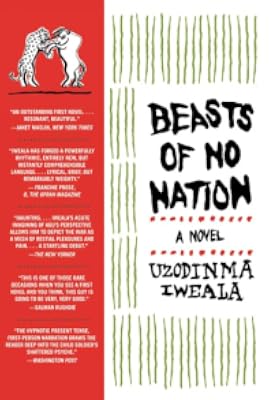
Beasts of No Nation
by Uzodinma Iweala
On This Page
Description
In this stunning debut novel, Agu, a young boy in an unnamed West African nation, is recruited into a unit of guerrilla fighters as civil war engulfs his country. Haunted by his father's own death at the hands of militants, which he fled just before witnessing, Agu is vulnerable to the dangerous yet paternal nature of his new commander. While the war rages on, Agu becomes increasingly divorced from the life he had known before the conflict started -- a life of school friends, church show more services, and time with his family still intact. As he vividly recalls these sunnier times, his daily reality spins further downward into inexplicable brutality, primal fear, and loss of selfhood. His relationship with his commander deepens even as it darkens, and his camaraderie with a fellow soldier lends a deceptive sense of normalcy to his experience. In a powerful, strikingly original voice that vividly captures Agu's youth and confusion, Uzodinma Iweala has produced a harrowing, deeply affecting novel. Both a searing take on coming-of-age and a vivid document of the dark face of war, Beasts of No Nation announces the arrival of an extraordinary new writer. show lessTags
Recommendations
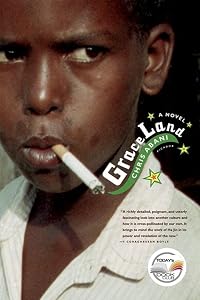
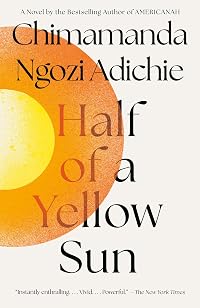
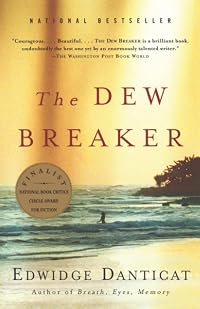
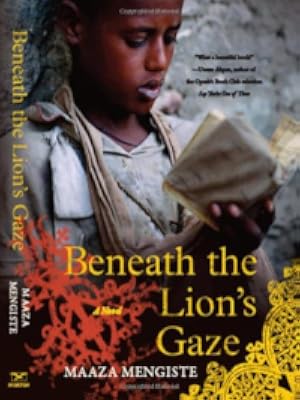
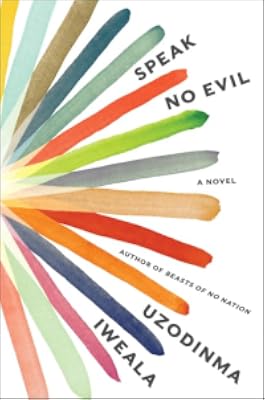
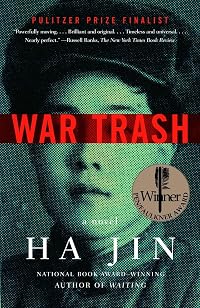
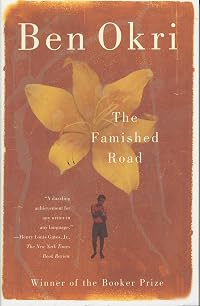
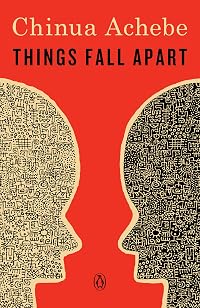
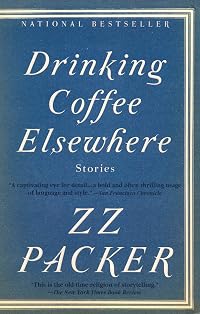
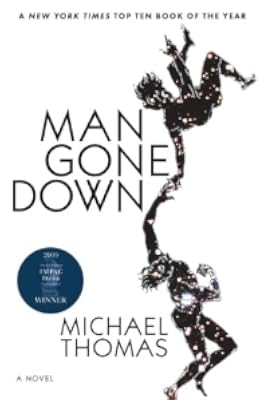
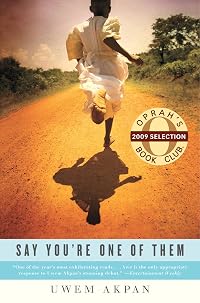
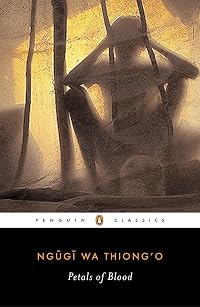
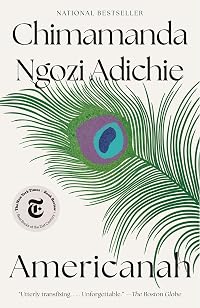

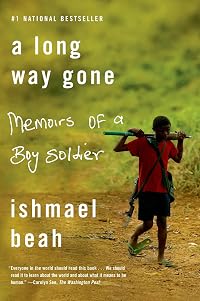




Member Recommendations
Member Reviews
It is hard to imagine a more tragic, terrifying player on the world stage than the child soldier. The recent movie Blood Diamond made a schmaltzy, Hollywood attempt to bring this story to the screen, but it is books that give us access inside, and not just memoirs, such as Ishamael Beah’s 'Long Way Gone' or Grace Akallo's 'Girl Soldier;' the past two years we have seen Ahmadou Kourouma’s 'Allah is Not Obliged,' Emmanuel Dongala’s 'Johnny Mad Dog,' Chimamanda Adichie’s 'Half of a Yellow Sun,' Helon Habila’s 'Measuring Time,' and most recently Chris Abani's otherworldly 'Song for Night.' Yet what is most remarkable is just how variously riveting and beautiful each one of these accounts is.
Having just been released by Uzodinma show more Iweala’s 'Beasts of No Nation,' I have to say that it rises out of the great mass of novels about war that one could read, to sit on the short shelf of war books one probably should read, so much anguish and experience is distilled into the raw utterances of its narrator Agu. This idiosyncratic voice (an inarticulate present tense - "I am just shooting and killing, killing" ) and morally compromised speaker will not work for everyone, but it felt a lot like truth to me. show less
Having just been released by Uzodinma show more Iweala’s 'Beasts of No Nation,' I have to say that it rises out of the great mass of novels about war that one could read, to sit on the short shelf of war books one probably should read, so much anguish and experience is distilled into the raw utterances of its narrator Agu. This idiosyncratic voice (an inarticulate present tense - "I am just shooting and killing, killing" ) and morally compromised speaker will not work for everyone, but it felt a lot like truth to me. show less
Rating: 4* of five
The Publisher Says: In this stunning debut novel, Agu, a young boy in an unnamed West African nation, is recruited into a unit of guerrilla fighters as civil war engulfs his country. Haunted by his father's own death at the hands of militants, Agu is vulnerable to the dangerous yet paternal nature of his new commander. While the war rages on, Agu becomes increasingly divorced from the life he had known before the conflict started a life of school friends, church services, and time with his family still intact.
In a powerful, strikingly original voice that vividly captures Agu's youth and confusion, Uzodinma Iweala has produced a harrowing, inventive, and deeply affecting novel.
My Review: Men writing in the voice of a show more child are at a disadvantage because childhood is traditionally thought of as a woman's preserve. Iweala writes about a boy who is only nominally a child, though; one of the thousands of boys who are compelled to serve in the civil wars and rebellions of Africa's troubled states.
He does this with force, beauty, and horror.
This moment is the narrator's first moment of joy:
I can't stress enough that this first novel is To Be Read! The passage above, in the context of the story, brought me to tears. It's a lovely piece of writing no matter what...but coming where it does in this wrenchingly infuriating story, it's got a wallop that must be experienced.
Beasts of No Nation was published in 2005. It's written by a Nigerian man of (then) some 23 years of age. Jamaica Kincaid acted as his advisor. Someone explain to me, that all being said, why the Adichie (of similar background and age) cult got rollin' and there was not an Iweala cult...?
This author deserves your attention. Please read his work. It's not flawless, but it's head and shoulders above most things that clutter our shelves!
Strongly recommended.
This work is licensed under a Creative Commons Attribution-NonCommercial-ShareAlike 3.0 Unported License. show less
The Publisher Says: In this stunning debut novel, Agu, a young boy in an unnamed West African nation, is recruited into a unit of guerrilla fighters as civil war engulfs his country. Haunted by his father's own death at the hands of militants, Agu is vulnerable to the dangerous yet paternal nature of his new commander. While the war rages on, Agu becomes increasingly divorced from the life he had known before the conflict started a life of school friends, church services, and time with his family still intact.
In a powerful, strikingly original voice that vividly captures Agu's youth and confusion, Uzodinma Iweala has produced a harrowing, inventive, and deeply affecting novel.
My Review: Men writing in the voice of a show more child are at a disadvantage because childhood is traditionally thought of as a woman's preserve. Iweala writes about a boy who is only nominally a child, though; one of the thousands of boys who are compelled to serve in the civil wars and rebellions of Africa's troubled states.
He does this with force, beauty, and horror.
This moment is the narrator's first moment of joy:
Nobody is seeing me as I am getting up and walking through the tree right to the road. I am feeling breezes to my back that is pushing me to walk far far away from here and I am moving quickly quickly onto the road where I am just walking walking walking to where the sun is setting. I am looking at it and wanting to catch it in my hand to be squeezing until the color are dripping out from it forever. That way everywhere it is always dark and nobody is ever having to see any of the terrible thing that is happening in this world.
I can't stress enough that this first novel is To Be Read! The passage above, in the context of the story, brought me to tears. It's a lovely piece of writing no matter what...but coming where it does in this wrenchingly infuriating story, it's got a wallop that must be experienced.
Beasts of No Nation was published in 2005. It's written by a Nigerian man of (then) some 23 years of age. Jamaica Kincaid acted as his advisor. Someone explain to me, that all being said, why the Adichie (of similar background and age) cult got rollin' and there was not an Iweala cult...?
This author deserves your attention. Please read his work. It's not flawless, but it's head and shoulders above most things that clutter our shelves!
Strongly recommended.
This work is licensed under a Creative Commons Attribution-NonCommercial-ShareAlike 3.0 Unported License. show less
When we sit in our comfortable homes, on our cozy couches, warm, dry, and full, it is hard to imagine lives other than our own. Even if we see the horrific ways that some people are forced to live on television, it all feels very removed from us. But when we encounter it in a book, we are right there with the character, facing the terror, the want and deprivation, and the brutality that is life in some corners of the world. It gets under our skin and inhabits our minds with its truths. Uzodinma Iweala's visceral and compelling novel, Beasts of No Nation, is one of those books that does not allow the reader to look away from the inhumanity, horror, and loss of innocence that even young children experience daily in a world rent by civil show more war.
In an unnamed West African nation, Agu is a child soldier. He was conscripted into the guerrilla army when he was found hiding in an abandoned village. Although just a boy, his choice is to become a soldier or to die. So he joins an army without a direction, not understanding its greater purpose, learning to kill simply because the Commandant orders him to do so. He is merely a pawn in a war he doesn't understand and is forced to choose a side he knows nothing about. Although Agu's family is gone, he befriends one of the other boys, Strika, and vies for attention from the brutal Commandant just as if from a benign father. Interspersed with the marching, the physical deprivation, and the atrocities of Agu's new life, are memories of a more peaceful time, life before the war came to his village. Agu was the son of the local school teacher. He was curious, intelligent, and present. These memories of his past are so at odds with his present that it is painful. The Agu of the guerrilla warriors is unquestioning, shut down, and as disconnected from emotion and morality as he can make himself be so as to survive. But what will it mean to survive in such a place and such a state as this? He is indeed one of the beasts of the title.
This is a very slight but powerful novel, heartbreaking in its depiction of this almost unimaginable reality. It is a searing look at the horrors our modern world has created and the stripping of humanity that it allows. Agu tells his own story in first person, present tense, keeping the narrative tension high and immediate throughout the entirety of the story. He narrates in a sing-song pidgin English which takes a little getting used to and is an odd choice of narrative voice given that this is fictional, not a translation, and the author himself is a native English speaker. It does give the reader more of a sense of foreignness than a more traditional grammar would have and perhaps adds to the childishness of Agu's voice as well. The ending is abrupt and almost trance-like but contains wisps of hope amidst ancient-feeling sadness. This is not a book for the faint of heart. It is raw and disturbing. It is unrelenting and graphic. There is no sense of right or good in the conflict and there's brutality on both sides. Agu himself is both victim and perpetrator. Iweala has imagined a terrible, terrible story here, but one that we cannot ignore. I promise that Agu and his fate will haunt you. show less
In an unnamed West African nation, Agu is a child soldier. He was conscripted into the guerrilla army when he was found hiding in an abandoned village. Although just a boy, his choice is to become a soldier or to die. So he joins an army without a direction, not understanding its greater purpose, learning to kill simply because the Commandant orders him to do so. He is merely a pawn in a war he doesn't understand and is forced to choose a side he knows nothing about. Although Agu's family is gone, he befriends one of the other boys, Strika, and vies for attention from the brutal Commandant just as if from a benign father. Interspersed with the marching, the physical deprivation, and the atrocities of Agu's new life, are memories of a more peaceful time, life before the war came to his village. Agu was the son of the local school teacher. He was curious, intelligent, and present. These memories of his past are so at odds with his present that it is painful. The Agu of the guerrilla warriors is unquestioning, shut down, and as disconnected from emotion and morality as he can make himself be so as to survive. But what will it mean to survive in such a place and such a state as this? He is indeed one of the beasts of the title.
This is a very slight but powerful novel, heartbreaking in its depiction of this almost unimaginable reality. It is a searing look at the horrors our modern world has created and the stripping of humanity that it allows. Agu tells his own story in first person, present tense, keeping the narrative tension high and immediate throughout the entirety of the story. He narrates in a sing-song pidgin English which takes a little getting used to and is an odd choice of narrative voice given that this is fictional, not a translation, and the author himself is a native English speaker. It does give the reader more of a sense of foreignness than a more traditional grammar would have and perhaps adds to the childishness of Agu's voice as well. The ending is abrupt and almost trance-like but contains wisps of hope amidst ancient-feeling sadness. This is not a book for the faint of heart. It is raw and disturbing. It is unrelenting and graphic. There is no sense of right or good in the conflict and there's brutality on both sides. Agu himself is both victim and perpetrator. Iweala has imagined a terrible, terrible story here, but one that we cannot ignore. I promise that Agu and his fate will haunt you. show less
This is a book that punches. Carolyn (MusciMom41) is spot on with her comment that this is not a book for the faint hearted. It is savagely horrific, harrowingly heartbreaking, violently visceral and chillingly claustrophobic.
With these terms, you might wonder why I rate it five stars. The answer is because it is a tale that needs to be told.
My life is comfortable, yet, I complain about the stress of my fast paced job, the dust that gathers on the floors because I have little time to clean, the meals I eat out because I am too tired to cook, and the fact that there are too few hours and too much to do.
Then, when reading Beasts of No Nation, bitter, cold water hits my face with the reality that I should stop whining and be grateful for show more my many blessings.
Agu is a young boy uprooted, torn and thrown into a violent African civil war. His village is destroyed and his father is killed. His mother and sister were taken by a UN truck to a safer place, yet Agu never knows if they made it to safety.
When Agu is beaten out of his hiding place, he has no choice but to join the cold, cruel, evil Commandant who leads a raggedy band of soldiers.
The author vividly shows the underbelly and violence of civil war where the elusive enemy hacks and kills senselessly.
Richard's hot review, is marvelous and I direct your attention to his January 13, 2010 comments.
Despite the graphic nature of the book, I highly recommend it! show less
With these terms, you might wonder why I rate it five stars. The answer is because it is a tale that needs to be told.
My life is comfortable, yet, I complain about the stress of my fast paced job, the dust that gathers on the floors because I have little time to clean, the meals I eat out because I am too tired to cook, and the fact that there are too few hours and too much to do.
Then, when reading Beasts of No Nation, bitter, cold water hits my face with the reality that I should stop whining and be grateful for show more my many blessings.
Agu is a young boy uprooted, torn and thrown into a violent African civil war. His village is destroyed and his father is killed. His mother and sister were taken by a UN truck to a safer place, yet Agu never knows if they made it to safety.
When Agu is beaten out of his hiding place, he has no choice but to join the cold, cruel, evil Commandant who leads a raggedy band of soldiers.
The author vividly shows the underbelly and violence of civil war where the elusive enemy hacks and kills senselessly.
Richard's hot review, is marvelous and I direct your attention to his January 13, 2010 comments.
Despite the graphic nature of the book, I highly recommend it! show less
Maybe everyone should read a novel written in "rotten English" once in a while. Sure, it's ungrammatical, difficult to get used to, and demands a certain amount of patience, but precisely because it makes mincemeant of the grammar and diction that most of us expect from serious novels it's got a vivacity and immediacy that's wonderful to experience. Like second-language learners whose imprecise use of tired clichés inadvertently breathes new life into them, the language used in this novel opens up whole new vistas for English by flat-out disregarding most of its rules. Perhaps readers who've resigned themselves to the fact to the fact that English has more-or-less reached the limits of its expressive capability should pick up "Beasts show more of No Nation" just so they can be proven wrong.
That said, I'm not sure if "Beasts of No Nation" is really a great novel. I don't think it achieves the emotional resonance of Ken Saro-Wiwa's wonderful - and, frankly, somewhat similar - "Sozaboy," and some readers will likely find its limited and necessarily repetitious vocabulary frustrating. There's also the problem of subject matter. The fact that the book relates the heartbreaking story of Agu, a child soldier caught up in one of the continent's civil wars, makes it difficult to judge on purely aesthetic grounds. One supposes, after all, that there are plenty of children like Agu who cannot tell any other story about themselves. On a realted note, the fact that the novel's author, Uzodinma Iweala, is a highly educated, well-to-do son of a Nigerian emigrant family who came across most of this material by working with former refugees also suggests a host of questions concerning appropriation and authenticity that are also, I imagine, delicate and complicated. Still, I'd be interested to know how "rotten English" might tell stories that were less sad than Agu's, if perahps also less socialy useful. Has somebody written rotten English's "Pride and Prejudice" yet? How about its "Portnoy's Complaint?" Now, that`s something I'd like to read. show less
That said, I'm not sure if "Beasts of No Nation" is really a great novel. I don't think it achieves the emotional resonance of Ken Saro-Wiwa's wonderful - and, frankly, somewhat similar - "Sozaboy," and some readers will likely find its limited and necessarily repetitious vocabulary frustrating. There's also the problem of subject matter. The fact that the book relates the heartbreaking story of Agu, a child soldier caught up in one of the continent's civil wars, makes it difficult to judge on purely aesthetic grounds. One supposes, after all, that there are plenty of children like Agu who cannot tell any other story about themselves. On a realted note, the fact that the novel's author, Uzodinma Iweala, is a highly educated, well-to-do son of a Nigerian emigrant family who came across most of this material by working with former refugees also suggests a host of questions concerning appropriation and authenticity that are also, I imagine, delicate and complicated. Still, I'd be interested to know how "rotten English" might tell stories that were less sad than Agu's, if perahps also less socialy useful. Has somebody written rotten English's "Pride and Prejudice" yet? How about its "Portnoy's Complaint?" Now, that`s something I'd like to read. show less
Read it. Be appalled. - written in the unrelenting tense of now - the horror never ends.
The author's use of present tense works like an incantation, grasping you by the throat tightly, it makes you breathless in a hyperventilating kind of way, you cannot stop - only turn the page, trying to read faster if only to get to the end of it. There's no real repose from the untenable pace, the brutal array of death merely merges into other grotesqueries you'd rather not think about too much.
You can't help feeling some gratitude and guilt for being born in a country not torn apart in civil war. There's the after effect - the infinite sadness to know somewhere today children are being forced to fight in wars not of their making - carrying guns show more too heavy for them and knives that kill not only their enemies but eventually their own sense of right and wrong, their sanity and their future.
I don't know if the author is a genius (the dust jacket tells me he is). The continual present tense grated and unnerved me - creating that kind of adrenaline rush fear does. Bad grammar and spelling annoyed me, but served it's purpose, being the fictional memoir of an African boy it really could be no other way. I'm rating it at the midway mark 3 stars, not because I liked it, because it's not the kind of book you can "like", but because I can't decide if it should get one star for technique or 5 stars for effect. It certainly achieves it's purpose to shock, despite the character Agu's limited vocabulary the book paints a lurid and searing image that almost rivals the work of war photographers James Nachtwey http://www.jamesnachtwey.com/ and Robert Capa .
. show less
The author's use of present tense works like an incantation, grasping you by the throat tightly, it makes you breathless in a hyperventilating kind of way, you cannot stop - only turn the page, trying to read faster if only to get to the end of it. There's no real repose from the untenable pace, the brutal array of death merely merges into other grotesqueries you'd rather not think about too much.
You can't help feeling some gratitude and guilt for being born in a country not torn apart in civil war. There's the after effect - the infinite sadness to know somewhere today children are being forced to fight in wars not of their making - carrying guns show more too heavy for them and knives that kill not only their enemies but eventually their own sense of right and wrong, their sanity and their future.
I don't know if the author is a genius (the dust jacket tells me he is). The continual present tense grated and unnerved me - creating that kind of adrenaline rush fear does. Bad grammar and spelling annoyed me, but served it's purpose, being the fictional memoir of an African boy it really could be no other way. I'm rating it at the midway mark 3 stars, not because I liked it, because it's not the kind of book you can "like", but because I can't decide if it should get one star for technique or 5 stars for effect. It certainly achieves it's purpose to shock, despite the character Agu's limited vocabulary the book paints a lurid and searing image that almost rivals the work of war photographers James Nachtwey http://www.jamesnachtwey.com/ and Robert Capa .
. show less
Life for the boy Agu in his West African country changes in an instant. The threat of war treading into his peaceful village forces his mother and sister to flee while he and his father stay behind to protect the village. As the soldiers overtake the village, Agu's father is killed, leaving him to either become a child solider or die like a coward.
Agu's world is full of bloodshed, anger, desolation. Through it all he wonders about how his world has changed, how he has become used to killing in order to keep worse from happening to him. His surprising strength in such a mad world, keeping hope alive that he might find his mother and sister and that he might one day continue his education to become a doctor, allow him to not go completely show more mad himself. "Beasts of No Nation" is a gritty, graphic and uncompromising portrait of life as a soldier, as seen through the eyes of a child. show less
Agu's world is full of bloodshed, anger, desolation. Through it all he wonders about how his world has changed, how he has become used to killing in order to keep worse from happening to him. His surprising strength in such a mad world, keeping hope alive that he might find his mother and sister and that he might one day continue his education to become a doctor, allow him to not go completely show more mad himself. "Beasts of No Nation" is a gritty, graphic and uncompromising portrait of life as a soldier, as seen through the eyes of a child. show less
Members
- Recently Added By
Lists

Top Five Books of 2018
802 works; 265 members
Author Information

9+ Works 1,866 Members
Uzodinma Iweala is the author of Beasts of No Nation, which won the Los Angeles Times Book Prize, the New York Public Library Young Lions Award, and the Sue Kaufman Prize from the American Academy of Arts and Letters. In 2007 he was selected as one of Granta's Best Young American Novelists. A graduate of Harvard University and the Columbia show more University College of Physicians and Surgeons, he lives in New York City and Abuja, Nigeria. show less
Awards and Honors
Awards
Series
Belongs to Publisher Series
Harper Perennial Olive Editions (2021 Olive)
Work Relationships
Has the adaptation
Is abridged in
Has as a student's study guide
Common Knowledge
- Canonical title
- Beasts of No Nation
- Original title
- Beasts of No Nation
- Original publication date
- 2005
- People/Characters
- Agu; Commandant; Luftenant; Strika; Hope; Rambo (show all 22); Griot; Preacher; Dagger; Driver; Agu's mother; Agu's father; Agu's sister; Pastor; Mistress Gloria; Dike; Madam; serving woman; soldiers; civilians; gatekeepers; prostitutes
- Important places
- West Africa; Nigeria
- Related movies
- Beasts of No Nation (2015 | IMDb)
- Epigraph
- Je parvins à faire s’évanouir dans mon esprit toute l’espérance humaine. Sur toute joie, pour l’étrangler, j’ai fait le bond sourd de la bête féroce.
I was able to expel from my mind all human hope. On... (show all) every form of joy, in order to strangle it, I pounced stealthily like a wild animal.
—Une Saison en Enfer
The uprising will bring out the beast in us. —Fela Kuti - Dedication
- For those who have suffered
- First words
- It is starting like this.
- Last words
- (Click to show. Warning: May contain spoilers.)I am all of this thing, but I am also having mother once, and she is loving me.
- Blurbers
- Abani, Chris; Ghosh, Amitav; Maslin, Janet; Prose, Francine; Rushdie, Salman
- Original language
- English
- Disambiguation notice
- 2005 novel
Classifications
Statistics
- Members
- 1,303
- Popularity
- 18,712
- Reviews
- 50
- Rating
- (3.61)
- Languages
- 8 — Dutch, English, Finnish, French, German, Italian, Portuguese, Spanish
- Media
- Paper, Audiobook, Ebook
- ISBNs
- 29
- UPCs
- 1
- ASINs
- 8